There is a very good piece at The Catholic Thing by Anthony Esolen. Here is how it starts.
This is my geopolitical fiction,” Jesus did not say, when He broke the bread at the Last Supper. “The group, though it has many members, is still one group,” Paul did not say, when he sought, gently, to lead the fractious democracy-leaning Corinthians back to their responsibilities toward one another and their submission to the truth. “Every man is an island,” John Donne did not say in his meditations on death, so that if you hear the church bells ringing, he did not continue, “you need not ask for whom they toll, so long as they do not toll for thee.”
It is almost impossible, in our time of social alienation, family breakdown, self-imposed detachment, radical sexual individualism, and loneliness, to ask people to consider what a society is; a prerequisite, one might think, for considering the social teachings of the Church, or the social good or harm to be expected from a proposed policy.
Esolen has had to have meditated at length over “society”. I suspect this because he translated The Divine Comedy by Dante. In Inferno, the sins and their punishments reflect how they broke the bonds of society. That’s a key to understanding what Dante was doing. The Divine Comedy is also a socio-political treatise.
Here’s how his piece ends. It’s a staggeringly profound and yet smoothly simple observation. HOWEVER, if someone gets this wrong and starts to “jenga” pull this or that from the whole, the result is disaster.
All these teachings, then, are bound up in one body. They are alive, mutually reinforcing, coherent, dynamic. To suppose that they are separable is to treat the body as a corpse. Nor is there society in the tomb.
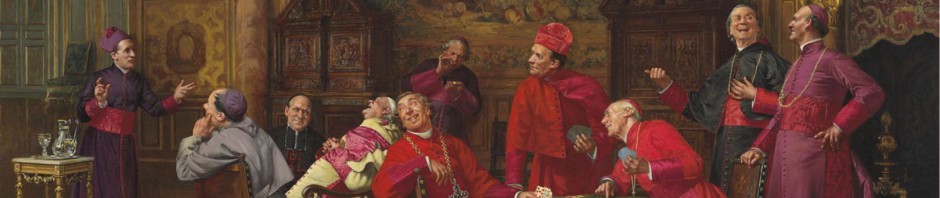
BTW… a couple of Cardinals, some aging feminists, and a bunch Jesuits are going to hate this article. So, share it around.































I read the article this morning and thought it brilliant.
One of the things that libertarians miss is that freedom is not necessarily the right to behave as an individual. Rather it can be seen as the right of individuals to form communities in which each of them are an integral part with duties and obligations to one another. At least this is the way I read Hayek. Social structures are very complicated, so they are not designed from scratch, they evolve through trial and error because if one thing is changed, it is really very difficult to figure out what will happen. For example, can the Church figure out how it will be affected by changing the Mass? Maybe not even the Mass itself, but only certain pious practices associated with the Mass, such as suppressing the Leonine prayers. The reformers really had no idea what would happen because they did not know how these practices affected various communities that make up the church as a whole. They blame the outcome on changes in society. Perhaps the changes in society were the result of the Church turning its back on tradition.
Thinking about this causes me to admire the brilliance of Pope Benedict XVI. He recognized there were problems caused by the liturgical reform. Rather than intervene in a wholesale manner, he gave priests the right to celebrate the historic Roman rite and was willing to let individual Vetus Ordo communities be created at the local level. The results in my opinion were marvelous, so much so that the liberal wing of the church felt obligated to suppress it.