QUAERITUR: Mentioning names of those for whom Mass is offered.

From a reader:

I will make this short. Why is the name of the person for whom the
Mass is beign said not mentioned by the priest any more?

There is no hard and fast universal custom about this from priest to priest or place to place.

Some people, however, who get used to this really take it to heart if they don’t hear the name they want to hear when they are used to hearing it. What results is an awkward confrontation in the sacristy when a 4’2″ Italian immigrant nonna with cataracts starts stabbing her sausage-like finger at the equally old visiting Vietnamese priest who has no idea what she is talking about. “I comma here and I paya for dis Messa ana you no saya da name. Whya you no saya da name?”

Some priests say the name during the Eucharistic Prayer or before Mass or at sermon time in the announcements. Some don’t say the name at all. However, be sure that – if it is a parish Mass and there is an intention – the priest has checked before Mass and has the intention in mind. Mass was said for the intention you asked for whether you heara da name o no heara da name.

Relax about this. If you are curious about a priest’s practice, wait until you are very calm and then, someday, ask him about it.

Posted in "How To..." - Practical Notes, ASK FATHER Question Box | Tagged
24 Comments

QUAERITUR: Usher dressing down mothers over children with TOYS, God forbid, during LATIN MASS!

From a reader:

Today at Mass, it would seem my very active 3 year old was being a
little too loud with one of his small toy cars (he wasn’t all that
interested in coloring one of his three catholic coloring books or his
illustrated bible or his “Story of Easter” book). An usher approached
me while I am trying to get my son to be quiet and says, “There are no
toys allowed in the Latin Mass.” Then he repeated it again in my ear.
“There are no TOYS allowed in the LATIN MASS.” I put the the toys away
and predictably my toddler started to cry. We had to leave church (and
stand out in the cold) until he settled down. I have to admit this
really upset me. I don’t know if this is a common church policy but I
must admit it seemed pretty off putting. In 3 years of attending Mass
with my child I have never once been scolded for being too loud or for
bringing “toys”. I was wondering if you had an opinion or any advice.

Well! And here we go, leaping toward the third rail.

I think I would have been tempted to respond, “And what part of LATIN MASS gives you permission to walk around church, ignoring the sacred action and reprimanding mothers?”

Ushers.

Without having been there, it is hard to know what to say. But it strikes me that the usher was on pretty shaky ground. Sure, all children at LATIN MASS should look just like the sweet little darlings in the pastel artwork depicting young ones praying head-bowed, pink hands together at their bedsides as a guardian angel hovers over them. That’s what all children at LATIN MASS should be like.

In the meantime, on my planet when little Stupor Mundi is making too much noise, and how much is too much and I am not at all sure, then attentive parents – used to their prodigy’s din at home – takes the diminutive treasure out.

That isn’t always possible and children can be obstreperous. Even at the LATIN MASS! Do be sensitive to noise levels. You might be used to the noise your child makes. Others are not.

Catholic Moms and Dads can jump in here. From time to time we have practical advice on this very topic. Since I firmly believe in the wisdom of the adage repetita iuvant, we can dig into it again.

Posted in "How To..." - Practical Notes, ASK FATHER Question Box, Liturgy Science Theatre 3000 | Tagged , ,
156 Comments

Wither the Ambrosian Rite?

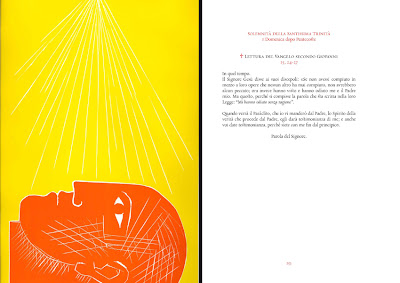
Rorate and Forma et fides have pictures from the Book of Gospels or Evangelarium for the Ambrosian Rite… the post-Conciliar Ambrosian Rite, of course, the Latin Rite of Milan and surrounding region reaching even into Switzerland.

The art for the first version of the 2002 Missale Romanum seems wonderful after perusing these offerings.  They range from something mom would tack to the fridge when junior comes home from 2nd grade and the loonier dreck you find in Chelsea art galleries.

That last one is – I am not making this up – the plate for the Nativity of the Blessed Virgin Mary.  Cool, huh?  Doesn’t this leave you shouting “More! More!”?

Keep in mind that this had to have been approved under the aegis of the now-retired Card. Tettamanzi, who did all he could as head of the Ambrosian Rite to suppress the growing interest in the pre-Conciliar form of the Ambrosian Rite.  Just as the Roman Rite is making a come back, so to the Ambrosian.  Summorum Pontificum really ought to apply also to the Ambrosian Rite, but Universae Ecclesiae clarifies that it does not.  It seems as if there may be a separate document concerning the older form of the Ambrosian Rite.

What the hell is that?

Dunno… seems to me that the older Ambrosian Rite could be a pretty good idea if this art for the new Evangelarium is any indication of the direction the newer Ambrosian Rite is going.

UPDATE 7 Nov 15:36 GMT:

Card. Scola on this… thing.

Posted in Liturgy Science Theatre 3000 | Tagged
33 Comments

NY Daily News on new, corrected translation. WDTPRS POLL ALERT!

At The New York Daily News there is a piece about the new, corrected translation and there is a POLL which you should use.

My emphases and comments.

Catholic Church unveils strict Latin translation, biggest change to Mass in 40 years

New English-version debuts nationwide Nov. 27
BY LORE CROGHAN
NEW YORK DAILY NEWS

The city’s Roman Catholics are preparing for the biggest change to the Mass in 40 years, a new English translation that will be rolled out nationwide Nov. 27.

A decade in the making, the new Mass is a more precise translation from Latin than the current version, peppered with more theological words and Biblical images.

Supporters say it will bring a more reverent, solemn tone to services, while detractors think the new language is too obscure or stilted.

Diane DeBernardo, 45, just knows it will be “a challenge.”

“In church, all my life I’ve known what to say,” the Kensington, Brooklyn, teacher said. “I’ll have to use a missal for the first time.” [Not a bad thing, in itself.  And she will get used to the new version quickly.]

[…]

The latest change is a new English translation of the Third Edition of the Roman Missal. It aims for a more reverent, solemn tone.

“In trying to make things relevant we lost a sense of the importance of ritual language,” said the Rev. Frank Tumino, pastor of the Church of Saint Thomas the Apostle in Woodhaven, Queens, who is helping to implement the revisions.

The structure of the Mass will remain the same, along with some major parts, such as the “Our Father.”

Some New Yorkers welcome the changes, which include a new emphasis on forgotten gestures like churchgoers striking their chests with fists when they ask God’s forgiveness. [Wasn’t that in the lame-duck rubrics?  One of the benefits of the new translation is the rediscovery of things people should have been doing all along.]

“We’ve been a little complacent,” said Theresa Noll, 59, a Windsor Terrace retiree and Immaculate Heart parishioner. “We need to be shaken up a little bit.

Others say the translation is a step backward because of its grammatical similarity to the Latin-language Mass and its use of unfamiliar vocabulary.

Church officials say the lexicon is important.

We want the sense of special respect for what we do at church, and we want to appreciate the exact nature of some theological words, like ‘consubstantial,’” said Msgr. William Belford, the vicar for clergy at the Archdiocese of New York.

“Nothing else says the mystery of the relationship of God the Father and God the Son as well as that word, which is 1,700 years old.”  [Good for him!  “Consubstantial” is about the best word we have to express this difficult concept.  “One in being” never did cut it.  Not even close.]

The theological precision of the new translation got a thumbs-up from schoolteacher Timothy Thomas, 29, of the upper East Side.

There’s more meat on the bone — something you can really sink your teeth into,” said Thomas, a parishioner at the Church of Saint Vincent Ferrer.

It’s winning fans among New Yorkers who prefer traditional Latin Mass, which is celebrated in a handful of churches.

Johnny Egan, 45, an assistant film and TV director who attends Latin services at the Church of the Holy Innocents in the Garment District [hurray!], usually steers clear of English-language Mass. He’ll be more willing to give it a try come Nov. 27.

“I’ll feel more at home,” the upper East Side resident said.

There is a POLL at the site of the The New York Daily News.

Here is what the form looks like… I’m not telling you how to vote… but… there it is.  CLICK the image below to go there.

And as of this writing here are the results so far.  You decide what to do about it.
Have an opinion?

UPDATE: 20:45 GMT:

Posted in Liturgy Science Theatre 3000, POLLS, The Drill | Tagged , ,
14 Comments

Account of participation for the first time at Holy Mass in the Extraordinary Form

At a blog called Having Left The Altar (a reference to a quote from St. Frances of Rome, a favorite of mine) there is a refection on a first experience of the Extraordinary Form of Holy Mass in the Roman Rite.

The piece is a bit long.  All in all it was favorable.  There is a point in it, however, which merits commentary. My emphases and comments.

[…]
I was personally struck by how meditative the Mass was. At a Mass of the Ordinary Form, there is always something you are supposed to be doing whether it is opening a book, finding a song, singing, passing a basket, hearing commentary or meeting catechumens or what have you. At the Extraordinary Form, most everything is done for you. With the songs all in Latin, the Gloria in Latin, the readings in Latin, it is almost like the Mass in on autopilot as far as the layperson is concerned. (The priest did read the readings in English for us just before beginning his homily.)

Now, St. Alphonsus provides books for you to follow along and sing all the parts of the Mass in Latin as well as understand them with an English translation. But if you don’t want to, you aren’t a person suspiciously not singing or a non-conformist or someone who is anti-social or lazy. Because everything is in Latin, there is an automatic trump card excusing you from singing or following along. But it doesn’t mean you aren’t experiencing the music or the Mass. On the contrary, sitting in a beautiful church, smelling incense, hearing beautiful solemn music, it becomes a multi-sensory environment with everything helping to lift your mind, heart and soul to God. It becomes a precious opportunity to meditate and pray silently, reflectively, raising yourself to God. Everything tries to help you leave the world and your week at the door and draw you closer to God.  [Okay… I think she is generally on the right track, and this is her first experience of the older, Extraordinary Form.  But our participation at Holy Mass in either form can’t really be reduced to being on “auto-pilot” when the outward expressions of participation have been somewhat decreased because, for example, the priest celebrant and/or choir is saying or singing the texts.  We still should be actively engaged with the sacred action while it is going on.]

Now, certainly, you don’t have to pray or meditate. You could sit there quietly irritated that everything isn’t in English. But, personally, the rest of my week is in English and, as a stay-at-home homeschooling mom to four young girls, the opportunity of prayerful meditation is worth far more than any song I could sing. For me, it was a golden opportunity, one I wish I had more often.

Now, I don’t think the Ordinary Form is invalid or anything like that. Christ is Christ. But the Ordinary Form seems to focus much more on participation. It focuses on how much it can make you involved, leading you by the hand to sing this hymn, say this prayer, even instructing when you should and should not go to Communion. After going to the Extraordinary Form of the Mass, I kind of feel like the Ordinary Form IS the children’s Mass, [and perhaps the Extraordinary Form is the grown ups’ Mass?  I have made that comparison on this blog.] holding your hand and directing your thoughts through every step of the Mass contrary to the Extraordinary Form which provides the environment for you to meet God but lets you meet Him on your own terms, in your own words, at your own pace.

There is nothing wrong with participation – singing, lecturing, ushering, etc. – but it makes you focus more on physically doing something rather than on praying or meditating. [Again, I think she is on the right track, but her way of putting it is not quite there.  Interior action is still active, even if it doesn’t have outward expression in gestures or words. Interior activity is active participation when you unite yourself by your will and with your mind to the liturgical action. We should move away from using the word “participation” only to describe outwardly active participation.] It is like filling your day with work and not taking any time to quiet your soul. There is nothing wrong with work; it can be very good. But without that time to quiet the soul, it becomes much harder to really enter into prayer. And constant participation makes it easier to fall into the belief that doing something is the equivalent of drawing closer to God, even if you are doing it mindlessly. All “Martha” and no “Mary” makes possible the illusion that “Martha” is all that is needed, is enough, or is as good as it gets. My thoughts after such a prayerful, meditative Mass were simply that, “Participation is overrated.”
[…]

Read the rest there.

Again, I think she is one the right track and I am very glad she had this experience. May she have many more and also invite others to join her!

Participation can be, must be first and foremost, inwardly, interiorly active. Let us not confuse “doing stuff” with “participation” as if “not doing stuff” excludes “participation”.

Posted in "How To..." - Practical Notes, Brick by Brick, Our Catholic Identity, The Drill | Tagged
15 Comments

Pres. Obama objects to FDR’s D-Day prayer at the World War II Memorial

A reader alerted me to the following.  I cannot say that I am surprised.

Obama Administration Opposes FDR Prayer at WWII Memorial
By Todd Starnes
Published November 04, 2011
| FoxNews.com

Republican lawmakers and conservative activists are expressing outrage after the Obama administration announced its objection to adding President Franklin Roosevelt’s D-Day prayer to the World War II Memorial in Washington, D.C.

The objection was noted during a congressional hearing on Rep. Bill Johnson’s, R-Ohio, bill — the “World War II Memorial Prayer Act of 2011.”
“It is unconscionable that the Obama administration would stand in the way of honoring our nation’s distinguished World War II veterans,” Johnson said. “President Roosevelt’s prayer gave solace, comfort and strength to our nation and our brave warriors as we fought against tyranny and oppression.”

Roosevelt asked the nation to join him in prayer as U.S. and allied troops launched the invasion that led to the defeat of Nazi Germany. He asked God to give the allied troops courage and faith, saying, “With thy blessing we shall prevail over the unholy forces of our enemy.”

[…]

Read the rest there.

Posted in The Drill | Tagged , , , ,
12 Comments

A seminarian’s New York Post op-ed on the new, corrected translation

From the New York Post comes an op-ed from a seminarian for the Archdiocese of New York who used to be a writer for the Post.

Critical mass
A priest in training explains why the Vatican is changing Catholic worship
By JOHN WILSON
November 6, 2011

English-speaking Catholics are in for a jolt later this month, as significant changes come to the words of the Mass they have been praying for more than 40 years.

To be sure, these changes pale in comparison to what happened in the 1960s, [Something liberals always forget to remember.] when, following the Second Vatican Council, the Mass was revised and translated from Latin into the vernacular. The updated Roman Missal, due to hit parishes three weeks from today, is simply a new English translation of the same prayers, albeit far more faithful to the Latin original.

But even modest changes can have a big impact on the way Catholics approach their worship — and on the way they interact with the rest of the world. [This reflects two ideas which we must keep firmly in mind.  First, the way we pray has a reciprocal relationship with what we believe (les orandi lex credendi) and also the useful distinction in the paring ad intra and ad extra (consideration of something for the Church within herself and also how the Church interacts with the whole world.)] Indeed, reforms like this one are key to understanding Pope Benedict XVI’s vision for the Church. [So far so good.]

Put simply, the project is about restoring beauty and reverence to their rightful place in Catholic liturgy. It succeeds in a way that Catholics and non-Catholics alike should appreciate.

The background story involves the 50-year debate among Catholics over the meaning of Vatican II.

That Council, held from 1962-65, aimed to equip the Church to engage effectively with the modern world. It expanded the use of the vernacular at Mass, dealt with tricky questions like relations with non-Catholics, and attempted to re-propose the truths of the faith in light of the challenges facing contemporary man.

But what does “engaging the modern world” actually look like? A 1969 Vatican document on the topic shunned word-for-word substitution in favor of what was called “dynamic equivalence”; the idea was to get at the general meaning of a prayer [also know as “the gist”… which isn’t good enough] and translate that into contemporary English.

It sounds good in theory, but much of the poetry that elevated the original text was simply stripped away. [Not to mention what the prayers really say.]

More generally, the Church found that the drive to make the liturgy “relevant” often obscured the transcendant — fueling the impression, reflected by declining Mass attendance in most Western countries, that the Church had nothing meaningful to say. [Could it be that this fellow has been reading WDTPRS from time to time?] Before his election, Pope Benedict labeled this nothing less than a “crisis.” His 2000 book, “The Spirit of the Liturgy,” called for a recovery of postures of worship that emphasize the Mass as a humble encounter with a reality far beyond man’s power to create or contain. [Nicely phrased.  Good work.]

Since becoming pope, he has labored to emphasize the continuity of the modern Church with its past, even permitting the more widespread celebration of the traditional Latin Mass. The effort to revise the English text, though it began before he was elected, is part of the same story.

WDTPRS kudos to Mr. Wilson

Posted in Our Catholic Identity, The Drill, The future and our choices | Tagged , ,
25 Comments

USA: Time to “fall back” – Daylight Saving ends

Denizens of the USA, remember to change your clocks tonight when you go to bed.

We “fall back”, tonight and you have your Mass obligation to fulfill in the morning.

Forgetting to change your clock could trap you into missing Mass.

Posted in The Campus Telephone Pole | Tagged
24 Comments

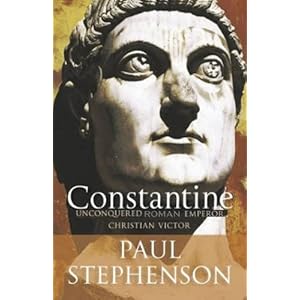
Book recommendation: Constantine – Unconquered Emperor, Christian Victor by Paul Stephenson

His Hermeneuticalness, Fr Tim Finigan, recommended this book to me.  I got it and I am glad I did.  I now recommend it to you.

As a bonus to you Kindle owners, you can get the Kindle version for only $6.19!   (UK here but for a bit more.)

The hardback is also available.  (UK here)

A blurb from the Introduction:

This study demonstrates that Constantine’s rise to power and his early actions as emperor were defined by his relationship with his troops, and consequently by his relationship with the greatest god, who would guarantee his, and hence their, victories. Constantine’s only means of retaining power in his early years was to lead his men in numerous successful campaigns and to reward them handsomely for their efforts and loyalty. This he did, distributing wealth, including thousands of coins, to his officers and troops with inscriptions declaring their loyalty to him. The emphasis on loyalty, frequently pronounced and inscribed, suggests that in his first decade of power Constantine was never entirely secure. He came close to death by mutiny within four years of his accession, when his father-in-law and rival emperor Maximian persuaded many of his troops to turn against him. Ever more and greater victories were needed, and thus he was set on the path to civil war and sole sovereignty. For this reason he led a seemingly foolhardy invasion of Italy in 312, his sights set on the capture of Rome itself.

Don’t have a Kindle yet?  What are you waiting for?

I have written about it here and UK here. Please use my link to get yours or to give them as gifts for Christmas. There is new generation of Kindle, Kindle Touch, and a new Kindle Fire with color.   The Kindle Fire is more like a tablet, like an iPad, and it has a new browser that runs on cloud technology which is apparently very fast.  I saw the new version at Best Buy.  Very nice.

A few other books I have read on my Kindle:

Patriots by James Wesley Rawles (UK here)
Demonic by Ann Coulter (UK hardback)
After America by Mark Steyn (UK hardback)
Steve Jobs by Walter Isaacson (UK here)
A More Perfect Heaven by Dava Sobel (UK here)

You can even lend books from your Kindle to another person’s Kindle.  Very cool.

Posted in REVIEWS | Tagged , ,
9 Comments

If you are what you eat…

… I’m crabby in Chinatown!

20111104-123542.jpg

20111104-123724.jpg

20111104-123810.jpg

Posted in On the road, What Fr. Z is up to | Tagged
17 Comments