
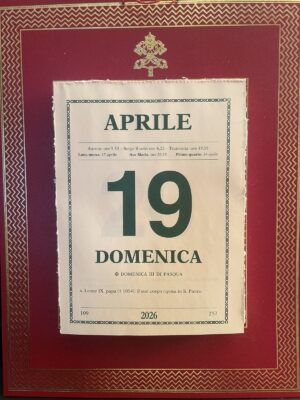
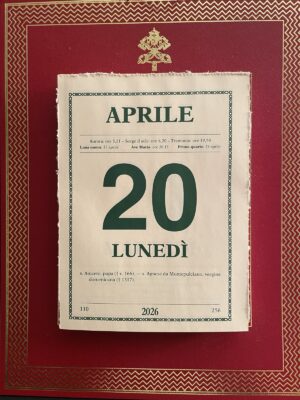
This beautiful sunny yet cool Roman day started by the sun’s rising at 06:20 and it will end at 19:59.
The Ave Maria (which you know all about now) is at 20:15 according to the Vatican curial calendar.
On this day in 1303 Boniface VIII founded the Sapienza University here in Rome, which still exists today.
On this day in 1884 Pope Leo XIII published the encyclical Humanum genus, condemning Freemasonry.
In the Novus Ordo calendar it is the feast of Pope St. Anicetus (+c. 166). In the Vetus, he was commemorated on the 17th. According to St. Irenaeus, St. Polycarp of Smyrna (a disciple of St John the Evangelist), came to Rome to discuss the date of Easter with Anicetus. They didn’t conclude anything at that time. This eventually became a big controversy. It was a massively complicated matter, still disputed today. Anicetus opposed Gnostics and priests with long hair. Really. Tradition says that Anicetus was martyred during the reign of the Emperor Lucius Verus, who is the boy in the movie Gladiator. Gladiator II is terrible, by the way.
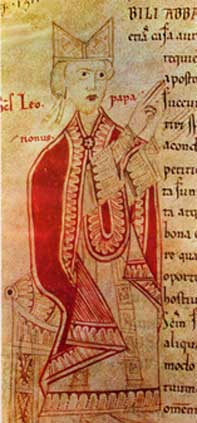 Speaking of Popes, yesterday we celebrated another saintly pontiff, St. Leo IX (+19 April 1054). He militated against simony and decreed clerical celibacy to the rank of subdeacon. As Pope he travelled all over the place, attending “walking togethers” which dealt with concrete issues, rather than dreamy bloviating. During his time as Pope, relations broke down with Constantinople. He also had a hard time with the Normans in the south and led an army against them – yes, the SAINT Pope led an army. He lost and was held captive until he recognized the Normans in Calabria and Apulia.
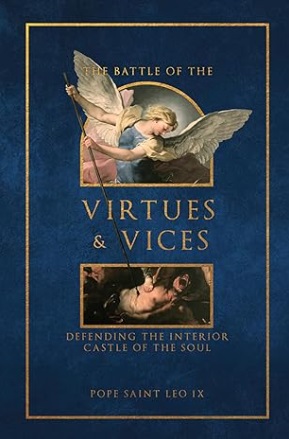
Why do I bring him up? Because yesterday was his feast day and because TAN published a work by him
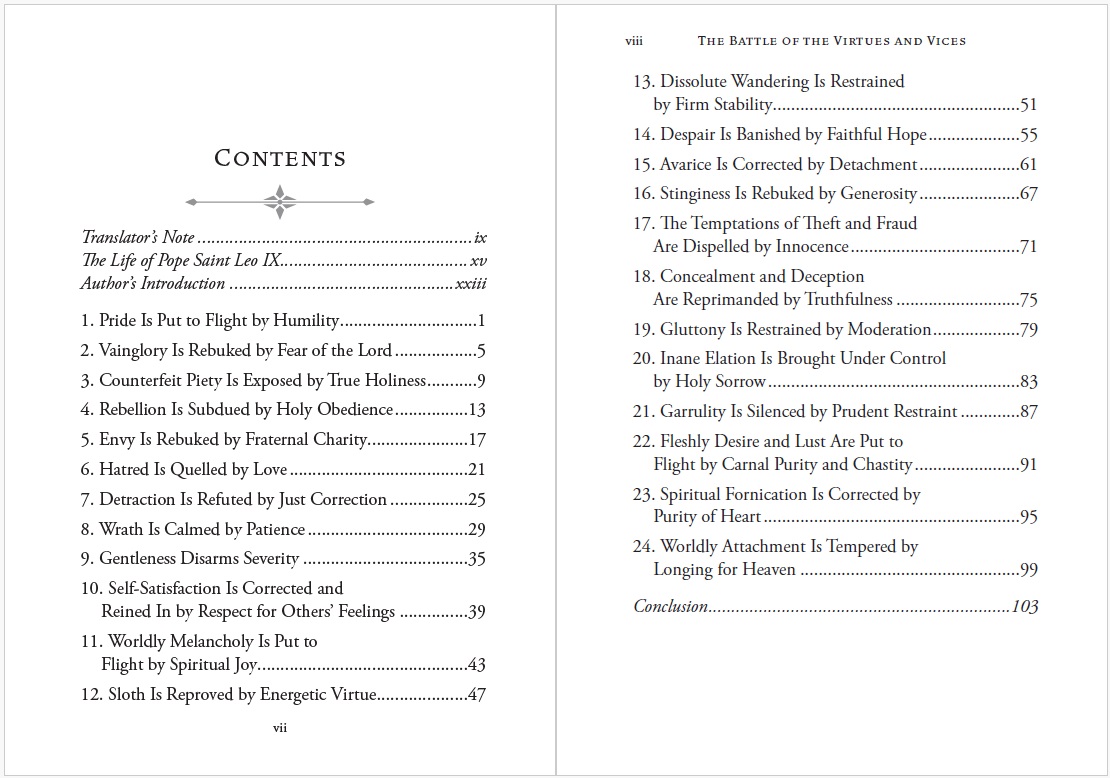
The Battle of the Virtues and Vices: Defending the Interior Castle of the Soul.
Here’s the table of contents. See if there isn’t a point in there for you. Or … maybe more than one? You can right click this for a bigger image in a new tab.
Yesterday, Sunday, I said Holy Mass for my monthly and Roman donors. Especially dear to me are my “200!”s and “100!”s. These are people who signed up for a monthly donation when I was in a really tough situation. My otherwise cold, black heart always warms a little when a notice from one of these arrives.
I’ve also in the last weeks said Masses with intentions from SH, SW, MP, VC, DM, LM, WC, SB, MF, JW, VD. I have had to say a couple Requiem Masses at the report of the death of someone close to a friend so my regular list is interrupted slightly.
Registrants welcome:
LatinMassServer
Rod
This is very cool…
NEW: Astronaut Reid Wiseman shares a video of ‘Earthset’ that was taken with his iPhone
“This is uncropped, uncut with 8x zoom which is quite comparable to the view of the human eye…” Wiseman said.
This has to be the greatest iPhone video of all time. pic.twitter.com/svkyaCW7pT
— Collin Rugg (@CollinRugg) April 20, 2026
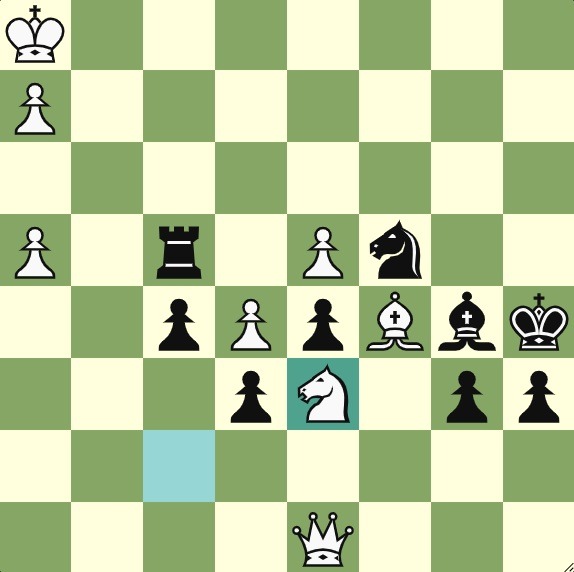
Black to move and mate in 4. (Easy.)
NB: I’ll hold comments with solutions ’till the next day so there won’t be “spoilers” for others.
Interested in learning? Try THIS.































sad to say the table of contents appears to be in invisible pixels, both on main and after right click. brave browser, which has not experienced this issue before on your site.
Thank you variously, and especially for the Pope St. Leo IX translation details, of a work I do not recall ever having heard of before! For those who would like to try the Latin – probably easiest for many of us with the help of this translation! – I see there is a pdf of Libellus Leonis pape De conflictu vitiorum atque virtutum at documentacatholicaomnia (which, however, I have not tried to download) – and a scan of it in a copy of handsome-looking 1515 edition in the Internet Archive bearing the title “[Leonis Pontificis Maximi sermones [quam] diligentissime nuperrime castigati et quantu[m] anniti ars potuit fideliter impressi]” which originally belonged to Juan de Zumárraga, first bishop of the Diocese of Mexico (where, however, a lot of text is lost in the ‘gutters’ due to the difficulty of photographing the pages).
The title has me wanting to listen to a recording of St. Hildegard of Bingen’s ‘Ordo Virtutis’ from about a century later.
Whew – how much help my Latin needs – I see too late I substituted singular for plural: ‘Ordo Virtutum’!
The audiobook price on that book is good, so I snapped it up. Thanks for the recommendation.
The thing is the saint Pope was a head-of-state with the right to declare war and presumably led a just war with (as all just wars have) a plan with a chance at victory.
That does not give other people the right to lead an unjust war without a plan that has a realistic chance of victory, particularly not if the laws of their own countries forbid them to do so without asking certain assemblies.
I guess the saint also did not threaten his enemies with civilizational extermination, coming to think of it.
Looking – so far unsuccessfully – for English translations of any early Life or Lives of Pope St. Leo IX, I learnt of both a Missa Brevis composed by Jacob de Haan in celebration of the millennium of his birth, and (linked from his French Wikipedia article) another millennial work, its description Google-Translated as “A portrait of Pope Leo IX, born in 1002 in Alsace, cousin of the Emperor, military leader, poet, and musician. […] A film in the form of an investigation” by Serge Steyer (whose work is unfamiliar to me, who am also sadly no Francophone – but I thought it perhaps worth mentioning).
Pope Julius II also led an Army against the French between arguing with Michael Angelo.