
 The Martyrologium Romanum has this entry for 7 February:
16*. Romae, beati Pii papae Noni, qui, veritatem Christi, cui ab imo adhaesit, plane proclamans, multas instituit sedes episcopales, cultum beatae Mariae Virginis promovit et Concilium OEcumenicum Vaticanum Primum ascivit.
You will notice from the photo that the effigy of the Pope has a red camauro, the cap trimmed in ermine that John XXIII and Benedict XVI used on cold days.
The vesture of Popes has shifted over the centuries. For example, they didn’t always wear white. They wore martyrial red.
There are conflicting theories about how the pope wound up garbed in white. Some think that Bl. Innocent V, pope for a few months in 1276, kept his white Dominican habit. Others think that it was Pius V, 1566-72, who kept his white Dominican habit. Either way, it seems that Dominicans were involved.
Would I like to see popes in red? No.
What I would like to see is the proper use of traditional papal garb and vestments, which demonstrates humility and shows respect for the office and God’s people.
There is, by the way, a nickname, the Red Pope, for the head of Propaganda Fidei, the Congregation for the Evangelization of Peoples. Back in the day, this was an extremely powerful position, especially because of the massive funds the head of Propaganda controlled and the territories he governed. The “red” here refers to the color of the cardinal’s garb.
However, another “Red Pope” could be the late, great Cardinal Giuseppe Siri, whom some claim was the real pope, truly the one elected in 1958. The story is that Siri was elected as Gregory XVII but because of massive resistance his election was somehow reversed and John XXIII was elected. The Siri Theory is the foundation of the claims of some sedevacantists. Other sedevacantists disputed the 1903 election of Giuseppe Sarto as Pius X. That conclave originally, or nearly so, elected Card. Mariano Rampolla del Tindaro. Back in the day, it was possible for secular powers to influence conclaves. When Rampolla was elected, or nearly so, the Card. Prince-Archbp. of Krakow exercised Franz Joseph’s, the Emperor of Austria’s, veto. One of Pius X’s first official acts was to abolish the veto right, the ius exclusivae, which was the prerogative of the Catholic monarchs of France, Spain, Austria, and the Holy Roman Emperor and exercised through a cardinal of royal blood. This veto had been used against papal candidates some dozen times during the 17th-19th centuries.
These days, there is discussion about the validity of the conclave of 2013.
Let’s just say that had Siri been elected things would have been very different, as they would have under Rampolla. Had Benedict not resigned, things would have been very different.


 Today is the feast of St. Agatha, a virgin martyr and saint of the Roman Canon.


 It often happens that when I ask you for help to find something out or explain something – BAM! – within hours, sometimes minutes – an answer arrives.
 You will find this video quite interesting. Larry Chapp interviews Bp. James Conley of Lincoln about the reform of the liturgy.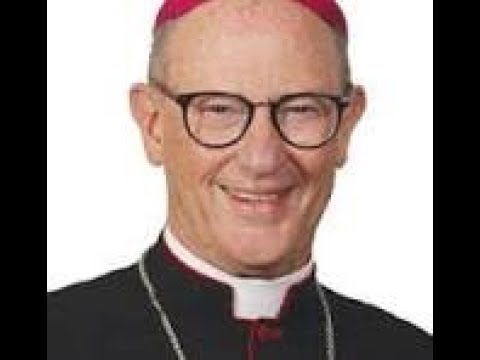

 “Days in Rome” Project – Easter 2024































