JUST TOO COOL: 20 July 1969 – MOON LANDING – on the 56th Anniversary, Leo XIV called Astronaut Buzz Aldrin – UPDATED (About Michael Collins and ROME)

I remember that night like it was yesterday.   I’d go out and look at the moon.  The echo of the broadcast and flicker of light from TV screens came from every house. Then I’d go back inside and watch more.

UPDATE:

WHOA!  I did not know this.

Posted in Just Too Cool, Look! Up in the sky! |
10 Comments

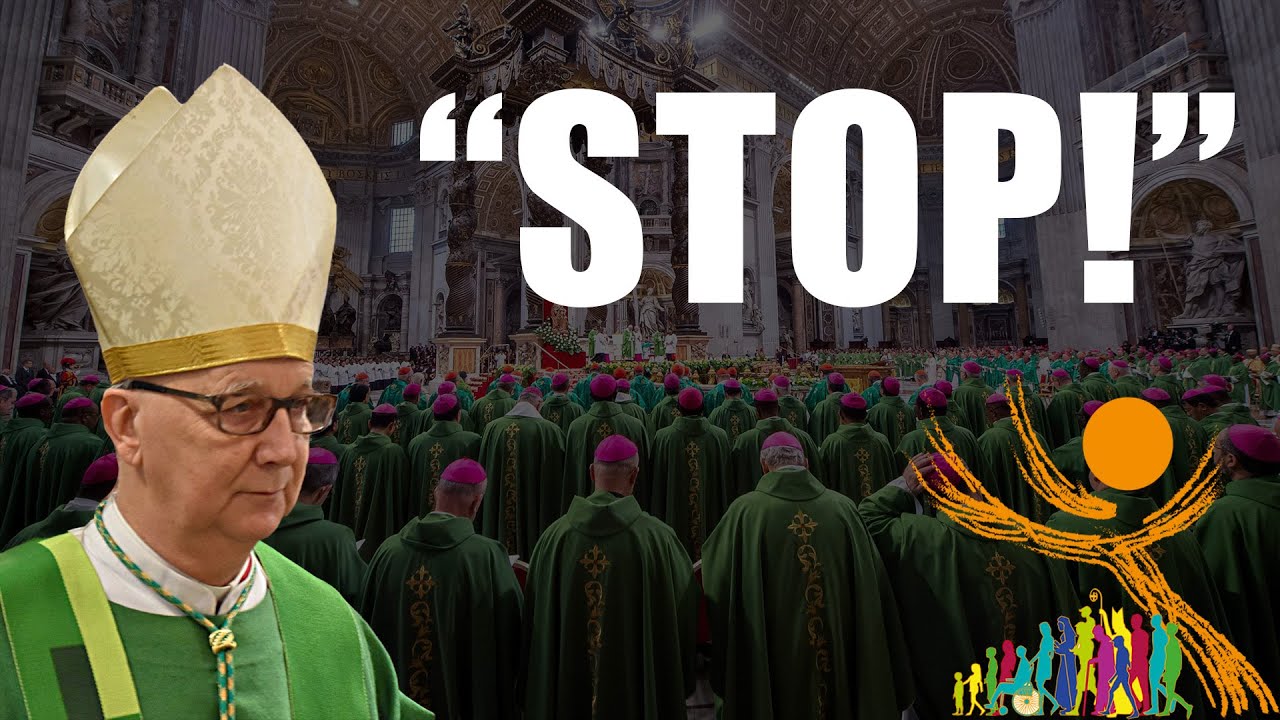
VIDEO: Swiss Bishop speaks about ongoing synodality (“walking together”)

In another post, my Daily Rome Shot, I have images from a lovely procession in the Trastevere neighborhood in Rome. I quipped there what an old Italian Bishop standing outside the Paul VI Audience Hall exclaimed when he stepped out of the blahblah of the meetings of the Italian Bishops conference.

“Meno chiacchiere… più processioni! … Less chattering … more processions!”

Reapplying and referring to the procession with the statue of Our Lady, I added:

We don’t need synodal “walking together”. We need THIS “walking together”!

I now bring to your attention a video from my friend Michael Matt who is the editor of The Remnant.   He reads a letter from a retired Swiss Bishop, Marian Eleganti, OSB about the ongoing, ever-amorphous synodaling (“walking together”).

I am right away going to disagree with His Excellency, Bp. Eleganti, who said that synodality (“walking together”) “has not awakened love for Jesus Christ in a single soul!”

Not a single soul? Surely that’s not right. I’ll bet synodality (“walking together”) has increased the love of tens of people.

Meanwhile, synodality (“walking together”) slouches along.

YouTube thumbnailYouTube icon

Bishop Eleganti will be a featured speaker at this year’s Catholic Identity Conference in Pittsburgh, PA (October 2025).

I wish that that conference were at a different time of year.  I am in Rome at that time.

Posted in SESSIUNCULA | Tagged
2 Comments

Daily Rome Shot 1395 – Roman Procession

I wish that I had had these a few days ago for the Feast of Our Lady of Mount Carmel.  The Archconfraternity of the Most Holy Trinity of the Pilgrims and Convalescents participated in the annual procession in Trastevere (Rome) with the statue of Our Lady.  Here are some images to warm your day.

Getting ready.

If I am not mistaken, this is the back entrance at Santa Cecilia and those are some of the Benedictines in that convent. Many moons ago, I had contact with them, but that’s another dusty old story.

We don’t need synodal “walking together”. We need THIS “walking together”!

“Meno chiacchiere… più processioni! … Less chattering … more processions!”

Please remember me when shopping online and use my affiliate links.  US HEREWHY?  This helps to pay for health insurance (massively hiked for this new year of surprises), utilities, groceries, etc..  At no extra cost, you provide help for which I am grateful.

In chessy news… the showdown in Las Vegas in the “Freestyle” tournament for 3rd ($100K) is between Hikaru and Magnus. Alas, Hikaru got there by defeating my guy Wesley So. Too bad. He then beat Fabiano. For his part, Carlsen had dropped a game to Pragg but came back to beat him and Arjun… 5 in a row won.

In the meantime, here’s an easy one for those who like easy ones.

White to move and win. Time yourself.  HERE

Posted in SESSIUNCULA | Tagged
1 Comment

Your Sunday Sermon Notes: 6th Sunday after Pentecost (N.O. 16th Sunday)

Too many people today are without good, strong preaching, to the detriment of all. Share the good stuff.

Was there a GOOD point made in the sermon you heard at your Mass of obligation for the this 6th Sunday after Pentecost?  16th Sunday of Ordinary Time in the Novus Ordo.

Tell about attendance especially for the Traditional Latin Mass.

Any local changes or (hopefully good) news?  I know there is a lot of BAD news.  How about some good news?

A taste of my thoughts from the other place: HERE

Latin eructo is “belch, vomit up”.  Thank you for bearing with my burpings.

Perhaps some explanation is in order.  First, in the ancient world, to belch at the table was a sign of appreciation for the food and host.  Remember the scene in the movie Ben Hur (the 1959 version) when in Sheik Ilderim’s tent Judah is prompted to burp?  Also, the verb eructo, -are is deeper than you might think.

We should take this “belching” as a metaphor to meditating on Scripture.

“How’s that again?”, you might be asking.

One way that we speak about meditating on Scripture is “to ruminate”.  Literally, rumination is what cows do when they chew their cud.  Cows and other ruminants (like giraffes) regurgitate and chew again previously swallowed food to get more nutrients out of it.  Perhaps on the analogy of being able to “ruminate” about Scripture, kosher laws permit Jews to eat ruminants.  Pigs are not ruminants, so they are not kosher.

Posted in SESSIUNCULA |
4 Comments

Sad news about a long-time reader and a WDTPRS look at the Collect of the Mass “for the sick near to death”

I received sad news.  A long time reader and commentator here, even longer from my time with The Wanderer, passed away last night.  In your kindness please pray for Charles Henry Edwards.

Henry was a key figure in fostering celebration of Holy Mass in the Vetus Ordo in Knoxville.  He would send out a newsletter to his community quoting my WDTPRS translations, of which he was a great fan.  He and his wife came to visit me once and we had a very pleasant time.  Henry donated a computer which I maintain, though it is outdated, because it has a precious database on it which I run with a virtual machine.  Henry was very kind and a gracious benefactor.

Yesterday, I receive the news from his daughter that Henry was in hospice care in his last hours.  Her mother had asked her to start cancelling Henry’s subscriptions, and so forth, which is how she happened to write.

When I had the news from Henry’s daughter, I changed my intention for the daily live-streamed Mass I was about to celebrate – Henry was on the list – and offered it for him.  I’ll say a Requiem for him tomorrow.

Yesterday, I added the orations from the Votive Mass “pro infirmo proximo morti… for a sick person close to death”.

The prayers are staggeringly beautiful.     Like to them are the prayers from the Votive “ad postulandam gratiam bene moriendi… to beg for the grace of dying well”.

Henry would have wanted me to have a look at the

COLLECT:

Omnipotens et misericors Deus, qui humano generi et salutis remedia, et vitae aeternae munera contulisti: respice propitius famulum tuum infirmitate corpore laborantem, et animam refove, quam creasti; ut, in hora exitus illius, absque peccati macula tibi, Creatori suo per manus sanctorum Angelorum repraesentari mereantur.

This is pretty straight forward.  You see the et… et… construction.  Refoveo is “to warm, cherish again, revive”.

Almighty and merciful God, who conferred upon the human race both the remedies of salvation and the gifts of eternal life: propitiously regard your servant suffering from bodily infirmity and restore his souls which You created; so that, in the hour of his passing, he will merit to be brought by the hands of Holy Angels before his Creator without the stain of sin.

Note that even as the body is giving out, the soul is to be stirred up, warmed up, as the breath of the Holy Spirit can revive and quicken an ember or coal into greater heat and light.

What is gift is baptism and all the sacraments.  Sine quibus non.

In a sense, we are all of us – right now – sick and near to death.

Death could come at any moment to any one of us, sick or in the peak of life.  In the great Litany of Saints the most important petition, in my opinion, is when we ask God to preserve us from a “sudden and unprovided death”, that is, without access to the last sacraments and Apostolic Pardon.  This is a constant concern of mine, since I live alone.  This is why I urge you to

GO TO CONFESSION!

We are going to die some day and go before the Just Judge to render an account.    This is why I sometimes say that the way that Mass is celebrated should help us all get ready for death.

Put bluntly, we go to Mass because we are going to die.

That doesn’t mean moping around or being lugubrious.  It does, however, suggest a certain gravitas, decorum, the need for prayers that reflect the reality of our spiritual condition along with expressions of the Four Last Things.  Not only prayers, but also architecture… music… vestments… style of movement and gesture… everything.  

If Mass does not have those elements which help your self-reflection and preparation for death… then… something important is missing.

Having Votive Masses explicitly for the sick as well as for the grace of dying well is a real gift from the Church.

It is good to drill into the orations, so carefully chosen by the Church over the centuries.  Henry liked to do that.

Posted in ACTION ITEM!, WDTPRS |
4 Comments

WDTPRS – 6th Sunday after Pentecost: “piety” as “duty/mercy”

Please flip open your own trusty copy of the Liber Sacramentorum Romanae Aeclesiae edited by Leo Cunibert Mohlberg, OSB (in other words the Gelasian Sacramentary and yes, it is “Aeclesiae”.).

You will find Sunday’s ancient Collect in the second group of prayers for Sundays.  This prayer survived the scissor and paste-pot wielding liturgical experts who, under the aegis of the late Fr. Annibale Bugnini, revised and shuffled the ancient prayers for the Novus Ordo.

With only slight changes, this prayer is still heard today on the 22nd Sunday of Ordinary Time.

COLLECT – (1962 Missale Romanum):

Deus virtutum, cuius est totum quod est optimum: insere pectoribus nostris amorem tui nominis, et praesta in nobis religionis augmentum; ut, quae sunt bona, nutrias, ac pietatis studio, quae sunt nutrita, custodias.

In the 2002 Roman Missal it appears this way (variations underscored):

Deus virtutum, cuius est totum quod est optimum, insere pectoribus nostris tui nominis amorem, et praesta, ut in nobis, religionis augmento, quae sunt bona nutrias, ac, vigilanti studio, quae nutrita custodias.

But in the ancient Gelasian it is like this:

Deus uirtutum, cuius est totum quod est optimum, insere pectoribus nostris amorem tui nominis et praesta, ut et nobis relegionis augmentum quae sunt bona nutrias ac uigilantia studium quaesomus nutrita custodias.

Yes, quaesomus. However, the apparatus criticus at the bottom of the page, where variations in different manuscripts are listed, also suggests vigilanti studio.

Thus, the Novus Ordo redactors attempted to restore the prayer in some respects to the version pre-dating by many centuries the “Tridentine” Missale Romanum, making also changes in style.  But they changed the conceptual grounding of the Collect by removing pietas.

Your trusty copy of the Lewis & Short Dictionary informs you that insero means “to sow, plant in, ingraft, implant.”  Virtutum is genitive plural of virtus, “manliness; strength, vigor; bravery, courage; aptness, capacity; power” and so forth.  Virtutum translates the Hebrew tsaba’, “that which goes forth, an army, war, a host.”

Tsaba’ is applied to hosts of angels, of soldiers, and the sun, moon and stars.   In the Sanctus of Holy Mass and in the great hymn called the Te Deum we echo the myriads of saints and angels bowed before God’s throne in the celestial liturgy: “Holy  Holy  Holy  LORD GOD SABAOTH…. God of “heavenly hosts”, or as the lame-duck ICEL version puts it, God “of power and might”.  “O mighty God of hosts” is a fair attempt at what Deus virtutum is saying.   We find in old translations of the Latin Vulgate Psalter that this address for God is rendered as: “God of hosts.”

The Holy See’s document which laid down the norms for liturgical translation, Liturgiam authenticam 51, says,

“deficiency in translating the varying forms of addressing God, such as Domine, Deus, Omnipotens aeterne Deus, Pater, and so forth, as well as the various words expressing supplication, may render the translation monotonous and obscure the rich and beautiful way in which the relationship between the faithful and God is expressed in the Latin text.”

We must drill into these tougher phrases and not simply gloss over them.

This is one reason why the progressives and the tellers of the Big Lie attacked the translation norms when they were released.  They are still grousing about them.  In some places there is backsliding.

It’s all part of their vision for the Church: its reduction to an NGO.

OBSOLETE ICEL (1973):

Almighty God, every good thing comes from you. Fill our hearts with love for you, increase our faith, and by your constant care protect the good you have given us.

LITERAL TRANSLATION:

O mighty God of hosts, of whom is the entirety of what is perfect: graft the love of Your Name into our hearts, and grant in us an increase of religion; so that You may nourish the things which are good and, by zeal for dutifulness, guard what has been nourished.

Here are images having to do with armies and also with vine tending, military and agricultural. On the one hand we have the God of hosts who guards the good things we have.  On the other, God grafts love into us and then nourishes it into growth.

Notice that we pray to God for an increase in “religion.”

Ancient Roman religio is a complicated term.  The word derives from the root lig– , “to bind”, hence, religio means sometimes the same as obligatio.  As our obliging L&S explains, Romans understood reverence for God (or their gods), the fear of God, “connected with a careful pondering of divine things; piety, religion, both pure inward piety and that which is manifested in religious rites and ceremonies; hence the rites and ceremonies, as well as the entire system of religion and worship, the res divinae or sacrae, were frequently called religio or religiones.”

Note the reference to “piety”.  This description also resonates closely with our Catholic axiom that the “lex orandi lex credendi… law of praying is the law of believing”, if we believe certain things inwardly, we are duty bound to express them outwardly in worship.

St. Augustine of Hippo (+430) in Book X of City of God states that pietas concerns honor and service to God and that it does not much differ from religio.

The Roman sense of pietas is especially the honor we are bound to show toward our parents, especially our father, but by extension to children and the one’s fatherland, patria.  In liturgical language, when pietas is applied to us humans it is the due respect we show supremely to God the Father, but also to His children in the foreshadowing of our true heavenly patria, the Church.  When in liturgical texts we talk of the pietas of God, we are talking about His mercy.  God cannot be under obligations, as we can be, but He has made us promises.  He will be true.

So, in our prayer is a strong conceptual link between pietas and religio.  It is fair to take religio to be the virtue of religion.

The Catechism of the Catholic Church defines religion in the glossary toward the back of the newer English edition, “Religion: a set of beliefs and practices followed by those committed to the service and worship of God. The first commandment requires us to believe in God, to worship and serve him, as the first duty of the virtue of religion. (Cf. also CCC 2084 and 2135)   Religion is the virtue by which men exhibit due worship and reverence to God (St. Thomas Aquinas, STh, 2-2a, 81, 1) as the creator and supreme ruler of all things, and to acknowledge dependence on God by rendering Him a due and fitting worship both interiorly (e.g. by acts of devotion, reverence, thanksgiving, etc.) and exteriorly (e.g., external reverence, liturgical acts, etc.).  The virtue of religion can be sinned against by idolatry, superstitions, sacrilege, blasphemy, etc.”

In sum, we must recognize God and act accordingly both inwardly and outwardly.  When that comes easily for us and is habitual, then we have the virtue of religion.  A virtue is a habit.  If it is hard to do something virtuous (be prudent, be temperate, be just, etc.) you don’t yet have the virtue.

Notice also that this petition of the Collect directly follows from the desire that God graft love of His Holy Name into our hearts.  Our thought in this prayer moves from the title given to God by the angels and saints in heaven in their unending liturgy: “HOLY”, they say again and again.  Then we ask for love of the Holy Name of God.  Then we want all good things nourished in us by God increasing in us the virtue of religion, the proper interior and exterior action that flows from recognizing who God truly is for us.

I find interesting the choice to change the phrase with pietatis in the “Tridentine” version of the Collect to vigilianti studio.

The 1962 version says, “…by means of zeal for dutifulness/mercy, you may guard the things which have been nourished.”  The 1970 edition says, “by means of vigilant zeal.”  We should also decide if the prayer is talking about God’s zeal or about our zeal, resulting from God’s increase of our religion.  From the Latin it is not entirely clear whose zeal it is.

Certainly in all ages and everywhere the powers of hell attack the Christian and attempt to pervert his soul.

It is always necessary to attend to one’s soul dutifully, striving to acquire and to practice the virtue of religion.

I get a somewhat greater sense of urgency in “vigilance” than I do from “duty”.

Consider the image of the soldier at a sentry post.

In peacetime he carries out his duty and is vigilant.  In wartime he is intensely vigilant.

Think of 1 Peter 5: 8-9, so long the chapter for every night at Compline in the Roman Breviary:

“Be sober and vigilant (vigilate): for your adversary the devil is going around like a roaring lion seeking whom he might devour: whom you must resist, strong in the faith.  But you, O Lord, have mercy (miserere) on us.”


Posted in WDTPRS |
2 Comments

Daily Rome Shot 1394

Welcome Registrant:

IBELIEVE


Please remember me when shopping online and use my affiliate links.  US HEREWHY?  This helps to pay for health insurance (massively hiked for this new year of surprises), utilities, groceries, etc..  At no extra cost, you provide help for which I am grateful.


In chessy news, I have not been closely following the “Freestyle” tournament in Las Vega

s. I looked today at what is going on. Alas, the unlikable Hans Neimann has been doing well and now faces Levon Aronian. In the lower bracket I see my guy Wesley So defeated Sam Sevian, Nodirbek and now faces Magnus.

Black to move and mate in 4.  HERE

Benedictine monks… Barroux, France (wine)… Norcia, Italy (beer)…

Posted in SESSIUNCULA |
4 Comments

A quick (I hope) fundraiser – UPDATED

UPDATE 12:15 – 21 July 25:

I am amazed and perpetually grateful for your help.  Thank you.

Thanks to…

DC, TD, RD, JW, AN, MMM, LD,EB, JS, D&P, TMcN, SN, SA, JF, VF, MF, TJG, JL, JPM, DE, ACW,  MW, JPC, CB, WH, CS

DONORS! Please notify me if you donate and you don’t get a note from me.  Remember, I have to have your email in order to write to you.

_____

Originally Published on: Jul 19, 2025 at 11:10

Dear readers, I am raising money to defray my travel to the Shrine of Our Lady of Guadalupe in Wisconsin for Card. Burke’s annual canon law conference.

I will have fundraiser later in August or early September for time in Rome (last part of Sept-November) and then in November for Christmas to the end of the year (primarily to deal with apartment issues).

This fundraiser is for airfare and car rental and my hotel(s).

SHEESH! CAR RENTAL! Holy cow. I saw really cheap rates but then read review of the companies. NO WAY. Not worth the risk.

The usual ways of donating are available.  Some of you know them already.

  • Zelle, through your US bank, works best.  Use my email if you have it. Drop me a note HERE   PLEASE use this if you can!  Add a note “Conference” in the “memo” and your email.
  • For international donations there is a service called WISE which is very good and has the lowest fees and best conversion rate I’ve seen.  I use this for my rent in Rome. Try WISE. HERE
  • Venmo is an option, also. @John-Zuhlsdorf  Drop me a note HERE  Or use this QR code…
  • PayPal takes a service fee percentage.  But it works.
    Donate with PayPal

Dear readers, making appeals like this isn’t pleasant for me.  What is consoling is the kindness you show.  Above all I ask for your prayers, in earnest, for a particular intention I have and for my mother.


Posted in SESSIUNCULA |
Comments Off on A quick (I hope) fundraiser – UPDATED

Daily Rome Shot 1393

And now for something more amusing.

This is GREAT…. these are the Dominican Sisters who make the great soaps and other things. Now cheese? I hope so!

Posted in SESSIUNCULA |
4 Comments

Every BISHOP! Every VOCATION DIRECTOR!

GREAT CAESAR’S GHOST!!!

This is GOLD.  Let this be your examination of conscience, pals. Fr. McTeigue rips the mask off the vocations crisis.

What (most of you) are doing… gotta change.

YouTube thumbnailYouTube icon

I want lots of comments here. I want you to share this around as much as possible.

“We would be the Church Militant once again.”

Posted in "How To..." - Practical Notes, Priests and Priesthood, Seminarians and Seminaries, The future and our choices |
27 Comments