
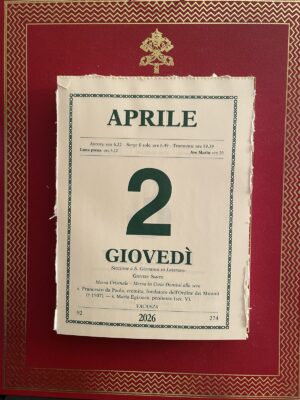
 On this Holy Thursday the Roman sun arose at 06:49.
The tramonta will be at 19:39.
Listen for the Ave Maria Bell at 20:00… you won’t hear it… except at The Parish™ where it rings at the more technically accurate time rather than merely within a 15 minute cycle.
The Ave Maria Bell is a relic of time calculation from when accurate clocks were not simply everywhere. Also, the clocks were different than now. The Ave Maria sounded a single bell struck 3 times, then 4 times, 5 times, and then 1 time.
The “Ave Maria” indicates the change of the religious day from day to night. It was a way of calculating the day using a 6-hour clock that the Church developed in the 13th c.. the 6-hour dominated until Napoleon imposed the 12-hour clock (which predominates today). If, when walking about in Rome and if you are in the know, you will spot old 6-hour day clocks.
I can give a more detailed explanation another day.
CLICK
Please remember me when shopping online and use my affiliate links. US HERE – UK HERE WHY? This helps to pay for health insurance (massively hiked for this new year of surprises), utilities, groceries, etc.. At no extra cost, you provide help for which I am grateful.

Now that Artemis II has launched we have 10 days to get everyone on Earth a Planet of the Apes costume so we can do something hilarious when the astronauts return ? pic.twitter.com/64jbCUnRkz
— Spaceballs The X Account (@Grunt2A) April 1, 2026
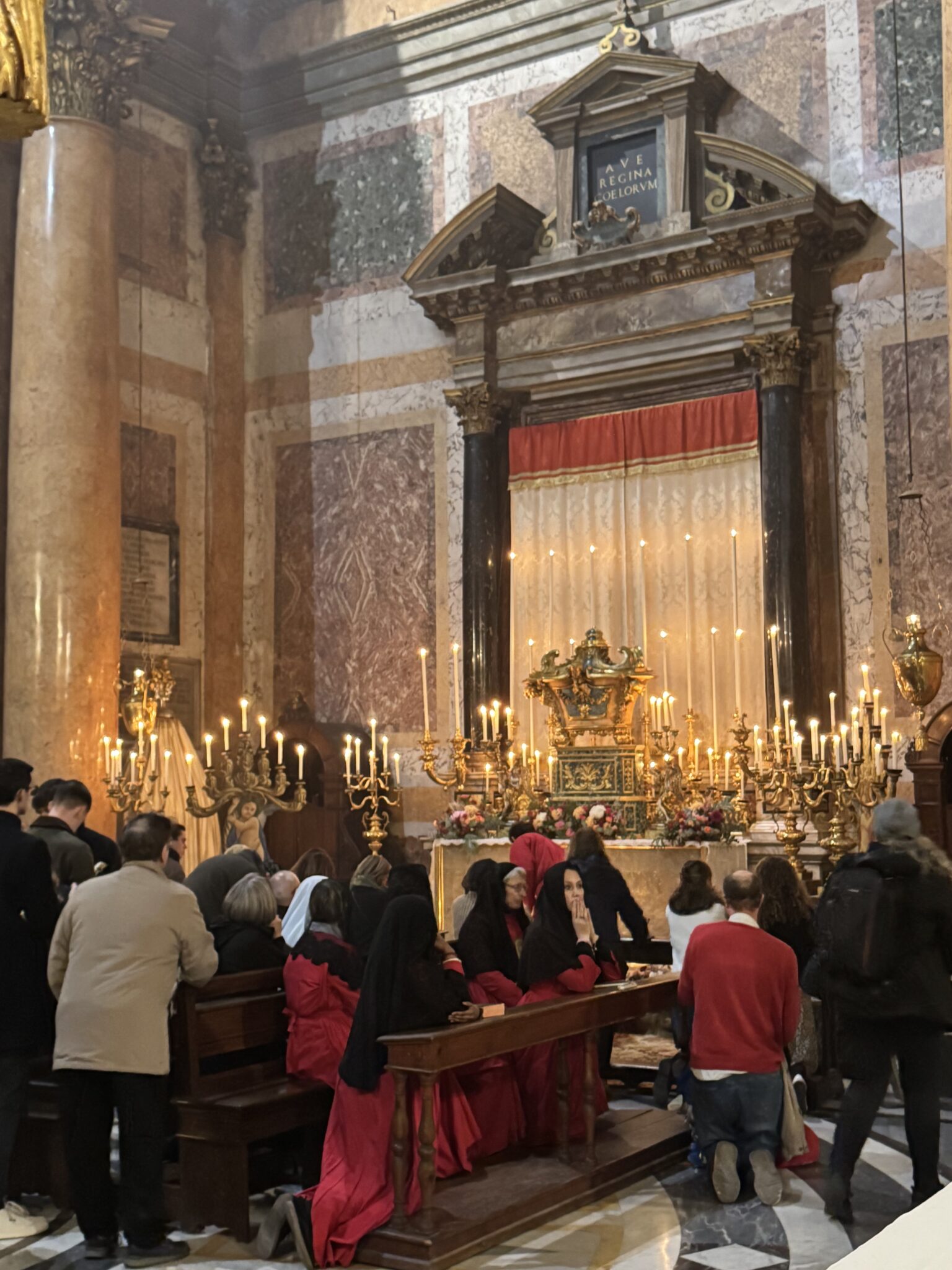
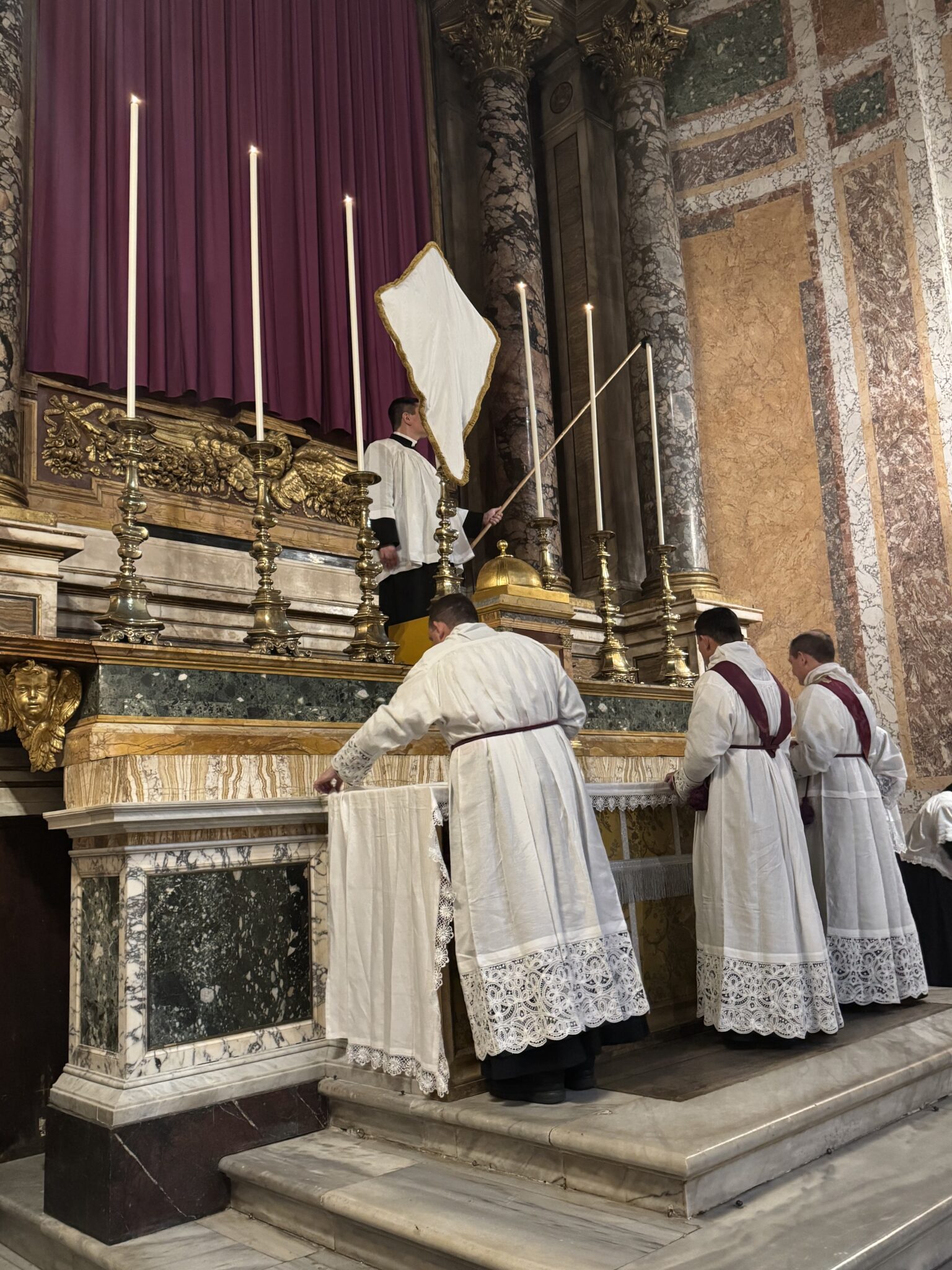
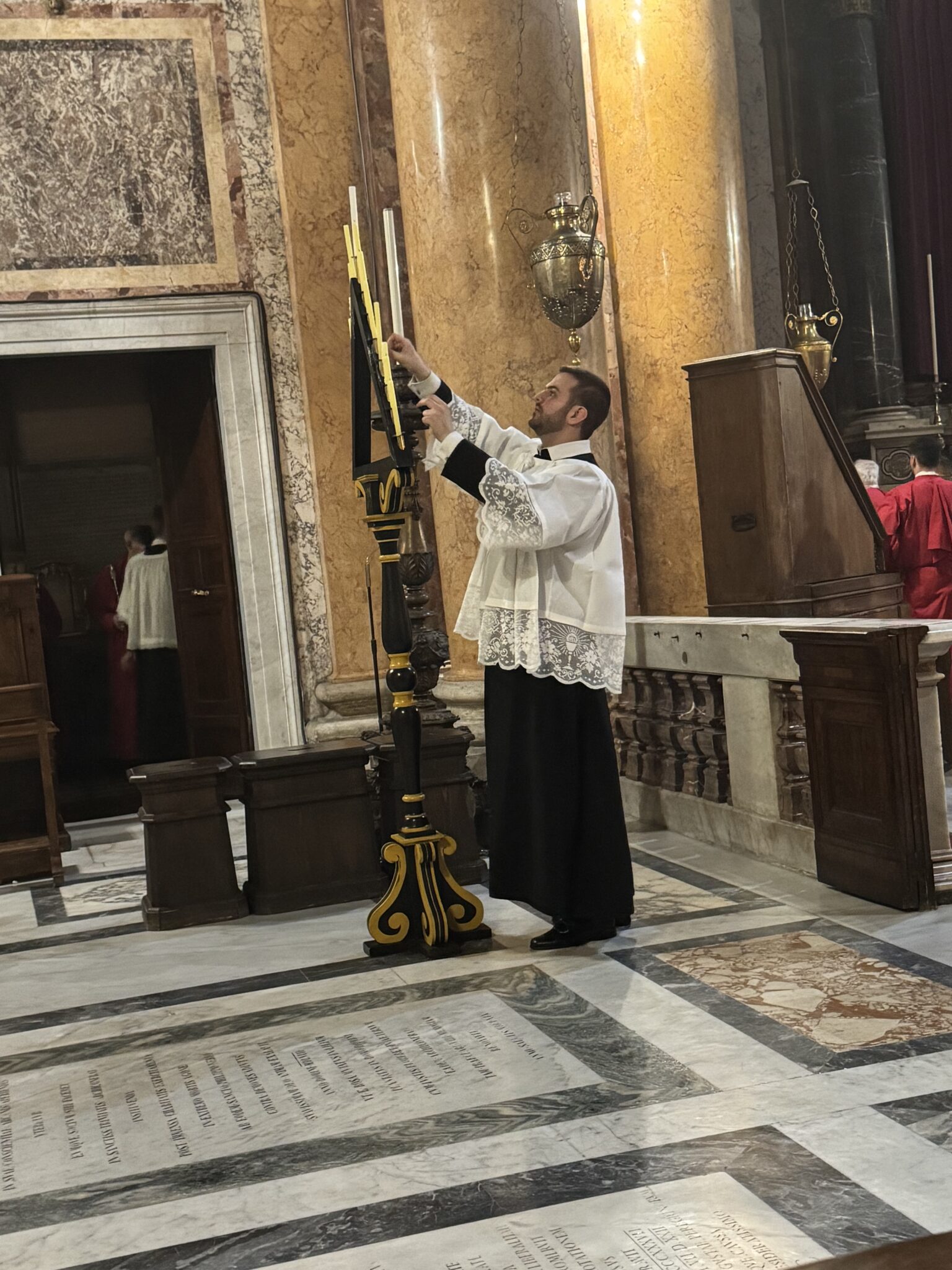
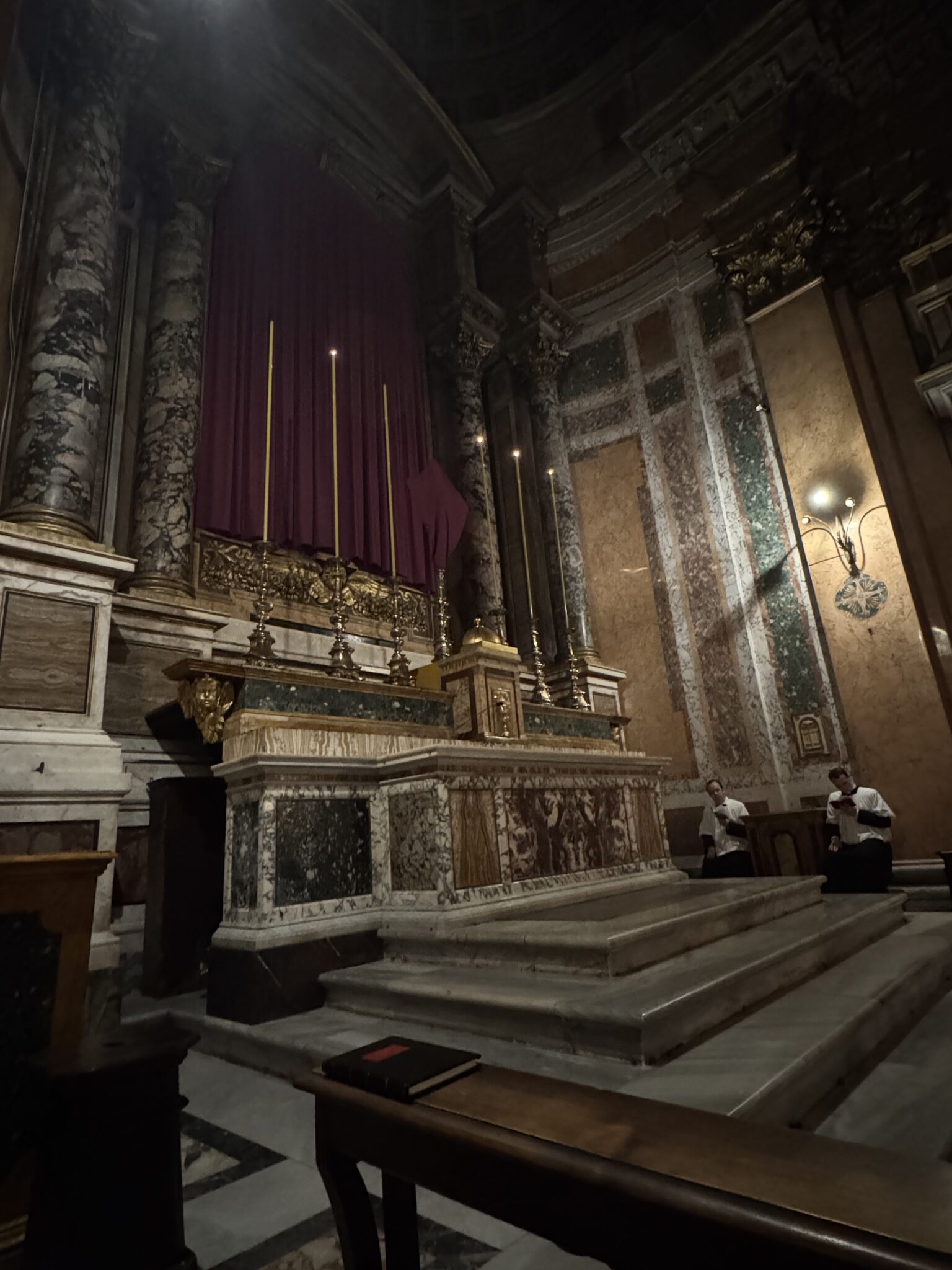
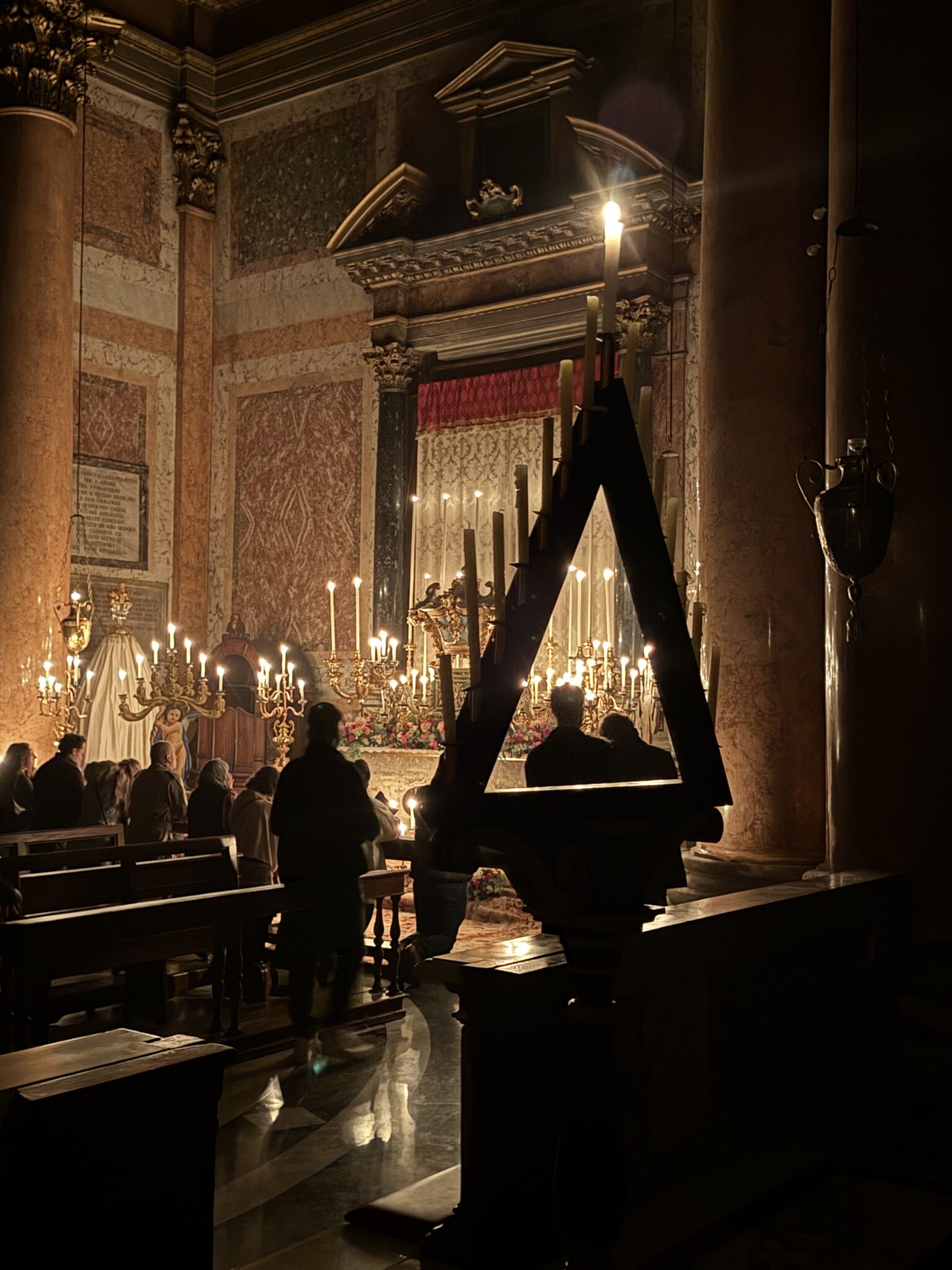
A few pics from Holy Thursday. I have been pretty busy and focused. I’ll wait for more pics from the “pro” who is around… if I ever get the link!
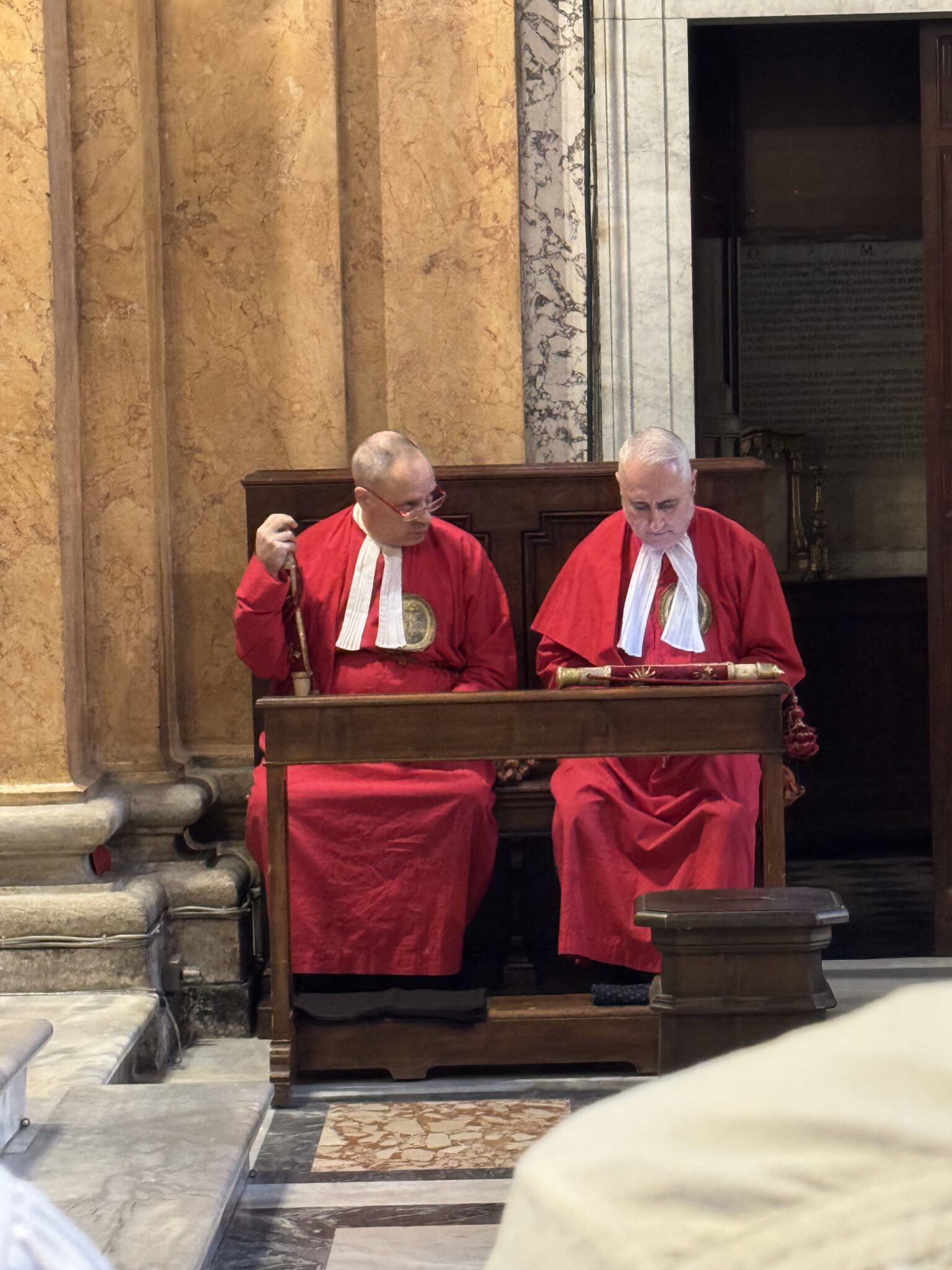
The “Guardiani” of the Archconfraternity sit with the clergy in the sanctuary for great feasts.
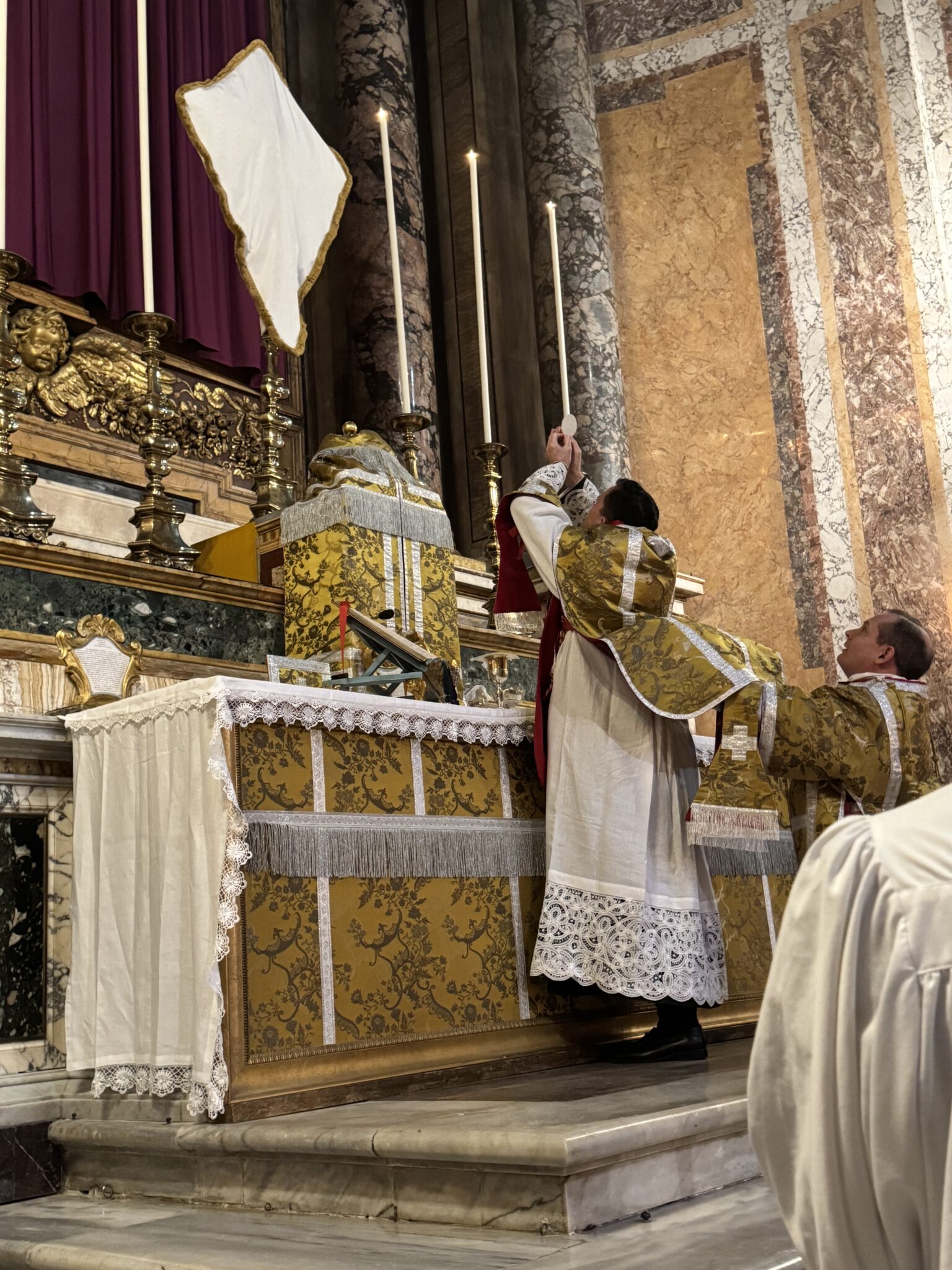
Use of a housling cloth.
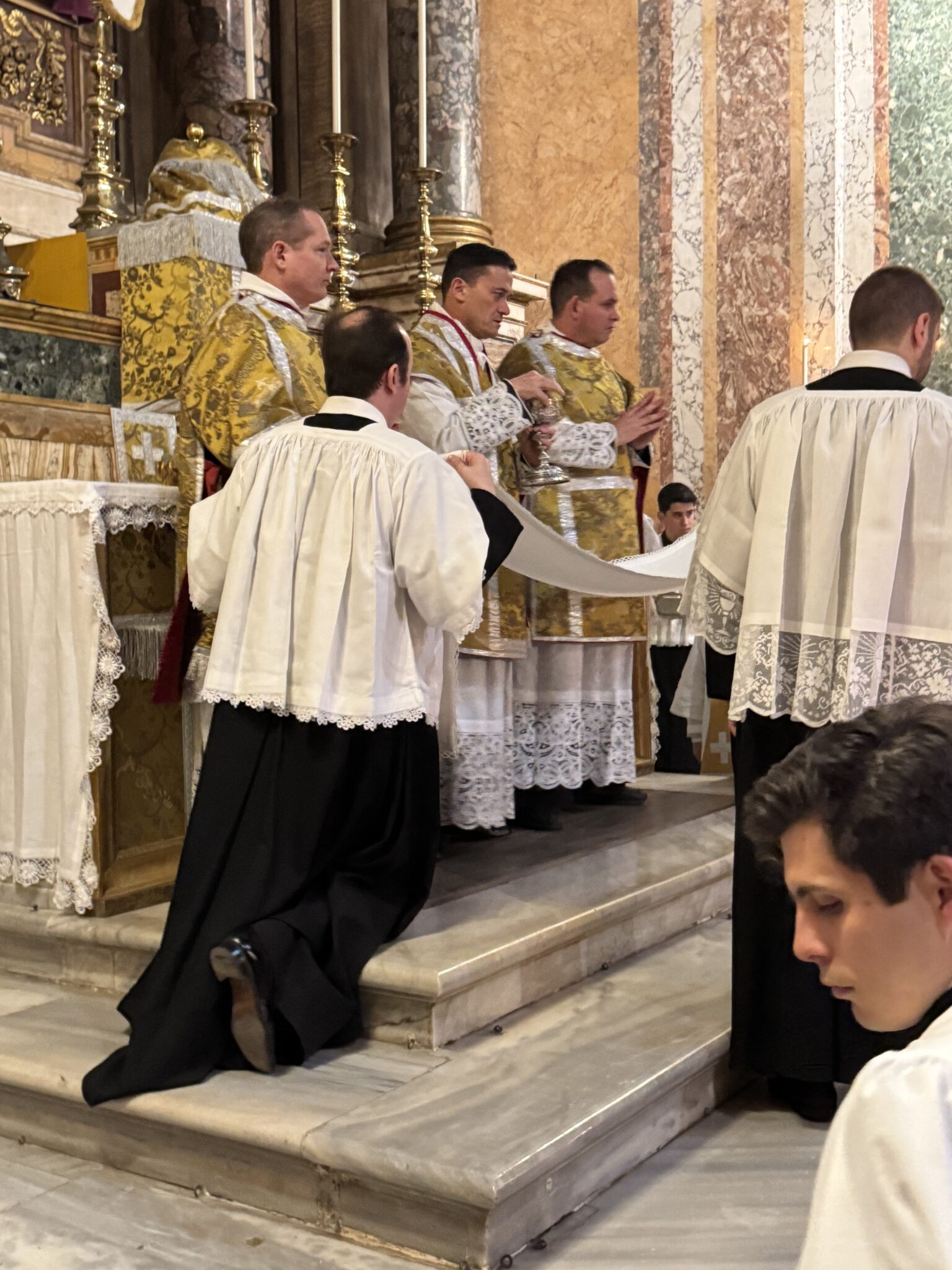
Getting ready for Tenebrae.































Since I have been so fascinated by the stars and planets and the cosmos in general lately, as well as this hobby cross-pollinating with my love of calendars of all types, I’ve also taken an interest in time-reckoning devices, especially the venerable sundial. Particularly, of course, the Vatican Obelisk which serves as the gnomon to a colossal sundial itself, but also small-scale ones.
There is a very nice little ordinary sundial installed in a public park near our library and museum. I learned a few things (thank you, MS Copilot) about how to read it properly. In an interesting coincidence, the other day as I approached it, another young Black fellow was also marveling at it, and saying how amazing it was, that people told time this way, without having phones or watches at the time.
Anyway I digress: my main point was to be this: I discovered that more archaic sundials, especially “vertical” ones which are mounted on the walls of buildings, are basically laid out in the same way as scallop shells. And this geometric similarity was surely noticed, and even expounded upon, through the ages. I told my father this and he readily agreed.
So the “pilgrimage” symbolism of the scallop shell, and its use in solemn baptisms to carry the water, and its ubiquity along pilgrim routes like the Camino has a deeper dimension, that of time itself. The seasonal and daily cycles of the Sun are projected onto sundials for us to read, and likewise, our own lives are earthly pilgrimages, journeys through time and space.
Now it may seem quite out of season, so I will not go deeply into my research on the so-called “Star of Bethlehem”, but I will point out, this weekend, that this early springtime would be exactly the season when the Magi “saw His star at its rising” [ascending to zenith at the summer solstice] and also, about four weeks after March 25th would be, in ancient times, when the stars in Orion’s Belt lined up and pointed directly at the Sun during daylight hours (that phenomenon being invisible to anyone except expert astrologers). 28-30 days in the lunar cycle would be just the right amount of time for… confirmation of a Savior, shall we say?
I really enjoy looking at your photos Fr.Z!!