ASK FATHER: Validity of absolution and reception of Communion in the state of grace

In light of several missives I’ve received – probably because of news about a recent confusing document – I reiterate hereunder what the Church holds to be true about the Sacrament of Penance, or Reconciliation.

From Ott’s Fundamentals of Catholic Dogma with my emphases:

§ 19. The Recipient of the Sacrament of Penance

The Sacrament of Penance can be received by any baptised person, who, after Baptism, has committed a grievous or a venial sin. (De fide.) D 911, 917.

According to the sententia communis the three acts of contrition, confession of sins and satisfaction, which form the matter of the Sacrament, are necessary for the valid reception of the Sacrament of Penance. For worthy reception the disposition of contrition is necessary in addition to faith. As this is an essential constituent part of the matter, worthy reception coincides with the valid reception.

Contrition is a necessary, constituent part of the Sacrament.  Contrition consists of three acts of the will: grief of soul, detestation, intention.  The intention of sinning no more is an obvious part of true sorrow for having sinned.   If there is no intention of amendment of life there is no true contrition.  In the absence of that intention, the sacrament absolution is not valid because the person is not disposed to receive it.

Contrition can be more perfect (sorrow for sins because of love of God), or less perfect (sorrow for sins because of fear of Hell).   Either of these are sufficient for valid reception of absolution.    When contrition is less perfect, it is often called attrition.

Perfect contrition bestows the grace of justification on the mortal sinner even before the actual reception of the Sacrament of Penance.  However, the extra-sacramental justification is effected by perfect sorrow only when it is associated with the desire for the Sacrament. (De fide.)   Again, there must be detestation of sin and the intention of amendment.

Moreover, the Church’s power to forgive sins extends to all sin without exception. (De fide.)  This means that there is no sin that we little mortals can commit that is so bad that God with His infinite power cannot forgive.  The Church’s ministers of this Sacrament (bishops and priests with faculties) absolve with Christ’s own power.

HIS DICTIS

A Catholic who is properly disposed can receive Holy Communion.  We are body and soul.  We are disposed in body by the Eucharistic fast (though certain circumstances mitigate this obligation).  We are disposed in soul by being in the state of grace (knowing you are not in the state of grace means no Communion).  Improper reception of Holy Communion, knowing and willed, is the sin of sacrilege.  It is very grave because the Eucharist is the most sacred of all possible things, the Body, Blood, Soul and Divinity of Christ.

There is no greater gift than the opportunity to receive Communion in the state of grace.

Hence, we see the necessary connection between the Sacrament of Penance and any hope for a Eucharistic Renewal.  Moreover, we understand that any Catholic, regardless of past sins and present state of life, can receive Communion with the sole caveat that care must be take to avoid any scandal or confusion.

With these few basic principles pretty much every “what if…” can be resolved without too much effort.

Examine your consciences and GO TO CONFESSION.

Posted in ASK FATHER Question Box, Hard-Identity Catholicism, SESSIUNCULA, The Drill | Tagged ,
4 Comments

WDTPRS – “Gaudete” 3rd Sunday of Advent: All the orations!

This Sunday’s nickname, “Gaudete” means “Rejoice!”  Gaudete, an imperative of gaudeo and the first word of the Introit chant, sets the theme in the Novus Ordo and the older, Traditional Mass: joy.

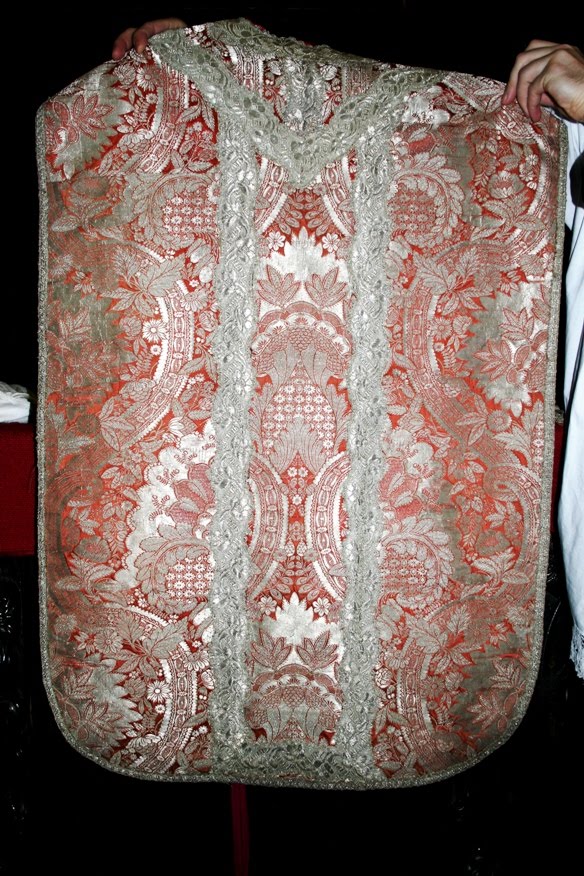
Advent is not strictly a penitential season the way Lent is.  Since Advent is about Lord’s Second Coming, not just His joyful First at Bethlehem, we also prepare through penance, joyful penance, or maybe penitential joy.  We sing Alleluia but not the Gloria.  During Advent flowers and ornaments are put aside and musical instruments are not to be used, except organ to sustain congregational singing… except for today, when the discipline is relaxed.  Gaudete parallels Laetare Sunday in Lent (which also means “Rejoice!”). Therefore, today is the only other Sunday we have rose (rosacea) colored vestments.

Let’s move along to our prayers.

COLLECT (1962MR):

Aurem tuam, quaesumus, Domine, precibus nostris accommoda:
et mentis nostrae tenebras, gratia tuae visitationis illustra.

The multi-volume Corpus orationum says this prayer was, with variations, in numerous ancient manuscripts.  The mickle Lewis & Short Dictionary says accommodo means “to fit or adapt one thing to another, to lay, put, or hang on”.  In English “accommodations” are a place suited to our living needs.  An “accommodating” person adjusts his world to suit our exigencies.  In relation to property accommodo means: “to lend it to one for use”.  In Classical Latin it is found, as in today’s prayer, with “ears”.  Think of Marc Antony crying out in Shakespeare’s Julius Caesar (III,ii) , “Friends, Romans, countrymen, lend me your ears”.  Mens means “the conscience” as well as “a plan, purpose, design, intention”.  Mens points to our heart, mind and soul.

LITERAL VERSION:

O Lord, lend your ear to our prayers, we beseech you, and by the grace of your visitation, illuminate the shadows of our mind.

God is infinite.  Yet it is possible for us to call on a loving God to condescend and adapt to our needs.  Our prayers, which our own for our benefit, are intricately bound with God’s eternal self-knowledge, plan and providence.  In the case of God “hearing” us, He knows what we want better than we know it ourselves.  Consider also that the eternal Word, uttered from before time, is in our prayers and good words and deeds, echoing back to the Father.  If we are images of God, especially in our mens, God should be able to hear and recognize Himself in us.  Our neighbor should look at us and hear us and see God reflected.

A second image in the prayer is from the contrast of illumination and darkness.  Christ, the light to our darkness, moral and intellectual, is coming.  With grace He adapts our minds and hearts to receive what is necessary for salvation.  He adapts to us, in His incarnation.  He adapts us to Him by grace.
SECRET (1962MR):

Devotionis nostrae tibi, quaesumus, Domine, hostia iugiter immoletur: quae et sacri peragat instituta mysterii, et salutare tuum in nobis mirabiliter operetur.

This prayer is in the ancient Gelasian among Advent prayers and in the Veronese Sacramentary during September for the “fast of the seventh month” (Latin septem “seven”).  It survived the post-Conciliar reform, and is in the Novus Ordo with potenter for the older mirabiliter.

Iugiter is an interesting adverb.   A iugum is a “yoke”, which harnesses oxen to a plow.  The iugum was the symbol of defeat.  Romans would force the vanquished to pass underneath to symbolize that they had been subjugated.  Our present iugiter means “always” or “continuously”, since by it actions are “yoked” together, one after another.

Immolo means “to sprinkle a victim with sacrificial meal” (as in grain) and also “to bring as an offering, to offer, sacrifice, immolate.”  Perago means essentially, “to pass through” and is construed as “to thrust through, pierce through, transfix” and hence “to slay.”  Also it means “to carry through, go through with, execute, finish, accomplish, complete.”  The Latin liturgical dictionary Blaise/Dumas says perago suggests continuous action.  Operor is “to work, have effect, be effectual, to be active, to operate.”

LITERAL TRANSLATION:

We now beg, O Lord, let there be offered up to You continuously the sacrificial victim of our devotion, which may both carry through the actions of the sacred mystery that was instituted, and wondrously effect for us Your salvation.

Do not forget this, O Catholic reader.  What does “wondrously effect for us Your salvation” really mean, if we do not as a consequence embody that effect, echo these words and sacred actions in our daily lives and works of mercy?  The Communion Antiphon drives this home.  This Sunday we hear Isaiah 35:4: “Dicite pusillanimes: confortamini et nolite timere…  Say to those who are of a fearful heart, ‘Be strong, fear not! Behold, your God will come with vengeance, with the recompense of God. He will come and save you.’”

This is meant not for us to hear and rejoice in, but also to hear and act upon.

We will all be called to account for how we treated the Lord’s gifts, how we shared them … or not.  Will you participate and Mass and then not attend to the salvation of others?  St. Basil “the Great” of Caesarea (+379), preaching about the obligation of Advent almsgiving said:

“The command is clear: the hungry person is dying now, the naked person is freezing now, the person in debt is beaten now – and you want to wait until tomorrow?”

After the Antiphon the priest intones today’s…

POSTCOMMUNIO (1962MR):

Imploramus, Domine, clementiam tuam: ut haec divina subsidia, a vitiis expiatos, ad festa ventura nos praeparent.

Again this is from the Gelasian Sacramentary.  It is also in the Novus Ordo, but rearranged with a slight change to improve the rhythm: “Tuam, Domine, clementiam imploramus…”.  It is also nice to start with God (Tuam) rather than with us (imploramus).
L&S indicates that clementia, is “a calm, tranquil state” and, “indulgent, forbearing conduct towards the errors and faults of others, mercy.”  It is a form of address, “Clementia Tua…Your Clemency”, like “Your Majesty”.  Subsidium means “the troops stationed in reserve in the third line of battle (behind the principes)” and thus “support, assistance, aid, help, protection”.   A vitium is “a fault, defect, blemish” and consequently, “a moral fault, failing, error, offence, crime, vice”.  Expio means “to make satisfaction, amends, atonement for a crime or a criminal; to purify any thing defiled with crime; to atone for, to expiate, purge by sacrifice.”

LITERAL TRANSLATION:

We implore Your mercy, O Lord, that these divine supports may prepare us, purified from our faults, for the coming feast days.

During Holy Mass today we anticipate the joy of Christmas with flowers, instrumental music, and rosacea vestments.  At the end, however, comes a stark prayer, spare, a reminder our sins.

We hear military language (subsidia). We are soldiers engaged in spiritual warfare.  In the Latin Rite, Holy Mass ends abruptly.  Seconds after this the priest will literally order us to get out, to go back into the world to our work: “Ite! missa est…  Go!  Mass is over!”, and bless us for our tasks. There must be continuity between the reception of Communion and our daily lives.

Today’s prayers, in both the Traditional Missale Romanum and in the Novus Ordo, speak to us from our ancient Roman Catholic origins.  And they continue them.   Is that not what the traditionally minded Catholic desires?  As a result, desire for these prayers, putting so much stock in them, demands a response according to the heart and mind of the prayers.

When these prayers were first uttered in the Roman liturgy, during Advent, Christians denied themselves in fasting in order to share more generously with the poor.  St. Leo I “the Great” (+461) was Pope when these prayers were probably coming into use.  Leo’s thought must help us understand what these prayers really say.

What did Leo think of Advent?   Hear him now in a sermon on the Advent fast:

“What can be more salutary for us than fasting, by the practice of which we draw nearer to God, and, standing fast against the devil, defeat the vices that lead us astray.  For fasting was ever the food of virtue.  From abstinence there arise chaste thoughts, just decisions, salutary counsels.  Through voluntary suffering the flesh dies to concupiscences, the spirit waxes strong in virtue.  But as the salvation of our souls is not gained solely by fasting, let us fill up what is wanting in our fasting with almsgiving to the poor.  Let us give to virtue what we take from pleasure.  Let abstinence of those who fast be the dinner of the poor.

Posted in SESSIUNCULA |
2 Comments

Daily Rome Shot 881 – Video!

Please remember me when ? CHRISTMAS ? shopping online. Thanks in advance. US HERE – UK HERE  These links take you to a generic “catholic” search in Amazon, but, once in and browsing or searching, Amazon remembers that you used my link and I get the credit.  WHY?  This helps to pay for insurance (massively hiked for next year), utilities, groceries, all the necessities.  You get the items you need and, at no extra cost to you, you provide important help for which I am grateful.

This is amazing.   It is the main altar of Ss. Trinità dei Pellegrini in my beloved Regola neighborhood in Rome.  Today is the feast of the saint in the main altar, St. Anthony, martyr.

Also, I received fabulous photos of the parish’s presepio, one of the finest in Rome.

Sample… because I can’t wait to start sharing them…

Click for larger.

It’s white’s move.  Mate in 2.

NB: I’ll hold comments with solutions ’till the next day so there won’t be “spoilers” for others.

Priestly chess players, drop me a line. HERE

Meanwhile, I think he must have heard me … and half the world, too, I hope.

What a difference a day makes.

Finally…

Welcome registrant:

Sunisyde

Posted in SESSIUNCULA |
9 Comments

Daily Rome Shot 880

Please remember me when CHRISTMAS shopping online. Thanks in advance. US HERE – UK HERE  These links take you to a generic “catholic” search in Amazon, but, once in and browsing or searching, Amazon remembers that you used my link and I get the credit.

In Toronto, the Set 1 of the Semifinal was yesterday. My guy Wesley So had a hard day against Nodirbek, winning his first and then losing two. Magnus… sheesh.. in one game against Fabi he blundered a queen and then won. Here’s a comment from Wesley.

Black to move. What are your next few moves to bring victory within reach?

NB: I’ll hold comments with solutions ’till the next day so there won’t be “spoilers” for others.

Priestly chess players, drop me a line. HERE

Posted in SESSIUNCULA |
4 Comments

Old Mass – New Mass. A few comments and a video.

I saw again videos from Mass of Ages.  They are very good and I recommend them.  I’m puzzled by their choices of whom to speak with.  But… hey.

This is one of the most powerful things I have ever seen about the differences between the Vetus and the Novus. This is from the second of the series, which I saw when it came out… but this is burned into the mind. As a priest who has celebrated the Vetus from his day of ordination in 1991 and has also celebrated the Novus in places “suburban”, if you get my drift”, and Italian, if you get my drift, and even as well as it possibly could be in the most Roman of styles at St Agnes in St Paul in its hayday, who worked in the Pontifical Commission and who has been writing on these issues since the early 90’s … I know what I’m talking about.

This is a must see and, if you are ever in a situation when you have to explain the differences, a must share.

Remember.

Please understand that Summorum Pontificum was a JURIDICAL solution for a thorny problem of how to ensure that Latin Church priests could say the Vetus Ordo. Saying that Roman Rite had “two forms” was a JURIDICAL solution. It was not a theological and liturgical-historical solution.

Posted in Liturgy Science Theatre 3000, SESSIUNCULA, SUMMORUM PONTIFICUM, The Drill |
4 Comments

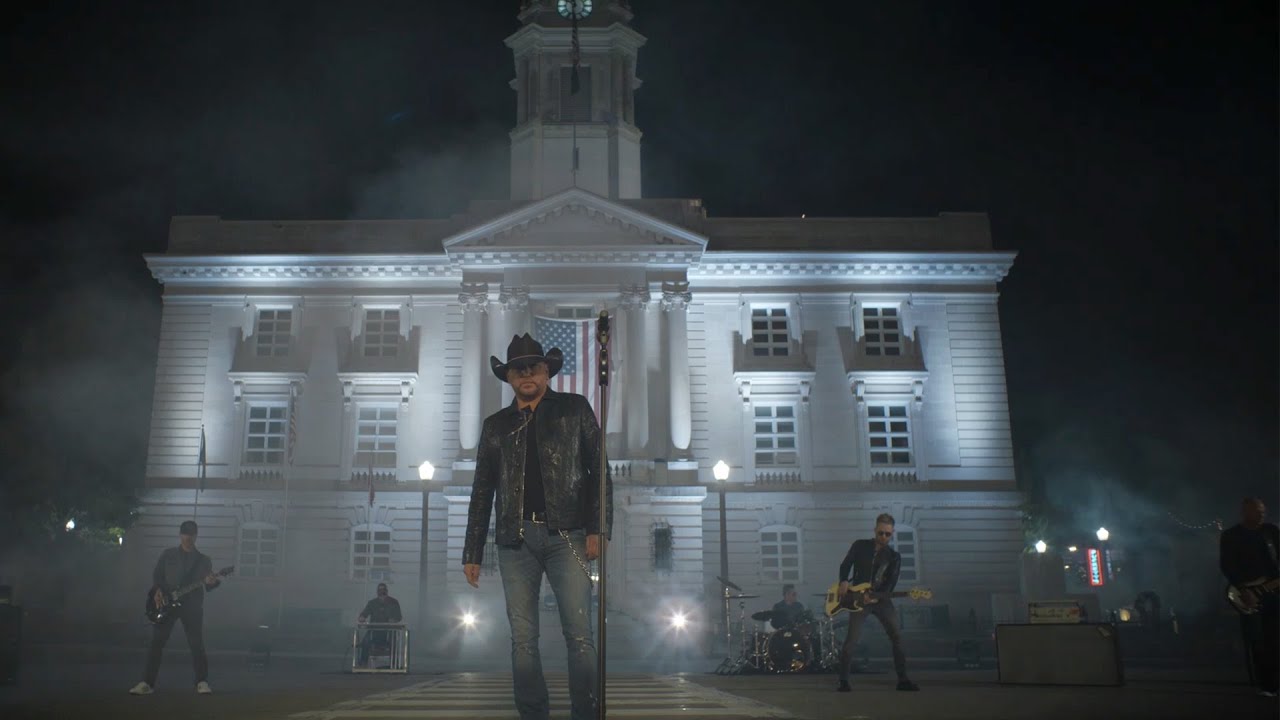
🎶”Try that in a Latin Mass – See how far you make it down the aisle…” 🎶

🎶 SAY THE BLACK – DO THE RED 🎶

YouTube thumbnailYouTube icon

And for context, the song by Kurt Allison:

YouTube thumbnailYouTube icon

Posted in SESSIUNCULA |
5 Comments

Daily Rome Shot 879

Please remember me when CHRISTMAS shopping online. Thanks in advance. US HERE – UK HERE  These links take you to a generic “catholic” search in Amazon, but, once in and browsing or searching, Amazon remembers that you used my link and I get the credit.

Photo by The Great Roman™

Can you fend off disaster and get a draw out of this?


1.Kc8 Kc6 2.Kb8 Kb5 3.Kb7 Kxa5 4.Kc6 h5 5.Kd5 h4 6.Ke4 h3 7.Kf3 h2 8.Kg2 draw.
NB: I’ll hold comments with solutions ’till the next day so there won’t be “spoilers” for others.

Speaking of solutions, I had a note from one of you asking about solutions. I usually let you all find and post them! Interactive, right? Active participation? Accompaniment?

However, I tried to respond to the gentleman’s query by email about half a dozen times and every time the email was kicked back as undeliverable. It’s the strangest thing I’ve seen: in the sending, somehow an extra 0 was added to the address. So, jcav****, sorry I could not respond via email.  If you have a different email, try writing from that.

Priestly chess players, drop me a line. HERE

Christmas music from FSSP seminarians!  A nice stocking stuffer.

By FSSP seminarians

In Toronto, Fabiano Caruana and Nodirbek Abdusattorov will be in the semifinals of the Champions Chess Tour Finals after the ‘survival stage’. Maxime Vachier-Lagrave and Hikaru Nakamura were knocked out of the competition. My guy Wesley So won the round robin! Now its So v. Abdusattorov and Carlsen v. Caruana to determine who will be in the title match.

Magnus, get a hair cut!  Buy a comb!

Posted in SESSIUNCULA |
3 Comments

13 Dec – St. Lucy and the Advent Ember Days

13 December was the darkest day – with the least length of sunlight – of the old Julian calendar.  Hence, it was once the Winter Solstice.

Today in the Gregorian calendar is the feast of St. Lucy, whose name from the Latin lux, for “light”, reminds us who dwell in the still darkening northern hemisphere that our days will soon be getting longer again.

Lucy will usually be depicted in art with a lantern, or with a crown of candles, or – most commonly – with her own eyes on a platter.

Some accounts have Lucy slain by having her throat thrust through with sword.  Other accounts say that to protect her virginity she disfigured herself by cutting her own eyes out and sending them to her suitor, a plot likely to discourage him.  St. Lucy is therefore the patroness of sight.

St. Lucy shows up fairly often in Dante’s great Divine Comedy.  She is first in the Inferno.  It is Lucy who asked Beatrice to help Dante.  In Purgatory the eagle that bears Dante upward in a dream is actually Lucy who is bearing him to the gate of Purgatory.  Eagles, of course, are “eagle-eyed” and see very well.  In the Paradiso she is placed directly across from Adam in the Heaven of the Rose.  She can gaze directly at God.

St. Lucy was something of a patroness for Dante and that he was devoted to her because, as we glean from various works, he may have had a problem not just with his eyes but also struggling with sins of the eyes.

Next week we also have Ember Days, which in Advent come after the Feast of St. Lucy.   Do you remember the little mnemonic poem?  “Lenty, Penty, Crucy, Lucy”, or else “Fasting days and Emberings be / Lent, Whitsun, Holyrood, and Lucie.

Ember Wednesday will be the Missa aurea.

In the meantime, let’s have a look at Lucy’s Collect in the Ordinary Form.

This prayer was not in the pre-Conciliar editions of the Missale Romanum. It is based on a prayer in the ancient Gelasian Sacramentary for St. Felicity (VIIII KALENDAS DECEMBRIS).

Intercessio nos, quaesumus, Domine, sanctae Luciae virginis et martyris gloriosa confoveat, ut eius natalicia et temporaliter frequentemus, et conspiciamus aeterna.

First, you will have immediately caught the elegant hyperbaton, the separation of intercessio and the adjective that goes with it, gloriosa.  There is also a nice et… et construction.

Confoveo is “to cherish, caress, keep warm.”  It is a compound of foveo which essentially is “to be hot, to roast”.  It obviously deals with heat, flame, light.  This is a good word for this time of year in the northern hemisphere (unless you are in, say, Florida).

Conspicio is “to look at attentively, to get sight of, to descry, perceive, observe”. We are obviously dealing the seeing and sight.  This word should ring mental bells for the throngs of you readers who attended Holy Mass in the Novus Ordo celebrated in Latin.  Conspicio is in the Collect for the 3rd Sunday of Advent, used in a an extremely clever way juxtaposed to exspecto.  They share a common root.  But I digress.

Natalicia refers to birthdays.  In the Christian adaptation of this word, we are always referring to the saints being “born” into heaven.

CURRENT ICEL (2011):

May the glorious intercession of the Virgin and Martyr Saint Lucy give us new heart, we pray, O Lord, so that we may celebrate her heavenly birthday in this present age and so behold things eternal.

Perhaps you might say a prayer today to St. Lucy, that she will intercede with God and implore Him, for us in the vale of tears, to open the eyes of so many of our Church leaders.

Also, let anyone having problems with their eyes, literally, pray to St. Lucy for help.

Posted in Liturgy Science Theatre 3000, Saints: Stories & Symbols |
2 Comments

Daily Rome Shot 879

As you think about shopping for Christmas… please remember me when shopping online. Thanks in advance. US HERE – UK HERE These links take you to a generic “catholic” search in Amazon, but, once in and browsing or searching, Amazon remembers that you used my link and I get the credit.

ALSO… regarding CHRISTMAS CARDS.

I am a frustrated man.  The PO BOX hasn’t been checked and items have not been forwarded.  So, I trust I will get a rather large batch.  (I hope so.)  However, please please PLEASE do NOT send packages without contacting me first.  PLEASE.  Packages get tricky, slow and costly to forward.

Meanwhile, yesterday in Toronto at the Chess Champions Finals there was a STUNNER of a game between Magnus Carlsen and my guy Wesley So. They had played to two ties and were set for an “Armageddon” game. The players make length of time bids to see who will have black. Black has less time, but a draw is counted as a win. A clearly disappointed Wesley was undercut in his bid by Magnus, who wound up with black.  Magnus is so good that if he wants a draw he’ll get a draw.  The closed Sicilian opening was a quiet and then Wesley, knowing he had to get a win and not let Magnus set up his position for a draw – BAM! – struck on the king side where Magnus had castled with an amazing knight sacrifice and then a rook sac. From there on it was attack attack attack and Magnus went down in flames. The video of the game is HERE.

Of course in the post match interview So characteristically gave glory to Christ for the win. HERE Nice to see. He went on to beat Nodirbek and is in full possession of the lead now. Tomorrow, if I understand rightly, he has to play the very tough Fabiano (world #2).

White to mate in 2.

NB: I’ll hold comments with solutions ’till the next day so there won’t be “spoilers” for others.

Priestly chess players, drop me a line. HERE

Posted in SESSIUNCULA |
3 Comments

ASK FATHER: “Pray without ceasing”?

From a reader…

QUAERITUR:

I took your advice and I’m starting to look at the upcoming readings for Sunday a few days ahead and reviewing them after.  I’m stuck on the second reading for this coming Sunday.  [3rd Sunday of Advent] I have to go to the Novus Ordo.  I hope that’s okay.  It from 1 Thess 5:16-24 and Paul says that it is the “will of God” that we “pray without ceasing”.  I don’t know about you, but I can’t do that.  Life is really busy and I’m not a nun.  You’ve said that we are not bound to do the impossible, but this seems impossible but we are bound to do it.  There must be an answer.

Firstly, it is okay that you are going to the Novus Ordo for your Sunday obligation.  We don’t let the good be the enemy of the perfect, after all.  These days we do what we can do.

Secondly, you might need to revise your notion of what nuns do all day.  They have a lot of chores and duties apart from formal prayer.

Thirdly, perhaps the distinction between formal prayer and praying “without ceasing” can be teased out a little more.

Let’s see the reading in the RSV (rather than the NAB used at Mass).

16 Rejoice always, 17 pray constantly, 18 give thanks in all circumstances; for this is the will of God in Christ Jesus for you. 19 Do not quench the Spirit, 20 do not despise prophesying, 21 but test everything; hold fast what is good, 22 abstain from every form of evil. 23 May the God of peace himself sanctify you wholly; and may your spirit and soul and body be kept sound and blameless at the coming of our Lord Jesus Christ. 24 He who calls you is faithful, and he will do it.

This reading appears only once in the three year cycle of the Novus Ordo.  Too bad.   However, in the Vetus Ordo it is only on Ember Saturday of Lent, an important day, to be sure, but not a Sunday.   I wonder if the fact that this is such a well-known reading that it was not considered necessary to have it often in the Lectionary for Mass.

This is at the end of Paul’s letter.  He is giving dense bullet points for the sake of the perfection and holiness of the listeners (in ancient times, letters were read aloud).  Paul isn’t speaking in half-terms or partial aspirations.  Notice the first three points are all marked with “always”.  The words are “always… constantly… all circumstances…”.  That’s pretty much every waking moment.

He doesn’t say, “When you get around to it, pray a little.  If there’s nothing better to do, be grateful.  Life’s hard but once in a while you might try to be happy.”

Later in the reading Paul refers to being sound and blameless in “spirit and soul and body”, which is a way of describing the whole person, and that which we do via those three elements of Paul’s understanding of how man is made up (anthropology).

Hence, in obedience to God we also depend on God to do the heavy lifting: “May the God of peace himself sanctify you wholly” and “He who calls you is faithful, and he will do it.”

Sometimes when writing about the will of God and our vocations I’ll add that we accomplish good things that He gives us to do through grace and elbow grease.  He gives the work and He makes our hands strong for that work in such a way that the work done is both ours and His, with His merits giving that work its goodness.

To the point that God doesn’t require what is impossible and yet Paul seems to be saying that God is asking for the impossible.  After all, parents with children are busy and distracted away from formally praying by their parental duties.  This goes for anyone with a job to be done, or even those who are afflicted or ill or suffering in some way.  Even those are recreating are distracted from “praying constantly”.

It seems to me that we untie the knot along the lines of what St. Augustine says (ep. 130) about this command (not suggestion) from Paul.  First, we have to have at least a disciplined and consistent prayer life that reasonably accounts for the duties of our state in life.  That’s a given.  However, over time we also strive to orient our whole person (in Paul’s terms spirit, soul, body) toward God such that even in the midst of other activities we are still making all we do an offering to Him in gratitude (“give thanks in all circumstances”).    It is good for us to be busy in fulfilling the duties of our vocations.  So there must be a way also to fulfill Paul’s exhortation about unceasing prayer and thanksgiving in joy.  Its the interior orientation of our minds and hearts so that their default setting, so to speak, is above all other things that joyful and grateful devotion to God’s will and goodness that informs everything else that we do, whether it is being ill, taking care of a obstreperous child, washing dishes, playing chess, studying for exams, driving to work (which might be a real challenge).  Augustine underscores the need to desire to pray.  We need to have a consistent prayer life and make use of certain times for more formal prayer.  Yet in all that we do, we should at least in desire be lifting our hearts and minds to God.  Augustine also stresses this in his commentary on the Psalms (en. ps. 35, 13-14):

For the desire of your heart is itself your prayer. And if the desire is constant, so is your prayer. The Apostle Paul had a purpose in saying: Pray without ceasing. Are we then ceaselessly to bend our knees, to lie prostrate, or to lift up our hands? Is this what is meant in saying: Pray without ceasing? Even if we admit that we pray in this fashion, I do not believe that we can do so all the time.

Yet there is another, interior kind of prayer without ceasing, namely, the desire of the heart. Whatever else you may be doing, if you but fix your desire on God’s Sabbath rest, your prayer will be ceaseless. Therefore, if you wish to pray without ceasing, do not cease to desire.

The constancy of your desire will itself be the ceaseless voice of your prayer. And that voice of your prayer will be silent only when your love ceases. For who are silent? Those of whom it is said: Because evil has abounded, the love of many will grow cold.

The chilling of love means that the heart is silent; while burning love is the outcry of the heart. If your love is without ceasing, you are crying out always; if you always cry out, you are always desiring; and if you desire, you are calling to mind your eternal rest in the Lord.

Other great writers have dealt with this as well, and along the same lines.  St. Francis de Sales in Introduction to the Devout Life comments on it.  St. Theresa of Calcutta prayed short prayers in the midst of her labors.   Also, St. Therese of Lisieux in Story of a Soul, who experienced the challenge of infirmity, offered her discomforts to God.  She said that her prayers were like “glances at heaven”.  She wrote:

“For me, prayer is an aspiration of the heart; it is a simple glance directed to heaven, it is a cry of gratitude and love in the midst of trial as well as joy; finally, it is something great, supernatural, which expands my soul and unites me to Jesus.”

Notice in that we find the “always”, with “prayer”, “thanksgiving” and “joy”.  Moreover, it is God who then works in her whole person.

I think you get the drift.

Three last things.   St. Thomas Aquinas in his commentary on 1 Thessalonians says that giving alms is a way of inspiring constant prayer in others on our behalf.

The constitutive repetitions in the Rosary are a good link between “formal” prayer and our desired “default” setting.

Also, if it is true that we do not sin when we are asleep, could it be true that our sleep can be a kind of prayer time?   I don’t know about that, because the will during sleep is… I don’t know what it is.  However, before going to sleep I make a conscious act of entrusting my sleep time to the Blessed Virgin Mary, Queen of Priests, asking also for her protective mantle to keep me from spiritual attacks.

Posted in SESSIUNCULA | Tagged ,
5 Comments