ASK FATHER: “What’s up with not adding water to the chalice? Or did you?” A deep dive into the offertory with a minor rant about Vatican II.

I had a question from a reader/viewer who was wondering about the preparation of the chalice during a streamed Mass. When it came to the water, I didn’t pick up the water cruet to add water.

QUAERITUR:

It looks like you don’t pick up the water and add it to the wine.  I though that was necessary.  Clearly I’m missing something but I asked, “Was that valid?”  I know you would never offer an invalid Mass but you also say all the time about priests who make up things that it is cruel to leave people wondering about the validity of sacraments.

The question reveals the underlying answer: the use of the scruple spoon.

The addition of water to the wine in the chalice is of profound significance. First, historically, in the ancient world wine was not consumed uncut. It was cut with water. As a matter of fact, the ancient Romans considered the consumption of merum (uncut vinum) was a mark of debauchery.  The rite of the addition of water to wine was mentioned twice by St. Justin Martyr in his Apology to Antoninus Pius (+161).  Fathers of the Church and Council mandated the addition, Trent in particular.  Trent obliges priests because a) this is what the Jews did and Christ did with wine at the Last Supper b), Blood and water flowed from Christ’s side and c) It is a symbol of the unity of Christ and the Church.

Moreover, as the following prayer reveals, it hearkens to the indestructible bond of Divinity and humanity in Christ.  What Christ took he, He irrevocably transformed.

When the priest adds water to the wine he first blesses it (unless it is a Requiem Mass) and prays:

Deus, + qui humánæ substántiæ dignitátem mirabíliter condidísti, et mirabílius reformásti: da nobis per huius aquæ et vini mystérium, eius divinitátis esse consórtes, qui humanitátis nostræ fíeri dignátus est párticeps, Iesus Christus, Fílius tuus, Dóminus noster: Qui tecum vivit et regnat in unitáte Spíritus Sancti Deus: per ómnia s?cula sæculórum. Amen.

O God, who, in creating human nature, didst wonderfully dignify it, and still more wonderfully restore it, grant that, by the Mystery of this water and wine, we may be made partakers of His divine nature, who vouchsafed to be made partaker of our human nature, even Jesus Christ our Lord, Thy Son, who with Thee, liveth and reigneth in the unity of the Holy Ghost, God: world without end. Amen.

This prayer, already in a 6th c. sacramentary, is also the Collect for the 3rd Mass of Christmas.  Appropriate.  It is a masterpiece of Roman concision and echoes the Christmas sermons of St. Leo the Great (+461).

What Christ took up, He irrevocably transformed.   Christ came ultimately for what Fathers of the Church called our “divinization”.  Be mindful of how the drops of water are lost into the larger quantity of the wine, merged and transformed.  This is why I often urge people to “pour” their hearts and petitions into the chalice with that little bit of water: to be taken up and transformed.  The water… that’s you.

BTW… I recall an ignorant comment from the Prefect for Worship, who violated the adage Si tacuisses.  He asserted that under the influence of Vatican II now the people also offer the sacrifice with the priest, as it says in the – here it comes – 1st Eucharistic Prayer: “or them, we offer you this sacrifice of praise or they offer it for themselves and all who are dear to them,…”. 1st Eucharistic Prayer! Therefore its from VATICAN II! RIGHT?!? The 1st Eucharistic Prayer is also known as the Roman Canon, which predates Vatican II by a millennium. The unity of Christ with us in offering the Sacrifice has been clear for centuries and Vatican II has NOTHING TO DO WITH IT.

For example, St. Thomas Aquinas, “When water is mixed with wine in the chalice, the people is united to Christ” (STh III q.74, a.6). The mixing is necessary for the symbolic value of the offering of the chalice.  To offer the wine without the water would be like to offer Christ without us.  To offer the water alone would be to offer us without Christ.  The faithful are not merely the co-offerers.  They are the co-offered.   This is possible because of the conformity to Christ in baptism.  He is Priest and Victim.  The baptized is also priest and victim, not in the ordained sense, but the baptized sense. This is the way.  If there is anything about this in Vatican II it is because it has always been the way.

The priest should be careful never to add too much water to the wine in the chalice.  This is not because we do not want too many lay people present at Mass!   It has to do with substance and accidents.   If you add a tiny bit of water to wine, the water is subsumed into the wine.  Add a lot of water to the wine, you can break the substance of the wine rendering it no longer valid for Mass.

As I have written in the past, in the manual of dogmatic theology by Tanquerey, that tonic for the soul, we read thatquinta pars aquae ad vinum corrumpendum non sufficiat … a fifth part of water isn’t enough to break [the substance of] the wine”, and thus render it invalid matter for consecration.

Prümmer is not too lenient in saying a third part water and you have highly doubtful matter, it should not be consecrated, and more wine ought to be added before it is consecrated.

I am inclined to be guided by Tanquerey’s view and never add more than a fifth part.

A priest who seriously doubts the validity of the matter of the host or the wine, sins mortally by continuing.

This is important especially for priests who prefer small quantities of wine for Mass, for whatever reason.

It is not a bad idea to use a “scruple spoon”. This has nothing to do with “having scruples” or “being scrupulous”.

This small spoon measures a scruple, an old apothecary measurement for the 24th part of an ounce in weight.

Sometimes an image of a scruple spoon will appear in the header of this blog.

I grant that there is something proper about the pouring gesture.  However, given the issue of dilution, I think safe is better than iffy.  Sometimes the surface tension of the water before pouring can result in the subsequent necessity of adjustments with the wine.

Prümmer prudishly posits that the scruple spoon tolerari potest.  Whatever.

If pouring is a strong symbol, no less powerful is that of a little drop.

The Belgian Désiré Félicien François Joseph Card. Mercier (+1926) wrote of this symbolism:

“I am the little drop of water absorbed by the wine of the Mass, and the wine of the Mass becomes the blood of the Man-God. And the Man-God is substantially united to the Holy Trinity. The little drop of water is swept into the main-stream of the life of the Holy Trinity. Shall I ever be pure enough, limpid enough, as the little drop of water destined to take part in the sacrifice of the Mass?”


Posted in "How To..." - Practical Notes, ASK FATHER Question Box, Hard-Identity Catholicism, Liturgy Science Theatre 3000, Save The Liturgy - Save The World | Tagged , , ,
7 Comments

Daily Rome Shot 729 – of wine, women and song

White to move. Not the easiest to find the mate in 2.

NB: I’ll hold comments with solutions ’till the next day so there won’t be “spoilers” for others.

The monks of Le Barroux are making good wine from the ancient vineyards of the Avignon Popes. 10% off with code FATHERZ10

I had a note the other day that their rosè was highly praised.  That region of France is known for rosè, which is not the enervated blush you may have only encountered.

I can attest that it is a good wine.  I was sent a bottle and gave it a try.

In Global Chess League action today, Vishy v Levon and Rapport v. Yu Yangyi and the Ganges Grandmasters and Triveni Continental Kings thrash it out.   Magnus (“I need a haircut” Carlsen) v. Ян Непо́мнящий!  It’s day 5 in Dubai.

It is good to have Keti doing some commentary. Her voice doesn’t lance straight through your head as does that of Tania.  Keti Tsatsalashvili (ქეთი წაწალაშვილი) is Georgian. Women playing today, on opposite squads are Georgian: Nana Dzagnidze and Nino Batsiashvili and Bella Khotenashvili. A young player always interesting to watch is from India (lots of super youngsters from India right now) is Rameshbabu Praggnanandhaa (ரமேசுபாபு பிரக்ஞானந்தா). You might see why they are referred to as first names like Keti, and shortenings like Nepo and Pragg.
The commentary is highly charged:

“He goes with e4!”

Others: [hushed] “Wow…”.

Please remember me when shopping online. Thanks in advance. US HERE – UK HERE  These links take you to a generic “catholic” search in Amazon, but, once in and browsing or searching, Amazon remembers that you used my link and I get the credit.

I received from TAN the new book – good grief it’s like every other week I write that – new book from Peter Kwasniewski. I haven’t delved into it yet. Right now there is a teetering tower of PK books looming over my house ready to topple and bury me forever. I am driven to ponder whether or the man we see at a microphone sometimes is just the outward golem of a large hive of prolific writers who have been changed to computers by their hard-driving sadistic overlord.

Good Music, Sacred Music, and Silence: Three Gifts of God for Liturgy and for Life

What I find interesting is that it was released also with an audiobook version. That’s good. Audiobooks are great. I once thought I might get involved in recording books, since my voice is well-proportioned for such work. There is a Catholic organization which has reading for the blind, for example. Readers have to be ready to handle tough words and different languages. Sometimes the results are cringeworthy and distracting. Even the best of the best fall down in this category, especially in matters Latin.

BTW… there is a very interesting documentary about wine-making in Georgia. They made huge terracotta containers and bury the wine, placing icons over it, praying over it and singing hymns to it! When I was still in the Cupboard Under The Stairs, a local wine place – exceptionally good and I miss it – had Georgian wine. It was quite good, very different.

BTW… the Global Chess League’s site is impossibly, stupidly complicated. And who picked the colors?!?

Posted in SESSIUNCULA |
3 Comments

It takes real effort to make something like this happen

I was sent this news:

France: Number of Ordinations at A Low

Only 88 French candidates will be ordained priests this year, announced Eglise.Catholique.fr (June 22). 52 of them belong to dioceses. It is the lowest number of ordinations in at least a decade, compared to 122 in 2022 and 130 in 2021.

Meanwhile, Francis has blocked priestly ordinations in the flourishing Fréjus-Toulon Diocese already for the second year running. The Novus Ordo Community of Saint Martin is also down to seven new priests, compared with 14 in 2022 and 26 in 2021.

The same decline can be seen throughout the world, including Poland.

Five of the 88 belong to the Fraternity of Saint Peter, compared to 6 ordinations in 2022 and 3 in 2021.

Meanwhile, I heard that in France the number of ordinations in the traditional communities is a significantly large percentage of all ordinations.

Posted in Priests and Priesthood, The Coming Storm, The future and our choices |
13 Comments

UPDATED – Novus Ordo – 22 June – St. John Fisher and St. Thomas More – NB: HARD TO FIND Mass Texts for their Feast in the Traditional Latin Mass (9 July)

UPDATE 25 June:

I received this note.

We met many years ago at Fr. Finigan’s Parish in Blackfen.  I was one of the regular visiting choir.  You kindly link to the Society of St. Bede’s Propers sheet that I made for the Feast.  I see in the comments that the music is not easily available. We have the music of the Propers here, https://lms.org.uk/proper-chants-england-wales#Fisher%20&%20More

Also I am working on Missale Romanum supplements for England and Wales here,  https://societyofstbede.wordpress.com/propers-for-england-and-wales/

ORIGINALLY POSTED 22 June 2023

In the Church’s traditional calendar St. John Fisher and St. Thomas More have their  feasts on 9 July.  More was martyred on 6 July and Fisher on 22 June.  In the Novus Ordo calendar they are celebrated today, together.


Pope John Paul II in 2000 declared St. Thomas more the patron saint of statesmen and politicians.

More makes you think about our catholic politicians today.   Fisher about our bishops.

Plus ça change…

There is a relatively new book about them: John Fisher and Thomas More: Keeping Their Souls While Losing Their Heads by Robert J. Conrad, Jr and published by TAN, which is serious stepping up its game.

US HERE – UK HERE

Two saints for our times if ever there was need, one for comportment in the secular sphere and the other in the Church.

Let us invoke the intercession of St. Thomas and of St. John for our public figures, secular and spiritual.

Animi caussa…

From the 2005 Martyrologium Romanum.

Sanctorum Ioannis Fisher, episcopi, et Thomae More, martyrum, qui, cum Henrico regi Octavo in controversia de eius matrimonio repudiando et de Romani Pontificis primatu restitissent, in Turrem Londinii in Anglia trusi sunt.  Ioannes Fisher, episcopus Roffensis, vir eruditione et dignitate vitae clarissimus, hac die iussu ipsius regis ante carcerem decollatus est; Thomas More vero paterfamilias vita integerrimus et praeses coetus moderatorum nationis, propter fidelitatem erga Ecclesiam catholicam servatam sexta die iulii cum venerabili antistite martyrio coniunctus est.

Anyone care to take a shot?

NOTA BENE FATHERS!

Mass texts in the Extraordinary Form for these two saints on 9 July are not easy to find. 

I’ll give them to you in advance of July so you can get ready:  HERE

Huge thanks for the texts from my good friend, His Hermeneuticalness, Fr. Tim Finigan.

Tonight… this great classic?

US HERE – UK HERE

Posted in Liturgy Science Theatre 3000, Saints: Stories & Symbols | Tagged ,
4 Comments

Your Sunday Sermon Notes – 4th Sunday after Pentecost (N.O.: 12th) 2023

Share the good stuff.

It’s the 4th Sunday after Pentecost in the Vetus Ordo and the 12th Sunday of the Novus Ordo.

Was there a GOOD point made in the sermon you heard at your Sunday Mass of obligation?

Tell about attendance especially for the Traditional Latin Mass. I hear that it is growing. Of COURSE.

Any local changes or (hopefully good) news?

I have some thoughts about the Sunday Epistle reading … no, I would have thoughts posted there but there is a log in problem, for me at least, at One Peter Five and I can’t post.   Here is something of what I would have posted and still might….

A taste:

Huh?

Let’s break this down.  First, Paul acknowledges that there are sufferings.  These result from Original Sin and the Enemy and his agents.  As bad as these sufferings are, the glory to come is greater.   This is a profound reason for hope.   Why?  The next sentence in Greek starts with gar, a particle that assigns a reason in an argument, after the definite article he for the next word apokaradokía, “earnest expectation, eager longing”.  There is a mighty expectation.

Expectations don’t float around on their own.  Sentient beings have expectations.  What is the sentient being with this powerful longing?  Greek ktísis, creation.  Creation is, in this construction, a sentient being with longing for the apokálypsis, the manifestation or revealing of the “sons of God”.  Why?  Because earnestly longing, eager ktísis will also be liberated from the bondage of sin and death that the sons of God will experience.  Ktísis, creation, is groaning (systenázo) together with the sons of God for what is to come.  Ktísis is undergoing agony as if in childbirth together with us (synodíno) a awaiting the revelation of the sons of God.  That syn-, together, in those verbs brings together the elements of creation, old and new, and points them at what is to come.

Posted in Liturgy Science Theatre 3000 |
4 Comments

Daily Rome Shot 727

Chinese Wei Yi scored a third win in four games in the Tech Mahindra Global Chess League 2023 in Dubai.  Magnus Carlsen beat fellow former World Champion Viswanathan Anand on day two, but Anand’s Ganges Grandmasters won the match and have the only perfect score.  As I write, an rather upset Carlsen just lost to MVL and Humpy v. Krush.

At OTB yesterday, I had 3 wins 1 loss and 1 draw (super tense rook pawn endgame).

NB: I’ll hold comments with solutions ’till the next day so there won’t be “spoilers” for others.

White to move.

Your use of my Amazon affiliate link is a major part of my income. It helps to pay for insurance, groceries, everything. Please remember me when shopping online. Thanks in advance.  US HERE – UK HERE

Posted in SESSIUNCULA |
Comments Off on Daily Rome Shot 727

“Perdonamose!” St. John’s Birthday Feast and Midsummer Snails

Hard to improve on this from a couple years ago.  Little changes.


Your planet once again is whirling its way towards your solstices, Summer in the North and Winter in the South.  Since the emphasis in Western Civilization has been northern, I’ll stick with that.

In the Northern Hemisphere the June solstice is the day with the most daylight and the shortest night.  It falls every year between 20-22 June, this year on 20 June.  The solstice marks the end of Spring and the beginning of Summer.

On Holy Church’s calendar we celebrated the Vigil of John the Baptist yesterday, 23 June, and the Feast of his Birth today, 24 June[This year, because the Feast of the Sacred Heart falls today, 24 June, John the Baptist is transferred to tomorrow, Saturday.  That means that there is no observance of the VIGIL of John the Baptist on 23 June 2022.]  The reason we celebrate John near the solstice, both because we count the months of Elizabeth’s being with child, and because John said “He must increase, I must decrease”. The ancients knew that at this time of year the length of days began to decrease.  The Nativity of the Lord falls near the Winter Solstice, when the days – at last – get longer and light comes back to the world.

There are lots of fine traditions from different cultures which you might incorporate into your own observances.

First, each year consider having a bonfire (and cookout) on the Vigil of the Nativity of the Baptist.  Invite your priests!  There is a special blessing in Rituale Romanum for fires on the Vigil.  After the usual introduction, the priest blesses (it should be done in Latin) the fire saying:

Lord God, almighty Father, the light that never fails and the source of all light, sanctify + this new fire, and grant that after the darkness of this life we may come unsullied to you who are light eternal; through Christ our Lord. All: Amen.

At this point the fire is sprinkled with holy water and everyone sings the hymn Ut queant laxis which is also the Vespers hymn.  I have more about that beautiful – and historically important hymn – HERE.  You might practice the hymn and sing it.

In some places the bonfire is used for the burning of witches… in effigy.  That could be fun.  The witch connection probably comes from the fact that the satanically inclined or possessed hold the solstice as one of their important annual moments for their vile rites.

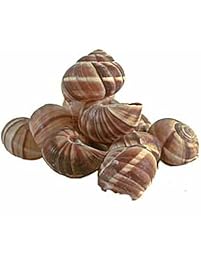
Also, I recommend the eating of snails.  This is very Roman. 

Romans traditionally eat snail of the Feast of John the Baptist, and so should you.

If you call yourself a traditional Roman Catholic…well… there’s no excuse.

Also, there is a witch connection with the snails and what Romans ate.

Romans would gather certain plants that were mature by this point, such as what we call St. John’s Wort, along with onions and garlic, which they thought drove off witches and demons.

Near St. John Lateran (named after both the Baptist and Evangelist) there was a little hill Monte Cipollario or “Onion Hill” that was eventually razed in the time of  Papa Lambertini – Benedict XIV.  It seems that lots of onions and garlic were cultivated in that zone.    In any event, the Romans gathered at St. John’s and ate lumache al sugo and greeted each other with the Roman dialect “Perdonamose!” (from “perdono… forgiveness”), a sort of way of mutual apologies and peacemaking.  It may be that the eating of snails comes from the fact, first, that at this time of year there are a lot of them and, next, they have horns, which could have symbolized discord and strife.  Hence, eating them did away with strife and promoted reconciliation.  “Perdonamose!”

To make and mess of lumache al sugo alla romana (aka ‘na ciumacata), you need well-purged snails, of course, along with tomatoes, olive oil, hot red pepper, onion, garlic, (preferably wild) fennel and/or mint. A couple versions I saw included anchovy.  Make your sauce and then add the snails, cook for a while, and serve hot with good bread.  This one is instructive HERE.  And, HERE. For wine …. why get fancy?  Stick with cold Frascati or another dry white from the Castelli Romani!

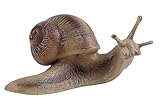
If you can’t get your hands on some snails, or enough snails, there’s always THIS… for lots of fun and conversation.   I am not making this up…

SNAIL ACTION FIGURE!

US HERE – UK HERE… nope, sorry!  [The old one seems to be gone, but there is THIS 

Meanwhile get your canned or jarred snails and start planning: US HERE – UK HERE… nope, sorry again!

Finally, I sure would like to make some snails tonight.  Anyone want to pitch in?  HERE

Click!

There is also a very cool Medieval recipe I just found for cherries for St. John’s Day.

And… I recently had snails in Rome.  I wish I were in Rome right now having snails.


Posted in SESSIUNCULA | Tagged
5 Comments

The new look of the new sanctuary of Notre-Dame de Paris

I just threw up in my mouth a little.

They never learn.

Will it take another fire?

Source, the great Twitter feed of Fr. V.  Fr. Z says follow Fr. V.

And …

Posted in Pò sì jiù, What are they REALLY saying?, You must be joking! | Tagged
25 Comments

Check this blog post by a priest friend. Women clergy? The real point.

I alert the readership to a blog post by a priest friend and commentator here, Fr. Martin Fox.  You want to check into this.

I am mindful of a story I read at the National Catholic Register about how in the upcoming Synodo-Tautological Self-Licking Ice Cream Cone Synod (“walking together”), there is an attempt to ram through more blather on deaconettes.

Fr. Martin picks up on what is probably the real point of forcing women’s ordination.

Pelosi: Women Should Be Priests: ‘That Is Real Power’

Posted in Deaconettes, Mail from priests | Tagged
8 Comments

Daily Rome Shot 725

Photo from M

Welcome new registrants:

mjanke
TMInsall

I am regularly celebrating Mass for the intention of my benefactors, including those who send things from my wish list.  My sandwich yesterday was magnificently augmented by great mustard, which recently arrived.  Today’s Mass was for those regular donors who use Chase/Zelle.  Thank you.

Today a cable should arrive, a replacement for one which I believed was damaged when water flooded the floor of my chapel when I was in Rome. It is for the “side cam” for the video stream of Mass. I hope this works.

Remind me to tell you about Federated Computer.  This is really cool.  I’m learning about it.

Global Chess League is taking place in Dubai from 12 June to 2 July 2 2023. The league introduces the franchise format to the sport of chess. It’s a mixed-team format of men, women and under 21 players. Six squads are involved with players like Magnus Carlsen, Vishy Anand and world champion Ding Liren. Follow the games live from 15:30 CEST (09:30 ET). Today: Carlsen vs Anand!

White to Move. Mate in 2.

NB: I’ll hold comments with solutions ’till the next day so there won’t be “spoilers” for others.

Your use of my Amazon affiliate link is a major part of my income. It helps to pay for insurance, groceries, everything. Please remember me when shopping online. Thanks in advance.  US HERE – UK HERE

The wonderful nuns of Gower Abbey, the Benedictines of Mary, Queen of Apostles, have a disc and digital download:

Tenebrae at Ephesus

US HERE – UK HERE

These are the RESPONSORIES of Tenebrae for all three days of the Triduum.  They are, arguably, the most beautiful chants of the entire liturgical year.

Posted in SESSIUNCULA |
2 Comments