31 December 2022 – Pope Benedict XVI – RIP

Papa Ratzinger died on 31 December 2022.

I was privileged to have known him well before his election. His loss is a personal loss.

Apart from his contributions as a priest, prefect and theologian, two of his accomplishments as Pope stand out for me.

Summorum Pontificum – This monumental document sparked the beginning of a liturgical renewal in the Church, as one can tell from how some still fear and still fight it.

Anglicanorum coetibus – earned for Benedict justly to be known as the “Pope of Christian Unity”.  In one gesture he did more for Christian unity than pretty much everyone else with all their talk and dialogue.

Shall we see his like again?

Clearly not.

For example, it is likely that, soon, the Pontiffs elected will have no life experience from the time before the Second Vatican Council.  They will certainly not have personal experience of WWII.   It is highly unlikely that they will have close to the intellectual and cultural formation of a Joseph Ratzinger.

Benedict’s passing is the end of an era in many respects.

Right now we are in an era of eroding identity, doctrine and praxis, endless obsession with process over concrete results, and even bullying of those who simply want the faith and prayer life of our forebears.

That didn’t start with his death.

Pray for him.  While I am confident that through his final sufferings and unquestionable reception of the last sacraments and Apostolic Blessing, Joseph Ratzinger now enjoys the Beatific Vision, it is nevertheless good to pray for him and to commit him to God’s mercy, particularly on an anniversary of death.

Finally, consider your own death and judgment, which is inevitable.

May we all have the grace of a death which is “provided” for, that is, with access to the last sacraments and Apostolic Blessing.  In the meantime we should be making good examinations of conscience and regular confessions of all mortal sins in both kind and number.   Kind and number.

Please, go to confession.

Posted in Benedict XVI | Tagged
13 Comments

FATHERS! ACTION ITEM! Plenary Indulgences available on 31 December (Te Deum) and 1 January (Veni Creator Spiritus)

Holy Mother Church offers the possibility to gain two plenary indulgences, one on 31 December to thank God for the graces received during the year and one on 1 January to invoke the Holy Spirit at the beginning of the new calendar year.

Enchiridion Indulgentiarum, #26

A plenary indulgence is granted to the Christian faithful who, in a church or in an oratory, are present in a recitation or solemn chant of:

1° the hymn Veni Creator … on the first day of the year, imploring divine assistance for the whole of the coming year…

2° the Te Deum hymn, on the last day of the year, in thanksgiving to God for the favors received in the course of the entire year.


Conditions for a Plenary Indulgence from the Apostolic Penitentiary, Prot. N. 39/05/I

In addition to the indulgenced act or “good work” (recitation or solemn chant of the hymn Veni Creator/Te Deum hymn on the due day) the usual following conditions must be observed for those who want to gain a plenary indulgence:

1. State of grace at least when performing the indulgenced act;
2. Complete detachment from sin, even venial sin;
3. Confession (within 20 days before or after the indulgenced act);
4. Communion (within 20 days before or after the indulgenced act);
5. Prayer for the intentions of the Supreme Pontiff (left to the choice of the faithful, e.g. Our Father & Creed).

A plenary indulgence can be gained only once a day. One sacramental confession suffices for several plenary indulgences, but a separate Holy Communion and a separate prayer for the Holy Father’s intentions are required for each plenary indulgence.

What is an indulgence?

An indulgence is the remission before God of the temporal punishment remaining for sins whose guilt has already been pardoned. It is granted to a properly disposed Christian who fulfills the conditions established by the Church. As the minister of redemption, the Church exercises its authority to dispense the spiritual treasury of Christ and the saints. Any Catholic in the state of grace and not under canonical penalty may gain an indulgence through the Church’s provision.

Indulgences rest upon the doctrine of the communion of saints: all who are united to Christ in grace—those in heaven, the souls being purified in purgatory, and the faithful on earth—share a supernatural solidarity. The merits of Christ, together with the superabundant merits of the saints, form a common spiritual treasury. From this treasury the Church, particularly through the Pope and the bishops, applies what is needed to remit the temporal effects of sin.

What does this mean? 2. Complete detachment from sin, even venial sin;

I wrote about this HERE

As a bonus, waaaaay back in 2006 my good friend Fr. Tim Finigan had a clear explanation of being detached from sin and the disposition you need to gain indulgences.  HERE

Posted in "How To..." - Practical Notes, ACTION ITEM!, Hard-Identity Catholicism, Just Too Cool, Liturgy Science Theatre 3000, Save The Liturgy - Save The World | Tagged
6 Comments

CHRISTMASCAzT 2025 – 31 – 6th Day in the Octave – Astonishment

A series of 5 minute daily podcasts for the Octave of Christmas.

Bossuet to Troadec.. he shoots…. he SCORES.

Exuperantius!

yesterday’s podcast HERE.


Posted in ADVENTCAzT, ADVENTCAzT, PODCAzT | Tagged , , ,
1 Comment

Daily Rome Shot 1515

Please remember me when shopping online and use my affiliate links.  US HEREWHY?  This helps to pay for health insurance, utilities, groceries, etc..  At no extra cost, you provide help for which I am grateful.

White to move and mate in 6.

NB: I’ll hold comments with solutions ’till the next day so there won’t be “spoilers” for others.

Priestly chess players, drop me a line. HERE

End of year… give some help.

CLICK!
SUPPORT CHAPLAINS!

Posted in SESSIUNCULA |
1 Comment

Daily Rome Shot 1514

Please remember me when shopping online and use my affiliate links.  US HEREWHY?  This helps to pay for health insurance, utilities, groceries, etc..  At no extra cost, you provide help for which I am grateful.

TODAY’S WORDLE: 4

Magnus Carlson won the 2025 FIDE World Blitz Chess Championship, but he stumbled on Day 1 of the BLITZ Championship. Leading in Blitz are Arjun Erigaisi, Maxime Vachier-Lagrave, and Fabiano Caruana with six rounds left in the Swiss portion. The drama! My guy Wesley So is presently #8. He is a Blitz beast.

White to move and mate in 4.

NB: I’ll hold comments with solutions ’till the next day so there won’t be “spoilers” for others.

End of year giving?   Causes I trust.

CLICK!
SUPPORT CHAPLAINS!

Posted in SESSIUNCULA |
1 Comment

St. David: Musical Poet King, Prophet, Progenitor of Christ

Holy Church considers many Old Testament figures to be saints.

Today when you open your trusty copy of the 2005 Martyrologium Romanum you will find, just below the St. Thomas Becket, this interesting entry:

2. Commemoratio sancti David, regis et prophetae, qui, filius Iesse Bethlehemitae, gratiam invenit ante Deum et oleo sancto a Samuele propheta unctus est, ut populum Israel regeret; in civitatem Ierusalem Arcam foederis Domini transtulit ac Dominus ipse mox ei iuravit semen eius in aeternum mansurum esse, eo quod ex ipso Iesus Christus secundum carnem nasciturus esset.

You readers can come up with your renderings of the Latin original, either in a smoother version or perhaps in a slavishly literal way.

Changing tracks slightly, in the Metropolitan Museum of Art there  is a series of paintings of Old Testament figures, including King David.  These are elements from an altar piece by Florentine painter Lorenzo Monaco (known also as Piero di Giovanni +1422).

Moses is at the top left.  Next to him is Abraham.  Below him on the bottom right is Noah with his ark.

By thy way, since I took that photo, the paintings have been rearranged… in case you go looking.

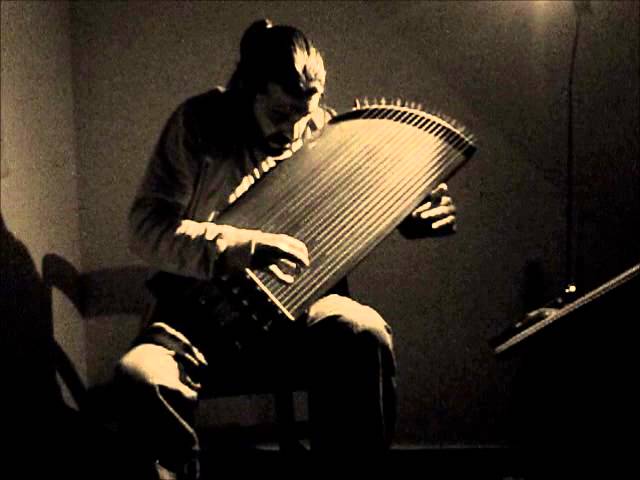
Here is David, holding a psaltery.  Greek psallo means “to pluck”.   While there are also bowed psaltery, this one is plucked by the fingers rather than bowed or struck with a pick or plectrum.

When you get the audio guide at the Met and listen to experts talk about the works, sometimes you get a sample of period music.  In this case, you get to hear some music played on a psaltery.

You can hear, below, a sample of a plucked psaltery in a Medieval Lament for Tristan, which would have been in vogue at the time the painter was working on the altar piece.

Listen as you do your translation!


YouTube thumbnailYouTube icon

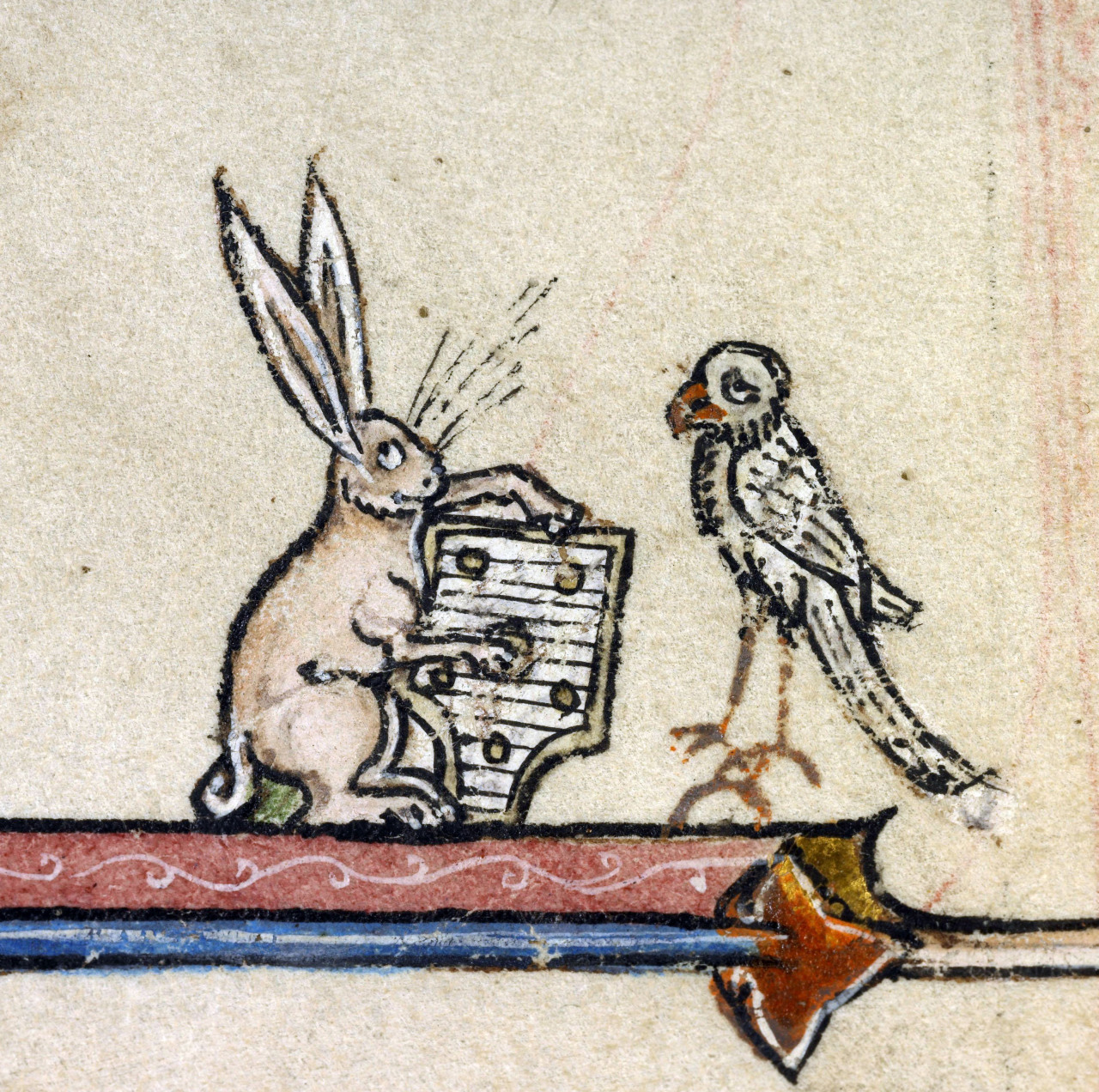
And, just for fun… here is another image of a psaltery bunny from a late 13th c. French manuscript. He even had the audience moved to sorrow.

And a psaltery cat!


Posted in SESSIUNCULA |
1 Comment

CHRISTMASCAzT 2025 – 30 – St. Thomas Becket – Wherein Fr. Z rants

A series of 5 minute daily podcasts for the Octave of Christmas.

I rant for a while about St. Thomas of Canterbury, and Church and State and … shepherds.

Yesterday’s podcast HERE.

Posted in ADVENTCAzT, ADVENTCAzT, PODCAzT, Wherein Fr. Z Rants | Tagged , , ,
1 Comment

It’s time to stop being “inappropriate”!

The hits just keep rolling in. Get this. An “expert” (I know people who know him) has clarified for us what the DDF doctrinal note about titles of the Blessed Virgin Mary mean. CNA has it.  My emphases and comments.

Vatican expert: Co-Redemptrix title of Mary not absolutely prohibited

Monsignor Maurizio Gronchi, an expert consultant for the Dicastery for the Doctrine of the Faith at the Vatican, clarified that the measure established last month regarding the use of the titles “Co-Redemptrix” and “Mediatrix” for the Virgin Mary is “not an absolute prohibition” and that these titles can still be used in popular piety, provided their meaning is understood.

“It’s not an absolute prohibition, but it will no longer be used in official documents or in the liturgy. [The 1962 Missale Romanum has in the appendix a formulary for a Mass on 8 May for Mary, Mediatrix of All Graces… just sayin’.] But if used in popular devotion, understanding its meaning, no one will be reprimanded for it,” [Whew!  I was worried.] the expert said in an interview with “EWTN Noticias,” the Spanish-language broadcast edition of EWTN News.

The interview took place after the Nov. 4 publication of the doctrinal note “ Mother of the Faithful People” in which the Dicastery for the Doctrine of the Faith, led by Cardinal Víctor Fernández, [author of … well….] stated that the use of the title “Co-Redemptrix” is “always inappropriate” and encourages “special prudence” regarding the title “Mediatrix of All Graces.” The text has sparked controversy among the faithful, especially among those who use these terms within the Catholic Church.

Gronchi explained that “the issue is an old one. This problem has been discussed for 99 years, since 1926. We have studied it on several occasions, and the dicastery has received numerous requests for clarification regarding these terms. These titles present a problem. There is a risk of obscuring, of not clearly explaining that the centrality of the paschal mystery of salvation lies in Jesus Christ.” [?  Really?]

“For this reason,” the expert indicated, “now is the time to clarify these titles, so that when it is said that they have been used in the past, it will mean that it was done inappropriately. [pace … John Paul II!] It doesn’t mean that it was wrong, but rather that a definition of these titles was not yet mature and clear.” [What’s the difference between “wrong” and “inappropriately”.  Is it sort of like what “time is greater than space” means?]

The consultant emphasized that the pontifical document is a doctrinal note that “deepens, clarifies, and states that these terms are not appropriate, they are not opportune, simply because Mary participates in the redemption, she collaborates in the redemption, but not in the same way as Jesus.”  [ZOWIE!  We were worried about that. It took the Tucho-led DDF with his acolyte Gronchi to clear up the CONFUSION that we all felt over the Blessed Mother, Our Lady of Sorrows’s, role in our redemption. It WASN’T the same as Christ’s! Protestants and you woke Catholics, you can relax now. We’re sorry for the past use of these titles. We goofed. Now we know officially that Jesus saves. Just as you Protestants have been telling us Catholics for centuries!]

After noting that the Virgin Mary is like the moon reflecting the light of the sun, a symbol of Jesus, Gronchi said that “Mary gives birth to Jesus, but on the cross, Jesus dies, not Mary. [Who knew?] Mary participates with her heart, with her affection, with all that she is, but it is a participation that the document calls dispositive, meaning that Mary disposes us to receive the grace of Christ, but she is not the source of grace, nor the mediatrix of all graces.”  [8 May]

What does he say to those who are confused?

When asked what he would say to those who are confused by the new Vatican document, the expert stated that “they shouldn’t feel any confusion. They should pray to Mary and they should pray to her with the holy rosary. The rosary contains the mysteries of the life of Jesus; therefore, one prays to Mary by meditating on the mysteries of the life of Jesus.”

“This is the simplest, most popular devotion, the one that leads to heaven. The saints have already said it, and we pray to Mary with serenity. If we wish, we can also use the Litany of Loreto, which has very beautiful titles; there is no need to add anything else,” Gronchi emphasized.  [Okay, that’s it.  JUST the Rosary and the Litany of Loreto.  Forget about Our Lady of Sorrows devotion or any of those other things, like Votive Masses.  Don’t say the Angelus.   Forget about the Miraculous Medal (I’m taking mine off after posting this…. NOT).  The Five 1st Saturdays.  Novenas.  No more traveling to Marian Shrines (sorry Card. Burke!)  And, get rid of that Scapular of Our Lady of Mount Carmel.  It’s time to stop being “inappropriate”!]

“What we must say about Mary,” he concluded, “is that she is the mother of the Lord, the mother of God, the mother of the Church, the mother of the faithful people [there’s the downgrade] who accompany us and guide us with tenderness and great love.”


Hey GRONCHI!

St. Bernardine of Siena:

Omnis gratia, quae huic saeculo communicatur, triplicem habet processum; nam a Deo in Christum, a Christo in Virginem, a Virgine in nos ordinatissime dispensatur. … A tempore enim a quo Virgo mater concepit in utero Verbum Dei, quandam ut sic dicam, iusrisdictionem seu auctoritatem obtinuit in omni Spiritus sancti processione temporali; ita quod nulla creatura aliquam a Deo obtinuit gratiam vel virtutem, nisi secundum ipsius piae matris dispensationem.

Every grace that is communicated to this world has a threefold process; for it is dispensed in the most orderly manner from God to Christ, from Christ to the Virgin, and from the Virgin to us. … For from the time when the Virgin Mother conceived the Word of God in her womb, He obtained a certain jurisdiction or authority, so to speak, in the entire temporal procession of the Holy Spirit; so that no creature obtained any grace or power from God, except according to the dispensation of the pious mother herself.

(De Nativitate Beatae Virginis, Sermo 5.8).

Posted in Blatteroons, Our Solitary Boast, Pò sì jiù, What are they REALLY saying?, You must be joking! | Tagged
20 Comments

28 Dec – Holy Innocents – Childermas: “They were the Church’s first blossoms”

Thursday was Christmas.

Today, along with it being the Sunday in the Octave, it is Childermas, the Feast of the Holy Innocents.

The “Coventry Carol”, a lullaby of mothers to doomed children, dates to the 16th century. It was part of a Mystery Play, “The Pageant of the Shearmen and Tailors”, about chapter two of the Gospel of Matthew.

The carol is about the Massacre of the Holy Innocents.

Lully, lulla, thou little tiny child,
By by, lully lullay, thou little tiny child,
By by, lully lullay.

O sisters too, How may we do
For to preserve this day
This poor youngling,
For whom we do sing,
By by, lully lullay?

Lully, lulla, thou little tiny child,
By by, lully lullay, thou little tiny child,
By by, lully lullay.

Herod, the King, In his raging,
Charged he hath this day
His men of might,
In his own sight,
All young children to slay.

Lully, lulla, thou little tiny child,
By by, lully lullay, thou little tiny child,
By by, lully lullay.

That woe is me, Poor child for thee!
And ever morn and day,
For thy parting
Nor say nor sing
By by, lully lullay!

We could sing it on every street corner.

The carol came to greater popularity after the BBC broadcast it at Christmas of 1940, after the Bombing of Coventry: it was sung in the ruins of the bombed Cathedral.

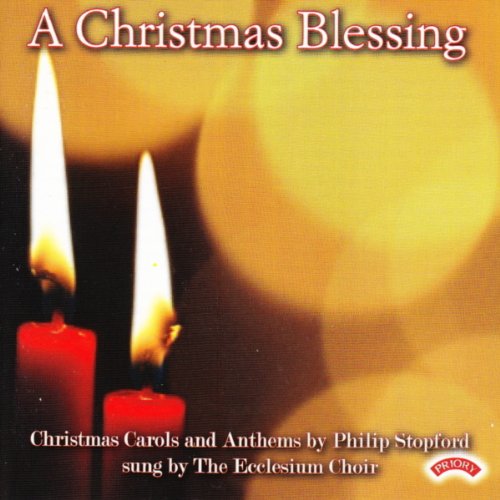
Here’s a modern reworking of Lully Lulla Lullay by Philip Stopford which might quite simply make you choke up and then, at the descant about 3:30, completely lose it.

YouTube thumbnailYouTube icon

Holy Innocents roundThere is sometimes attributed (wrongly) to St. Augustine a quote about the Holy Innocents with some beautiful imagery.  Here it is… mind you, attributed to the Doctor of Grace:

These then, whom Herod’s cruelty tore as sucklings from their mothers’ bosom, are justly hailed as “infant martyr flowers”; they were the Church’s first blossoms, matured by the frost of persecution during the cold winter of unbelief.

Lovely, no?  Augustine didn’t say that.  It was Caesarius of Arles who preached:

Quos herodis impietas lactantes matrum uberibus abstraxit; qui iure dicuntur martyrum flores, quos in medio frigore infidelitatis exortos velud primas erumpentes ecclesiae gemmas quaedam persecutionis pruina decoxit.  [s. 222, 2 in CCL 104]

Literally: Whom the impiety of Herod dragged from their mothers’ breasts; who rightly are called the flowers of the martyrs, whom, having sprung up in the midst of the cold of infidelity, bursting forth as the Church’s first jewels, a certain frost of persecution wasted.

or

Whom the ungodliness of Herod dragged as nursing babies from their mothers’ breasts; who rightly are called the flowers of martyrs, whom the frost of persecution cooked up, grown up in the midst of the cold, bursting forth as the first buds of the Church.

Some interesting things are going on in the Latin.  First, you need to know that gemma isn’t just “gem”, but can also be “bud, blossom”.    In Latin there are two related verbs, lacto, lactare, “to contain milk, to give suck”, and lacteo, lactere, “to suck milk, to be a suckling”.  However, in all periods they swap meanings.  We could use one English verb for both, “to nurse”. This is also why we for the famous line “out of the mouth of infants and of sucklings” both “ex ore infantium et lactentium” and “ex ore lactantium”.

By the way, if you like this drilling into Latin, try Latin Synonyms, with Their Different Significations, and Examples Taken from the Best Latin Authors, by M. Jean-Baptiste Gardin Dumesnil, translated into English, with additions and corrections, by the Rev. J. M. Gosset. US HERE – UK HERE

Decoquo is “to waste” or “to reduce by boiling”.  I found an interesting reference in Suetonius how Nero made a icy-cold drink decoction, a decocta.  Pliny uses decoctum as a medicinal drink.  Note the juxtaposition of the heat indicated in decoquo and the cold of frost.  The cold heat of persecution brought forth flowers before their day.

Here is the Collect from the 1962 Missale Romanum:

Deus, cuius hodierna die praeconium Innocentes Martyres non loquendo, sed moriendo confessi sunt: omnia in nobis vitiorum mala mortifica; ut fidem tuam, quam lingua nostra loquitur, etiam moribus vita fateatur.

O God, whose public heralding the Innocent Martyrs professed this very day not by speaking but by dying; mortify in us every ill of vices; so that (our) life might confess Your Faith, which we speak with our tongue, also by (our) morals.

Look at the not-so-subtle change made to the Collect by the cutters and pasters who glued together the Novus Ordo:

Deus, cuius hodierna die praeconium
Innocentes Martyres non loquendo,
sed moriendo confessi sunt:
da, quaesumus, ut fidem tuam,
quam lingua nostra loquitur
etiam moribus vita fateatur.

Can you spell “bowdlerize”?

LITERAL VERSION:

O God, whose public heralding the Innocent Martyrs
professed this very day not by speaking but by dying;
grant, we implore, that (our) life might confess Your Faith,
which our tongue declares,
also by (our) morals
.

That lingua nostra could, I suppose, be ablative, but it is probably the nominative subject of loquitur.  I originally swerved that into “which we speak with our tongue”.  There is a strong temptation to reconstruct these clauses when rendering it into English.

NEW CORRECTED VERSION:

O God, whom the Holy Innocents confessed
and proclaimed on this day,
not by speaking but by dying,
grant, we pray,
that the faith in you which we confess with our lips
may also speak through our manner of life
.

Did the translator not get that fateor is deponent?  The subject is vita, no? Accusative fidem is the object, not the subject.

What a mess.

St. Thomas Aquinas dealt with the question of how the Innocents could be considered martyrs if they didn’t yet have use of their free will so as to be able to choose death in favor of Christ and if they were not baptized.

The Angelic Doctor answered that God permitted their slaughter for their own good and that their slaying brought them the justification and salvation that would also come from baptism.

This was a “baptism of blood”. In their deaths they were truly martyrs. And they were indeed for Christ, since Herod, fulfilling the prophecy of Jeremiah 31:15, killed them from ill-will for the new-born Christ.

YouTube thumbnailYouTube icon

Did you like the Stopford version?

US HERE – UK HERE

holy innocents 01

Adorazione_dei_Magi_by_Gentile_da_Fabriano_Predella Flight into Egypt sm

Posted in Christmas and Epiphany, Saints: Stories & Symbols, SESSIUNCULA, WDTPRS |
15 Comments

CHRISTMASCAzT 2025 – 29 – Six Thrones

A series of 5 minute daily podcasts for the Octave of Christmas.

Pius Parsch talks about the six throne of Jesus.

Dom Prosper Guéranger on the wonder of adoption.

At the end, a taste of the heartrending Coventry Carol in honor of the Feast of the Holy Innocents.

Yesterday’s podcast HERE.

Posted in ADVENTCAzT, PODCAzT | Tagged , , ,
1 Comment