Daily Rome Shot 621

“The history of salvation is not a small event, on a poor planet, in the immensity of the universe. It is not a minimal thing which happens by chance on a lost planet. It is the motive for everything, the motive for creation. Everything is created so that this story can exist, the encounter between God and his creature.”

— Pope Benedict XVI
address at the opening of the 12th Ordinary General Assembly of the Synod of Bishops, 6 October 2008

Welcome new registrant:

PeterJacob

From the new presepio at Ss. Trinità dei Pelegrini.

Use FATHERZ10 at checkout

Meanwhile,…

White to move.

NB: I’ll hold comments with solutions ’till the next day so there won’t be “spoilers” for others.

Interested in learning?  Try THIS.

3:16 isn’t just in John.

Posted in SESSIUNCULA |
1 Comment

Pope Benedict XVI – Requiescat in pace

I was privileged to have known him well before his election. His loss is a personal loss.

Apart from his contributions as a priest, prefect and theologian, two of his accomplishments as Pope stand out for me.

Summorum Pontificum – This monumental document sparked the beginning of a liturgical renewal in the Church, as one can tell from how some still fear and still fight it.

Anglicanorum coetibus – earned for Benedict justly to be known as the “Pope of Christian Unity”.  In one gesture he did more for Christian unity than pretty much everyone else with all their talk and dialogue.

Shall we see his like again?

Clearly not.  For example, it is likely that, soon, the Pontiffs elected will have no life experience from the time before the Second Vatican Council.  They will certainly not have personal experience of WWII.   It is highly unlikely that they will have close to the intellectual and cultural formation of a Joseph Ratzinger.

Benedict’s passing is the end of an era in many respects.

Pray for him.  While I am confident that through his final sufferings and unquestionable reception of the last sacraments and Apostolic Blessing, Joseph Ratzinger now enjoys the Beatific Vision, it is nevertheless good to pray for him and to commit him to God’s mercy, particularly during the traditional days of mourning.

Finally, Benedict XVI’s passing might be a stimulus to consider your own death and judgment, which is inevitable.

May we all have the grace of a death which is “provided” for, that is, with access to the last sacraments and Apostolic Blessing.  In the meantime we should be making good examinations of conscience and regular confessions of all mortal sins in both kind and number.   Kind and number.

Please, go to confession.

UPDATE

SPIRITUAL TESTAMENT OF BENEDICT XVI

Testo in lingua tedesca

Traduzione in lingua italiana

Testo in lingua tedesca

29. August 2006

Mein geistliches Testament

Wenn ich in dieser späten Stunde meines Lebens auf die Jahrzehnte zurückschaue, die ich durchwandert habe, so sehe ich zuallererst, wieviel Grund ich zu danken habe. Ich danke vor allen anderen Gott selber, dem Geber aller guten Gaben, der mir das Leben geschenkt und mich durch vielerlei Wirrnisse hindurchgeführt hat; immer wieder mich aufgehoben hat, wenn ich zu gleiten begann, mir immer wieder neu das Licht seines Angesichts geschenkt hat. In der Rückschau sehe und verstehe ich, daß auch die dunklen und mühsamen Strecken dieses Weges mir zum Heile waren und daß Er mich gerade da gut geführt hat.

Ich danke meinen Eltern, die mir in schwerer Zeit das Leben geschenkt und unter großen Verzichten mir mit ihrer Liebe ein wundervolles Zuhause bereitet haben, das als helles Licht alle meine Tage bis heute durchstrahlt. Der hellsichtige Glaube meines Vaters hat uns Geschwister glauben gelehrt und hat als Wegweisung mitten in all meinen wissenschaftlichen Erkenntnissen standgehalten; die herzliche Frömmigkeit und die große Güte der Mutter bleiben ein Erbe, für das ich nicht genug danken kann. Meine Schwester hat mir selbstlos und voll gütiger Sorge über Jahrzehnte gedient; mein Bruder hat mir mit der Hellsicht seiner Urteile, mit seiner kraftvollen Entschiedenheit und mit der Heiterkeit des Herzens immer wieder den Weg gebahnt; ohne dieses immer neue Vorausgehen und Mitgehen hätte ich den rechten Weg nicht finden können.

Von Herzen danke ich Gott für die vielen Freunde, Männer und Frauen, die er mir immer wieder zur Seite gestellt hat; für die Mitarbeiter auf allen Stationen meines Weges; für die Lehrer und Schüler, die er mir gegeben hat. Sie alle vertraue ich dankbar seiner Güte an. Und danken möchte ich dem Herrn für die schöne Heimat im bayerischen Voralpenland, in der ich immer wieder den Glanz des Schöpfers selbst durchscheinen sehen durfte. Den Menschen meiner Heimat danke ich dafür, daß ich bei ihnen immer wieder die Schönheit des Glaubens erleben durfte. Ich bete darum, daß unser Land ein Land des Glaubens bleibt und bitte Euch, liebe Landsleute: Laßt euch nicht vom Glauben abbringen. Endlich danke ich Gott für all das Schöne, das ich auf den verschiedenen Stationen meines Weges, besonders aber in Rom und in Italien erfahren durfte, das mir zur zweiten Heimat geworden ist.

Alle, denen ich irgendwie Unrecht getan habe, bitte ich von Herzen um Verzeihung.

Was ich vorhin von meinen Landsleuten gesagt habe, sage ich nun zu allen, die meinem Dienst in der Kirche anvertraut waren: Steht fest im Glauben! Laßt euch nicht verwirren! Oft sieht es aus, als ob die Wissenschaft – auf der einen Seite die Naturwissenschaften, auf der anderen Seite die Geschichtsforschung (besonders die Exegese der Heiligen Schriften) – unwiderlegliche Einsichten vorzuweisen hätten, die dem katholischen Glauben entgegenstünden. Ich habe von weitem die Wandlungen der Naturwissenschaft miterlebt und sehen können, wie scheinbare Gewißheiten gegen den Glauben dahinschmolzen, sich nicht als Wissenschaft, sondern als nur scheinbar der Wissenschaft zugehörige philosophische Interpretationen erwiesen – wie freilich auch der Glaube im Dialog mit den Naturwissenschaften die Grenze der Reichweite seiner Aussagen und so sein Eigentliches besser verstehen lernte. Seit 60 Jahren begleite ich nun den Weg der Theologie, besonders auch der Bibelwissenschaften, und habe mit den wechselnden Generationen unerschütterlich scheinende Thesen zusammenbrechen sehen, die sich als bloße Hypothesen erwiesen: die liberale Generation (Harnack, Jülicher usw.), die existenzialistische Generation (Bultmann usw.), die marxistische Generation. Ich habe gesehen und sehe, wie aus dem Gewirr der Hypothesen wieder neu die Vernunft des Glaubens hervorgetreten ist und hervortritt. Jesus Christus ist wirklich der Weg, die Wahrheit und das Leben – und die Kirche ist in all ihren Mängeln wirklich Sein Leib.

Endlich bitte ich demütig: Betet für mich, damit der Herr mich trotz all meiner Sünden und Unzulänglichkeiten in die ewigen Wohnungen einläßt. Allen, die mir anvertraut sind, gilt Tag um Tag mein von Herzen kommendes Gebet.

Benedictus PP XVI.

[02044-DE.01] [Originalsprache: Deutsch]

Traduzione in lingua italiana

29 agosto 2006

Il mio testamento spirituale

Se in quest’ora tarda della mia vita guardo indietro ai decenni che ho percorso, per prima cosa vedo quante ragioni abbia per ringraziare. Ringrazio prima di ogni altro Dio stesso, il dispensatore di ogni buon dono, che mi ha donato la vita e mi ha guidato attraverso vari momenti di confusione; rialzandomi sempre ogni volta che incominciavo a scivolare e donandomi sempre di nuovo la luce del suo volto. Retrospettivamente vedo e capisco che anche i tratti bui e faticosi di questo cammino sono stati per la mia salvezza e che proprio in essi Egli mi ha guidato bene.

Ringrazio i miei genitori, che mi hanno donato la vita in un tempo difficile e che, a costo di grandi sacrifici, con il loro amore mi hanno preparato una magnifica dimora che, come chiara luce, illumina tutti i miei giorni fino a oggi. La lucida fede di mio padre ha insegnato a noi figli a credere, e come segnavia è stata sempre salda in mezzo a tutte le mie acquisizioni scientifiche; la profonda devozione e la grande bontà di mia madre rappresentano un’eredità per la quale non potrò mai ringraziare abbastanza. Mia sorella mi ha assistito per decenni disinteressatamente e con affettuosa premura; mio fratello, con la lucidità dei suoi giudizi, la sua vigorosa risolutezza e la serenità del cuore, mi ha sempre spianato il cammino; senza questo suo continuo precedermi e accompagnarmi non avrei potuto trovare la via giusta.

Di cuore ringrazio Dio per i tanti amici, uomini e donne, che Egli mi ha sempre posto a fianco; per i collaboratori in tutte le tappe del mio cammino; per i maestri e gli allievi che Egli mi ha dato. Tutti li affido grato alla Sua bontà. E voglio ringraziare il Signore per la mia bella patria nelle Prealpi bavaresi, nella quale sempre ho visto trasparire lo splendore del Creatore stesso. Ringrazio la gente della mia patria perché in loro ho potuto sempre di nuovo sperimentare la bellezza della fede. Prego affinché la nostra terra resti una terra di fede e vi prego, cari compatrioti: non lasciatevi distogliere dalla fede. E finalmente ringrazio Dio per tutto il bello che ho potuto sperimentare in tutte le tappe del mio cammino, specialmente però a Roma e in Italia che è diventata la mia seconda patria.

A tutti quelli a cui abbia in qualche modo fatto torto, chiedo di cuore perdono.

Quello che prima ho detto ai miei compatrioti, lo dico ora a tutti quelli che nella Chiesa sono stati affidati al mio servizio: rimanete saldi nella fede! Non lasciatevi confondere! Spesso sembra che la scienza — le scienze naturali da un lato e la ricerca storica (in particolare l’esegesi della Sacra Scrittura) dall’altro — siano in grado di offrire risultati inconfutabili in contrasto con la fede cattolica. Ho vissuto le trasformazioni delle scienze naturali sin da tempi lontani e ho potuto constatare come, al contrario, siano svanite apparenti certezze contro la fede, dimostrandosi essere non scienza, ma interpretazioni filosofiche solo apparentemente spettanti alla scienza; così come, d’altronde, è nel dialogo con le scienze naturali che anche la fede ha imparato a comprendere meglio il limite della portata delle sue affermazioni, e dunque la sua specificità. Sono ormai sessant’anni che accompagno il cammino della Teologia, in particolare delle Scienze bibliche, e con il susseguirsi delle diverse generazioni ho visto crollare tesi che sembravano incrollabili, dimostrandosi essere semplici ipotesi: la generazione liberale (Harnack, Jülicher ecc.), la generazione esistenzialista (Bultmann ecc.), la generazione marxista. Ho visto e vedo come dal groviglio delle ipotesi sia emersa ed emerga nuovamente la ragionevolezza della fede. Gesù Cristo è veramente la via, la verità e la vita — e la Chiesa, con tutte le sue insufficienze, è veramente il Suo corpo.

Infine, chiedo umilmente: pregate per me, così che il Signore, nonostante tutti i miei peccati e insufficienze, mi accolga nelle dimore eterne. A tutti quelli che mi sono affidati, giorno per giorno va di cuore la mia preghiera.

Benedictus PP XVI

[02044-IT.01] [Testo originale: Tedesco]

Posted in Benedict XVI, GO TO CONFESSION, Pope of Christian Unity, SUMMORUM PONTIFICUM |
21 Comments

Daily Rome Shot 620

Welcome registrants:

MariaHDolan

From the new presepio at Ss. Trinità dei Pellegrini.

Please remember me when shopping online. Thanks in advance.  End of the month!  Important time.

US HERE – UK HERE

Use FATHERZ10 at checkout

Meanwhile,…

As I was looking for news about Benedict XVI on ANSA (Italian news service) I saw a front page piece about two Iranian gals who recently competed in the FIDE World Rapid Championships in Kazakhstan… without hijab.  They are now – for obvious reasons – seeking asylum in Spain.  ANSA says that, according the news agency Hrana between 26 Sept and 7 Dec some 500 people have been killed in 1200 protests in 161 cities including 69 dead children with arrests of over 18000.

Black to move and win, but it’s going to cost.

NB: I’ll hold comments with solutions ’till the next day so there won’t be “spoilers” for others.

In more chess news… this is crazy…

After a dramatic finish to the FIDE World Rapid Championship in Kazakhstan on Wednesday, lopsided round-one matchups seemed unlikely to produce comparable tension. In a surprise twist, this couldn’t have been further from the truth. The news of the round was undoubtedly Carlsen arriving late to the board and playing his entire game against GM Vladislav Kovalev with 30 seconds on his clock. 59 moves later the world champion secured a win and it was later revealed that he was “stuck in traffic” after going skiing earlier in the day.


Posted in SESSIUNCULA |
2 Comments

The prayer book of St. Thomas Becket

Here is something from 2016 which remains fascinating to this day.

The other day I read about St. Theresa of Avila’s book that had the famous poem written in the margin, perhaps by St. John of Avila.  And years ago I saw an exhibit at the British Library about Henry VIII (monster) wherein there was a prayer book of Anne Boleyn with Henry’s little love notes in the margins.

Human beings, not just carved figures in the past.

The idea that St. Thomas Becket may have been holding this when he was killed is particularly evocative for me, since I have a relic of of the Saint: a thread from the alb he was wearing when he was martyred.

thomas becketFrom The Guardian:

Thomas Becket’s personal book of psalms ‘found in Cambridge library’

Historian claims the Psalter is ‘undoubtedly’ the property of martyred saint, and that he may have been holding it when he was murdered

A Cambridge academic believes he has discovered Thomas Becket’s personal book of psalms, an ancient manuscript the martyred saint and so-called “turbulent priest” may have been holding when he was murdered in Canterbury Cathedral in 1170.

Dr Christopher de Hamel, a historian at Cambridge University, stumbled across the book during a conversation with a colleague. De Hamel, author of the just-released Meetings with Remarkable Manuscripts, had said that books belonging to saints were generally not used as relics, and his fellow historian replied that he knew of an exception.

He showed de Hamel an entry from the Sacrists’ Roll of Canterbury Cathedral, dating to 1321, which gave a detailed description of a Psalter, [Talk about a great example of scripta manent!] or book of psalms, in a jewelled binding, that was then preserved as a relic at the shrine of Becket in the cathedral. Becket, archbishop of Canterbury from 1162 to 1170, was murdered by four knights inside the cathedral, who took on the task after supposedly hearing Henry II remark: “Who will rid me of this turbulent priest?”

De Hamel said that he read the Psalter’s description, and realised he had seen it before: an Anglo-Saxon Psalter in Cambridge’s Parker Library bears the same description on its flyleaf. It is undoubtedly the same manuscript from Becket’s shrine, he believes.

A 16th-century note says the book once belonged to Becket, but “everyone has always said it was ridiculous,” said de Hamel. “Becket is a big name and there’s a list of his books. This isn’t one of them.” But a link had not previously been made between the 14th-century inventory and the Parker manuscript.

In a piece in Saturday’s Guardian Review, De Hamel lays out how the Psalter was clearly made in Canterbury, and dates from the very early 11th century. It was probably, he said, made for the private use of an archbishop, likely Alphege, who was archbishop from 1005 to 1016, when he was killed by the Danes in Greenwich. Alphege was later canonised, and was Becket’s personal patron saint.

“People hadn’t matched it up, and suddenly there it was,” said de Hamel. “The inscription says this is the Psalter of the archbishop of Canterbury. It clearly is a private Psalter … I assume Becket had come across the book and taken it into his own possession.”

The academic also points to the stained glass window in Trinity Chapel in Canterbury, which shows Becket holding a book of the Psalter’s size, in a similarly decorated binding. The window is above the site of the shrine of Becket, and is almost contemporary to the saint’s death, made around 1200. The shrine was destroyed in the 16th century by Henry VIII. [Monster.]

“Of course he is going to be shown holding something you could have seen on the shrine – that’s part of ­­the marketing,” said de Hamel. “The shrine was destroyed, and nothing from it survives, except possibly this. It would have been seen by pilgrims to the shrine [including] Chaucer. And it was sitting quietly in Cambridge.”

De Hamel said he was “absolutely sure” that the Parker library manuscript is the book that sat on Becket’s shrine. “Whether it really belonged to Becket – well, I wasn’t there. But I bet it did. [The creators of the shrine] obviously absolutely believed it was his. And I expect it was,” he said.


[…]

Read the rest there.

Every once in a while fantastic finds are made, which boggle the mind. For example, in 1969 Johannes Divjak discovered in the Bibliothèque Municipale of Marseilles 29 letters by St. Augustine of Hippo that were completely unknown. Think… Rosetta Stone, Dead Sea Scrolls, the body of King Richard III.

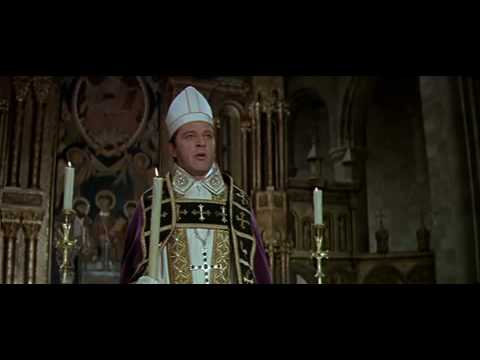
On that note, let’s watch the wonderful excommunication scene from Becket with Richard Burton.  UK HERE

And, yes, the old rite of excommunication was really like this, even with the candles.

YouTube thumbnailYouTube icon

It’s that little pause before the last word that really does it.

When I’m at last elected and take the name Pius or Clement or something, that’s what my extremely rare public appearances will be like.  Then we shall disappear back into the Apostolic Palace not to be seen for stretches of time so long that people will speculate that we have died.

Posted in Linking Back, Saints: Stories & Symbols |
8 Comments

Daily Rome Shot 619

From the new presepio at Ss. Trinità dei Pellegrini.

Use FATHERZ10 at checkout

Meanwhile, …

White’s b pawn threatens promotion.  How does black move and win?

Black to move.

NB: I’ll hold comments with solutions ’till the next day so there won’t be “spoilers” for others.

Priestly chess players, drop me a line. HERE

We are in the season of Christmas!

By FSSP seminarians

Your use of my Amazon affiliate link is a major part of my income. It helps to pay for insurance, groceries, everything. Please remember me when shopping online. Thanks in advance.  US HERE – UK HERE


Posted in SESSIUNCULA |
3 Comments

UPDATED: Pope Benedict XVI is doing quite poorly – pray for him! Final perseverance!

UPDATE 31 Dec 22: 0820 CST

Joseph Ratzinger, Pope Benedict XVI, has passed away. His desire was for simple rites. The funeral will be celebrated in St. Peter’s Square on 5 January and he will be interred in the grotto of the basilica.

Requiescat in pace.

UPDATE 30 Dec 22: 1020 CST

Papa Ratzinger is stable, but grave.  He concelebrated Mass again.

++ Ratzinger resta stabile, continua a partecipare a messa ++
Anche stamane ha concelebrato la liturgia con mons.Gaenswein (ANSA) – CITTA’ DEL VATICANO, 30 DIC – Le condizioni di salute di BENEDETTO XVI restano “stabili”, secondo quanto riferisce una fonte direttamente dal Monastero Mater Ecclesiae. Al momento non trapelano ulteriori dettagli se non che il Papa emerito ha continuato stamane, nella sua camera e pur con le difficoltà di un quadro clinico ancora grave, a partecipare alla messa, concelebrandola con mons. Georg Gaenswein semplicemente indossando una leggera stola sopra il camice della sua degenza. Le quattro memores domini e l’infermiere fra Eligio continuano a costituire intorno a Ratzinger, tenuto sotto costante controllo medico, un cordone di sicurezza e assistenza continue. (ANSA). Y43-GR 30-DIC-22 11:04 NNN

UPDATE 29 Dec 22: 1216 CST

From ANSA we learn that Benedict did not want to go to the hospital, but rather stay at his monastic enclosure.

He is “extremely serene” and he concelebrated Mass.

++ Bild, Benedetto rifiuta di essere portato in ospedale ++ (ANSA) – BERLINO, 29 DIC – “Il pontefice emerito Benedetto XVI, a quanto si dice, non vuole essere portato in ospedale, nonostante sia gravemente malato”. È quello che scrive la Bild. La sua residenza nell’ex monastero Mater Ecclesiae ha a disposizione l’attrezzatura medica necessaria. Lì viene sorvegliato in modo permanente dai medici. (ANSA). PGL 29-DIC-22 15:36 NNN
++ Ratzinger ‘estremamente sereno’, concelebra messa ++ Con lui Gaenswein,le memores,fra Eligio. Assistito da medico (ANSA) – CITTÀ DEL VATICANO, 29 DIC – “E’ sereno, estremamente sereno”. Così viene descritto, da fonti vicine al Mater ecclesiae, il Papa Emerito Benedetto XVI. Ratzinger si trova nella stanza da letto al primo piano dell’ex monastero, indossa un camice, e al momento della messa concelebra con una stola che gli viene appoggiata sulle spalle. Ad assisterlo ci sono sempre le quattro memores domini, monsignor Georg Ganswein, e l’infermiere vaticano, fra Eligio. Assistenza viene fornita anche dal medico personale, Patrizio Polisca. (ANSA).

UPDATE 29 Dec -22 0900 CST

From ANSA:

Papa Ratzinger’s condition is grave but stable.  He is lucid, but frail.  His condition hasn’t changed since yesterday.

++ Condizioni Ratzinger gravi ma stabili ++
Ha trascorso la notte continuamente assistito dai medici (ANSA) – CITTÀ DEL VATICANO, 29 DIC – Il Papa emerito BENEDETTO XVI si trova in condizioni di salute gravi ma stabili. “La sua situazione non è cambiata rispetto a ieri”, dicono all’ANSA fonti in contatto con l’ex monastero Mater Ecclesiae. Il Pontefice emerito ha trascorso la notte continuamente sotto il controllo dei medici e il monitoraggio proseguirà nelle prossime ore. (ANSA). Y43-GR 29-DIC-22 10:01 NNN

From Avvenire:

There will be a Mass celebrated for him tomorrow, 30 Dec, at the Lateran Basilica.


Originally Published on: Dec 28, 2022 at 15:33

If you haven’t yet seen this news, as I write Papa Ratzinger, 95 year old, frail Pope Benedict XVI, is quite ill.

Pray for him.

Posted in Benedict XVI |
26 Comments

Daily Rome Shot 618

New registrants, welcome!

Luxmaria22
San Antonio Rose

From the new presepio at Ss. Trinità dei Pellegrini.

Use FATHERZ10 at checkout

Meanwhile, …

Black to move.   Black is in trouble!   Find a way out.

NB: I’ll hold comments with solutions ’till the next day so there won’t be “spoilers” for others.

Interested in learning?  Try THIS.

Your support helps the sisters and gets nice thing for you and yours.

Posted in SESSIUNCULA |
2 Comments

ASK FATHER: Must we do penance, abstain from meat, on Friday in the Octave of Christmas?

This is a question which comes up each year. It came up again today.

Must we do penance on Friday within the Octave of Christmas?

The short answer is YES, this year, yes.

According to Canon Law, Catholics are bound to do penance on Fridays of the year except when the Friday is of the liturgical rank of a “Solemnity” (a new-fangled post-Conciliar rank).

In some years, the Friday will be 1 January.  That’s another matter, because 1 January is the Solemnity of Mary, Mother of God in the new-fangled calendar, and the Solemnity removes the obligation.

THIS YEAR, however, Friday is the Sixth Day in the Octave.

The Octave of Christmas does not have the same liturgical “weight” of the Octave of Easter.

Easter Friday (a Solemnity) outweighs the penance thing, but Christmas Friday does not.

Note can. 1251 in the 1983 Code.

Can. 1251 Abstinence from meat, or from some other food as determined by the Episcopal Conference, is to be observed on all Fridays, unless a solemnity should fall on a Friday. Abstinence and fasting are to be observed on Ash Wednesday and Good Friday.

Remember, you can ask your parish priest to dispense you or commute acts of penance.

Can. 1245 Without prejudice to the right of diocesan bishops mentioned in can. 87, for a just cause and according to the prescripts of the diocesan bishop, a pastor [parish priest] can grant in individual cases a dispensation from the obligation of observing a feast day or a day of penance or can grant a commutation of the obligation into other pious works. A superior of a religious institute or society of apostolic life, if they are clerical and of pontifical right, can also do this in regard to his own subjects and others living in the house day and night.

Members of religious communities and third orders should consult their own regulations and review to whom they turn for dispensations.

Also, you can substitute another form of penance for abstaining from meat.  Make it penitential, however.  Abstinence from meat has good reasoning behind it.  For some, however, there abstinence from other things can be of greater spiritual effect.

Also, it may be that some local places have exceptions in their calendars.   For example, if, this year, you are a parishioner of a parish named in honor of St. Exuperantius, Martyr, (Feast 30 Dec.) your patronal feast could be a reason not to be bound by Friday penance.


Posted in SESSIUNCULA | Tagged , ,
10 Comments

27 December – St. John the Evangelist – Today we bless WINE!

The liturgical year guided and nourished and shaped Catholics for centuries.  It does so far less now, since it is much diminished after the “reforms” that hacked away at the calendar. However, once upon a time people not only followed the turning of the earth and the wheeling of the stars and the rising and setting of the sun and moon with serious attention for the sake of planting and harvesting – a life and death matter – but they also marked the passage of time with sacramentals and blessings and other customs.

Ttoday is the Feast of St. John the Evangelist and Apostle.  In the older, traditional Rituale Romanum, which priests of the Latin Church may use no matter what anyone says, there is a blessing today for wine.

Why wine?  There is a story about St. John that an attempt was made to kill him with poisoned wine.   John was protected, however.  He blessed the cup and the poison extracted itself from the wine and crawled out of the chalice in the form of a snake.  This is why St. John the Evangelist is often depicted not just with an eagle, his gospel symbol, but also a cup with a little snake crawling out of it.

I have in the past had some wine that was so bad that I was sure someone was trying to kill me. I wish I had had the presence of mind to bless it especially just to see what would happen.

Here is the translation of the beautiful Latin blessing for wine.  Remember, Fathers, according to the edition of the Rituale Romanum, blessings are to be done in Latin or they are not valid.

Frankly, I am not sure how that works, but… just do them in Latin.

BLESSING OF WINE

on the Feast of St. John, Apostle and Evangelist

At the end of the principal Mass on the feast of St. John, Apostle and Evangelist, after the last Gospel, the priest, retaining all vestments except the maniple, blesses wine brought by the people. This is done in memory and in honor of St. John, who drank without any ill effects the poisoned wine offered to him by his enemies.

P: Our help is in the name of the Lord.

All: Who made heaven and earth.

P: The Lord be with you.

All: May He also be with you.

If it please you, Lord God, bless  + and consecrate +  this vessel of wine (or any other beverage) by the power of your right hand; and grant that, through the merits of St. John, apostle and evangelist, all your faithful who drink of it may find it a help and a protection. As the blessed John drank the poisoned potion without any ill effects, so may all who today drink the blessed wine in his honor be delivered from poisoning and similar harmful things. And as they offer themselves body and soul to you, may they obtain pardon of all their sins; through Christ our Lord.

Lord, bless + this creature drink, so that it may be a health- giving medicine to all who use it; and grant by your grace that all who taste of it may enjoy bodily and spiritual health in calling on your holy name; through Christ our Lord.

May the blessing of almighty God, Father, Son, + and Holy Spirit, come on this wine (or any other beverage) and remain always.

It is sprinkled with holy water. If the blessing is given privately outside of Mass, the priest is vested in surplice and stole and performs the ceremony as given above.

4. ANOTHER FORM FOR BLESSING WINE on the Feast of St. John, Apostle and Evangelist

At the end of Mass, after the last Gospel, the following is said:

(for this psalm see Rite for Baptism of Children)

After the psalm: Lord, have mercy. Christ, have mercy. Lord, have mercy. Our Father (the rest inaudibly until:)

P: And lead us not into temptation.
All: But deliver us from evil.
P: Save your servants.
All: Who trust in you, my God.
P: Lord, send them aid from your holy place.
All: And watch over them from Sion.
P: Let the enemy have no power over them.
All: And the son of iniquity be powerless to harm them.
P: Then if they drink anything deadly.
All: It will not harm them.
P: Lord, heed my prayer.
All: And let my cry be heard by you.
P: The Lord be with you.
All: May He also be with you.

Holy Lord, almighty Father, everlasting God, who willed that your Son, co-eternal and consubstantial [apparently “consubstantial” wasn’t tooo haaard back then!] with you, come down from heaven and in the fulness of time be made flesh for a time of the blessed Virgin Mary, in order to seek the lost and wayward sheep and carry it on His shoulders to the sheepfold, and to heal the man fallen among robbers of his wounds by pouring in oil and wine; may you bless + and sanctify + this wine which you have vintaged for man’s drink. Let all who taste or drink of it on this holy feast day have health of body and soul; by your grace let it be a solace to the man who is on a journey and bring him safely to his destination; through Christ our Lord.

Lord Jesus Christ, who spoke of yourself as the true vine and the apostles as the branches, and who willed to plant a chosen vineyard of all who love you, bless + this wine and empower it with your blessing; so that all who taste or drink of it may, through the intercession of your beloved disciple John, apostle and evangelist, be spared every deadly and poisonous affliction and enjoy bodily and spiritual well-being. We ask this of you who live and reign forever and ever.

God, who in creating the world brought forth for mankind bread as food and wine as drink, bread to nourish the body and wine to cheer the heart; who conferred on blessed John, your beloved disciple, such great favor that not only did he himself escape the poisoned potion, but could restore life by your power to others who were dead from poison; grant to all who drink this wine spiritual gladness and everlasting life; through Christ our Lord.

It is sprinkled with holy water.

Posted in "How To..." - Practical Notes, Liturgy Science Theatre 3000, Our Catholic Identity |
Comments Off on 27 December – St. John the Evangelist – Today we bless WINE!

27 Dec – St. John Evangelist and St. Fabiola and Card. Wiseman about Protestantism and the Bible

Today, being the Feast of the Evangelist John, we have a special blessing for wine and other libations.  I wrote about that HERE.  We have this blessing because of an assassination attempt.    There was an attempt on the life of St. John the Evangelist by poisoning.  He blessed the cup and the poison crawled out in the form of a serpent.  You often see St. John depicted this way in art.

St Jerome Joos van CleeveSt. Jerome says this about the Evangelist.  Priests read this in the Breviarium Romanum during Matins.

V. Grant, Lord, a blessing.
Benediction. May the Spirit’s fire Divine in our hearts enkindled shine. Amen.

Reading 6
From the Commentary upon the Epistle to the Galatians, by the same author [St. Jerome]
iii. 6.

The Blessed Evangelist John lived at Ephesus down to an extreme old age, and, at length, when he was with difficulty carried to the Church, and was not able to exhort the congregation at length, he was used simply to say at each meeting, My little children, love one another. At last the disciples and brethren were weary with hearing these words continually, and asked him, Master, wherefore ever sayest thou this only? Whereto he replied to them, worthy of John, It is the commandment of the Lord, and if this only be done, it is enough.
V. But thou, O Lord, have mercy upon us.
R. Thanks be to God.

R. In the midst of the congregation did the Lord open his mouth.
* And filled him with the spirit of wisdom and understanding.
V. He made him rich with joy and gladness.
R. And filled him with the spirit of wisdom and understanding.
V. Glory be to the Father, and to the Son, * and to the Holy Ghost.
R. And filled him with the spirit of wisdom and understanding.

This is the author of the Fourth Gospel, the visionary of Revelation, the discipline whom Jesus loved best, the one who, though he ran at first, was at the Cross, and to whom the dying Savior entrusted His Mother even as He told her that John was her son. This feast reminds us of the filial relationship priests should have with Mary, which she already has with us and would see deepened.

Fabiola_Jean_Jacques_HennerAnother connection through St. John’s Day and Jerome is that this is the feast of St. Fabiola, one of the ascetic gang of Roman matrons who were around Jerome while he was in the City and who busied themselves in works of mercy.

Fabiola eventually moved to St. Paula’s monastic house in Jerusalem to continue her work near Jerome. She was quite a wealthy widow and is a patroness of widows, divorced people, troubled marriages, victims of domestic abuse and those who suffer because of adultery.  Perhaps we can ask her today to intercede with God for enlightenment of Card. Kasper and … others who are confusing the People of God about the indissolubility of marriage and the sinfulness of infidelity.  There was a famous painting of Fabiola by the French painter Jean-Jacques Henner, which was copied many times before it was lost.  There are many copies.

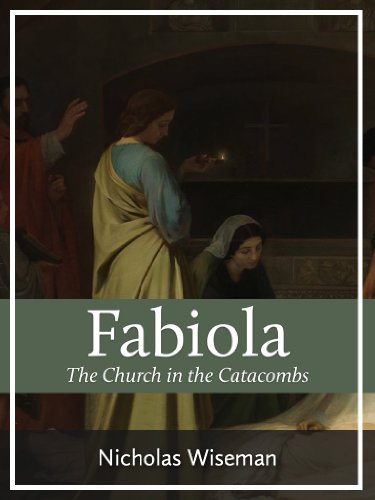
There is a novel about Fabiola called, surprise, Fabiola by Nicholas Wiseman… Cardinal and the first Archbishop of Westminster after the restoration of the hierarchy in England in 1850.

US HERE – UK HERE

I like this quote from Card. Wiseman (not in Fabiola):

“The doctrine and practice of the Church must not be allowed to be impugned by those who have no claim at all to Scripture, and who can prove neither the canon, its inspiration, nor its primary doctrines, except through that very authority which they are questioning, and through treacherous inconsistency with the principles on which they are interrogating it. When many years ago this ground was boldly adopted, it was charged with being an attempt to throw Protestants into infidelity, and sap the foundations of the Bible. Years of experience, and observation not superficial, have only strengthened our conviction, that this course must be fearlessly pursued. We must deny to Protestantism any right to use the Bible, much more to interpret it. Cruel and unfeeling it may be pronounced by those who understand the strength of our position, and the cogency of the argument; but it is much more charitable than to leave them to the repeated sin of blaspheming God’s Spouse, and trying to undermine the faith of our poor Catholics.” [The Catholic doctrine on the use of the Bible, 1853]

I’m sure that the Evangelist, Jerome and Fabiola would have all been in agreement.

Lift a libation and invoke health today for your loved ones… and confusion to your enemies… on this Feast of St. John.

Posted in Saints: Stories & Symbols |
1 Comment