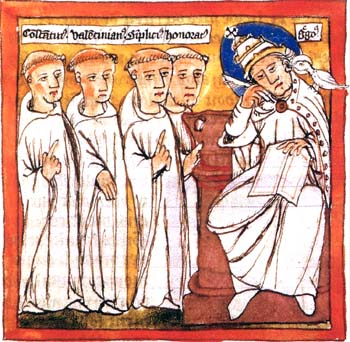
Diocese of Knoxville: Because… communion and unity… and Peter and Paul… and the Holy Spirit!

Here’s the raw material.

Highlights…  my emphases:

[…]

In light of this knowledge, I wish to share a bit of background. Shortly after I was named Bishop-Elect of this beautiful Diocese, I received communication from the Dicastery for Divine Worship and the Discipline of the Sacraments. My predecessor had written to that Dicastery in March of 2023 asking for permission for the Mass in the Extraordinary Form to continue in four of the parishes in our diocese. The reply of the Dicastery was to request that I personally revisit the direction set by Pope Francis in Traditionis Custodes in 2021 and to take the necessary time to evaluate and respond.

[…]

In conversation only days ago with our nuncio, Cardinal Christophe Pierre, he affirmed that the Motu Proprio remains the normative guide.

[…]

Current indications are that Pope Leo does not intend to abrogate Traditionis Custodes which still serves as the current definitive guidance of the Church Universal.

[…]

 I have decided to provide for the continuation of Mass celebrated according to the Roman Missal of 1962 on a monthly basis at the Chapel of our retreat center, Christ Prince of Peace in Benton, Tennessee, and to place the care of this community under Fr. David Carter as my delegate (Traditionis Custodes, Art. 3 §2, §3 and §4).

I realize that your preference would be the continuation of this celebration in your parish church, and I am deeply aware of the suffering and loss you are feeling. I do believe the reform of the Liturgy as directed by the Second Vatican Council and as implemented by St. Paul VI and St. John Paul II is a gift of the Holy Spirit for the Church. In my judgment, the wisdom of Pope Francis in Traditionis Custodes is also guided by the Holy Spirit and for that reason I have chosen not to ask for a dispensation from the prohibition of celebrating the 1962 Missal in parish churches and chapels. I ask you to trust in the Lord’s guidance of his church and his promise to remain with her until the end of time. Know also of my heartfelt…

Notes:

He has clearly heard what was said in England.  He know, for sure, about the Pontifical Mass in St. Peter’s.  He knows that there is a different Pope now.   He knows that he can ask for a dispensation.

Paul VI gave generous permissions.

John Paul II commanded by his Apostolic Authority that “respect must everywhere be shown for the feelings of all those who are attached to the Latin liturgical tradition, by a wide and generous application of the directives already issued some time ago” (Ecclesia Dei adflicta 6c).

If I recall, Benedict XVI was also a Pope.  When did the Holy Spirit get involved?  AFTER Benedict?  When was it that Popes became wise?

So, remember people of Knoxville, its because of the Holy Spirit and Peter and Paul and Francis and reasons and deep affection and love.

One might ask what the rush is all about.

Posted in Pò sì jiù, Traditionis custodes | Tagged
7 Comments

HERESY from Pope Leo!

YouTube thumbnailYouTube icon

Look. Ketchup is divinely revealed as a basic food group.  I get it.  I get it, in fact, by the demijohn.

But this has to stop.  Something must be done.   I cannot be silent.   If not I, who?  If not now, when?  If not here, where?  If not… those other things, then….  I digress.

Divine Revelation provides all things necessary for salvation and human flourishing. Human flourishing clearly includes French fries. And French fries, by natural law, demand ketchup, not mayo, not vinegar, ketchup. So, because whatever is necessary for the proper use of God-given foods is part of God’s providential plan and since ketchup is necessary for the proper use of French fries, which are clearly God-given, therefore, ketchup is part of God’s providential plan. This fact rises to the level of at least sententia certiora: a teaching “more certain” because all right-thinking people accept it without complaint. HENCE, ketchup is not merely a condiment, it is a basic food group, divinely intended, doctrinally secure, and pastorally indispensable.

Except when hot dogs are involved.

What God ordains for a specific purpose may not be distorted for an unholy purpose. But God ordained ketchup for French fries (and related potato-based delights… okay hamburgers, scrambled eggs sometimes, grilled cheese sandwiches perhaps), not for hot dogs.

Therefore, using ketchup on hot dogs is a distortion of divine purpose.

Furthermore, Tradition must be considered.

Across the ages, from baseball stadiums to parish cookouts, there exists a living magisterium of the grill in which mustard, onions, relish, and sauerkraut form the legitimate constellation of hot-dog condiments. Except in recent times (Get it?  After Vatican II!) ketchup is conspicuously absent as though Providence Itself decreed non licet.

This non licet is strengthened by negative revelation: no saint, Church Father, or approved apparition has ever endorsed ketchup on a hot dog. The silence is thunderous.

In NYC you eat hot dogs without committing heresy with mustard, kraut and some chopped onion.

In some places you can use chili, like in Cincinnati or at Coney Island. Detroit too, if I remember, but with mustard and onion.

You can travel the world and there will be ubiquitous mustard. But ketchup? For a guy who grew up in CHICAGO? Maybe in California… which figures… and Jesuit houses.

But CHICAGO?

In Chicago, you can do a lot of things to a hot dog, including “drag it through da garden” which means generally the addition of yellow mustard, chopped onions, a dill pickle, tomato slices, neon green relish, hot peppers, and celery salt.

Given the clarity of purpose, the witness of Tradition (NB: upper case T), and the sentiment of every self-respecting grill master, we may therefore state:

To put ketchup on a hot dog is contrary to divine revelation, and should be avoided under pain at least of raised eyebrows and tisking and blog posts.

Pastorality, however (NB: my use of a newly “walking together” neologism because I’m really trying communicate in a post-Conciliar Church… church… ), suggests that ketchup on hotdogs for children under the age of 10 as well as for Minnesotans … and Canadians… may be tolerated per modum dispensationis, but they should be catechized promptly.

This is where things get serious and I risk my ecclesial neck but retain my good conscience. Dear readers… everything I do is for YOU.   I am a river to my people.

Try to follow even if you are from Columbia Heights.

Now, Chicago TRADITION intensifies the situation. In that windy city, presently being punished by God according to St. John Eudes, the hot dog is treated with dogmatic reverence: mustard, onion, relish, tomato, sport peppers, celery salt, and a pickle spear. Never ketchup. To violate this is not merely a breach of taste, but an act akin to denial of doctrine taught de fide.

A heretic is one who obstinately denies or contradicts a truth held de fide. The doctrine that ketchup is divinely ordained for French fries (etc. ut supra) and forbidden on hot dogs has been established as at least sententia certiora, but the fact of the Traditio culinaria Chicagiensis introduces a qualitative distinction. Leo XIV, from Chicago, is bound by Tradition.   Who more than he?   When it comes to hot dogs he is bound by Traditio Chicagiensis. Therefore, he who obstinately places ketchup on a hot dog contradicts a truth held as de fide and stands on the brink of heresy.

But Leo PUBLICLY stated ketchupify for hot dogs.

This is not just offensive to pious ears, my dear readers. This is serious.

A Chicago-born Pope who knowingly and publicly endorses ketchupifying a hot dog (I’ll use bullet points to show I am being argumentative):

  • rejects authentic tradition (Traditio culinaria Chicagiensis),
  • defies the universal magisterium of street vendors,
  • and, being from the south-side gives grave scandal to the faithful of both Wrigleyville and whatever it that other place is called now.

Therefore, such a pontiff could be accused of condimental heresy.

Important Clarification

If previous theological, traditional, and Chicagoan claims were not sufficient, we now appeal to the ultimate authority in all serious matters: Latin etymology.

In classical Latin, we find two distinct words:

Cónditor, from condo, cóndere (“founder, establisher, creator”) as in Cónditor alme siderum … Loving Creator of the stars.”   This is applied to God, and by extension (in a subordinate sense) to a Pope as guardian of what God has founded in the realm of doctrine.

But there is also Condítor — from condio, condíre (seasoner, one who spices or pickles, maker of condiments).

Though spelled the same, they belong to utterly different realms.

One is about creation and divine order.

The other is about adding relishes, etc. to … hot dogs.

The Pope, as successor of Peter, participates analogically in the role of Cónditor: the protector of what God has established, not the inventor of new culinary dogmas.

He is not a condítor (from condio) in the sense of “One who concocts condimental novelties.”

Nihil innovetur.

And so, the Pope, as Cónditor, must preserve what is established and not innovate in matters contrary to divine order.  But, declaring ketchup as desirable on hot dogs constitutes a condimental innovation proper only to a condítor.

ERGO, a Pope may not declare ketchup licit on hot dogs, lest he confuse his role as Cónditor with that of a condítor.

To do so would collapse the majestic office of the Supreme Pontiff into that of a rogue sandwich artist an inversion so grave it borders on .. don’t know what it borders on but it is not good.  Why?  Since in Chicago the hot dog’s proper “creation” (conditio) is mustard-based and universally received, a Pope from Chicago who introduces ketchup would violate the divinely implied ordo condimentorum, blur the ontological line between founding and flavoring, and effectively claim a power proper only to a lesser condítor, a mere condiment tinkerer.

Such confusion of offices is intolerable.

Therefore, by the witness of Latin, theology, and every hot-dog stand from Cicero Avenue to Wrigley Field, we declare that a Pope from Chicago must not even suggest ketchup on a hot dog, lest he betray his role as guardian of creation and descend into the heresy of condimental innovation.

Leo may bind and loose, but he mustn’t squeeze ketchup on a Vienna beef.

Does he have the power to put ketchup on a hot dog?   Yes, but he doesn’t have the moral authority to do so, just as Karl Rahner – who understood sausages with mustard and kraut – argued about abolishing the Eastern Rites, just as no Pope has the moral authority to suppress the Traditional Latin Mass.

Q.E.D.

To correct this scandal, I think the only path forward is that Pope Leo, during a trip to Chicago, must go to the NORTH side and order not just a “hot dog” but rather a Superdawg at… well… SUPERDAWG and tell them to drag it through the garden. If he want’s ketchup with his fries, great! That’s his job after all, to point us to divinely revealed truths and NOT this … other thing.


Posted in Leo XIV, Lighter fare, SESSIUNCULA | Tagged
41 Comments

25 November – St. Catherine and mystical marriage

Today in the calendars of both sides of the Roman Rite is the Feast of St. Catherine of Alexandria, virgin, martyr.  As a matter of fact, she is celebrated by just about all Christians (who have any doctrine and history).
In the 2005 Martyrologium Romanum we find this entry:

Sanctae Catharinae, quam virginem fuisse Alexandrinam et martyrem nrratur, ingenii acumine et sapientia non minus quam animi robore refertam.  Eius corpus in celebri coenobio monte Sina pia colitur veneratione.

It is said that angels bore her body to Mt. Sinai, where Moses received the Law.

In an interesting coincidence, it is also today the feast of St. Moses, a priest and martyr in Rome in 251.  It is also the feast of Peter of Alexandria, a bishop and martyr in 311.  I’m just sayin’.

Catherine of Alexandria is depicted usually with a palm, since she is a martyr, and a spiky but broken wheel, the instrument with which she was threatened before she broke it with a touch.  She was eventually beheaded.  She is also often depicted from medieval time onward as the subject of a “mystical marriage” with the Christ Child who is in the act of placing a ring on her finger.  Another Catherine who is depicted this way is Catherine of Siena, recognizable in her Dominican habit.  There are zillions of painting across several centuries of this popular theme for both saints.  The painting I embedded, above, show both saints at the same time, which is rare.

“Mystical marriage” is a traditional Christian way of describing the soul’s total union with Christ. It does not refer to a literal marriage, but to a spiritual relationship in which God becomes the primary love, source of identity, and goal of the believer’s life. The imagery comes especially from Scripture: the prophets speak of God as Israel’s spouse, and the New Testament presents Christ as the Bridegroom and the Church as His Bride. In this context, mystical marriage expresses the culmination of a growing relationship with God, moving from faith and conversion to deep intimacy, trust, and self-surrender.

The soul is generally thought of in Christian spiritual writing as being feminine, in both sexes.  St. Bernard of Clairvaux wrote, “Christus est sponsus animae…Christ is the Bridegroom of the soul” (Sermons on the Song of Songs).

Spiritual writers use the term “mystical marriage” to indicate a mature stage of prayer in which the soul experiences a stable sense of God’s presence and belonging. St. Teresa of Ávila described it as the point at which “the soul becomes one with God,” noting that this union produces humility, charity, and perseverance rather than emotional excitement (Interior Castle, VII). The imagery emphasizes commitment rather than feeling: just as marriage involves fidelity, so mystical marriage highlights lifelong dedication to God’s will. It also underscores exclusivity—placing God above every other attachment. In Christian tradition, this concept has been applied to consecrated virgins, saints like Catherine of Alexandria, and all believers who seek complete communion with Christ, the true Bridegroom.

Catherine of Alexandria is also one of the Fourteen Helpers, saints to whom people have over the centuries turn most often for intercession.  Recourse to the Vierzehnheiligen was an especially popular tradition in German speaking lands.

Here is Catherine’s rather poetic Collect in the older, traditional Roman Rite:

Deus, qui dedísti legem Móysi in summitáte montis Sínai, et in eódem loco per sanctos Angelos tuos corpus beátæ Catharínæ Vírginis et Mártyris tuæ mirabíliter collocásti: præsta, quaesumus; ut, ejus méritis et intercessióne, ad montem, qui Christus est, perveníre valeámus:…

BONUS:

A favorite in the Boston Museum has our saint in her mystical marriage.  But we have have St. Margaret beating the Devil with a hammer.

BONUS BONUS

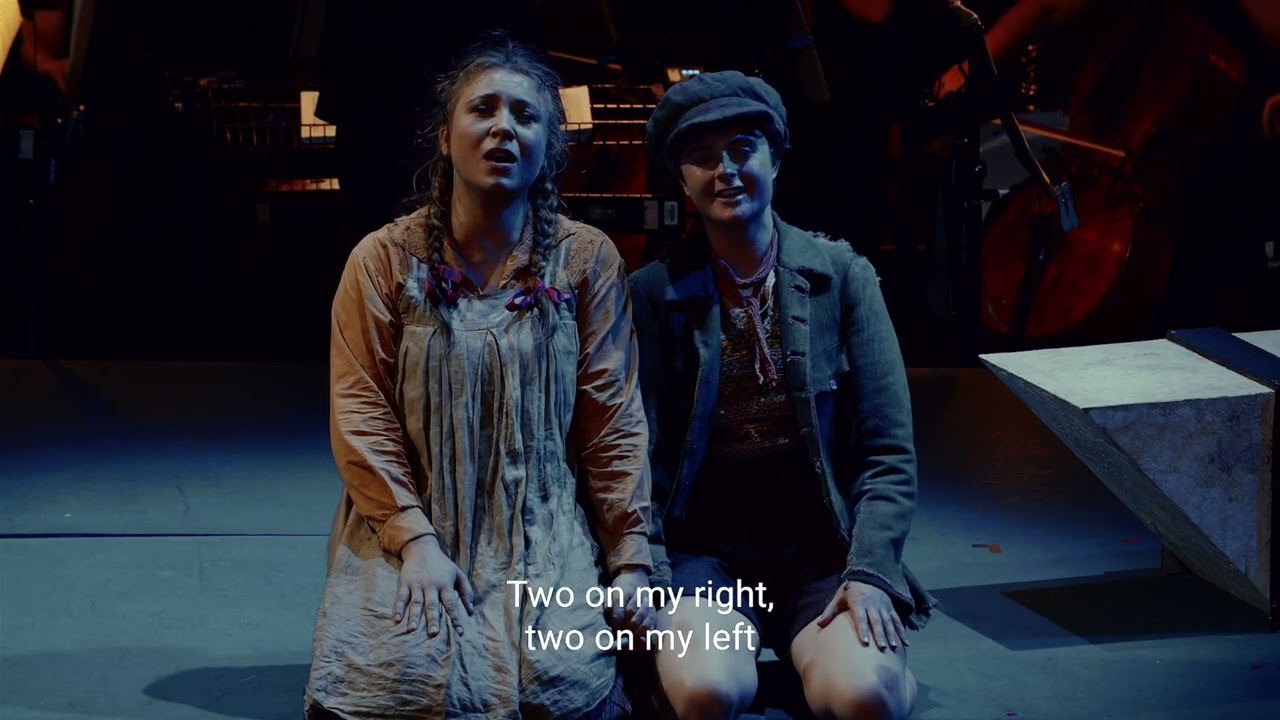
Speaking of Margaret and the Fourteen Helper Saints… in the opera Hansel and Gretel by Engelbert Humperdinck the children sing their “Evening Prayer”… to the 14 saints.

When at night I go to sleep,
Fourteen angels watch do keep,
Two my head are guarding,
Two my feet are guiding;
Two upon my right hand,
Two upon my left hand.
Two who warmly cover
Two who o’er me hover,
Two to whom ’tis given
To guide my steps to heaven.

YouTube thumbnailYouTube icon

Posted in Saints: Stories & Symbols | Tagged
5 Comments

Daily Rome Shot 1491

Please remember me when shopping online and use my affiliate links.  US HEREWHY?  This helps to pay for health insurance, utilities, groceries, etc..  At no extra cost, you provide help for which I am grateful.

Hey Fathers!  How about a clerical Guayabera shirt?

Posted in SESSIUNCULA |
2 Comments

The new “General Regulations of the Roman Curia” and Latin

In today’s Bollettino we are informed that the new Regolamento Generale della Curia Romana (General Regulations of the Roman Curia) is out.

Toward the end we find…

Titolo XIII

LINGUE IN USO
Art. 50
§1. Le Istituzioni curiali redigeranno di regola i loro atti nella lingua latina o in altra lingua.
§2. È costituito presso la Segreteria di Stato un ufficio per la lingua latina, a servizio della Curia Romana.
§3. Si avrà cura che i principali documenti destinati alla pubblicazione siano tradotti nelle lingue oggi più diffuse.

or

Title XIII

LANGUAGES IN USE
Art. 50
§1. Curial institutions shall, as a rule, draft their acts in Latin or another language.
§2. A Latin Office shall be established within the Secretariat of State, at the service of the Roman Curia.
§3. Care shall be taken to ensure that the principal documents intended for publication are translated into the languages ??most widely used today.

It is good that a “Latin Office” shall be established, given that it is still the official language of the Roman Curia. You wouldn’t know that from recent documents, however, including the newly released Apostolic Letter In Unitate Fidei on the 1700th Anniversary of the Council of Nicaea. You can read it in Arabic, but not in Latin … beyond the title.

Canon 928 says that Mass is to be celebrated “either in the Latin language or in another language, provided that the liturgical texts have been lawfully approved.” Latin is given precedence.

Also, can. 249, requires – it doesn’t suggest or recommend or propose, but requires – that seminarians be “very well skilled” in the Latin language:

Can. 249 — Institutionis sacerdotalis Ratione provideatur ut alumni non tantum accurate linguam patriam edoceantur, sed etiam linguam latinam bene calleant necnon congruam habeant cognitionem alienarum linguarum, quarum scientia ad eorum formationem aut ad ministerium pastorale exercendum necessaria vel utilis videatur.

NB, calleo is already “well versed/skilled”. Then bene calleant is “let them be very well versed/skilled”.  Calleo is “to be practiced, to be wise by experience, to be skillful, versed in” or “to know by experience or practice, to know, have the knowledge of, understand”.  We get the word “callused” from calleo.  We develop calluses when we do something repeatedly.


Posted in What are they REALLY saying? | Tagged , , ,
12 Comments

POLL: Which is scarier?

A serious question, but you are only qualified if you have watched some si-fi movies.

Which is scarier

The xenomorph (from the original Alien or Aliens)

The nasty critters in The Tomorrow War.  

I picked these two, because there are two versions of each.  In the case of The Tomorrow War the males and the female.  In the case of Alien, yes there males and the female, but in particular there is the “facehugger”.   (Full Disclosure: I just saw The Tomorrow War to the accompaniment of a doctored up sausage, pepperoni and mushroom pizza, which – now that I think about it – I haven’t done for several years).

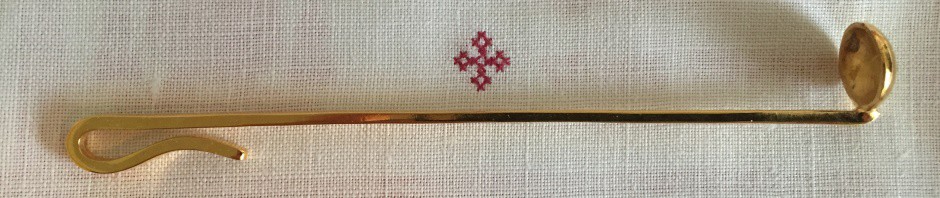
Speaking of scary, my pizza cutter.

Yes, it’s sharp.  Don’t walk up behind me suddenly while I’m using it.

Frankly, I don’t think either the Predator or the Terminators are as scary, no matter how lethal.   Yeah… I know there are other candidates, like “Touchme” Fernandez or SJ Jasmine, but they are not relevant to the question.

Anyone can vote, but only registered and approved members can comment.  I hope you will.

I expect a very high voter turn out for this serious question.  After all, my Poll about the “sign of peace” in the Novus Ordo only has some 26K votes.

Which is scarier?

View Results


Posted in Lighter fare, POLLS |
15 Comments

Daily Rome Shot 1490

Please remember me when shopping online and use my affiliate links.  US HEREWHY?  This helps to pay for health insurance, utilities, groceries, etc..  At no extra cost, you provide help for which I am grateful.

Yeah… gotta admit that this is funny…

Meanwhile… not so funny…


Have an online presence large or small? Catholic DIOCESE? Cottage industry? Federated Computer is your safe and private alternative to big biz corporations that hate us while taking our money and mining our data with AI. See what Federated has to offer as alternatives to SaaS.  Save money, protect your data, gain peace of mind.


Posted in SESSIUNCULA |
5 Comments

WDTPRS – 24th and Last Sunday after Pentecost: Like lightning in the East

This is the Last Sunday of the liturgical year.

The last part of the liturgical year thematically dovetails with the first part of the new liturgical year.  Advent was once longer, so the overlap of reflection on the End Times across this whole period goes way back into our long history as a pilgrim people, soldiering on toward our meeting with the Lord.

In the traditional Roman calendar, we use the texts from the 24th Sunday, which is always the Last Sunday of the liturgical year … even when it isn’t.

It is a little odd that the last Sunday of the year doesn’t have a special formulary.  Again, this is probably because Advent was once longer than it is now, and this time of the year dovetails with Advent.

We also call today “Stir Up” Sunday, because of the first words of the Collect.  This is the day when families in England would stir up the ingredients for the Christmas Pudding, so that it could season a while against the day of its own coming.

COLLECT (1962MR):

Excita, quaesumus, Domine, tuorum fidelium voluntates: ut, divini operis fructum propensius exsequentes; pietatis tuae remedia maiora percipiant.

This is an ancient prayer, occurring in the Liber sacramentorum Augustodunensis, a 9th century manuscript variation of the Gelasian Sacramentary. This prayer survived in the tender ministrations of Bugnini’s Consilium as the Collect for the 34th Week of Ordinary Time, in the Novus Ordo, used during the week after the Sunday celebration of the Solemnity of Christ the King.  Thus, it stays in the same place in the liturgical year that it occupied before the changes.

Our rousing Lewis & Short Dictionary says excito means “to raise up, comfort; to arouse, awaken, excite, incite, stimulate, enliven”.   Propensius is a comparative adverb of propendeo, which thus means “more willingly, readily, with inclination”.  As we have seen many times before, pietas when attributed to God is less “piety, duty” than it is “mercy”.  Exsequor is “to follow to the end, to pursue, follow; to execute, accomplish, fulfill”.  Percipio is “to get, obtain, and receive”.

The two comparatives, propensius and maiora, set up a proportional relation between the grace-filled pursuit, on our part, and the extent of the effects of the remedy.  The greater our earnestness, which is itself prompted by God’s work in us, the more will we receive His mercy.

LITERAL TRANSLATION:

Rouse up, we beseech You, O Lord, the wills of Your faithful, that they, pursuing more earnestly the fruit of the divine work, may obtain the more greatly the remedies of Your mercy.

A SMOOTHER TRANSLATION: 

Stir up the will of your faithful, we pray, O Lord, that, seeking more eagerly the fruit of your divine work, they may find in greater measure the healing effects of your mercy.

OBSOLETE ICEL (1973):

Lord,
increase our eagerness to do your will
and help us to know the saving power of your love.

Noooo… I didn’t make that up or get the wrong day.  That’s really what we heard all those years. No wonder Catholic identity is in such a mess.  It’s as if they wanted to make everyone as stupid as possible.

CURRENT ICEL (2011):

Stir up the will of your faithful, we pray, O Lord, that, striving more eagerly to bring your divine work to fruitful completion, they may receive in greater measure the healing remedies your kindness bestows.

You can see from this the difference between a formal equivalence approach and a dynamic equivalence.   Which do you prefer?  I hear that some in high places want to go back to “dynamic equivalence”.  In effect, Liturgiam authenticam is dead in most countries.

Our wills, even while loving God, tend to grow sluggish. St. Augustine says, “Our will is cold, our heart is heavy, unless He inflame and lift it up” (En ps 80.3). The Collect aligns perfectly with that anthropology. We begin by acknowledging our need for divine stirring.

But what is it that God stirs us to do? Divini operis fructum exsequentes. Literally, “pursuing more earnestly the fruit of the divine work”. The divine work is God’s saving act in Christ, received and made fruitful in us. The Collect therefore presupposes synergy: God plants, we cooperate. As St. Paul says, “Work out your salvation… for God is at work in you” (Phil 2:12-13). The prayer asks that the fruit already begun in us may be pursued propensius—more eagerly, more promptly, with greater readiness of spirit.

Moreover, the pursuit itself begins and returns to sacred liturgical worship.  That’s why it is so important to get it right.  That’s why things are in such a mess today.

Keep in mind that this is the last Sunday of the liturgical year.

This is a threshold for crossing into a new Advent.

Advent is more than a preparation for the coming of the Christ Child at Bethlehem.

Advent really points to the Second Coming of the Lord at the end of the world, when all will be laid bare and the cosmos will be unmade in fire. 

In the Epistle for this Mass Paul tells the Colossians to persevere in every fruitful good work (in omni opera bono fructificantes).

In the Gospel from Matthew 24, Jesus describes the “abomination of desolation” from Daniel and the antichrists and the end times, the hour of which we do not know.  This is the pericope in which Christ says He will appear like lightening in the East.

The Lord talks about the “signs of the times” in Matthew 24.  He includes this in v. 15: “When therefore you shall see the abomination of desolation, which was spoken of by Daniel the prophet, standing in the holy place: he that readeth let him understand.”  In Daniel 9:27, 11:31, 12:11 we read of  ha-shikkuts meshomem, one who makes desolate and a desolator and an abomination that makes desolate.   Some thought that this referred to the desecration of the Temple by Antiochus, or the coming of the Romans, or the building of the Mosque.   It seems they were wrong.   Each generation has a feeling that they were in the “end times”.  Indeed, the End Times began when the Lord Ascended.  However, signs of our times suggest an acceleration toward things abominable, abominations that do cause desolation.  Motus in finem velocior.

Do I have to mention pagan rites in the Vatican gardens and the placing of a demon idol worship bowl on the very altar of St. Peter’s?  The highest point of worship over the grave of the Apostle Peter?  Whatever that damn thing was, it wasn’t and isn’t good.

Let’s not dismiss the fact that the one who ordered that demonic idol bowl to be placed on the altar was the one who issued Traditionis custodes.   He sat in the Vatican Gardens and watched people worship a pagan idol.  He stood and watched an Imam recite a sutra from the Koran which “claimed” the Vatican for Allah.

Other than that… how was the play, Mrs. Lincoln?

The Secret asks God to free us from earthly desires (cupiditates) and the Postcommunion asks for healing of whatever is directed to vices (medicatio).  This is a fitting theme for the end of the year and the threshold of the new.

Making connections within the texts for Mass helps me drill into a possible source for this prayer’s imagery.

There is a sermon of Pope St. Gregory I “the Great” (+604) on Matthew 20:1-16 about the man who hires day-laborers at different hours of the day.  Gregory uses an allegorical key to interpret the different hours the man came to hire workers as being the ages of a man’s life.  The parable of the Lord is also eschatological. It describes the reward the Lord gives for doing His work, regardless of the moment of the calling in history.  The work to be done is more than likely harvest work, bringing in the fruits of the growing season.

This parable applies to the late-coming Gentiles as well as the early-coming Jews, just as it is meant for individuals who experience conversion even late in life.

In the parable Jesus has a man identify those sitting idle without work: they will obviously receive no good wage at the end of the day.  Without work, they will be poor, in straights.  In the sermon there is a phrase which is echoed in the Collect:

“For whoever lives for himself and is sated by his own pleasures of the flesh, is rightly called ‘idle’ (otiosus), because he is not pursuing the fruit of the divine work (quia fructum diuini operis non sectatur).” (Hom. XL in Evangelia, I, 19, 2)

The verb sector is “to follow continually or eagerly”. In the Collect the priest prays that we will with God’s help be the opposite of “idle”, namely, that we will be not merely earnest or intent, but even more eager (propensius).   The references to “fruits” and “work” in the Mass texts and the parallel of concepts in the sermon with those of the Collect, suggest to me a connection. We know that many of our ancient Latin prayers were authored at the time of Pope Gregory and before.

We are in need of healing and actual graces.

Baptism gives us an initial healing and justification, but wounds of Original Sin remain in our body, mind and will.

God gives us grace to move and strengthens us to do His will, which has healing and saving consequences.

To the extent that God gives us grace and to the extent we cooperate with His guidance and helps, the greater will be our present healing and consolation and our reward when the Lord comes like lightening from the East.

Beg His help.  Beg His mercy.  Praise Him for His gifts.

Posted in WDTPRS |
1 Comment

Your Sunday Sermon Notes – 24th and Last Sunday after Pentecost (N.O.: Christ The King) 2025

Too many people today are without good, strong preaching, to the detriment of all.

Share the good stuff.

Was there a GOOD point made in the sermon you heard at your Mass of obligation for this 24th and Last Sunday after Pentecost or the Solemnity of Christ The King in the Novus Ordo?

Tell about attendance especially for the Traditional Latin Mass.

Any local changes or (hopefully good) news?

My thoughts about the “end of the world as we know it”: HERE  A taste…

[…]

Never has it been more necessary for Catholics to relearn the basics, deepen their grasp of doctrine, and avoid the snares of false teachers regardless of the colors of the trim on their cassocks.

Nowhere is this learning so embodied, nowhere is doctrine so lived, as in sacred liturgical worship, “the perfect ‘good work’,” theologia prima. The disorders we see in the Church today arise largely from a rupture of continuity in both believing and worshipping. All true reform begins in rightly ordered worship; all apostolic action flows back into the Sacrifice. “We are our rites.”

Fittingly, the Collect for this final Sunday expresses this entire spiritual program in compact majesty:

Excita, quaesumus, Domine,
tuorum fidelium voluntates:
ut, divini operis fructum propensius exsequentes;
pietatis tuae remedia maiora percipiant.

[…]

Posted in SESSIUNCULA | Tagged
4 Comments

Daily Rome Shot 1489

This is awesome…

And…

truth…

Chessy news… I got my ass kicked… I helped… by The Romanian™ today.  I’m irritated.  I can visualize the move where I went sideways.

This.

I had the misfortune while driving of hearing something of a concert from … Philadelphia?… complete excrement.   The announcer’s description horrified me.  I can’t remember it, but I looked on the inter webs. HERE Be ready to become stupider.

Gabriela Lena Frank [Of Lithuanian Jewish heritage and her mother is Peruvian, of Chinese descent. She grew up in Berkeley, California. Her parents met when her father was a Peace Corps volunteer in Peru in the 1960s.]
Pachamama Meets an Ode (2019)

[…]

Many climatologists attribute the origins of humankind’s destructive behaviors to the Industrial Revolution, the backdrop to Ludwig van Beethoven’s life. Just as the iconic 9th Symphony (Ode to Joy) was coming to life, across an ocean, the exploitation of the New World’s natural resources (along with those from Africa and the Indian subcontinent) fueled Europe’s churning engines of commerce and technology, with brutal results for native Americans.

Among these people, the Cusco School of Painters were in quiet revolt. Reaching the peak of their expressive power as Beethoven was achieving the same, these largely anonymous Peruvian indios, who had been drafted into a service of pictorial evangelism, mastered oil and canvas to portray scenes from biblical stories. Yet, amidst depictions of European countrysides and visages, images of native birds, animals, flowers, and trees were snuck in, an act of subversive preservation of the gifts of Pachamama (“Mother Earth” in the Inca-Quechua language).

In my choral-orchestral work Pachamama Meets an Ode, Beethoven is treated to a scene of an indigenous painter plying his trade in a Spanish church with Moorish (Mudéjar) arches constructed on the remains of a demolished Inca temple. The painter hides spirits from bygone native cultures (Chavín… Moche… Huarí) amidst European figurines, equipping them with protective natural talismans (huacas) and friendly fauna. He is readying his subjects for their journeys, as paintings, into lands violently transformed by colonization. Even old indigenous myths take on new meanings as a Peruvian pistaqo is no longer simply a highland boogie man, but also an urban capitalist murdering indios for their body fat to grease factory machines.

[…]

What a load of B as in B, S as in S. However, I will note the connection with the Jesuit Reductions. Just sayin’.

And after hearing this dreck?

Posted in SESSIUNCULA |
4 Comments