ASK FATHER: Why are Sunday “of Lent” in the Novus Ordo and “in Lent” in the TLM?

From a priest reader

QUAERITUR:

I noticed that in the Traditional Latin Mass calendar we have Sundays IN Lent and in the Novus Ordo we have Sundays OF Lent.  What’s going on?

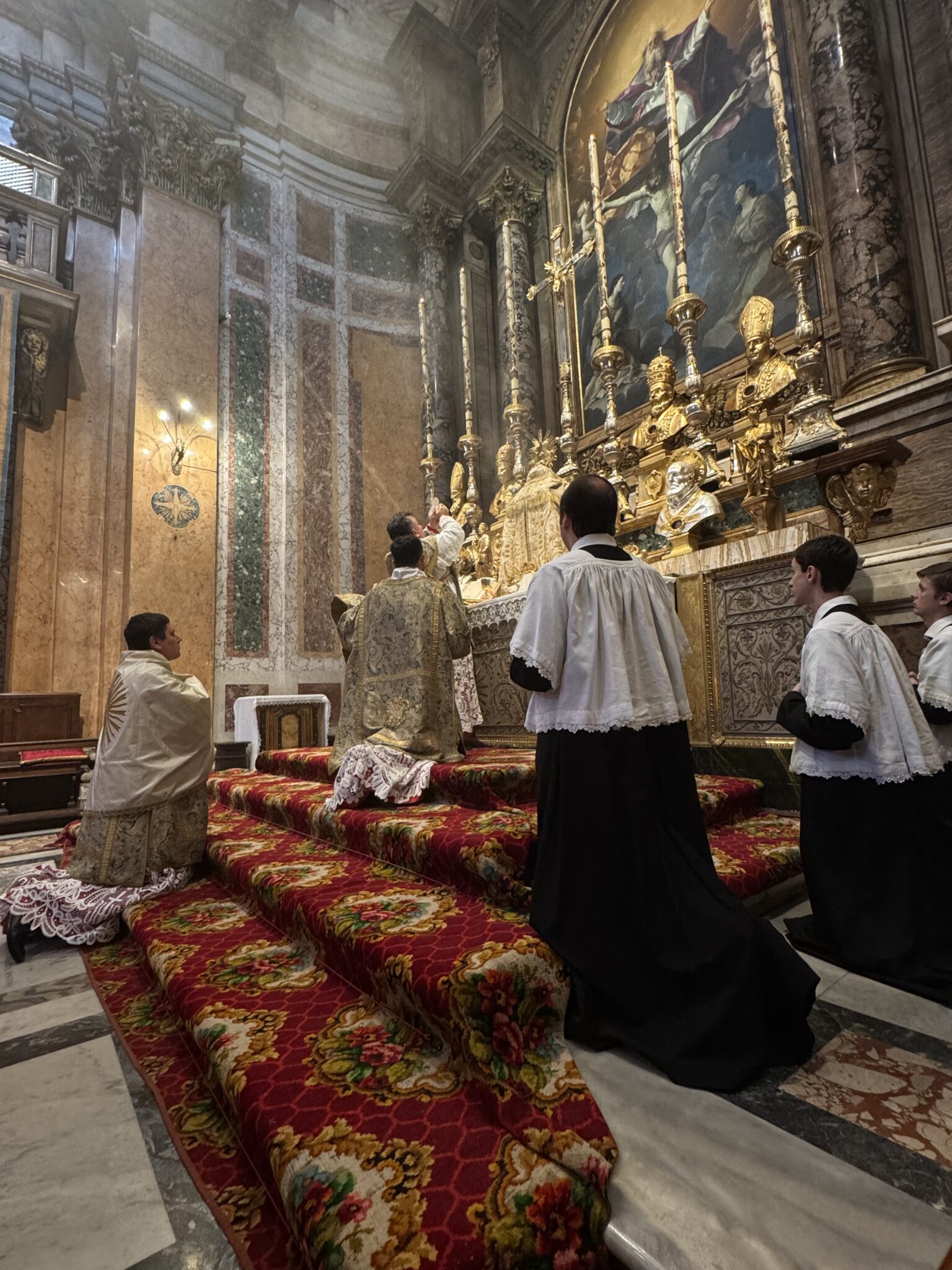
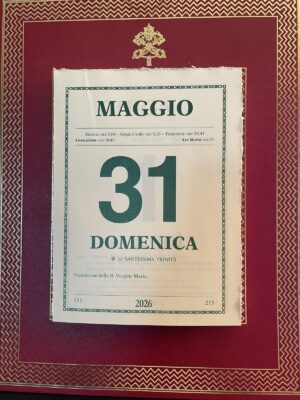
In the 1962 Missale Romanum today is called Dominica I in Quadragesima, the 1st Sunday in Lent.

In the post-Conciliar Missal today is called Dominica I Quadragesimae, the 1st Sunday of Lent.

The distinction rests on a small grammatical shift. The older title uses the preposition in with the ablative, expressing location within a span of time. The Sunday falls “in Lent,” that is, within the sacred forty days. The newer title employs the genitive, “of Lent,” which conveys belonging or constitutive identity. The Sunday is not thought of as being within the season. Rather, the Sunday belongs to Lent as an integral part.

The earlier Roman usage reflects the classical style of the liturgical calendar. Other seasons were described similarly: Sundays in Adventu or in Septuagesima (that is, within the 7th decade or 10-day period – before Easter … i.e., the 61st to 70th days). The formulation emphasizes temporal placement. This accords with the traditional discipline in which every Sunday, even during Lent, retained a certain distinct character as a “mini Easter”. For example, it was not a fasting day. The phrase “in Lent” subtly preserves that Sunday stands within the penitential season without being entirely absorbed into its ascetical rigor in the same way as the Lenten weekdays.

I believe the post-Conciliar reform sees the liturgical year as having strong structural cohesion. The seasons are conceived as unified theological arcs, each with an internal progression.  Yes, surely the pre-Conciliar vision did too, but perhaps more and more once the Liturgical Movement got under way.  The genitive construction, “of Lent,” underscores that the Sundays themselves articulate and advance the season’s spiritual trajectory.

This brings in another issue: the number of days of Lent.

We sing “Forty days and forty nights”, right?    This is a more theological and typological way than a mathematical of describing the length of Lent because of the biblical associations of the number “40” (years in the wilderness, days of Moses on Mt. Sinai, Elijah’s days of journey to Mt. Horeb, Christ’s fasting).

Lent starts in Ash Wednesday.  If you count the days to the Easter Vigil inclusively you get 46.  Romans count inclusively, which is why dates calculated before the Kalends of a month need an extra day to make sense.    This is why in Latin nudius tertius or “three days ago” actually means “the day before yesterday”, which to us in English seems like only two days ago.   We count exclusively.  Not the Roman way.

So, 46 days from Ash Wednesday to Easter Vigil.  Now subtract the 6 for the six Sundays: 40.  In the traditional Roman discipline of Lent, Sunday was not a fast day.  Hence there were 40 days to the Lenten fast.

In the post-Conciliar, Novus Ordo calendar Lent ends before the Evening Mass of the Lord’s Supper on Holy Thursday, when the Paschal Triduum begins (three day period… Thursday, Friday, Saturday… um… Sunday, that’s four…. but be inclusive).  That’s 44 days.  If we take out the Sundays it get us to 38 Lenten fast days, since Good Friday and Holy Saturday are within the Triduum (not part of Lent).

Posted in "How To..." - Practical Notes, ASK FATHER Question Box, Liturgy Science Theatre 3000 | Tagged
4 Comments

Your Sunday Sermon Notes – 1st Sunday in/of Lent 2026

Too many people today are without good, strong preaching, to the detriment of all. Share the good stuff.

Was there a GOOD point made in the sermon you heard at your Mass of obligation for this 1st Sunday in Lent and in the Novus Ordo 1st Sunday of Lent?

Tell us about attendance especially for the Traditional Latin Mass.

Any local changes or (hopefully good) news?

A taste of what I offered at 1 Peter 5 this week:

[…]

Genesis recounts the serpent’s insinuation and Eve’s gaze: “vidit igitur mulier quod bonum esset lignum ad vescendum et pulchrum oculis aspectuque delectabile et desiderabile ad hoc quod scilicet prudentiam tribueret” (Gen 3:6). She saw that the tree was good for food, delightful to the eyes, desirable to make one wise. The Apostle names the triad: “quoniam omne, quod est in mundo, concupiscentia carnis est et concupiscentia oculorum et superbia vitae” (1 John 2:16). Lust of the flesh, lust of the eyes, pride of life. The Hebrew nahash beguiled the first Adam in an orchard, paradeisos. The New Adam confronts the Tempter in a desert.

[…]

Posted in SESSIUNCULA | Tagged
6 Comments

Daily Rome Shot 1555

Welcome registrants:

Quem timebo
Julie1864IA
Murph
Abouna Robert

Please remember me when shopping online and use my affiliate links.  US HEREWHY?  This helps to pay for health insurance (massively hiked for this new year of surprises), utilities, groceries, etc..  At no extra cost, you provide help for which I am grateful.

It has been quite a week.

Go to confession!

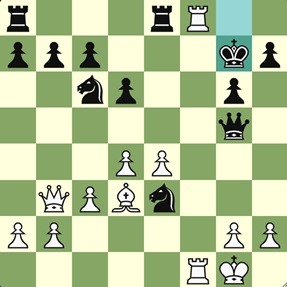
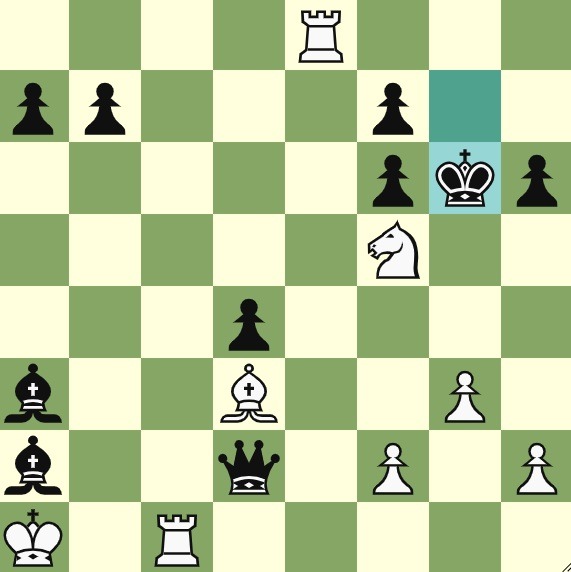
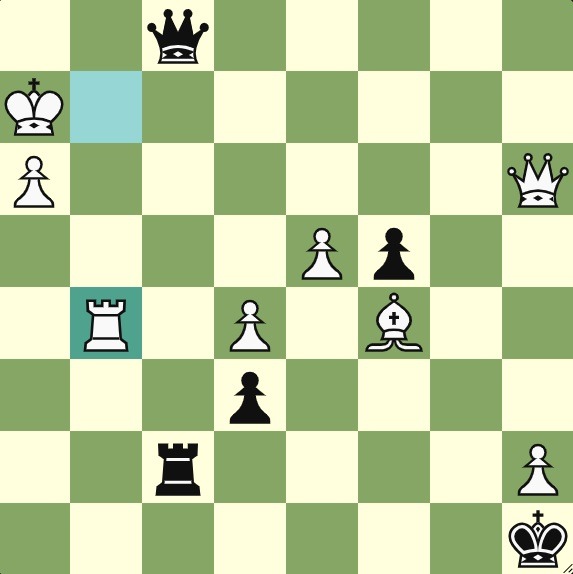
White to play and… ? HERE

Posted in SESSIUNCULA |
3 Comments

LENTCAzT 2026 – 05: 1st Sunday of Lent – ANGELS!

A 5 minute daily podcast to help you in your Lenten discipline.

Today we visit St. John Lateran, the Roman Station and also talk about the Feast of the Cathedra of St. Peter, which is today, 22 February. The Bl. Ildefonso Schuster takes over with a fascinating digression about the angels who ministered to the Lord in his human body and also in his mystical body.

Yesterday’s podcast HERE

Posted in LENTCAzT, PODCAzT | Tagged , , , ,
1 Comment

Daily Rome Shot 1554

Today, Saturday is one week out from the death of my mother (14 Feb). I’ll say a “7th Day” Requiem for her at 1700 EDT. Please unite in prayers.

Please remember me when shopping online and use my affiliate links.  US HEREWHY?  This helps to pay for health insurance (massively hiked for this new year of surprises), utilities, groceries, etc..  At no extra cost, you provide help for which I am grateful.

Very cool… gotta get ZedNet going again!

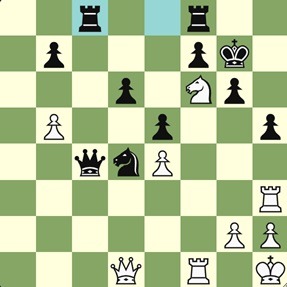
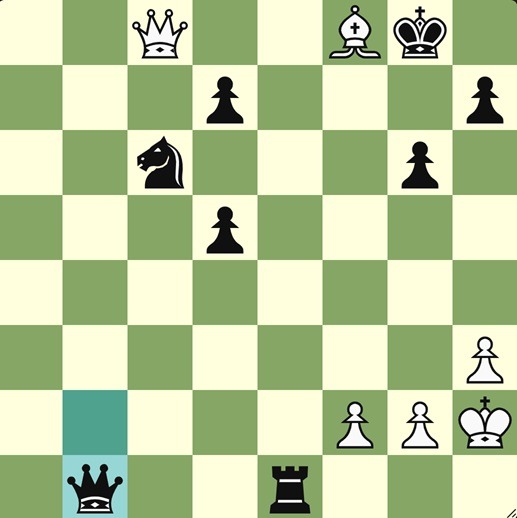
White to move and mate in 4 HERE

Posted in SESSIUNCULA |
7 Comments

Card. Müller: a canonical solution for the SSPX

Not long ago, Bp. Schneider suggested that the SSPX should be canonically recognized and then more fruitful discussions, with the SSPX involved, could be opened up about certain thorny issues.

Now, Card. Müller…

From a substack Per Mariam

Cardinal Gerhard Müller has issued a firm critique of the Society of St. Pius X’s planned episcopal consecrations, while simultaneously proposing a possible canonical solution for the Society – with whom he used to meet while leading the Holy See’s “dialogue” for Pope Francis.

But in the face of this “internal confusion” in the Church, through which “great uncertainties in dogmatic questions and even heresies have also penetrated the Church,” Müller argued that the Society must “submit” to Pope Leo XIV’s “teaching authority and primacy of jurisdiction without preconditions.”

[…]

“The only solution possible in conscience before God is for the Society of St. Pius X, with its bishops, priests, and laity, to recognize our Holy Father Pope Leo XIV as the legitimate Pope, not only in theory but also in practice, and to submit to his teaching authority and primacy of jurisdiction without preconditions,” he wrote.

Having predicated this, the former prefect of the CDF suggested a potential solution for the Society regarding their canonical status:

“Then a just solution can also be found for their canonical status, for example by granting their prelate ordinary jurisdiction over the Society, who would be directly subject to the Pope (perhaps without the mediation of a Curial authority). But these are canonical and practical conclusions that are only valid if they are dogmatically consistent with Catholic ecclesiology.”

[…]

I think this is the best way forward.

Posted in SSPX | Tagged ,
14 Comments

LENTCAzT 2026 – 04: Saturday after Ash Wednesday – A very dangerous sin

A 5 minute daily podcast to help you in your Lenten discipline.

Today our Roman Station is at the Church of St. Augustine. We hear from Fr. Troadec about a sin of the tongue, gossip that harms the reputations of others.

Yesterday’s podcast HERE

Posted in PODCAzT | Tagged , , ,
1 Comment

LENTCAzT 2026 – 03: Friday after Ash Wednesday – Prayer over the people

A 5 minute daily podcast to help you in your Lenten discipline.

Today we get into the Prayer over the people, Oratio super populum – at the end of Mass in the Vetus Ordo.

Yesterday’s podcast HERE

Posted in LENTCAzT, PODCAzT | Tagged , , ,
1 Comment

Daily Rome Shot 1553

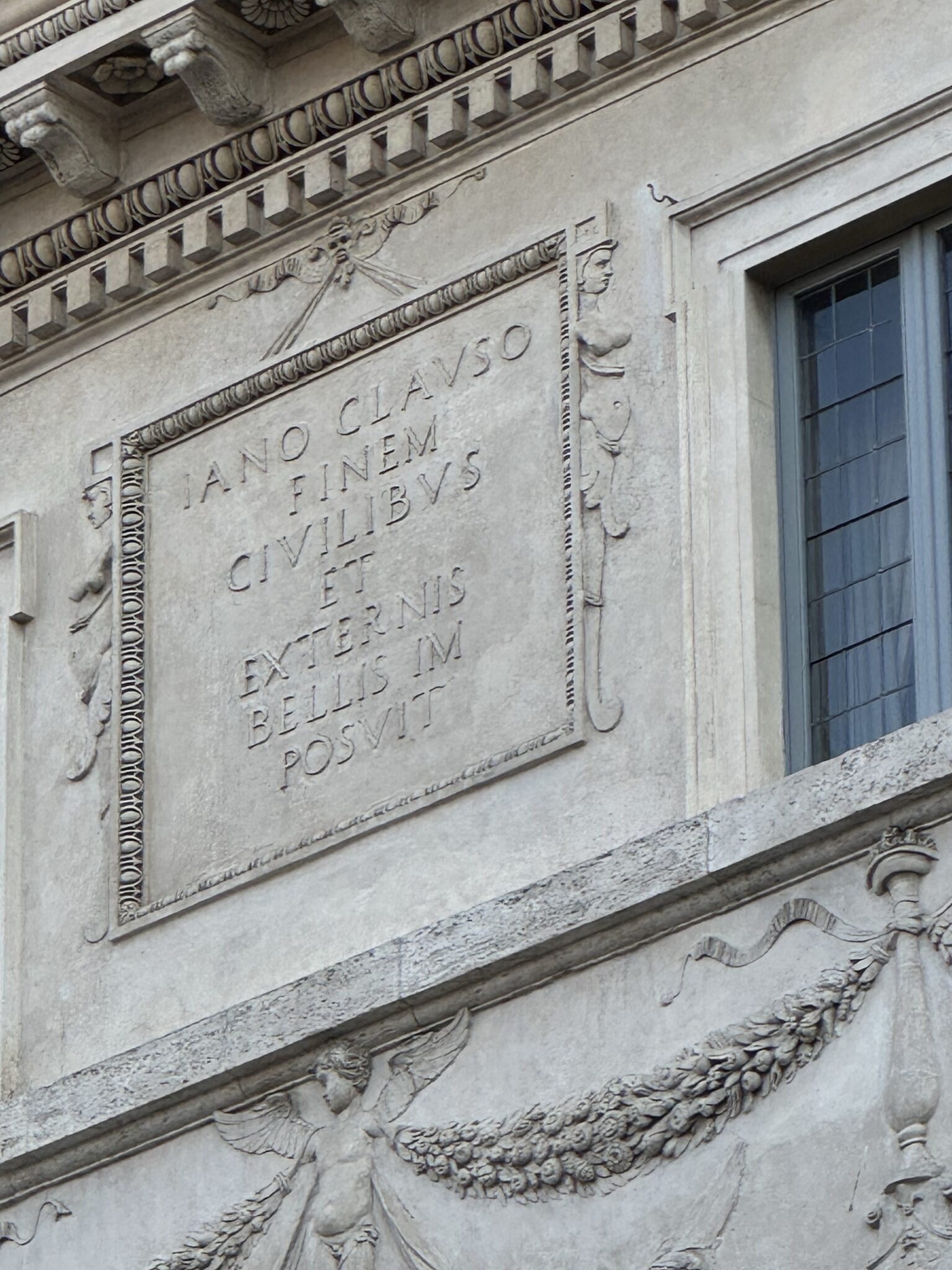
Renovations are taking place at The Parish™.  A very cool find…

A recycled stone with an ancient inscription. The lettering looks quite early, late antiquity.

Rome!

Today’s Wordle: 3

Welcome registrants:

CarthagoDelendaEst
Christ is the way
Deusdedit

Please remember me when shopping online and use my affiliate links.  US HEREWHY?  This helps to pay for health insurance (massively hiked for this new year of surprises), utilities, groceries, etc..  At no extra cost, you provide help for which I am grateful.

A great photo of the corona of the sun taken during the solar eclipse over Antarctica.

White to move and mate in 4. HERE

Posted in SESSIUNCULA |
9 Comments

Bishop Athanasius Schneider remarks on burning issues, Vatican II, SSPX.

There is an informative piece at Infovaticana, wherein Bishop Athanasius Schneider remarks on some burning issues.

Highlights…

  • The Prefect of the Dicastery for the Doctrine of the Faith says the texts of the Second Vatican Council “cannot be modified”.  Schneider maintains that only the Word of God is immutable in the strict sense.  Fernández’s formulation would be “completely erroneous” if applied without distinction to the conciliar texts.
  • John XXIII, when convening the Second Vatican Council, made it clear that it was not about defining new dogmas or resolving doctrinal issues definitively. It had a purpose adapted to the language of the time.
  • Paul VI reiterated that the council was “primarily pastoral.” Therefore, pastoral formulations—since they do not constitute dogmatic definitions—could be improved or corrected.
  • Dogmas cited by Vatican II cannot be modified.
  • The Fourth Lateran Council (1215) imposed at that time on Jews to wear distinctive signs in Christian cities, describing that provision as a form of discrimination.  If revising pastoral formulations from previous councils is admitted, the same applies to Vatican II.
  • The bishop then emphasizes the need to honestly examine what he considers “evident and undeniable ambiguities” in some conciliar texts, and maintains that other ecumenical councils have undergone adjustments in their pastoral declarations.
  • Schneider referred to the situation of the FSSPX by proposing that they first be granted canonical regularization and that doctrinal dialogue continue afterward.  The SSPX could help clarify debated aspects and benefit the entire Church.
  • The Holy See has shown “harsh” and “imprudent” behavior toward the SSPX.

I entirely agree with B. Schneider about canonically regularizing the SSPX and then including them in a discussion about V2 formulations.  It would also resolve the issue of bishops.

If Fr. Leonard Feeney could be reconciled after excommunication without having to completely abjure his position about a really hard issue to understand, why cannot the SSPX be reconciled without having to completely abjure their positions on really hard to understand passages of Vatican II?    Does that make sense?

Meanwhile…

So… now what?

Posted in SSPX, The Drill, The future and our choices | Tagged
37 Comments