WORDLE


Gregorian Mass reminder: HERE
(Lately a priest who says the Novus Ordo only said he was free.)


WORDLE
Gregorian Mass reminder: HERE
(Lately a priest who says the Novus Ordo only said he was free.)

Context: After having been tempted by the Enemy, Our Lord goes into Galilee to preach in the synagogues. Here, He in the town He grew up in after the sojourn in Egypt, Nazareth.
Continuation of the Holy Gospel according to Luke [Luke 4:23-30 – RSV]
At that time, Jesus said to them, “Doubtless you will quote to me this proverb, ‘Physician, heal yourself; what we have heard you did at Caper?na-um, do here also in your own country.’” 24 And he said, “Truly, I say to you, no prophet is acceptable in his own country. 25 But in truth, I tell you, there were many widows in Israel in the days of Eli?jah, when the heaven was shut up three years and six months, when there came a great famine over all the land; 26 and Eli?jah was sent to none of them but only to Zar?ephath, in the land of Sidon, to a woman who was a widow. 27 And there were many lepers in Israel in the time of the prophet Eli?sha; and none of them was cleansed, but only Na?aman the Syrian.” 28 When they heard this, all in the synagogue were filled with wrath. 29 And they rose up and put him out of the city, and led him to the brow of the hill on which their city was built, that they might throw him down headlong. 30 But passing through the midst of them he went away.
The 1st reading in the Vetus Ordo is from 2 Kings about the healing of Naaman the Syrian leper. Coincidentally, the readings are the same, 1st and Gospel, today, in both the Vetus Ordo of the Roman Rite and the Novus (which is, on the face of it, not the only expression of the Roman Rite).
Comment:
How swiftly your own can turn on you when you follow God’s will.
God’s ways are not the ways of the world and it is a risky thing to give yourself over to God. You will be misunderstood and you will be unjustly treated. As we read in John, the Lord says, “They will put you out of the synagogues; indeed, the hour is coming when whoever kills you will think he is offering service to God” (16:2).
In Luke 4 the Lord is just undertaking His public earthly ministry. He goes, first, to “his own”. They received Him not (John 1:11). In a foreshadowing of what would come, His betrayal by one of His own leading to His Passion and Death, He went mutely, allowing Himself to be brought to the very brink of a cliff and death. But it was not His time and the Devil had already, just before He came to Nazareth, tempted Him to throw Himself down as an echo of Adam’s fall in the sin of “pride of life”. It was not His time, so He simply slipped from their clinging and walked away without saying a word.
Two lessons.
As it would have availed Our Lord nothing to have argued or complained along the way, we could avoid a lot of sins by keeping our mouths shut, even when under duress. Even when painful crosses are offered to us, even by those whom we account friends or loved ones, we must take care how we react.
Unjust or mean treatment hurts more when it comes from loved ones than from strangers. In Nazareth, Christ was being hauled to the cliff by the people He grew up with, who knew Him. How that must have hurt His Sacred Heart, perhaps with a first sharp stab.
I am minded of King Lear who said (unjustly as it turns out) to his own “heart”, his daughter Cordelia, when she won’t flatter him for material gain: “How sharper than a serpent’s tooth it is to have thankless child”. Lear was wrong about Cordelia, but ironically, what he says falsely about her hurting him is exactly what he does to her. From Cordelia’s perspective: “How sharper than a serpent’s tooth it is to have an unjust parent”.
Hurting is a double-edged tooth that cuts both ways.
As times get harder – and they are going to, in society economically and culturally, in the Church from our leadership – we will need each other more and more.
Let’s make a promise to ourselves to be especially careful with those who are the closest to us, who, in a dreadful twist of our fallen nature, we are the quickest to lash out at because we are confident that they won’t abandon us as would a stranger.
Damian Thompson, who happens to be in Rome, has a really interesting interview with Card. Pell. HERE
Among other things the Cardinal talks about the Traditional Latin Mass and the cruel document Traditionis custodes. He also talks about Vatican financial corruption, China, and the Synodal (“walking together”) Way.
He makes some interesting comments about the Church in these USA.
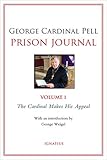
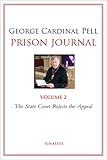
Card. Pell’s got game. If you want some insight into him, read his “prison diaries” being published in volumes by Ignatius Press.
The first is here. I worked through these in small bites, just has he wrote them. Impressive and moving.
Prison Journal, Volume 1
Prison Journal, Volume 2: The State Court Rejects the Appeal
The unnecessarily cruel legacy document of the reign of Francis, Traditionis custodes, seems to be rapidly becoming a dead letter, rather like Ex corde Ecclesiae.
This weekend some version of the new Constitution, Praedicate Evangelium, about the reshuffling of the Roman Curia was released. Among other things, Congregations will now be called Dicasteries… so try to get out of the habit of using the abbreviation CDF.
I guess now we will have the
Dicastery of Truth
Dicastery of Peace
Dicastery of Love
Dicastery of Plenty
Dicastery of Silly Walks…
Seriously, “dicastery” is a perfectly good word and it has been used to describe pretty much any office in the Curia along the lines of all squares are rectangles but not all rectangles are squares… all Congregations are dicasteries but not all dicasteries are Congregations.
“Dicastery” comes from Greek dikasterion which was a “law court”. It is an interesting choice to move away from language that is collegial, which is implied in a “gathering together”, a “Congregation”, to something that is impersonal and legalistic.
The newly shuffled deck puts something called the Dicastery for Evangelization above Doctrine of the Faith in the pecking order…. but still below the most bureaucratic office of all the now slightly reduced Secretariat of State.
Putting Doctrine below Evangelization… meh. I think the idea is to stop thinking about the CDF (DDF!) completely. There is a chicken and egg aporia here. To evangelize there has to be “good news”. But “good news” has content. That content has to bring people to faith. For centuries in baptizing the priest would meet people at the threshold of the church and ask “What are you asking of God’s Church?” and they respond, “Faith”. Going on, “What does Faith hold out to you?” “Everlasting life”.
Going forward, “faith seeks understanding”. There is a content to our Faith. We can make distinctions, like St. Augustine, about that content in terms like this. There is a Fides quae creditur and a Fides qua creditur. There is a Faith in which we believe and a Faith by which we believe. Simplifying for the sake of space and time, there are formulas we can study and memorize and there is the pure gift of grace. Both of these have their deep content which is not an abstraction, but rather a Person, Christ. We can have a personal relationship by Faith.
That said, there has to be a logical priority and I am not convinced that signal sent by placing Evangelization first in line is the right signal.
Shifting gears, something came up in the new conference about the new Constitution concerning the description of Culto Divino the liturgy dicastery.
Art. 93
Il Dicastero si occupa della regolamentazione e della disciplina della sacra liturgia per quanto riguarda la forma straordinaria del Rito romano.
The Dicastery handles the regulation and the discipline of the sacred liturgy regarding the extraordinary form of the Roman Rite.
Apparently this – which is now a mistake – was written before the Plessy v. Ferguson legacy document, “Jailers of Tradition”. Apparently, on paper, there is only one form of the Roman Rite, not two. This is on the face of it false, of course. There are in use now two “versions” (is that a better word?) of the Roman Rite. They aren’t the same.
People have been going after Benedict’s Summorum Pontificum here and there since “Jailers of Tradition” was extruded. Let’s remember that SP was not intended to solve every issue. And it was created in an environment slightly more agreeable for Tradition than the life-sucking whirlpool between Scylla and Charybdis was for a barque. SP went just so far and no farther. It presented a juridical solution whereby priests could use the Vetus Ordo, or Pian or Gregorian or Tridentine Rite or whatever you want to call it. SP did not seek to settle questions of liturgical coherence except insofar as Benedict expressed a hope that the two “forms” would influence each other in such a way that the organic development of the Church’s worship would be jumpstarted and the artificial imposition of the Novus Ordo would be dealt with in time.
We shall have to keep an eye out for the future version of “Art. 93” which smacks a little of MiniLove’s Room 101.

Too many people today are without good, strong preaching, to the detriment of all. Share the good stuff.
Was there a GOOD point made in the sermon you heard at the Masses for the 1st Sunday of Lent?
Tell about attendance especially for the Traditional Latin Mass. I hear that it is growing. Of COURSE.
Any local changes or (hopefully good) news?
Those of you who regularly viewed my live-streamed daily Masses – with their fervorini – for over a year, you might drop me a line.
I have some written remarks about the TLM Mass for this Sunday – HERE

Photo by The Great Roman™
Daily streamed Mass fervorino. HERE


Your use of my Amazon affiliate link is a major part of my income. It helps to pay for insurance, groceries, everything. Please remember me when shopping online. Thanks in advance.
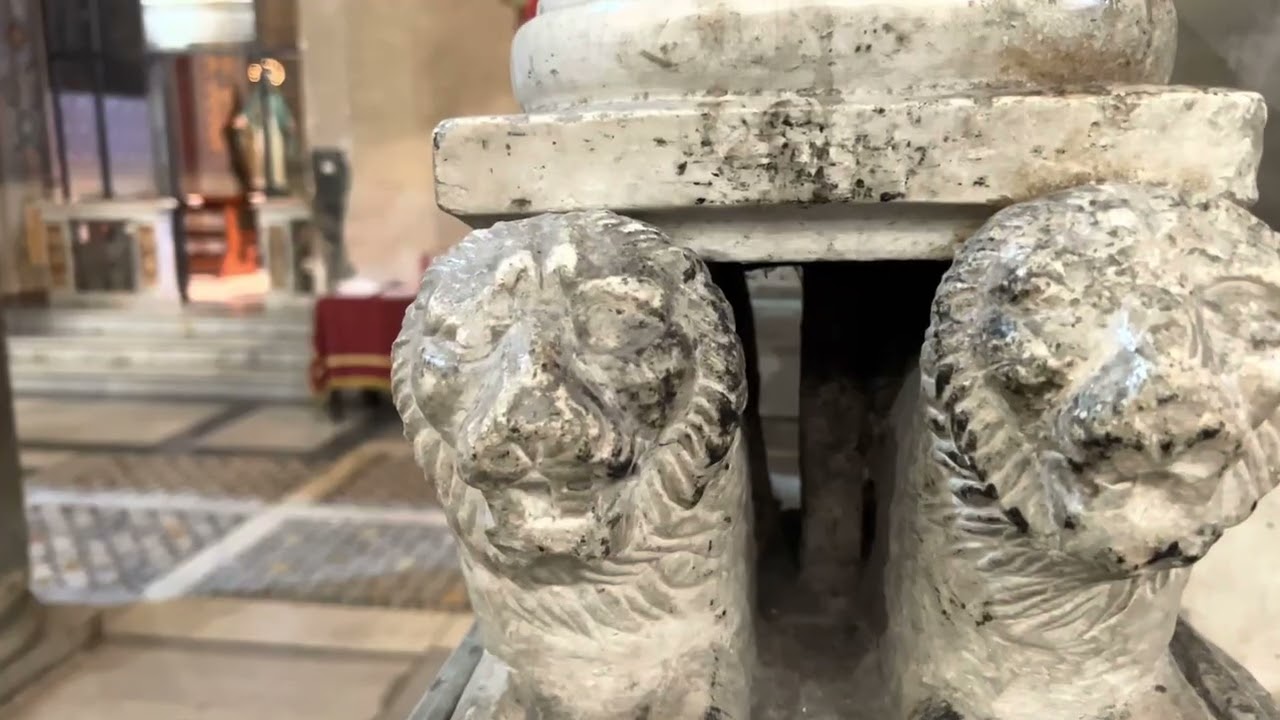
Today, the Feast of St. Joseph, is the baptismal name day of Joseph Ratzinger, who chose as his regnal name, Benedict.
Here is a tweet from a canceled titan of the Church. It is an honor to live at the same time as the great Card. Zen. It is also Card. Zen’s name day! Joseph Zen Ze-kiun!
Buon onomastico Santità Papa Emerito Benedetto XVI https://t.co/cJTgFeXABf
— Joseph Zen (@CardJosephZen) March 19, 2022
Wouldn’t it be something if in the next conclave, which some say might not be too far off, the electors decided that someone unable to vote was elected? Card. Zen. Imagine. Could Zen, even at his age, do for China what Wojtyla did for the Soviet bloc?
Or…. speaking of elderly candidates how about… remember these?

Imagine…
… the votes are counted and the results ring in the Sistine Chapel. Stunned, awe-filled silence prevails.
There is a moment of bustling consultation at the main table of the officers of the conclave. Several of the Cardinals and personnel slip out the door to the Gospel side of the main altar.
Time passes. As the Cardinal Electors wait, some being to stir, to gather in small groups, and move about and the sound of voices slowly rises in the great painted barn.
There is a sudden tapping on the microphone to get their attention and everyone returns to his place. The main door of the chapel opens. A momentary swirl of porpora sacra and paonazza.
A small figure dressed in white in a wheel chair is escorted into the nave surrounded by officials of the conclave. As if from the sacral sense in the very marrow of the men whose burden it is to bear the color of martyrs, one by one they remove their birettas and bow to the man in the chair.
In the chair.
In the absence of the Dean of the College, who had been unable to enter the conclave due to age, the Vice Dean approaches the diminutive focus of their collective minds and hearts.
Vice Dean: “Acceptáste electiónem de te canónice factam de Summum Pontificem?” (Do you accept your canonical election as Supreme Pontiff?)
B16: Non accepto. (No.)
Vice Dean: “Quo nómine vis … eehh… non acceptas? Ma.. come… cosa…?” (By what name do you wish … uh… you don’t? But… how… what…?)
B16: Acceptare nuper non possumus quod iam hic abhinc decima septima annos acceptavimus. Apud vos declaramus Nos iam Vicarium Christi esse. Ministerium actuosum Episcopi Sedis Romanae renuntiavimus sed non Christi munus Vicarii. Munus retinuimus illud et retinemus retinebimusque usque ad ultimum cordis saltum Nostrae. Acceptare idcirco hanc electionem modo a vobis factam in Summum Pontificem Nobis non licet. Iamdudum Sumus Pontifex, Christi iam Vicarius.
[Gasps. All eyes turn back to the man in white.]
Aliquod autem mutare desideramus.
Eminentissime ac Reverendissime Domine Decane! Interoga Nos iterum, quo nomine volemus vocari.
Vice Dean: S…S… Sanctissime P.. Pater… quo nomine vis vocari… nunc?
B16: Vocabor nomine … Petri Romani.
PR (continuing): Priusquam Nos nuper aperte praebebimus, opportet nos multa et difficiliora prodigia Vobis adaperire. Solea mea extenta, facitote vero adorationem, non modo inurbano et saeculari sed ut Sanctae Romanae Ecclesiae Cardinalibus et omnium Clericis gradum decet. Tempus fugit. Incipitote et, adoratione expleta, una cum vobis magnam in renovationem incipiamus.
PR to the Vice Dean [quietly]: Verta, care frater, mea verba latina in linguam italicam. Iste Iesuita non capit quidquam. Et inveni, sodes, aurantii gusti Fantam. Areo.)
We are our rites.
Liturgy is doctrine… is identity… is life choices.
The only way to turn things around is to turn our sacred liturgical worship around… including turning in back to God, in more than one way.
Attacks on the traditional Roman Rite is proof that this is the key that the modernists know must be used to lock the treasury and then broken. Otherwise, they won’t succeed in forcing their agenda on the Church and the world through the Church.
His Excellency Most Reverend Athanasius Schneider was interviewed for a Crisis podcast.
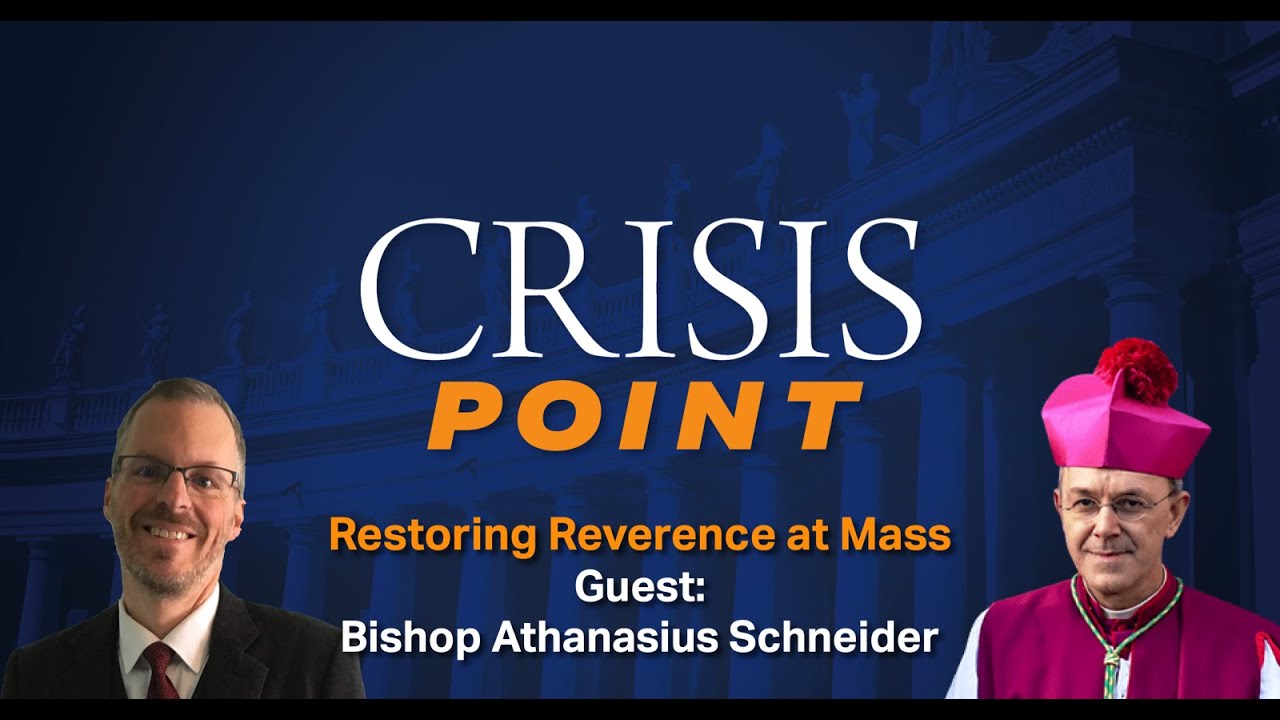
His Excellency’s book from the ever more valuable Sophia Press


Coat of Arms by D Burkart









A Daily Prayer for Priests


They find you a pro-life agent in your area who commits to giving a portion of the fee to a pro-life group!

PLEASE subscribe via PayPal if it is useful. Zelle and Wise are better, but PayPal is convenient.
A monthly subscription donation means I have steady income I can plan on. I put you my list of benefactors for whom I pray and for whom I often say Holy Mass.
In view of the rapidly changing challenges I now face, I would like to add more $10/month subscribers. Will you please help?
For a one time donation...



Help Monks in Wyoming (coffee – UPDATED LINK) and Norcia (beer) and the wonderful "Soap Sisters" of Summit, NJ!


Please follow me on Twitter!










Visits tracked by Statcounter
since Sat., 25 Nov. 2006: