“He descended into Hell” – Notes on “The Harrowing of Hell”

Quiet day, as befitting Holy Saturday.  All is quiet in the Church as Christ’s soon to be reclaimed Body is in the tomb while His human fused divinity harrows Hell.

Starting with some citations in the New Testament we pry open what came to be known as the “harrowing” or “raid” of hell, what Christ did between His death on the Cross and His resurrection.

Originally, the English word “harrow” has to do with preparing ground for tilling.  “Harrowing” involved drawing a kind of grate with downward spikes over the ground to break it up.    Here’s an image from a 16th c Book of Hours:

After the Council Trent was closed, the Roman Catechism was issued in 1566.  It was intended especially to shore up the fundamental doctrine of the clergy and be an aid for pastoral preaching.  I take my title for the columns I post at One Peter Five from Trent, which says that sermons should be giving “at least on Sundays”.

The Catechism explains with characteristic clarity the articles of the Apostle’s Creed and therefore what the “harrowing of hell” was and why Christ did it.

The Roman Catechism states that after His death Christ’s soul, in no way diminished, descended into hell in solidarity with man not to suffer, but to “liberate the holy and the just from their painful captivity, and to impart to them the fruit of His Passion.”

The Catechism then says, “Having explained these things, the pastor should next proceed to teach that …”, … and here let me fulfill the Catechism’s directive,…

Christ the Lord descended into hell, in order that having despoiled the demons, He might liberate from prison those holy Fathers and the other just souls, and might bring them into heaven with Himself. This He accomplished in an admirable and most glorious manner; for His august presence at once shed a celestial lustre upon the captives and filled them with inconceivable joy and delight. He also imparted to them that supreme happiness which consists in the vision of God, thus verifying His promise to the thief on the cross: This day thou shalt be with me in paradise.  […]  But the better to understand the efficacy of this mystery we should frequently call to mind that not only the just who were born after the coming of our Lord, but also those who preceded Him from the days of Adam, or who shall be born until the end of time, obtain their salvation through the benefit of His Passion. Wherefore before His death and Resurrection heaven was closed against every child of Adam. The souls of the just, on their departure from this life, were either borne to the bosom of Abraham; or, as is still the case with those who have something to be washed away or satisfied for, were purified in the fire of purgatory.

One artistic representation I thoroughly enjoy is that the Blessed Fra Angelico.  The Roman Catechism says Christ “despoiled the demons”.   Note what’s under the door Christ has blasted down.  You can right click for a larger version.

Out comes old Adam, first of all, to the New Adam.

That sure reference work for the Catholic faith issued in 1997 in the Latin typical edition (1994 in French), the Catechism of the Catholic Church, covers this article of the Creed in par. 632ff.  The first meaning applied to this phrase was that “Jesus, like all men, experienced death and in his soul joined the others in the realm of the dead. But he descended there as Savior, proclaiming the Good News to the spirits imprisoned there” (632).

The place Christ went, the abode of the dead, biblical sheol, is where the none of the dead can see God, regardless of their wickedness or righteousness. Christ descended into sheol to liberate the righteous dead, not the damned.   Thus, the “the Author of life”, by dying destroyed “him who has the power of death, that is, the devil” (635).  Furthermore, as we read in an ancient Holy Saturday sermon in Greek (included in the Office of Readings of the Liturgy of the Hours),

He has gone to search for Adam, our first father, as for a lost sheep. Greatly desiring to visit those who live in darkness and in the shadow of death, He has gone to free from sorrow Adam in his bonds and Eve, captive with him – He who is both their God and the son of Eve.

This article of the Creed underscores Christ as the Second Adam, making right the damage worked by the First Adam in the original sin of our first parents.

It may be that an element of ancient mythologies influenced the telling of this doctrine of the Apostolic Church.  Down through the centuries this idea of the “harrowing of hell” fueled the imagination of Christians and their theological reflection resulting in apocryphal “gospel” accounts, medieval mystery plays, and works of art such as Eastern icons.  There is something paradoxical in the core of the doctrine, namely, that our God, in an indestructible bond with our humanity, might go to hell, even if for a brief and specific mission.

In early Christian apocrypha, such as the Greek fourth century Acts of Pilate or the Latin medieval Gospel of Nicodemus there were imagined dialogues between the King of Glory, Christ, and the Prince of Hades, Satan.  In the medieval period, particularly from 13-16th  century England, there were performances of mystery plays, including of course the dramatic “harrowing of hell”.   Mystery plays were an important force in the revival of modern theatre.  The 13th century Aurea Legenda or Golden Legend compiled by Jacob de Voragine (+1298) includes the tale.

Dante in the Divine Comedy has Virgil give the poet an eyewitness account (Inf 4,52-63).

rispuose: “Io era nuovo in questo stato,
quando ci vidi venire un possente,
con segno di vittoria coronato.54Trasseci l’ombra del primo parente,
d’Abèl suo figlio e quella di Noè,
di Moïsè legista e ubidente;57Abraàm patrïarca e Davìd re,
Israèl con lo padre e co’ suoi nati
e con Rachele, per cui tanto fé,60e altri molti, e feceli beati.
E vo’ che sappi che, dinanzi ad essi,
spiriti umani non eran salvati”.
Replied: “I was a novice in this state,
When I saw hither come a Mighty One,
With sign of victory incoronate.Hence he drew forth the shade of the First Parent,
And that of his son Abel, and of Noah,
Of Moses the lawgiver, and the obedientAbraham, patriarch, and David, king,
Israel with his father and his children,
And Rachel, for whose sake he did so much,

And others many, and he made them blessed;
And thou must know, that earlier than these
Never were any human spirits saved.”

In Eastern iconic depictions of the mystery, you see the risen Lord in luminous garb, carrying a Cross, trampling broken doors.  He extends His hand, sometimes to an old man, Adam, or to others below in a cave or tomb-like grotto.  Sometimes we see Dismas, the Good Thief, to whom Christ promised salvation that very day as they were crucified together.  In renaissance frescoes and paintings the same themes continue, but often with the dramatic addition of irritated devil onlookers, probably echoes in paint of the mystery plays common to the era.

Through the ages up to our own day in the Easter vigil liturgy in the Eastern Churches, Catholic and Orthodox, a sermon known simply as “The Easter Sermon” attributed to St. john Chrysostom (+407) is read, often with dialogue-like participation of the congregation (not “assembly”).  Here is an excerpt:

Let no one fear death, for the Death of our Savior has set us free.
He has destroyed it by enduring it
He destroyed Hades when He descended into it
He put it into an uproar even as it tasted of His flesh
Isaiah foretold this when he said
“You, O Hell, have been troubled by encountering Him below.
Hell was in an uproar because it was done away with
It was in an uproar because it is mocked.
It was in an uproar, for it is destroyed
It is in an uproar, for it is annihilated
It is in an uproar, for it is now made captive.
Hell took a body, and discovered God.
It took earth, and encountered Heaven.
It took what it saw, and was overcome by what it did not see.
O death, where is thy sting?
O Hades, where is thy victory?

The “harrowing of hell”, however it took place and however it may be depicted, is an doctrine of faith to which as Christians we give assent.  The central point of this article of the Creed is that the Christ in His atoning Sacrifice has free us from the eternal bonds of death in sin, liberated us from the fear of unavoidable everlasting separation from God.

Whether in our recitation of the Holy Rosary or during Holy Mass, every time you say “he descended to the dead” and in the newer version is “he descended into hell”, do so with hope in your heart and firm belief that Christ’s Sacrifice freed you from the inevitability of hell.

Posted in Hard-Identity Catholicism |
4 Comments

Truth from T.S. Eliot

Posted in The Coming Storm, The future and our choices | Tagged
1 Comment

ROME 25/4– Day 9-10: Holy Thursday – Good Friday

On good Friday the Roman Sun rose at 06:23 and it set at 19:57. Little by little our days lengthen which is welcome.

The Ave Maria should sound for the Curia at 2015. However, it DOES RING at The Parish™ at the precise time!   I’ve written on that before and I will have a reminder before too long.  Perhaps I will be able to catch a recording of it.

Today’s Station is Santa Croce in Gerusalemme, for obvious reasons.   Listen to today’s LENTCAzT for more.

As you might understand, I haven’t had much going in the way of food, other than some fine lamb yesterday when I went to Constanza with all the priests of The Parish™ for our Holy Thursday observance.  Priests customarily dine together if they can on Holy Thursday for what is the Feast of the Priesthood.  Christ instituted the priesthood at the Last Supper by instituting the Eucharist and telling them to repeat and renew what He did, the salvific Meal that concluded on Calvary when He finally consumed the last wine of  Passover as He died on the Cross.

Abbacchio a scottadito… little lamb cutlets on the grill… scottadito means “finger burner”.

It was great being out with these good men for a nice meal together before the long liturgical work began. There was the Mandatum with washing of feet and the Mass of the Last Supper

and Tenebrae for Good Friday.

Here what the end of the last Miserere after Lauds sounded like with the “earthquake”.

The Blessed Sacrament reposed.

Posted in SESSIUNCULA |
3 Comments

Good Friday FASTING and ABSTINENCE explained, links to recipes, notes about what breaks the fast, what doesn’t

To aid me in keeping my online time down today, here is something from a couple years back.

It’s Good Friday!   Here are a couple of recipes for good food for this day of fasting and abstinence.

Fr. Z’s Kitchen: Lentils from the Benedictine Monks of Norcia. IMPROVISE – ADAPT – OVERCOME

Fr. Z’s Kitchen: Pasta e ceci alla Romana

On only two days of the year we modern Latin Church Catholics are asked both to fast and to abstain from meat.

According to the 1983 Code of Canon Law for the Latin Church, Latin Church Catholics are bound to observe fasting and abstinence on Ash Wednesday and Good Friday.

Here are some details. I have posted them before, and I am sure you know them already, but they are good to review.

FASTING: Catholics who are 18 year old and up, until their 59th birthday (when you begin your 60th year), are bound to fast (1 full meal and perhaps some food at a couple points during the day, call it 2 “snacks”, according to local custom or law – two snacks that don’t add up to a full meal) on Ash Wednesday and Good Friday.

Since we are Unreconstructed Ossified Manualists, we pay attention to old manuals.  Prümmer suggests that for the morning snack a piece of bread and 2 ounces of nourishing food is sufficient, and that for the afternoon or evening snack, 8 ounces of nourishing food is permitted to all.  “Sufficient” for what is not entirely clear.  There is a difference between working construction and working at a computer.  This is greatly simplified by taking Good Friday off… if possible.

There is no scientific formula for this. Figure it out.

ABSTINENCE: Catholics who are 14 years old and older are abound to abstain from meat on Ash Wednesday and on all Fridays of Lent… and Good Friday in the Triduum.

In general, when you have a medical condition of some kind, or you are pregnant, etc., these requirements can be relaxed.

For Eastern Catholics there are differences concerning dates and practices. Our Eastern friends can fill us Latins in.  As I understand, the Byzantine (Ruthenian) Catholic Church in these USA has followed the Latin rite to a certain extent.  Abstinence from meat is required on all Wednesdays and Fridays of Great Lent, with the the strict fast (abstinence from meat and dairy) on Clean Monday and Good Friday.

The question always comes up….

How about in between?

The other day I had a question via email about vaping.   Vaping!   One can, indeed, “vape”.  However, wouldn’t it be a wonderful thing to give it up for a day?

Click!

The old axiom, for the Lenten fast, is “Liquidum non frangit ieiunium … liquid does not break the fast”, provided you are drinking for the sake of thirst, rather than for eating. Common sense suggests that chocolate banana shakes or “smoothies”, etc., are not permissible, even though they are pretty much liquid in form. They are not what you would drink because you are thirsty, as you might more commonly do with water, coffee, tea, wine in some cases, lemonade, even some of these sports drinks such as “Gatorade”, etc.

Again, common sense applies, so figure it out.

Drinks such as coffee and tea do not break the Lenten fast even if they have a little milk added, or a bit of sugar, or fruit juice, which in the case of tea might be lemon.

Coffee would break the Eucharistic fast (one hour before Communion), since – pace fallentes – coffee is no longer water, but it does not break the Lenten fast on Ash Wednesday or Good Friday.

You will be happy to know that chewing tobacco does not break the fast (unless you eat the quid, I guess), nor does using mouthwash (gargarisatio in one manual I checked) or brushing your teeth (pulverisatio – because tooth powder was in use back in the day).

If you want to drink your coffee and tea with true merit I suggest drinking it from one of my coffee mugs. I’d like to offer an indulgence for doing so, but that’s above my pay grade.

There’s always the Liquidum non frangit ieiunium mug.

Posted in SESSIUNCULA |
5 Comments

YOUR Holy Thursday SERMON NOTES and a POLL about Holy Thursday Washing of Feet

Were there any really GOOD points you heard in sermon for Holy Thursday, at either the Chrism Mass (whenever it was) or the Mass of the Last Supper??  Please share them with us.  Sometimes there are real gems and people don’t always have strong preaching when they are.

Meanwhile, a poll about NOVUS ORDO Holy Thursday and foot washing.  (I can be done in the Vetus Ordo, but it is not encouraged.  It is best done apart from Mass, as we shall here in Rome.)

You have to be registered and approved to comment, and I hope you will, but ANYONE can vote in the poll.

The 2025 Holy Thursday NOVUS ORDO Mass I attended ...

View Results

Posted in Liturgy Science Theatre 3000 | Tagged ,
6 Comments

Holy Thursday Plenary Indulgence

A plenary indulgence, under the usual conditions, is granted to the faithful who:

Visit the Blessed Sacrament for adoration lasting at least half an hour;

OR Piously recite the verses of the Tantum ergo after the Mass of the Lord’s Supper on Holy Thursday during the solemn reposition of the Most Blessed Sacrament.

Tantum ergo Sacramentum Veneremur cernui:
Et antiquum documentum Novo cedat ritui:
Praestet fides supplementum Sensuum defectui.
Genitori, Genitoque Laus et iubilatio,
Salus, honor, virtus quoque Sit et benedictio:
Procedenti ab utroque
Compar sit laudatio. Amen.

V. Panem de caelis praestitisti eis.
R. Omne delectamentum in se habentem.

Oremus: Deus, qui nobis sub sacramento mirabili, passionis tuae memoriam reliquisti: tribue, quaesumus, ita nos corporis et sanguinis tui sacramysteria venerari, ut redemptionis tuae fructum in nobis iugiter sentiamus. Qui vivis et regnas in saecula saeculorum. R. Amen.

Down in adoration falling, Lo! the sacred Host we hail, Lo! o’er ancient forms departing Newer rites of grace prevail; Faith for all defects supplying, Where the feeble senses fail. To the everlasting Father, And the Son Who reigns on high With the Holy Spirit proceeding Forth from each eternally, Be salvation, honor blessing, Might and endless majesty. Amen.

R. Thou hast given them bread from heaven.
V. Having within it all sweetness.

Let us pray: O God, who in this wonderful Sacrament left us a memorial of Thy Passion: grant, we implore Thee, that we may so venerate the sacred mysteries of Thy Body and Blood, as always to be conscious of the fruit of Thy Redemption. Thou who livest and reignest forever and ever. R. Amen. 

Posted in "How To..." - Practical Notes |
3 Comments

ROME 25/4– Day 8: Holy Wednesday Birthdays

The Sun rise for Rome came at 06:26. The sun will set beyond the Gianicolo at 19:55.

The Ave Maria Bell is set to ring at 20:15.

Happy Birthday, Papa Ratzinger (1927)

Today is the “birthday” (dies natalis) of St. Benedetto Giuseppe Labre (+1783). He died on the evening of Holy Wednesday (today) and is buried at S. Maria dei Monti. St. Benedict Joseph Labre was not, I believe, fully a member of the Archconfraternity of Ss. Trinità, but he was always around the place, perhaps partaking of its charity.  He was a poor man, French, a Franciscan Tertiary, who wandered much as a pilgrim to different shrines, eventually coming to Rome. He had ecstasies when contemplating the crown of thorns and he would levitate or bilocate. In the last years of his life, he lived in Rome, for a time living in the ruins of the Colosseum.  He was famous as the “saint of the Forty Hours” (Quarant’ Ore) and Eucharistic adoration.  One of the works of the Archconfraternity at Ss. Trinità was monthly Quarant’ Ore.  It was the Eucharistic devotion of the confreres that fueled their charitable works of feeding and housing the pilgrims, the sick and the poor.

St. Benedict Joseph Labre lived by begging.  He is, therefore, dear to my heart.

Here is The Parish’s™ painting of him in the chapel dedicated to St. Philip.  As I write, this side of the church is closed off in scaffolding for restoration.

He is patron of the homeless.   His Mass texts are in the appendix of the Missale Romanum for “aliquibus locis”, this locus being Rome.  However, today being Holy Wednesday, he can only be commemorated.

Welcome registrant:

Crooked Castle 1391

Another saint who died on this day is St. Bernadette Soubirous (+1879).    Her Novus Ordo feast is today, the day of her death, but in the older calendar it is in February.  Watching The Song of Bernadette might be a good thing today.

Please remember me when shopping online and use my affiliate links.  US HERE – UK HERE  WHY?  This helps to pay for health insurance (massively hiked for this new year of surprises), utilities, groceries, etc..  At no extra cost, you provide help for which I am grateful.

Not much of an appetite.   Some pizza bianca and mortadella.  Classic.


White to move and mate in 2. HOWEVER… do it without the first move being a check. The first move cannot be check.  (Not hard.)

[NB: I’ll hold comments with solutions ’till the next day so there won’t be “spoilers” for others.]

Support the wonderful Summit Dominicans.

Posted in SESSIUNCULA |
3 Comments

Stop what you are doing and read this. No, really.

At Crisis there is a piece that would make the coldest stone-flint heart, like my own, perhaps miss a beat, which it already does.  HERE

It’s about … well… I’m not going to tell you, but you can trust me and Crisis.

A hint…

The cancerous tumor in Fr. Hollowell’s head was slowly growing when bishops gathered in Baltimore that autumn in 2018 for their plenary assembly, when they voted down—by a nearly two-to-one margin—a proposal that simply asked the Vatican to release all documents related to the numerous criminal allegations against Theodore McCarrick.


Posted in SESSIUNCULA | Tagged , ,
4 Comments

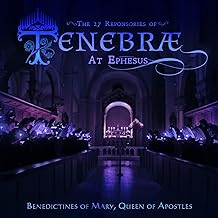
The Benedictine nuns of Gower Abbey sing the Tenebrae Responses… disc and digital download!

The wonderful nuns of Gower Abbey, the Benedictines of Mary, Queen of Apostles, have a  disc and digital download:

Tenebrae at Ephesus

US HERE – UK HERE

These are the RESPONSORIES of Tenebrae for all three days of the Triduum.  They are, arguably, the most beautiful chants of the entire liturgical year.

Posted in Just Too Cool, The Campus Telephone Pole, Women Religious |
Comments Off on The Benedictine nuns of Gower Abbey sing the Tenebrae Responses… disc and digital download!

UPDATED – IMPORTANT: Archd. Detroit: New Archbp crushes the people who frequent the TLM within one month.

UPDATE 16 APRIL:

The Archbishop of Detroit has responded to the firestorm.  I was sent this from Detroit.

My emphases and comments.  If I’ve put my foot wrong here, I want to know how and why.

April 16, 2025

Dear Father, [apparently sent to the priests of the diocese]

One of our parishes recently placed an [factually accurate] message on its website informing the faithful that the Extraordinary Form [outdated terms] of the Mass (commonly referenced as TLM) would end on July 1, 2025. Actually, the language used was regrettable if not inflammatory, stating that I was “banning” the celebration of the Tridentine Mass in parish churches. [So…. that’s not true?] Not surprisingly, the comment chain following the announcement on the website is filled with statements of considerable anger, disparaging remarks toward the Holy Father and myself, angst, and rage[That might have been taken into consideration beforehand and handled better beforehand.]

Allow me to note that the statement lacked rather significant nuance. [Passive aggression] It did not indicate that I do not possess the ability to grant permission for the Extraordinary Form of the Mass to be celebrated in parish churches, [it doesn’t command that you must oppress the faithful] nor did it note that I intend to identify a location in each of our Archdiocesan Regions were it could be offered to the faithful, [and that was going to be communicated …when?  I look all over the archdiocesan website for an official statement about this…. PLEASE tell me where it is, if it is there, before I published the original post] nor did it note that the current celebrations undertaken by the Institute for Christ the King Sovereign Priest are undisturbed, [big deal… it’ not diocesan] nor did it note that prior permissions to celebrate the Extraordinary Form of the Mass always contained a clear statement indicating that there was no presumption that said permission would be renewed, [and?] nor did it note that priests celebrating said Liturgy in parish churches have been asked by the Holy See to work toward bringing people to a unified novus ordo celebration of the Mass.  [Whatever that means.  Please… tell me how that is done?  ANYONE who knows ANYTHING about the Vetus Ordo and Novus Ordo will call B as in B, S as in S.   But he wouldn’t know that.]

As you will recall from my very brief reference to this at last week’s priest gathering, I indicated that this was not a matter I had hoped to delve into so close to the start of my own ministry in our Archdiocese. [You mean… a matter under your control for decisions and timing… right?  You didn’t to do it NOW.  But you chose to do it.] Moreover, I addressed the issue primarily as the prior permissions for the celebration of the TLM are set to expire on July 1 of this year and, in light of that, I wanted to prepare our priests so that they could, where necessary, consider how they might properly prepare our people for this change. I did not request individual pastors to notify the faithful at this time.  [So is the pastors fault…. I see.  So much for transparency.]

Please permit me two final observations.  [Watch this.]

The first is that when selecting men for the critical role of deliverance ministries (commonly referenced as Exorcist) [?!!?!  What does this have to do with anything?] it is critical that the correct man is chosen. [Okay… see where this is going?]  It cannot be a man who is energized by the regrettably adolescent thought of battling evil spirits. [!] It requires a human maturity coupled with a spiritual maturity as such a ministry is dealing in a powerfully direct way with the very salvation of souls. By analogy, I am sometimes left to ponder whether the Church today would not be constricting the use of the TLM if the Church had been more cautious relative into which hands the TLM was placed. [Do you see what he did there?  Soooo greasy. He has just implied that “battling spirits” is “adolescent” and “immature” and so are those who want the Traditional Liturgy.   Read it again.  AM I WRONG? Please convince me because I truly want to be wrong.  I read it again and again.  No one in the “trad” side of things will deny that there have been some people with regrettable approaches etc. They have souls too.  They need a shepherd, not an angry liberal psychoanalyst.] In short, we sometimes lose our focus on that critical unity so prized by St. Paul throughout his letters. In its place we [the royal we?] can become messengers of disunity, foment anger toward the Church, and weaken the faith of her members. [Which is exactly what he did… disunity, foment anger, weaken…] As we move forward in discerning how the TLM might be celebrated throughout our Archdiocese please know that I will be careful about which priests to whom I will entrust this Liturgy. It is too precious—to great a treasure—to be in the hands of one who might misuse it.  [Demonstrate goodwill by doing it yourself.  SHOW US HOW IT’S DONE.]

Second and finally, my own spiritual journey has revealed to me that the Evil One oftentimes finds something to distract the faithful in the days leading up to the great celebrations of Easter and Christmas. [You mean… like tell the priests – JUST BEFORE EASTER –  that you are suppressing the old Mass?] The timing is seldom coincidental. Moreover, the Evil One frequently disguises himself in false trappings of apparent goodness, holiness, and righteousness. While I begin first and foremost with myself, I humbly ask that each of you—apart from the general topic of this message—look within your heart and ask the Lord to reveal how you might permit yourself to be ever more an instrument of healing, unity, and service to the faithful. Moreover, and perhaps of greatest concern as we approach our rededication of priestly ministry at the Chrism Mass, let this matter not be one that divides our presbyterate! In this way we are more likely to be Servants of God and not servants of a far lesser spirit.

May God bless you abundantly and I will look forward to tomorrow’s great celebration,

Archbishop Edward J. Weisenburger

Unbelievable.

I am told that there are TLMs in some 30 locations.  Is this accurate?  I bow to local wisdom.

I am informed by a priest that at the meeting with priests the Archbp. told them what was on the parish website, not anything about his “intended” (see above) plans.  He told them everything was going to be cancelled in parishes, and didn’t say that he was considering other options.  To have included that on the diocesan website… he would have had to have told them.

It’s everyone else’s fault! Not mine!  I didn’t want to do it before Easter (but I did) and they are immature and adolescent and they didn’t tell you what they didn’t know and let’s pray that THEY aren’t angry and creating disunity!

The Archbishop was in … OK City and Salina and Tucson before he went to Detroit.  

Didn’t he in a meeting of the USCCB call for the excommunication of US Border Patrol agents who tried to do their jobs and enforce the law?  I may be wrong about that.  Please correct me if I am.

O Lord, I hate this.  Please please wash us all with your Most Precious Blood and, with the help of Angel Guardians, bring this to a healthy result.


Originally published on: Apr 15, 2025 at 18:30

The more I see things like this, the more I am persuaded that these bishops loathe the people who desire the Traditional Latin Mass.  They dislike the people even more than the form of Mass itself, which they don’t know.   They don’t know the people, either.

But they know what both of them stand for.

He has been Archbishop of Detroit for less than a month.  He was installed on 18 March.

It’s like he couldn’t wait.

And… wait until just before Easter.

A link to that parish.  HERE


Posted in New catholic Red Guards, Pò sì jiù, The future and our choices, You must be joking! | Tagged
32 Comments