Your Sunday Sermon Notes – Septuagesima (N.O. 6th Ordinary) 2025

In the Vetus Ordo, it’s Septuagesima Sunday.  In the Novus Ordo, it is the 6th Sunday in Ordinary (Ordered) Time.    Green vestments for the Novus Ordo, and violet for the Vetus Ordo.

Was there a GOOD point made in the sermon you heard at your Sunday Mass of obligation?

Share the good stuff.  Quite a few people are forced to sit through really bad preaching.  Even though you can usually find – if you are willing to try – at least one good point in a really bad sermon, that can be a trial.  So… SHARE THE GOOD STUFF which you were fortunate enough to receive!

Tell about attendance especially for the Traditional Latin Mass. I hear that it is growing. Of COURSE.

Any local changes or (hopefully good) news?  We really need good news.

I have some thoughts posted at One Peter Five.

[…]

They are your prayers too, raised in your stead by the priest at the altar of Sacrifice.  You raise them by your baptismal share in Christ’s priesthood through your attentive listening which is far from passive when you are truly engaged with them and the sound of the voice of the alter Christus, praying in persona Christi capitis.  In the priest’s vocal praying and by your full, conscious and actual active participation in his praying, Christ the Head and Christ the Body come together into, as St. Augustine of Hippo might put it, Christus Totus, Christ Whole Entire.

[…]


Posted in SESSIUNCULA | Tagged
6 Comments

Daily Rome Shot 1246 – Why Pre-Lent was dropped

Please remember me when shopping online and use my affiliate links.  US HEREWHY?  This helps to pay for health insurance (massively hiked for this new year of surprises), utilities, groceries, etc..  At no extra cost, you provide help for which I am grateful.

Welcome new registrants:

Nela1758
aortwein
BirdsofaFeather
Nana Anna B

First, a tweet from yesterday but pertinent for today, the beginning of Pre-Lent, Septuagesima.

In chessy news… HERE

Cool puzzle!  White to move and mate in 2.  Name the situation.

The monks of Norcia make GREAT beer!  Have some with savory cheeses and sausage.  They have three kinds and you can have it.  Get some, help the monks.  They are building.

Posted in SESSIUNCULA |
14 Comments

ASK FATHER: How can Septuagesima and Sexagesima be “70th” and “60”? It doesn’t add up.

From a reader…

QUAERITUR:

I don’t get it.  “Septuagesima” means “seventieth” and “sexagesima” means “sixtieth”, which are ten apart.  But the Sundays are seven days apart. 10 isn’t 7.  Is there an explanation?

Here is something I’ve penned before.

Roman numbering can be a little fluid.

The number 70 is more symbolic than arithmetical.

The Sundays which follow Septuagesima (“seventieth”) are Sexagesima (“sixtieth”) and Quinquagesima (“fiftieth”) before Ash Wednesday brings in Lent, called in Latin Quadragesima, “fortieth”.

These “Gesima” Sundays before the “fortieth” discipline begins, are rough estimates but within certain parameters.

  • Septuagesima is the 63rd day before Easter and, therefore, it in the 7th (septimus) decade or 10-day period before Easter (61st to 70th days).
  • Sexagesima Sunday is the 56th before Easter, in the 6th (sextus) decade (51st to 60th).
  • Quinquagesima is the 49th day, 5th (quintus) decade (41st to 50th) days before Easter.

So the Sundays are named after the 10 day block of days rather than the precise day.

And that, dear readers, accounts for the names of the Gesima Sundays.

BONUS ANSWER

QUAERITUR:

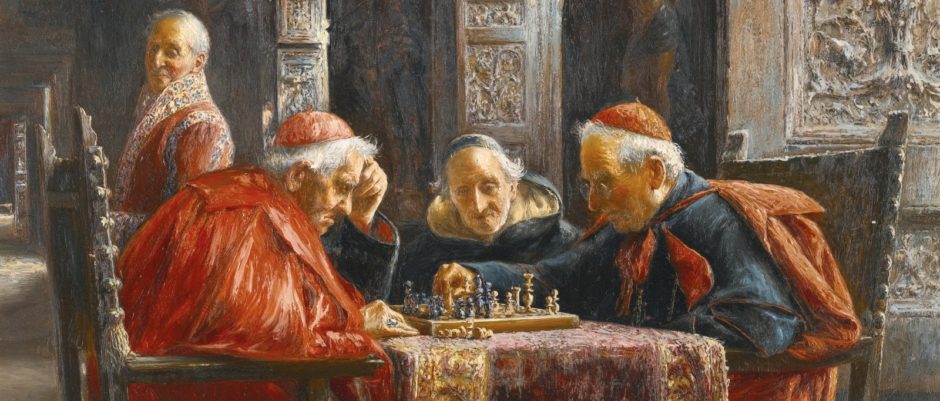
What’s with the three figures in the image at the top?

The Church’s Liturgy is more than that of the Mass.  It is also the Divine Office.

In the first week of pre-Lent we have in Matins readings about the Creation, in particular the Creation of Man and Man’s Fall in the Original Sin of our First Parents, Adam and Eve.  In the second week we hear of Noah.  In the third, Abraham’s willingness to sacrifice Isaac.

In each case, Adam, Noah, Abraham all receive in new levels of covenant with God.  The are also harbingers of good things that come from God.   Adam was the progenitor of sin, but because of that sin we had the “happy fault… felix culpa” that we sing of in the Exsultet.  Christ came in the way that He came because of that sin.  Noah became the second father of mankind.  Abraham together with Isaac foreshadow Christ’s redemptive Sacrifice.  Abraham as priest offers Isaac the victim who carries the wood up the hill.  Christ is both priest and victim in His own Person.

Posted in "How To..." - Practical Notes, ASK FATHER Question Box, Liturgy Science Theatre 3000 |
2 Comments

Brick By Brick! Altar rail restored at the National Shrine of Divine Mercy

A good bit of news HERE.

WATCH the blessing of the new altar rail during Mass on Saturday, Feb. 15 at 9 a.m. ET.

The Communion rail was restored to the National Shrine of Divine Mercy in Stockbridge, MA.  It is staffed by the Marian Fathers (Congregation of Marian Fathers of the Immaculate Conception of the Most Blessed Virgin Mary). They were founded in 1670 by St. Stanislaus Papczynski.

What it was like in the 1950s’

Notice how similar the rail and the altar are in that photo.

Fr. Donald Calloway, MIC, sent me some photos.  For larger, right click and open in a new tab.

The new rail has visual elements of the main altar.

The original rail was removed in 1970. I like that the MIC’s post about this says:

However, no Church document ever called for the removal of the altar rail!

Now they have to get rid of that awful Cramner altar that disturbs the harmony of the sanctuary.

Their post also says:

The altar rail is an extension of the altar and sometimes called “The People’s Altar.” This is why some altar rails are made of the same material and design as the altar. This connection is also seen with the linen communion cloth on top of the altar rail which was required to be used until 1962.

On behalf of the Marian Fathers of the Immaculate Conception in the USA, thank you very much to all the benefactors who made this beautiful altar rail possible during this Jubilee Year of Hope. May the Lord bless this altar rail to help foster a greater sense of the sacred and deeper appreciation of the Eucharist to all those who come here to receive His Divine Mercy, Who is so good to us, that He continues to pour out on us and the whole world His Blood and Water almost 2,000 years later through the Eucharist.

Congratulations to the Marian Fathers and to all the people who will visit that Shrine, regularly and occasionally.

I encourage you to read their post which is informative and take a look at their excellent site.

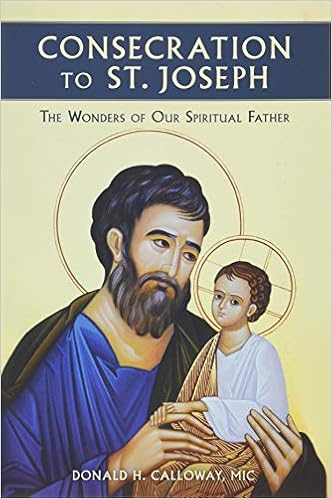
I also warmly endorse Fr. Calloway’s book on St. Joseph.

Consecration to St. Joseph: The Wonders of Our Spiritual Father by Fr. Donald Calloway

US HERE – UK HERE

St. Joseph is a mighty intercessor.  I’ve been blessed several times by his help in times of real need and stress.  I have zero doubt that he was the one who intervened, so concretely that it’s amusing.

Posted in Liturgy Science Theatre 3000, Save The Liturgy - Save The World | Tagged ,
13 Comments

Wherein Fr. Z is reminded of November 2020 and of Beefaroni

I saw a great image today which I must share.  It got to me via an email with various links which led me to click and find it

Archangel Michael Finds Discord Presiding Over an Election in the Monastery – Gustave Dore?, 1879.

This is a scene from Orlando Furioso by Ludovico Ariosto.   Ariosto once stayed in a palazzo in front of the Pantheon in Rome.  There is a plaque on the wall about it, next to the plaque that says Mascagni wrote Cavalleria Rusticana there.

The building is now called the Albergo del Sole.  Nice place.

The Orlando in question is Roland, Charlemagne’s Christian knight.  It is in the tradition of the 11th c. French La Chanson de Roland and is replete with chivalric romance.  Some pretty wild things happen in this poem, including a trip to the Moon on the Prophet Elijah’s flaming chariot, an early version of SpaceX.  It is a sequel to a work called Orlando Innamorato by Matteo Boiardo … perhaps an ancestor of Italian cook and later American entrepreneur Ettore Boiardi (boy-AR-dee) who came to be known as Chef Boyardee.  He was a serious supplier of food to the troops in WW2, keeping his plant open 24/7.

Anyway, Michael was supposed to get Discord to stir up the wicked Saracens, but he finds her stirring up this monastery instead.  He grabs her by her hair and takes her to the Saracens and bids her to get to work.

And here’s the Prelude to Cavalleria Rusticana with Turiddu’s Sicilian solo “Lola”, sung off stage or behind the curtain as if from a distance:

O Lola, c’hai di latti la cammisa
Si bianca e russa comu la cirasa
Quannu t’affacci fai la vucca a risa
Biatu cui ti dà lu primu vasu!
Ntra la puorta tua lu sangu è spasu
Ma nun me mpuorta si ce muoru accisu
E si ce muoru e vaju ‘n paradisu
Si nun ce truovo a ttia, mancu ce trasu
E si ce muoru e vaju ‘n paradisu
Si nun ce truovo a ttia, mancu ce trasu
Oh…

O Lola, white and red as the cherry
In your nightdress white as milk,
When you appear at the window you smile;
Happy he who gave you your first kiss!
The mark of blood is over your door,
But I care not if I am killed;
If through you I die and go to Paradise,
It will not be Paradise for me unless you are there.
Ah!

YouTube thumbnailYouTube icon

And there’s a lovely Regina Caeli, too.

I will not be having Beefaroni this evening.

Or maybe I’ll make my own version?

Posted in Lighter fare | Tagged
2 Comments

NEW BOOK: “Close the Workshop: Why the Old Mass Isn’t Broken and the New Mass Can’t Be Fixed”

“Dr. Kwasniewski’s latest book will present challenges both to those who agree with him and to those who disagree with him. For those who agree with him, his evidence and arguments ask, ‘Can you see your way to embrace all of the implications of this book?’ For those who disagree, his evidence and arguments ask, ‘State for the record your superior evidence and the arguments that justify your disagreement.’ Dr. Kwasniewski has produced a volume that demands a verdict. Agree or disagree with this work as you see fit—but it cannot with integrity be dismissed or ignored.”

—FR. ROBERT MCTEIGUE, S.J., host of The Catholic Current via the Station of the Cross Catholic Media Network; author of Real Philosophy for Real People and Christendom Lost and Found

This comment, from the dust cover, is directly on target. Dr. K has made a case. If you disagree, you have to refute what he wrote.

If it is Thursday, or any day of the week, don’t get caught napping because Dr. K might have another book.

This time its:

Close the Workshop: Why the Old Mass Isn’t Broken and the New Mass Can’t Be Fixed by Peter A. Kwasniewski

RELEASES 26 FEBRUARY 10% off

You can pre-order from Angelico press.  I’ll have other links for you as well as they become available.

Here is the table of contents.

I’ve been spot reading according to topics that catch my eye in the ToC.

However, it’s good to start at the beginning, since that is where good writers front load important concepts, helpful for reading the rest of the world.

In the Preface he lays out what he trying to do (my emphases and comments throughout):

As the subtitle of this book indicates, we are concerned here with two major issues: the soundness of the inherited Roman rite of the Mass, and the unsoundness of the new rite of Paul VI. Going, in a sense, from the more known (the fiasco of the new rite) to what is less known (the perfection of the old), the first part of this book will address the new Mass and the second part, the traditional Mass. Part I will explain why a ‘reform of the reform” is not possible without altogether deconstructing the modern rite and, in a sense, trying to re-engineer the goods of the old rite out of materials poorly suited to or incapable of such a transformation; [Again and again I have heard well-meaning priests say that what is needed is the Novus Ordo with elements of the Vetus Ordo.  That ignores the vast question that instantly looms: If the Novus Ordo is to be “improved” with elements of the Vetus, why not just use the Vetus and cut out the confused middle?] that smells and bells can only cover up, not correct, the enormous problems embedded in the new rite, since these problems are genetic and not cosmetic in nature; and that even the quest for a “reverent celebration”—assuming it is not obstructed by hostile forces [Has anyone heard lately of bishops forbidding kneeling to receive Communion?] — involves serious spiritual dangers for both clergy and faithful.  As for Part II, it is not this book’s purpose to demonstrate in detail all the glories and perfections of the traditional rite and to respond to the arguments people never cease to hurl against it; this I have done in several other works, notably Turned Around: Replying to the Most Common Objections Against the Traditional Latin Mass  (TAN Books, 2,014). Here, I will concentrate on how proposals to reform the old rite as well as pastoral experiments undertaken in our times to ‘improve” it or to ‘make it more relevant to the people” are contrary to the genius of the rite and disruptive to the communities that celebrate it, and, moreover, that the old rite has sufficient built-in “flexibility” to make itself at home in a great diversity of situations. The key aspect over which there is control is the ars celebrandi, that is, the manner in which the old rite is offered; and in that regard, I will indeed argue that we must take pains to celebrate it well,….

In short, Dr. K argues that the Novus Ordo is flawed to the point that it shouldn’t be used and that the Vetus Ordo (the term I prefer) has always been flexible and able to accomplish what the Novus Ordo was allegedly intended to do.

I maintain that one thing that we have gained from our time in the wilderness is an appreciation of the fact that there are people in the pews, and there is a knock on effect on them by how the priest celebrates Holy Mass.  This is one dimension of the polyvalent catch-phrase I often use: “We are our rites!”

Also, in the Preface, and this point merits more than mention in a footnote.   This echoes my frequent observation about how some people of a certain age, who lived in those iconic and halcyon days of change and rebellion against authority, are trigged by the sight of a biretta and become more tyrannical than the fictitious tyrants they fought against in their youth:

The bitterness, resentment, and anger of elderly clergy and religious towards the revival of traditional Catholicism in our day is at least partially connected with the psychological abuse visited upon them in the sixties, when they were coerced into conformity with a new paradigm that was presented as an unrepealable replacement of the Tridentine inheritance. When they see young people now happily taking hold of these things again as if the trauma of the conciliar and postconciliar period had never happened and as if their own sufferings were in vain), it must be like salt and vinegar in the wounds. One should not overlook, as well, the Stockholm syndrome. See Peter Kwasniewski, Reclaiming Our Roman Catholic Birthright: The Genius and Timliness of the Traditional Latin Mass (Angelico Press).

The growing desire for the Vetus Ordo and other expressions of traditional Catholicism must be a constant reminder of their failed experiments and, thus, possibly, wasted years.

In Dr. K’s part about Sacrosanctum Concilium, I note especially these points.

Let’s start with this:

On the whole, Sacrosanctum Concilium is marred by two errors: the rationalist assumption that things must always be easily understood by us, [This has been my constant observation for some 30 years now!] and the neo-Pelagian implication that we—or rather, the pope and his favored commission—are the primary architects of our worship, the ones who can build a better liturgy by our own efforts, even as post-World War H statesmen flattered themselves into thinking they could build a better world under the benevolent guidance of the United Nations.

Let’s tie that together with this:

This ancient tradition, like so many others, was abandoned in the 196os as part of the “extreme makeover” of the Church’s worship by committees that invented what they thought the world now needed, and suppressed what they thought it had outgrown. That is completely contrary to the way the liturgy has always been treated: as an inheritance to be proudly maintained and jealously protected. How could such a thing have happened? A purge and fabrication of this magnitude arose from the belief that Modern Man is essentially different from his predecessors, to such an extent that what past generations possessed and made use of can no longer be assumed profitable to modern people. This belief, as false as the day is long, dovetailed with the mania for system and method characteristic of modern times: with enough taxpayer dollars and enough government committees, we can build a better world—or, in this case, with enough “experts” backed by conciliar and papal muscle, we can build a better worship.

Yes, this puts a finger on a big part of the disaster that has resulted in sacred worship and our Catholic identity.  It is also at the core of the antinomianism which is rampant (except when the powerful want to punish or suppress – and then they don’t use proper procedure by violate law right and left and in between).

Sound familiar?  “We are no longer like peasants or slaves who have to grovel before a king. We are grown up Easter People who should stand for Communion and receive the Host like adults, rather than subservient children from a patronizing master.”

Contrast that with the left’s hyperpapalism, papalotry.  “When the Pope says something, you must obey perinde ac cadaver!  Never question.  Just grovel and obey.”

Dr. K concludes this section with a helpful, hopeful truth:

“As St. Thomas Aquinas argues, following St. Augustine and other Church Fathers, God would not permit an evil unless He wills to bring forth from it a greater good.”

Like Tolkien’s “eucatastrophe”.  Like the felix culpa.

I could go at this book like this section by section.  Just get and read it.


Posted in Hard-Identity Catholicism, Liturgy Science Theatre 3000, Our Catholic Identity, REVIEWS, Save The Liturgy - Save The World, SESSIUNCULA, Turn Towards The Lord | Tagged
17 Comments

Daily Rome Shot 1245 – E-sports and irony

Welcome registrants:

katerimcalister
Laufer325
lph

Please remember me when shopping online and use my affiliate links.  US HEREWHY?  This helps to pay for health insurance (massively hiked for this new year of surprises), utilities, groceries, etc..  At no extra cost, you provide help for which I am grateful.

The great Papa Lambertini!

Now they need to rebuild that neighborhood!

Never waste a good crisis, quoth Bill Clinton.

Not to mention how they treat people who desire the TLM!

In chessy news… HERE

Black to move and mate in 2. How long did it take you? Under a minute? Over?

Posted in SESSIUNCULA |
3 Comments

Notes about different kinds of Holy Water

Recently there was an incident in St. Peter’s Basilica.   A man (allegedly with mental problems) profaned the main altar over the tomb of the Apostle.  In the case of a profanation like this, the altar could be “reconciled”, a kind of spiritual reordering.  The altar was not technically “desecrated”, that is, it did not lose its consecration.  To lose consecration the mensa has to be broken or separated from its base, or its relics are removed.   In this recent case the profaner climbed onto the mensa, kicked the candles off the altar and started to pull off the cloth.  It’s one thing to climb up onto an altar for the sake of doing some cleaning or decoration.  It’s another thing to do so for the sake of violating its sacredness.  It seems to me that this profanation was not so bad as to require a reconciliation of the altar.  Perhaps the altar cloth should go (by burning).   The candlestick will need to be repaired.

In any event, this incident is an opportunity to make a review of something that every Catholic should know about: Holy WaterS.  Plural.

The rites for reconciling, a kind of reordering, of an altar, church, cemetery which has been profaned or desecrated involves the use of Holy Water.  The consecration of churches and altars traditionally requires Gregorian Water.

Here are a few notes about different blessed waters we Catholics use and enjoy.  This is not meant to be exhaustive.  I just want to give a snapshot to those of you who haven’t heard of these things before.

The blessing and use of Holy Water goes back to very early Christian times.  Using the traditional Roman Ritual, the water for Holy Water is first exorcised.  Exorcised salt is mixed with the water.  In both exorcisms the water and salt are addressed directly, as if they were almost sentient, “O you creature of salt, be thou a blessed salt”, and so forth.  The salt has symbolic value, of course, and the saltiness of the water helps retard algae growth.    The prayers for blessing the salt include the biblical image of Eliseus (Elisha) healing the barrenness of the land and water of Jericho with salt, which is counter-intuitive.  God can do all things through his chosen instruments.

The blessing for the water and salt tell us what the Church is doing and what we should do with it:

 May this creature of yours, when used in your mysteries and endowed with your grace, serve to cast out demons and to banish disease. May everything that this water sprinkles in the homes and gatherings of the faithful be delivered from all that is unclean and hurtful; let no breath of contagion hover there, no taint of corruption; let all the wiles of the lurking enemy come to nothing. By the sprinkling of this water may everything opposed to the safety and peace of the occupants of these homes be banished, so that in calling on your holy name they may know the well-being they desire, and be protected from every peril

[…]

wherever it is sprinkled and your holy name is invoked, every assault of the unclean spirit may be baffled, and all dread of the serpent’s venom be cast out.

You see, this is a powerful spiritual tool against the enemy.

Remember that this world has its “prince”, the Enemy, the Devil.  By blessings and consecrations by the priest material things are torn away from the prince and given over to the King, Christ.  We use these sacramental against the Enemy for the sake of body and soul, which are interconnected in this life.

Easter Water is blessed at Easter and at Pentecost.  As you might surmise it is used for baptisms.  Easter Water is blessed while mixing in Oil of Catechumens and Sacred Chrism.  The Paschal Candle is also held in the water.   There is a rite for blessing Baptismal Water apart from Easter or Pentecost.  This is the water we generally use for baptism, though in a pinch, other true water may be used.  We use Baptismal Water for much the same reason as regular Holy Water.  The bonus is the lovely fragrance of the Chrism in the water.

There is a blessing of a rare water used for the reconciliation of a church building, or for the blessing of an altar at the time of the consecration of a church called Gregorian Water, which involves the admixture of blessed ashes and blessed salt and blessed wine.  This water is also used in the rite of reconciliation of a church.  A church is a sacred place, normally consecrated.  If something bad happens in the building, say the priest is attacked during Mass or someone breaks in and does a terrible thing inside, then the building should be reconciled so that it can be used again for sacred purposes.  We don’t just ignore evil acts, because demons attach through evil acts.  Hence, we exorcise things and people before we bless or baptize.  Gregorian Water, with its use of ash, is a cleansing water.  Ash is an element of ancient soap, after all.   The blessing of Gregorian Water is in the Pontificale Romanum, used by bishops only. The rite for Gregorian Water is particular.  Even the exorcism and blessing of salt is unlike that of the normal Holy Water.  It talks about the reason for its use, the expulsion of demons and temptations from demons.  Similarly, the exorcism of the water describes how it is to be used to drive demons from the even the shadowy places of the church and around the altar.  He blesses ashes without exorcising them, with the image of ourselves confessing our faults.  The wine is blessed invoking the image of Cana.  I’ve never seen this rite.  I’d sure like to.  I hope it will be for the consecration of a church, rather than for its reconciliation!

There is also a blessing of water at Epiphany which involves the basic salt and water combination of Holy Water.  This make Epiphany Water.  The rite is amazing.  I refer you to my post HERE.  However, there is a nice rite which can be performed in the context of, say, Vespers which involves solemn exorcisms of the place and singing psalms, the Litany and Te Deum.  This water would be used to bless houses, along with the blessed chalk, of course.  It is an amazing rite. Some photos HERE.

On different feast days priests could bless water in honor of such and such a saint, for example, St. Raymond Nonnatus or St. Ignatius.  Lots of these.

And we mustn’t forget the Benedictio maris, blessing of the sea, wherein, I believe God has already mixed in the salt.  Spectacular prayers.  I’d love to do that one sometime, preferably with a procession with a statue of the Blessed Mother to the shoreline, with the city’s oompa band.  There are blessings of a spring and a well, as well.  When you don’t get your water from a tap you want a priest around to bless your water source.  The blessing for the well includes the serious “repulsis hinc phantasmaticis collusionibus, ac diabolicis insidiis, purificatus atque emendatus semper hic puteus perseveret.”  Nice clausula.

Anyway, we Catholics are deeply interested in water and we like our water blessed, thank you very much.  A thousand and one uses!  Especially against the Enemy of our soul.

The Devil really hates this stuff.

A note.

Newer rite v. traditional rite.

I have never, in over 30 years as a priest, even once used the post-Conciliar Book of Blessings to bless anything, much less Holy Water.

As a matter of fact, I don’t think that the prayers in that book intend to bless anything.  There is one, I think, which is the traditional prayer for blessing a rosary, tucked in with other options that might bless a person who might use a Rosary.

The book’s attempts to change the Church’s theology about blessings.

There are, in a nutshell, two kinds of blessings: invocative, by which we call down God’s blessing on a person or animal, and constitutive, which ask God to make a thing or place a blessed thing or place with an enduring blessing.   The new book eliminates that distinction.  Hence, I will never, ever, EHVUR, use the Book of Blessings, which I consider to be a travesty that should never have been promulgated.

I use the older, traditional Rituale Romanum.  I always have and I always will.  The rite tells you what it is doing.  There are the important exorcisms of the elements of the Holy Water (salt, water – in the case of Easter water the oils are consecrated by a bishop).  The prayers say what is going on, the Church’s intention in blessing regular Holy Water.

“God’s creature, salt, I cast out the demon from you…”

“Almighty everlasting God, we humbly appeal to your mercy and goodness to graciously bless + this creature, salt…”

“God’s creature, water, I cast out the demon from you…”

“… pour forth your blessing + on this element now being prepared with various purifying rites.”

“… we beg you, Lord, to regard with favor this creature thing of salt and water, to let the light of your kindness shine upon it, and to hallow it with the dew of your mercy; so that…”

Our rites should describe what we want them to do.  This is also important because

WE ARE OUR RITES.

Use Holy Water.  Sprinkle it around your dwelling. Bless yourself with it.

Posted in "How To..." - Practical Notes, Our Catholic Identity |
4 Comments

Some observations about Francis’ Letter to US Bishops

Do you have the same feeling that I have? It’s a sense of impending disaster like seeing a train about to ram a fuel truck. SloMo. kaBLAM.

Francis issued a letter to the US Bishops which was clearly aimed against the Trump administration, its policy on “deportation”, and at VP Vance who invoked the term “ordo amoris”.

HERE is a link to the letter at the Vatican website.

Quite a bit of commentary is flowing.  I have done some reading about what ordo amoris is really all about.  Did Vance get it right or did Francis?  Francis, in his letter, suggests… no, categorically states (citing only himself in a footnote)… that “ordo amoris” must be interpreted through the lens of the Parable of the Good Samaritan.  That raises the question: Why?   In one commentary I read the parable invoked was the Parable of the Friend in the Night (Luke 11:5-8) which involves the sacred duty of hospitality.

The use of one does not exclude the application of the other.

I’m going to get into other things, below, but I can’t help but make a couple of observations about Francis’ invocation of the Holy Family’s flight into Egypt, namely:

2. … [Jesus] did not live apart from the difficult experience of being expelled from his own land because of an imminent risk to his life, and from the experience of having to take refuge in a society and a culture foreign to his own. The Son of God, in becoming man, also chose to live the drama of immigration. I like to recall, among other things, the words with which Pope Pius XII began his Apostolic Constitution on the Care of Migrants, which is considered the “Magna Carta” of the Church’s thinking on migration:   …

[…]

As I read this, with great respect to the sentiment and to Pius XII, it occurs to me that there are differences between what we see in the Holy Family and what we see today in the movement of peoples, especially at the US southern border.

  • St. Joseph obeyed the civil law by responding to the census.
  • The Holy Family did not leave the jurisdiction of the Romans. Egypt was a province of the Empire.
  • In travelling to Egypt the road was a trade route secured by Legio II “Cyrenaica”, not by human trafficking cartels. They didn’t have to sneak into Egypt.
  • St. Joseph worked for a living and did not receive government hand outs, hotels and free cellphones.
  • St. Joseph, so far as we know, didn’t have a criminal record, wasn’t a fugitive from justice or a violent gang member with multiple convictions.
  • Nor was Mary.
  • “Jesus lived the drama of immigration” – really “emigration”, no?
  • Jesus also lived the drama of going home.

Also, correct me if I am wrong, but isn’t what the Trump administration doing, even by the Church’s own teaching, “repatriation” and not “deportation”?   If I remember correctly, when the Church (Gaudium et spes?) speaks of causing people to move from one place to another, it’s about the ejection of people from their proper, chosen place.  That’s “deportation”.  Sending people out of a country they do not belong to back to where they came from is not “deportation”, it is “repatriation”.  Am I wrong?

Changing gears…

R. Reno at First Things has a couple of interesting comments lately. A couple days ago, 10 February, he penned a piece which brings to two themes of border control and altar rails together. HERE That got my attention! A comment or two from that (my emphasis)…

[…]

A similar shift is afoot in the Church, and for the same reason. The open Church gets colonized by the world. Its leaders talk like therapists and multicultural bureaucrats. The sacred is swamped by the banal. A growing number of churchgoers, especially the young, want something different, something confident and separate from the world. As Cardinal Cupich in Chicago has discovered, to his dismay, they want to kneel at altar rails.

Tell me your views on altar rails, and I can predict where you stand with regard to the increasingly grave political and cultural phenomenon of mass migration. If you think the restoration of altar rails represents a betrayal of Vatican II, I’m confident that you regard any attempt to enforce borders as anti-Christian xenophobia.

[…]

There’s more provocation over there.   It also gets me onto the next track.

Yesterday, 11 February, he’s back at it. “Pope Francis’s Apocalyptic Dream” (my emphasis):

Pope Francis published his suicide note. It took the form of a letter to the American Catholic bishops. In so many words, the Holy Father urged his brother bishops to intervene in American politics and oppose the Trump administration’s efforts to enforce our country’s immigration laws. Along the way, Pope Francis also took a jab at Vice President JD Vance, correcting him (along with St. Thomas Aquinas). No, we are not to love our parents, spouses, and children more than others. The true order of love, ordo amoris, starts with the vulnerable and outcast. We must seek “a fraternity open to all.”

[…]

And, still riffing on the borders and altar rails issue:

[…]

The practical upshot of the Holy Father’s letter is nothing other than the globalist, open borders position, glibly theologized. This, Francis implies, is the only position permitted for true Christians who honor Christ’s universal love.

[…]

This paragraph sparked a memory, which I will get to.  First…

[…]

Reading Pope Francis over the years has led me to believe that he harbors an apocalyptic dream for the West, one in which mass migration and ecological peril overturn the foundations of Western confidence and global hegemony. In this regard, his thinking accords with post-colonial ideologues and those at pro-Hamas rallies. The West is a den of iniquity. Its capitalism foments greed. Its enterprises have raped mother nature and polluted the biosphere. Its vainglory, especially American pride, has brought war and ruin to foreign lands. The wretched of the earth are fully within their rights to rise up, migrate, and destroy the Behemoth.

[…]

What memory, you ask?

Back in 2014, I had a long conversation with South American journalist Alejandro Bermudez of CNA. The concept of “peripheries”, is important to Francis. Bermudez spoke of the influence on Francis of thinkers such as the Uruguayan writer-theologian Alberto Methol Ferré, the Russian-American sociologist Pitirim Sorokin, and the pivotal Spanish-language poet Rubén Darío. To condense wildly, it seems that Francis may embrace a school of thought that sees a kind of “manifest destiny” for Latin America. When cultures develop a interior decay, which they always do, revitalization of the cultures comes from “peripheries”. For the larger Church, experiencing an interior decay, a periphery is Latin America. Latin America, unlike any other continent, is unified in language (by far dominated by Spanish with related Portuguese) and is/was unified in religion, Catholicism (though there is bad erosion). With these unifying factors, Latin America has a critical role to play in this view.

Francis is famous for his programmatic “¡Hagan lío!”.  In the 11 Feb article by Reno, we read (my emphasis):

[…]

By all appearances, [Francis is] an accelerationist, someone who welcomes catastrophe rather than appealing to Catholic social doctrine to make nuanced judgments that might help us humanize, as best we can, the policies and actions necessary to prevent the social upheaval that attends rapid demographic change, and the disorder it will bring. The Argentine Jesuit seems to relish collapse. It will provide an opportunity to break the iron grip of homo economicus and build a new world, a “fraternity open to all.” This borderless fraternity is a true utopia, a world of no-place, a future universal society free from the grave evil of loyalty to one’s country—Donald Trump’s terrible crime against universal love.

[…]

I was tweaked by the word choice, “accelerationist”.

Cambridge says,

“someone who believes that technological change, especially relating to artificial intelligence, should happen more quickly, even if this destroys existing systems and leads to radical (= extreme or complete) social change”.

On the other hand, Britannica has an article about “accelerationism” which seems mainly to be a leftist attack on capitalism through acceleration of capitalism in order to tip it into collapse.   The idea is destroy rather than slowly change from within.  Why? We don’t have time!   A couple of examples of accelerationism in the movies might be the Bruce Willis Die Hard 4: Live Free or Die Hard in which a cyber-terrorist attempts to bring down global everything.  Another might be when in a Justice League movie, a terrorist wants to bring down the world economy by bombing the Bank of England.

Millions of people flowing over the southern border unchecked for years seems like one way to accelerate the collapse of these USA.

This is how Reno concludes.

[…]

As I said, I don’t envy America’s bishops. It’s a hard task to require the faithful to attend Mass so that they can be told that loving one’s country and its citizens is a wicked sin. That’s a recipe for ecclesiastical suicide.

Reno rem tetigit.  What are Francis’ expectations for the US bishops?   He put the bishops in an awkward position before, probably pushed into it by conniving mandarins (cf the cruel Traditionis custodes).  What does he want US bishops to do now?

Finally, US Bishops get a lot of government money with which they want (we assume) to do good (such as corporal and spiritual works of mercy).   Doing good is a great deal more expensive now because of the dissolution of religious.   We lean on government money now to facilitate the work of holy men and women in religious communities.  We can’t afford to pay teachers in schools a just wage and there are no sisters to teach.  Hospitals, etc.   In addition to religious, after Trent Confraternities of people from all walks of life cooperated to do these things.   They were also focused on prayer.

Change the Church’s prayer life and you change everything.

I think you see where I am going with this.

It all comes back to that, doesn’t it.

We are our rites.   Screw up our rites, you screw up everything.

It’s almost like there is a kind of hierarchy or order of … priorities? Values?  What’s a good word?

If we don’t properly fulfill the virtue of Religion, other things done the line are going to be out of sorts.  If we don’t properly love God first, and place no one or no thing other than God on the inmost throne of our hearts, then we won’t love others in the right way.   It’s as if one thing affects another… God, family, country, neighbor, in an expanding sphere of love and responsibility.  I know there is a term for this idea out there somewhere.

If I have gotten something wrong here, please let me know.
Posted in SESSIUNCULA, The Drill | Tagged
27 Comments

Daily Rome Shot 1244

Ferretti alla Norma.

Please remember me when shopping online. Thanks in advance. US HERE – UK HERE  These links take you to a generic “catholic” search in Amazon, but, once in and browsing or searching, Amazon remembers that you used my link and I get the credit. 

Verse 3:16 isn’t just in John.

How screwed up is the Novus Ordo Lectionary in English, you ask?   At least in these USA you can get an idea of how screwed up.  Not just the Lectionary, but the liturgical scene and oversight.  HERE  Read, and shake your head in amazement.

Here is some serious legislation…

New Archbishops in Detroit and Cincinnati. It is also interesting that 4 of the 7 bishop of Florida hit 75 this year. Big changes.

In chessy news… HERE

Black can mate in 4.

 

Posted in SESSIUNCULA |
3 Comments