Daily Rome Shot 1060

Welcome registrants:

Abigail5432
the********t@gmail.com (Not a good idea to use your email, friend.)
Teofilo


Black to move and mate in 3.

Nice people! Great service!

NB: I’ll hold comments with solutions ’till the next day so there won’t be “spoilers” for others.

In chessy news, bad news. Twice in OTB this week I’ve totally blown two games which I was completely winning against two strong players with piece blunders. In each case it was a problem of lack of focus, rather, total focus on one idea and missing the shockingly obvious blunder. In the second game, I determined to fight back hard and try to salvage the game, since the blunder did, in fact, work as a sac that improved my position (another thing I hadn’t seen). I got used aggressive counterplay, and, with a tactic, won a piece back. But my opponent had too many pawns.

I’m an affiliate. Sign up with my link! Get something going!

Meanwhile, 10-year old Faustino Oro seems to be poised to become the youngest ever IM. He has also superseded 2400 on chess.com in … Rapid, I think. I read of him that he learned to play 4 years ago. “Alejandro Oro, Faustino’s father, has previously said that to prevent his son from kicking a ball inside their home during lockdown he created an account for him on Chess.com.” He’s 3000 in Blitz. Scary.

In Bucharest, Romania, the second event of the Grand Chess Tour has begun. This is a 10-player single round-robin from 26 June-5 July. Magnus and Hikaru are not there, but present and ready for battle are Fabiano Caruana, Ian Nepomniachtchi, Gkesh, Pragg, Anish, MVL, “Puer”, Nodirbek, and my guy Wesley So, for whom I hope all the readership is pulling. No draw offers allowed. Prize pool $350K. 1st: $100K. G/120+30.

Posted in SESSIUNCULA |
1 Comment

Daily Rome Shot 1059

With a starter of trippa alla romana.

Evviva San Giovanni!

I read that there is still time to join the Biel International Chess Festival Tournament for amateurs.  16-25 July.  The place looks beautiful.   Gosh, that would be fun.  *sigh*

Welcome registrants:

Ouma0128
Zidge

White to play and mate in 2.

NB: I’ll hold comments with solutions ’till the next day so there won’t be “spoilers” for others.

Please remember me when shopping online and use my affiliate links.  US HERE – UK HERE  WHY?  This helps to pay for health insurance (massively hiked for this new year of surprises), utilities, groceries, etc..  At no extra cost, you provide help for which I am grateful.

Posted in SESSIUNCULA | Tagged
3 Comments

ACTION ITEM: 7-15 July Novena to the Holy Face of Jesus – for the preservation of the Traditional Latin Mass

Every once in a while, more and more often as a matter of fact, references to devotion to the Holy Face of Jesus are surfacing.

I received this email:

Dear Fr Z,
From today’s Mass: “Quia óculi Dómini super iustos, et aures eius in preces eórum: vultus autem Dómini super faciéntes mala.

Suggested action item: Novena to the Holy Face of Jesus from 7 July to 15 July for the preservation of the TLM. A devotion entrusted to the Carmelites to defeat revolutionary men.
https://theholyface.com/wp-content/uploads/2018/01/Holy-Face-9Day-Novena.pdf

One of my great favorites, a saint who has been good to me and who has helped me and given me signs of her intercession, St. Thérèse of Lisieux was devoted to the Holy Face. Her full religious name was Thérèse of the Child Jesus and of the Holy Face. Her sister Pauline (aka Sister Agnès of Jesus) introduced Thérèse to this devotion. St. Thérèse wrote many prayers about the Holy Face. She wrote, “Make me resemble you, Jesus!” on a small card with an image of the Holy Face to it which pinned over her heart. In 1895, in her “Canticle to the Holy Face” she wrote:

“Jesus, Your ineffable image is the star which guides my steps. Ah, You know, Your sweet Face is for me Heaven on earth. My love discovers the charms of Your Face adorned with tears. I smile through my own tears when I contemplate Your sorrows.”

And she composed the prayer

“Eternal Father, since Thou hast given me for my inheritance the adorable Face of Thy Divine Son, I offer that face to Thee and I beg Thee, in exchange for this coin of infinite value, to forget the ingratitude of souls dedicated to Thee and to pardon all poor sinners.”

Posted in SESSIUNCULA |
8 Comments

OLDIE PODCAzT 36: St. Augustine on John the Baptist; Ut queant laxis

Here is an old PODCAzT. Gosh my voice has changed.  2007!   Much happier times.


036 07-06-24 St. Augustine on John the Baptist; Ut queant laxis
https://zuhlsdorf.computer/podcazt/07_06_24.mp3
Our PODCAzT for this Solemnity of the Nativity of John the Baptist presents a selection from sermon (s. 288) preached by St. Augustine of Hippo (+430) in Carthage in 401. 

This is not the same selection as you find in the Office of Readings today (from s. 293).

Then we get into the wonderful hymn for Vespers as well as a very hot Rituale Romanum
blessing for the day.

  • Donate using VENMO

Posted in Linking Back, PODCAzT |
2 Comments

Items of interest and concern about the TLM.

Posted in SESSIUNCULA |
10 Comments

Daily Rome Shot 1058

White to move and mate in 3.

NB: I’ll hold comments with solutions ’till the next day so there won’t be “spoilers” for others.

Please remember me when shopping online and use my affiliate links.  US HERE – UK HERE  WHY?  This helps to pay for health insurance (massively hiked for this new year of surprises), utilities, groceries, etc..  At no extra cost, you provide help for which I am grateful.

3:16 isn’t just in John.

Posted in SESSIUNCULA |
3 Comments

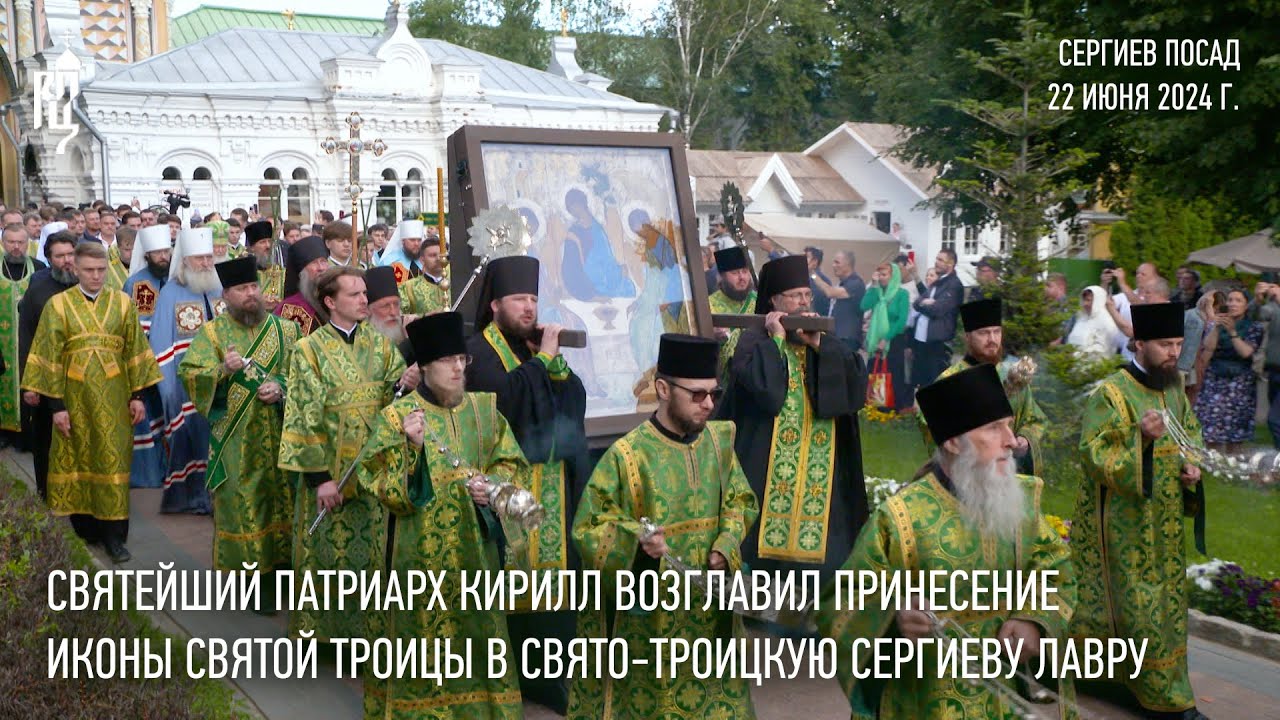
VIDEO: The icon of the Holy Trinity painted by Rublev returned to the Trinity Lavra of St. Sergius

It is Julian Calendar Pentecost. For their Pentecost, there was a special moment when Patriarch Kirill of Moscow led the meeting of the icon of the Holy and Life-Giving Trinity, painted by Andrei Rublev, in the Trinity Lavra of St. Sergius and the all-night vigil in the Trinity Cathedral of the monastery.

YouTube thumbnailYouTube icon

Posted in SESSIUNCULA |
3 Comments

23 June – Vigil of St. John – solstices and snails, bonfires and witch burnings

Mathis_Gothart_Grünewald John BaptistIt is nice to have as your Patron the great Baptist, for I get two feasts a year, his Nativity and his Beheading.

For the Vigil of St. John (today, as I write even thought it is the 5th Sunday after Pentecost, which bumps the Vigil) in the old Roman Ritual the priest would once bless bonfires!

And in Bavaria, witches are burned!  A priest friend who shares my feast sent me a spiffing photo (below – a little hard to see at this size, but I assure you, there is a witch in there).

If you have any unwanted witches (and don’t we all?), send them to Bavaria next year for a nice vacation.

In other places, cast-off or unneeded things are burned… in a way parallel, I suppose, to throwing things away at the other end of the year after the Winter Solstice.

In any event, the evening is about as long as the year can offer, so a great party could be had well into the night with much cooking in the open and revelry.  Have a nice bonfire!

The blessing for the bonfire is beautiful.  After the usual introduction, the priest blesses the fire saying:

Lord God, almighty Father, the light that never fails and the source of all light, sanctify + this new fire, and grant that after the darkness of this life we may come unsullied to you who are light eternal; through Christ our Lord. All: Amen.

At this point the fire is sprinkled with holy water and everyone sings the hymn Ut quaent laxis which is also the Vespers hymn for the Feast of St. John.

It is almost as if the fire, and our celebration, is baptized.

The reference to light and darkness surely harks to the fact of the Solstice, which was just observed. At this point the days get shorter in the Northern Hemisphere.  I looked at that HERE and HERE.

For the feast of St. John in June for centuries the Church has sung at Vespers the hymn beginning Ut queant laxis

If you want to hear Ut queant laxis sung “in the wild”, as it were, check the monks at Le Barroux.  Hard core.  Fantastic chant. HERE  Their sung hours are available live and on demand.

Those of you who are lovers of the movie The Sound of Music will instantly recognize this hymn as the source of the syllables used in solfège or solmization (the use of syllables instead of letters to denote the degrees of a musical scale). Both the ancient Chinese and Greeks had such a system.

The Benedictine monk Guido d’Arezzo (c. 990-1050) introduced the now familiar syllables ut re mi fa sol la for the tones of the hexachord c to a… or, more modally, the tonic, supertonic, mediant, etc. of a major scale. The Guidonian syllables derive from the hymn for the feast of St. John the Baptist:

UT queant laxis
REsonare fibris
MIra gestorum
FAmuli tuorum,
SOLve polluti
LAbii reatum,
Sancte Ioannes (SI).

The Guidonian Hand was often used as an instructive tool for music

After the medieval period (when music became less modal and more tonal) to complete the octave of the scale the other syllable was introduced (si – taken from S-ancte I-oannes, becomes “ti”) and the awkward ut was replaced sometime in the mid 17th c. with do (or also doh – not to be confused in any way with the Homeric Simpsonic epithet so adored by today’s youth, derived as it is from the 21st century’s new liturgical focal point – TV) and do came to be more or less fixed with C though in some cases do remains movable.

So, now you know where Doh, Re, Mi comes from!  Check out this oldie PODCAzT from 2007:

036 07-06-24 St. Augustine on John the Baptist; Ut queant laxis

It is also good to gather St. John’s Wort (Hypericum perforatum) on the feast.

“Wort” is from Old English wyrt (German Würze), which means “plant”, but is used mostly in compounds.  Since ancient times “singent’s wort” was known to relieve melancholy or depression, as does borage… which every garden should have.  It would be hung above doors, windows and sacred images (hence the hyper-icum “above image”) to keep witches and evil spirit away.

Burning those witches might have something to do with its effectiveness as well, now that I think about it.

Build a fire tonight, even if you can’t burn a witch, and sing something in honor of St. John!

Oh! And get some snails for tomorrow. It is a Roman custom to eat snails on the Feast of John the Baptist.

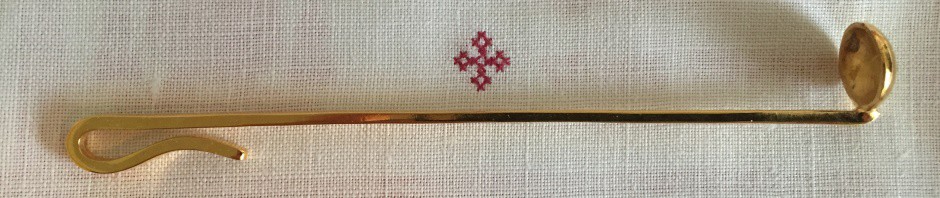
And, just in case it has been a while…
Posted in Classic Posts, Linking Back, Liturgy Science Theatre 3000, Look! Up in the sky!, Saints: Stories & Symbols, SESSIUNCULA |
1 Comment

Daily Rome Shot 1057

Interim, motus ad lusorem cum militibus albis pertinent. Scaccus mattus, scilicet mors regis, IV in motis veniat.

NB: Explicationes detineam oblatas in crastinum, ne vestrae interrumpantur commentationes.

Please remember me when shopping online and use my affiliate links.  US HERE – UK HERE  WHY?  This helps to pay for health insurance (massively hiked for this new year of surprises), utilities, groceries, etc..  At no extra cost, you provide help for which I am grateful.

Chessy news. Yesterday at OTB I played well, winning all my games. However, one game ended when my opponent made a significant blunder, such that he resigned. However, I suggested that we go back a couple moves and go at it from the previous position. At that point he rallied and beat me, though the victory was already mine. It was instructive, because then, being freer, we talked about our moves.

Interested in learning?  Try THIS.

Help the monks. Help yourselves.

Posted in SESSIUNCULA |
1 Comment

Your Sunday Sermon Notes – 5th Sunday after Pentecost (N.O.: 12th) 2024

Too many people today are without good, strong preaching, to the detriment of all. Share the good stuff.

Was there a GOOD point made in the sermon you heard at your Mass of obligation for this 5th Sunday after Pentecost, or the 12th Sunday of Ordinary Time?

Tell about attendance especially for the Traditional Latin Mass.

Any local changes or (hopefully good) news?

A couple thoughts about the sign of the cross: HERE  A taste…

[…]

The 20th century liturgical commentator Pius Parsch thought that the 2nd and 3rd Sundays after Pentecost showed God’s love inviting us (the Parable of the Supper) and His seeking us (Parable of the Lost Sheep).  On the 4th Sunday, God revealed in the calling of Peter and the Apostles the instruments of administering His love and the messengers inviting us.  The Good Shepherd has Fishers of Men.  On this 5th Sunday after Pentecost we move from a painting by the Church of God’s love for us, to an image of our love for our neighbor, which is a demonstration that we have recognized God’s love and providence.

Posted in SESSIUNCULA | Tagged
6 Comments