26 July: Fr. Jacques Hamel, martyred 7 years ago in France

Interrupted while saying Mass at his parish church in Saint-Étienne-du-Rouvray, the 85-year old priest struggled to repel his two 18-year old attackers with his feet. “Go away Satan!”, he repeated.

Fr. Jacques Hamel was murdered, in odium fidei, a martyr to the Faith, his throat slashed by Islamic terrorists.

Today is the 7th anniversary of the martyrdom of Fr. Jacques Hamel in France.

Churches are being attacked and destroyed all over France… and elsewhere.

Sts. Nunilo and Alodia, pray for us.
St. Lawrence of Brindisi, pray for us.
St. Pius V, pray for us.
Martyrs of Otranto, pray for us.
St. Michael the Archangel, defend us in battle.
Our Lady of Victory, intercede for us with your Divine Son.

Posted in Modern Martyrs, Saints: Stories & Symbols |
1 Comment

From “The Private Diary of Bishop F. Atticus McButterpants” – 2019-07-24 – Vetitum

EDITOR’S NOTE:

The problem with the Pie Town Couple started HERE when they had their photo taken with the +F. Atticus and then said “The bishop blessed our marriage”. More on 13 June 13: HERE This was the Pie Town couple’s situation as of 7 July: HERE


July 24th, 2023

Dear Diary,

The guy from Pie Town who claims he’s getting the run around? Not so much. The man knew he had some kind of prohibition for him getting married in church unless he went for counseling or treatment. So he wanted another answer. That’s why he came over to Fr. Bruce. We’re sending him back to his own diocese and Fr. “Anything Goes” Bob. I asked if I could remove the ‘vetitum’ (the canon people corrected my spelling of it) but I was told I can’t because the man lives in the Pie Town diocese and is not my subject. Dang it. I wanted to be the hero in this thing. Have fun with that, Dozer! I least I can send a follow up to the Nuncio and let him know these folks don’t even live in my diocese!

Posted in Canon Law, Diary of Bp. McButterpants | Tagged
4 Comments

Daily Rome Shot 747

Meanwhile, a puzzle.

White to play.  Mate in two.  I’ll make this a little larger today so you can see the notation more easily.

NB: I’ll hold comments with solutions ’till the next day so there won’t be “spoilers” for others.

Chesscomshop Banner

Your use of my Amazon affiliate link is a major part of my income. It helps to pay for insurance, groceries, everything. Please remember me when shopping online. Thanks in advance.  US HERE – UK HERE

I hope you will make use of the links to the various Catholic concerns which I post in these daily “omnium gatherums”.   You and they both benefit.

Posted in SESSIUNCULA |
6 Comments

25 July St. James the Greater, Apostle

Today is the Feast of St James the Greater, Apostle, brother of St John the Apostle Evangelist and a son of Zebedee.  These brother were called the “Sons of Thunder… Boanerges“.

He was put to death around AD 42-44.  His feast marks the translation of his relics which are believed to be in Santiago de Compostela, in Galicia, Spain.

Sts. Peter, John, and James were the inner core of the inner circle around the Lord.

This James is distinguished from James “the Lesser”.  “Greater” perhaps refers to his age or his height.  James the Less was a cousin of Christ being the son of the Mary married to Clopas (John 19:25).  Alphaeus and Clopas are versions of the same name.

Back to James the Greater.

Today is the Feast of St. James the Greater.

One of the striking moments in the Gospel involving this James, with John his brother, is when their mother asks the Lord for “glory” for them.  They affirm the request.  They got what they asked for, but not in the way they thought.  John lived to old age, the last to die, and James was the first to die: direct opposites.  “Glory”, in the Gospel of John, as in John 17 when Jesus says to the Father, “Glorify your Son” and John remarks that, at Calvary, he had “seen His glory”, John means the Passion and crucifixion of the Lord.   Both John and James were glorified.  John did not escape martyrdom, by the way.  When he was in Rome he was arrested and several times they tried to kill him, to no avail.  He was exiled to Patmos.

All of us have to drink the chalice.  To be with Christ in heaven, we who bear his name and mark have to follow him to the Cross before the resurrection.   The chalice for most people is not martyrdom of blood.  But it always has to be the martyrdom of loving obedience to God’s will as it is lived out in our vocations, whatever vocation that may be.

Each person’s vocation has its particular chalice to drink.

I note with interest a particular word in today’s Collect for St. James.  Let’s see if you notice it too.

Esto, Dómine, plebi tuæ sanctificátor et custos: ut, Apóstoli tui Iacóbi muníta præsídiis, et conversatióne tibi pláceat, et secúra mente desérviat.

Variations of this appear in ancient sacramentaries, such as the Gregorian, for feasts of apostles and other occasions. There are variants, such as “Esto protector, Domine, populi tui propitiatus et rector eique…“.

A literal translation:

O Lord, be the sanctifier and the guard of your people, so that, fortified with the assistances of Your Apostle James, it may both please You by their manner of living and also zealously serve You with a tranquil mind.

A looser translation:

Protect Your people and make them holy, O Lord, so that, guarded by the help of Your Apostle James, they may please You by their conduct and serve You with peace of mind.

See it?

Custos.

ACTION ITEM! Be a “Custos Traditionis”! Join an association of prayer for the reversal of “Traditionis custodes”.

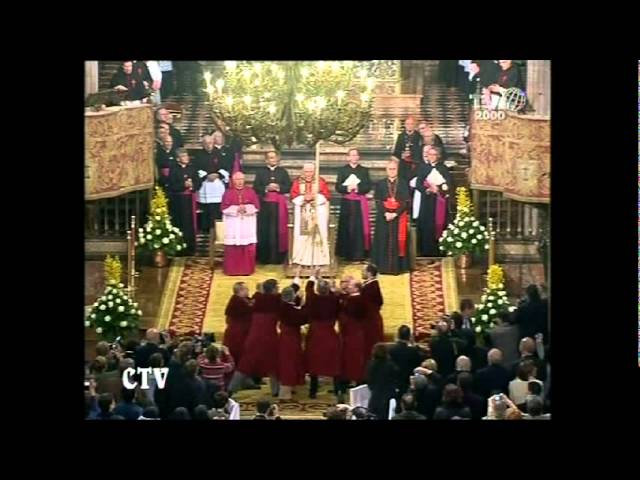
Here is Pope Benedict at Santiago where the huge censer, the “Botafumerio” is charged up and swung.  I can’t help but think that the Pontiff might have been slightly apprehensive.

YouTube thumbnailYouTube icon

Posted in SESSIUNCULA |
5 Comments

Daily Rome Shot 746

Welcome registrants:

studens
Fazio
Fr.A.

Your use of my Amazon affiliate link is a major part of my income. It helps to pay for insurance, groceries, everything. Please remember me when shopping online. Thanks in advance.  US HERE – UK HERE

Chesscomshop Banner

White to play and mate in 2.  Tough.

NB: I’ll hold comments with solutions ’till the next day so there won’t be “spoilers” for others.

Interested in learning?  Try THIS.

Posted in SESSIUNCULA |
9 Comments

ASK FATHER: What is the official book and English translation for blessings after Vatican II but prior to the release of Book of Blessing? Wherein Fr. Z rants.

From a reader…

QUAERITUR:

I have been doing research however to no avail. What is the official book and english translation used for blessing after Vatican 2 prior to the release of Book of Blessing?

The book of blessings remained the Rituale Romanum, which is in Latin.

The new Book of Blessings is appalling and should not be used for anything except perhaps as a tire block on a slope or occasional fire-starter.   I will never use it.

We are confident that, when the priest blesses, God blesses in the person of the priest.  We are confident that, when the priest exorcises, God exorcises.  We are confident that when the priest consecrates items or places or persons, God acts in the priest to constitute them as blessed or consecrated, to tear from from the grip of the Prince of this world and set them apart for the King and the advance His Kingdom.

The efficacy of the blessings depends ultimately on God, who desires what is good for us.

However, we do our best to bless and consecrate through outward signs, the gestures and words of, especially, the priest who is alter Christus.

If our blessings are not magic, neither are they nothing.  Gestures and words count.  Latin makes a difference, as exorcists will confirm.  Moreover, the Rituale Romanum, in the edition that was in force at the time of Vatican II and after explicitly states that if Latin is not used the blessing is void.  I am not making that up.

The Rituale Romanum, Title 8, Chapter 1 gives the general rules for blessings. These are also presented in an English translation of the Rituale by Weller (vol. 3, pp. 2-5).

N. 2 states:

“Benedictiones sive constitutivae sive invocativae invalidae sunt, si adhibita non fuerit formula ab Ecclesia praescripta.   

Both constitutive and invocative blessings are invalid if the form prescribed by the Church is not used.”

Weller’s English translations were never approved for use, even in that interim time after the Council when more English could be used.  The translations are for reference, not use.  The LATIN is approved for use.

The apparent meaning of that, read as it is, is that if priests are using the Weller translation to bless things, Holy Water, etc., they aren’t blessing.    At the end, you have salty water.

HIS SCRIPTIS

  • We cannot limit God.
  • We don’t make the perfect the enemy of the good.
  • People are not bound to do the impossible.

That said…

  • God gives us strong guidance in how to worship Him in a way that pleases Him and we see the fruits.
  • If there is a way to do things better, we should strive to perfect them.
  • People can improve themselves and, for example, learn Latin.

If a priest doesn’t use Latin and instead uses the English translation is something blessed or not?

All I know is that I will always use Latin when I bless holy water.  I will always use Latin to bless objects.  I will always use Latin for the important bits, such as forms of sacraments and exorcisms.

I am never going to leave anyone with the slightest whisp of a doubt about what just happened.  When you come to me for blessings or sacramentals or sacraments, I owe that to you.  It is my duty to make sure that you have no doubt as to what happened.  Latin always resolves that and the vernacular can resolve that.

Latin, for me, is now second nature.  It isn’t for a lot of priests.

These are troubling times.

When the People of Israel broke covenant after covenant with God, God eventually imposed Law on them which reflected not just their state of being chosen by Him, but reflected also their wickedness.  This is why, for example, God allowed for divorce, which, as Christ says, was not so before.

It seems to me that the Church is so messed up right now, and our Catholic identity is so violated and wounded and scrambled, that latitude has to be provided, because Deus providebit.

How do I mean this?

Take analogy of our sacred liturgical worship as, now, having been forced onto a continuum of Catholic identity, ranging from clueless to well-informed and dedicated.

Using Paul’s image of the newly converted being like children who can only take milk, not ready for solid food, in these our times we have to work within reality, not fantasy.

The hic et nunc has to be considered.  We have priests of the Latin Church, the Roman Rite, who have no idea about how to celebrate in their Church’s Rites and don’t know Latin.

What does that mean for our identity?

This ignorance was purposeful on the part of those who both wrote and then warped what was written for the reform of the liturgy.  This was systematically done by those in charge of priestly formation.  They destroyed Catholic identity guttatim.  Drop by drop.  They undermined priesthood, brick from brick.

The result, hic et nunc, is what it is, and it is not what it isn’t.  That sounds tautological, I know, but we have to sober ourselves with this smelling salt and get the cobwebs out of our heads.

So, today, if a well-meaning priest, who through no fault of his own, blesses something using the English translation in Well, does he bless or not?

Here are the factors I put into the scales of my mind.

  • God loves us and wants us to have blessed things.
  • The Church without doubt said that the approved text, meaning Latin, has to be used.
  • God knows that 99% of priests don’t know Latin because the Church has, manifestly contrary to the law, cheated them out of that critical aspect of their formation and identity.
  • God is not limited by the Church’s positive law concerning blessings.
  • Priests of the Roman Catholic Church ought to pray like Roman Catholic priests.
  • The Rituale Romanum itself states that it is a starting point, a reference point for the development of local rituals.
  • It is extremely important to maintain the categories of constitutive and invocative blessings against modernist encroachment and the campaign against them.
  • We are our rites!
  • The wider world is affected by what we do regarding sacred objects, places and persons.  Getting it right is more important than our comfort zone.

Putting all of that into the mental hopper and letting it macerate, when a priest blesses (constitutive) using some other form than what is in the book, I am not sure what happens.  I am inclined to think that, God being merciful, something happens.   If, for example, someone were to walk up to me and ask me to bless the Rosary she was holding out, and if I were to make the sign of the Cross over it while saying something like, Benedictus benedicat (which I got from my old mentor the holy and late, great Card. Mayer), I am inclined to think that the Rosary is blessed.

You will object, why shouldn’t I have just memorized the Latin prayer for the blessing of a Rosary?

We have to fight to recover these things and use them properly.  In the meantime, we have to be smart and flexible.

Allow me to go back to my food analogy for liturgy. This might seem a little insulting but it is just intended to make a point about the continuum we are on.

In 99% of a man’s day and activities, it is  beneath his dignity to scrunch up his face and make airplane noises while moving a spoon around with his hand.  People would think he was nuts.   OR… if he is sitting in front of the high-chair of his little son, who can only eat goop and must sometimes be convinced to eat it, then that man is not doing anything beneath his dignity.  On the contrary, he is performing a sacrificial act of love for his child.  He sacrifices his dignity – becoming more dignified yet – for the sake of his boy’s eating something that will help him to grow out of the need to eat that sort of thing in that sort of way.  He helps his boy move up the food and eating continuum to more complicated foods eaten in a more human way.  Infants eat in the way that infants eat, not in the way that adults eat.  To force an infant to eat steak and cabernet is abuse, not love.

This is our situation with a large number of those who miraculously still self-identify as Catholic.  Some can take the solid food of the Vetus Ordo, with its greater challenge and deeper apophatic approach to an encounter with mystery.  Some are still pretty much bound up in the emphasis on the immanent in the Novus Ordo.  Some are ready to make a move quickly and others need more time.  Some are ready for steak and cabernet and others still need goop, or perhaps SpaghettiOs if they are into the Novus Ordo with some traditional elements.  Eventually, they can handle a slice of bologna and maybe stab at it with a fork that they have to hold in various ways while they learn and their dexterity improves.  You get the idea.  Eventually, it is china, linens, crystal, sharp knives and bistecca alla fiorentina with a bottle of Tignanello.

Do not make the mistake of thinking that the toddler with Spaghetti O’s is bad because he can’t handle spaghetti all’arrabbiata.  Do not make the mistake of thinking that mom and dad who give their toddler SpaghettiOs are bad.    They would be bad if, once junior is grown and able to take more and better, they keep him eating pureed carrots in a special chair.   They would be infantalizing him, which would be abuse of their child and beneath their own dignity as parents.

Of course if the parents had been kept in an infantile state themselves, they wouldn’t know any better.

Keeping people down liturgically is just plain wrong.

However, if priests and bishops don’t have a clue themselves… what to do?  Nemo dat quod non habet.  No one gives what he doesn’t have.  Priests and bishops are included in this.   Some priests are at the level of the boy in the high chair when it comes to liturgical identity.  Remember: we are our rites! Alas, they listen to the “experts” who did the infantalization in the first place and the closed circles just grinds on and on.

To move this into the plain of the Church’s teaching on morals, while we acknowledge that some people are in sinful situations, we don’t leave them in sinful situations.  Understanding that movement and improvement takes time, we don’t just excuse what they are doing because, after all, the ideals we have been presented are just too hard for some people.   No.  We are our rites and our rites are doctrine.   With the help of authority and of grace, we must be working toward the ideal, even if it is painful.

This is true for our moral lives and also our sacred liturgical worship, by which we individually and collectively fulfill the virtue of Religion.

Our Catholic identity is a mess.  There are correctives and remedies.   But the therapy will have its painful moments.  But they MUST be undertaken.

I’ve had injuries that required painful therapeutic exercises.   Oh, how I didn’t want to do them.  But I wanted recovery enough so that I was willing to deal with the discomfort.   In the long run, it paid off.  I never want to have that pain again, but it worked.

I am reminded of the Lord’s words in John 16, using the image of painful child-birth:

21 When a woman is in travail she has sorrow, because her hour has come; but when she is delivered of the child, she no longer remembers the anguish, for joy that a child is born into the world. 22 So you have sorrow now, but I will see you again and your hearts will rejoice, and no one will take your joy from you. 23 In that day you will ask nothing of me. Truly, truly, I say to you, if you ask anything of the Father, he will give it to you in my name. 24 Hitherto you have asked nothing in my name; ask, and you will receive, that your joy may be full.

We have to get through this dark time together, in solidarity, with joy, hopeful determination and elbow grease.

We must renew and restore our sacred liturgical worship to have a renewal and restoration of Holy Church and society.  Hence, there will always be some who will try to destroy the traditional Roman Rite.

Posted in "How To..." - Practical Notes, ASK FATHER Question Box, Liturgy Science Theatre 3000, Save The Liturgy - Save The World, Wherein Fr. Z Rants | Tagged ,
20 Comments

Your Sunday Sermon Notes – 8th Sunday after Pentecost (N.O.: 16th) 2023

Share the good stuff.

It’s the 8th Sunday after Pentecost in the Vetus Ordo and the 16th Sunday of the Novus Ordo.

Was there a GOOD point made in the sermon you heard at your Sunday Mass of obligation?

Tell about attendance especially for the Traditional Latin Mass. I hear that it is growing. Of COURSE.

Any local changes or (hopefully good) news?

I have some thoughts about the Sunday Epistle reading posted at One Peter Five.

A taste:

You will sometimes hear from the pulpit that Abba is a term of intimacy with the Father which is rendered into English as “Daddy.” No. And No. “Abba” isn’t “Daddy.” It is wholly other than that.  It is a term of intimacy, but it carries the connotation not of mere affection but rather of obedience, as is demonstrated precisely in Our Lord’s obedience when He says: “Abba, Father, all things are possible to thee; remove this cup from me; yet not what I will, but what thou wilt” (v. 36). A child says “Abba” when obeyingAbba is rather like respectful “Sir,” which comes through archaic “sire” from Norman “sieur” (think, French monsieur,” Italian monsignore) and ultimately Latin senior.

Posted in SESSIUNCULA |
11 Comments

Daily Rome Shot 745

White to move..  Find white’s only move that does not immediately checkmate black!

How long did that take you?

NB: I’ll hold comments with solutions ’till the next day so there won’t be “spoilers” for others.

Interested in learning?  Try THIS.

Your use of my Amazon affiliate link is a major part of my income. It helps to pay for insurance, groceries, everything. Please remember me when shopping online. Thanks in advance.  US HERE – UK HERE

Ju Wenjun won a wild final game defeating Lei Tingjie for the 2023 FIDE Women’s World Championship. It’s her fourth title which she has held since 2018. She won €300000. Hikaru Nakamura won the Bullet Chess Championship 2023 on Friday beating Magnus Carlsen despite his comeback in overtime. The speed is… scary.

The Tour comes to a close today.

Posted in SESSIUNCULA |
6 Comments

Grabbed by the neck. Famous poem by Yeats and a vision of heretic Jesuit Pierre Teilhard de Chardin. A talk by Michael Hitchborn at the Coalition for Canceled Priests Conference

Longtime readers here know of my love of poetry. Hence, from the beginning this talk by Michael Hitchborn at the Coalition FOR Canceled Priests grabbed my attention, for he began with William Butler Yeats and his most famous work.
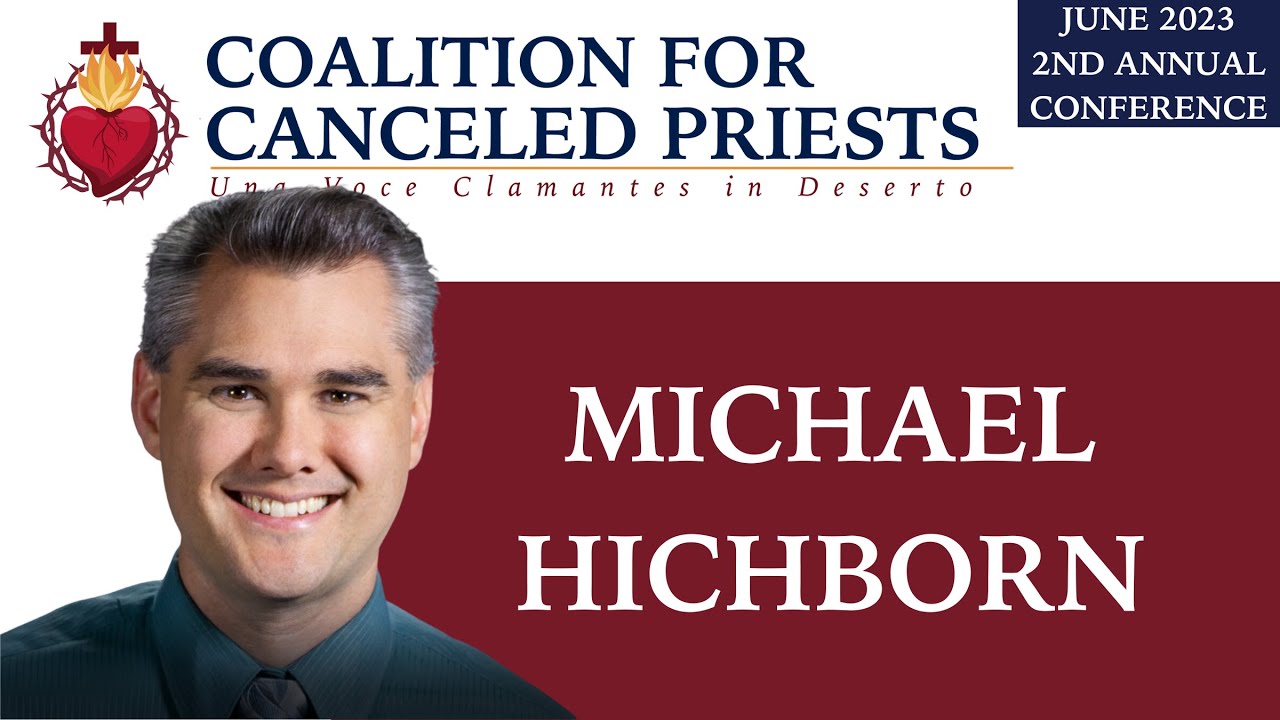


He then revealed that Yeats was into, basically, Satanism (I had zero idea!) and that his most famous work closely resembles a vision by the heretic Jesuit (tautology?) Pierre Teilhard de Chardin in China which he recounts, clearly a temptation and subsequent possession by the Enemy.  Key: Spiritus Mundi… spirit of the earth/world.

At this point, my attention was grabbed… by the neck.

YouTube thumbnailYouTube icon

Posted in Poetry, The Coming Storm, The future and our choices | Tagged , ,
10 Comments

Synodality (“walking together-ity”): It is the thought world of rotary phones, eight-track tape players, and Hans Küng. It is “Muskrat Love” and Charlie Curran all over again.

There is a terrific read at Catholic World Report today by Larry Chapp.  It is a retrospective which is actually a contemporary diagnostic.  What is going on today, we’ve seen before in germ.   Today, however, the germ has hatched out into something harder to weed out.

There just popped into my head the line from Claudius in Robert Graves book (and the super PBS series). Anyway.

A couple of samples from the piece. I’m tempted to do an audio recording of it so that more people can absorb it.

[…]

But what struck me the most, even at that young age, was the manipulation of language for the furtherance of this new genital Gnosticism as a legitimate “development of doctrine”. We were told in a pounding, percussive succession of re-education lectures (“Days of Recollection”!) that God was “doing a new thing” that apparently contradicted all of the “old things” that God used to say and do—but now regrets—and that we could not be “fundamentalists” anymore since fundamentalism is one of the things God once liked—but no longer does.

There was also a strange and ironic ecclesiolatry going on. All of the emphasis was upon the Church as the generator of truth and, in this case, new truths, but not on the Church as the preserver of truths that had been gifted to her by God in divine revelation. And to the extent they did emphasize that God alone was the source of the truth of divine revelation, it was only to reinforce some bizarre voluntarist concept of a God who could just make stuff up as he went along and as it suited him/her/they/them/it. Of course they did not really believe in any of that and it was really all just a mere cipher for dismissing the normativity of divine revelation as anything binding.

[…]

I do think that we are seeing a resurgence of a new version of this old dynamic, especially in all of the current gyrations and agitations surrounding “synodality”. In reality, the post-conciliar Docetic and Marcionite Gnosticism never went away, as it continued to live on almost everywhere in the Catholic academic guild. And despite the rise of significant countervailing theological voices against this hegemony, it remains true that the ecclesial theological needle is now moving once again leftward and in ways that are tellingly similar to the old genital Gnosticism that never really died out, but simply went underground during the previous two pontificates.

Therefore, my claim is a simple one. Namely, that even though there are new elements in the neo-progressivism of today, that it is a recurrence of the older narrative but now decked-out in the verbiage of “discernment”, “accompaniment”, “inclusion”, “listening” and “sensitivity to complex situations”. But what they really want is precisely to reignite the fires of that post-conciliar revolution and to reopen the debates over women’s ordination, contraception, intercommunion with Protestants, communion for the divorced and remarried, cohabitation, and a green-lighting of the whole LGBTQ+IA++ world of endless sexual identity acronyms.

[…]

Once again, this is not new. We have seen it all before. There will be calls for dialogue, inclusion, diversity, openness, parrhesia, and debate, until the desired results are reached and at that point all conversation will cease. The garage door will be closed and anyone who dissents from the neo-Montanist assertion that “God is doing a new thing” will be dismissed as bigots, reactionaries, rigid backwardists, and anti-magisterial dissenters. Theological careers will be ruined, successful pastors will be reassigned to Our Lady of Moonshine parish in Dog Breath USA, or put in charge of the diocesan cemeteries, and seminaries will be instructed to weed out the recalcitrant obstructionists.

So, please be attentive. Please pay attention, for example, to the style of the art associated with the Synod. They all look like the cartoonish ecclesiastical art of the 1970s and I do not think that is an accident. It is just further evidence of the thought world these folks inhabit. It is the thought world of rotary phones, eight-track tape players, and Hans Küng. It is “Muskrat Love” and Charlie Curran all over again.

[…]

YouTube thumbnailYouTube icon

And now for one of the dumbest songs ehvur…

YouTube thumbnailYouTube icon

UPDATE:

Remember when the official Parodohymnodist here thought that the mascot of the Synod (“walking together”) on Synodality (“walking together-ity”) should be quokka named blather?

I think I found just the right theme song.


Posted in SESSIUNCULA |
5 Comments