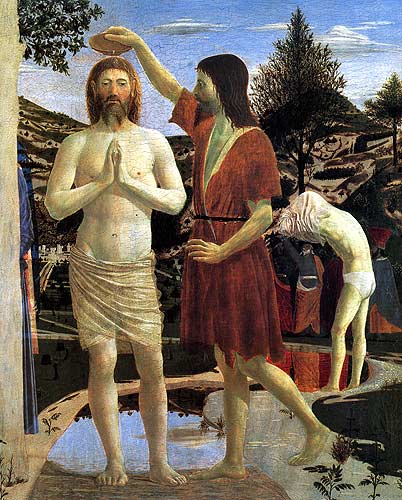
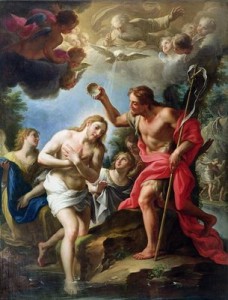
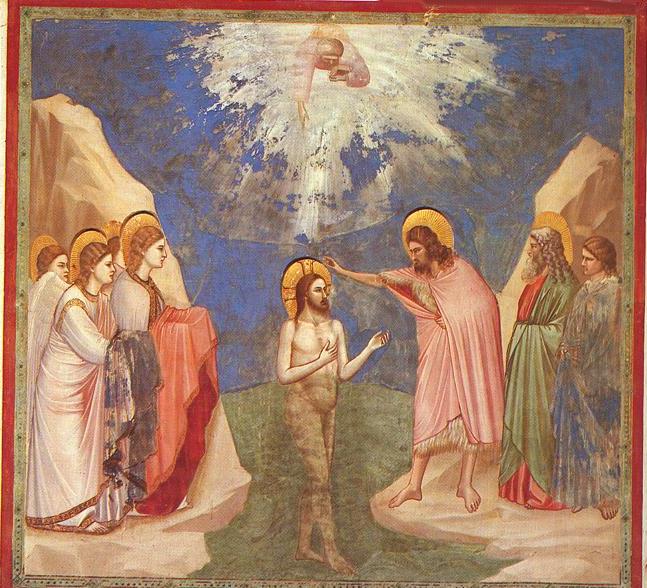
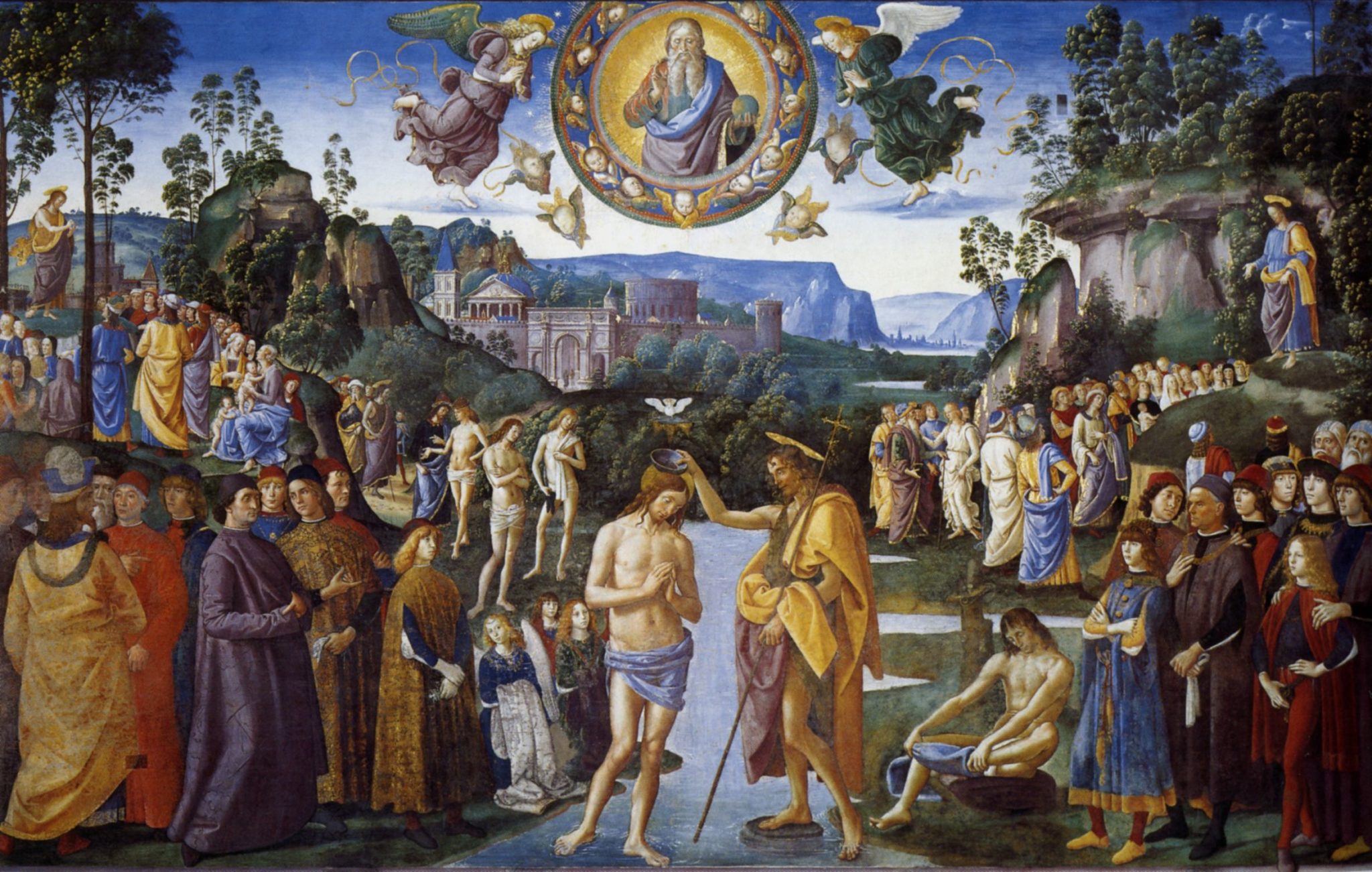
 On the SIXTH of January, Epiphany, we prayed liturgically with the three mysteries of the Lord’s life revealing Him as divine: the adoration of Jesus by the Magi, the changing water to wine at Cana, and His baptism by John in the Jordan River.
In the reform after the Council, the mystery of the Lord’s Baptism (as revealing His divinity) celebrated at Epiphany was teased out, I suppose to put greater emphasis on the Lord’s baptism as a model for our own baptism.
The Novus Ordo Feast of the Baptism of the Lord (which closes the Christmas season in the Novus Ordo), is now placed on a Sunday. In the pre-Conciliar calendar it had, with some exceptions, a commemoration on 13 January… the octave day of Epiphany, which is appropriate.
John the Baptist helped us into our Advent preparation for Christmas by reminding us to straighten the paths of our lives for the coming of the Lord. It is fitting that we meet the Baptist again at the end of the Christmas season.
John announced the coming of the Messiah and now he points us to the Messiah. This was when the Baptist told his disciples to follow Jesus, saying “He must increase, I must decrease” (John 3:30).
In His baptism by John, Christ foreshadows what He would do later: He descends into the waters of the Jordan (death and the tomb) and rises out of them again (resurrection).
Christ had no need of John’s baptism. Being perfect and sinless Jesus had nothing to repent.
Instead, His submission to baptism shows all humanity the way to our salvation.
Christ’s baptism reveals how we must die and rise to our sins in the sacrament He instituted at the Jordan. By receiving John’s baptism the Lord was solemnly revealed to be divine by the Father’s voice and the descent of the Holy Spirit, and He sanctified the waters for our baptisms. He instituted the sacrament.
Baptism is the starting point of all saving and actual graces we receive as Christians. Baptism confers on us an indelible character, almost like a branding mark of Christ’s Lordship in and over us. This is the foundation of our spiritual lives. Christ’s humility orients us in the right direction for our lives as baptized Christians.
He must increase, we must decrease.
We find two collects for today in the 2002 Missale Romanum. The first is of new composition for the post-Conciliar Novus Ordo and the second is from the 1962MR on 13 January, the Commemoration of the Baptism of the Lord.
COLLECT (2002MR):
Omnipotens sempiterne Deus,
qui Christum, in Iordane flumine baptizatum,
Spiritu Sancto super eum descendente,
dilectum Filium tuum sollemniter declarasti,
concede filiis adoptionis tuae, ex aqua et Spiritu Sancto renatis,
ut in beneplacito tuo iugiter perseverent.
Apart from the obvious references to the events at the Jordan, there are echoes of Scripture here (cf. Is 42:1-4, 6-7; Is 61:1-2; Rom 8:15; Eph 1:3. 5-6). According to the illuminating Lewis & Short Dictionary the later Latin adverb sollemniter, from the adjective sollemnis, refers to all that which is performed according to the proper customs and forms usually in a ritual religious context. Thus, it mostly means grand and “ceremoniously” but also in an ordinary way, so long as it is the “customary” way. The form of the verb declarasti is again “syncopated” (declaravisti). Spiritu…descendente is our old friend the ablative absolute and it takes its time from the perfect declarasti. Iugiter, ultimately from iugum (a “yoke” for horses or cattle), means “continuously” as if one moment in time is being “yoked together” with the next, and so on. The substantive beneplacitum is from the late, ecclesiastical verb beneplaceo (“to please”), found in the Latin Vulgate and in authors such as St. Ambrose of Milan (+397).
SLAVISHLY LITERAL TRANSLATION:
Almighty eternal God,
who as the Holy Spirit was descending upon Him,
solemnly declared Christ, baptized in the Jordan river,
to be Your beloved Son,
grant that the children of Your adopting, reborn from water and the Holy Spirit,
may continually persevere in your good pleasure.
CURRENT ICEL (2011):
Almighty ever-living God,
who when Christ had been baptized in the River Jordan,
and as the Holy Spirit descended upon him,
solemnly declared him your beloved Son,
grant that your children by adoption,
reborn of water and the Holy Spirit,
may always be well pleasing to you.
The ICEL version isn’t too far off the mark today, probably because this rather chatty prayer pretty much tells a story and the syntax is fairly straight forward.
COLLECT 2 (2002MR):
Deus, cuius Unigenitus
in substantia nostrae carnis apparuit, praesta, quaesumus,
ut, per eum, quem similem nobis foris agnovimus,
intus reformari mereamur.
This prayer is far less wordy than the newly composed collect. The language here is denser and more “theological”. Note the contrast between two pairs of words. First, the adverbs intus, “on the inside, within”, contrasted with foris, “from without” (this is literally, “outside the doors”, so it refers to what you see from the outside). Next, the noun substantia, a theological word “substance”, that which we really are in and of ourselves apart, or “beneath” in a sense our outward appearances or “accidents”, contrasts with the adjective similis, “like, resembling, similar”. There is another theological concept, “form”, contained within the passive infinitive reformari. Human beings are composed of “matter” (our fleshly bodies) and “form” (our immortal, rational souls). The sacraments have matter and form: for example, in baptism water (matter) and the Trinitarian words spoken while pouring the water (form), in the Eucharist bread and wine (matter) and the words of consecration by an ordained priest (form), in penance the confession of sins (matter) and the absolution from the priest (form).
SLAVISHLY LITERAL TRANSLATION:
O God, whose Only-begotten,
appeared in the substance of our flesh, grant, we beg,
that we may merit to be reshaped inwardly
through Him, whom we recognize is like us outwardly.
CURRENT ICEL (2011):
O God, whose Only Begotten Son
has appeared in our very flesh,
grant, we pray, that we may be inwardly transformed
through him whom we recognize as outwardly like us.
The Latin prayer’s meaning hinges on the effects of baptism.
Through the words of the formula for baptism and the outward pouring of sensible, visible water, there is an invisible and inward effect of grace in the soul.
By baptism we are inwardly conformed or “shaped” so that we can be a proper temple of the Holy Spirit and recipient of graces as holy member of the Body of Christ, the Church. By taking up our human nature, our “flesh”, into an indestructible bond with His divinity, the Second Person became one like us in all things but sin.
Our baptism is the first step of being more and more reformed and shaped according to His image, a process which will continue for eternity in heaven.
In this life it is our task to make sure that our outward life, our words and actions, are fully consistent with and show forth clearly the inward reality of Christ in us.
This but one of the lessons we receive from Jesus’ humble submission to a baptism at the hands of John in the Jordan for which He had absolutely no need.
The main concept underlying the primary Collect, and this feast, would have to be our spiritual adoption and new status in the Holy Spirit as the children of God, brothers and sisters of Christ having the same heavenly Father.
In our baptism and by living the faith we profess we enjoy the indwelling of the Holy Spirit, indeed the indwelling of the Triune God (cf. John 14:23).
This indwelling begins with the humble reception of a “character” or “owner’s mark” on our souls, which although it is a sign of God’s Lordship over us actually sets us free from the bondage of sin. He adopts us as His own making us sons and daughters, not slaves. When the Holy Spirit dwells in us, we can address God with reverential awe intimately as “Abba” (Mark 14:36), rather than with the abject fear of a slave for a hard master.
God does more for us than freeing us from sin and making us His adopted children.
He also makes us co-heirs with His eternally Only-Begotten to a divine inheritance.
As co-heirs we can be admitted also to the joys of heaven which Christ, our brother in our humanity, has in perfect possession with His resurrection and ascension to the Father’s right hand (cf. Romans 8:34).
Once we were slaves of sin and the enemies of God (Romans 5:10-11).
Now we are sons and daughters with a (re)birthright to inherit.
Our humanity, in Christ, already enjoys this while all of humanity still awaits the fulfillment of this promise.
God now hears our prayers as He hears His confident children, not fearful strangers.



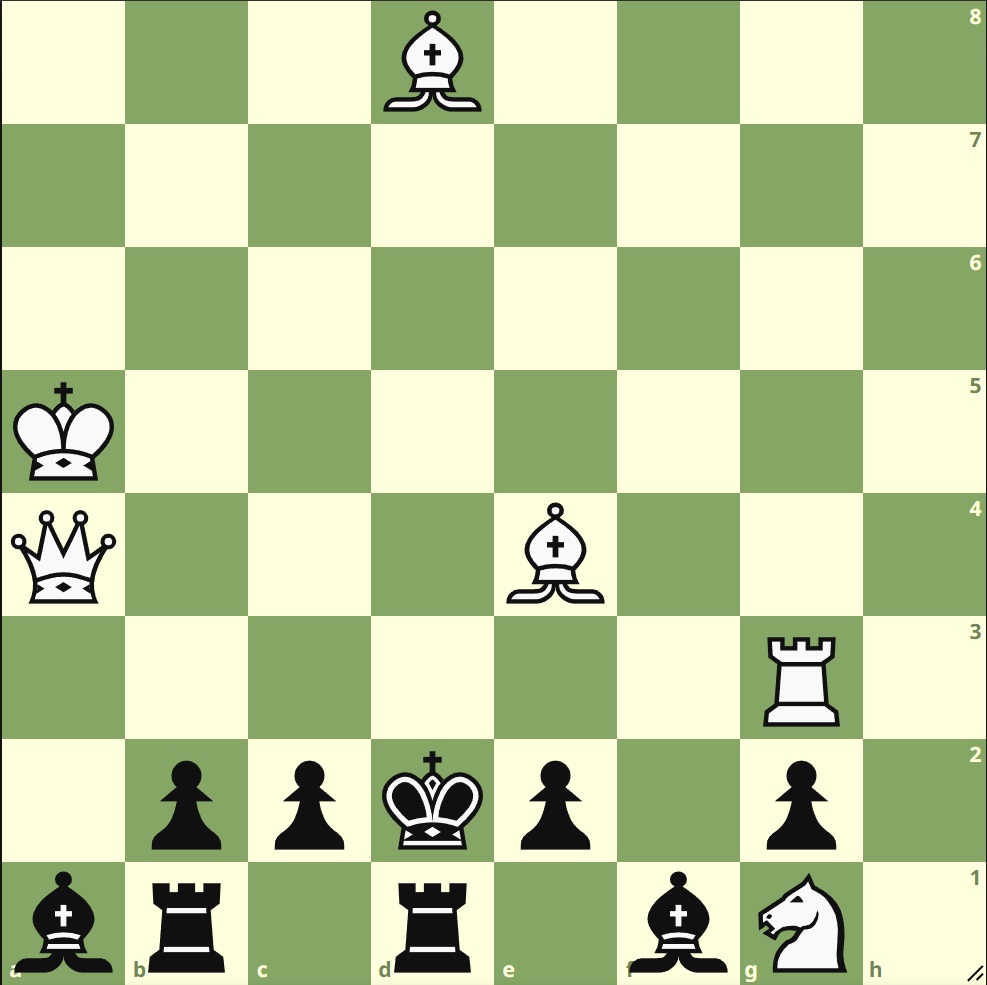
 Ceterum censeo Firouzja delendum esse.


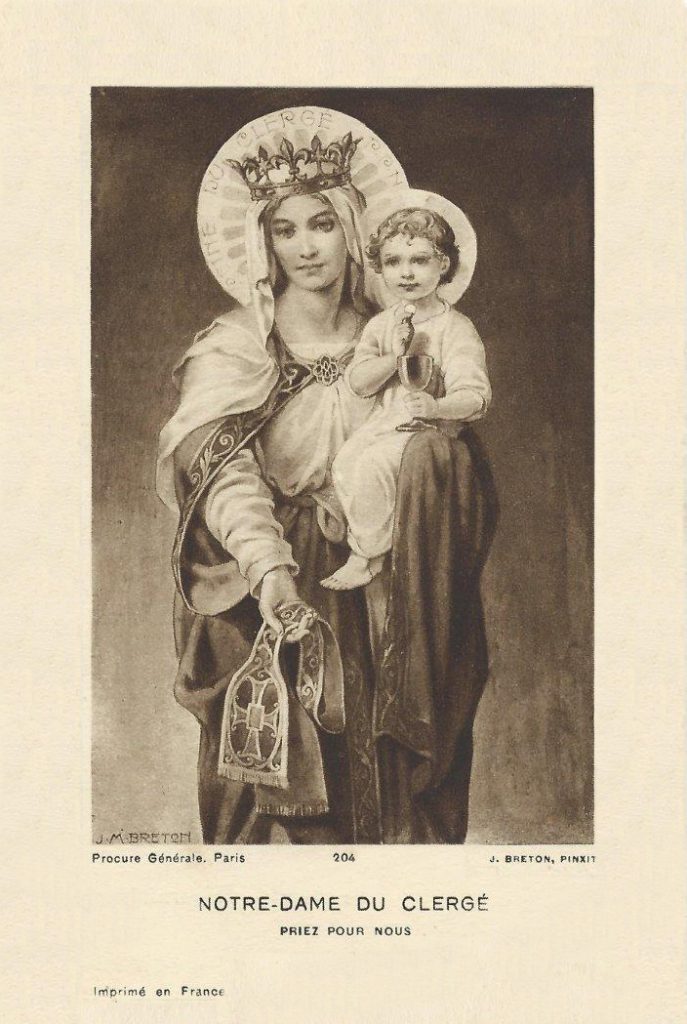 Do you consciously pray for priests? For those local priests whom you know and those far away? For those whom you love? For those who are annoying or obviously in grave spiritual danger?



 On the SIXTH of January, Epiphany, we prayed liturgically with the three mysteries of the Lord’s life revealing Him as divine: the adoration of Jesus by the Magi, the changing water to wine at Cana, and His baptism by John in the Jordan River.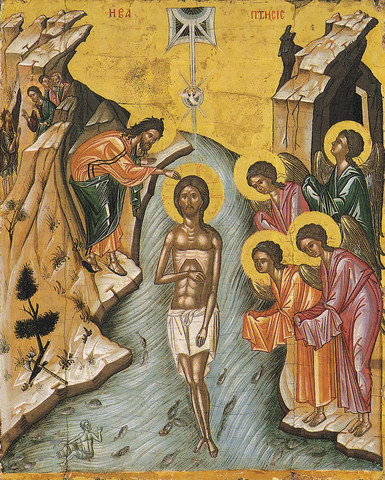







 It’s 10 January 2024 and it is a Wednesday. Some time ago, I saw a movie called News of the World in which after the Civil War a former confederate officer ekes out a living wandering about reading newspaper stories from all over to people who pay a dime a head (which figures to about
  January 8th, 2024

 ProfessorCover on What’s going on in Rome?: “Anyone who spends any amount of time in academics will notice that one way to satisfy one’s ambitions is to…”



























