Daily Rome Shot 608

Meanwhile,

NB: I’ll hold comments with solutions ’till the next day so there won’t be “spoilers” for others.

Please remember me when shopping online. Thanks in advance.  When you are ready to shop, come back and click one of these links, then Amazon will remember that you entered with my affiliate link.  By the way, I can’t control what you might initially see when you get there.  Alas.

US HERE – UK HERE

3:16 isn’t just in John.

Welcome new registrants!

conqueringlyons

Posted in SESSIUNCULA |
8 Comments

WDTPRS: O Antiphons – 17 December – O Sapientia – The Way of Prudence

On December 17th we enter into that final stretch of our Advent preparation. In the Church’s solemn prayer of the hours, at Vespers, the great “O Antiphons” are sung. Today we have the first.

Years ago, I made a little webpage for the O Antiphons.  It might be useful.

By way of introduction, here are a few points every Catholic should know.

First, the song Veni, veni Emmanuel is a musical presentation of the themes of the O Antiphons.

Second, the first letters of the “addressee” of the Antiphon, arranged backward spell out “Ero cras… I will be (there) tomorrow”.  So, there is a clever “count-down” in the antiphons.

Third, each of the “O Antiphons” carries Old Testament biblical figures. At the same time each one carries an element of the New Covenant. These two characteristics are juxtaposed and a third dimension emerges which serves as a point of meditation when considering the Incarnate Word, the Son of God made flesh.

Today’s O Antiphon is O Sapientia.

LATIN: O Sapientia, quae ex ore Altissimi prodidisti, attingens a fine usque ad finem, fortiter suaviter disponensque omnia: veni ad docendum nos viam prudentiae.

ENGLISH: O Wisdom, who came from the mouth of the Most High, reaching from end to end and ordering all things mightily and sweetly: come, and teach us the way of prudence.

Scripture References:
Proverbs 1:20; 8; 9
I Corinthians 1:30

Relevant verse of  Veni, Veni Emmanuel:
O come, O Wisdom from on high,
who orders all things mightily,
to us the path of knowledge show,
and teach us in her ways to go.

In today’s “O Antiphon” – “O Sapientia” – we are drawn into the Old Testament’s wisdom literature. Wisdom is a divine attribute. The divine Wisdom is personified. Wisdom is the beloved daughter who was before Creation, Wisdom is the breath of God’s power, Wisdom is the shining of God’s (transforming) glory. (See Sirach 24:3 and Wisdom 8:1.)

Wisdom is also something which we deeply desire. It is also a human attribute, not just a divine attribute, though authentic human wisdom is never separated from a relationship with God. Fear of the Lord is the beginning of wisdom, as we learn from the psalms as well as the school of personal hard-knocks. From this convergence of awesome respect for God with the experience of learning through life’s mysterious calendar, we understand (if we are wise) that wisdom is more than mere knowledge. It is something more than love.  It is something more than just a special astuteness regarding how to get along in life, a certain kind of savior faire. Rooted as it is in fear of the Lord, true human wisdom is both love and that knowledge of God that seeks to understand, the knowledge that is completed by faith.

The Prologue of John’s Gospel refers to the “Verbum caro factum...the Word made flesh”. He is the divine Logos… the eternal thought/word/reason. Through Him all things were made. Without Him nothing can be. So, the New Testament image in the Prologue of John brings to completion the imagery of Wisdom. He, the Word, is the archetype of the material universe. All things are ordered in and to Him.

Our lives, to be happy, need order. Our individual private lives and our collective lives in larger society must have structure and order. They must be disposed in such a way that the real and genuine good of all is fostered and promoted. Thus, in human governance we struggle to find the proper balance of exercise of power (without which governance and order is not possible) and gentle concern for the individual and community (without which there is mere imposition and tyranny and exploitation for some end material or ideological). Wisdom permits the balance of these.

This first “O Antiphon” shows us the Creator of all that is invisible and visible, the whole of  spiritual and material creation.  Creation is moving according to an eternally disposed plan of divine Providence toward an inexorable end: that God may be all in all. In this end the blessed elect will participate. We have had the way opened for us toward this end by the Word (divine) made flesh (human). Our humanity now sits in transformed glory at the right hand of the Father in an indestructible bond with the Son’s divinity. The risen Christ is the new Adam…the new Creation. With unspeakable sweetness He orders our salvation. With irresistible power all things exist and move according to His will. Our lives have meaning only in Him, according to His guidance, who handles us “suaviter et fortiter“.

Our Old Testament and New Testament figures and images merge into a new point of reflection for our lives which today’s “O Antiphon” underscores as “prudence” – “Come…Teach us the way of prudence!”

“Prudence” comes from the Latin “to see/look ahead”. It is one of the four “cardinal” virtues, the one upon which the other virtues depend. Prudence is a habit of the intellect that allows us to see in any circumstance what is virtuous and what is not. Prudence helps us to seek what is virtuous and avoid what is not. Prudence perfects the intellect (rather than the will) in practical decisions. It determines which course of action must be taken. It indicates what the golden mean is hic et nunc…here and now. This mean is at the core of every virtue. Without the virtue of prudence courage becomes foolhardiness… rushing in to the wrong danger in the wrong way at the wrong time. Without the governing of prudence mercy devolves into slackness and enervated weakness, spinelessness.

But this is still a kind of prudence which is merely human prudence, not looking beyond the issues of daily life.  We must also look beyond this vale of tears. In addition to the prudence which grows out of the school of hard-knocks and which becomes a sound and good habit through repeated acts, there is another prudence, an “infused” prudence. This kind of prudence is a grace given us by God out of His merciful love. This greater prudence, which governs other grace-filled virtues, cannot be separated from the life of grace. It is exercised in the state of grace.  Mortal sin is its enemy.  This higher kind of prudence helps us to determine the proper things that help us to salvation.  It helps us to avoid things that slam the door that Christ opened (mortal sin). Thus, prudence cannot be separated from charity, which is in the soul as a characteristic of sanctifying (habitual) grace.

Today in the opening “O Antiphon” we sing to Emmanuel who is coming.  We plead with Him, for He orders all things “sweetly and strongly.”  He teaches us how to avoid things that harm us, both in material concerns and in our pursuit of the happiness of heaven.  He teaches us true prudence.

Take stock: is there something going on in my life that needs to be examined in prudence? Am I doing something which is going to be an obstacle to the happiness of heaven? Christ is coming, both at Christmas as the infant King and the end of the world as the Judge and King of fearful majesty. This is a cause to rejoice.  But it is also cause to prepare prudently and well the way of the Lord and make straight His paths before He comes, as we heard about on “Gaudete” (“Rejoice!) Sunday of Advent.

Listen to the monks at Le Barroux sing this antiphon and the Magnificat with which it is inextricably bound:

Posted in SESSIUNCULA |
2 Comments

Mornië utúlië

I’m banging my head against something I am trying to write about the Vetus Ordo Epistle for Sunday’s Mass, the 4th Sunday of Advent.  It happens.  A losing battle against the clock?  No, I always get there.

So, while keeping an eye on Magnus v. MVL in the Speed Chess Championship, insane, I spotted a video that forced a click and another distraction, just as a zugwang forces you into something you would rather not do, but have to to anyway.

I’m thinking Tolkienly since one of you sent me the new Numenor book (thanks CG).

Anyway, one video reminded me of the state of the Church right now and our role in it.

Sam: “..folk in those stories had lots of chances of turning back, only they didn’t. They kept going. Because they were holding on to something.”
Frodo : “What are we holding onto, Sam?”
Sam : “That there’s some good in this world, Mr. Frodo… and it’s worth fighting for.”

That’s the Peter Jackson film version. That speech isn’t in the book.  I don’t like those movies, in the main, but that was a good movie moment and fully in keeping with Sam’s true nature. Some could argue that Sam is the main hero of the whole thing.

That led to me finding this video of one of my favorite vocal groups.

The Jackson movies had songs at the end.  The first movie had one by Enya… I remember seeing Enya with Clannad wayyyyy back in the early 80’s when they were touring dives in these USA.

Anyway, Voces 8 does that song which has these words:

May it be an evening star
Shines down upon you
May it be when darkness falls
Your heart will be true
You walk a lonely road
Oh! How far you are from home

Mornië utúlië (Darkness has come)
Believe and you will find your way
Mornië alantië (Darkness has fallen)
A promise lives within you now

May it be the shadow’s call
Will fly away
May it be you journey on
To light the day
When the night is overcome
You may rise to find the sun

Mornië utúlië (Darkness has come)
Believe and you will find your way

Mornië alantië (Darkness has fallen)
A promise lives within you now

A promise lives within you now

YouTube thumbnailYouTube icon

By the way, here’s the parallel from the actual hold in your hand book:

‘Yes, that’s so,’ said Sam. `And we shouldn’t be here at all, if we’d known more about it before we started. But I suppose it’s often that way. The brave things in the old tales and songs, Mr. Frodo: adventures, as I used to call them. I used to think that they were things the wonderful folk of the stories went out and looked for, because they wanted them, because they were exciting and life was a bit dull, a kind of a sport, as you might say. But that’s not the way of it with the tales that really mattered, or the ones that stay in the mind. Folk seem to have been just landed in them, usually – their paths were laid that way, as you put it. But I expect they had lots of chances, like us, of turning back, only they didn’t. And if they had, we shouldn’t know, because they’d have been forgotten. We hear about those as just went on – and not all to a good end, mind you; at least not to what folk inside a story and not outside it call a good end. You know, coming home, and finding things all right, though not quite the same – like old Mr Bilbo. But those aren’t always the best tales to hear, though they may be the best tales to get landed in! I wonder what sort of a tale we’ve fallen into? ‘
`I wonder,’ said Frodo. ‘But I don’t know. And that’s the way of a real tale. Take any one that you’re fond of. You may know, or guess, what kind of a tale it is, happy-ending or sad-ending, but the people in it don’t know. And you don’t want them to.’
‘No, sir, of course not. Beren now, he never thought he was going to get that Silmaril from the Iron Crown in Thangorodrim, and yet he did, and that was a worse place and a blacker danger than ours. But that’s a long tale, of course, and goes on past the happiness and into grief and beyond it – and the Silmaril went on and came to Eärendil. And why, sir, I never thought of that before! We’ve got – you’ve got some of the light of it in that star-glass that the Lady gave you! Why, to think of it, we’re in the same tale still! It’s going on. Don’t the great tales never end? ‘
‘No, they never end as tales,’ said Frodo. `But the people in them come, and go when their part’s ended. Our part will end later – or sooner.’
‘And then we can have some rest and some sleep,’ said Sam. He laughed grimly. ‘And I mean just that, Mr. Frodo. I mean plain ordinary rest, and sleep, and waking up to a morning’s work in the garden. I’m afraid that’s all I’m hoping for all the time. All the big important plans are not for my sort. Still, I wonder if we shall ever be put into songs or tales. We’re in one, or course; but I mean: put into words, you know, told by the fireside, or read out of a great big book with red and black letters, years and years afterwards. And people will say: “Let’s hear about Frodo and the Ring! ” And they’ll say: “Yes, that’s one of my favourite stories. Frodo was very brave. wasn’t he, dad?” “Yes, my boy, the famousest of the hobbits, and that’s saying a lot.”‘
`It’s saying a lot too much,’ said Frodo, and he laughed, a long clear laugh from his heart. Such a sound had not been heard in those places since Sauron came to Middle-earth. To Sam suddenly it seemed as if all the stones were listening and the tall rocks leaning over them. But Frodo did not heed them; he laughed again. ‘Why, Sam,’ he said, ‘to hear you somehow makes me as merry as if the story was already written. But you’ve left out one of the chief characters: Samwise the stouthearted. “I want to hear more about Sam, dad. Why didn’t they put in more of his talk, dad? That’s what I like, it makes me laugh. And Frodo wouldn’t have got far without Sam, would he, dad? ” ‘
`Now, Mr. Frodo,’ said Sam, ‘you shouldn’t make fun. I was serious. ‘
`So was I,’ said Frodo, ‘and so I am. We’re going on a bit too fast. You and I, Sam, are still stuck in the worst places of the story, and it is all too likely that some will say at this point: “Shut the book now, dad; we don’t want to read any more.” ‘
`Maybe,’ said Sam, ‘but I wouldn’t be one to say that. Things done and over and made into part of the great tales are different. Why, even Gollum might be good in a tale, better than he is to have by you, anyway. And he used to like tales himself once, by his own account. I wonder if he thinks he’s the hero or the villain?

Posted in Random Thoughts | Tagged
8 Comments

Fr. Z’s Kitchen: Rögtönzött Magyar-Római Paprikás Csirke.

Last night I had the plan of making a “Cornish Game Hen” (aka CGH aka little chicken) for supper. Hence, I brined it and determined that I would spatchcock it and put it on the grill.

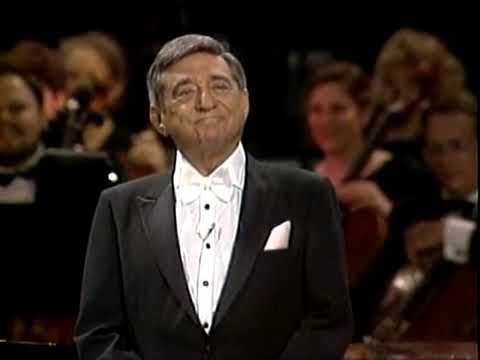
Did you know that the CGH was popularized by Victor Borge, whom I literally, physically ran into once in Christenstad.  Here he is with the great Robert Merrill.

YouTube thumbnailYouTube icon

Brining the CGH.

Then, while I was doing my daily Hungarian lesson, I had an idea.

I was going to just shove in some lemon and rosemary.  Why not make Paprikás Csirke?  I’m sure you ask yourself the same all the time.

The question was, would I have all the ingredients and, important, time?

I put on my roller-skates and went for it.  I figured I’d aim for one hour prep and cooking.

Could I do it?  With what I had on hand?

Use the grill rather than cut up the little bird and use a pan to brown.

FAST FAST!  Gotta get those onions going immediately, so that they can cool a little before adding the paprika!

I fired up the grill at this point.    Next.

Seconds later.

I smashed and left the the jackets.  Four seemed about right because this is the sort of weak-ass garlic we get in these USA.

Since I had just a couple strips of bacon left, I tossed them in, not having lard.  It is good to do things in stages, but I am on the clock at this point.  FAST FAST!

Kitchen sheers.  Vital.

When the Metropolitan Opera would come to town for a week during their annual tours, inevitably some of the stars would show up at a piano bar in downtown Minneapolis called Richards where a lot of cops would also hang out after work, since it was across from the downtown police HQ.  It was a real karaoke place before karaoke and the old pianist there – don’t remember his name – Stan? – was about 150 years old knew everything.  My mom, the cop, had a stupendous voice as did quite a few of the cops. They would do solos and duets when the MPLS Police Band played the parks during the summer evenings. I played in the band. Anyway, they would wind up singing with Robert Merrill and Corelli (best “Di quella pira” ever) and Sills, etc.  I digress.

CLEAN YOUR KNIVES AND BOARD AND …

GO TO CONFESSION!

How evenly should it be browned?  I didn’t care. The clock is ticking and it is enough to get that good flavor from the grill.

I shifted the onions, etc., off the heat and let it cool.  If you put paprika into something that is too hot, it gets bitter.

I had half a can of San Marzanos in the icebox so… in they go.

Using the Italian tomatoes… THANKS to the read who sent them from my wish list! … and realizing that I didn’t have egg noodles or dumplings or other traditional sides, I had another idea.  More on that below.

In goes the chicken and broth.

I didn’t have any cream so I used extra sour cream.  To make a kind of cold roux, mix the flour into the sour cream little by little.

If you add this to quickly to the hot liquid in the dutch oven, it’ll clump.  You have to temper it first by mixing small amounts of the hot broth into the cream and flour.

In it goes.

Cook it. Covered for 20 un covered for 20.

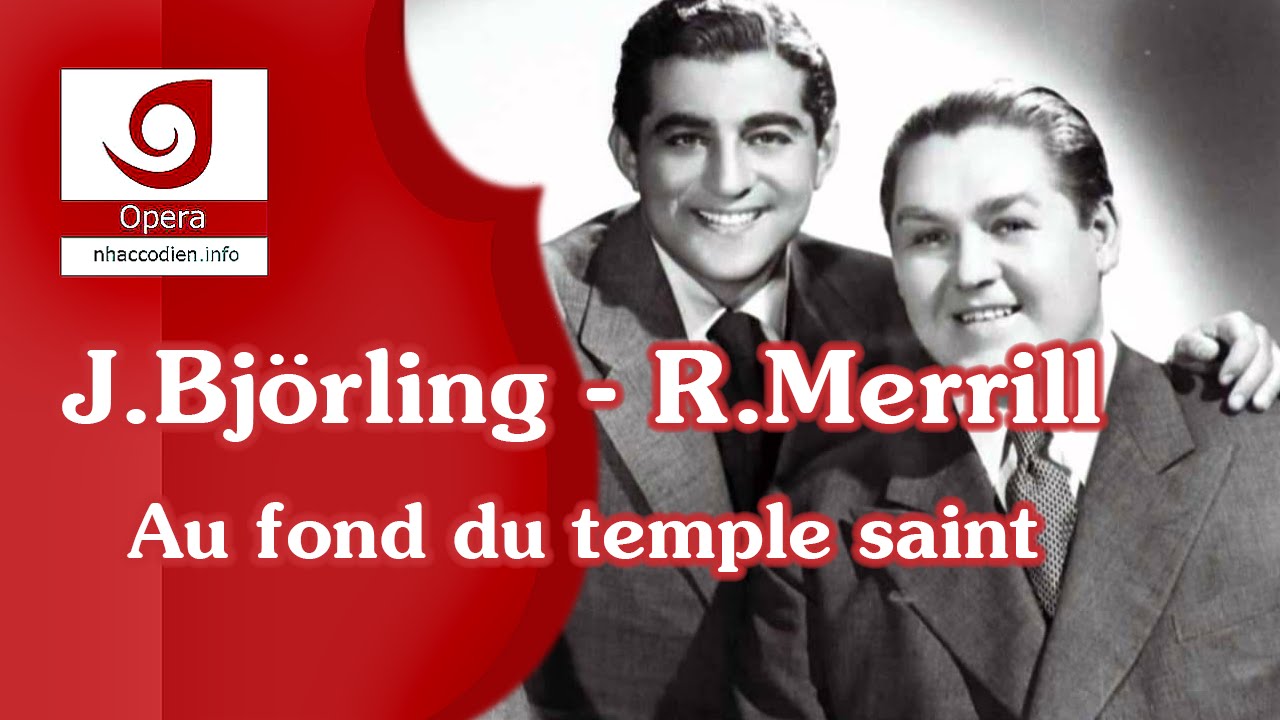
Speaking of Robert Merrill, here he is with Jussi Björling in one of the most beautiful of the male duets in all of opera, “Au fond du temple saint” from Bizet’s Les pêcheurs de perles.

YouTube thumbnailYouTube icon

Since I didn’t have any nokedli or any other egg noodles, which is traditional, my idea:

In honor of a friend in Rome who is the Hungarian ambassador to the Holy See, I decided to make this Magyar-Roman fusion.   My eye turned to some loitering…

I didn’t bother cooking them first.  Instead, I added more broth and just threw them in along with some cherry tomatoes who were hanging around like day laborers waiting to be hired.

Speaking of Di quella pira… I know some of you are “inoperable”, but give Franco Corelli a try.

YouTube thumbnailYouTube icon

40 minutes later, out comes the bird.

This needed to reduce for a few more minutes.  The starch from the bronze-cut rigatoni helped to thicken the gravy.

With some basil and rosemary.

This produced enough for two, for sure.  This sort of thing can be better the next day.

really wanted to have those left overs today, but it is FRIDAY, and an EMBER DAY to boot.

Sometimes you can go forward and improvise.  If you don’t have some exact ingredient, adapt and overcome.   Of course if you don’t have any paprika, you can’t make Paprikás Csirke.  But you can still make something like… Game Hen alla cacciatora…. which is sort of how this worked out.

Don’t be afraid to cook and charge ahead.  It is amazing what you can make from things that are just around or left over.

If you want to contribute to my kitchen, there is in my wishlist a particular gift card I designated with the remark, “If this MC shows up, I’ll know it’s for the kitchen.”  One of these just arrived from “R, G & E”.  Thank you.

And I meant it… everyone…

GO TO CONFESSION!

Posted in Fr. Z's Kitchen, GO TO CONFESSION | Tagged ,
3 Comments

Daily Rome Shot 607

Saw the story about the prospective Prefect of Doctrine of the Faith.

Meanwhile, I found the world’s smallest chess set.  HERE

Meanwhile,… ChessHouse has a Gift Page and a 20% OFF the gift items with coupon Gift2022   Here’s a basic club/tournament board that I favor.  HERE

White to move.  Mate in 3.

NB: I’ll hold comments with solutions ’till the next day so there won’t be “spoilers” for others.

Priestly chess players, drop me a line. HERE

Interested in learning?  Try THIS.

The monks of Le Barroux are making wine from the ancient vineyards of the Avignon Popes.  Check out this new collection of their wines.  HERE  Use my code for a discount: FATHERZ10

FSSP Seminarians singing Christmas stuff.

By FSSP seminarians

Welcome NEW registrants!
bjoeym
CogitoAmoAquam
Synonymous_Howard

Posted in SESSIUNCULA |
3 Comments

Daily Rome Shot 606

Meanwhile… is this nuts?

Black to move and win.

NB: I’ll hold comments with solutions ’till the next day so there won’t be “spoilers” for others.

Interested in learning?  Try THIS.

The sisters have their shop open for two more days, today and tomorrow. They close on the 17th so they can focus on the final stage of Advent.

Welcome to new registrants:

karkar
OnlyTheTruth
Marigold

Posted in SESSIUNCULA |
5 Comments

YOUR URGENT PRAYER REQUESTS

PLEASE use the sharing buttons! Thanks!

In your charity would you please take a moment look at the requests and to pray for the people about whom you read?

Continued from THESE.

Let’s remember all who are ill, who will die soon, who have lost their jobs, and who are afraid.

I get many requests by email asking for prayers. Some are heart-achingly grave and urgent.

As long as my blog reaches so many readers in so many places, let’s give each other a hand. We should support each other in works of mercy.

If you have some prayer requests, feel free to post them below.

You have to be registered here to be able to post.

I ask prayer for myself.  I’m dealing with TWO serious challenges right now.   I also want to thank all of you who pray for me.

Posted in SESSIUNCULA |
10 Comments

Daily Rome Shot 605

Meanwhile…

Black to move and force mate.

NB: I’ll hold comments with solutions ’till the next day so there won’t be “spoilers” for others.

Watch a great movie, co-directed by Noel Coward and David Lean!

In Which We Serve

US HERE – UK HERE

Has anyone used the “Watch Party” feature in Amazon?

Please remember me when Christmas shopping online. Thanks in advance.

US HERE – UK HERE

Lastly, I see that a few of you have bought things from Chess House and someone got a course pack from Remote Chess Academy.  I can’t see who got what, but I hope you enjoy them!  “Giving chess”, especially to a child, can be a lifelong gift.

Posted in SESSIUNCULA |
12 Comments

Building a spectacular new altar for Our Lady of the Rosary

I recently wrote about a book:

Copies should be obtained and given to priests, especially those who lean toward traditional, and to bishops perhaps along with a spiritual bouquet.

What book?

Does TRADITIONIS CUSTODES Pass the Juridical Rationality Test?

by Fr. Réginald-Marie Rivoire FSVF and Fr. William Barker FSSP

US HERE – UK HERE

You perhaps recognize “FSSP”. But do you know “FSVF”?

This is the Fraternity of Saint Vincent Ferrer in Chémeré-le-Roi, France – HERE  They have a Dominican spirituality.

I’ve written about them before. They had a series of videos on the Mass.

I post today because I received an email from them about a spectacular altar they are making for their chapel. You really should have a look at what they are doing. They are proving that, in this day and age, churches and our worship can, in fact, have beautiful appointments.

HERE

A taste…


Posted in Just Too Cool, Our Catholic Identity, Our Solitary Boast | Tagged
5 Comments

Advent Ember Week and the pivotal Feast of St. Lucy, the “darkest day”

13 December was the darkest day – with the least sunlight – of the old Julian calendar.

Today in the Gregorian calendar is the feast of St. Lucy, whose name from the Latin lux, for “light”, reminds us who dwell in the still darkening northern hemisphere that our days will soon be getting longer again.

Lucy will usually be depicted in art with a lantern, or with a crown of candles, or – most commonly – with her own eyes on a platter.  The photo, above, is from the Church of St. Lucy in Rome.

Some accounts have Lucy slain by having her throat thrust through with sword.

Other accounts say that to protect her virginity she disfigured herself by cutting her own eyes out and sending them to her suitor, a plot likely to discourage him.

St. Lucy is therefore the patroness of sight.

St. Lucy shows up fairly often in Dante’s great Divine Comedy.  She is first in the Inferno.  It is Lucy who asked Beatrice to help Dante.  In Purgatory the eagle that bears Dante upward in a dream is actually Lucy who is bearing him to the gate of Purgatory.  Eagles, of course, are “eagle-eyed” and see very well.  In the Paradiso she is placed directly across from Adam in the Heaven of the Rose.  She can gaze directly at God.

St. Lucy was something of a patroness for Dante and that he was devoted to her because, as we glean from various works, he may have had a problem not just with his eyes but also struggling with sins of the eyes.

This week we also have Ember Days, which in Advent come after the Feast of St. Lucy.   Do you remember the little mnemonic poem?  “Lenty, Penty, Crucy, Lucy”, or else “Fasting days and Emberings be / Lent, Whitsun, Holyrood, and Lucie.

Ember Wednesday will be the Missa aurea.

In the meantime, let’s have a look at Lucy’s Collect in the Ordinary Form.

This prayer was not in the pre-Conciliar editions of the Missale Romanum. It is based on a prayer in the ancient Gelasian Sacramentary for St. Felicity (VIIII KALENDAS DECEMBRIS).

Intercessio nos, quaesumus, Domine, sanctae Luciae virginis et martyris gloriosa confoveat, ut eius natalicia et temporaliter frequentemus, et conspiciamus aeterna.

First, you will have immediately caught the elegant hyperbaton, the separation of intercessio and the adjective that goes with it, gloriosa.

There is also a nice et… et construction.

Confoveo is “to cherish, caress, keep warm.”  It is a compound of foveo which essentially is “to be hot, to roast”.  It obviously deals with heat, flame, light.  This is a good word for this time of year in the northern hemisphere (unless you are in, say, Florida).

Conspicio is “to look at attentively, to get sight of, to descry, perceive, observe”. We are obviously dealing the seeing and sight.  This word should ring mental bells for the throngs of you readers who attended Holy Mass in the Novus Ordo celebrated in Latin.  Conspicio is in the Collect for the 3rd Sunday of Advent, used in a an extremely clever way juxtaposed to exspecto.  They share a common root.  But I digress.

Natalicia refers to birthdays.  In the Christian adaptation of this word, we are always referring to the saints being “born” into heaven.

OBSOLETE ICEL (1973):

Lord, give us courage through the gracious prayers of Saint Lucy. As we celebrate her entrance into eternal glory, we ask to share her happiness in the life to come.

Here is the usual clunky parataxis we know so well from the dreadful obsolete translation.  As usual, the translation is dumbed-down.  Do you see anything of the concept of vision?  Sight?  Is there anything in there that harks to the time of year?

Can you believe that some people want this back?

CURRENT ICEL (2011):

May the glorious intercession of the Virgin and Martyr Saint Lucy give us new heart, we pray, O Lord, so that we may celebrate her heavenly birthday in this present age and so behold things eternal.

We are obviously much closer to the Latin in this new version.  Also, that behold at the end is consoling.

Reason #7569320 for the new, corrected translation.

Perhaps you might say a prayer today to St. Lucy, that she will intercede with God and implore Him, for us in the vale of tears, to open the eyes of so many of our elected officials – and voters – and our Church leaders too, while we’re at it.

Posted in Liturgy Science Theatre 3000, Saints: Stories & Symbols | Tagged
1 Comment