NOVENA for the Immaculate Conception (8 Dec): Day 8

Today is the 8th Day for a Novena before the Feast of the Immaculate Conception.

Will you participate?  Even if you are late to starting, that’s okay!  Start anyway.  And remember that there is no one way to observe this Novena.  But here’s one way.

GIVE SOME THOUGHT TO AN INTENTION.

Suggestions for intentions:

  • the overturning of Traditionis custodes.
  • an increase of vocations to the priesthood.
  • the miraculous healing of a sick loved one.
  • conquering a principal fault.
  • the return of a fallen away Catholic through practice by confession and Communion.
  • that your bishop will be manifestly courageous and faithful.

Day 8:

O God, who by the Immaculate Conception of the Blessed Virgin Mary,  did prepare a worthy dwelling place for Your Son,  we beseech You that, as by the foreseen death of this, Your Son, You did preserve Her from all stain,  so too You would permit us, purified through Her intercession, to come unto You.  Through the same Lord Jesus Christ, Your Son, who lives and reigns with You in the unity of the Holy Spirit,  God, world without end.  Amen.

O Most gracious Virgin Mary, beloved Mother of Jesus Christ, our Redeemer, intercede with him for us that we be granted the favor which we petition for so earnestly in this novena… O Mother of the Word Incarnate, we feel animated with confidence that your prayers in our behalf will be graciously heard before the throne of God. O Glorious Mother of God, in memory of your joyous Immaculate Conception, hear our prayers and obtain for us our petitions.

 (State your intention here… )

O Mary of the Immaculate Conception, Mother of Christ, you had influence with your Divine Son while upon this earth; you have the same influence now in heaven. Pray for us and obtain for us from him the granting of my petition if it be the Divine Will.  Amen.

Posted in Our Catholic Identity, Our Solitary Boast | Tagged ,
Comments Off on NOVENA for the Immaculate Conception (8 Dec): Day 8

ASK FATHER: Are there still “partial indulgences”? Notes on indulgences in general.

From a reader…

QUAERITUR:

My 1956 Saint Andrew Daily Missal, pages 1111 et seq., allows for partial indulgences, measured in days and years, upon various prayers; yet, current my Baronius Press missal does not.

Two Questions:

1. Have partial indulgences been suppressed?

2. If not, should/must/or just-a-good idea words such as “the following prayer or act is in hope of earning a partial indulgence” or similar be said prior to praying or acting?

You raise a good point.

Firstly, let’s review.

An indulgence is the remission of temporal punishment due to sins the guilt of which has been forgiven.  We gain indulgences through certain works and conditions prescribed by the Church which has Christ’s authority to dispense and to apply the treasury of the satisfactions of Christ and of the saints.

Indulgences can always be applied either to oneself or to the souls of the deceased, but they cannot be applied to other persons living on earth.  

An indulgence can be full (plenary) or partial.

The reason for the discrepancy in your books results from the fact that in 1967 Pope Paul VI revised the way that indulgences can be gained.   The book called the Raccolta (a collection of indulgenced works) was replaced by the Enchiridion Indulgentiarum (Handbook of Indulgences).

Whereas before 1967 the Church thought in terms of the remission of the equivalent number of days, months, forty-day periods (quarantines), and years of assigned canonical penance, after 1967 the Church’s emphasis shifted to stirring in individuals sincere conversion (not that the Church didn’t do that before, of course!).

Your 1956 book reflects the Church’s practice before 1967.

Your Baronius Missal – lovely book!  – published I think in 2014 reflects the situation after 1967.

Partial indulgences have NOT been suppressed.   The extent of remission of temporal punishment now seems to depends on the fervor with which a person performs the prescribed work.

The general condition to obtain a plenary indulgence are four:

  1. Make a valid sacramental confession
  2. Reception of Communion in the state of grace
  3. Pray for the intentions designated by the Roman Pontiffs (such as an Our Father and a Hail Mary, ad libitum)

On that point of praying for the Pope’s intentions: that means praying for what he designates, not praying for him, though it is a good thing to pray for Popes.  I have written about what one could do in the case that the intentions designated by a Pope are, well, wacky.  HERE

You have about 20 days to make a good confession and good Communion though it is best if everything is completed on the same day.  One confession will suffice for a number of indulgenced works.  The idea is that one must be in the state of grace by the time the indulgenced work is completed. One can see why it is a real boon to have a priest available for confession during Holy Mass.

While single sacramental confession suffices for gaining several plenary indulgences, Holy Communion must be received and prayer for the intentions of the Roman Pontiff must be recited for the gaining of each plenary indulgence (Enchiridion Indulgentiarum 20.2).

Confessors can commute the work prescribed and the conditions (except for the following in the case of plenary indulgences).

When it comes to those works which can bring a plenary indulgence, a key to obtaining that full remission includes not just performance of the work, but also…

4. complete detachment from all sins, mortal of course, but also venial.

That is not the easiest state of intention to attain, but it is not by any means impossible.  The Church doesn’t require the impossible.  This is important to remember.

These days there seems to be a tendency to relax discipline and teaching from a false sense of compassion and a strange notion that people can’t be expected to live according to “ideals”.   For example, some people think that people who are divorced and remarried couldn’t possible live according to the “ideal” of perfect continence and – therefore – they should be admitted to Communion, even though they are in a manifestly adulterous relationship.   It is false compassion to suggest to people that ideals are impossible, and so they shouldn’t even try.

If the full disposition (complete detachment from sin) is lacking, or if the work and the three prescribed conditions (1-3 above) are not fulfilled (except in the case of those who are legitimately impeded) the indulgence will only be partial.  And, again, priest confessors can commute works and conditions except for that issue of detachment for a plenary indulgence.

So, some of the indulgences which the Church grants are partial.  Some of the grants are plenary.  But… some that are plenary are only obtained in a partial way if the full conditions are not met.

Finally, it is right and proper that you have a clear intention of gaining an indulgence so that you do what you do with focus and full sincerity.


Posted in "How To..." - Practical Notes, ASK FATHER Question Box, Just Too Cool, Our Catholic Identity, Save The Liturgy - Save The World | Tagged
15 Comments

Rediscovered video about and with J.R.R. Tolkien

A friend of mine sent a link to this interesting video about J.R.R. Tolkien and some offcuts from a documentary recorded in Oxford in 1968, material that didn’t make it into the final show. There are also some great comments about literature.

Tolkien’s writings were stupendously influential in my life’s path. They provided interior formation that eventually contributed to my conversion and vocation and they opened doors to meeting people who remain in my life today.

I’m both impressed and profoundly disappointed with the Peter Jackson movies. The newest “Rings” thing… some great CGI, seeing Numenor was fun… but the episodes competed in my mind between, “Is this going to end soon?” and “How stupid do they think we are?” and “What else is there to watch?”

I also want to thank some readers who sent Tolkien writings that I had on my wish list. Especially, CG who sent a set of LotR when I expressed a desire to re-read it with real books when mine were still locked away in storage half a continent away.

BTW… in the video I link, above, we learn that Sauron survived the destruction of the Ring!

Posted in SESSIUNCULA |
5 Comments

NOVENA for the Immaculate Conception (8 Dec): Day 7

Today is the 7th Day for a Novena before the Feast of the Immaculate Conception.

Will you participate?  Even if you are late to starting, that’s okay!  Start anyway.  And remember that there is no one way to observe this Novena.  But here’s one way.

GIVE SOME THOUGHT TO AN INTENTION.

Suggestions for intentions:

  • the overturning of Traditionis custodes.
  • an increase of vocations to the priesthood.
  • the miraculous healing of a sick loved one.
  • conquering a principal fault.
  • the return of a fallen away Catholic through practice by confession and Communion.
  • that your bishop will be manifestly courageous and faithful.

Day 7:

O God, who by the Immaculate Conception of the Blessed Virgin Mary,  did prepare a worthy dwelling place for Your Son,  we beseech You that, as by the foreseen death of this, Your Son, You did preserve Her from all stain,  so too You would permit us, purified through Her intercession, to come unto You.  Through the same Lord Jesus Christ, Your Son, who lives and reigns with You in the unity of the Holy Spirit,  God, world without end.  Amen.

O Immaculate Virgin, Mother of God, and my mother, from the sublime heights of your dignity turn your merciful eyes upon me while I, full of confidence in your bounty and keeping in mind your Immaculate conception and fully conscious of your power, beg of you to come to our aid and ask your Divine Son to grant the favor we earnestly seek in this novena… if it be beneficial for our immortal souls and the souls for whom we pray.

 (State your intention here… )

O Mary of the Immaculate Conception, Mother of Christ, you had influence with your Divine Son while upon this earth; you have the same influence now in heaven. Pray for us and obtain for us from him the granting of my petition if it be the Divine Will.  Amen.

Posted in Our Catholic Identity, Our Solitary Boast | Tagged
Comments Off on NOVENA for the Immaculate Conception (8 Dec): Day 7

Daily Rome Shot 598, etc.

Send Fr. Z your snail-mail 2022 CHRISTMAS CARDS!  They will be forwarded.

Newly restored at my adoptive parish, Ss. Trinità dei Pellegrini.  Biretta tip to The Great Roman™. o{]:¬)

Meanwhile,…

White to move.  Force mate in 6.

NB: I may hold comments with puzzle solutions a little longer than others so there won’t be “spoilers”.

WISE is one of the best ways to convert currencies and send money internationally. If you do this, try it. HERE

Christmas shopping?  Please remember me when shopping online. Thanks in advance.  Enter Amazon via my links and I will get a small percentage of the sale.

US HERE – UK HERE

By FSSP seminarians

Posted in SESSIUNCULA |
3 Comments

NOVENA for the Immaculate Conception (8 Dec): Day 6

Today is the 6th Day for a Novena before the Feast of the Immaculate Conception.

Will you participate?  Even if you are late to starting, that’s okay!  Start anyway.  And remember that there is no one way to observe this Novena.  But here’s one way.

GIVE SOME THOUGHT TO AN INTENTION.

Suggestions for intentions:

  • the overturning of Traditionis custodes.
  • an increase of vocations to the priesthood.
  • the miraculous healing of a sick loved one.
  • conquering a principal fault.
  • the return of a fallen away Catholic through practice by confession and Communion.
  • that your bishop will be manifestly courageous and faithful.

Day 6:

O God, who by the Immaculate Conception of the Blessed Virgin Mary,  did prepare a worthy dwelling place for Your Son,  we beseech You that, as by the foreseen death of this, Your Son, You did preserve Her from all stain,  so too You would permit us, purified through Her intercession, to come unto You.  Through the same Lord Jesus Christ, Your Son, who lives and reigns with You in the unity of the Holy Spirit,  God, world without end.  Amen.

Glorious and immortal Queen of Heaven, we profess our firm belief in your Immaculate Conception preordained for you in the merits of your Divine Son. We rejoice with you in your Immaculate Conception. To the one ever-reigning God, Father, Son, and Holy Spirit, three in Person, one in nature, we offer thanks for your blessed Immaculate Conception. O Mother of the Word made Flesh, listen to our petition as we ask this special grace during this novena…

 (State your intention here… )

O Mary of the Immaculate Conception, Mother of Christ, you had influence with your Divine Son while upon this earth; you have the same influence now in heaven. Pray for us and obtain for us from him the granting of my petition if it be the Divine Will.  Amen.

Posted in Our Catholic Identity, Our Solitary Boast, PRAYER REQUEST | Tagged ,
Comments Off on NOVENA for the Immaculate Conception (8 Dec): Day 6

Your Sunday Sermon Notes: 2nd Sunday of Advent – 2022

Too many people today are without good, strong preaching, to the detriment of all. Share the good stuff.

Was there a GOOD point made in the sermon you heard at your Mass of obligation for the 2nd Sunday of Advent – 2022?

Tell about attendance especially for the Traditional Latin Mass.  I hear that it is growing.  Of COURSE.

Any local changes or (hopefully good) news?

I have a few thoughts about the Gospel HERE.

Posted in SESSIUNCULA |
2 Comments

Daily Rome Shot 597, etc.

Meanwhile…

White to move and mate in 3.

NB: I may hold comments with puzzle solutions a little longer than others so there won’t be “spoilers” for others.

Priestly chess players, drop me a line. HERE


I had a note from the Summit Dominican “Soap Sisters” today:

December 15 is the last day for Christmas Shopping at the Cloister Shoppe. The online store will be closed from December 16 – January 1 so that the Nuns can prepare for and celebrate Christmas.

Place your orders for Christmas gifts now!

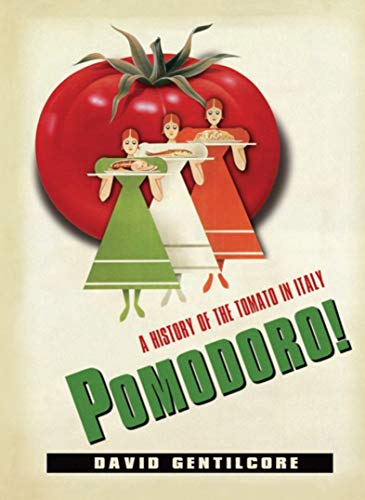
Someone wrote asking about a book that was fun and interesting but not necessarily religious in nature.   While some might say that these are tantamount to a religious experience when they are at their peak… there is a fascinating little book about the history of the tomato.  A great read.  Get it with my affiliate link.

Pomodoro!: A History of the Tomato in Italy by David Gentilcore

US HERE – UK HERE

Think about it.  Tomatoes were discovered in the New World and they weren’t like our tomatoes today.  But Italian cuisine is unthinkable today without them.  How did that happen?

Posted in SESSIUNCULA |
Comments Off on Daily Rome Shot 597, etc.

DIEBUS SALTEM DOMINICIS – 2nd Sunday of Advent: Patience

The Gospel for our 2nd Sunday of Advent according to the Vetus Ordo, the Roman Mass, has two sections which need to be addressed separately, though they are connected.

Firstly, in Matthew 11 John the Baptist is in prison because he preached about Herod’s unlawful marriage. He learned of the wonders his cousin Jesus was working and he sent his own followers to ask Christ about His identity, “Are you he who is to come, or shall we look for another?”   Christ sent back an answer.  Next, like a putting a book end on the moment, Christ then asked questions about John’s identity.

It probably occurs to most people to wonder why John asked this question at all.  Did he have doubts about Jesus?   If so, doesn’t that contradict what Christ says about John?   If he didn’t have doubts, why did John ask a question for which he already knew the answer?

We’ll get to that, but there is some work to do beforehand.

Sticking with the first part of our passage, to our ears today the Lord’s response to John, about His identity, seems to dodge John’s question.  However, when Jesus spoke these words in the 1st century, the Jews who heard Him would have known exactly what He meant both by His response and the seemingly non sequitur tag line, a “beatitude”, He attached to His response.

And Jesus answered them,

“Go and tell John what you hear and see: the blind receive their sight and the lame walk, lepers are cleansed and the deaf hear, and the dead are raised up, and the poor have good news preached to them. And blessed is he who takes no offense at me.”

The crowbar to pry open this enigmatic response is the Book of Isaiah, which the gathered crowd, Christ’s own disciples, and the messengers from the Baptist would have known well.  For example, Isaiah reads:

The wilderness and the dry land shall be glad, the desert shall rejoice and blossom; like the crocus it shall blossom abundantly, and rejoice with joy and singing. The glory of Lebanon shall be given to it, the majesty of Carmel and Sharon. They shall see the glory of the LORD, the majesty of our God. Strengthen the weak hands, and make firm the feeble knees. Say to those who are of a fearful heart,” Be strong, fear not! Behold, your God will come with vengeance, with the recompense of God. He will come and save you.” Then the eyes of the blind shall be opened, and the ears of the deaf unstopped; then shall the lame man leap like a hart, and the tongue of the dumb sing for joy. For waters shall break forth in the wilderness, and streams in the desert (35:1-6 RSV).

The blind shall see, the deaf shall hear, the lame shall leap; miracles Christ had worked.

What about the good news being preached?  Again, Isaiah 61: “The Spirit of the Lord God is upon me, because the Lord has anointed me to bring good tidings to the afflicted (61:1).”  This is what Jesus preached in His first sermon in Nazareth (Luke 416-21). His response to John includes a clue to His identity.  He is the “anointed” one, the Christ, the Messiah.

But wait.  There’s more.  John’s question was, “Are you he who is to come?”   That certainly suggested the Messiah.

Look at the passage from Isaiah 35 again.  Who is coming?  Not the Messiah, but God Himself: “They shall see the glory of the Lord, the majesty of our God.”  Note also the description of blooming and waters in desert.  What is described isn’t merely a glorious new and surely indisputable Vatican II springtime, but rather a new Exodus, even a new Creation.

Christ added in His response to John also that the leapers have been cleansed and the dead have been raised.  The Messiah could be expected to work wonders, but there are some things that only God does.   Remember the panicked reaction of the King of Israel when he received the letter with the obligation that he cure Naman’s leprosy?  “As soon as the king of Israel read the letter, he tore his robes and said, ‘Am I God? Can I kill and bring back to life? Why does this fellow send someone to me to be cured of his leprosy?’ (2 Kings 5:7)”.  God cleansed Naman of leprosy after Elisha told him to wash in the Jordan seven times.   As far as the dead being raised, again in Isaiah, the Jews of the time would have known that when God comes, “Thy dead shall live, their bodies shall rise. O dwellers in the dust, awake and sing for joy!” (Is 26:19)

Christ had by this point healed leprosy and raised the son of the widow of Nain (cf. Matthew 8).

To sum up a little, the scriptural allusions Christ made answered John’s question: I am not just the long-expected Messiah, I am also God.  His listeners, in on these allusions, must have reacted sharply.  This surely explains why the Lord tacked on that seemingly out of place line: “And blessed is he who takes no offense at me.”   At other times, people accused Christ of blasphemy.

After this, the passage shifts from the answer to John’s query about Christ’s identity, to Christ’s query about John’s identity.

As they went away, Jesus began to speak to the crowds concerning John:

“What did you go out into the wilderness to behold? A reed shaken by the wind?  Why then did you go out? To see a man clothed in soft raiment? Behold, those who wear soft raiment are in kings’ houses.  Why then did you go out? To see a prophet? Yes, I tell you, and more than a prophet. This is he of whom it is written, ‘Behold, I send my messenger before thy face, who shall prepare thy way before thee.’ (vv. 7-10)

This is a continuation of Christ’s answer to John.  Jesus underscored who He Himself was by talking about John’s role.  Yes, John was a prophet, but he was more than a prophet.  Jesus said that John was the one foretold by the prophet Malachi, whom He quoted.  Again, the Jews present would have caught the reference:

“Behold, I send my messenger to prepare the way before me, and the Lord whom you seek will suddenly come to his temple; the messenger of the covenant in whom you delight, behold, he is coming, says the Lord of hosts” (3:1).

In the verse immediately after this Sunday’s Gospel pericope, v. 11, Christ said that John was the greatest man to have been born of woman.  John didn’t simply point to the Messiah, he heralded the arrival of God.  Moreover, in v. 14 Christ said that John was an “Elijah”.  Again, this is a reference to the prophecy of Malachi, “Behold, I will send you Elijah the prophet before the great and terrible day of the Lord comes” (4:5).

The first reading was from the Letter of Paul to the Romans, 15:4-13.  The beginning of the reading exhorts us to have patience.  The end of the reading, with the allusion to the “root of Jesse”, signaled to the ancient Romans and also to us to pay attention to Isaiah for insight into Christ’s identity as both God and Messiah.

The episode of Christ with the messengers and John’s burning question smacks of longing and perhaps impatience.   How appropriate that we have this during Advent.  Holy Mother Church wisely gives us the mighty figure of John the Baptist, the greatest man born of woman, herald not just of the Anointed One, but of God incarnate.  As great as he was, John still had to make his own response of faith in Christ.  Knowing what he knew, John had to decide what he was going to do about it.   So do we.

Buried in John’s question could also be some impatience.  John, perhaps sensing that he wasn’t going to get out of prison alive, wanted to experience the fruits of the coming of the long-awaited one.   Every generation of Christians through the ages has impatiently waited for the Coming of the Lord, just as we, in a compressed arc of time, explore during Advent the Parousia and await the arrival of the Incarnate Word, both at Christmas and at the End.  Think of how the passage of time is perceived by those who have fewer distractions, the young.  It takes forever for Christmas to arrive.   Paul tells us that we have to have steadfastness, patience.

There is a passage from a sermon by Pope St Gregory the Great (+604) on this episode in Matthew 11 which sheds light on the question of John’s question.   Did John doubt that Christ was the one they were waiting for?  Gregory explains:

It seems almost as if John did not know the one he had pointed out, as if he did not know whether he was the same person he had proclaimed by prophesying, by baptizing, by pointing him out!

We can resolve this question more quickly if we reflect on the time and order of the events.  For when John is standing beside the river Jordan, he declares that this is the Redeemer of the world.  But when he has been thrown in jail, he asks whether they were to look for another or whether he had come.  This is not because he doubts that he is the Redeemer of the world.  John now wants to know whether he who had personally come into the world would also descend personally into the courts of Hell.  For John had preceded Christ into the world and announced him there. He was now dying and preceding him to the nether world.  This is the context in which he asks, “Are you he who is to come, or shall we look for another?”  But if he had spoken more fully he might have said, “Since you thought it worthy of yourself to be born for humanity, say whether you will also think it worthy of yourself to die for humanity.  In this way I, who have been the herald of your birth, will also be the herald of your death.  I will announce your arrival in the nether world as the One who is to come, just as I have already announced it on earth.”

A longish quote but full with treasures.  One gem we can unpack could shed beauty even on those times when we are in our own personal prison, our own anticipation of the “courts of Hell” on earth, when we are racked with suffering or scorched with anxiety, or shame, or sorrow.

Like John in prison, we do not doubt our Savior.  We know Him and believe Him.  We struggle with patience (from Latin patior “suffer”) because we long for the resolution.  We cannot be shaken in our belief in what Holy Church claims and understands about Christ, only Savior of any who comes to be saved.    We long for and recognize His coming in the words of Scripture, in the poor and needy, in the person of the priest, in every word and gesture of Holy Mass, in the ultimate union with Him of Communion.  In this faith, even when we are plunged in our darkest moments, we need not be shaken.  By this faith, even when our trials come from within the Church herself, from her pastors, our faith response is not to doubt but to arise in greater faith, hope and love.

“Be strong, fear not! Behold, your God will come.”
Posted in Liturgy Science Theatre 3000, Save The Liturgy - Save The World, Sermons | Tagged
2 Comments

Daily Rome Shot 596, etc.

Meanwhile,…

Black to move and mate in 3.

NB: I may hold comments with puzzle solutions a little longer than others so there won’t be “spoilers” for others.

Priestly chess players, drop me a line. HERE

Interested in improving your game?  Try THIS.

I’ve started reading a new book about Bella Dodd by Mary Nicholas and Paul Kengor:

The Devil and Bella Dodd One Woman’s Struggle Against Communism and Her Redemption  (UK –HERE)

Posted in SESSIUNCULA |
3 Comments