Daily Rome Shot 499

Help the wonderful Summit Dominicans!

Please remember me when shopping online. Thanks in advance. – US HERE – UK HERE

On a personal note, if that last part wasn’t personal enough, I’ve been sick for a couple days, so posting has been thin.  Aches, fatigue, fever (not too high).   I had half a dozen naps yesterday.  This morning, too, I couldn’t stay up.  Perhaps partly from the fever I had an odd dream: I had taken in a Catholic Tradition loving chess Grand Master a bit down on his luck in exchange for serving Masses and giving lessons, thus sparking the beginning of a chess club.  Who knows!   I had earlier been looking for different chess clubs in different cities via the interwebs.  Perhaps it was auto-suggestive.

I’ve also been giving thought to and reading around the lie that to be attached to traditional worship is “against the Council”, or that the Traditional Latin Mass is “against the Council”.  It’s a lie, of course.   But this is Big Lie Theory in action.  It takes a thousand words to counter 10 word lies.  Hence, they have to shut down the living proof by shutting down access to the lived experience of attending such Masses.  More on this later.

Time for a nap.

Posted in SESSIUNCULA | Tagged
7 Comments

It is tiring to have relentlessly bad news.  BUT…

A lot of ground was covered in this conversation.   Not much of it was happy.

But it has to be said.

It is tiring to have relentlessly bad news.  BUT… if we choose to be tuned in, this is what the status quaestionis is.

YouTube thumbnailYouTube icon

Posted in SESSIUNCULA |
11 Comments

Daily Rome Shot 498

Use your phone’s camera!

Please remember me when shopping online. Thanks in advance.

US HERE – UK HERE

Posted in SESSIUNCULA |
Comments Off on Daily Rome Shot 498

More on Desisdeede – Desiderio desideravi. This time through a particularly vicious lens that might be at the core of the document.

Today at Le Crock… sorry… Le Croix… there is a piece by one Gregory Solari.  Who?  I asked the same question.  I found this link.  Involvement with McGill in Montreal.  French, I think, maybe Swiss. Interested in Newman.  Seems to be instrumentalizing Newman in support of “synodality” (“walking together”).  Hence, he is on that side of the spectrum.  There is not much of a reason to know about him.

He penned a brutally vicious piece for Le Crock, as is consistent with those who work for Le Crock, and one that is especially insulting to Benedict XVI (see previous observation) and all those who desire traditional liturgical worship.

As I have been moving through Desideedee, with its changing voices, changing quality of thought, I had gotten down to a section on the “Paschal Mystery” which, properly understood is fascinating and which, inadequately understood is disaster for anything and everything liturgical.

Skipping that part for now, I use this following translation from French of the piece by Solari, to clue you in to what I suppose is the thought of Desideedee 27-29, about post-modernism.  NB: He also cites the DD paragraphs about “Paschal Mystery”.  This is the hook, I think, that they are hanging everything on.

What follows is pretty nasty.

It effectively says that if the Church doesn’t back a rite, then you wind up in nothingness, nihilism.  Hence, all the people who are strongly attached to the TLM are incapable of true prayer (according the the ancient Jewish Kabbalistic notions of prayer Solari tweaks at the end), and their efforts have resulted in nothingness.

But, as he asserts, “it is not a question of ‘banning the Mass in Latin'”.  Rather, it is a question of “arranging the conditions which will make possible what was the authentic intention of Summorum Pontificum.”   Note the whiff of Gnosticism.

Solari, therefore, compares Summorum Pontificum – and this piece was published today, on the anniversary of Summorum – and its misdirection to a “avortement pastoral… pastoral abortion”.

You might find that this smacks of word salad in some places, and you would be right.   One theologian I shared it with, someone serious and of international repute, called it “utter gibberish”.    It is not, however, gibberish in its intent.  It may be that we are getting to the core of Desideedee and its ghostwriters intentions.

As you begin, keep this is mind.

Reject the premise: Out in the real world of those who desire the TLM, apart from certain fringes, there is not an “exclusive attachment to the ‘Tridentine Rite.  Instead, what there is on the part of those in power is a proclaimed and in fact brutally imposed “attachment” to the modern rite absurdly defined as the sole expression of the Roman rite.  Absurdly because, there is no Roman rite outside tradition and continuity.   If they hit you with this, dare them to show you how the Novus Ordo is truly reflective of the text of Sacrosanctum Concilium.  Dare them to show you how often any given NO mass is celebrated according to its own rubrics.  It is they who have an exclusive attachment, that is, to destroying the Roman liturgy in the name of an ever elusive “Spirit the Council” found in the “emanations and penumbras” of the Council, and not in its letter.

“Pope Francis suggests that attachment to the Tridentine Rite is a product of nihilism”

Grégory Solari sheds light on the reading of the Pope’s Apostolic Letter on the liturgy in the light of the question of nihilism. The formalist attachment to the Tridentine Rite would be a way for some to resort to “tradition” to compensate for the symbolic deficit that characterizes postmodernity. By forgetting that the rite is nothing if there is not the Church behind it.

Could attachment to the Tridentine Rite be a product of nihilism? This is indirectly implied by the Apostolic Letter of Pope Francis on the liturgical formation Desiderio desideravi. By nihilism, we must understand a phenomenon that affects the question of value in a differentiated way. In the configuration of nihilism, the Pope further explains, “man feels lost, without references of any kind, deprived of values ??because they have become indifferent, orphaned by everything, in a fragmentation where a horizon of meaning seems impossible – (an epoch) still charged with the heavy heritage left to us by the previous epoch” (n. 28). We must not pass too quickly over this horizon of nihilism. It is this, I believe, which constitutes a posteriori the hermeneutic key of Traditionis custodes. We know that the essence of nihilism consists in the phenomenon of devaluation. After the dissolution of the link between the Name of God (revealed) and the attributes projected on him by men (“death of God”), no more criteria guarantee valorization. The dissolution of the link between God and his attributes has cracked the relationship between man and his own productions, creating a gap that nothing can fill anymore – or rather: only one thing fills: “nothing” precisely. From then on, nothing has any real value, and what is still valued is only ever valued on the basis of criteria external to the object (economic, political, aesthetic, sociological criteria, etc.), and not without being affected by an arbitrariness.

Liturgy and nihilism

The strength of Francis’ analysis resides first of all in his lucidity: the Pope, like the Council before him on which he bases his reflection, does not avoid the reality of nihilism. No. 29 explicitly inscribes the question of the liturgy and its reform in this horizon of postmodernity: “It is with this reality of the modern world that the Church, gathered in the Council, wanted to confront itself, by reaffirming its awareness of being the sacrament of Christ, (…), and it is no coincidence that this immense effort of reflection by the Ecumenical Council began with a reflection on the Liturgy (Sacrosanctum Concilium). What the liturgy provides is the possibility of a (temporary) exit from nihilism. But not automatically, nor without the relation to a ritual form suffering the effect of the loss of any formally “absolute” criterion. As happens in the case of an exclusive attachment to the Tridentine missal.

While the “desert grows” (Nietzsche), one can indeed understand the reflex that resorts to “tradition” to compensate for the symbolic deficit that characterizes postmodernity. But what you have to see is that this reflex, because it confuses tradition with the past, does not contain the surrounding nihilism, on the contrary, it feeds it. In the absence of an authentic criteriology, all valuation rests on the “will to power” (always subjective and arbitrary). If Francis insists on the link between the lex orandi and the lex credendi, it is because there is no gap between the Church and the liturgy – there is no vacuum: Christ’s love fills everything and is therefore revealed as the only criterion of valorization. While at a distance from the Church which receives and constitutes itself in the celebration of the Paschal Mystery (cf. n. 24-26), every liturgical form tends to be transformed into formalism. Any style, in stylization. All reality, in artifice. “Neo” becomes the other name for nothingness.

The only ecclesial criterion

This does not mean that the Tridentine rite is deprived of “value”. Simply, what must be remembered from the Apostolic Letter on this point is that nothing except the reference to the life of the community guarantees that a valuation is not in one way or another arbitrary. Why ? Because among all the “institutional greatnesses” (Pascal) only the Church has always been deprived of any “constitutional” power over itself. The ecclesial institution only exists in the act by which it receives its existence from Christ. Not once, but continually, in the donation of the Body of Christ which in turn constitutes it as a “body”. In short, from beginning to end and without ceasing, it is on the desire of Christ, and on him alone, that the Church rests (as an event and as an institution). And therefore also the liturgy, whose rites must be understood as expressions of the response that the community has given and is giving to this continual “Christic donation”. This is why, especially in the time of nihilism, but not only, there is no other criterion for valuing the liturgy except the Church itself. Only the Church, as the “sacrament” of the Paschal Mystery, resists the subtle corrosion of nihilism.

The exclusive attachment to the Tridentine rite has reduced to nothing the purpose of the Motu Proprio of 2007 (“mutual enrichment” of the two missals). As Abraham Heschel already said, “it is not the rite that is sick, it is the intentionality of our heart” – what our Jewish brothers call kavana, the condition of all authentic prayer. Faced with this pastoral abortion [avortement], the pope, with Desiderio desideravi, joins and prolongs what was the initial impulse of the liturgical movement: recovering the kavana of Christian prayer. It is not a question of “banning the Mass in Latin”, but of arranging the conditions which will make possible what was the authentic intention of Summorum Pontificum. The “Ecclesia Dei” generation could have contributed to this. For now, its experience unfortunately counts as “nothing”.

So, you are sick in the heart and your all your efforts are a betrayal ending in nothing.  All of this has been a “pastoral abortion”.

Remember: it is not just the Traditional Latin Mass that they hate.  They hate the people who want it.  They hate the people.

Posted in Francis, Pò sì jiù, The Drill, Traditionis custodes, What are they REALLY saying? | Tagged
29 Comments

07-07-07 Bittersweet Summorum Pontificum

15 years ago today, Pope Benedict XVI issued Summorum Pontificum, which freed up the use the 1962 Missale Romanum.  This was one of the most significant acts of his pontificate.
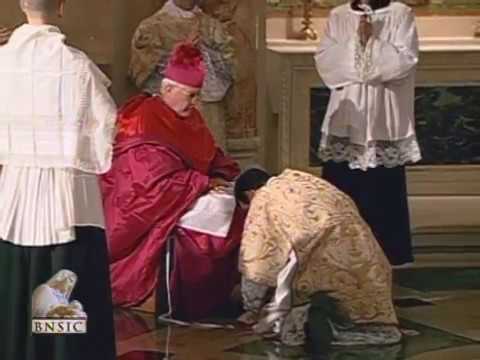
His motives for issuing Summorum were to jump start an organic and legitimate liturgical renewal, especially through “mutual enrichment”, to reconcile many and to provide sacred liturgical worship according to the hearts of even more.  I will not rule out that Benedict, as a priest himself, keenly understood what priests understand about their priesthood through the use of the Traditional Latin Mass.

Summorum could be likened to the Emancipation Proclamation for countless laity and priests.   The attempt to crush the fruits of Summorum Pontificum could be likened to Plessy v. Ferguson, the 1896 SCOTUS decision that upheld the constitutionality of racial segregation under the “separate but equal” doctrine.  Except that “equal” doesn’t mean equal.

Benedict’s Summorum Pontificum was surely an element of his larger program which I have described in terms of the post-WWII Marshall Plan.

After the devastation WWII these USA helped to rebuild Europe in order to foster trade and support a bulwark against Communism.  In the wake of the devastation caused by a hermeneutic of discontinuity after the Second Vatican Council, Pope Benedict tried to revitalize our Catholic identity as a bulwark against the dictatorship of relativism.

The renewal of our Catholic identity requires a realigning of the Roman Rite.  How we pray has a reciprocal relationship with what we believe.  This realignment requires the Traditional Roman Rite.  There is no way around it.  We have to renew our liturgical worship in order to be who we are within Holy Church, so that we can have an impact, as Catholic disciples of the Lord, on the world around us.

The Traditional Roman Rite is an antidote to the secularization of the Church.

Find a bishop or priest who resists, forbids the Traditional Rite, and you find a priest or bishop for whom the Church is an NGO.

If we don’t know who we are, no one will pay attention to us or what we might have to offer in the public square.  If we are incoherent, for example giving Communion to radically pro-abortion Catholics, or stand by and watch when you could do something about it, why should anyone pay attention to anything we have to say on any other issue?  Bishops have squandered our moral capital for decades.

There is the bitter in today’s anniversary, to be sure, because of the cruelty of so many pastors of a certain leaning.

However, there is also the sweet.

In the 80’s and 90’s when people were struggling to maintain traditional worship, there were fewer resources.  Then the internet came along.

What Rush did for the conservative movement through radio, the internet did for the traditional liturgical movement.

Now, people know each other.  Information flows.  Markets opened for for traditional books and other resources.

The spectacular multiplication of locations of the TLM in just these USA from 2007 – 2017 demonstrates the viability and the hunger out there.

The hunger and viability are both there.

Many priests now know how to say the older Mass.  They will teach the new men who will be ordained, in secret if necessary.  The more bishops crack down, the more TLMs will be said in people’s homes.

It isn’t going away.

Given the demographic disaster that we face, the sinkhole opening up under the Church, we have to face the fact that changes are necessary. Great swathes of “Catholics” will soon disappear.  Those left will be of a traditional leaning together with converts from Evangelical backgrounds and well-rooted charismatics who are enthusiastic about their Faith.  There will be some frictions, but these groups will find each other out of need.  The result, I predict, will be amazing.

ACTION ITEM! Be a “Custos Traditionis”! Join an association of prayer for the reversal of “Traditionis custodes”.


UPDATE:

I receive a note:

The cumulative numbers of youtube hits for the two pontifical Shrine Masses The Paulus Institute arranged in 2010 and 2018 now exceeds 250,000, and growing.

2010 Mass

YouTube thumbnailYouTube icon

2018 Mass
YouTube thumbnailYouTube icon

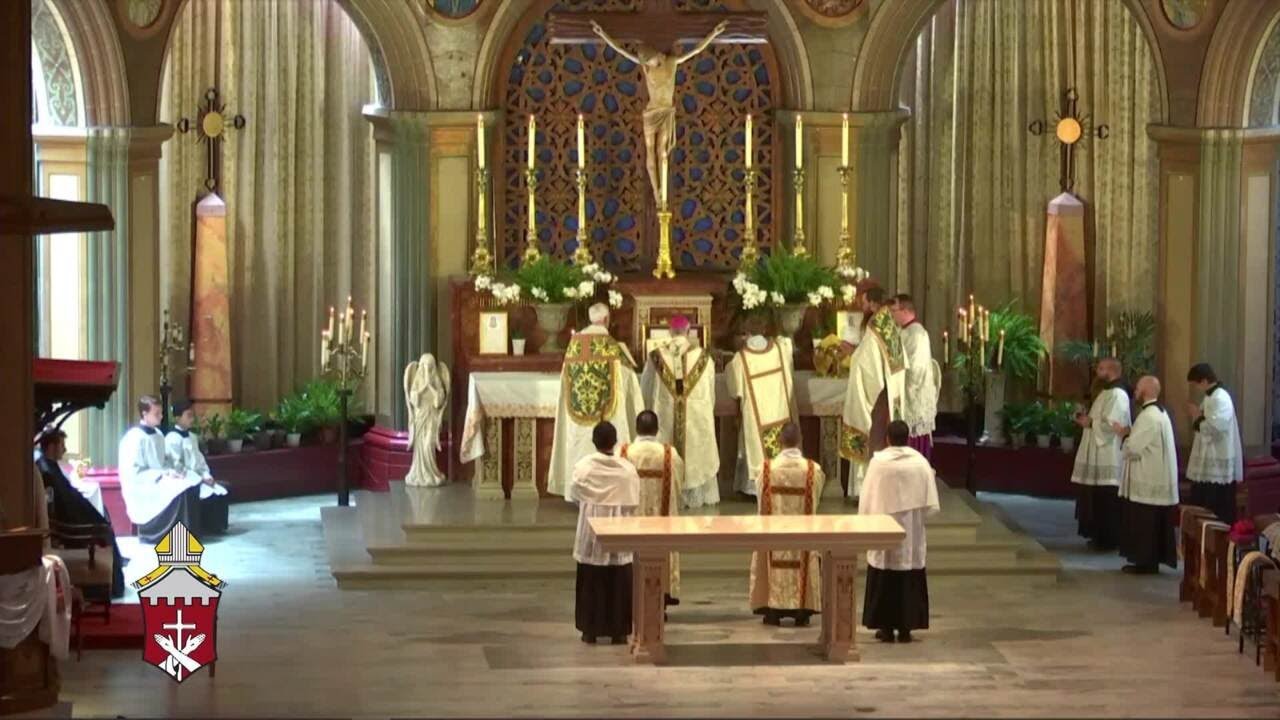
Archbishop Cordileone, recently insulted by Francis, had a Pontifical Mass at the Throne on 1 July with the premier of a new Mass setting in honor of St. Junipero Serra.

YouTube thumbnailYouTube icon

UPDATE

Irony?

Posted in SUMMORUM PONTIFICUM | Tagged
7 Comments

Daily Rome Shot 497

The Benedictine Monks in Norcia, Italy make spectacular beer.  Try with with savory sausage and cheese.

Your use of my Amazon affiliate link is a major part of my income. It helps to pay for insurance, groceries, everything. Please remember me when shopping online. Thanks in advance.

US HERE – UK HERE

Posted in SESSIUNCULA |
Comments Off on Daily Rome Shot 497

Blunt message from Naomi Wolf

Naomi Wolf.  Jewish, liberal, feminist, homosexualist.  Not a name that you would think to see on this blog.  However, a reader sent me an email with about an video interview she gave about what is going on in the world right now.   HERE

The important part starts at 37:00 and goes for several minutes.

“Honestly at this point, these people are so evil and their attack on humanity and on the West is so comprehensive — well, I’ll just say what I believe, Sarah — I’m a very critical thinker and I’m not trying to blow my horn but it’s just like what I do. I’ve looked at this attack on us for the last 2 years from every level and it’s so global in scale, it’s so well-coordinated, its so kind of demonic in its imagination, and so comprehensive. I have also studied politics and history my whole life; in no other — NO other circumstance — not even Nazi Germany’s ascent, have I seen such a supernatural amount of coordination. Usually people fight, there are rifts, there’s an in-group, and an out-group, people betray each other; it’s human nature. Nothing like that for 2 years has happened!

“I can’t understand this without reference to non-human, non-material reality. In other words, I actually think this is a satanic attack on humanity. And I’m not a, you know, a woo-woo person. I never talk about this kind of stuff in public but I think we have to face it. These are meta-human powers I think we’re up against.

“And that’s not necessarily all bad news. Paradoxically, seeing, concluding that this was a meta-human level of evil with supernaturally-efficient skill sets led me to believe in God more literally than I ever have because they have to be targeting something, right? But I’m not proselytizing, I’m not asking people to believe or see what I see but I cannot understand this global . . . that the sophistication, skill and complexity of this as attributable to just human politics — even bad politics, even bad people. It doesn’t make sense. It only makes sense on a metaphysical level that we don’t understand yet.

“So I guess what I’m trying to say is if that’s the case, I don’t really think we have any hope (just us alone) but I do think if there is a metaphysics involved, maybe we have hope by prayer or repentance, or you know, I’m literally reading the Old Testaments these days like what are we supposed to do — like tell me, prophets, I don’t know; this is too horrible. It could be like principalities and powers that we don’t understand. So other cultures, other civilizations in the past have cleaned up their own act and at least in the Western narrative, that helped them deter their worst enemies, their worst outcomes. That’s my best offering to this community. That’s all I’ve got. This is really bad. . . . It’s not about left vs. right but us against them — these demonic oligarchs who want to enslave us.”

Naomi Wolf.

Posted in The Coming Storm, The Drill, The future and our choices | Tagged
20 Comments

6 July: Pius XII during the Canonization of St. Maria Goretti – AUDIO

Here is a snippet from the sermon Ven. Pius XII gave for the canonization of St Maria Goretti, whose feast is today.

Pius, the Last Roman Pope, from about 1950 onward, seeing what was going on in society called for greater purity.

What would he think about today?

The place: St. Peter’s Square, completely jammed
The date: 24 June 1950
The occasion: the canonization of St Maria Goretti

Full text HERE.

What you hear Pius XII say in the recording:

Perchè, diletti figli, siete accorsi in così sterminato numero alla sua glorificazione? Perchè, ascoltando o leggendo il racconto della sua breve vita, così somigliante a una limpida narrazione evangelica per semplicità di linee, per colore di ambiente, per la stessa fulminea violenza della morte, vi siete inteneriti fino alle lacrime? Perchè Maria Goretti ha conquistato così rapidamente i vostri cuori, fino a divenirne la prediletta, la beniamina? Vi è dunque in questo mondo, apparentemente travolto e immerso nell’edonismo, non soltanto una sparuta schiera di eletti assetati di cielo e di aria pura, ma folla, ma immense moltitudini, sulle quali il soprannaturale profumo della purezza cristiana esercita un fascino irresistibile e promettente : promettente e rassicurante.

Why, beloved children, have you rushed in such boundless numbers to her glorification?  Why, hearing or reading the account of her brief life, so much like a pristine gospel narrative for the simplicity of its line, for the painting of its setting, for the very flaming violence of the death, were you touched even to tears?  Why has Maria Goretti conquered your hearts so quickly, even to the point of becoming your favorite, your darling?   Thus, there is in this world, manifestly overwhelmed and sunk into hedonism, not only a sparse crowd of the chosen, thirsting for heaven and pure air, but a throng, but an immense multitude, upon which the supernatural fragrance of Christian purity works an irresistible and promising allure: promising and encouraging.

Some visuals to go along with the sound.

YouTube thumbnailYouTube icon

Maria Goretti was murdered in the course of an attempted rape, which she resisted to the point of being mortally wounded.  The Church teaches that those who die bearing witness to Christ, to the Faith, or to some virtue or quality inseparable from the Faith, in that moment manifest the virtues in a heroic way and are, therefore, able to be proposed even for elevation to our altars.  Something about St. Maria Goretti captured the imagination of the Catholic faithful in the early 20th c., as did, for example, St. Therese de Lisieux.  Their lives show us that we can, in fact, try – with the help of grace – to be clean in a world that is fallen and fallen far.  It is not hard to understand why even some Catholics react with strong negativity about Maria Goretti.  They’ve gone the way of the world.

Also, my contact with exorcists informs me that St. Maria Goretti is a mighty intercessor and a serious terror of demons, surely after the heart St. Joseph… known for his purity.   Joseph most chaste… Guardian of virgins… Solace of the wretched… Patron of the dying… THE Terror of demons.

Posted in SESSIUNCULA | Tagged
2 Comments

Look at even more of “Desiderio desideravi”

Continuing our look at Desiderio desideravi (aka Desideedee).   The letter, as I wrote before, is a mixed bag.   It seems divisible according to the voice and topic.  That probably reflects authorship by different people or groups.

Continued from HERE. The section I’ll look at today smacks of Francis, because it get into his old accusation of Gnosticism and neo-Pelagianism.

What is “Gnosticism”.  The term, from Greek gnosis – knowledge – applies to some heresies of the early Church.  A common element was that salvation was gain by knowledge that only a few could possess.   This idea of salvation by a more or less “secret” knowledge was a corruption of Christian faith in contact with false religions of the East.

What is “Pelagianism”.   This applies to several strains of heresy named after a British priest who was an early promoter, Pelagius.  At its core it involves the rejection of Original Sin.  Death is due to human nature, not because of a fall.  Baptism doesn’t forgive the guilt of Original Sin, but is rather like a admission ticket to Heaven.  Grace is not necessary for salvation.  Rather, on our own account, by our own effort, we can attain Heaven.  Grace makes it easier, but it is not necessary.  After the Pope in Rome confirmed the condemnation of Pelagianism by the Council of Carthage in 416, St. Augustine uttered his famous,

Iam enim de hac causa duo concilia missa sunt ad Sedem Apostolicam: inde etiam rescripta venerunt. Causa finita est: utinam aliquando finiatur error! Ergo ut advertant monemus, ut instruantur docemus, ut mutentur oremus. …

Indeed, the result of two councils about this matter were sent to the Apostolic See (Rome): and the rescripts (responses) have come back.  The case is closed: would that the error was over!   Therefore, let us admonish them to take notice, that we will teach so that they will be instructed, that we pray that they will change their minds.  (s. 131.10)

This is the text whence we have the distilled phrase “Roma locuta est. Causa finita est.”  Augustine didn’t actually say that… but that’s what he meant.

Let’s see a couple paragraphs of Desideedee.   My emphases and comments.


19. If Gnosticism intoxicates us with the poison of subjectivism, the liturgical celebration frees us from the prison of a self-referencing nourished by one’s own reasoning and one’s own feeling. The action of the celebration does not belong to the individual but to the Christ-Church, to the totality of the faithful united in Christ. [Except to those who desire traditional forms.  Or lace.  Lace is bad.] The liturgy does not say “I” but “we,” [Credo Confiteor… Lavabo…] and any limitation on the breadth of this “we” is always demonic. [!] The Liturgy does not leave us alone to search out an individual supposed knowledge of the mystery of God. Rather, it takes us by the hand, together, as an assembly, to lead us deep within the mystery that the Word and the sacramental signs reveal to us. And it does this, consistent with all action of God, following the way of the Incarnation, that is, by means of the symbolic language of the body, which extends to things in space and time.

[What I find exasperating about this talk of “Gnosticism” is that it is precisely in a kind of “secret knowledge” about the “spirit of the Council”, something between the lines and words of the actual texts of the documents, that some have forced into a super dogma by which they intend to re-interpret everything, the Church’s history, doctrine, worship especially.   They have a secret knowledge of the Council’s “ecclesiology” which they use as a bludgeon.  If you stand in the way and resist, they slam you with it as the only acceptable ecclesiology, admitting no other possibility.  If you do not conform instantly, you are “against the Council”, which is the last remaining, apparently, sin that cries to… I dunno.. Pachamama, I guess.]

20. If neo-Pelagianism intoxicates us with the presumption of a salvation earned through our own efforts, the liturgical celebration purifies us, proclaiming the gratuity of the gift of salvation received in faith. Participating in the Eucharistic sacrifice [thank you for adding “sacrifice”] is not our own achievement, as if because of it we could boast before God or before our brothers and sisters. The beginning of every celebration reminds me who I am, asking me to confess my sin and inviting me to implore the Blessed Mary ever virgin, the angels and saints and all my brothers and sisters to pray for me to the Lord our God. [Correct me if I am wrong, but that is just one option in the Novus Ordo.  Isn’t there a “penitential rite” without the Confiteor?] Certainly, we are not worthy to enter his house; we need a word of his to be saved. (cf. Ma 8:8) We have no other boast but the cross of our Lord Jesus Christ. (cf. Gal 6:14) The Liturgy has nothing to do with an ascetical moralism. It is the gift of the Paschal Mystery of the Lord which, received with docility, makes our life new. The cenacle is not entered except through the power of attraction of his desire to eat the Passover with us: Desiderio desideravi hoc Pascha manducare vobiscum, antequam patiar (Lk 22:15).

[What I find exasperating about this is the fact that, if Pelagianism is about “DIY… Do It Yourself”, so is the Novus Ordo.  First DYI of all is the very rite! It was a DIY project by the Consilium that went way beyond the intentions of the Council Fathers who voted on Sacrosanctum Concilium.  This is where “Gnosticism” and “Pelagianism” intersect: the “experts” who cobbled together the Novus Ordo knew better than the Church what the Church intended.  The Novus Ordo was DYI and it is itself a DYI because of all the options.  The options themselves create another strain of Gnosticism, whereby every priest and bishop has his own way of saying Mass and he is sure that his way is the right way (otherwise they would do something else). Parish Masses can differ wildly within cities, not to speak of countries. Talk about “intoxication”!  Have you seen what some priests become, up there in front of people?  Talk about turning worship into “being about me” and not about the “assembly”.]

Rediscovering daily the beauty of the truth of the Christian celebration

21. But we must be careful: for the antidote of the Liturgy to be effective, we are required every day to rediscover the beauty of the truth of the Christian celebration. I refer once again to the theological sense, as n. 7 of Sacrosanctum Conciliumso beautifully describes it: the Liturgy is the priesthood of Christ, [NB: no quotation marks… SC doesn’t say that in that way, but it sort of says that.] revealed to us and given in his Paschal Mystery, [SC 7 doesn’t talk about the Paschal Mystery, but 5 and 6 do.] rendered present and active by means of signs addressed to the senses (water, oil, bread, wine, gestures, words), so that the Spirit, plunging us into the paschal mystery, might transform every dimension of our life, conforming us more and more to Christ.

[“Paschal Mystery”.  Everything is “Paschal Mystery” these days.  I am all for the Paschal Mystery.  I get how the rites themselves make the baptized present to the sacred mysteries we celebrate and make those mysteries present to us.  I get how, as Vonier teaches, sacramental reality is not less real than sensible reality.  However, the problem with most of the jibber jabber about the Paschal Mystery is that it gets reduced to the Resurrection.  SC 7 hadn’t done that yet.  As a matter of fact, it says that the Mass is a sacrifice.  This is the corrective that needs to be stressed whenever there’s lots of talk about the Paschal Mystery.  As Trent emphasized dogmatically in Session 22, the Mass is a sacrifice which is propitiatory.  It is the sacrifice of Calvary in an unbloody manner, the same Victim/Priest (by the ministry of ordained priests), the manner alone of offering being different.  There are some, such as the theologians of the SSPX, who are deeply suspicious of any talk of the Paschal Mystery, in which term they hear echoing the exaggerations and wanderings of the “ressourcement” writers of the 20th c.  They aren’t wrong.  However, in the offertory prayers of the TLM the priest says that he offers the sacrifice to the Trinity in memory of the “Passion, Resurrection and Ascension”.  In the Roman Canon at the Unde et memores we remember the Passion, Resurrection and Ascension.  The “anamnesis… remembering” in this case is more than just a recollection of a past event.  In the context of the Canon, during the renewal in an unbloody manner of the propitiatory sacrifice by the Priest/Victim Christ (in the person of His ordained priest), the sacred mysteries are made present to us and we to them.  While Mass is the SACRIFICE of Calvary, in a preeminent way, that doesn’t mean that it isn’t also a making present of, yes, the Resurrection and Ascension.  Moreover, there is a sense in which the Mass is the culmination of the entire history of salvation, foreshadowed in God’s work as in, for example, the very first pasch, the Passover and Exodus which the Hebrews would “remember” through history, though not in a way that they thought they were renewing it in a new manner.  I’ll stop.  The problem is that, these days, the “Paschal Mystery” is about the Resurrection, to such an extent that the propitiatory sacrificial dimension of the Mass is virtually smothered.]

22. The continual rediscovery of the beauty of the Liturgy is not the search for a ritual aesthetic which is content by only a careful exterior observance of a rite or is satisfied by a scrupulous observance of the rubrics. Obviously, what I am saying here does not wish in any way to approve the opposite attitude, which confuses simplicity with a careless banality, or what is essential with an ignorant superficiality, or the concreteness of ritual action with an exasperating practical functionalism[Which would also have to include a kind of minimalism that is a very dangerous and distorting tendency, the dreadful notion that so long as a sacrament is valid, then nothing else matters.]

23. Let us be clear here: every aspect of the celebration must be carefully tended to (space, time, gestures, words, objects, vestments, song, music…) and every rubric must be observed. Such attention would be enough to prevent robbing from the assembly what is owed to it; namely, the paschal mystery celebrated according to the ritual that the Church sets down. But even if the quality and the proper action of the celebration were guaranteed, that would not be enough to make our participation full.

And so we get to “active participation”.

That last bit, however… which does that describe most positively (if I can put it that way): Novus or Vetus?  Observance of rubrics… care of celebration… sticking to the ritual so that the sacred mysteries will be encountered more readily.  Which?  Novus?  Vetus?

Meanwhile…

ACTION ITEM! Be a “Custos Traditionis”! Join an association of prayer for the reversal of “Traditionis custodes”.

Posted in Liturgy Science Theatre 3000, Save The Liturgy - Save The World, The Drill | Tagged , , , ,
13 Comments

Daily Rome Shot 496

Please remember me when shopping online. Thanks in advance.

US HERE – UK HERE

Posted in SESSIUNCULA |
2 Comments