ROME 22/6 – DAY 12: Full iron circle

The time of sunrise in Rome today was 5:32.  Sunset will fall at 20:49.  The Ave Maria won’t ring at 21:15 in the Vatican, but it should ring at one Roman parish at 21:19.

It is the feast of St. Anthony of Lisbon… er um… of Padua (+1231).  He was canonized a year after his death – at only 35 – and named Doctor of the Church by Pius XII.

My favorite story about Anthony is that when he was in heretical Rimini the people wouldn’t listen to him.  He therefore went to the shore and began to preach and the fish gathered and stuck their heads out of water to show that they were listening.

Also, for fun, there is a recording of a hymn called “O Gloriosa Domina” by Venantius Fortunatus which Antony’s mother used to sing to him.  It is said that he died singing this beautiful hymn to Our Lady.

YouTube thumbnailYouTube icon

And… how about this! Stunning… Matthew Curtis does all the voices. I have used his pieces in my LENTCAzTs.
YouTube thumbnailYouTube icon

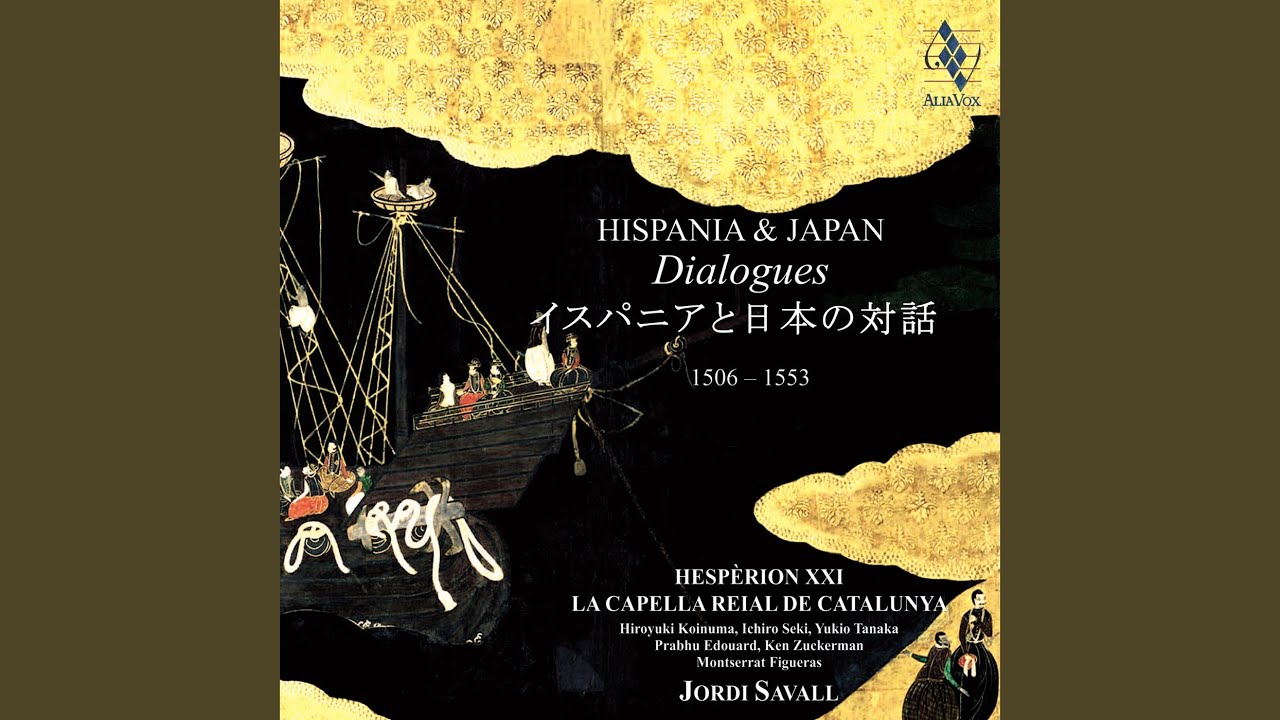
It is done quite differently on this disc, which brings together the music of the East with what early missionaries carried from the West.
YouTube thumbnailYouTube icon

US HERE – UK HERE – It seemed appropriate
The Gesù.  The Roman flagship of the Jesuits.  A monumental rebuke to the Protestant Revolt and confident expression of joyous Catholicism, focused on the Most Holy Name.

This is how the Church perceived herself the gifts given by God from on high.

The whole building was directed to the altar, where the priest renewed the Sacrifice of Calvary, the focus of the whole place.

So, obviously, set up something in front of the focal point of the building.

I waver between thinking about The Borg or, perhaps, the ring of power that Sauron gave to the Witch King of Angmar.

It reminds me of any number of movies where someone goes up to the cube with the glowing streak in it and, when he touches it, the ancient thing with glowing eyes and tentacles comes out and eats everyone in the room except the one who gets away to sputter the tale.

If you are going to set up something that looks like it belongs in a mini-golf course, you might as well have a strange Paschal Candle stand too.


UPDATE: One of my correspondents sent this image with the comment.

“The Gesu candle stand looks like a gyro.”


Meanwhile, on your left, the Catholic Faith Triumphs over Heresy on the right side of the tomb of St. Ignatius Loyola.   Truth is smashing Heresy and the snakes are making a slithering run for it.  Happy, intense putti lend a helpful hand by tearing up the ghastly books of the heretics.

Which heretics, you ask?

Looking across the nave you see the altar of St. Francis Xavier, with the relic of his arm that baptized so many.

In the nearby chapel, the famous Sacred Heart, so much copied.

On the other side there is a chapel dedicated to Mary’s Immaculate Conception.  It is a privileged altar.

These things in juxtaposition.  Sigh.

Lunch.
 

Posted in Jesuits, On the road, What Fr. Z is up to |
20 Comments

GREGORIAN MASS REMINDER

A reminder about Gregorian Masses.   I have a post HERE in which I try to match up priests who are available to take a Gregorian series of Masses with people who desire them.

There are a couple of issues.

First, some people desire TLM only.  This request is a little harder to match up.

Also, some people – some priests – seem not to take seriously my own request to write to me with the proper subject line and information in the body of the email.  This is a little exasperating for me.  Please, take care to write as I indicate.  It really helps.

In our Catholic tradition we celebrate Requiem Masses for the dead on the day we receive the news, or on the day itself or the day of burial, the third day, the seventh day and the thirtieth day (“month’s mind”).  We remember anniversaries.

Gregorian Masses are an ancient tradition going back to St. Gregory the Great (+604) of a continuous series of thirty consecutive Masses said in thirty days for the soul of a deceased person to release them from the Purgatory. Once upon a time, the Masses could only be at the main altar at the Monastery of St. Andrew in Rome, where Gregory had received a message from a “purgatorian” monk who had been released because of thirty Masses said for his soul. Eventually, the “privileged” altars were designated in other Roman churches. I wrote about one such the other day. Often when you visit Roman churches you will see that an altar has an inscription “ALTARE PRIVILEGIATUM”. Originally, these were designated by the Holy See. However, I think that the Holy See granted to bishops to establish them in their dioceses.

With the retooling of all the indulgences, these privileges were all canceled.  So, like priests who have been canceled, these altars stand silent and forgotten in the side aisles of churches, like so many sentinels of better days.

However, the Gregorian Masses remain in the Church and we have confidence in their efficacy, just as our forebears did going back to the 6th century and a Pope whom we call, “the Great”.

Posted in "How To..." - Practical Notes | Tagged ,
Comments Off on GREGORIAN MASS REMINDER

Francis used lace… loved lace… we have proof

The other day Francis said that lace was against the Church.  HERE  Lace is against the Church!  Against the Council.  It’s even against your mothers.

Francis, however, used lace.

At LAJ,

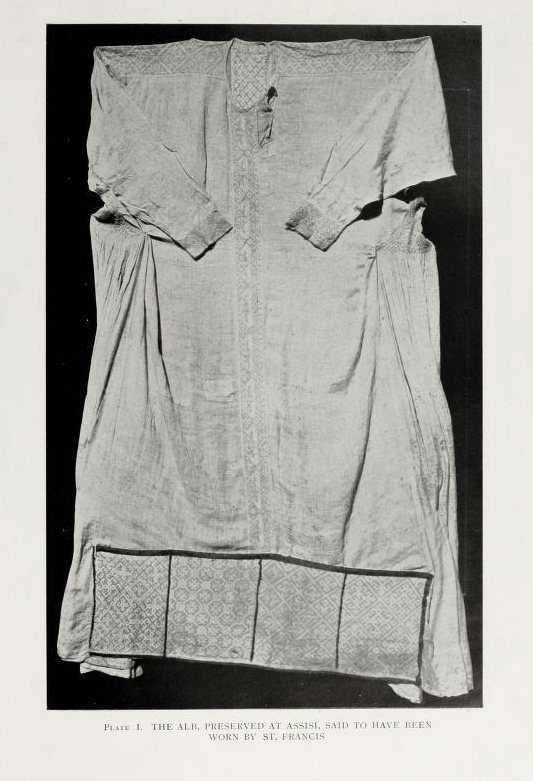
The alb of St. Francis (who lived from A.D. 1181-1226) is preserved in the convent of St. Clare in Assisi. Here is a look at it:

If you are perhaps thinking that is just some sort of brocaded textile apparel, here is a closer look where you will see the actual lace work.

Clearly, St. Francis didn’t know the that lace was bad for the Church and for mothers.

Posted in Lighter fare | Tagged
6 Comments

Your Sunday Sermon Notes: Trinity Sunday

Too many people today are without good, strong preaching, to the detriment of all. Share the good stuff.

Was there a GOOD point made in the sermon you heard at your Mass of obligation for Trinity Sunday?

Also, since this is a day when some priests or deacons absolutely go to the zoo in trying to talk about the Trinity, did you hear any really good heresy today, or something just plain stupid?   We can have an exception to just good stuff this week.

Tell about attendance especially for the Traditional Latin Mass.  I hear that it is growing.  Of COURSE.   The church was jammed in Rome.  As “diverse” a crowd as you will see anywhere other than a major international airport.

Any local changes or (hopefully good) news?


Posted in SESSIUNCULA | Tagged
8 Comments

ROME 22/6 – DAY 11: Great big altar and tiny little car

Sunrise was quite some time ago at 5:32 and sunset will very close to now at 20:48.  The Ave Maria Bell should ring in the Vatican at 21:15.  However, technically it should ring elsewhere at 21:18.

Some have desired more food pics. Okay.  Grilled swordfish and a salad.

A glimpse of the altar of the Church of the Most Holy Trinity on their patronal Feast!  The “dedication” candle is lit.

Meanwhile, there’s this.

Terrific.

Posted in On the road, What Fr. Z is up to |
1 Comment

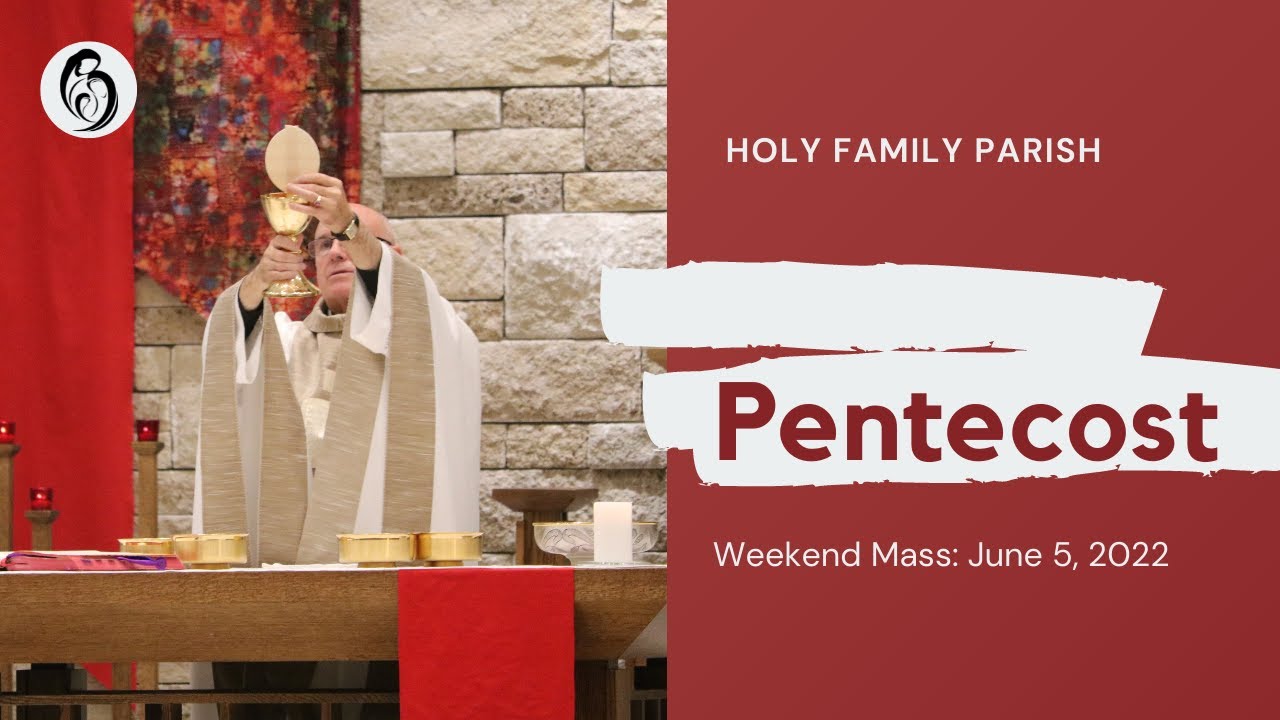
VIDEO: WARNING! This is going to be painful, but it is instructive.

That is one of the most painful videos I have ever seen.  This is the Pentecost Mass from a parish in the Diocese of Kansas City – St. Joseph, Holy Family.

Mind you, the parish leadership wants people to see this.  After all, they put it on YouTube in hi def and with pretty high production techniques.

You will find that, no matter where you click in this video, it is going to be painful.   I will suggest a few low points.

10:15 – Note that the priest does not kiss the altar. He doesn’t in other videos either.  It is a choice. That is something to think about.  It isn’t an empty sign, one way or the other, kissing the altar or not kissing the altar.  It is packed with meaning either way.  Very different meanings.

12:00 – Opening remarks.   Put down your coffee mug first.

13:30 – “The Lord is with you!”

32:00 – Theatrical fire lighting followed by excruciating Gospel reading

37:00 – Sermon.  Words fail.

45:00 – I wouldn’t let kids anywhere near this guy.

49:00 – Creed, sort of.

1:05:00 – Eucharistic Prayer “lowlight”

I’m going to stop there.  I just can’t go on.

I post this on the heals of posting about the changes to the Gesù in Rome, how the church has to shed its identity connected to Trent and come more to embody what is suggested by the Second Vatican Council.

The people who are screwing around with one of the greatest churches in the world would be just fine with this, bet your bottom dollar. BUT… the Traditional Latin Mass must be suppressed.

YouTube thumbnailYouTube icon

Posted in Liturgy Science Theatre 3000, What are they REALLY saying?, You must be joking! |
35 Comments

Jesuits lead the way for Conciliarized churches everywhere

A few days ago I received a copy of a note from the diocesan offices of the Diocese of Rome about the renovation of the sanctuary of the mighty Jesuit church in central Rome called “Il Gesù”.  My soul groaned within me even before I read anything.  What fresh hell would the Jesuits concoct for their flagship, to lead the way for others to uglier, “gayer”, sanctuaries far and wide?

The passages that were really bothersome was…

The Church of the Gesù, mother church of the Society of Jesus in Rome, presents a renewed arrangement of the sanctuary in keeping with the Second Vatican Council.  Designed at the end of the 16th century – its dedicated 1584 – … the church of the Most Holy Name of Jesus at Argentina incarnates fully the spirit of the Council of Trent, with a single nave and attention focused on the altar.  There was needed, therefore, a liturgical update.

[…]

This concerns a reorganization in line with suggestions of the Council…. The new arrangement does not compete with the original, but complies with the concrete exigencies of a community which celebrates in the present day. It was necessary that the People of God could gather and feel like a single body..

I haven’t seen the changes yet.  I imagine, imagine, that there is now a “thrust” stage for a table altar and various concoctions that pull focus away from the main altar, because – you know – The People.

Mind you, “Il Gesù” is one of the exemplary Counter-Reformation churches in the world.  When you start changing something like the Gesù, you are saying something to the world about what the Church believes about herself, what our identity is.

More on this soon.

UPDATE:

This will really help The People feel more like The People.

And I really think the People friendly inscription on the big iron shackle is great… People friendly Ancient Greek!

Posted in Jesuits, Pò sì jiù | Tagged
19 Comments

ASK FATHER: Preliminary rinsing of altar linens before laundering. Wherein Fr. Z rants.

From a reader…

QUAERITUR:

I have seen many documents and books explaining that a first rinse or wash of purificators and corporals must be done before laundering as usual. But after much searching I have been unable to find specific instructions on how to do the first rinse. Having seen all sorts of various things done in different places. Are you aware of a certain way to do the first rinse?

This doesn’t have to be complicated.

Ideally, the first rinsing of altar linens should be done by a priest (whose hands are consecrated to touch sacred things, e.g. the Eucharist) either in a sacrarium – a sink whose pipe goes directly into the earth – or in a vessel which could then be poured either into the sacrarium or onto the ground.

Why the first rinsing?  Because corporals may have particles of Hosts and because purificators have been used to absorb the Precious Blood.

Once the first rinsing is done, then anyone can deal with the linens, hopefully using the right starch and ironing pattern.

This seems nitpicky?

It is all part of a worldview that is Catholic.

This world has its “prince”, the Devil and fallen angels, the Enemy.  We believe – or ought to believe – that there are things are are “outside the Temple… profane”.  That doesn’t mean “nasty”, it means “unconsecrated”.  When we consecrate or bless things with constitutive blessings, they are ripped from the dominion of the prince and given over to the King.   They are “inside the Temple” as it were.   This applies to certain places, things and people.   This is also why in traditional giving of certain blessings and in the rite of Baptism there are exorcisms.

This is real.  This is really how the cosmos is.

This is what modernists deny and want to obliterate from Catholic identity.  They reduce everything supernatural to the natural.   That’s their game. They would take the Church down to an NGO.  That’s what they are doing.

This is why in the dreadful post-Conciliar Book of Blessings there is an explicit move away from the concept of constitutive blessings, blessings that make things blessed things.

If you lose the concept of “sacred”, then you’ve lost the big picture of why we do certain things with rites and with beautiful things.  If you don’t believe, like those influenced by the Jesuit Rahner, that rites and blessings and sacraments actually do something, effect something, rather than just acknowledge some pre-existing reality, then you are not really Catholic other than in name only.   You can put on any old garment, or not, and do whatever you want, or not.  It hardly makes a difference.

One thing you will do, however, is rail against anything that reminds you of or recalls the Catholic belief in the supernatural realm, the efficacy of rites, that there is a difference between the sacred and the profane.  You will belittle and insult and suppress all that hearkens to the transcendent.

The way to combat this modernist, desacralizing attitude and project is to embrace the old ways.  If in some parishes sacred vessels are treated like common drinking cups, then where it is possible to get the custom going again, wear a glove when handling chalice if you are not a priest.   That’s just one example of many.

I think that one of the reasons why so many strange problems are cropping up in society at large today is that the sense of transcendence has been so repressed.  The outward signs that remind us of transcendence and Catholic identity are fading away.

I heard something from an exorcist once that got me thinking.  Exorcists will tell you that the numbers of cases coming to them are on the rise, in a serious way.   One idea why that could be, among others, is that in the Church itself there is a desacralization going on.  Once, in the traditional way of things, everything to be used for Mass had to be blessed before use.   There were special blessings for everything and it was unthinkable not to use them.   Now?  Pfffft.  Buy stuff and use it without a thought.  In other words: leave it in the realm of the prince but use it on the altar.   Does that sound right?   There is an idea that the first use of a chalice for Mass consecrates the chalice.  Maybe it does.   Maybe it doesn’t.  But why on earth wouldn’t you want to have the chalice consecrated before use?

Get it?   If we are our rites, and we are, if there is a real connection between the dynamic of rites and the sacred in their effects on the world, then what the hell are we doing by dumbing down our rites?  If we really believe that our rites have effects, then what are we denying to the world as a Church by denying or destroying the rites?

So, a question about first rinsing opens up a window onto a much larger landscape.


Posted in "How To..." - Practical Notes, ASK FATHER Question Box, Hard-Identity Catholicism, Wherein Fr. Z Rants | Tagged , ,
6 Comments

ASK FATHER: Substituting a “sufficient” penance

From a reader…

QUAERITUR:

As you know we are required to do penance on Fridays of the year unless a Solemnity take precedence. On Fridays during Lent we are required to abstain from meat, however on other Fridays of the year we are allowed to substitute another penance. I try to abstain from meat on Fridays but sometimes this isn’t possible. Do you have any suggestions for alternate penances? Would praying an extra Rosary for the Holy Souls be considered sufficient?

Saying the Rosary can be a penitential practice.  Praying it can also be a work of mercy and a joy.   Is it “sufficient”?  Sure, I guess so.  Why not?

Some people find eschewing the chewing of meat pretty easy, and no penance at all to give up on every day of the week.   For some, I suppose giving up a PBJ would be really hard.  For others a PBR.  Maybe for others … I think I’ll stop with the three letter thing right here.

“Sufficient”.   This is a tricky word when it involves penance.  For example, when we sin, we open up a chasm between ourselves and God that only God can mend.  Hence, even were we to undertake the most brutal penances possible for the rest of our lives, they would not be “sufficient” in light of damage done by sin.  So, all penances are rather arbitrary.  We have to acknowledge that they are sufficiently insufficient. Or rather insufficiently sufficient.

The same goes for our chosen, not imposed, penances. “Sufficient” for what?   This is why the Church gives us guidance through explanations about how indulgences can be gained.  What works are sufficient (with the proper attitude and state of grace) to obtain the desired effect?

It seems to me that taking on a voluntary penance ought to involve a measure of sacrifice or discomfort that one doesn’t just brush off.   For some people, skipping a meal could be really hard.  For others, self-denial of pleasurable and regular activity such as a game or stroll could “suffice”.   Of course in all instances, health of self and those in your charge is to be remembered.

Also, note that self-denial of something pleasurable is one thing, but taking on something that is not so is also an option.  Going out of your way to do something for a needy person, perhaps someone unpleasant, might be a good penance (along with being a good thing to do).

Take stock of yourself, maybe with a pencil and paper (remember those?) and list some things that you really like and are regular features of life.  In another column, think up a few concrete applications of the spiritual and corporal works of mercy.

Work through the lists.

That might “suffice”.

And… GO TO CONFESSION.

The performance of penances or good works are good things to do in themselves, but if you are not in the state of grace they lack any merit they might otherwise have.

GO TO CONFESSION!

Posted in "How To..." - Practical Notes, ASK FATHER Question Box | Tagged
7 Comments

NCReg: In 2023 the Form of Absolution Will Change for US Catholics.

NCReg:

The Prayer of Absolution Will Change for US Catholics in 2023. Here’s How

[…]

The Catholic bishops of the United States in 2021 voted in favor of the new translation of the prayer, with 182 votes in favor, 6 against, and 2 abstentions. The Vatican’s Dicastery for Divine Worship and the Discipline of the Sacraments approved the translation in April 2022, according to a USCCB newsletter shared online this week.

New translation of the prayer of absolution incoming next year.

[…]

God, the Father of mercies,
through the death and resurrection of his Son
has reconciled the world to himself
and poured out [Latin: effudit] the Holy Spirit among us for the forgiveness of sins;
through the ministry of the Church may God grant [Latin: tribuat] you pardon and peace,
and I absolve you from your sins
in the name of the Father, [sign of the cross] and of the Son,
and of the Holy Spirit.

And here’s what the prayer was before:

God, the Father of mercies,
through the death and resurrection of his Son
has reconciled the world to himself
and sent the Holy Spirit among us for the forgiveness of sins;
through the ministry of the Church may God give you pardon and peace,
and I absolve you from your sins
in the name of the Father, [sign of the cross] and of the Son,
and of the Holy Spirit.

It isn’t going to change for me. I use Latin.

The Latin for the post-Conciliar form:

Deus, Pater misericordiarum, qui per mortem et resurrectionem Filii Sui mundum Sibi reconciliavit et Spiritum Sanctum effudit in remissionem peccatorum, per ministerium Ecclesiae indulgentiam tibi tribuat et pacem. Et ego te absolvo a peccatis tuis in nomine Patris, et Filii, et Spiritus Sancti

The new form is more accurately translated.

One good thing about this tinkering might result.

In putting a spotlight on the form of absolution, it could happen that a lot of priests who are screwing around with the words of absolution will correct themselves or be required to correct themselves through pressure from above and from laity alike.

People hearing about the changes to the words of absolution might pay close attention to what the priest actually says and, hopefully, query priests when they stray.

One can hope.

Posted in GO TO CONFESSION, Liturgy Science Theatre 3000 | Tagged ,
8 Comments