Quam terribilis est locus iste! Hic non est aliud nisi domus Dei, et porta caeli!

Holy Church has given two great gifts to all of humanity: art and saints.

Both art and saints reflect God’s beauty and, therefore, call to each man to recognize also what is good and what is true.

Art reflects God’s beauty through inanimate things and saints reflect His beauty as animate.   In each case His images are His agents, so that we can can even call art, God’s grandchildren.

I’ve long thought that the architecture, art and music of each given age and culture employed for worship reflects that people’s self-understanding and their understanding of who and what the Church is.  There is a simultaneous enrichment constantly going on between a culture and a people with the Church through which they offer their first duty, proper worship through the virtue of Religion.  When the world’s offering is given logical priority in this chronologically simultaneous exchange, one result is produced.  When what the Church has to give to the world is given logical priority, another result is produced.

And, thus, I arrive at the goal of this post.   Behold a photo from a Solemn Mass at the Faldstool at the Wallfahrtskirche in Birnau.

Right click this and open it in a new tab.  Put down your coffee first.

There are so many things to say about this photo.

Posted in "How To..." - Practical Notes, Hard-Identity Catholicism, Liturgy Science Theatre 3000 | Tagged , , ,
10 Comments

CHICAGO Fri 31 May – Procession with “Our Lady of the Broken” from @SJCantius

Are in or near Chicagoland? Check this out.

Go to the site: HERE

May I just add that the people at St. John Cantius were formed to think and to pray in this way over many years. This doesn’t just happen automatically or overnight.

The one who guided that formation in thought and prayer was Fr. Frank Phillips, who was “broken” on the wheel of the Archd. of Chicago, though he was exonerated from what he was accused of.

Meno chiacchiere – più processioni!


Posted in "How To..." - Practical Notes, Events, Our Solitary Boast, The Campus Telephone Pole | Tagged , , ,
1 Comment

Zersetzung and the Pontifical Shunning of Prof. John Rist

I noted at LifeSite something which is personally upsetting.   It concerns a friend and old prof of mine at the Augustinianum, the Patristic Institute, in Rome.   Prof. Rist taught at the Augustinianum for years.  He is a serious and well-known scholar, still working!  Prof. Rist, even when he wasn’t teaching courses at the Augustinianum, still used their excellent library for his research.

The Augustinianum has, apparently, banned Prof. Rist because he signed that (ill-fated, I think) Letter to Bishops which levels a charge of heresy at Francis.   In other words, this is nothing other than payback.

Prof. Rist recounted what happened to LifeSite.   The President of the Aug.num. also stripped Rist of his supervision of a candidates thesis, thus punishing also the student (who pays the school for services).

Not only, Prof. Rist seems also to have been banned from all other Pontifical institutions, including CUA.  And CUA cancelled a Festschrift!

I also understand that no communication has been given to Prof. Rist explaining why.

We. Know. Why.

BTW… Prof. Rist was the author of one of the essays in the amazing Remaining in the Truth of Christ: Marriage and Communion in the Catholic Church[US HERE – UK HERE] 

Rist wrote: “Divorce and Remarriage in the Early Church: Some Historical and Cultural Reflections”.

BTW… this book was famously stolen from the mail boxes of the participants of the Synod on the Family.

Rist’s treatment is the stuff of the Stasi.   It’s called Zersetsung.

Here is the definition from East Germany’s own manual.  Zersetsung is… (my emphases)…

… a method of operation by the Ministry for State Security for an efficacious struggle against subversive activities, particularly in the treatment of operations. With Zersetzung one can influence hostile and negative individuals across different operational political activities, especially the hostile and negative aspects of their dispositions and beliefs, so these are abandoned and changed little by little, and, if applicable, the contradictions and differences between the hostile and negative forces would be laid open, exploited, and reinforced.

The goal of Zersetzung is the fragmentation, paralysis, disorganization, and isolation of the hostile and negative forces, in order to preventatively impede the hostile and negative activities, to largely restrict, or to totally avert them, and if applicable to prepare the ground for a political and ideological reestablishment.

Zersetzung is equally an immediate constitutive element of “operational procedures” and other preventive activities to impede hostile gatherings. The principal forces to execute Zersetzung are the unofficial collaborators.  Zersetzung presupposes information and significant proof of hostile activities planned, prepared, and accomplished as well as anchor points corresponding to measures of Zersetzung.

Zersetzung must be produced on the basis of a root cause analysis of the facts and the exact definition of a concrete goal. Zersetzung must be executed in a uniform and supervised manner; its results must be documented.

The political explosive force of Zersetzung heightens demands regarding the maintenance of secrecy.

Edward Feser, very smart, reacts to this news HERE.  Feser thinks that that Letter wasn’t the best move, but that this is,

undeservedly shabby treatment.  Whatever one thinks of his views, Rist is not some hotheaded pamphleteer or hack blogger.  He is a serious thinker, an eminent scholar of classical and early Christian philosophy, the author of many important books, a longtime professor at the Catholic University of America, and a loyal and orthodox son of the Church.  It seems to me not irrelevant to point out that he is also 83 years old.”

A couple things come to mind.  First is the issue of academic freedom. That’s obvious.

However, Feser also brings up the point of Prof. Rist’s age.   If the Aug.num., or any other institute, thinks they are defending Francis from Rist, consider what Francis has said about treatment of old people.

I agree with Feser.  This is shabby.  Especially shabby is how Rist seems to have been banned from all Pontifical institutes.

Posted in Pò sì jiù, The Coming Storm, The Drill, The future and our choices | Tagged ,
23 Comments

A warning from recent history about changes to the CDF and notes about authentic and deficient “evangelization”

A priest friend sent this around to a select group.  I think more people should know about it.

As we read about the proposed Curial “reforms”  Ottaviani reminds us that the seeds for this were sown by Paul VI another disastrous decision for the Church among so many others by Paul VI and the price the Church will pay for this politicization of the Church:

1966

Msgr Simcic recalling:

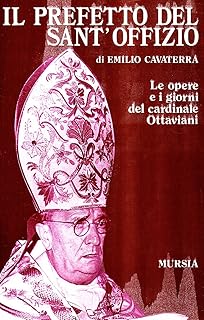
when in the reform of the Curia immediately after the Second Vatican Council, the Holy Office was recast and its title “Supreme  Sacred Congregation” was taken away, Ottaviani commented on the fact before a group of his collaborators with these words (I am giving you their gist): “Remember this is a dark day for the history of the Church because we are not dealing with form with titles but with substance. [NB] Indeed, up to now, the supreme principle of governance for the Church was revealed doctrine, whose custody and right interpretation in the Church is entrusted in first place to the Pope, who makes use of this Congregation and that’s why it is ‘Supreme’. Now I don’t know what will be the critical inspiration for the governance of the Church, but I fear that the diplomatic and contingent will prevail.  I foresee that the Church will suffer much damage from this but because assisted by the Holy Spirit, sooner or later, she will take up the standard of government inspired by Revelation and its essential contents….

Il Prefetto del Sant’Offizio Le opere e I giorni del Cardinale Ottaviani by Emilio Cavaterra p.85

US HERE – UK HERE

I remind the readership that the Congregation for the Doctrine of the Faith – if reports are accurate – is about to be knocked down a couple of levels of importance under some new “super dicastery” for Evangelization.

This is a Very Bad Idea, for the reasons that Card. Ottaviani mentioned at the time of the Pauline reforms.

There is another reason, too.

In the context of the “New” Evangelization we are supposed to be about, I have often wondered aloud about, “What about the ‘Old’ Evangelization?  When did that stop? What can it teach us about the ‘New’?  Is is substantively different, or is it mostly the same but with a different emphasis and audience?  What’s ‘Evangelization’ anyway?”

Since this is the First Day of the Novena after Ascension and before Pentecost, let’s bring these mysteries into play.

Before His Ascension, in Luke 24, the Lord tells the disciples that

“repentance and forgiveness of sins should be preached in his name to all nations, beginning from Jerusalem.”

He said that it was prophesied, as indeed it was in Is 52 & 53 about the Suffering Servant and in Jonah, when God’s servant preached to the Ninevites.  What did Jonah (a type of Christ, a foreshadowing figure) preach?  Repentance for sins.

Evangelization is about conversion – first and ongoing – metanoia.  That means that bringing the “Good News” to people – whether baptized or not – MUST involve preaching repentance for sins.   This is essential for any kind of evangelization according to the way the Lord intended it.  Christ effectively says that there is no evangelization without repentance for sins.  If we gloss over repentance for sin, whatever it is that we do we are not doing what Christ commanded.   Repentance is a universal dimension of all evangelical practice.  It was to start with the Jews and go to all nations.

I’m not making this up.  “… repentance and forgiveness of sins should be preached…”.

Some people very high in the hierarchy of the Church and some who are not so high are preaching that you don’t have to make changes, change your view of sin and your life.  They talk about joy joy joy happy happy happy but they don’t mention repentance and true conversion.

Sure! Go to Communion without changing your life.

If you leave out sin and repentance, you don’t have any kind of authentic evangelization.

Evangelization does not have to dwell only on repentance, of course.  Repentance and reconciliation results in joy.  However, repentance for sins must be first at least logically if not chronologically.   It also must probably be chronologically first, too.

But those who exclude or diminish repentance… FAIL.

Posted in The Coming Storm, The Drill | Tagged , , , , , , ,
13 Comments

ASK FATHER: “Priest screws around with order of Mass. Should I mind my own business?” @FatherZ rants, advises.

From a reader…

QUAERITUR:

Our priest always reverses the order of the peace and the fraction.

Specifically, he observes the following order:

  1. Our Father, embolism, doxology.
  2. Prayer for the peace of Christ.
  3. Fraction and commingling.
  4. Exchange of peace.
  5. Agnus Dei.

As you can see, #3 and #4 are reversed.

He says it’s because “peace comes from Jesus’s broken body” or something like that. Is this an abuse worth taking up with the bishop, or should I just mind my own business?

“Just mind your own business….”…?!?   No!  This is YOUR business!

Sacred worship is your business.  Our sacred liturgical worship is not the property of the priest, who can do whatever the hell he wants.

The fact that you wrote, “He says it’s because…” suggests that you have spoken with him or he has publicly explained himself.

If you have not communicated with him personally, I urge you to do so.   Drop him a note and, if he doesn’t answer, approach him.   Of course, use common sense and be kind and respectful.

At the same time, you should discreetly get a few instances of what he does via the video camera setting on your smart phone (assuming you have one).

The paper trail and the video are what might be called “proofs” in the case that this needs to go to another level.   It isn’t enough simply to say that Father X is doing Y.   You need to show that he is really doing it.

The next step, if the priest continues to commit this clear abuse, is to go to the bishop (I am assuming that this is the pastor of the parish).   And/or you can go to the Congregation for Divine Worship in Rome.   If there is no bishop right now, write to the Congregation directly.

I have tips for writing to bishops and to Rome, HERE.

I said at the top that this is YOUR business.   The Church thinks so too.

The document Redemptionis Sacramentum clarifies your role.

6. Complaints Regarding Abuses in Liturgical Matters

[183.] In an altogether particular manner, let everyone do all that is in their power to ensure that the Most Holy Sacrament of the Eucharist will be protected from any and every irreverence or distortion and that all abuses be thoroughly corrected. This is a most serious duty incumbent upon each and every one, and all are bound to carry it out without any favouritism.

[184.] Any Catholic, whether Priest or Deacon or lay member of Christ’s faithful, has the right to lodge a complaint regarding a liturgical abuse to the diocesan Bishop or the competent Ordinary equivalent to him in law, or to the Apostolic See on account of the primacy of the Roman Pontiff. It is fitting, however, insofar as possible, that the report or complaint be submitted first to the diocesan Bishop. This is naturally to be done in truth and charity.

The last paragraph clarifies that the faithful have recourse directly to the Holy See at any time in the process.  However, they urge that the problems be dealt with at the lowest level possible before seeking help from a higher authority.    Hence, if you do not get satisfaction from the priest directly, after collecting written and video proofs you should try the local bishop and then the Congregation.

Again, friend, this is your business.


Posted in "How To..." - Practical Notes, ASK FATHER Question Box, Liturgy Science Theatre 3000 | Tagged ,
7 Comments

DAY 1 – Novena of Prayer to the Holy Spirit – AUDIO

Let us, upon our knees, pray in a special way to God the Holy Spirit during this time between Ascension Thursday and Pentecost.

This is one way to pray.  I invite the readership to join in.

MANNER OF PRAYING THE NOVENA

Each day the meditation and prayer for the particular day is said, followed by 1 Our Father, 1 Hail Mary and 7 Glory be to the Father, followed by the Act of Consecration and the Prayer for the Seven Gifts.

FIRST DAY OF THE NOVENA

Holy Spirit! Lord of Light!
From Your clear celestial height,
Your pure beaming radiance give!

Only one thing is important — eternal salvation. Only one thing, therefore, is to be feared — sin. Sin is the result of ignorance, weakness, and indifference The Holy Ghost is the Spirit of Light, of Strength, and of Love. With His sevenfold gifts He enlightens the mind, strengthens the will, and inflames the heart with love of God. To ensure our salvation we ought to invoke the Divine Spirit daily, for “The Spirit helpeth our infirmity. We know not what we should pray for as we ought. But the Spirit Himself asketh for us.”

Almighty and eternal God, Who hast vouchsafed to regenerate us by water and the Holy Ghost, and hast given us forgiveness of all sins, vouchsafe to send forth from heaven upon us your sevenfold Spirit, the Spirit of Wisdom and Understanding, the Spirit of Counsel and fortitude, the Spirit of Knowledge and Piety, and fill us with the Spirit of Holy Fear. Amen.

(Our Father and Hail Mary ONCE. Glory be to the Father 7 TIMES. Act of Consecration, Prayer for the Seven Gifts)

ACT OF CONSECRATION TO THE HOLY GHOST

On my knees before the great multitude of heavenly witnesses, I offer myself, soul and body, to Thee, Eternal Spirit of God. I adore the brightness of Thy purity, the unerring keenness of Thy justice, and the might of Thy love. Thou art the Strength and Light of my soul. In Thee I live and move and am. I desire never to grieve Thee by unfaithfulness to grace, and I pray with all my heart to be kept from the smallest sin against Thee. Mercifully guard my every thought and grant that I may always watch for Thy light, and listen to Thy voice, and follow Thy gracious inspirations. I cling to Thee and give myself to Thee and ask Thee, by Thy compassion, to watch over me in my weakness. Holding the pierced Feet of Jesus, and looking at His five wounds, and trusting in His Precious Blood, and adoring His opened side and stricken Heart, I implore Thee, Adorable Spirit, Helper of my infirmity, so to keep me in Thy grace that I may never sin against Thee. Give me grace, O Holy Ghost, Spirit of the Father and the Son, to say to Thee always and everywhere, “Speak Lord, for Thy servant heareth.” Amen.

PRAYER FOR THE SEVEN GIFTS OF THE HOLY GHOST

O Lord Jesus Christ, who before ascending into Heaven, didst promise to send the Holy Ghost to finish Thy work in the souls of Thine Apostles and Disciples, deign to grant the same Holy Spirit to me, that He may perfect in my soul the work of Thy grace and Thy love. Grant me the Spirit of Wisdom, that I may despise the perishable things of this world and aspire only after the things that are eternal; the Spirit of Understanding, to enlighten my mind with the light of Thy divine truth, the Spirit of Counsel, that I may ever choose the surest way of pleasing God and gaining Heaven; the Spirit of Fortitude, that I may bear my cross with Thee and that I may overcome with courage all the obstacles that oppose my salvation; the Spirit of Knowledge, that I may know God and know myself and grow perfect in the science of the saints; the Spirit of Piety, that I may find the service of God sweet and amiable; the Spirit of Fear, that I may be filled with a loving reverence towards God and may dread in any way to displease Him. Mark me, Dear Lord, with the sign of Thy true disciples, and animate me in all things with Thy Spirit. Amen.

Posted in PODCAzT | Tagged , , ,
4 Comments

FOLLOW UP – Travel Vestments for US Navy Chaplain

You will recall that a friend of mine’s airplane went into the river on landing at NAS JAX and he lost his vestments.  I started a fundraiser to have new vestments made at Gammarelli in Rome.

Gammarelli sent photos of the fabric being cut.  I saw the stacks of cut fabric the other day in Rome as they were waiting to go to the tailors.

I’m also having an alb made.

Here are a few shots.

Posted in SESSIUNCULA |
9 Comments

WDTPRS: Ascension Thursday: That hope informs our trials

Ascension 1651 by Francisco Camilo Museu Nacional dArt de Catalunya MNAC Barcelona smTonight at 6:30 PM at St. Mary’s in Pine Bluff we will have a Solemn Mass for the Feast of the Ascension of the Lord… because it is Ascension THURSDAY… today.

A priest friend wrote this morning:

“Today we have celebrated the Novus Ordo mystery of ‘not the Ascension”.  Almost uplifting!”

Agreed.  Of course even in the Novus Ordo today is supposed to be Ascension.  The shift to Sunday’s took place arbitrarily and it was done in some places, not all (very few).

On Sunday I will celebrate Sunday after Ascension Thursday, because that’s what day it is.

Let’s have a look at the Collect for the Mass of the Lord’s Ascension… on this THURSDAY.

COLLECT – (1962MR):

Concede, quaesumus, omnipotens Deus: ut, qui hodierna die Unigenitum tuum Redemptorem nostrum ad caelos ascendisse credimus; ipsi quoque mente in caelestibus habitemus.

Our hard working Lewis & Short Dictionary can have a little rest today, I think.  There is nothing especially noteworthy in the vocabulary.  Let us therefore move on to a straight-forward…

LITERAL TRANSLATION:
Grant, we beseech You, Almighty God,
that we, who believe Your Only Begotten Son our Redeemer
to have ascended on this day to heaven,
may ourselves also dwell in mind amongst heavenly things.

Bl. Abbot Columba Marmion, OSB (+1923), wrote in Christ in His Mysteries (US HERE – UK HERE) that “of all the feasts of Our Lord … the Ascension is the greatest, because it is the supreme glorification of Christ Jesus.”

Then, speaking about the very Collect we are looking at today, Bl. Columba says,

“This prayer first of all testifies to our faith in the mystery in recalling the title ‘Only-begotten Son’ and ‘Redeemer’, given to Jesus, the Church shows forth the reasons for the celestial exaltation of her Bridegroom;—she finally denotes the grace therein contained for our souls. … The mystery of Jesus Christ’s Ascension is represented to us in a manner suitable to our nature: we contemplate the Sacred Humanity rising from the earth and ascending visibly towards the heavens.”

Of course it is not only Christ’s humanity but our humanity that ascended into heaven.

We Catholics know that what was not assumed, was not redeemed (St. Gregory of Nazianzus).  Our humanity, body and soul, was taken by the Son into an unbreakable bond with His divinity. When Christ rose from the tomb, our humanity rose in Him.  When He ascended to heaven, so also did we.  In Christ our humanity now sits at the Father’s right hand.  His presence there is our great promise and hope.  It is already fulfilled, but not yet in its fullness.  That hope informs our trials in this life.

Preaching on 1 June 444 St. Pope Leo I “the Great” said,

“Truly it was a great and indescribable source of rejoicing when, in the sight of the heavenly multitudes, the nature of our human race ascended over the dignity of all heavenly creatures, to pass the angelic orders and to be raised beyond the heights of archangels. In its ascension it did not stop at any other height until this same nature was received at the seat of the eternal Father, to be associated on the throne of the glory of that One to whose nature it was joined in the Son.”

Leo says in another sermon of 17 May 445,

“This Faith, reinforced by the Ascension of the Lord and strengthened by the gift of the Holy Spirit, has not been terrified by chains, by prison, by exile, by hunger, by fire, by the mangling of wild beasts, nor by sharp suffering from the cruelty of persecutors.  Throughout the world, not only men but also women, not just immature boys but also tender virgins, have struggled on behalf of this Faith even to the shedding of their blood.  This Faith has cast out demons, driven away sicknesses, and raised the dead.”

The knowledge that our humanity is now enjoying heaven can work wonders for us in the hour of need. Keep this in mind in time of trial.

When the Lord ascended to heaven He did not lose touch with us His people in this vale of tears.  St. Augustine in s. 341 talks about Christ’s presence in every word of Scripture as Word equal to the Father; or as the mediator in the flesh dwelling in our midst; or Christ as the Head and Body together as in a spousal relationship, Christ and His Church intimately bound.

This means that Christ is not insensible to our sufferings.  Our faith in this unbreakable bond of Head and Body calls us to be clean and worthy of this saving intimacy.

Allow me to get a little mystical for moment. Another thing that this means is that Christ, as High Priest, is now at the heavenly altar eternally offering His Sacrifice to the Father.  This means that His High priestly action is in eternity and not just in points of historical, past time.  The immense implication of all of this is that, by having our High Priest in heaven and eternity, what He does is still present to us.  All the mystery of the Passion and Resurrection is still available to us, not bound by chronology or by geographical location.  The High Priest in heaven now guarantees that we can have many Masses at many altars at the same time, many Communions, many people encountering the Mystery through the time that hurtles toward the summation of all things when Christ will take all things to present them to the Father so that God will be all in all.

Posted in "How To..." - Practical Notes, Liturgy Science Theatre 3000, WDTPRS |
6 Comments

Vigil of Ascension – old and new

fullsize_vanni_ascensionHere is something I wrote a loooong time ago – 2006 – for an WDTPRS article in the print version of The Wanderer.  I had a column there for 11 years.

…(I)n some places the Feast of the Ascension, which falls always on a Thursday, has been transferred to this Sunday.  That would make it “Ascension Thursday Sunday”, I suppose.

In addition, the third edition of the Missale Romanum issued in 2002 now provides us with a Mass for the Vigil of Ascension, which wasn’t in previous editions of the Novus Ordo.  Moreover, the prayers for the new Vigil of Ascension are not the same as those found in the pre-Conciliar Missale for the Vigil.  Also, there are now proper Masses for the days after Ascension, most having alternative collects depending on whether or not in that region Ascension is transferred to Sunday. Since many people do not have access to the prayers for the Vigil of Ascension, let’s look at them this week.  First, here are the antiphons. Ant. ad introitum:  Regna terrae cantata Deo, psallite Domino, qui ascendit super caelum caeli; magnificentia et virtus eius in nubibus, alleluia. (Ps 67:33,35)  Ant. ad communionem: Christus, unam pro peccatis offerens hostiam, in sempiterum sedet in dextera Dei, alleluia.  (Cf. Heb 10:12)

COLLECT:
Deus, cuius Filus hodie in caelos,
Apostolis astantibus, ascendit,
concede nobis, quaesumus,
ut secundum eius promissionem
et ille nobiscum semper in terris
et nos cum eo in caelo vivere mereamur.

This was modified from a prayer in ancient sacramentaries such as the Liber Sacramentorum when it was used on Ascension Thursday having its Station Mass at St. Peter’s Basilica.  Here is some liturgical education for you.  The eucological formulas (the prayers), for the Ascension found in what is sometimes called the Leonine Sacramentary surviving in one 7th century manuscript in Verona (the Veronese Sacramentary) are the oldest prayers we have in the Roman liturgy!  The Missale Romanum and those ancient collections consist principally in prayers for Masses which in fancy liturgist talk are called “eucological formulas”.

You might not immediately recognize astantibus as being from asto or adsto, which that ascendant lexicon of Latin lemmata, the Lewis & Short Dictionary, says means, “to stand at or near a person or thing, to stand by”  The L&S will also inform you that asto has the synonym adsisto.

If you have ever heard the phrase “to assist (adsisto) at Holy Mass” this is the concept: you are present and actively participating.

Also, during the Roman Canon, the priest describes the people as circumstantes, “standing around”.  This doesn’t mean they there around the altar with their hands in the their pockets (though I admit I have seen that happen). Rather, they are there morally and spiritually “around” the altar, participating each according to their vocation and capacity.  So, circumstantes is used to identify the baptized who are present.

SUPER LITERAL VERSION:
O God, whose Son today ascended
into the heavens as the Apostles were standing close by,
grant us, we beseech You,
that, according to His promise,
we may be worthy both that He lives with us on earth,
and that we live with Him in heaven.

The Apostles, who were adstantes, actively participating in the Lord’s Ascension before, during and after the actual moment if the Ascension, both listened to the Lord and watched the Lord.  Similarly, at Holy Mass we actively participate before, during and after the consecration, both by listening to the Lord speak through the texts and watching what the Lord does in the liturgical action.

LATER ADDITION in 2011:

NEW CORRECTED ICEL (2011):
O God, whose Son today ascended to the heavens
as the Apostles looked on,
grant, we pray, that, in accordance with his promise,
we may be worthy for him to live with us always on earth,
and we with him in heaven
.

When the Second Person took up our human nature into an indestructible bond with His divinity, indestructible, we were thereby destined to sit at God’s right hand, first in Christ and then on our own.  Christ makes us worthy, no one else.  Christ alone.  It’s all His.  And because it’s His, it’s ours.

Posted in SESSIUNCULA |
5 Comments

Tuesday 28 May – Mass for Benefactors

I’ve been saying Masses for benefactors in Rome, with a couple of interruptions for other issues.   However, unless something super big pops up, I’ll say Mass for benefactors – those who regularly contribution donations by subscription or recently ad hoc, and who have sent items from my wishlist, etc. – tomorrow afternoon, Rome time.

God and my angels know who has sent snail-mail I haven’t seen yet.

I keep you in my constant prayers, of course, and regularly say Mass for your intention.   It is my pleasure, honor, and duty to do so.

UPDATE: Here’s some concelebration.

I’m at the center altar, celebrating Mass for the intentions of YOU benefactors.

Posted in ACTION ITEM! |
Comments Off on Tuesday 28 May – Mass for Benefactors