
Click!
On Sunday I posted about the difference between Latin gaudete and laetare. In that post I commented on the mens of Roman liturgical use: to preserve. I wrote that
“The Roman Thing… the Romanitas … that is the breath and heartbeat of Roman liturgical use seeks to hand on what it has received. Only over great spans of time are adjustments made. Since in this year much attention is given to The Lord of the Rings, recall what Gimli said about the Glittering Caves of Aglarond. Ut brevis, I’ll write about that in another post.”
This is “another post”.
I had in the other post shown how in the Roman Rite we have Latin antiphons texts which are from Latin version of the Scripture that pre-date Jerome’s Vulgate. There are textual differences, such as when we sing on the Sunday after Easter, Quasimodo geniti infantes instead of Jerome’s Sicut modo geniti infantes. The Roman Thing was to preserve the older version of the chant even when the Vulgate was made the Church’s official version of Latin Scripture. They didn’t dare to to change the chant. Indeed, Augustine remarks in a letter to Jerome that people were upset by the changes in Latin he was making. Before I get to what was the original digression in the other post, I’ll digress here, because it is a fascinating example of the conservatism of worshippers in the thoroughly Roman early Church of North Africa.
Augustine refers to popular resistance to Jerome’s revised Latin biblical translations in several letters, most clearly in Letter 71 and again, with reflection and moderation, in Letter 82. The context is Jerome’s revision of Scripture according to the Hebrew and Greek texts, which disturbed congregations accustomed to the older Latin versions. Here’s Augustine describing the situation to Jerome in 403 (ep. 71.5). A passage from the Book of Jonah had been read including the plant that shaded the prophet. Jerome had translated the Hebrew qiqayon as hedera (ivy) rather than the familiar cucurbita (gourd). People in the city of Oea nearly rioted when they heard it.
“Nam cum lectum esset in ecclesia, ubi praesens erat episcopus, quod propheta Ionas sub hedera consedisset, tanta confusio exorta est in populo, maxime in Africa, ut vix potuerit episcopus sedare tumultum, clamantibus omnibus falsum esse quod lectum est.
And when it was read in church, where the bishop was present, that the prophet Jonah sat under an ivy, such confusion arose among the people, especially in Africa, that the bishop could scarcely calm the disturbance, with everyone shouting that what had been read was false.”
It got so bad that the bishop himself we nearly thrown off of his see.
Augustine explains the reason for the uproar:
“Homines enim, quae semel imbiberunt, difficile mutare patiuntur.
For people scarcely tolerate change in things they have once absorbed.”
They took their Scripture seriously. Imagine this today. Remember when the horrid translation used in the Novus in these USA had the baby Jesus placed in a “feed box”? People should have rioted then and there and saved us a lot of time and wasted energy.
Augustine tells Jerome that even though his translation is philologically superior, he was causing scandal and loss of confidence in Scripture: “Ne forte, dum paucorum doctorum studia corriguntur, plurimorum animis scandalum generetur. … Lest perhaps, while the studies of a few learned men are corrected, a scandal be produced in the minds of the many.”
Augustine does not deny Jerome’s expertise. His anxiety concerns reception in the Church, especially among the unlearned.
Sever years later, Augustine has another crack at his concern with Jerome’s work in ep. 82.3. Again, he acknowledges Jerome’s skill but raises pastoral concerns.
“Ego sane fateor me in eis libris, qui canonici appellantur, didicisse hunc timorem honoremque deferre, ut nullum eorum auctorem scribendo aliquid errasse firmissime credam.
“I confess that I have learned to hold this reverence and honor toward the books that are called canonical, that I most firmly believe none of their authors erred in writing anything.”
Yet he adds (ep. 82.35) that translations are another matter:
“Quod autem ad interpretationes attinet, quae plurimae sunt, in quibus non parva potest esse varietas, magis mihi placet consuetudo ecclesiastica.
But as for translations, which are many and in which there can be no small variation, ecclesiastical custom pleases me more.”
Here Augustine clearly distinguishes between the inspired text and its Latin transmission. He recognizes Jerome’s scholarly achievement, but he insists that liturgical and ecclesial usage possesses its own authority, rooted in reception and stability.
I am reminded of Ratzinger writing that, no matter what scholarly blah blah could be bilge pumped about the bizarre rendering of pro multis as “for all”, the meaning of “for many” was but now its own theological locus.
These letters of Augustine explain why Roman liturgical texts often preserve Old Latin readings that differ from Jerome’s Vulgate. Augustine witnesses to a Church in which Scripture was primarily heard, memorized, and prayed. Altering familiar wording risked unsettling faith itself. The Roman chant tradition, by retaining forms such as Quasimodo, stands squarely within the pastoral instinct Augustine articulates. Any priest who accidently stumbled on to the Pius XII Psalter will fill you in on this in detail.
Now to my original digression in the other post. To repeat, I wrote that
“The Roman Thing… the Romanitas … that is the breath and heartbeat of Roman liturgical use seeks to hand on what it has received. Only over great spans of time are adjustments made. Since in this year much attention is given to The Lord of the Rings, recall what Gimli said about the Glittering Caves of Aglarond. Ut brevis, I’ll write about that in another post.”
After the Battle of Helm’s Deep, the company heads towards Isengard. They go past the scary trees that dispatched Saruman’s army leaving Legolas greatly curious and Gimli rather unsettled. Gimli says that he saw something far more wonderous than this forest.
Here is the extended exchange. Read it with your liturgically sensitive eyeballs. Gimli speaks at first:
You may think them [the trees] wonderful, but I have seen a greater wonder in this land, more beautiful than any grove or glade that ever grew: my heart is full of it.
“Strange are the ways of Men, Legolas! Here they have one of the marvels of the Northern World, and what do they say of it? Caves, they say! Caves! Holes to fly to in time of war, to store fodder in! My good Legolas, do you know that the caverns of Helm’s Deep are vast and beautiful? There would be an endless pilgrimage of Dwarves, merely to gaze at them, if such things were known to be. Aye indeed, they would pay pure gold for a brief glance!”
“And I would give gold to be excused,” said Legolas; “and double to be let out, if I strayed in!”
“You have not seen, so I forgive your jest,” said Gimli. “But you speak like a fool. Do you think those halls are fair, where your King dwells under the hill in Mirkwood, and Dwarves helped in their making long ago? They are but hovels compared with the caverns I have seen here: immeasurable halls, filled with an everlasting music of water that tinkles into pools, as fair as Kheled-zaram in the starlight.
“And, Legolas, when the torches are kindled and men walk on the sandy floors under the echoing domes, ah! then, Legolas, gems and crystals and veins of precious ore glint in the polished walls; and the light glows through folded marbles, shell-like, translucent as the living hands of Queen Galadriel. There are columns of white and saffron and dawn-rose, Legolas, fluted and twisted into dreamlike forms; they spring up from many-coloured floors to meet the glistening pendants of the roof: wings, ropes, curtains fine as frozen clouds; spears, banners, pinnacles of suspended palaces! Still lakes mirror them: a glimmering world looks up from dark pools covered with clear glass; cities, such as the mind of Durin could scarce have imagined in his sleep, stretch on through avenues and pillared courts, on into the dark recesses where no light can come. And plink! a silver drops falls, and the round wrinkles in the glass make all the towers bend an waver like weeds and corals in a grotto of the sea. Then evening comes: they fade and twinkle out; the torches pass on into another chamber and another dream. There is chamber after chamber, Legolas; hall opening out of hall, dome after dome, stair beyond stair; and still the winding paths lead on into the mountains’ heart. Caves! The Caverns of Helm’s Deep! Happy was the chance that drove me there! It makes me weep to leave them.”
“Then I will wish you this fortune for your comfort, Gimli,” said the Elf, “that you may come safe from war and return to see them again. But do not tell all your kindred! There seems little left for them to do, from your account. Maybe the men of this land are wise to say little: one family of busy dwarves with hammer and chisel might mar more than they made.”
“No, you do not understand,” said Gimli. “No dwarf could be unmoved by such loveliness. None of Durin’s race would mine those caves for stones or ore, not if diamonds and gold could be got there. Do you cut down groves of blossoming trees in the springtime for firewood? We would tend these glades of flowering stone, not quarry them. With cautious skill, tap by tap — a small chip of rock and no more, perhaps, in a whole anxious day — so we would work, and as the years went by, we should open up new ways, and display far chambers that are still dark, glimpsed only as a void beyond fissures in the rock. And lights, Legolas! We should make lights, such lamps as once shone in Khazad-dum; and when we wished we would drive away the night that has lain there since the hills were made; and when we desired rest, we would let the night return.”
“You move me, Gimli,” said Legolas. “I have never heard you speak like this before. Almost you make me regret that I have not seen these caves. Come! Let us make this bargain — if we both return safe out of the perils that await us, we will journey for a while together. You shall visit Fangorn with me, and then I will come with you to see Helm’s Deep.”
“That would not be the way of return that I should choose,” said Gimli. “But I will endure Fangorn, if I have your promise to come back to the caves and share their wonder with me.”
“You have my promise,” said Legolas. “But alas! Now we must leave behind both cave and wood for a while. See! We are coming to the end of the trees.
What do those who repress the Roman Rite say? CAVES!
Click!
For those of you unfortunates who have never read The Lord of the Rings, after the destruction of the Ring, Gimli leads many Dwarves south to Aglarond to become to first Lord of the Glittering Caves. The dwarves of the south build great works in Rohan and Gondor, including a new gate for Minas Tirith made of mithril and steel. After Aragorn’s death, 262 years old Gimil sails with Legolas into the West, the first Dwarf in the Undying Lands.
“Unfortunates”? Nay! Rather, “fortunate indeed”!
You have the chance to read it for the first time.
Marvelous.
Here’s an idea. If you have a couple of friend/family who haven’t read it, give them a set like the one pictured above for Christmas and then read it together.
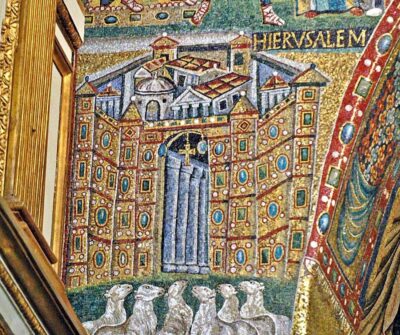 From a priest reader…
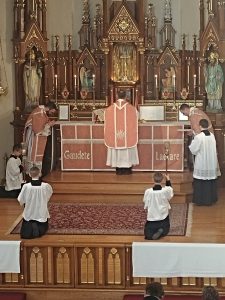 From a reader…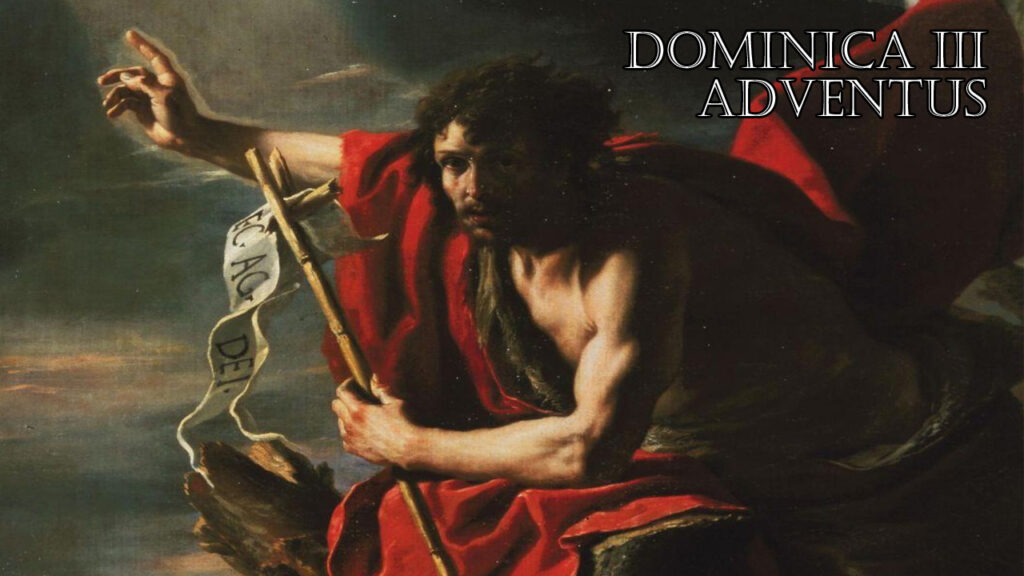





 waalaw on ROME 26/10– Day 22: Colors and courses and Coco: “Thank you, pestolover. I made sure that my solution was correct before posting it; but, as is my fatal flaw,…”



























