JUST TOO COOL: SPACE FORCE!

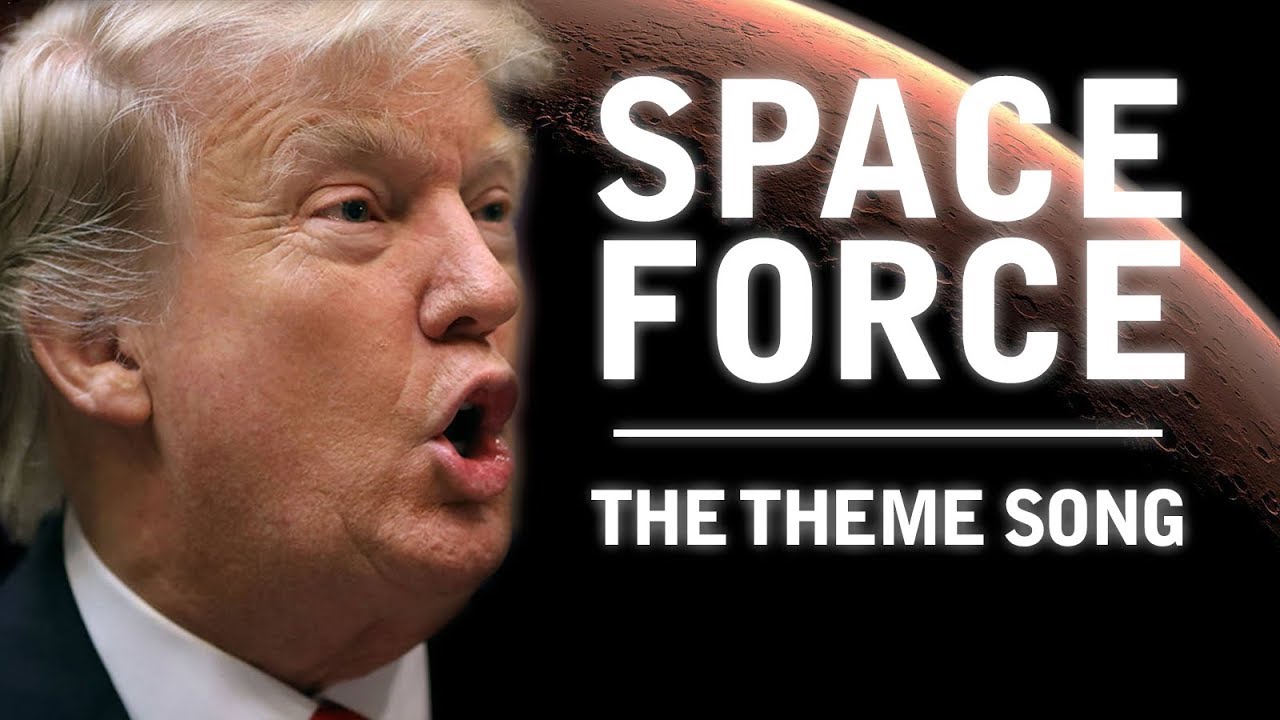
When I was driving to Michigan for this year’s Acton University, I heard a speech that Pres. Trump gave to a gathering of small business leaders.   During that speech he mentioned NASA and the development of the

SPACE FORCE!

I heard some of the President’s talk yesterday in Duluth, MN.  He spoke about NASA and the

SPACE FORCE!

Let’s just say that I’ll sign up to be a chaplain.   That might have to come after they figure out how to reverse my clock about 40 years.    But, I’ll sign up anyway.

After all, I’ve already been a chaplain in space!   HERE

A long-time reader here, who is involved with NASA, took the time to send these inspiring images.

UPDATE:

Some wags had a little fun with this. I, of course, am really serious.

YouTube thumbnailYouTube icon

Posted in Just Too Cool, Look! Up in the sky! | Tagged , ,
16 Comments

ASK FATHER: What can the acolyte do and wear?

From a reader…

QUAERITUR:

I was wondering if you know the rubrics or know where the rubrics for lay instituted acolytes in the EF can be found?
At my parish, we try and do a lot of things in the extraordinary form, and I am trying to find some authoritative/knowledgeable source on what an instituted acolyte can/ cannot do/wear (in terms of the biretta) for liturgical celebrations (mainly outside of Mass). Thank you!

Once upon a time, Paul VI suppressed the “minor orders” with a document called Ministeria quaedam.  In that document the Pope said that, henceforth, the functions of the subdeacon would be assumed by lectors and acolytes.    Along came the 1983 Code for the Latin Church which supplanted Mq to a degree. It has canons on the lector and acolyte and established that the clerical state, which once began with tonsure and minor orders, now begins with diaconate.

Technically, cleric choir dress should apply to clerics.  However, it also pertains to servers who fill the roles in liturgical service that clerics would ideally serve.

To my mind, the instituted lector/acolyte can wear the tunic and function as the subdeacon in the Usus Antiquior.  Some don’t like this suggestion, but they can do so even if they left seminary and married.  They are still lectors/acolytes.  Some would not vest this liturgical critter in a maniple.  Lana caprina.

To my mind, the instituted lector/acolyte can wear clerical choir dress (cassock, collar, surplice, biretta) when in choir, as the subdeacon of yore would.  Some might disagree.  Fluctus in simpulo.

Otherwise, the acolyte can function in the EF as… acolyte!  He can take other roles, too.  Be flexible.

There are good books which breaks down and describes the individual roles of different ministers at Mass.  I like Stehle and Collins.

¡Hagan lío!

Posted in "How To..." - Practical Notes, ASK FATHER Question Box, Liturgy Science Theatre 3000 | Tagged , ,
14 Comments

Day 1 #ActonU – Getting Started – Days and Deaths

There are some thousand participants from across the globe and many confessions and religion.

The first evening involves checking in, a social hour, supper and an address.

The first evening our speaker addressed us from Venezuela.

She is forbidden to leave Venezuela.

“We don’t count our days in minutes, but in deaths.”

In the morning I caught up with a friend from Rome who showed me an app that lists all the various “genders” you could chose from today. Alas, it’s the people who came up with this horse-hockey were serious… no… earnest.

All this new participants take a “core” of talks before they select electives. That provides a common basis. Here is one of the core lectures.

A bookstore is available. A certain Fishwrap writer would like the titles by Fr Robert Sirico, Rodney Stark, San Gregg….

One of the talks.

I am on tomorrow afternoon.

Mass each morning, TLM, NO and Orthodox Divine Liturgy and Protestant prayer service each day.

Posted in SESSIUNCULA |
5 Comments

“Disinformation” and some notes about the World Council of Churches

The Fishwrap (National Schismatic Reporter) is all excited about a visit His Holiness will make soon to the World Council of Churches in Geneva for its 70th anniversary.  John Paul II and Paul VI both visited the institution.  In turn, the WorldCC had its influence on theologians such as Yves Congar, who played a major role from the sidelines of Vatican II.

When I read “World Council of Churches” a little bell rang in my head.   I don’t think of that group very often.  There was, however, something that I read about it not too long ago.  What was it?

It came to me this morning.

I read about the World Council of Churches in the gripping book

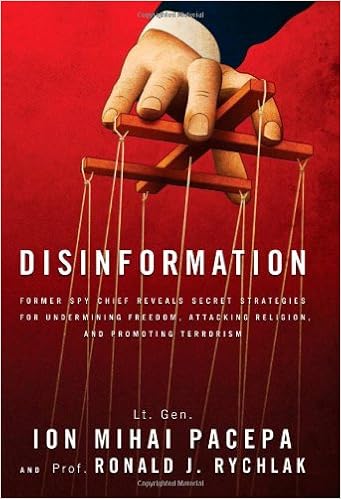
Disinformation: Former Spy Chief Reveals Secret Strategies for Undermining Freedom, Attacking Religion, and Promoting Terrorism by Ronald Rychlak and Lt. Gen. Ion Mihai Pacepa.

I want to recommend it warmly.
US HERE – UK HERE

Gen. Pacepa, who ran intelligence for Romanian despot and Soviet thug Nicolae Ceaucescu, fled to the West when he was asked to start killing people. He is an expert on the Soviet technique of framing, disinformation, creating false narratives and history. The book exposes the Communist background of seemingly-benign organizations and explains the treatment received by Cardinals Stepinak, Mindszenty and Wysznski and, of course, Pius XII.

In the first part of the book, Pacepa relates how the Soviet Union used the WorldCC to whip up sensationalism about “white supremacy” and arson cases committed against black churches in these USA.    Sound familiar?  Pacepa wrote:

The clue to understanding the significance of the black church arson hoax lies in the documented fact that the World Council of Churches, which ignited and promoted that story, has been infiltrated and ultimately controlled by Russian intelligence since 1961. The Mitrokhin Archive, a voluminous collection of Soviet foreign intelligence documents smuggled out of the Soviet Union in 1992, provides the identities and Soviet intelligence code names of many Russian Orthodox priests dispatched over the years to the World Council of Churches for the specific purpose of influencing the politics and decisions of that body. In fact, in 1972 Soviet intelligence managed to have Metropolitan Nikodim (its agent “Adamant”) elected WCC president. A 1989 KGB document boasts: “Now the agenda of the WCC is also our agenda.” Most recently, Metropolitan Kirill (agent “Mikhaylov”), who had been an influential representative to the World Council of Churches since 1971 and after 1975 a member of the WCC Central Committee, was in 2009 elected patriarch of the Russian Orthodox Church.

There’s quite a lot about the World Council of Churches in the former Romanian intelligence chief’s book.

That doesn’t mean that the Pope shouldn’t visit their HQ or talk to members.   Popes meet with all sorts of people, such as Paul VI meeting with Idi Amin Dada, etc.  That’s what Popes do.

Anyway, here is another quote:

In 1985, the KGB-managed World Council of Churches elected its first general secretary who was an avowed Marxist: Emilio Castro. He had been exiled from Uruguay because of his political extremism, but he managed the WCC until 1992. Castro strongly promoted the KGB-created liberation theology, which is today putting down strong roots in Venezuela, Bolivia, Honduras, and Nicaragua. In those countries, the peasants have supported the efforts of Marxist dictators Hugo Chávez, Evo Morales, Manuel Zelaya (now exiled to Costa Rica), and Daniel Ortega to transform their countries into KGB-style police dictatorships. In September 2008, Venezuela and Bolivia booted out the US ambassadors during the same week and called for Russian military protection.

Disinformation is a fascinating read.  It gives a lot of insight into what certain Russian entities have been trying to accomplish in these USA of late.

Disinformation is really dangerous. I think that the MSM and vast hordes who follow it uncritically have fallen prey.   As we read in the book:

Soviet leader and long-time KGB head Yuri Andropov, apparently a real aficionado of dezinformatsiya, put it this way: “[ Dezinformatsiya is] like cocaine. If you sniff once or twice, it may not change your life. If you use it every day though, it will make you an addict— a different man.”

Posted in The Drill | Tagged , ,
6 Comments

Catholic? Why?

Quotes from the article that follows:

  • Freely to assent to truth is the heart of what it means to be civilized.
  • A human order is built on fidelity to tradition and principle.
  • While there are signs of life in various places in the Church, a survey of the whole, to be frank, is rather bleak.
  • In the past several years, I have perceived a noticeable loss of intellectual acumen that the Church gained with John Paul II and Benedict.
  • Things that once seemed unchangeable are now changed or expected to change in the near future.
  • Under the aegis of finely tuned “mercy” and “discernment,” a method has been developed that would justify this accommodation of the Church to that modernity and its principles that everyone seems eager to embrace.
  • Many wonder whether the Church does not now see itself as simply a this-worldly socio-political movement instrumental primarily in curing our temporal ills.
  • Indeed, it seems like we find two Churches holding contradictory views within the same Church.
  • The primary argument that the Church teaches the same things over time does not seem valid for many any longer.
  • What is new is the worry that radical changes have been made in an official way that would cause us to doubt the integrity of the original revelation.

At Crisis:

Why Be (or Continue to Be) Catholic?
REV. JAMES V. SCHALL, S.J.

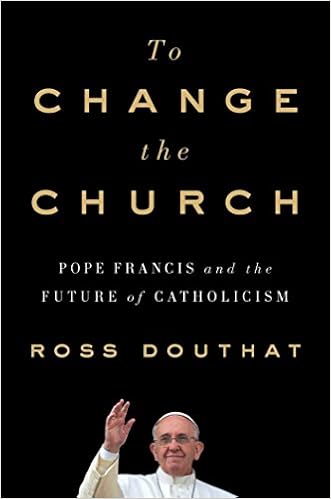
On a recent book review TV interview program called Q/A, Ross Douthat, author of To Change the Church, was asked about his own beliefs. He responded quite frankly that he was a Catholic. When asked why, Douthat replied that, as far as he could see, a divine intervention did take place in this world around the time and appearance of Christ. He added that the essence of this intervention has been best preserved down the subsequent ages by the Catholic Church. This sensible view is one that many Catholics would also accept as valid for them. Indeed, probably the best way to see this view of the divine intervention spelled out step by step is in Benedict’s Jesus of Nazareth. After reviewing most of the scholarly literature on this topic, Benedict concluded that the evidence seems to show that Christ was “who He said He was.”
But few are much concerned with the intellectual facts of the matter. Something else is going on. Not many really seem to worry about the truth of these issues, though that is where the real drama lies. Freely to assent to truth is the heart of what it means to be civilized. [Isn’t it interesting that libs try to force people to deny the truth in front of your face?] In a way, however, our culture is beyond truth. We make up our own universe. The Supreme Court tells us it is our “right.” Such a development, wherein we impose our ideas on reality rather than let reality instruct us about what it is, usually means to opt for one or other current fantasy or ideology that is custom-designed to explain away things that we choose not to accept, no matter what evidence can be given for them.

Many millions of words have now been written about the meaning of the Irish abortion vote, one foreshadowed by a similar change in Quebec decades ago. In both cases, areas that had been proudly Catholic for centuries, suddenly decided to ditch its tradition to join the secular world, its principles and practices. Such a radical change in these cultures had already taken place, just as Plato thought, in the souls of the citizens of these areas. From that viewpoint, the change was not so surprising. A human order is built on fidelity to tradition and principle. It is not immune to change as if it were a material object. Indeed, reasonable change is part of its stability.

Likewise, many Catholic churches, orphanages, hospitals, and schools in Europe and America are closed. Muslims are willing to move into these edifices if allowed to do so. [I know a concrete case like this in my native place.  What an outrage.] Many famous churches have long been national monuments or museums under government support. I read somewhere that, on visiting the churches in Dublin, the only people there were American tourists, often looking for their ancestors. While there are signs of life in various places in the Church, a survey of the whole, to be frank, is rather bleak. Whether Scripture or tradition gives us many grounds for expecting anything too much different is doubtful. Christ himself asked the disciples whether, on his return, they thought there would be faith on earth (Luke 18, 7-8). This passage is always a testimonial to the powers that are in constant opposition to what Christ put into the world.

In the past several years, I have perceived a noticeable loss of intellectual acumen that the Church gained with John Paul II and Benedict. Many are upset by this lack of depth, especially more recent converts who came into the Church with the help of the vigorous thinking we still see in these two popes. But the main reason for the decline of Church membership is the desire to be like others in modern society. Many want Catholic teaching to be viewed and interpreted through a modern lens. [The lib, modernist agenda: reduction of the supernatural to the natural, conformation to the world.]

We no longer speak of “heretics.” [Isn’t that the case??  Just try the word “heretic” and people run around with their hair on fire and spout virtue signals.] Heretics insist on staying in the Church so that they can change it from the inside. On the surface, everybody is nice, [But only on the surface.  Scratch a lib….] with a “right” to his own opinion. Nothing seems definite, precisely so that nothing binds. In the end, freedom of opinion ends up with everyone having mostly the same opinions, now politically enforced. Things that once seemed unchangeable are now changed or expected to change in the near future. The clergy and the bishops are not much help as they seem—to many at least—to betray the same symptoms.

II.

In the light of these comments, in spite of scandals and confusions in Rome, we still need to ask: “Why should we continue to be Catholic?” Much of the controversy that swirls around the Holy Father has, at its origin, the feeling that certain basic—once-thought non-negotiable—principles and practices have been denied or at least implicitly allowed to pass away. Under the aegis of finely tuned “mercy” and “discernment,” a method has been developed that would justify this accommodation of the Church to that modernity and its principles that everyone seems eager to embrace.

Recent remarks and decisions, often coming from Archbishop Luis Ladaria, the current Prefect of the Congregation of the Doctrine of Faith, however, have been more careful. We have seen a firm statement that women cannot be priests. The German formula for the interfaith communion at a wedding is set aside. A renewed interest in the centrality of doctrine appears in CDF documents. These are welcome signs. The dubia are still not answered. Good Catholics are still seen as rigid. The papacy often appears to act in the public eye like a political party of the left. Christianity is seen as a force to lead sundry crusades over ecology, poverty, or immigration. Such initiatives are difficult to square with good economics, science, and politics.

Not a few have also pointed out that an indirect papal input in the various pro-abortion and gay marriage votes in Ireland and Portugal occurred when Catholics were advised to deal with more “important” things. Their enemies, to give them credit, do not think these issues are among the lesser important things. Many wonder whether the Church does not now see itself as simply a this-worldly socio-political movement instrumental primarily in curing our temporal ills. The irony is that the methods recommended in these areas have almost invariably, when tried, made things worse. We do find considerable talk of sanctity and holiness but again this is often of an activist kind. The contemplative life, the life that is needed to keep our souls in touch with the transcendent, seems to be minimized.

III.

Let us ask again: “Why be, or continue to be, Catholic today?” The only sensible reason is that what the Church teaches is true to its immediate origin in the divinity itself. Has the Church on any major issue contradicted its own mandate? This is a delicate point. Only the Church believes that it is the sole deposit of this mandate.

In thinking about these things, I again take my cue from the “heretics” who refuse to leave the Church but stay in it to transform it, as they say, into their image of modernity. In the end, they can find no place else to go. They are already wrapped within modernity’s orbit. The effort from within to transform Christianity into modernity, to align its basic premises with those of the modern world, seems like a plausible, shrewd tactic. Many have already made this transition.

The Catholics who remain in the Church because the Church is consistent over time with its founding often find themselves perplexed. Practically no one is excommunicated for holding any position associated with modernity. They see people, in apparent good standing, continuing in the Church who accept and practice most of the aberrations of modern social living. Indeed, it seems like we find two Churches holding contradictory views within the same Church. The division liberal/conservative is practically useless as a way to understand the difference. The issue is a matter of truth, not interpretation.

To many, both inside and outside the Church, there seems to be much ecclesiastical confusion. Upsetting new interpretations constantly appear. Previously, many considered the Church wrong, but no one thought it did not hold or articulate what it affirmed on basic points of practice and doctrine. The primary argument that the Church teaches the same things over time does not seem valid for many any longer. [This is the position of Kasper and Co., who have replaced philosophy with politics.  Over time the truth can change.] The same things do not seem to be taught and affirmed in its many dioceses, schools, seminaries, and institutions. Various attempts have been made to explain how the Church can be both loyal to its tradition and, without contradiction, accept the basic premises of modernity.

For instance, Jesus was said in his time to look at current events and see what needed to be changed. So he changed them according to what was needed at the time. “Loyalty” to tradition thus means doing the same for our time. First we do what needs to be done; then we can develop a theory to justify it. The word “discernment” has come to mean the ability to see almost directly into temporary things or situations the action of the Holy Spirit. On the basis of what we think we discern, we can act with confidence that we are not following our own wills but that of the Holy Spirit[Note how libs talk about the “spirit-filled church” over and against the “institutional” Church.]

Or we can say that we do not know exactly what Jesus said or did[Like a certain head of the Jesuits, who cast doubt on just about every word of Christ because they didn’t have tape recorders back then.] He really did not lay down basic principles that needed to be maintained over time to protect the authenticity of his teaching and revelation. He was merciful and compassionate. The best we can do is to read the “signs of the times” and accommodate ourselves to where the Spirit is leading all men into the future. This approach would allow us to put aside our “absolutes” and embrace the pastoral changes that the culture has already put into place.

However plausible these positions may seem, if indeed they do seem plausible, they clearly avoid facing the central issue of whether a definite revelation in Christ was to be maintained for the human good down the ages in spite of persecution, disagreement, and other cultural conditions in other places and times.

Can we continue to be Catholic today? Only if one thing remains true and upheld. Only if the same teachings and practices that were handed down and guaranteed down the ages remain the basis of what the Church is. This revelation in all its ramifications is what best explains human meaning and destiny. If the substance of this revelation is not upheld, the question is no longer a merely human problem of loyalty to a tradition. It is the breakdown of revelation itself since it is no longer credible on its own terms. The guarantee of Christ is to be with us till the end, with the central teachings and practices of his life at the center. If this content and sequence is not maintained in a living way, in a thoroughly nuanced but plain way, we really have no reason still to be Catholic.

What is unusual about our time is not opposition to or rejection of the truth of this revelation. Adversaries have been found in every era. What is new is the worry that radical changes have been made in an official way that would cause us to doubt the integrity of the original revelation. At least some of us can still affirm with Douthat that a divine intervention did take place in Christ and that it is best preserved in the Catholic Church. The same intervention also gives us the criterion for judging when it is itself not credible—namely when the Church as guardian of revelation clearly changes its own truths and does not uphold them before the nations down the ages. This is why contemporary writers like Douthat carefully watch for changes that take place in Roman. [sic – that’s how it ends.  It could be “… in Rome.”]

Fr. Z kudos to Fr. Schall for this sober and sobering comment.

It seems appropriate also to post a reminder about a recent book by Peter Kreeft.

Forty Reasons I Am A Catholic

US HERE – UK HERE

Posted in Hard-Identity Catholicism, Our Catholic Identity, The Drill, The future and our choices | Tagged , ,
6 Comments

“Perdonamose!” Midsummer Snails, John’s Birthday Feast and You.

UPDATE:

Thanks for “snail money” as JP called it, and to: GG

___

Your planet once again is whirling its way towards your solstices, Summer in the North and Winter in the South.  Since the emphasis in Western Civilization has been northern, I’ll stick with that.

In the Northern Hemisphere the June solstice is the day with the most daylight and the shortest night.  It falls every year between 20-22 June, this year on 21 June (05:07 CDT – 10:07 UTC).  This solstice marks the end of Spring and the beginning of Summer (as if we weren’t already getting 90ºF days and +100ºF  heat indices).

On Holy Church’s calendar we celebrate the Vigil of John the Baptist on Saturday, 23 June and the Feast of his Birth on Sunday, 24 June.  Surely the reason we celebrate John near the solstice is because He said “He must increase, I must decrease”, and the ancients knew that at this time of year the length of days began to decrease.

There are lots of fine traditions from different cultures which you might incorporate into your own observances.   I post this some days in advance so that you can prepare.

First, consider having a bonfire (and cookout) on Saturday, the Vigil of the Nativity of the Baptist.  Invite your priests!  There is a special blessing in Rituale Romanum for fires on the Vigil.  After the usual introduction, the priest blesses the fire saying:

Lord God, almighty Father, the light that never fails and the source of all light, sanctify + this new fire, and grant that after the darkness of this life we may come unsullied to you who are light eternal; through Christ our Lord. All: Amen.

At this point the fire is sprinkled with holy water and everyone sings the hymn Ut quaent laxis which is also the Vespers hymn.  I have more about that beautiful – and historically important hymn – HERE.  You might practice the hymn and sing it.

In some places the bonfire is used for the burning of witches… in effigy.  That could be fun.  The witch connection probably comes from the fact that the satanically inclined or possessed hold the solstice as one of their important annual moments for their vile rites.

Also, I recommend the eating of snails.  This is very Roman. 

Romans traditionally eat snail of the Feast of John the Baptist, and so should you.

If you call yourself a traditional Roman Catholic…well… there’s no excuse.

Also, there is a witch connection with the snails and what Romans ate.

Romans would gather certain plants that were mature by this point, such as what we call St. John’s Wort, along with onions and garlic, which they thought drove off witches and demons.

Near St. John Lateran (named after both the Baptist and Evangelist) there was a little hill Monte Cipollario or “Onion Hill” that was eventually razed in the time of  Papa Lambertini – Benedict XIV.  It seems that lots of onions and garlic were cultivate in that zone.    In any event, the Romans gathered at St. John’s and ate lumache al sugo and greeted each other with the Roman dialect “Perdonamose!” (from “perdono… forgiveness”), a sort of way of mutual apologies and peacemaking.  It may be that the eating of snails comes from the fact, first, that at this time of year there are a lot of them and, next, they have horns, which could have symbolized discord and strife.  Hence, eating them did away with strife and promoted reconciliation.  “Perdonamose!”

To make and mess of lumache al sugo alla romana (aka ‘na ciumacata), you need well-purged snails, of course, along with tomatoes, olive oil, hot red pepper, onion, garlic, (preferably wild) fennel and/or mint. A couple versions I saw included anchovy.  Make your sauce and then add the snails, cook for a while, and serve hot with good bread.  This one is instructive.  So is this. For wine …. why get fancy?  Stick with cold Frascati or another dry white from the Castelli Romani – even Velletri!

If you can’t get your hands on some snails, or enough snails, there’s always THIS… for lots of fun and conversation.   I am not making this up…

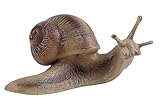
EDIBLE SNAIL ACTION FIGURE!

US HERE – UK HERE… nope, sorry!

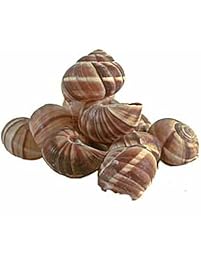
Meanwhile get your canned or jarred snails and start planing: US HERE – UK HERE… nope, sorry again!

Finally, I sure would like to make some snails.  Perhaps some of you readers could pitch in with a small donation?  HERE

Click!

Posted in Fr. Z's Kitchen, SESSIUNCULA | Tagged , ,
4 Comments

Fr. Z’s Kitchen: The South

It has been awhile since I’ve cooked something interesting for myself. After my trip a few months ago which included Sicily, I’ve had a hankering for Pasta alla Norma. Today I saw that my DVR had picked up the Met’s broadcast of Norma, after which the pasta was names. I figured that was the signal, so I gathered my ingredients and did it.

Always use short pasta.  I made a simple tomato sauce from San Marzano and fried eggplant.  Use ricotta salata and fresh basil.  This is a really easy one.   Always fry the eggplant in olive oil, don’t grill.  I think this is best with a base of garlic in the sauce rather than onion (pick one or the other and don’t burn garlic).

For my second, I opted for scaloppine al limone e vino bianco… again with the south and the lemons, though this isn’t so much a southern thing.

After pounding out the scaloppine, flouring it, and giving it proper color in the butter, I put them aside and deglazed with lemon juice and white wine, adding a touch of thyme and a couple little threads of saffron.

VERY seedy lemon.  I had to sort that out.

Since

UPDATE Monday 18 June:

Since I was in the mood, I threw together a pizza.  I had a pre-made crust.  I like pizza super thin and crispy.  Sauce: I had made before.  Cheese: a combination of what I had on hand.  With a sprinkling of thyme and lots of fresh basil = Lunch.

Posted in Fr. Z's Kitchen | Tagged , ,
5 Comments

Pres. Trump and the Brown Scapular

This is really interesting.  HERE

The Governor of Guam, gave Pres. Trump a brown scapular for the First Lady.  And he talks about a statue of Our Lady of Fatima.


Posted in Just Too Cool | Tagged ,
4 Comments

Your Sunday Sermon Notes

Was there a good point made in the sermon you heard at your Mass of Sunday obligation?

Let us know what it was.

Posted in SESSIUNCULA |
8 Comments

Surprise article at Commonweal about participation in the Traditional Latin Mass

There was a surprise at Commonweal, which generally leans left and against Tradition. It is about a week old, but I missed it: I don’t real Commonweal unless I can’t avoid it.

It starts out with an off-putting reference to the disastrous Silence by Shusaku Endo, but it improves. The writer juxtaposes it with the silence of the traditional Roman Rite.

Silent Grace
Finding Peace in the Latin Mass
By Michael Wright

[…]

There was never silence or stillness at Mass for me growing up. I was, and am, afflicted with attention deficit disorder. For a long time, my family worshipped in the gym of the local Catholic school, crammed into folding chairs, kneeling, standing, and watching Father Joe turn purple during a homily on compassion. For me, Mass was a test of endurance. I could never find the peace the nuns told us about in CCD. Although I’d learned what each part of the Mass meant, I couldn’t linger on what was happening in front of me. I raced ahead in the missalette, willing the priest to speak as fast as I read. My restlessness never left enough room for grace to find its way in.

[…]

Then, three or four years ago, on a whim, I attended Latin Mass at St. Mary’s Cathedral in Austin, Texas. Just a block from the State Capitol, St. Mary’s is modest, with bare wood pews and a sanctuary set back from the congregation. I paged through a blue book that had Latin text on one page and English text on the facing page, with stage directions and illustrations in the margins.

Despite Catholic school and all that CCD, I didn’t realize until then the Novus ordo wasn’t just a straight translation. The Latin readings confused me; I couldn’t tell, for example, just when the transubstantiation was occurring. But I knew without looking at the translation when we were saying “Lamb of God” and the Lord’s Prayer. I watched these strange ways of doing familiar things. The priest faced away from us. We knelt to take communion on the tongue. All the altar servers were male. I bowed at the priest during the recessional, incense still in my nostrils. Then I did something I’d never done after Mass. I sat in a pew, and I felt it: peace.

[…]

He goes on to talk about his life, the older Mass, and even critiques a little the likes of that mass constructor of straw-men of Mass destruction, Massimo “Beans” Faggioli.

And then…

[…]

But the Latin Mass has a place for me. I don’t think it’s the future of the church, even though [!] I’ve noticed the pews are filled with fellow Gen X-ers and their children. (My nine-year-old daughter has been to more Latin Masses than English.) The English Mass is too easy; the unfamiliarity of the Latin Mass requires me to quiet my mind, to focus, to attend to my faith in a way that Mass in English does not. It isn’t a refuge from a changing world, but a base from which to engage it. My faith is not certain, and my doubt leads to questions. The Latin Mass welcomes me into the silence that allows me to seek the answers.

Interesting, no?

I applaud his honesty.

His observation that “the English Mass is too easy” hits several nails on the head all at once. Frankly, in no way to people benefit from futile attempts to make what is really hard, Mystery, easy, even simplistic.

The author observes that the people who attend “the Latin Mass” where he goes, “seem to be a community with a community” and that they want a parish of their own.

I often write about the importance of being involved in the whole life of the parish where the TLM is celebrated. On the other hand… I fully understand that people who have what Pope St. John Paul called “legitimate aspirations” should want a parish where they can have the whole package, where they have consistency without being made to feel like second class citizens. It is understandable that they would want to have a parish where the Mass they desire, quite rightly, to attend isn’t relegated to the edges of Sundays. They would prefer to have all the sacraments according to the older rites, including, for example, absolution in the confessional. They would like to have traditional devotions that don’t have to be rediscovered piecemeal.

At times I have written (i.e., whined a little) about those who prefer the older forms and who disappear between Sundays.

On the other hand, even factoring in the fact that people are busy, and sometimes live at quite a distance from the church where they have the older Mass, I am also cognizant of the legitimate aspirations that they have and also suffer with.

Moving on, the writer observes that the pews are filled with young families.  I observe that recent research suggests that there will be traumatic consequences for church attendance in the next few years because the majority of young people don’t identify with any religion.   Moreover, large numbers of priests will exit active ministry one way or another.  On the other hand, traditional groups of priests are growing and young people are filling pews at traditional Masses.

Where tradition is tried, it seems to work.

The future?

Posted in Hard-Identity Catholicism, Our Catholic Identity, The Coming Storm, The Drill, The future and our choices | Tagged ,
19 Comments