“the worthy deeds and prayers of thy blessed martyr George”

Here is a piece I wrote for the UK’s best Catholic weekly’s print edition of the Catholic Herald:

Last week in Los Angeles I visited the great Getty Museum.  My attention was arrested by a 16th century Italian oil on panel by Dosso Dossi.  A man in armour with a subtle halo, Christ-like hair and beard, clutches a broken spear with his white-knuckled hand.  Below and before him he holds the head of a lizard bird beast.  Above, a faint rainbow emerges.  The man’s face is a masterwork of conflicting forces: fatigue, triumph, sorrow, determination.  It was one of the most interesting paintings of the martyr St George and the Dragon that I have ever seen.

This coming week brings St George’s Feast, celebrated with solemnity as England’s Patron.  His blood red Cross is emblazoned across the Union Flag.   George, as the tale goes, was one of those soldier saints who, when he refused to recant his Christian Faith, was put to death perhaps in AD 303 during the reign of the Emperor Diocletian.  His cult was deep and widespread. He was numbered among the Fourteen “Holy Helper Saints” and was invoked against the Black Death for the health of domestic animals. His skull is venerated in the Roman Minor Basilica of San Giorgio in Velabro which once had Bl John Henry Newman for a titular cardinal.

Speaking of dragons, the saint is most often depicted in the act of slaying one.  There is little evidence of non-metaphorical dragons roaming about in the 4th century. Perhaps it was a journalist? Nevertheless, the image of St George, having captured our forebears’ minds and hearts, produced countless works of devotional art across many centuries.  The kernel of the story is in the Legenda Aureaor Golden Legend of Jacobus de Voragine (d1298). Once upon a time, a venom-spewing dragon which demanded human sacrifice (as they do) plagued a town in Libya where George happened to be trotting.  George declared that if they professed belief in Christ he would save the king’s daughter who had just been lead away as basilisk bait.  Our saint speared the devilish critter, chopped off its head with his sword, saved the girl and, thence, a spring of disease-curing water sprang forth. The king subsequently built a church there in honor the Blessed Virgin and the saintly dragon-slayer.

At some point, we all must face the dragon.  Christians strive for victory in sorrow and great fatigue, battered but determined, even when our spears have shattered.

Posted in SESSIUNCULA | Tagged , ,
7 Comments

WDTPRS 3rd Sunday after Easter (TLM): Be distinguished by your profession of Christ!

In the midst of chaos, we need to bring our minds to work at hand, our work of sacred liturgy, the renewal of which is our only hope for true revitalization of the Church.

This Sunday’s Collect survived the knives of the liturgical experts and was inserted into the 1970 Missale Romanum on the 15th Sunday of Ordinary Time. The redactors who glued the Novus Ordo together, however, removed the word iustitiae, thus returning it to the form it had in the ancient Gelasian Sacramentary. Other ancient sacramentaries, such as the Liber sacramentorum Gellonensis as well as the Augustodunensis had the iustitiae. In any event, by the time St. Pius V issued the the Missale Romanum of 1570, which I am sure you have on hand, someone had seen fit to make it read, “in viam possint redire iustitiae”, which endured until the 1970MR and subsequent editions.

COLLECT (1962MR):

Deus, qui errantibus, ut in viam possint redire iustitiae, veritatis tuae lumen ostendis, da cunctis qui christiana professione censentur, et illa respuere, quae huic inimica sunt nomini, et ea quae sunt apta sectari.

Stylistically snappy! It has nice alliteration and a powerful rhythm in the last line.

I think there is a trace here of John 14, which I will show you below. Can we also find a connection between this Collect in a phrase from the Roman statesman Cassiodorus (+c. 585 – consul in 514 and then Boethius’ successor as magister officiorum under the Ostrogothic King Theodoric)? Cassiodorus wrote, “Sed potest aliquis et in via peccatorum esse et ad viam iterum redire iustitiae? … But can someone be both in the way of sins and also return again to the way of justice?” (cf. Exp. Ps. 13).

Is this prayer old enough to have been known by Milan’s mighty Bishop St. Ambrose (+397) or even St. Augustine of Hippo (+430), who use similar patterns of words?

Your thorough Lewis & Short Dictionary says censeo has a special construction: censeo, censeri aliqua re, meaning “to be appreciated, distinguished, celebrated for some quality”, “to be known by something.” This explains the passive form in our Collect with the ablative christiana professione. Getting christiana professio into English requires some fancy footwork. We could say “Christian profession”, but this adjectival construction really means “profession of Christ.” This same thing happens in phrases such as oratio dominica, “the Lordly Prayer”, or more smoothly “the Lord’s Prayer”.

Via means, “a way, method, mode, manner, fashion, etc., of doing any thing, course”. There is a moral content to via as well, “the right way, the true method, mode, or manner”.

Let’s see what people used to hear in church on the 15th Sunday of Ordinary Time in the…

OBSOLETE ICEL (1973):

God our Father,
your light of truth
guides us to the way of Christ.
May all who follow him
reject what is contrary to the gospel.

And now, ….

LITERAL RENDERING:

O God, who do show the light of Your truth to the erring so that they might be able to return unto the way of justice, grant to all who are distinguished by their profession of Christ that they may both strongly reject those things which are inimical to this name of Christian and follow eagerly the things which are suited to it.

CURRENT ICEL (2011):

O God, who show the light of your truth
to those who go astray,
so that they may return to the right path,
give all who for the faith they profess
are accounted Christians
the grace to reject whatever is contrary to the name of Christ
and to strive after all that does it honor.

Ancient philosophers (the word comes from Greek for “lover of wisdom”) would walk about in public in their sandals and draped toga-like robes. Thinkers such as Aristotle were called “Peripatetics” from their practice of walking about (Greek peripatein) under covered walkways of the Lyceum in Athens (Greek peripatos) while teaching. Their disciples would swarm around them, hanging on their words, debating with them, learning how to think and reason. They would discuss the deeper questions the human mind and heart inevitably faces. They were effectively theologians. We must be careful not to impose the modern divorce of philosophy from theology on the ancients. In ancient Christian mosaics Christ is sometimes depicted wearing a philosopher’s robes. But He doesn’t merely love Wisdom, He is Wisdom incarnate, the perfect Teacher!

He is the one from whom we learn about God and about ourselves (cf. Gaudium et spes 22 – which the young Pope John Paul II helped to write during the Council).

The Collect also reminds me of the very first lines of the Divine Comedy by the exiled Florentine poet Dante Alighieri (+1321) who was heavily influenced by Aristotle’s Ethics and the Christianized Platonic philosophy mediated through Boethius (+525) and St. Thomas Aquinas (+1274). The Inferno begins:

Midway in the journey of our life
I came to myself in a dark wood,
for the straight way was lost.
Ah, how hard it is to tell
the nature of that wood, savage, dense, and harsh –
the very thought of it renews my fear!
It is so bitter death is hardly more so.

Dante, the protagonist of his own poem, is describing his fictional self. In his poetic persona, Dante is in the middle of his life (35 years old – half of 70, the number of years mentioned as man’s span in Ps. 90:10). He is mired in sin and irrational behavior, having strayed from the straight path of the life of reason: he is in the “dark wood”.

The life of persistent sin is a life without true reason. Human reason, when left to itself without the light of grace, is crippled.

Dante likens his confused state to death. He must journey through hell and the purification of purgatory in order to come back to the life of virtue and reason. In the course of the three-part Comedy the Poet finds the proper road back to light, Truth and reason through the intercession of Christ-like figures, such as Beatrice, and then through Christ Himself. In the Comedy, Dante recovers the use of reason. His whole person is reintegrated through the light of Truth.

Don’t we often describe people who are ignorant, confused or obtuse as “wandering around in the dark”?

This applies also to persistent sinners. By their choices and resistance to God’s grace they have lost the light of Truth. God’s grace makes it possible for us to find our way back into the right path, no matter how far from it we have strayed in the past. When we sin, we break our relationship with Christ. If in laziness we should refuse to know Him better (every day), we lose sight of ourselves and our neighbor.

Christ, the incarnate Word, gives us consolation:

“‘Let not your hearts be troubled; believe in God, believe also in me. In my Father’s house are many rooms; if it were not so, would I have told you that I go to prepare a place for you? And when I go and prepare a place for you, I will come again and will take you to myself, that where I am you may be also. And you know the way (via) where I am going.’ Thomas said to him, ‘Lord, we do not know where you are going; how can we know the way (via)?’ Jesus said to him, ‘I am the way (via), and the truth (veritas), and the life (vita); no one comes to the Father, but by me. If you had known me, you would have known my Father also; henceforth you know him and have seen him…. He who has seen me has seen the Father’” (cf. John 14:1-6 RSV).

We Catholics, who dare – DARE – publicly to take Christ’s name to ourselves, need to stand up and be counted (censentur)!

In what we say and do other people ought to be able to see Christ’s light reflected and focused in the details of our individual vocations. To be good lenses and reflectors of Christ’s light, we must be clean. When we know ourselves not to be so, we are obliged as soon as possible to seek cleansing so that we can be saved and be of benefit for the salvation of others. We must also practice spiritual works of mercy, bringing the light of truth to the ignorant or those who persist in darkness either through their own fault or no fault of their own.

Every Catholic is called to evangelize, if not in an “official” capacity in the Church’s name, at least through the obligation we have as members of Christ’s Body the Church.

Evangelization and the efforts of ecumenism are an obligation for every Catholic.  There are still people living in darkness. We must “preach” always and, as the phrase often attributed to St. Francis of Assisi says, sometimes use words.

When people look at us and listen to us, do they see a light-extinguishing black hole where a beautiful image of God should be?

Posted in SESSIUNCULA |
2 Comments

Your Sunday Sermon Notes

Was there a good point made in the sermon you heard at your Mass of Sunday Obligation?   Let us know.

I’m with a pilgrimage group in S. Italy and we are having the TLM all through.  Today, very briefly indeed, I commented with some irony on the admonition in the 1st letter of Peter about the “carnal desires” in relation to the spectacular food and the amazing sensory things we are enjoying.  Then I shifted into the word “apta” in the Collect in relation to our “Christiana professione“, rejecting (respuere) whatever is against who we are known to be by our identity.


Posted in SESSIUNCULA |
11 Comments

Felix Natalis Dies Roma!

Today is the 2771 Birthday of Rome. Happy birthday!

The Great Roman Fabrizio™ shared his quintessential, virtuous Roman repast: fave, pecorino, vino bianco.  It doesn’t get more Roman than that.

On the other hand, I arrived at Roma today to scoot southward down the Via Appia.  I am in Basilicata, or Lucania.

We have orange and jasmine and a little fountain.

Here is the famous portable altar made by St. Joseph’s Apprentice, along with elements of the famous silk travel vestments, which a few of you elite readers helped to purchase.

So, we had Mass…

… and supper, and now serious CRASH.

Tomorrow, I must write an article for the paper sometime between breakfast, Mass and going to Lecce.

For a fascinating read about the guy who figured out the date of the Birthday of Rome: HERE

And because I usually post a food photo today… here’s some goat!

Yes, the sauce is made from goat.

An afternoon drink!

Yes, that’s rosemary.   Lot’s of cracked ice, tonic, lime juice, lemon, basil leaves.

The pizza oven is ready.

Remember.  The pizza oven is NOT as hot as Hell.

GO TO CONFESSION!

Posted in Just Too Cool, On the road, SESSIUNCULA, What Fr. Z is up to | Tagged ,
12 Comments

My View For Awhile: Mezzogiorno Edition

I’m heading out on an adventure as chaplain to a pro-life pilgrimage group which will travel in S. Italy, where I have never been: Puglia, Calabria, Sicily with some time in Naples and, on my own, a few days in Rome at the end.

I’m hoping for good connectivity along the way.

May I ask for prayers for the safety of all who are traveling and for a successful journey for all.

UPDATE

Do you have one of these for your inflight power with your phone?

You should have one. Use the amazon search box on the side bar.

Posted in On the road, What Fr. Z is up to |
11 Comments

20 April 2007 – Msgr. Richard Schuler – RIP

Today is the anniversary of the death of Msgr. Richard Schuler, a well-known Church musician and pastor for many years of the Church of St. Agnes in St. Paul, MN.

This was a man who fought the good fight, in hard years, for sacred Church music and excellence in liturgy.  In his 33 years as pastor of St. Agnes, there were some 30 First Masses offered.

Papa Ratzinger knew Msgr. Schuler well, and Schuler was a friend of the Holy Father’s brother Msgr. Georg Ratzinger, who himself was a great Church musician in his day.

Card. Ratzinger would often express interest to me when I would run into him at the Palazzo Sant’Uffizio, where I worked for some years, about the music program at St. Agnes and ask about Msgr. Schuler.  Each year I would give him a program of the sacred music at St. Agnes and he always immediately looked through it with comments, “Theresienmesse… I like that one”, and so forth through the whole year.

When I heard that Msgr. Schuler had died, I sent a note to Msgr. Gänswein (now Archbishop), the personal secretary to His Holiness, asking him to inform the Pope.  I requested that Pope Benedict send a telegram, if he deemed it opportune.  His Holiness sent a telegram to St. Agnes parish in St. Paul in time for Monsignor’s Requiem (Mozart) wherein it was read to the congregation.

How many parish priests get for their funerals a telegram from the Pope?

Perhaps in your charity you would stop and say a prayer for the repose of his soul.

Also, I had made a PODCAzT in which I talk about him sometime ago.  A great many people owe him a great deal.  I trust that God has been merciful to him and that he now enjoys the heavenly choirs.

PODCAzT 21: Leo the Great on Peter – Msgr. Schuler

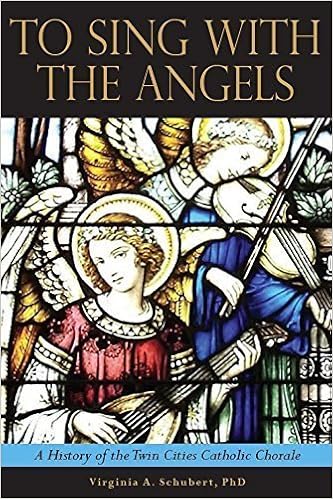
There’s a book of essays (Festschrift) in his honor.  Cum Angelis Canere.

And there…  To Sing With The Angels

Posted in Linking Back, PRAYER REQUEST | Tagged
7 Comments

19 April 2005: Benedict XVI elected

Today, 19 April, is the 13th anniversary of the election of Benedict XVI.

I’ll bet you remember where you were.

How time flies.

I was with FoxNews at the time.  Here’s the coverage…

YouTube thumbnailYouTube icon

Posted in Benedict XVI, Linking Back | Tagged
30 Comments

“And Paul VI wept”. More fascinating notes about the Pope and the liturgical reform.

Today, Sandro Magistero offers some information about Paul VI’s true attitude about the liturgical reform sparked by “experts” such as Annibale Bugnini well before the Council, during the Liturgical Movement, and carried out through and after the Council by the same.

Bugnini undertook a furious and relentless jihad against the Sacred Congregation for Rites after the Congregation gave him the heave-ho from his professorship on account of his goofy ideas.  With great guile, Bugnini figured out a way to use the authority of the Council to bludgeon the Congregation and obtain his aims, among which was the diffusion of power away from the Congregation.  Also, those experts were dead set to reform the whole of the Church through reform of the liturgy.

In a book over the signature of Bugnini’s secretary, later papal MC and now Archbp. Piero Marini A Challenging Reformwe read of the marvelous work of the Consilium of its head Card. Lercaro and Bugnini.  Get this. Context: The Consilium has just taken a major step in moving from an informally meeting group to an officially and formally established body.  They have their first plenary session.

“They met in public to begin one of the greatest liturgical reforms in the history of the Western church.  Unlike the reform after Trent, it was all the greater because it also dealt with doctrine.”  (p. 46)

They succeeded.  The work of the Consilium, in revising the Missale Romanum, did indeed change the Church’s doctrine. Change the way you pray and you change what you believe… and vice versa.

In any event, what about the role of Pope Paul VI?  He did a lot of this, right?

Magister reports that there is a new book which explores something of Paul’s attitude about the liturgical reform which draws on the diaries of the late Archbp. Virgilio Noè, papal MC from 1970-82.

Thus Sandro… my emphases:

[…]

In reality, between Paul VI and the reform that was taking shape little by little there was not that affinity for which the critics rebuke him.

On the contrary, it was not unusual for Paul VI to suffer on account of what he saw taking place, which was the opposite of his liturgical culture, his sensibility, the spirit in which he himself celebrated.

There is a brief book published in recent days that sheds new light precisely on this personal suffering of pope Giovanni Battista Montini over of a liturgical reform that in many ways he did not condone[But permitted and signed off on.]

Paolo VI. Una storia minima,” edited by Leonardo Sapienza, Edizioni VivereIn, Monopoli, 2018.

In this book Monsignor Sapienza – who has been regent of the prefecture of the papal household since 2012 – collects various pages of the “Diaries” compiled by the master of pontifical celebrations under Paul VI, Virgilio Noè (1922-2011), who became a cardinal in 1991.

With these “Diaries,” Noè carried on a tradition that dates back to the “Liber Notarum” of the German Johannes Burckardt, master of ceremonies for Alexander VI. In his account of every celebration, Noè also recorded everything that Paul VI said to him before and after the ceremony, including his comments on some of the innovations of the liturgical reform that he had experienced for the first time on that occasion.

For example, on June 3, 1971, after the Mass for the commemoration of the death of John XXIII, Paul VI commented:

How on earth in the liturgy for the dead should there be no more mention of sin and expiation? [!] There is a complete absence of imploring the Lord’s mercy. This morning too, for the Mass celebrated in the [Vatican] tombs, although the texts were beautiful they were still lacking in the sense of sin and the sense of mercy. But we need this! And when my final hour comes, ask for mercy for me from the Lord, because I have such need of it!”

And again in 1975, after another Mass in memory of John XXIII:

“Of course, in this liturgy are absent the great themes of death, of judgment….”

The reference is not explicit, but Paul VI was here lamenting, among other things, the removal from the liturgy for the deceased of the grandiose sequence “Dies irae,” which in effect is no longer recited or sung in the Mass today, but survives only in concerts, as composed by Mozart, Verdi, and other musicians.

Another time, on April 10, 1971, at the end of the reformed Easter Vigil, Paul VI commented:

“Of course, the new liturgy has greatly streamlined the symbology. But the exaggerated simplification has removed elements that used to have quite a hold on the mindset of the faithful.”

And he asked his master of ceremonies: [NB] “Is this Easter Vigil liturgy definitive?”

To which Noè replied: “Yes, Holy Father, the liturgical books have already been printed.”

But could a few things still be changed?” the pope insisted, evidently not satisfied.  [Sigh.]

Another time, on September 24, 1972, Paul VI replied to his personal secretary, Pasquale Macchi, who was complaining about how long it took to sing the “Credo”:

“But there must be some island on which everyone can be together: for example, the ‘Credo,’ the ‘Pater noster’ in Gregorian….” [As Sacrosanctum Concilium wanted!]

On May 18, 1975, after noting more than once that during the distribution of communion, in the basilica or in Saint Peter’s Square, there were some who passed the consecrated host from hand to hand, Paul VI commented:

“The Eucharistic bread cannot be treated with such liberty! The faithful, in these cases, are behaving like.. infidels!”

Before every Mass, while he was putting on the sacred vestments, Paul VI continued to recite the prayers stipulated in the ancient missal “cum sacerdos induitur sacerdotalibus paramentis,” even after they had been abolished. And one day, September 24, 1972, he smiled and asked Noè: “Is it forbidden to recite these prayers while one puts on the vestments?”

“No, Holy Father, they may be recited, if desired,” the master of ceremonies replied.

And the pope: “But these prayers can no longer be found in any book: even in the sacristy the cards are no longer there… So they will be lost!

[…]

You will remember the story – of which I was the origin in these interwebs – of the shock and sorrow of Paul VI on Pentecost Monday, when he found green vestments laid out for Mass.

Do look at this – HERE

I recount that story and add some other information about Paul and reform, including some old PODCAzTs about his words when the Novus Ordo was implemented.  Shocking and sad.

Remember BUGNINICARE!

Posted in SESSIUNCULA | Tagged , , ,
26 Comments

Wherein Fr. Z rants about the Church as “field hospital”. Brutal horror, heroic wonder.

In his preaching and writings, St. Augustine of Hippo (+430) frequently presents Christ as Medicus, or doctor/physician of the soul. Christ heals the ills of man brought upon ourselves by sin. This is hardly a surprise, given that in the Gospels Christ conspicuously heals people and forgives their sins.

Christian polemicists before Augustine dealt with the pagan attacks on the faith through their claims about the healer god Aesclepius.

St. Ambrose, to whom Augustine listened with fixed attention, referred to Christ as the Physician in whom we find shelter, whose grace is medicine. For Jerome, Christ is verus medicus, solus medicus, ipse et medicus et medicamentum. He is the true healer and medicine, as opposed to the false.

In his Ennarationes in psalmos 35, Augustine has a stark image of the process of healing which the sinner undergoes under the ministrations of the True Doctor.  Keep in mind ancient medicine, which didn’t have anesthesia, etc.

For a Physician He was (medicus enim erat), and to cure the insane patient He had come.  Just as a human physician does not care whatever insulting remarks he may hear from an insane patient, [not necessarily “crazy”, but, “sick”] but how the mad person recover and become sane; nor even if he receive a blow from the insane patient does he care, but while the mad person inflict new wounds upon him, he cures the patient’s old fever: so also the Lord came to the sick man, came to the mad man to pay no heed to whatever He may hear, to whatever he may suffer, by this very example teaching us humility that, being taught humility, we might be healed from pride.

You’ve seen scenes in movies and read in books about how the wounded in wars would scream and beg as the doctor in the field hospital or the below decks on the ship prepared to saw off a limb ruined beyond saving.

Before Augustine, Tertullian in Ad scorpiacem also uses the image of a doctor being cruel to be kind.  Defending the moral value of Christian martyrdom against the errors and attacks of the Gnostics, Tertullian writes that God only seems to be cruel when He cuts and cauterizes.  He says in Adversus Marcionem 3 that it is wrong to find fault with God’s ways of healing sin, just as it is wrong to fault the cauterizing iron, the blade, the saw.

And for those of you who are timid in confessing some embarrassing sins, Tertullian describes in De paenitentia 10 how some people die because they hesitate to reveal a problem with their more private areas.

In a nutshell, the patient has to reveal the truth before the healing can begin and the doctor doesn’t stop cutting just because the patient is screaming at him to stop.

These days there is some talk again about the image that Pope Francis used for the Church.  For example, a new article in First Things brings it up.   Francis described the Church as being like a “field hospital after battle”.   BTW… Professor of Divisive catholic Studies at Villanova, Massimo “Beans” Faggioli weaponized that article in order to widen the gap even more:

Sad. No?  Did that really help?  I guess it depends on what you are trying to accomplish.  The bread of his buttering seems to be precisely in the conflict he is stirring.

Of course the Holy Father is exactly right!   “Field hospital” is a great image for the Church, even though it isn’t terribly original.  As a matter of fact, Pauline Phillips (aka Abigail van Buren, aka Dear Abby) quipped that, “A church is hospital for sinners, not a museum for saints.”  And we have seen that the medical image is nothing new in Christian thought.  No matter.  It can be brought back out and made available, as the master of the household’s things both old and new.

But let’s now think about a field hospital.

For natural disasters and for battlefields alike field hospitals are set up.  These are temporary places (while the Church is enduring).  Many wounded, not all wounded, are admitted.  A process of triage takes place either outside or just inside, to determine the likely prognosis before time and effort is applied in sometimes frenzied conditions.  Triage is rather cold-blooded when it is going on, though afterward it is heart-rending for the doctors who perform it.  They’re task is to determine the truth of the patient’s condition in the here and now, with an eye on future recovery, resources, etc.  They have to be realistic.

Inside the field hospital, there’s a lot of screaming.  In modern times, the screaming is a bit reduced because of modern drugs, etc.

It doesn’t smell very good.  The combination of charred flesh, burnt clothing, blood, bowel, fear combine for … an intense experience.

Some people have to be patched up so they can be sent along to a better facility.  That’s the point of a field hospital.  After the medic in the field, it’s only the first stop.   Patch the guy up here, get him stable, move him to a better facility.

Medic, field hospital, trauma center, rehab facility, counseling, etc. We have a continuum of care for the wounded.

The brutal stuff happens in each of these places, medic in the field, field hospital, trauma center, rehab gym, counseling, with as much compassion as possible, but not at the expense of the truth.

And of course, at a field hospital some people have to kept as comfortable as possible because they are, in fact, not going to make it.

People die in field hospitals.  It a fantasy that everyone makes it out alive and intact.

Is the Church like a “field hospital”?  Yes.

AND … not everyone in the Church will, in fact, be saved.  Nor is their contact with the Church always going to be daisies and sunshine.

Where the analogy breaks down, and all analogies break down, is that whereas the patient often has no control over his bodily wounds, he does have control over his spiritual wounds.

Whereas the field hospital is mostly concerned with wounds inflicted in disaster or war, the Church generally contends with wounds to the soul that are self-inflicted through sin.  Field hospitals are temporary, but the Church will endure to the end of the world.  Parishes are temporary, however, and on the front lines or in the places where they are needed.

Perhaps Catholic parishes are the Church’s field hospitals?  So, the analogy is not perfect, but it is still pretty good.

The wounded soul comes to the Church’s field hospital, which might take the form of a rectory door, a soup-kitchen where there’s a smile and a friendly ear, or the ultimate, the confessional.

That’s when the triage and truth must be explored: What is the true condition of the suffering soul?

Another problem with the analogy.

In a field hospital, you might find the kind nurse or doctor or fellow warrior holding the hand of the dying man, saying during his last few minutes of life, “You’re okay.  Everything’s going to be alright.”… when it really isn’t.   You do nothing except comfort, because there’s nothing else to be done.

You can’t do that in the Church’s field hospital.  You can’t “hold the hand” of the person dying in self-inflicted sins and say, “Don’t worry.  You’re okay.”   No.  Everything is NOT okay.

It is true that, if the penitent is ready to get to work and suffer a bit, things will be okay down the line. The fact is that, right now, things are kind of awful.  The person is spiritually dead in mortal sins.  But it doesn’t have to be that way!   Conversion is possible and God is fire-hosing grace at the person even while the cutting and clamping is underway.

Remember. Christ the Doctor and alter Christus must cut, even if the patient screams.

In no way am I advocating harshness in the confessional.  As St. Alphonsus Liguori teaches in his advice to confessors, tough medicine is sometimes to be applied, sternness, but not often and not by the hands of the “intern”.

Harshness, no.  TRUTH, yes.  Application of the truth can result in screams.

Sometimes, for a wound to heal, you have to remove the necrotic tissue which would cause problems and slow the healing process.  Debridement of wounds is a careful and gentle process.  Only in the most extreme cases of necessity – as in the environment of a field hospital? – does one just go in and scrape and cut, never mind the screaming.  The usual approach is, in a stable environment, to work carefully, slowly, gently.

But debridement must be honest, just as triage must be honest, just as diagnosis and prognosis must be honest.

Lying and fantasy does no good.  Before you can really treat the wound, you have the dig out the shrapnel and cut off the burned or jellied stuff.

Debridement must be a gentle as possible, but it must be done.  For individuals, this involves hearing the truth, serious examination of conscience, and then a program of life to overcome vices through self-denial and suffering.

For the larger Church, this involves applying censures, such as excommunication, which are always “medicinal”.

Telling people that they can receive Communion if they are in the state of mortal sin and they have no firm purpose of amendment is a lie and a fantasy.

Telling people that they can receive Communion if they don’t believe what the Church teaches about Communion, is a lie and a fantasy.

NOT applying necessary medicines or tools as a doctor is to betray the oath to heal and to do no harm.

NOT to apply censures in the Church, is a betrayal of her discipleship with Christ the Doctor.

NOT to deal in the truth is diabolical.

The Church is indeed a field hospital and field hospitals are simultaneously places of brutal horror and heroic wonder.  They are as real as life gets. To quote the poet, life is real, life is earnest, and the grave is not its goal.  We have souls to save and that involves more than just present, earthly comfort.

The Church is not a comfy Lord of the World euthanasia resort.

GO TO CONFESSION!

Posted in Classic Posts, GO TO CONFESSION, Liberals, The Coming Storm, The Drill, The future and our choices | Tagged ,
4 Comments

WDTPRS: 4th Sunday of Easter (2002MR) – Mighty humble Shepherd, humble mighty flock

sacrophagus Good ShepherdComing up this weekend…

Those who generally frequent Holy Mass with the traditional form of the Roman Rite heard the Gospel about the Good Shepherd last week.   In the Novus Ordo, that Gospel is read this week, for the 4th Sunday of Easter.

It’s really too bad that there is a disconnect.  I’m not sure why the experts of the Consilium thought it was so important to break the continuity of hundreds of years like that.  But let’s keep moving.

For this 4th Sunday of Easter, Novus Ordo Good Shepherd Sunday, we have a little gem for a Collect which goes back to the time of the Gelasian Sacramentary.

Omnipotens sempiterne Deus, deduc nos ad societatem caelestium gaudiorum, ut eo perveniat humilitas gregis, quo processit fortitudo pastoris.

Whoever wrote this was a true master of faith, thought and language.

Note the nice eo…quo construction and the rhythmic endings of clauses which makes the prayer so singable.  There is synchesis in the last part, a parallelism of grammatical forms “ut A-B-C-D, A-B-C-D”.

The prayer’s structure resembles the orderly procession which the vocabulary invokes.

Procedo is “to come forth” as well as “to advance, proceed to.”  It comes also to mean, “to result as a benefit for” someone or something.  Think of English “proceeds”, as in money raised for a cause.  “Procession” (apart from the liturgical meaning) is a theological term describing how the Persons of the Trinity relate to each other.

A societas is “a fellowship, association, union, community”, that is, a group united for some common purpose.  I’ll render it as “communion”, which gets to the relationship we will have in heaven and, in anticipation, as members of Holy Church.

There is a nice contrast in humilitas and fortitudo.  They seem to be opposites.  (Hint: they’re not.)

True to the ancient Roman spirit, humilitas has the negative connotation of “lowness”, in the sense of being base or abject: humus means “soil”.  On the other hand, fortitudo means “strength” and even “the manliness shown in enduring or undertaking hardship, bravery, courage.” In the 8th century Gelasian Sacramentary, whence comes today’s prayer, that fortitudo was originally celsitudo (“loftiness of carriage”, also a title like “Highness”). Fortitudo could poetically refer to Christ’s moral strength and endurance in His Passion and death.  Moreover, Our Lord chooses the weak and makes them strong with His strength, His fortitudo (cf 1 Corinthians 1:26-28).

Weakness and strength are not to be measured by worldly successes.

LITERAL ATTEMPT:

Almighty eternal God, lead us unto the communion of heavenly joys, so that the humility of the flock may attain that place to which the might of the shepherd has advanced.

OBSOLETE ICEL (1973):

Almighty and ever-living God, give us new strength from the courage of Christ our shepherd, and lead us to join the saints in heaven.

CURRENT ICEL (2011):

Almighty ever-living God, lead us to a share in the joys of heaven, so that the humble flock may reach where the brave Shepherd has gone before.

Translators occasionally turn an abstract idea that sounds like a possessive (a trope called synecdoche), as in “the humility of the flock” or “the might of the shepherd”, into a characteristic of the possessor, as in “the humble flock” or “the mighty shepherd”.  I think we lose something beautiful in that exchange.  You decide.

In our Collect is the image of Christ as shepherd. In mighty resolve He goes before – precedes us, the humble flock. He leads us back to that from which He first proceeded, communion with the Father and the Spirit.

Going forth.  Turning.  Going back.

In the Greek Neo-Platonic philosophy that informed early Christian thought we often find the paradigm of going forth (proodos, or Latin exitus), a turning around, and returning back (epistrophe, reditus).  This common ancient pattern is echoed in today’s ancient prayer.

This Collect also reminds me of mosaics in the apses of Christian basilicas.

Mosaics are assembled from tiny bits of colored stone, tesserae, into beautiful spiritual works with many symbols.  Up close, individual tesserae are unremarkable, often flawed.  Once a great artist gathers and arranges them according to a plan, they proceed to dazzle and amaze.

Holy Church is like a mosaic.

Just as one tessera makes the others more beautiful, we small individual Catholics, with different vocations, in diverse places, and even distant eras in history, play important roles in a larger societas.

S M Trastevere sheep mosaicThe mosaics in apses of ancient and Romanesque churches often depict Christ dressed in glorious imperial trappings.  Apostles and saints, His celestial court, stand on either side bracketed in turn by Bethlehem or the earthly and heavenly Jerusalem.  Beneath the feet of Christ, mighty Shepherd King, are lines of courtly sheep, hooves elegantly raised as they process into a green safe place where water flows, symbolizing the river Jordan and our baptism, the refrigerium we evoke in the Roman Canon.

The Second Person of the Trinity, the Son, proceeded from the Father from all eternity. He proceeded into this world in a mighty gesture of self-emptying in order to save us from our sins, turn us away from sin and death, and open for us the way to salvation.

In His first coming, Christ came in humility to take up our fallen societas, our humilitas, His grex, into an indestructible societas with His divinity.

In His second coming, clothed in His own fortitudo He will shepherd us into a new societas in heaven.

If you are a sheep who has strayed, come back now to His fold, Holy Catholic Church.  GO TO CONFESSION!

I include in this category of straying sheep those who dissent from the doctrine of the Church the Good Shepherd founded.

Posted in EASTER, Liturgy Science Theatre 3000, WDTPRS | Tagged , , , , , ,
2 Comments