2500th anniversary of the Battle of Marathon, reenacted, sort of, at Marathon

According to one reckoning, today, 12 September, could be the anniversary of the Battle of Marathon (490 BC).  They are probably wrong, but… who cares?

Marathon is, of course, a Greek word (Mάραθον or modern Greek Μαραθώνας and ancient Μαραθών, Latin marathrum) meaning “fennel”.  The famous battle (related by Herodotus +425 BC) was likely fought in a fennel field, which grows wild in the in the eastern part of Attica.

This was one of the most significant event of ancient history.

You would have had to guess that if there are, 150 years after the fact, Civil War reenactors, then there are Marathon reenactors, 2500 years after the fact.

History brought to life as Battle of Marathon re-enacted

By John Hadoulis (AFP)

MARATHON, Greece — Sweating beneath heavy armour, a group of die-hard archaeology fans [Gotta be, at this time of the year.  But the Greeks don’t have jobs, for the most part, so that have some extra time.] brought the Battle of Marathon to life this weekend on the coastal plain where the fate of Europe dramatically changed 2,500 years ago.

Gathering from Europe, North America and Australia, [Hmmm… not Greeks after all.] the re-enactors staged a three-day event of combat, archaic culture revival and commemoration at Marathon Bay never before seen in Greece despite its rich archaeological heritage.

For many of the participants, it was also a personal pilgrimage after long years of arduous preparation and unfulfilled hope.

“It’s a dream come true after 10 years,” said Hywel Jones, a printer from Wales who came to Marathon with his wife Stephanie to fight as a Greek hoplite, the heavily armed infantry soldier of ancient Greece.

Most of the re-enactors had spent thousands of euros (dollars) on travel expenses just to get to this small town 40 kilometres (25 miles) northeast of Athens that is better known for the long-distance race held here every year.

They brought with them family members as well as hand-made armour and kit crafted over the years at great personal cost.

“I don’t think I’d be exaggerating to say that standing around is $1 million in kit and travel fare,” said Christian Cameron, a Canadian novelist and former US navy career officer who headed preparations for the event.

“What you see today is the product of 11 years of work,” added Andy Cropper, a university lecturer from England’s Sheffield region and member of a British historical revival association who arrived with several sets of Greek, Persian and Scythian armour in tow.

“It was worth spending the money because it’s such a unique event, as a Greek re-enactor, to be able to be on the field of Marathon,” he told AFP.

The re-enactors initially had to persuade their hosts in Greece that this was the correct moment to commemorate the 2,500-year anniversary of the 490 BC battle in the bay of Marathon.

“Originally everybody thought it was last year, and of course it wasn’t, as there’s no year ‘zero’,” Cropper noted.

Few in number but no less determined, the group showed they meant business from the start, setting up camp near the presumed battlefield, sleeping on straw-filled mattresses and serving up a simple diet of vegetables, fruit, cheese and water in wooden bowls and cups.  [I think I would have preferred a hotel and airconditioning in which to polish my greaves.]

Spare armour was quickly put to good use among the combatants as a set of last-minute cancellations and the loss of a large contingent from Bulgaria left the event badly short of Persian adversaries[Bulgarians!  PAH!]

“We would have had 15 more hoplites but what we really missed is that the Bulgarians were Persians, and that would have helped us a lot,” Cameron said.  [It still takes two to have a battle, I think.  Though if they are going for the PC outcoming, they wouldn’t be keeping score this time.]

Organisers had initially hoped for a turnout of 200 but had to settle for 50 battle-ready Greek hoplites and a handful of Persian archers[Reminds me of that scene in Gladiator: “The barbarian hoard!“]

They were also refused permission from the Greek culture ministry to access archaeological sites such as the tomb of the Athenian warriors slain in the battle, and the ancient Agora and Acropolis in Athens. [First question.  Was that because it would have required a government worker to, I dunno, work?]

But the municipality of Marathon was more amenable, providing logistical support [and open shops and restaurants and hotels] and allowing the group to hold a memorial ceremony to honour the Greek and Persian fallen at the battle’s victory monument.

“I think the town would like us to come back every year,” Cameron said, though the cost to the participants makes an immediate re-run unlikely.

“I think it would be three years,” he notes. “They want to do it again, we’ll do it better. Fifty people is a start, 500 is an achievable goal.”  [Now that the word is out!]

One of history’s most famous military engagements, the Battle of Marathon is also one of the first to be recorded by chroniclers.

It gave its name to the world’s premier long-distance running event, inaugurated during the first modern Olympics in 1896 in honour of an Athenian messenger believed to have run back to the city to deliver news of the victory, and subsequently dying of exhaustion.  [What was it Pheidippides gasped before he died?  “Just Do It!”?  Something like that. Maybe that’s the lame-duck ICEL version of Νενικήκαμεν!.]

Although only the citizen armies of Athens and Platea fought against the Persian levies that day, the battle galvanised the warring Greek city-states and demonstrated that the Persian Empire, the superpower of the age, could be defeated.

“People argue that it is the battle where the Greeks saved Western civilisation. People can equally argue that it was the moment at which a great civilisation, the Persian civilisation, lost control of the West,” Cameron said.

Battle of Marathon.  Very cool.  A great maneuver was involved and great discipline by the Greeks.  To make a long story very short, just as the much large Persian forces were shifting their position and loading their cavalry back into ships, the Greek general Miltiades sent the Greeks on a frontal attack charging over a mile in a tight formation to sweep through the Persian flanks.  As they collapsed, the Greeks focused on the center and as the Persian wings retreated, the Greeks forced an envelopment.  The Athenians sent a runner Pheidippides to Athens. 21.4 miles away.  He ran the distance, gasped “Νενικήκαμεν! Nenikékamen! We were victorious!”, and died.

Robert Browning, by the way, wrong about Marathon in his 1879 poem Pheidippides.

So, when Persia was dust, all cried, “To Acropolis!
Run, Pheidippides, one race more! the meed is thy due!
Athens is saved, thank Pan, go shout!” He flung down his shield
Ran like fire once more: and the space ‘twixt the fennel-field
And Athens was stubble again, a field which a fire runs through,
Till in he broke: “Rejoice, we conquer!” Like wine through clay,
Joy in his blood bursting his heart, he died – the bliss!

One man’s bliss…

Note the reference to fennel. Also the reference to the God Pan, who instilled “panic”, they say, in the enemy Persians. I’m all for that, given who is running Persia now.

This was the poem which inspired Baron Pierre de Coubertin and other founders of the modern Olympic Games to invent a running race called the Marathon.

Posted in Classic Posts, Just Too Cool | Tagged , , ,
5 Comments

WDTPRS – SECRET 13th Sunday after Pentecost: a fearful puzzle

This is a classic Roman prayer, terse, balanced.  Note the elegant repetition of propitiare.  These two petitions are followed by two more, set off by an et…et construction.  On the page of your Missale Romanum you may not immediately see the parallel construction, but when it is separated into different lines and arranged as below, you can see how it was crafted.

SECRET (1962MR):
Propitiare, Domine, populo tuo,
propitiare muneribus,
ut, hac oblatione placatus,
et indulgentiam nobis tribuas,
et postulata concedas
.

Lot’s of alliteration.

Our illustrious Lewis & Short Dictionary says that postulo is “to ask, demand, require, request, desire”.  The verb propitio means “to render favorable, appease, propitiate” or “look propitiously.” In this prayer the form resembles an infinitive. It has imperative force. In later Latin infinitives are sometimes used as imperatives, but I don’t think that is the case in our prayer today. In the Biblical Latin of the Vulgate, the passive form of propitio means, “to be propitious” (cf. Vulgate Leviticus 23:2 – propitietur vobis Dominus … may the Lord be propitious to you). So, propitiare looks like an infinitive but is really a 2nd person singular present passive imperative.

LITERAL WDTPRS VERSION:
Look propitiously, O Lord, on Your people,
look propitiously on these gifts,
that, having been appeased by these offerings,
You both may bestow on us forgiveness,
and You also may concede to us our requests
.

ANOTHER SLAVISHLY LITERAL WAY TO DO IT
:
Be appeased, O Lord, toward Your people,
be appeased by these gifts,
that, having been appeased by these offerings,
You both may bestow on us forgiveness,
and You also may concede to us our requests
.

Roman Catholic Daily Missal (Angelus Press):
Look, graciously, O Lord, upon Thy people:
graciously look upon our gifts:
and, appeased by this offering,
mayest Thou grant us pardon
and give us what we ask
.

This prayer was in the Gelasian Sacramentary and the Liber sacramentorum Engolismensis. It did not survive the creators of the Novus Ordo and is not in any post-Conciliar edition of the Missale Romanum.

On Calvary Our Savior fulfilled the perfect act of propitiation for our sins.  Our Sacrifice of the Mass renews Christ’s act of propitiation and, while adding glory and thanks, raises our petitions to the Father.  We unite our own prayers and acts of propitiation to what the Lord has done for us.

It may be that “modern man”, all grown up now, who doesn’t want to kneel in God’s presence, who takes rather than receives, who prefers to be busy and voluble rather than still and silent, is unsettled by the concept of “propitiation”, of “appeasement”.  It is easier to think about God as smiling friend, beneficent sky father, rather than omnipotent creator and judge whom we offend by our sins.  Thinking about judgment and propitiation reminds us all that we are going to die one day.

It is a fearful puzzle that in justice, even though our Lord conquered death, we still have to die.  This reality must be reflected in our liturgical worship.

As the Feast of the Exaltation of the Cross approaches, be still and consider what the Lord has done and the great mystery we yet face.

Posted in WDTPRS | Tagged
1 Comment

QUAERITUR: Too fussy or righteously annoyed by unworthy worship?

From a reader:

Lately, with your help, I have had much higher expectations and a greater appreciation for the liturgy at my parish. I expect to see the altar servers with black shoes, and the music and Mass settings appropriate and approved, which is almost always the case. However, I still hear (pretty frequently) “Come as you Are” and “Companions on a Journey”, see way too many extraordinary ministers on the altar and witness some pretty irreverent behaviour from those ministering. I’ve found that I’ve been becoming increasingly annoyed with people who act irreverently or play that terrible music. Is this a righteous annoyance or am I being too fussy? Is it even possible to be too fussy with something as precious as the Mass? Or should I just put up with it and be grateful that we don’t have liturgical dance in my parish?

I think you are right to be annoyed with bad liturgical practice.  Also, I think you should put up with it even as you patiently, prudently, charitably, work for improvements.

I don’t think you are being too fussy.  We should have exceptional liturgical worship.

Also, it may be that you were always annoyed. It is just that now, you know why you were annoyed.

Posted in "How To..." - Practical Notes, ASK FATHER Question Box, Liturgy Science Theatre 3000 | Tagged
32 Comments

Bp. Davies (D. Shrewsbury): Pastoral letter on Pope Benedict’s visit, Friday abstinence, new translation

From ZENIT comes the text of a pastoral letter by the Bishop of Shrewsbury, England, Most Rev. Mark Davies.  He issued it for the 1st anniversary of Pope Benedict’s visit to England.  This pastoral letter is supposed to be read at all Masses in the Diocese of Shrewsbury on Sunday, 11 September.

My emphases and comments.

My dear brothers and sisters,

The extraordinary scenes as they unfolded on the streets of London and Birmingham would disturb public opinion, shock media commentators and prompt a statement from the Prime Minister. I write to you today not of the rioting [this year] which brought violence to so many cities this summer but of the visit of our Holy Father, Pope Benedict, 12 months ago. In cities where mobs momentarily brought fear, much greater crowds gave witness to their faith and joy with Pope Benedict.

Today I wish to mark this happy anniversary of the Pope’s visit to our country and to draw inspiration from those days last September.

Just as so many Catholics from many different backgrounds stood together in public witness with the Holy Father so this September in two small ways we are being called to stand together in that same witness of faith and unity[As I am constantly harping, I think Pope Benedict has a Marshall Plan for the revitalization of our Catholic identity.  If we don’t know who we are and what we believe and then believe it, then we have nothing to offer as Catholics to the rest of society.]

From Friday this week, the Bishops of England and Wales have restored the practice of abstinence from meat every Friday. We are familiar with this act of penance on Ash Wednesday and Good Friday but now it is extended to every Friday other than Feast Days like Christmas Day.

For a number of years we have been asked to choose our own act of self-denial on Fridays to mark the day on which Our Lord gave His life for us. But we know this obligation has in practice been often forgotten. So abstinence from meat each Friday (and for those who do not eat meat, abstinence from some other food) will become a weekly reminder that we are a people called to penance and to conversion of life together. It will become a small but significant weekly witness to our Catholic life and identity. And so I wish us to embrace this in a positive way despite the practical difficulties we may encounter. The very fact this will be an act of penance shared by all Catholics will be a witness to our faith in the midst of our working and family lives.

I am also conscious we have just begun to use the new translation of The Roman Missal which unites us in worship. At the heart of Pope Benedict’s visit to our country was always the Holy Eucharist celebrated with great dignity and adored with love and reverence. [He was giving an example to follow.] The Holy Father asked that the introduction of this revised English translation would be something more than simply a change of wording: “I encourage you now to seize the opportunity that the new translation offers,” he asked, “for in-depth catechesis on the Eucharist and renewed devotion in the manner of its celebration.” As we become more familiar with this fresh translation, I hope it will enrich our prayer and understanding, help us to recognise more clearly in the Liturgy the words and images of Scripture and, by the beauty and richness of its language, express our wonder at the mystery and reality of the Mass. I hope we will always go beyond the translated words to the reality they express at the heart of the Mass: Jesus Christ, His Sacrifice and His Real Presence with us as we come together with all the Church.

We recall a year ago those extraordinary moments in London’s Hyde Park when more than 80,000 people knelt with the Pope in silent adoration of Christ, [Remember that?  TV coverage with the “dead air” that was anything but dead air?] God and man who, “makes himself wholly and entirely present,” in the most blessed sacrament of the Eucharist (CCC 1374). “Together,” Pope Benedict invited us, “in the silence of common adoration let us open our minds and hearts to his presence, his love, and the convincing power of his truth.” May the newly translated prayers of the Mass be such an invitation for us; and may the renewed practice of Friday penance become a weekly reminder of the people we are called by daily conversion to be. In all our homes, working lives and communities, by coming together each Sunday in the Mass, may we always give witness to the unity and joy of our faith seen so wonderfully during Pope Benedict’s visit to our country 12 months ago.

Nice letter.  He presents challenges in a positive way while bring back to mind Pope Benedict’s important visit.

WDTPRS kudos.

We shall keep an eye on Bp. Davies.

Keep in mind that Bp. Davies allowed the Institute of Christ the King into his diocese to take care of the so-called “Dome of Home” in Wirral.

Posted in Brick by Brick, Our Catholic Identity, Pope of Christian Unity, The future and our choices | Tagged , , , , , ,
10 Comments

Bandwidth and file transfers

Sometimes you have greater bandwidth by mailing a CD or DVD or by sending a little USB drive by FedEx.

From XKCD:

It is a synchronicity that this came up.  The other day I had to send someone a large batch of big photos.  After the first couple attempts with different email accounts, I remembered I had one old account permitting huge attachments.   I wound up compressing the folder and sending it off.  It worked.

Posted in "How To..." - Practical Notes, Lighter fare | Tagged , , ,
9 Comments

Accidently praying together, or, reason #7873 for Summorum Pontificum

Amy Welborn had a very interesting entry at her blog, Charlotte Was Both.  She writes about a Mass she attended which wound up with the priest as the focus.  Here I jump into the middle of her post with my emphases:

The priest became the center of the Mass – and not in the alter Christus  offering sacrifice mode he’s supposed to – and for the rest of us, there was no escaping him.

But I’ve gone over that before in this space.  Here’s what struck me this time.

The parish has a special intention for which they are praying to the Virgin.

So after Mass the priest led the people in this prayer to the Virgin for this special intention.

He turned around. Away from the congregation. With them.

He recited the words of this prayer to the Virgin, on his knees facing her statue –  which stood in the sanctuary.

He turned , he faced the statue, he prayed.

With us.

I could not help but wonder why embracing this stance and this mode of praying which did not deviate from the given, “rote,” prayer one bit – leading us, but in the same direction –  was acceptable now, but not during Mass.

When it cam time to pray instead of celebrate together, the instinct was to face the same direction together to the one whom they were addressing.  When the priest got himself out of the way, they prayed together.

The imposition of a versus populum position for Mass was probably the single most corrosive thing perpetrated in the name of Conciliar liturgical reform.  That was the opinion of the great liturgical scholar Klaus Gamber.

A reorientation of our Catholic identity requires a reorientation of our liturgical worship.  One way to help reorient ourselves as a praying Church would be to reorient our altars to the “liturgical East”.

Posted in "How To..." - Practical Notes, Liturgy Science Theatre 3000, New Evangelization, Our Catholic Identity, SUMMORUM PONTIFICUM, The future and our choices | Tagged ,
13 Comments

WDTPRS 13th Sunday after Pentecost

COLLECT (1962MR):
Omnipotens sempiterne Deus,
da nobis fidei, spei et caritatis augmentum:
et, ut mereamur assequi quod promittis,
fac nos amare quod praecipis
.

This prayer, found in the Veronese and the Gelasian Sacramentary, survived the machetes of the Consilium, to live on in the Novus Ordo as the Collect for the 30th Sunday of Ordinary Time.

LITERAL TRANSLATION:
Almighty everlasting God,
grant us an increase of faith, hope and charity,
and cause us to love what You command
so that we may merit to obtain what You promise
.

LAME-DUCK ICEL (1973 – 30th Sunday):
Almighty and ever-living God,
strengthen our faith, hope, and love.
May we do with loving hearts
what you ask of us
and come to share the life you promise
.

NEW CORRECTED ICEL (2011 – 30th Sunday):
Almighty ever-living God,
increase our faith, hope and charity,
and make us love what you command,
so that we may merit what you promise
.

Bare bones.

Posted in WDTPRS |
3 Comments

TAC’s Archbp. Hepworth and breakthrough in negotiations with the Holy See

On the site of English Catholic I found an encouraging article about Archbishop John Hepworth of the TAC, Traditional Anglican Communion, and a breakthrough in negotiations with the Holy See for his flock to be united with the Catholic Church.

English Catholic had links to articles in The Australian.

Posted in Pope of Christian Unity, The Drill | Tagged , , ,
10 Comments

America Magazine wants dumbed-down path to canonization

From the Jesuit run America Magazine comes this with my emphases and comments.

The Universal Call
The Editors | SEPTEMBER 19, 2011

Ever since the Second Vatican Council spoke of the “universal call to holiness,” there has been a move to recognize more lay men and women as saints, as models of sanctity for lay Catholics. Several contemporary lay women and men have already been raised to the “glories of the altar,” among them St. Gianna Molla (1922-62), an Italian mother who carried a child to term rather than consent to an abortion and died in the process. Others on their way include Blessed Pier Giorgio Frassati (1901-25), the charismatic Italian social activist who said, “Charity is not enough; we need social reform.” In that same vein, the cause for canonization of Dorothy Day, the American-born co-founder of the Catholic Worker movement, has just been advanced. And in 2008, Louis and Zélie Martin, the devout parents of St. Thérèse of Lisieux, were beatified, a rare instance of a husband and wife recognized together. [Bl. Luigi and Maria Beltrame Quattrocchi.]

But when it comes to recognizing saints, the church still tends to favor popes, bishops, priests and members of religious orders. In June Pope Benedict XVI released the latest list of 27 candidates for sainthood, which included martyrs in the Spanish Civil War, among them a bishop and 13 Daughters of Charity; an Austrian priest killed in Buchenwald; the Mexican foundress of a women’s religious order; an 18th-century Italian diocesan priest and a French Dominican priest who founded the Bethany community. While there are plenty of holy Fathers and Mothers on that list, where are the holy mothers and fathers? [If the editors of America Magazine have someone in mind, I suggest that they become the actors of a cause.  After all, they have the money and resources together with the apparent will to do such.]

Fifty years after the council, in the midst of the church’s continued invitations for laypeople to lead holy lives, why are there still relatively few role models for the laity? Surely there are many who fit the definition of holiness: men and women who, aware of God’s love for them, return that love through service to their neighbor, specifically in their humility, charity and self-sacrifice.

Though the logistics may be difficult, the church should find a way to recognize models of holiness in men and women who lived “ordinary” lives. [The Church does have a way.  It is called a “cause”.  The editors of America could initiate one.] These would include: someone other than a saint from the very earliest days of the church (like St. Joseph), [There are martyrs in the ancient Church, right?  Very many of them “ordinary” people.  But note the writer’s choice of St. Joseph.  More on that later.] someone who was not royalty (like St. Elizabeth of Hungary), a married person who did not found a religious order in later years (like St. Bridget of Sweden), a couple who did not initially plan to live as “brother and sister” while married (like Louis and Zélie Martin), someone who did not found a religious community or social movement (like Dorothy Day) and someone who did not die in terrible circumstances (like St. Gianna Molla). [Do you get the sense from that list that the writers of America are focused on who has sex and who doesn’t?]

While Catholics recognize that the canonized saint needs to have led a life of “heroic sanctity,” many lay Catholics long for someone they can emulate in their daily lives. [Hold on.  Are the editors saying that Catholics are not in fact to strive for heroic sanctity?  Also, I believe the better term for what the Congregation must determine is “heroic virtue”.  I don’t want to quibble to much with “sanctity”, which is “holiness”, but we more easily come to a determination of the holiness of a person though “proofs” about their manifestation of virtues, theological and cardinal.] Which raises a question: Who is holier—Mother Teresa or the church-going mother who for decades takes care of an autistic child? Pope John Paul II or the pious man who serves as a director of religious education while holding down two jobs to support his family? The answer: they are all saintly in their own ways. “Heroic sanctity” comes in many forms—and it includes both those whose faith inspires them to found a religious order and those whose faith enables them to care for a sick child for years on end.  [That is right.  But while someone can propose that a person lived a life of “heroic virtue“, they then have to demonstrate that claim so that it can be accepted with moral certainty. That isn’t easy.  And it shouldn’t be, given the stakes.]

Three factors frustrate the desire for more lay saints. The first is the persistent belief that ordination or taking religious vows represents a higher level of holiness than does, say, raising a child. [I believe there is a pretty sound tradition that priesthood and religious life are higher callings.  But I don’t think anyone suggests that having that calling automatically means greater holiness.] But even the saints disagreed with this idea. “Holiness is not the luxury of a few,” said Mother Teresa. “It is a simple duty for you and for me.” [Yes, of course.  To be lived according to one’s state in life.  A Jesuit should know that.]

The second factor is the public nature of the lives of the priests and members of religious orders who are canonized. It is easier to see the personal impact of a founder or foundress than it is to know about a parent’s care for an autistic child. This kind of hidden lay holiness will be less likely to attract the devout simply because it is less well known. So, in the case of the ordinary layperson, the church’s requirement that a local devotion spring up around the person will be frustrated. [For someone to promote the cause of a person, they have to be known.  Those who knew the person must have the sense that the person was holy.  The issue of the person’s fama sanctitatis is important precisely because it affirms the devotion of the ordinary people the editor’s are exalting.  It is a sign of God’s favor when authentic.]

The third factor is the arduous, time-consuming and expensive canonization procedure, which only religious orders and dioceses have the financial resources and technical know-how to navigate. [Consider the implications of a procedure that is easy, swift, and cheap.  McSaints. Consider the impact on the Church’s reputation when many people not meriting beatification or canonization, miracles which are bogus, obtain approval.] Not many children of holy parents can manage the complex process required by the Congregation for the Causes of Saints. [Where there is a will there is a way.  If people want it badly enough, and if God favors the enterprise, they find a way.  It may not be the smooth and easy road the editors of America want.  When did excellence cease to be of value in Jesuit spirituality?] Once the mother of the autistic child dies, who will advance her cause? Few might know of her holiness, yet her example might speak to more Catholics than even that of a pope[I cannot but agree.  She might be inspiring.]

If the church hopes to offer relevant models of holiness for laypeople, it is time to make the canonization process far more accessible and far less expensive for those who knew a holy husband, wife, mother, father, friend or neighbor.

So, they think the process is too complicated and expensive.

I think that these causes are very important and require the highest standards.  Having high standards will incur costs.

What aspects of finding out the truth of claims about holiness are the editors of American Magazine ready to set aside?

Another thing that makes me uncomfortable with their editorial is the sense I get that they don’t quite get what this “heroic” thing is.

At the time of the beatification of John Paul II I wondered aloud if we weren’t seeing a shift in the criteria for what is called “heroic virtue”.  I wasn’t suggesting that John Paul wasn’t heroically virtuous, by the way.  But I get a sense, in recent commentary, that what has always been understood as “heroicity” in the practice of the virtues a Christian must manifest hasn’t been somewhat undercut.

As I learned in the Studium conducted by the Congregation for Causes of Saints for future or potential postulators, et al., a virtue is practiced to a heroic degree under ordinary circumstances when it is practiced over a long portion of the person’s life and to the end with perseverance till death.  It can also be heroic when the circumstances of life are such that that most people fail.  True martyrs, for example, in their time of trial are thought to, in that time of being martyred, manifest the virtues to a heroic degree.

There is a tension inherent in the “universal call to holiness” and living a life of holiness, according to the virtues, to a “heroic” degree.  Heroic necessarily means something beyond the normal way people react to thing in life.  We are called to heroic virtues.  Not all of us attain them to a heroic degree.

And here I wonder aloud again…. could it be that the concept of “hero” has been eroded?  I don’t, for example, agree with the incessant use of the word “hero” when people do something out of the ordinary or perform some good act.  For example, I think that a Marine who is award the Congressional Medal of Honor probably did something heroic.  As much as I admire Marines, I don’t think that a Marine is a “hero” simply for serving in the Marine Corp.  I heard a story the other day and saw a video, about a man who ran to a car which was entirely engulfed in flames after an accident and, risking his own life, broke the window by pounding on it with his bare fist in order to rescue a perfect stranger.  I think acts like that are heroic.  The flames were enough to deter most people.  He did it anyway, seemingly with no self-interest. I am not sure that running to a car not on fire and opening the door and pulling a person out is “heroic”.  It could be.  The first example clearly is.  The second… not to clearly.  When you want to hold someone up as heroic, it is better to hold up clear examples of heroism, not doubtful examples.

Heroic virtue is attained through perseverance, elbow grease, and special graces.  It isn’t everyday.

That is not to say that people don’t attain the joys of heaven if they don’t manifest the virtues in a heroic degree.  They certainly can.  But when we want to hold some one up as a model of something, we hold up a model, not something ordinary.  We hold up as fine an example as we can find, so as to aspire, edify.  Cal Ripkin was a model baseball player, because he played well with great consistency for a very long time.  Some model players have shorter and less consistent careers, but they accomplished true mastery of the tools of their positions.  On cooking shows, you want to see good cooks, not just average cooks.  Even if they cook “average” or “everyday fare”, they do it well, with skill and insight.  What you then do with their recipes and examples is up to you.  You can adapt their recipes to just “okay”, or you can try to make it well.   But the model should be exemplary.

Another thing.  If the editors of American Magazine want the process to be cheaper, are they willing to abandon tenets of social justice and not pay people a proper wage for the work they do?  To put together a case for your “servant of God” you will have to cover travel and living expenses, which are not set by the Church, secretarial and translation costs, research, experts in many fields, etc.  A cause is a serious thing, like a juridical trial.  Precision is required because the truth is desired.

What aspect of finding out the truth of claims about holiness are the editors of American Magazine ready to set aside?

Yes, religious orders and dioceses have greater resources than most individuals.  The editors of American Magazine don’t think it is fair that people with resources should be able to advance causes, but those without the same resources cannot.  Do I detect a whiff of class warfare?  Let’s “dumb-down” the process so that everyone can have a whack, so that everyone can be called a “saint”.

But, “fair” is a description of the weather, not of life.

If some poor person thinks that another person who has died was a saint, then that person can go to the local bishop and make a case that a cause should be opened.  If the local bishop is convinced, he will take steps to begin a cause as the causes “actor”.

Otherwise, if the editors of America Magazine have some people in mind for beatification, I suggest that they band together to be the “actor” in a cause, approach the dioceses where the people died, and then commit to carrying the cause through to the end.

Rather than call on other people to do something, or to dumb-down the process, why don’t they write an editorial saying that they will take on the expenses of the process for any one and every one who has a person to propose?

Posted in "How To..." - Practical Notes, Liturgy Science Theatre 3000, New Evangelization, Our Catholic Identity, Saints: Stories & Symbols, The Drill, The future and our choices, Throwing a Nutty | Tagged , , , ,
39 Comments

Benedict XVI refers to riots, relativism when welcoming new British Ambassador. Fr. Z rants.

Five Wounds of Christ BannerIn the UK’s best Catholic weekly, The Catholic Herald, there is a sound observation about a comment made by Pope Benedict as he formally received the credentials of the new Ambassador Extraordinary and Plenipotentiary of the United Kingdom of Great Britain and Northern Ireland to the Holy See.

Pope Benedict XVI has urged the British Government to root its policies in objective values, saying this is “especially important in the light of events in England this summer”. [Rioting.]

In a speech welcoming Nigel Baker, Britain’s new ambassador to the Holy See, Benedict XVI said: “When policies do not presume or promote objective values, the resulting moral relativism, instead of leading to a society that is free, fair, just and compassionate, tends instead to produce frustration, despair, selfishness and a disregard for the life and liberty of others. [Do I hear an “Amen!”?]

“Policy makers are therefore right to look urgently for ways to uphold excellence in education, to promote social opportunity and economic mobility, to examine ways to favour long-term employment and to spread wealth much more fairly and broadly throughout society,” the Pope said.

“Moreover, the active fostering of the essential values of a healthy society, through the defence of life and of the family, the sound moral education of the young, and a fraternal regard for the poor and the weak, will surely help to rebuild a positive sense of one’s duty, in charity, towards friends and strangers alike in the local community.”

The full text of his address can be read here.

The fruits of the dictatorship of relativism are despair and violence and loss of freedom, property and life.

I think that Pope Benedict has what I call his “Marshall Plan” for the Church, especially the Church in Europe.  His concept of the New Evangelization, reintroducing the Faith into areas which were Christian but are losing Christian identity, is an aspect of this.

The West is losing its soul because Christianity – Catholicism in particular – is not being lived by the mature or passed on to the young in a clear form.  After WWII the US helped to rebuild Europe through the Marshall Plan to create good trading partners and to serve as a bulwark against Communism.  In Pope Benedict’s “Marshall Plan” he hopes that we can build up Catholic identity after the ecclesial devastation resulting for various reasons since the Second Vatican Council.  We need a stronger Catholic identity for the sake of souls and to help create a bulwark against secularism and the soul annihilating dictatorship of relativism.

Thus endeth the rant.

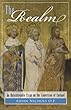
The RealmOn that note, however, I would remind the readers here of an fine book by Fr. Aidan Nichols called The Realm: An Unfashionable Essay on the Conversion of England.  If you are in the UK order it HERE.  If you are a Catholic in Dear Ol’ Blighty, and you haven’t read this… well then… just… tisk tisk.  In the US order it HERE (used or import).

Nichols argues that, since Catholic Christianity was at the heart of the development of England, the Catholic Church is essential for a positive transformation of England.

Nichols’ plan for renewal includes:

  • Firmer doctrine in our teaching and preaching [Go back before Vatican II.]
  • Re-enchant the liturgy [The tip of the spear. This should be No. 1, but it is linked to preaching and catechesis.]
  • Recover the insights of metaphysics [Be smart again.]
  • Renew Christian political thought [Be active in the public square.]
  • Revive family life [Stop denying human nature, God’s image, and natural law.]
  • Resacralise art and architecture  [Use God’s “grandchild” well.]
  • Put a new emphasis on monastic life  [Support in prayer for the active.]
  • Strengthen pro-life rhetoric [See above.]
  • Recover a Catholic reading of the Bible [Benedict has lots to say on that.]

I say that the key to any New Evangelization anywhere is a renewal of our liturgical worship under a hermeneutic of continuity with our tradition.  No renewal effort in any sphere of the Church’s life can be successful without a renewal of our liturgical worship.  It is the sine qua non, but they are all interconnected.

Posted in New Evangelization, Our Catholic Identity, The future and our choices, Wherein Fr. Z Rants | Tagged , , , , , , ,
8 Comments