
 UPDATE 10 May 2026 21:20 CET
There was bad news. Now there is good news.
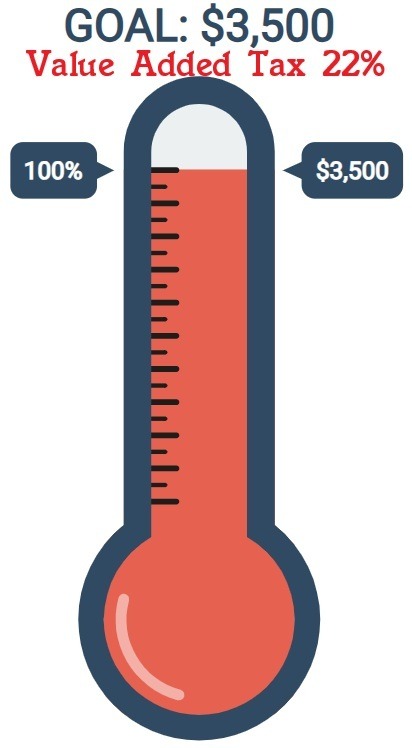
 The bad news was that, when I was given the estimate, it did not include the 22% Value Added Tax in Italy (IVA). That pushed it to €14640 which is, today, roughly $17500.
The good news is that we made up the gap.
At this time, please don’t send more pledges, unless someone who pledged winds up in a life-jam. It happens.
NEW PLEDGES:
PG, KS, SB, LS, SP.
Unless something strange comes up, this ends this fundraiser.
Original pledges from:
MR, AK, JV, JK, NW, T&LI, ME, MM, ARG, CD, SH, EB, KB for the initial run.
THANK YOU. The Pastor at The Parish™ is over the moon.
The next step… I’ll write an email to you about how to proceed.
ORIGINAL POST
I hereby present a project.
We build the corporal and spiritual health of the communities which enjoy the Vetus Ordo brick by brick. By helping them, we raise all boats like a rising tide. Those who attend the Novus Ordo are also genuinely aided by attraction and osmosis.
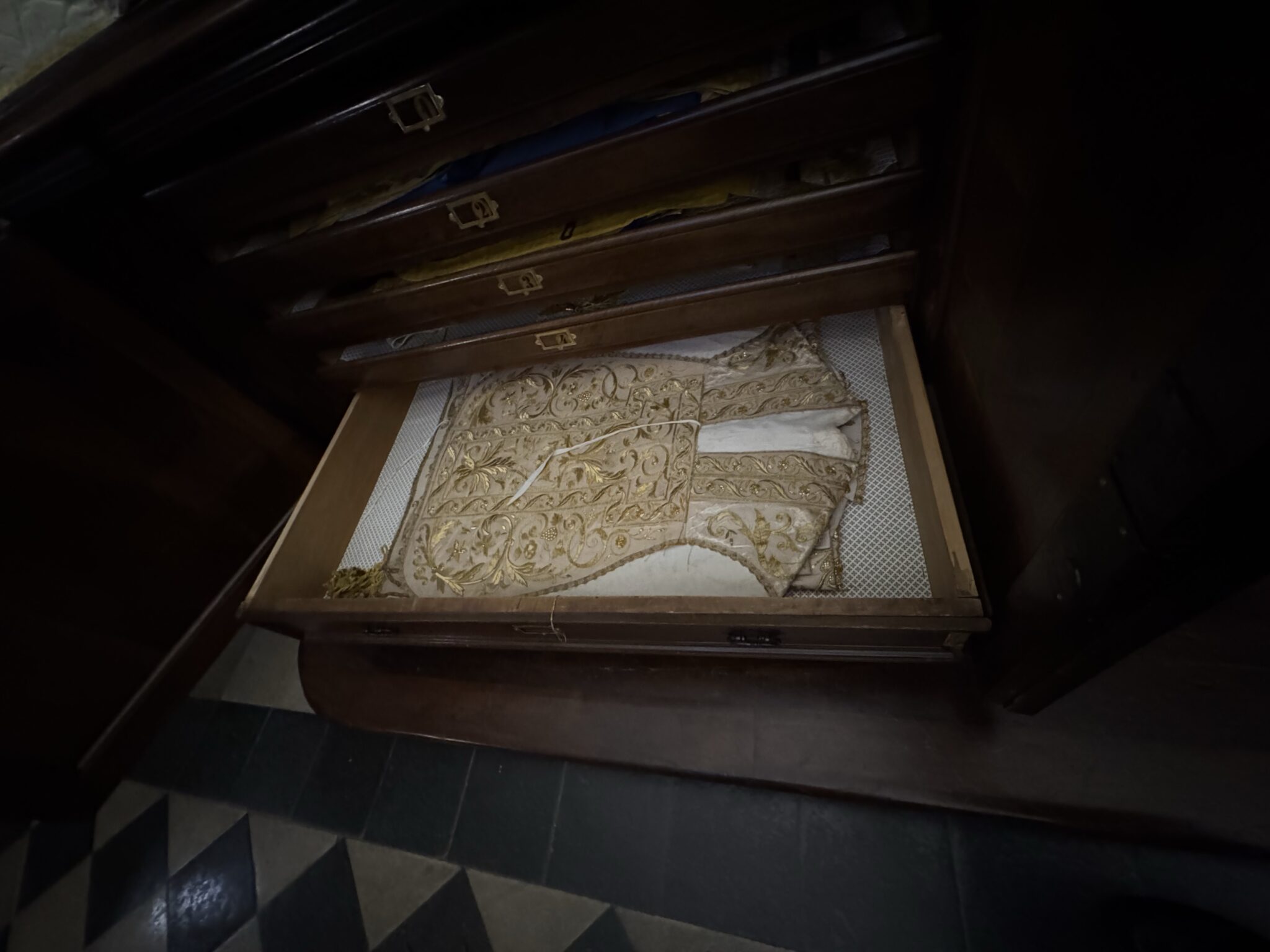
At The Parish™, buried in a bottom drawer, is a spectacular white set worked with real gold from the time of Bl. Pius IX… he was a member of the mighty Archconfraternity. It is difficult adequately to underscore the importance of this group in Rome over the centuries.
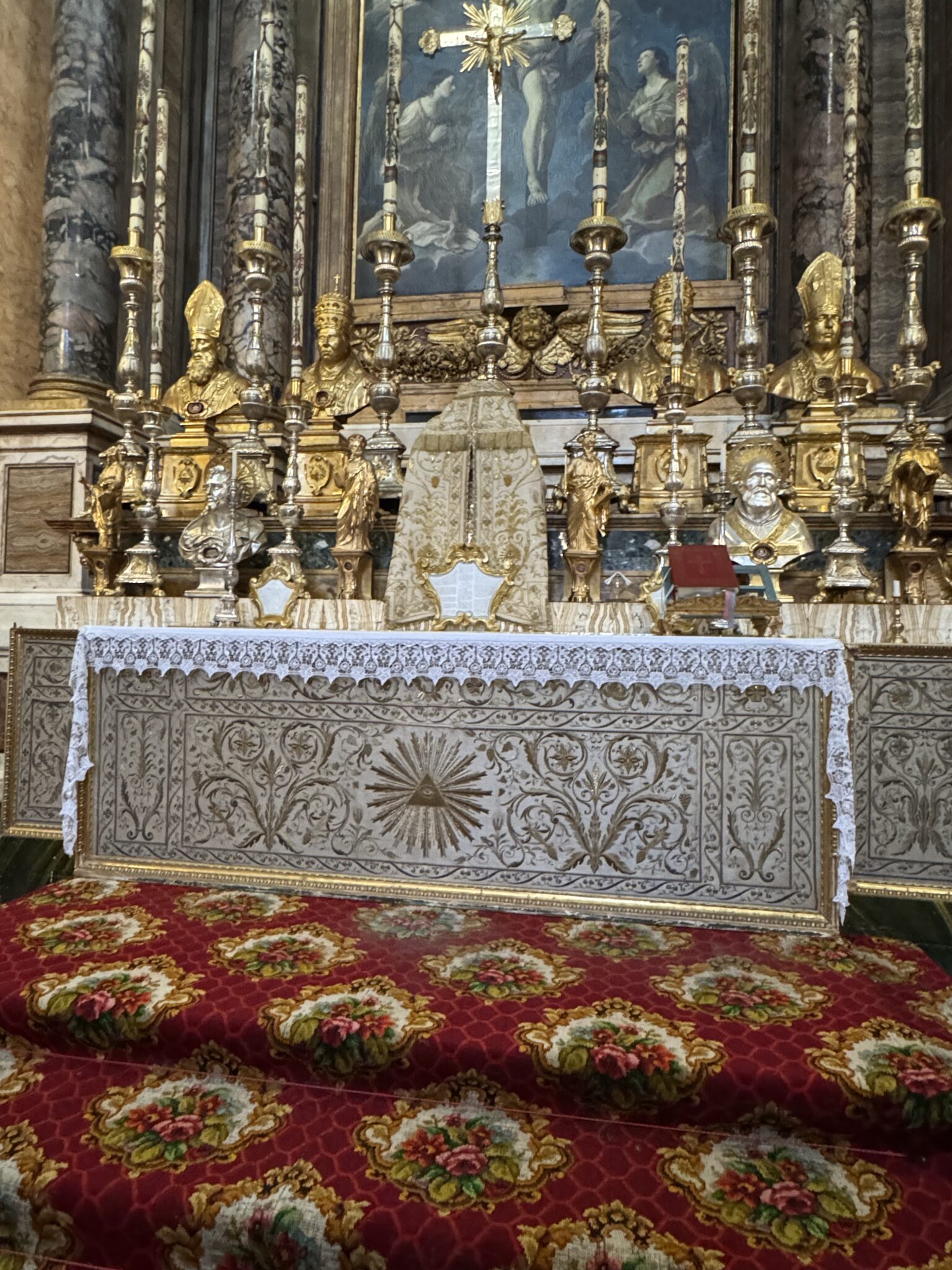
The white set has also an altar frontal and tabernacle canopy.
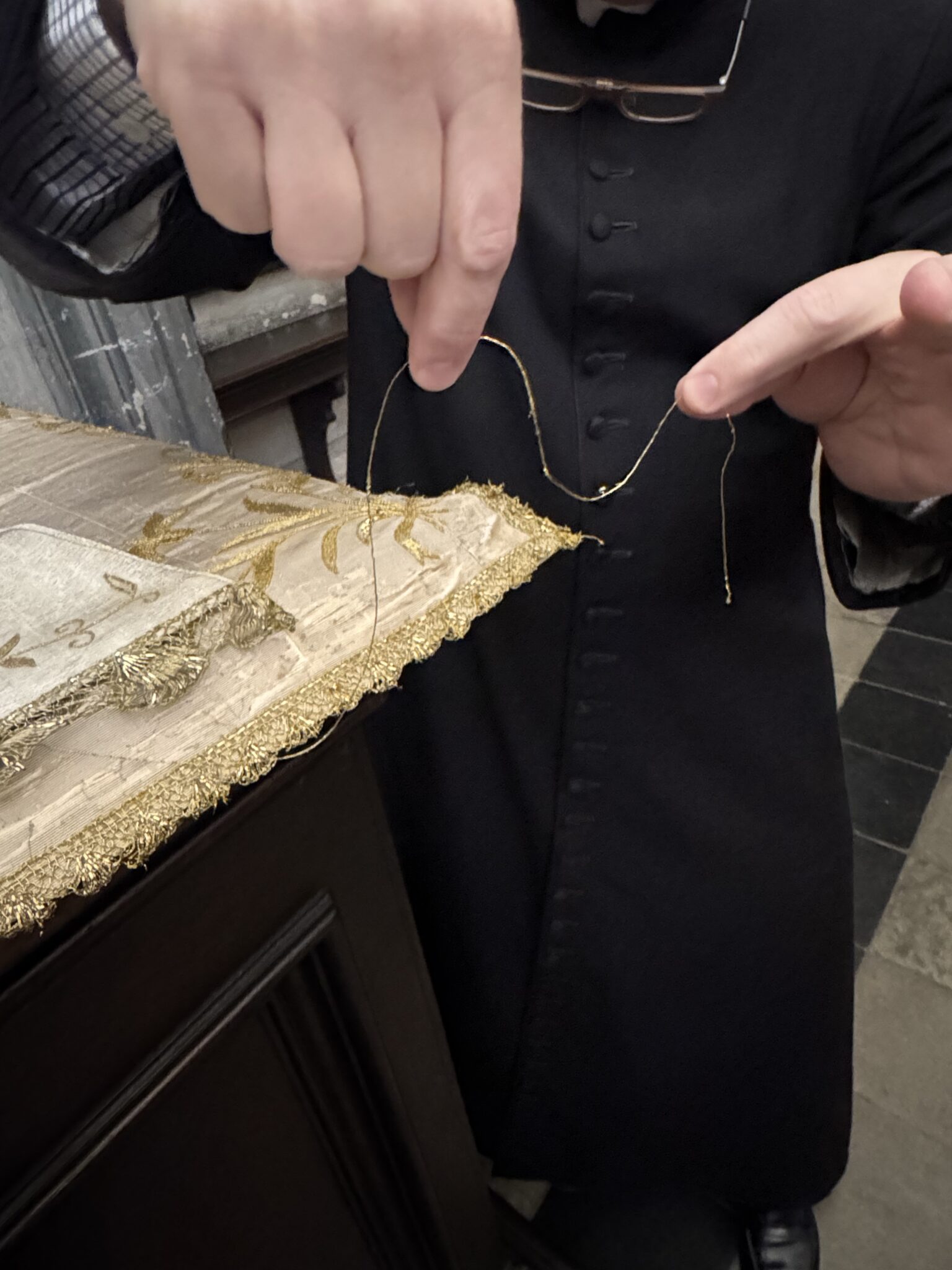
Here is a photo of the frontal with the canopy. NB: The canopy has been cleaned, but it needs more. Look at the difference the years have wrought.
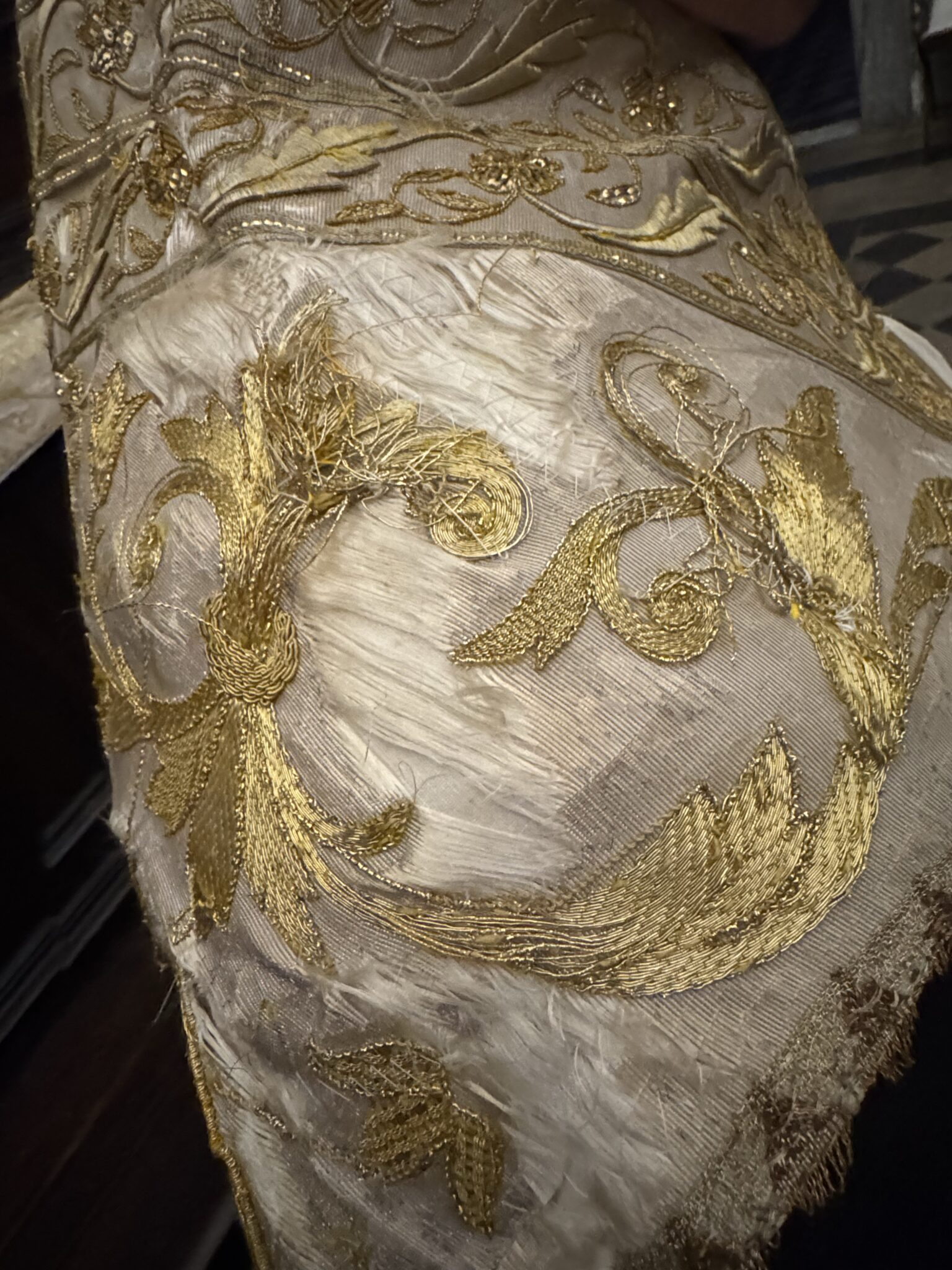
The vestments are in bad shape. Here are a few of many photos I took. First, look at this.
What must be done? All of the decoration must be removed and transferred to new fabric. This takes expert knowledge. We have someone!
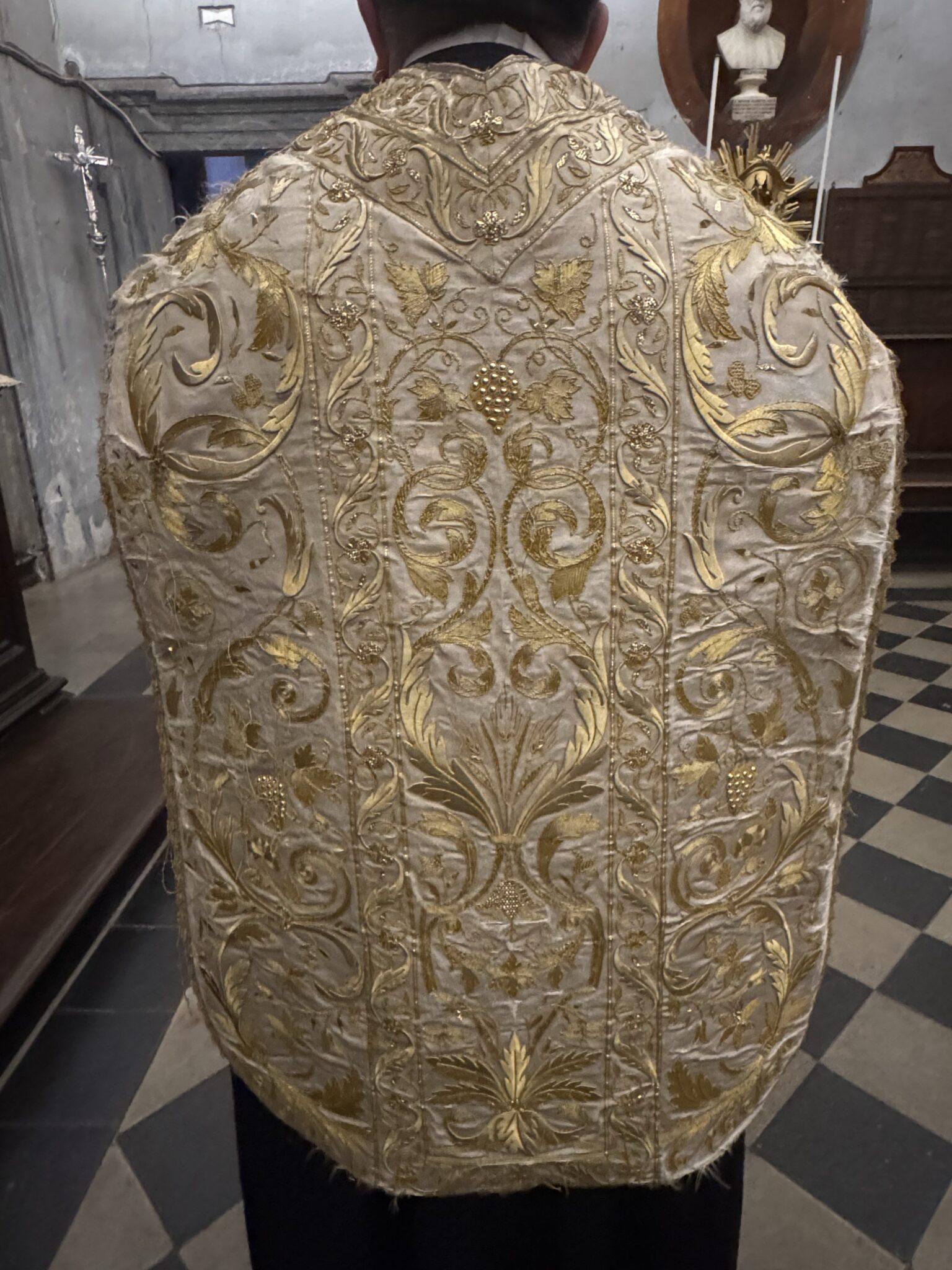
Some close ups of some of the pieces.
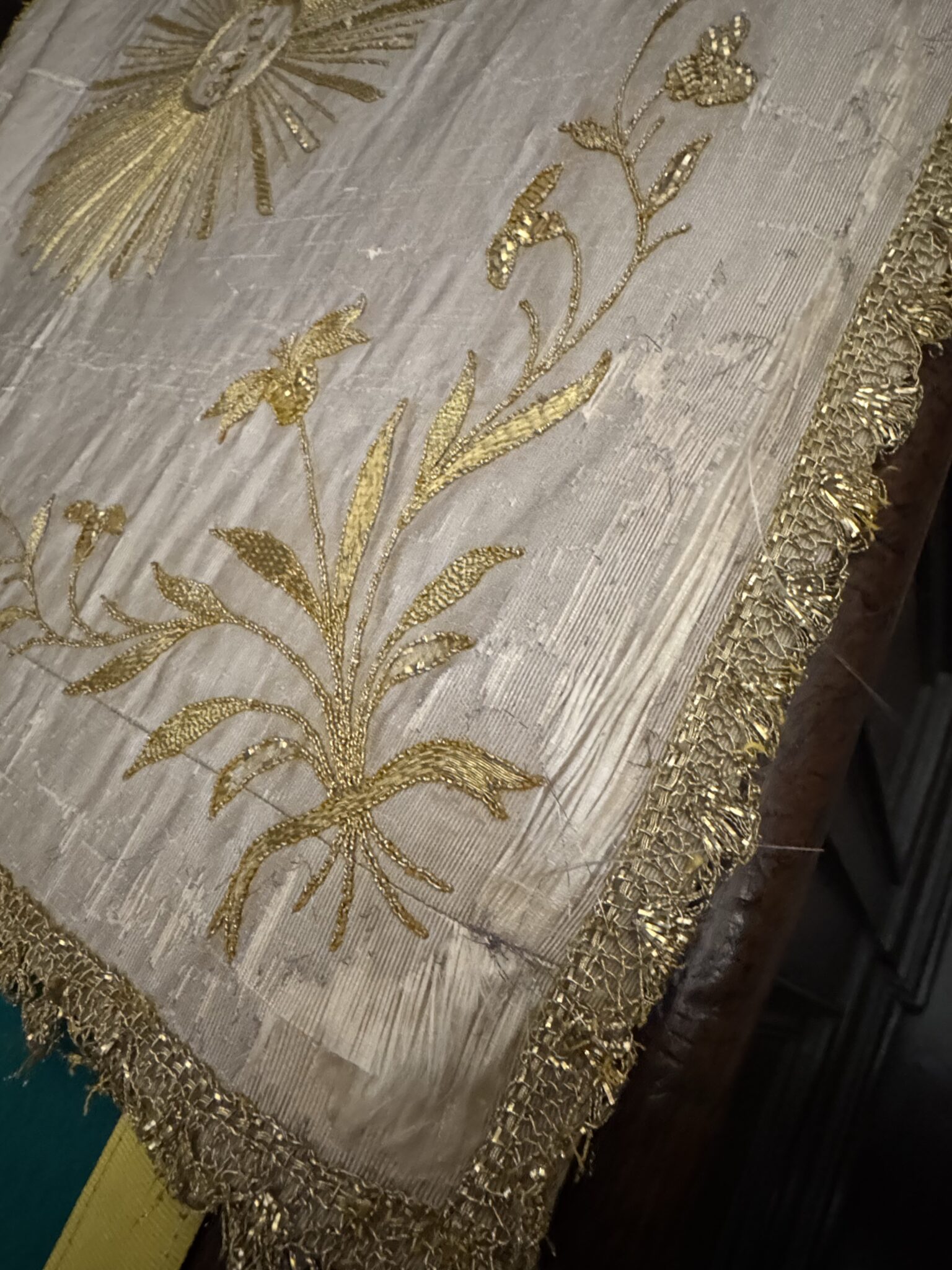
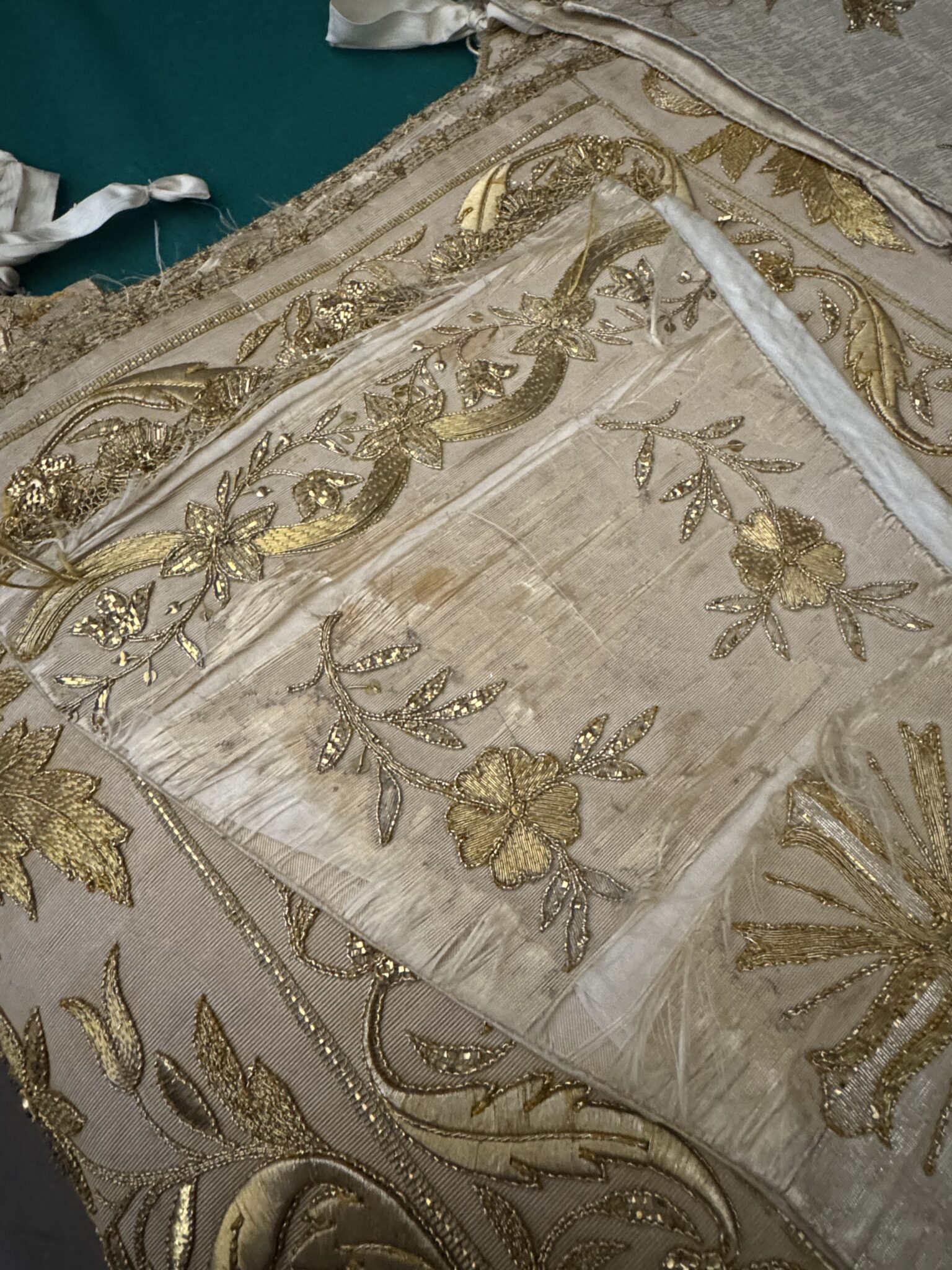
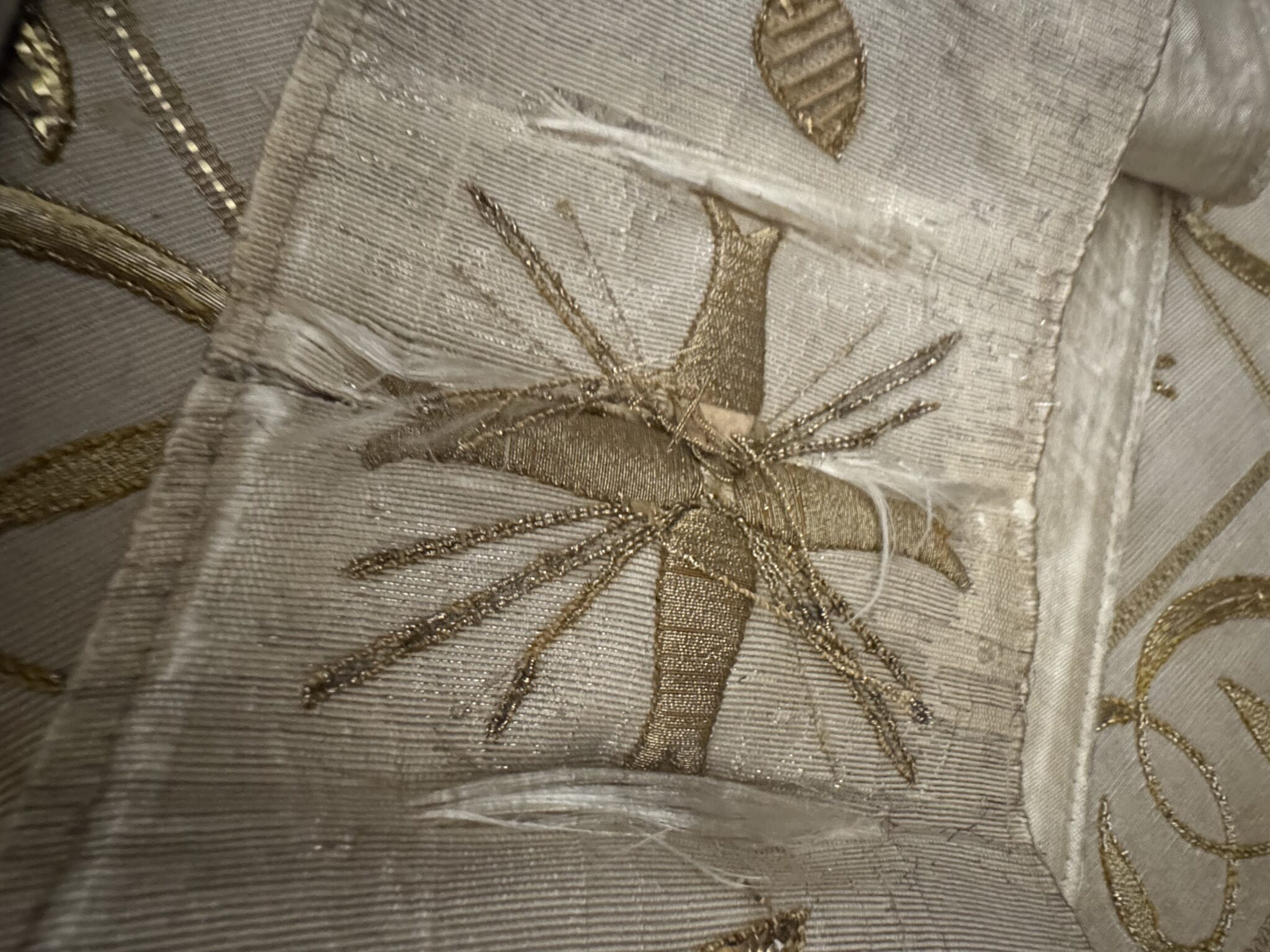
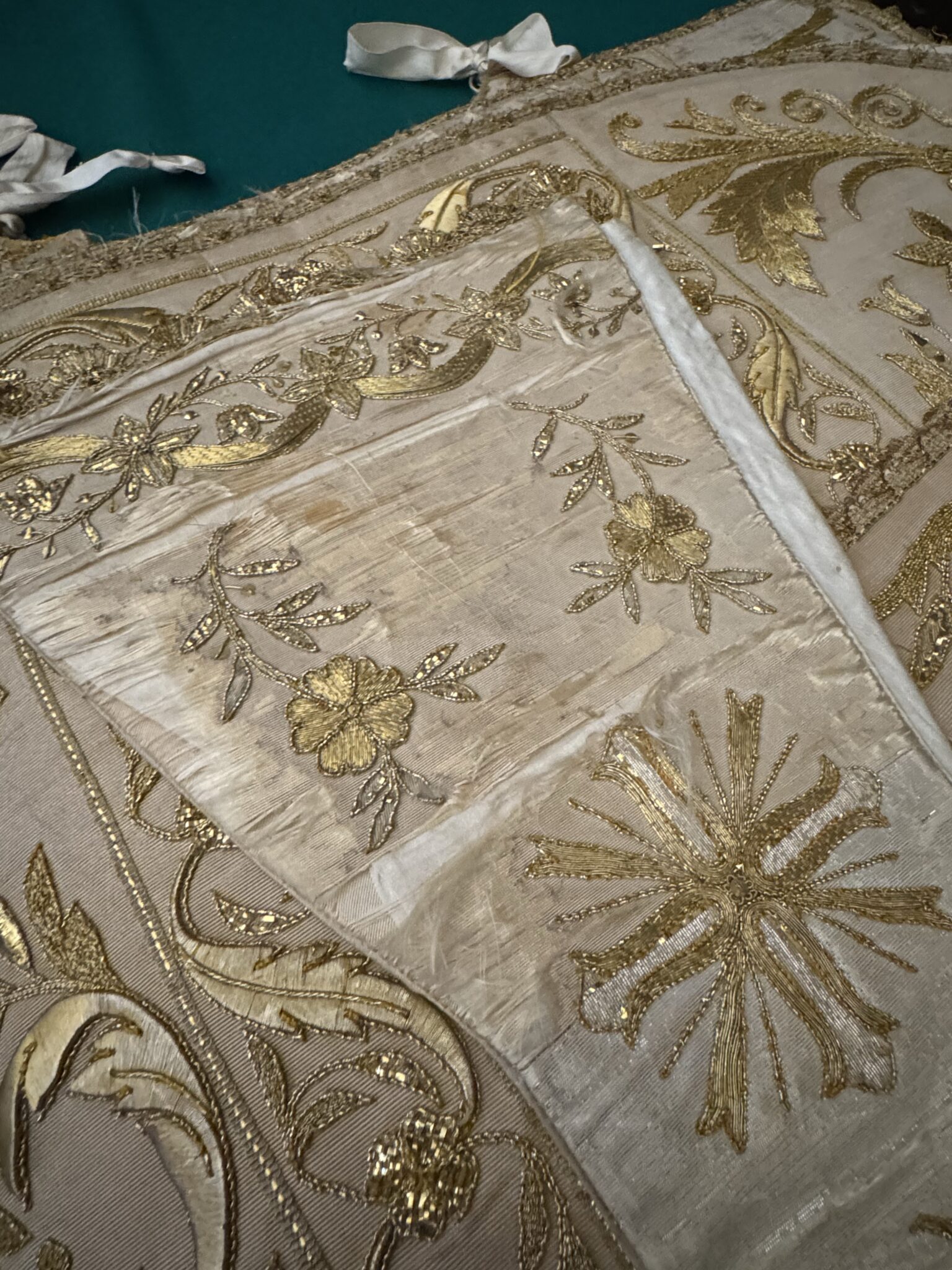
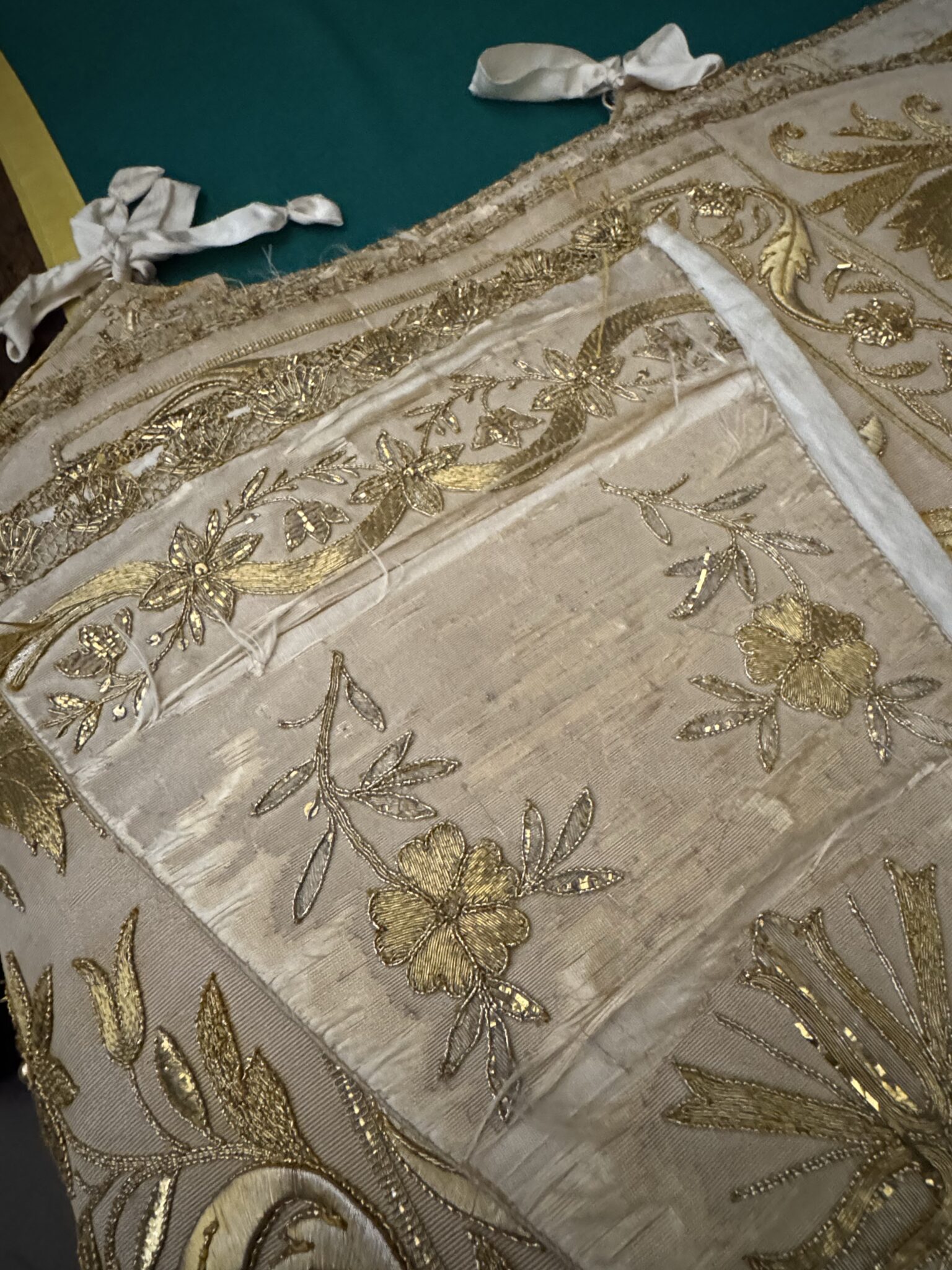
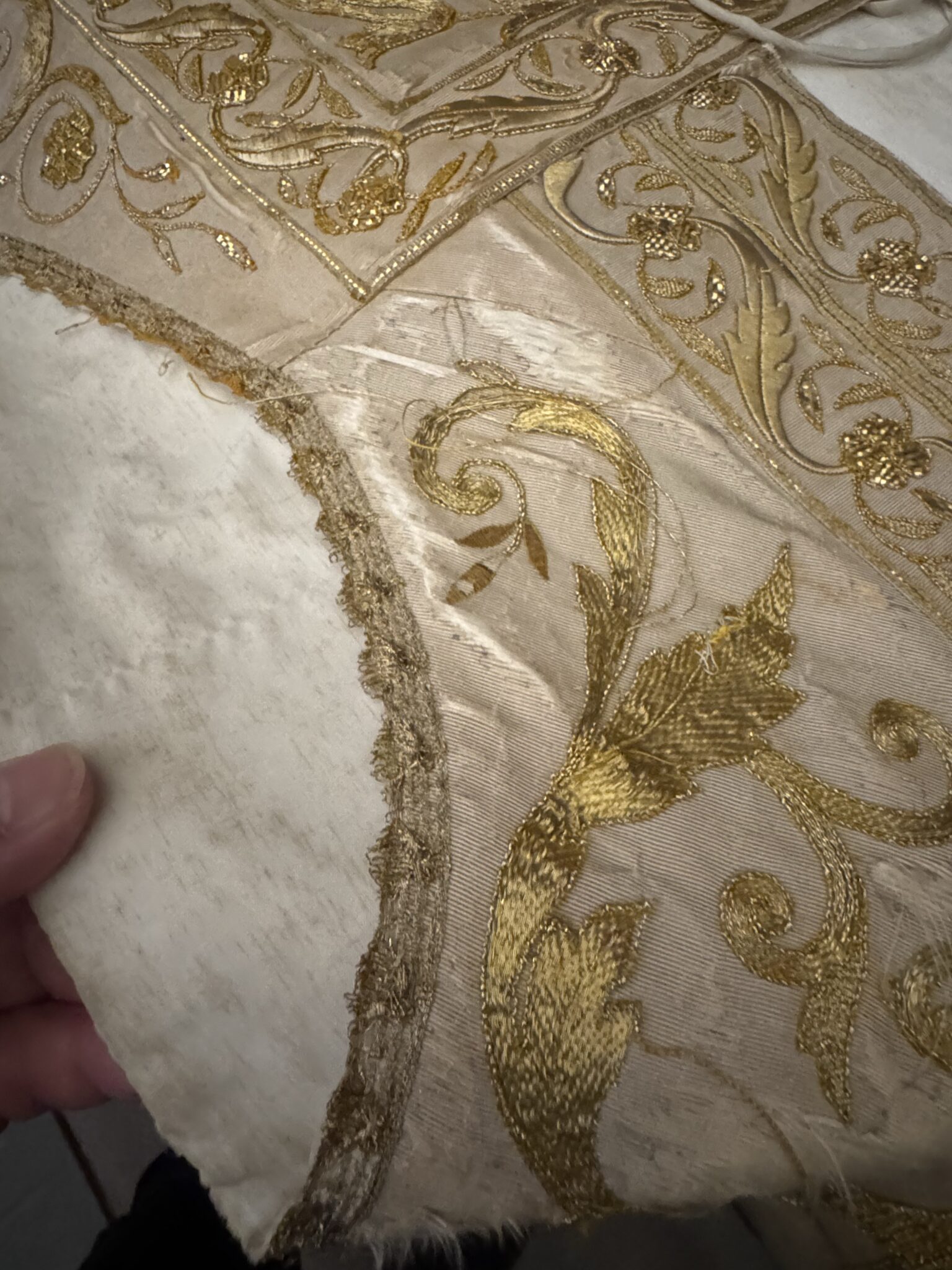
Makes you want to cry. BUT… they are ready for rebirth. As they are… using them would do terrible damage.
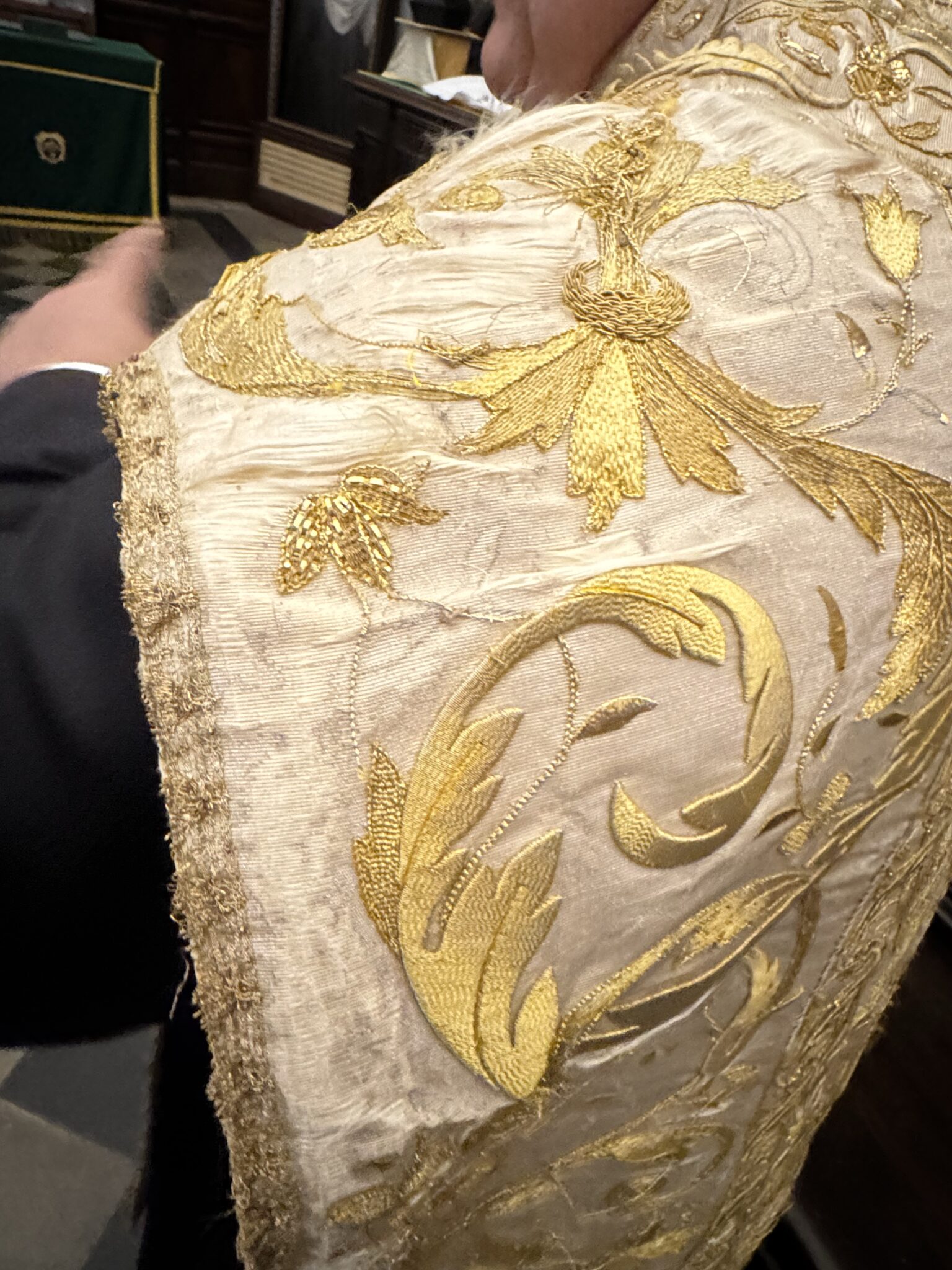
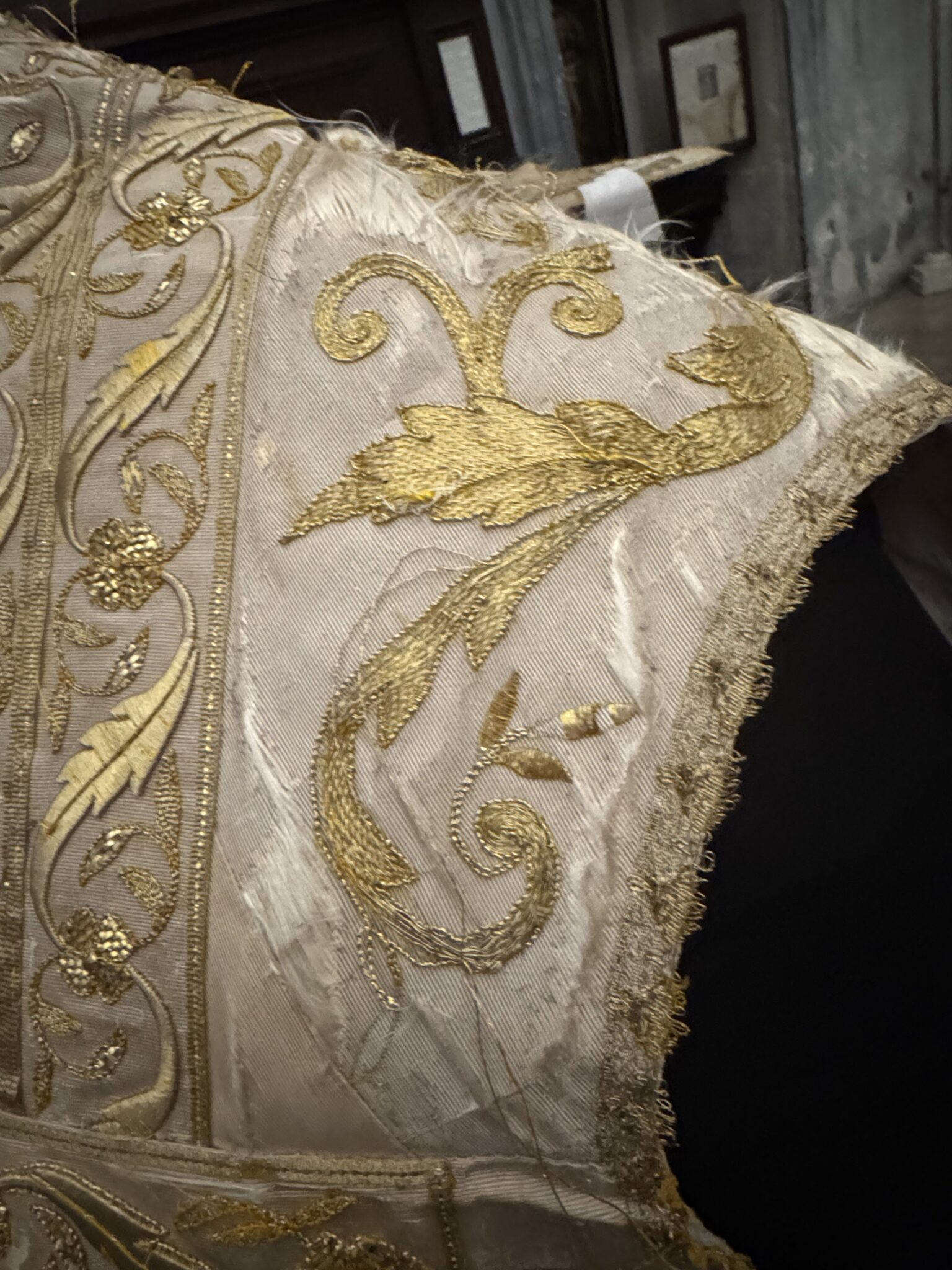
Gosh.
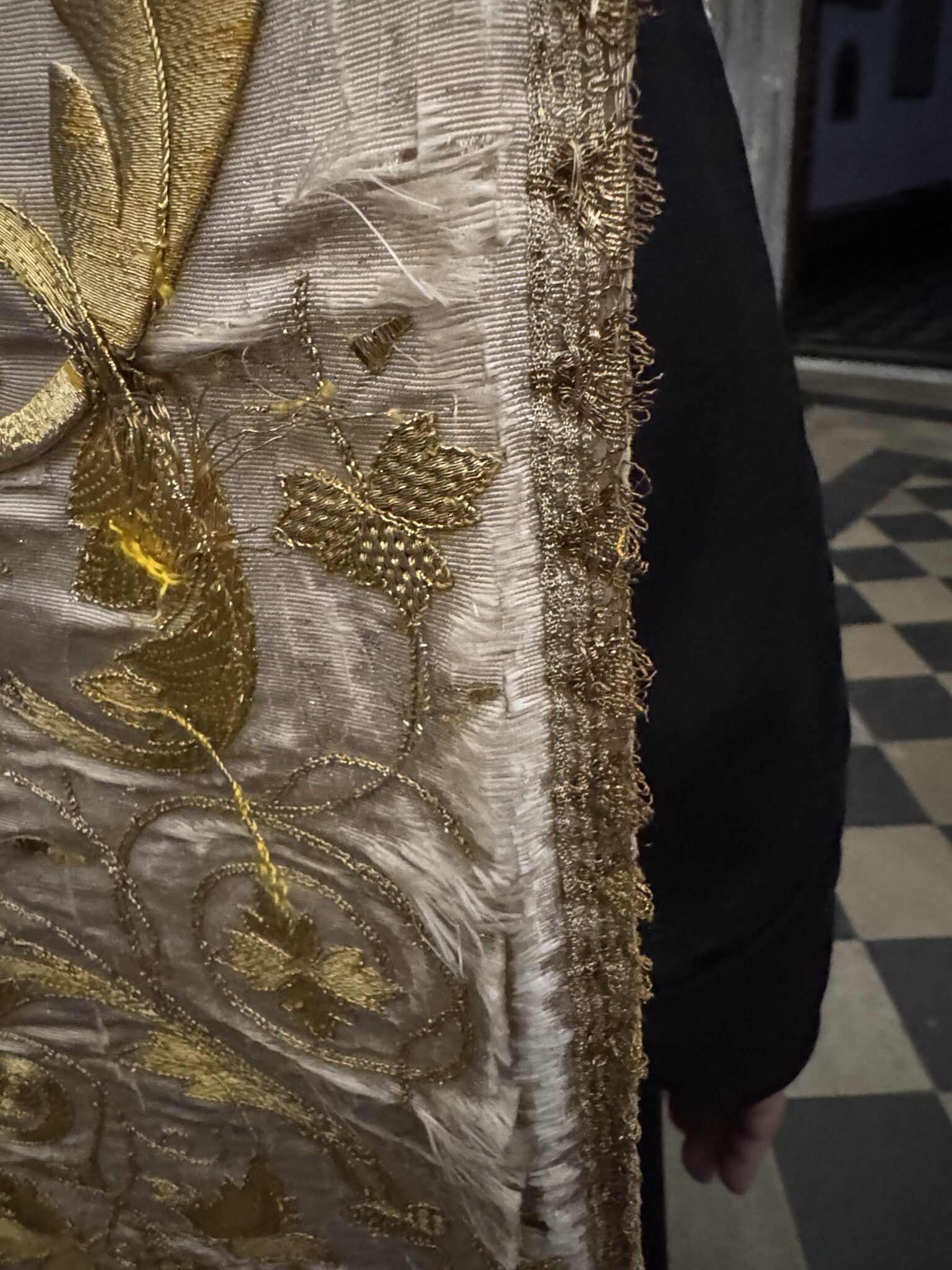
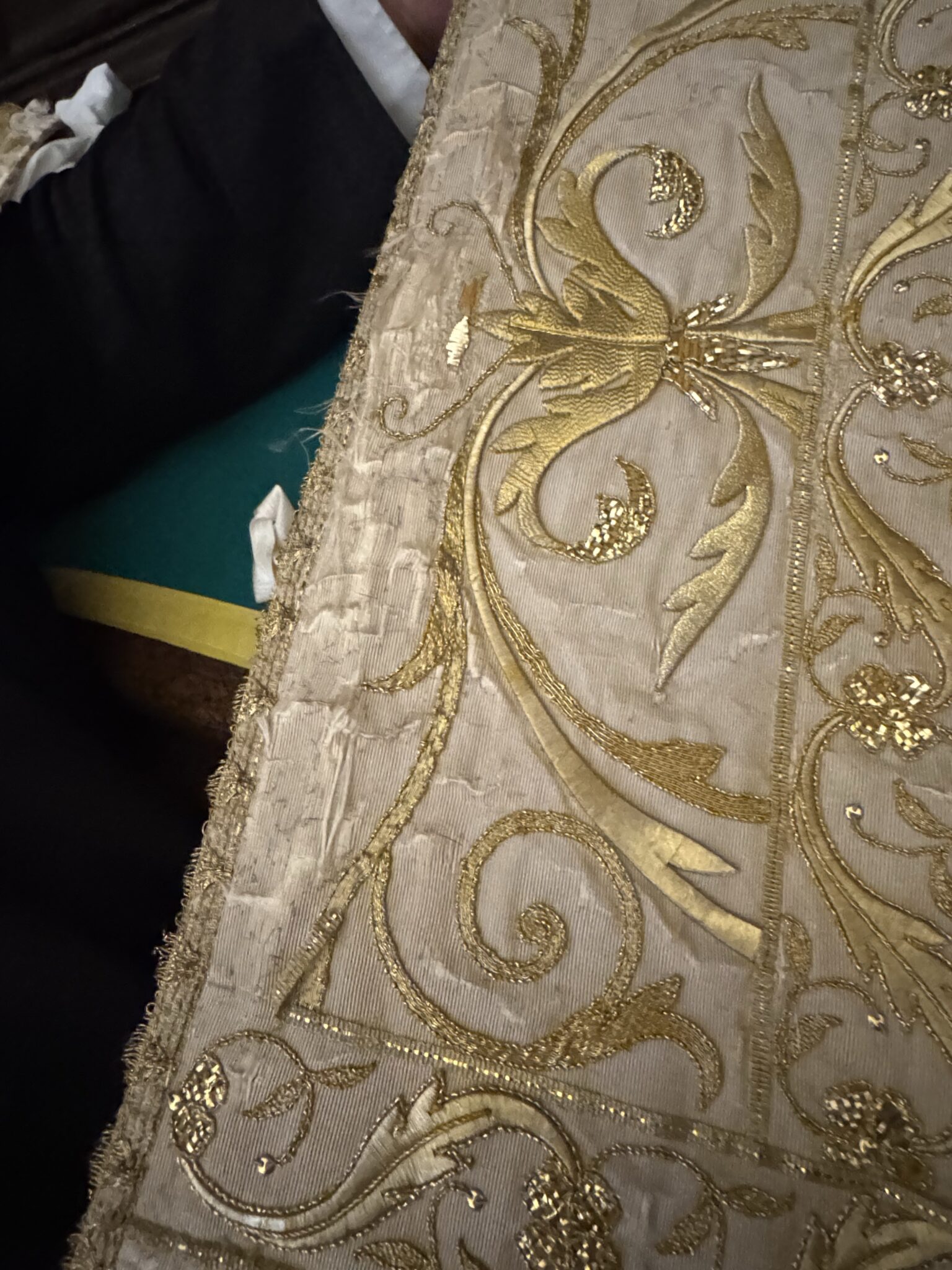
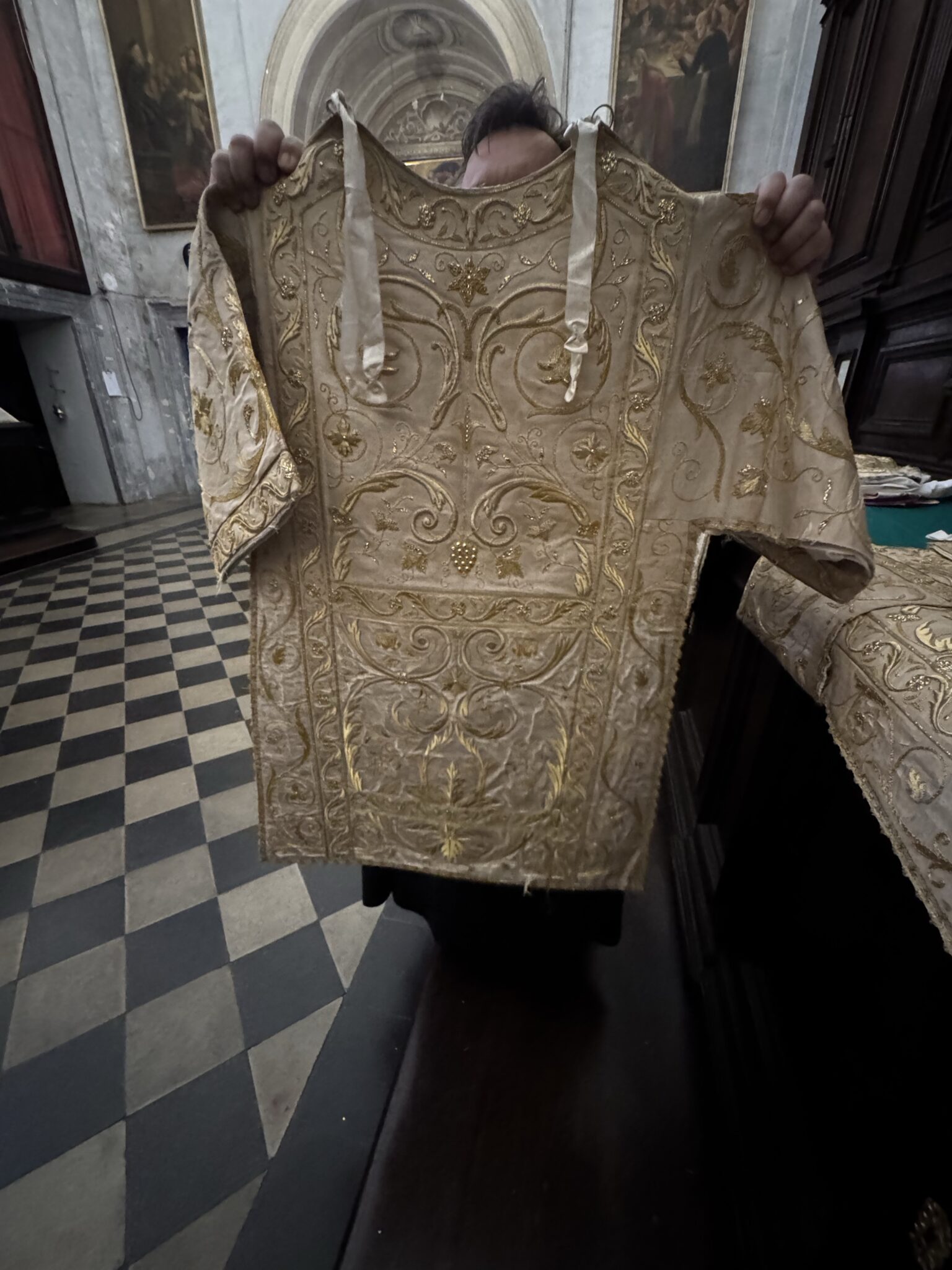
Here’s the point.
I’ll start with a bid for funds for the Tridentine Mass Society of the Diocese of Madison. In this weird time of ecclesial demolition it is hard to know where your monetary support should go for constructive purposes. Always remember the TMSM – 501(c)(3).
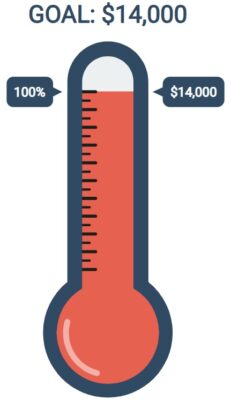
The estimate for the work is €12,000 which is about $14000.
We are going to restore this set. It will take months. It will only get more expensive and iffy the longer we wait.
I ask for donors willing to pledge at least $500 but ideally $1000 to the TMSM, which will pay for the restoration.
You names will be recorded and a document placed with the vestments so that you will be remembered by name when they are used.
When I get the right number of pledges, we can pull the trigger.
We have a good track record. We did their baptismal font when they became the Traditional Parish in Rome, black vestments, red vestments.
Please drop me a note HERE and put this in the subject: PLEDGE
If you want to pledge more, great!
DO NOT SENT MONEY YET. When we have pledges, I will ask you – individually – for checks to go to the TMSM. Non-$US donations can come maybe another way which I will figure out.
Friends, this is an important set of vestments… let’s save them and bring them back to the altar.































These vestments and the frontal and canopy are magnificent!
I am a member of the St. Martha’s Guild at St. John Cantius Church in Chicago and we have seen many vestments with this sort of magnificent embroidery which are in about the same condition. It is really something to get up close and examine the needle work, not only for artistry, but for the precision and skill of the seamstresses and quality of materials.
The underlying fabric of the vestments shown is probably a fine silk which has deteriorated over time. The gold is probably as bright as it was the day it was sewn. All of this kind of work was done by hand, and most of it by cloistered nuns who supported themselves by making vestment sets. Because of that, many of the techniques and knowledge that had been passed down from aged sister to novices about how to do this work disappeared when the effects of Vatican II caused the demand for these types of vestments to vanish, and emptied the traditional orders, because no one had ever thought to document in detail what they were doing or how to do it.
For instance, in photo number 12 of the details of the vestments, there are raised vines shown. This is done by cutting a piece of about 1/8″ thick leather in the shape desired, then placing it exactly, and stitching gold thread across it, placing each thread across the leather so that it is touching the thread adjacent to it, and entering and exiting the fabric below precisely adjacent to where the previous thread entered or exited the fabric. If you look at the precision of how the decorative vines are placed, it is astounding to be able to do that on fabric. When you look at the design as a whole on the back of the chasuble, every embellishment is precisely placed and sewn. It is perfection. When you consider the unknown sisters who sat and sewed these vestments, who were doing so for the glory of God, mindful of the vestment’s future role to glorify Him, and desiring to do the finest work that could be done, meditating on Him and the beauties of heaven, praying for the priests who would use it, and the people who would see it, it can take your breath away and cause tears to well up.
Prior to Vatican II, even poor parishes more than likely had at least one vestment set with exquisite embroidery such as the ones shown (maybe not with actual gold thread, but more than likely with fine silk thread), with matching chalice veils and burses, for use at the most important feasts, such as Easter. After Vatican II with the changes that swept the Church, especially with the introduction of the newer machine made polyester chasubles that became the norm, those older exquisite sets were simply tossed into dumpsters by the Modernists who took over in the 1970’s and 1980’s. A true iconoclasm.
To make the vestments and frontal that Fr. Z shows here today would be impossible. They don’t even make the quality of silk or thread used in these magnificent pieces anymore, and there are only a small number of people in the world who have the skills to do that kind of goldwork. It is truly a heroic act to make these holy and glorious vestments usable again. Any of us who do this kind of work feel so honored and humbled to be a part of it, we often literally tear up at the thought of it.
Given what these vestments actually are, the price of restoration is a fraction of what even one of these would cost if trying to make it today. God bless you all who contributed, and God bless the lady who is brave enough to take on this project of restoration.
Even in this much deteriorated condition these vestments are stunningly beautiful. Truly worthy of restoration, so they can be used again for the greater glory of God.
fac, thank you for that information. Now I appreciate such beautiful vestments all the more!