ACTION ITEM: Prayer to avert a serious act of persecution – UPDATED

UPDATE 15 July:

It seems that, again, there are those who cannot keep things to themselves.  I had hoped to build a prayerful barrage regarding this really bad news, in the hope that, perhaps, there were still some chances that, behind the scenes, things could be worked out in a better way without the public eye on everything, thus to allow the Archdiocese to “save face” and not have to “dig in”.

You might respond that, given the Archdiocese in question, that was an act of the greatest optimism, even naivete.

I continue to believe in the power of prayer and that that must always play an important part in whatever other lines of action we are forced to take.

So, effectively, since the news is out on Twitter and other places,…

Cupich of Chicago has told the members of the Institute of Christ the King in Chicago, that he is effectively shutting them down as of 1 August.   This will be formally announced on Sunday at the Institute’s church on the South Side of Chicago.

No Masses.  Nothing.  31 July is their last day to function.

I’m sorry that the Institute itself was not able to break the news.

This is very bad for everyone, as it is another move to slam shut the gates of grace, to make the Church smaller, stingier, narrower.   If a place is doing well, then – by gum – crush it.

It seems that they would rather have smoking, salt-sown craters rather than vibrant churches where Tradition is maintained.  I am reminded of the fateful words of Tacitus about the Romans in Germany: “Where they make a desert, they call it peace.”

Ironically, even at Jesuit-run Amerika there are thoughts about how “excessive restrictions on the Latin Mass could push away some ordinary Catholics”. That’s an article title!  The well-intentioned author gets pretty much mired in the externals of the two Rites, Vetus and Novus, and thinks that just by dressing the Novus Ordo in traditional trappings, that ought to be enough, the answer to everything.  What he doesn’t understand is that the differences are far deeper.   But this isn’t the time or place for that.

My heart aches for the faithful of Chicago… those left.

I still ask you all, please, to get down on your knees and say, at least, a Memorare for the people who will be hurt by this, for the priests involved.

And perhaps ask St. Joseph now, also, to take this matter into his mighty hands.


Originally published on Jul 14, 2022 at 19:42

I simply must not say what this intention is. I assure you it is a serious case of ecclesiastical pogrom.

News will come out soon enough, but in the meantime… trust me.


Let’s call this:  Intention “I”.  (UPDATE: It isn’t about me, but this affects everyone.)

I implore you all…

… get down on your knees and say, at least, a Memorare – which I advise in my “Custos Traditionis” invitation.

If you can do this several times a day.  Do it.

If you can do a Rosary.  Do it.

If you can offer a few days of fasting.  Do it.

If you can spend time in front of the Blessed Sacrament. Do it.

If you can fortify your prayer with a good confession.  Do it.

This is ALL HANDS ON DECK.


Posted in ACTION ITEM!, GO TO CONFESSION, Hard-Identity Catholicism, Liberals, New catholic Red Guards, The Coming Storm, The future and our choices, The Last Acceptable Prejudice, Traditionis custodes | Tagged ,
66 Comments

Another blow against the faithful ordered by Rome: D. Savannah

July is a month of special devotion to the Most Precious Blood of Jesus.

Let us ask Jesus, High Priest and Victim, to wash us in the Blood and Water from His side as a laver of consolation and strength.  Let us ask Him to take the sufferings of those who will now be afflicted by the continuing persecution from Rome and from bishops and to transform them into graces and great spiritual fruits.

While the following is NOT the topic of the intention for which I ask you to pray HERE, I sense that it is strongly connected, since we are a arrived at a fateful anniversary.

Read and weep for the faithful of Savannah.

“Mass in conformity with the decrees of the Second Vatican Council”.

That’s quite simply a false statement.  The Novus Ordo is NOT what Sacrosanctum Concilium decreed.

But…  just keep repeating it and repeating it and repeating it.

Watch for more of this. Rome will target the faithful for more suffering in their spirit of accompaniment.

Posted in Traditionis custodes | Tagged
32 Comments

15 July: St. Henry, Emperor and Confessor… did some consequential things

Over at her place, Ann Barnhardt was kind enough to pick up and repost my earnest invitation to prayer about a serious act of ecclesial persecution which is yet to be announced publicly.  I want to respect the wishes of – and perhaps the on-going back-scenes work of – those involved.  However, prayer can move mountains.   I hope that your earnest prayers, raised for an intention that God knows, will result in the averting of or the mitigation of something that is going to hurt a lot of people and may have dire ripple effects.   Trust me for now and pray sincerely and pointedly that this thing be diverted, blocked, mitigated, thwarted… whatever works best.

And since Ann cross posted with me, I will return the favor and send you her way.  She has an interesting post – HERE –  about the saint of the traditional calendar today, St. Henry II, Emperor and Confessor.    He is not to be confused with Henry II Plantagenet of England (+1189) or Henry II of France (+1559).

He was Holy Roman Emperor in the 11th c.  He was crowned by Pope Benedict VIII in Old St. Peter’s and was canonized in 1146, the only German monarch ever to be so.  His wife, Cunigunde, is also a saint.  There really should be more baby girls named Cunigunde.

St. Henry was involved with a dispute over the papacy.

There was a powerful family in Rome, the Crescenzi (a street is still named for them near the Pantheon), who had dominated pretty much everything to the point that he kept Henry from meeting with a couple of Popes who would have conferred the imperial title.  When Benedict VIII was elected in 1012, Giovanni Crescenzio backed an anti-pope, Gregory VI.  Benedict VIII fled Rome, going to Henry.   Gregory also went to Henry.  Henry deposed the anti-pope, Gregory, installed Benedict in Rome, got himself crowned, helped enact some needed reforms in Rome and then went back north.

Henry II persuaded Benedict VIII to add “filioque” to the Creed.

Also, Henry, who had wished to be a monk, did in fact join a monastery, having ordered the Abbot to accept him.  The abbot complied.  When Henry made his vow of obedience, the abbot commanded him to continue to function as Emperor.

The last of the Crescenzi, by the way, seems to have been the 18th c. Cardinal, Marcello, whom Benedict XIV knew to be rather intellectually slow but pious.  He was a close friend of the famous preacher St. Leonard of Porte Maurice  He wound up being a very good Archbp. of Ferrara and, at the same time, the secular legate there, thus combining in one person both ecclesial and secular power.  His biography is really interesting – HERE.


Posted in SESSIUNCULA | Tagged
2 Comments

Daily Rome Shot 505

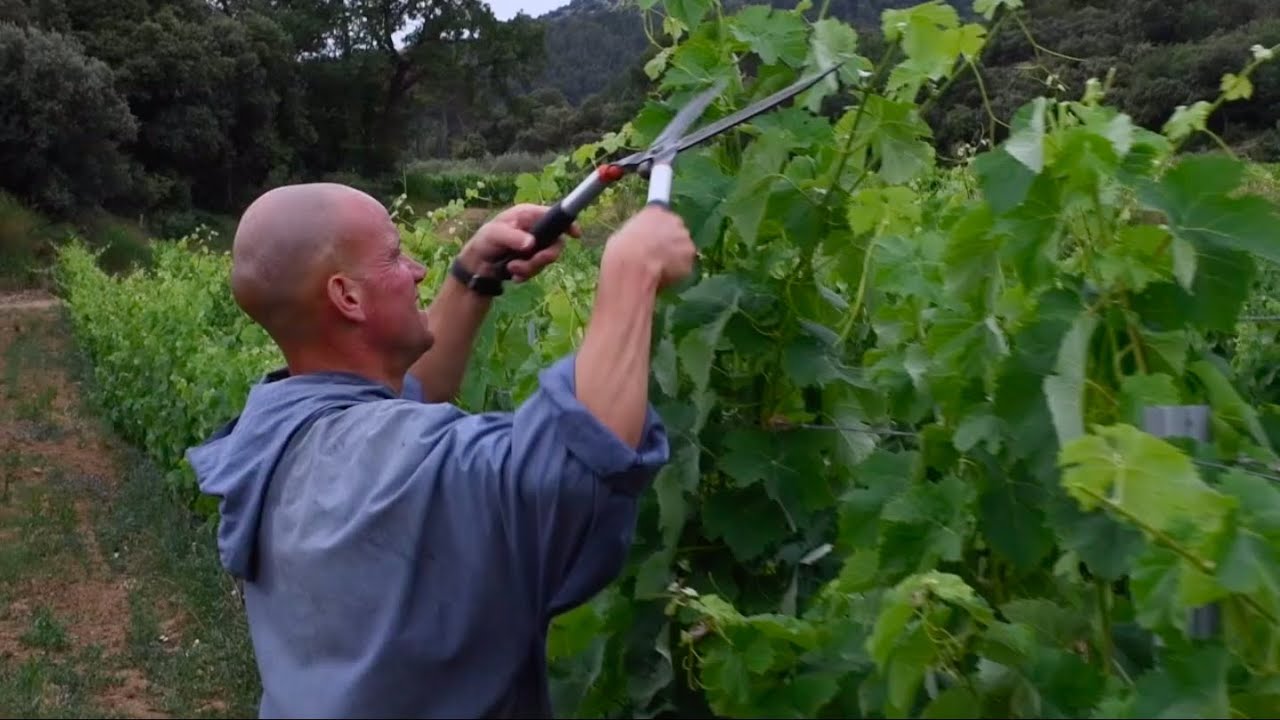
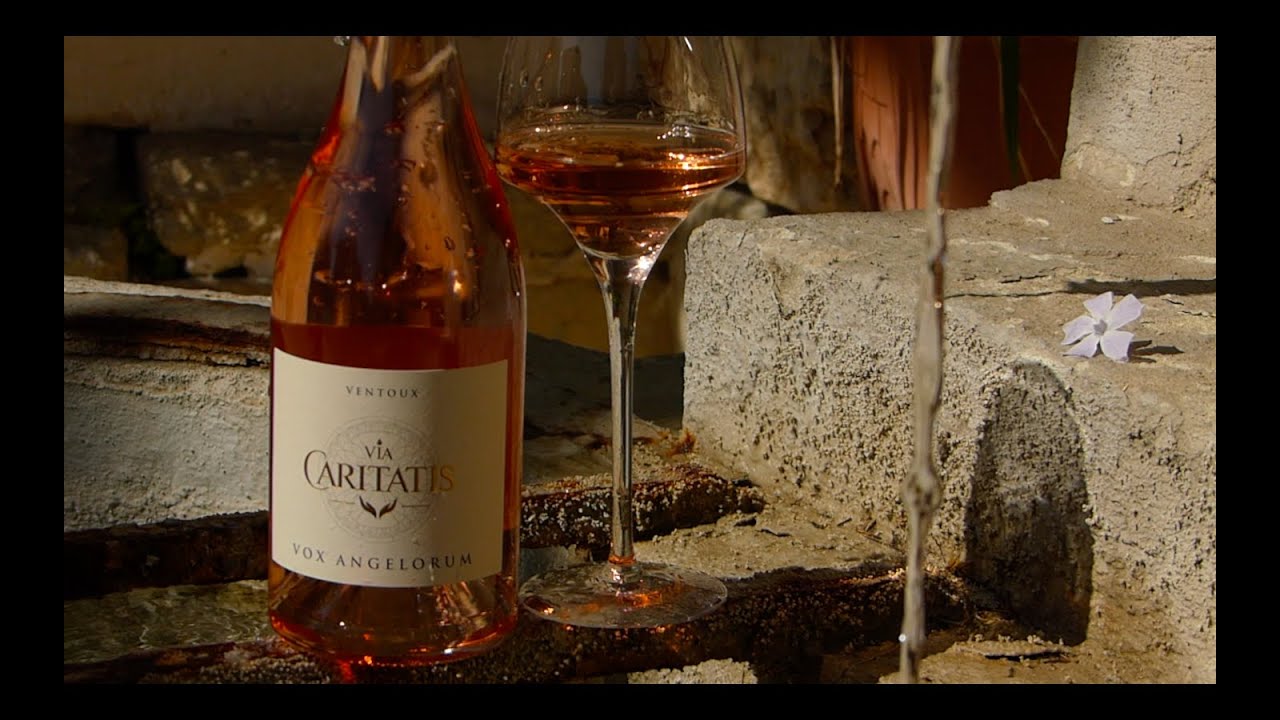
The monks of Le Barroux, Benedictines of the traditional stripe, are making wine again in the ancient papal vineyards of the Ventoux region. They feature now the Via Caritatis Vox Rosé.  HERE   – 10% discount with code: FATHERZ10

YouTube thumbnailYouTube icon

Buy wine. Help monks. Drink wine. Help monks.  Share wine.  Help monks. Give wine.  Help monks.  Win. Win.

Black to play… and win.

Posted in SESSIUNCULA | Tagged
Comments Off on Daily Rome Shot 505

14 July: St. Bonaventure, Doctor of the Church. “What should I do with my life?”

Today is the Feast of St. Bonaventure, Doctor of the Church.

Back in the happier year of 2010, Pope Benedict XVI gave a General Audience talk about St. Bonaventure, about whom he had written as a younger theologian dealing with revelation and the theology of history.


Saint Bonaventure

Dear Brothers and Sisters,

St. Bonaventure receiving Communion from an Angel

Today I would like to talk about St Bonaventure of Bagnoregio. I confide to you that in broaching this subject I feel a certain nostalgia, for I am thinking back to my research as a young scholar on this author who was particularly dear to me. My knowledge of him had quite an impact on my formation. A few months ago, with great joy, I made a pilgrimage to the place of his birth, Bagnoregio, an Italian town in Lazio that venerates his memory.

St Bonaventure, in all likelihood born in 1217, died in 1274. Thus he lived in the 13th century, an epoch in which the Christian faith which had deeply penetrated the culture and society of Europe inspired imperishable works in the fields of literature, the visual arts, philosophy and theology. Among the great Christian figures who contributed to the composition of this harmony between faith and culture Bonaventure stands out, a man of action and contemplation, of profound piety and prudent government.

He was called Giovanni di Fidanza. An episode that occurred when he was still a boy deeply marked his life, as he himself recounts. He fell seriously ill and even his father, who was a doctor, gave up all hope of saving him from death. So his mother had recourse to the intercession of St Francis of Assisi, who had recently been canonized. And Giovanni recovered.

The figure of the Poverello of Assisi became even more familiar to him several years later when he was in Paris, where he had gone to pursue his studies. He had obtained a Master of Arts Diploma, which we could compare with that of a prestigious secondary school in our time. At that point, like so many young men in the past and also today, Giovanni asked himself a crucial question: “What should I do with my life?”. Fascinated by the witness of fervour and evangelical radicalism of the Friars Minor who had arrived in Paris in 1219, Giovanni knocked at the door of the Franciscan convent in that city and asked to be admitted to the great family of St Francis’ disciples. Many years later he explained the reasons for his decision: he recognized Christ’s action in St Francis and in the movement he had founded. Thus he wrote in a letter addressed to another friar: “I confess before God that the reason which made me love the life of blessed Francis most is that it resembled the birth and early development of the Church. The Church began with simple fishermen, and was subsequently enriched by very distinguished and wise teachers; the religion of Blessed Francis was not established by the prudence of men but by Christ” (Epistula de tribus quaestionibus ad magistrum innominatum, in Opere di San Bonaventura. Introduzione generale, Rome 1990, p. 29).

So it was that in about the year 1243 Giovanni was clothed in the Franciscan habit and took the name “Bonaventure”. He was immediately sent to study and attended the Faculty of Theology of the University of Paris where he took a series of very demanding courses. He obtained the various qualifications required for an academic career earning a bachelor’s degree in Scripture and in the Sentences. Thus Bonaventure studied profoundly Sacred Scripture, the Sentences of Peter Lombard the theology manual in that time and the most important theological authors. He was in contact with the teachers and students from across Europe who converged in Paris and he developed his own personal thinking and a spiritual sensitivity of great value with which, in the following years, he was able to infuse his works and his sermons, thus becoming one of the most important theologians in the history of the Church. It is important to remember the title of the thesis he defended in order to qualify to teach theology, the licentia ubique docendi, as it was then called. His dissertation was entitled Questions on the knowledge of Christ. This subject reveals the central role that Christ always played in Bonaventure’s life and teaching. We may certainly say that the whole of his thinking was profoundly Christocentric.

In those years in Paris, Bonaventure’s adopted city, a violent dispute was raging against the Friars Minor of St Francis Assisi and the Friars Preachers of St Dominic de Guzmán. Their right to teach at the university was contested and doubt was even being cast upon the authenticity of their consecrated life. Of course, the changes introduced by the Mendicant Orders in the way of understanding religious life, of which I have spoken in previous Catecheses, were so entirely new that not everyone managed to understand them. Then it should be added, just as sometimes happens even among sincerely religious people, that human weakness, such as envy and jealousy, came into play. Although Bonaventure was confronted by the opposition of the other university masters, he had already begun to teach at the Franciscans’ Chair of theology and, to respond to those who were challenging the Mendicant Orders, he composed a text entitled Evangelical Perfection. In this work he shows how the Mendicant Orders, especially the Friars Minor, in practising the vows of poverty, chastity and obedience, were following the recommendations of the Gospel itself. Over and above these historical circumstances the teaching that Bonaventure provides in this work of his and in his life remains every timely: the Church is made more luminous and beautiful by the fidelity to their vocation of those sons and daughters of hers who not only put the evangelical precepts into practice but, by the grace of God, are called to observe their counsels and thereby, with their poor, chaste and obedient way of life, to witness to the Gospel as a source of joy and perfection.

The storm blew over, at least for a while, and through the personal intervention of Pope Alexander IV in 1257, Bonaventure was officially recognized as a doctor and master of the University of Paris. However, he was obliged to relinquish this prestigious office because in that same year the General Chapter of the Order elected him Minister General.

He fulfilled this office for 17 years with wisdom and dedication, visiting the provinces, writing to his brethren, and at times intervening with some severity to eliminate abuses. When Bonaventure began this service, the Order of Friars Minor had experienced an extraordinary expansion: there were more than 30,000 Friars scattered throughout the West with missionaries in North Africa, the Middle East, and even in Peking. It was necessary to consolidate this expansion and especially, to give it unity of action and of spirit in full fidelity to Francis’ charism. In fact different ways of interpreting the message of the Saint of Assisi arose among his followers and they ran a real risk of an internal split. To avoid this danger in 1260 the General Chapter of the Order in Narbonne accepted and ratified a text proposed by Bonaventure in which the norms regulating the daily life of the Friars Minor were collected and unified. Bonaventure, however, foresaw that regardless of the wisdom and moderation which inspired the legislative measures they would not suffice to guarantee communion of spirit and hearts. It was necessary to share the same ideals and the same motivations.
For this reason Bonaventure wished to present the authentic charism of Francis, his life and his teaching. Thus he zealously collected documents concerning the Poverello and listened attentively to the memories of those who had actually known Francis. This inspired a historically well founded biography of the Saint of Assisi, entitled Legenda Maior. It was redrafted more concisely, hence entitled Legenda minor. Unlike the Italian term the Latin word does not mean a product of the imagination but, on the contrary, “Legenda” means an authoritative text, “to be read” officially. Indeed, the General Chapter of the Friars Minor in 1263, meeting in Pisa, recognized St Bonaventure’s biography as the most faithful portrait of their Founder and so it became the Saint’s official biography.

What image of St Francis emerged from the heart and pen of his follower and successor, St Bonaventure? The key point: Francis is an alter Christus, a man who sought Christ passionately. In the love that impelled Francis to imitate Christ, he was entirely conformed to Christ. Bonaventure pointed out this living ideal to all Francis’ followers. This ideal, valid for every Christian, yesterday, today and for ever, was also proposed as a programme for the Church in the Third Millennium by my Predecessor, Venerable John Paul II. This programme, he wrote in his Letter Novo Millennio Ineunte, is centred “in Christ himself, who is to be known, loved and imitated, so that in him we may live the life of the Trinity, and with him transform history until its fulfilment in the heavenly Jerusalem” (n. 29).

In 1273, St Bonaventure experienced another great change in his life. Pope Gregory X wanted to consecrate him a Bishop and to appoint him a Cardinal. The Pope also asked him to prepare the Second Ecumenical Council of Lyons, a most important ecclesial event, for the purpose of re-establishing communion between the Latin Church and the Greek Church. Boniface dedicated himself diligently to this task but was unable to see the conclusion of this ecumenical session because he died before it ended. An anonymous papal notary composed a eulogy to Bonaventure which gives us a conclusive portrait of this great Saint and excellent theologian. “A good, affable, devout and compassionate man, full of virtue, beloved of God and human beings alike…. God in fact had bestowed upon him such grace that all who saw him were pervaded by a love that their hearts could not conceal” (cf. J.G. Bougerol, Bonaventura, in A. Vauchez (edited by), Storia dei santi e della santità cristiana. Vol. VI. L’epoca del rinnovamento evangelico, Milan 191, p. 91).

Let us gather the heritage of this holy doctor of the Church who reminds us of the meaning of our life with the following words: “On earth… we may contemplate the divine immensity through reasoning and admiration; in the heavenly homeland, on the other hand, through the vision, when we are likened to God and through ecstasy… we shall enter into the joy of God” (La conoscenza di Cristo, q. 6, conclusione, in Opere di San Bonaventura. Opuscoli Teologici / 1, Rome 1993, p. 187).

Posted in Saints: Stories & Symbols | Tagged
1 Comment

Daily Rome Shot 504

Please remember me when shopping online. Thanks in advance. US HERE – UK HERE

If you want some fun…

3:16 isn’t just in John!

I just received a tee with this, it’s in the washer as I write.


Posted in SESSIUNCULA | Tagged
4 Comments

13 July: St. Ezra (Esdras), Old Testament Scribe and spectacular baroque musical weirdness

Today is the feast of St. Ezra or Esdras, Old Testament scribe.

In the 5th c. BC, the Persian Artaxerxes allowed a scribe named Ezra to return to Jerusalem to restore the Temple worship and the law of Moses.  At Jerusalem he finds that the people have fallen into pagan practices.  Some years later, Nehemiah will go to Jerusalem.

Some of you may not know that Holy Church considers many Old Testament figures to be saints.  You can find them commemorated in the pages of the Martyrologium Romanum.  Today, we have…

2. Commemoratio santi Esdrae, sacerdotis et scribae, qui, tempore Artaxerxis regis Persarum, Babylone in Iudaeam rediens populum dispersum congregavit et omni studio enisus est, ut legem Domini investigaret, impleret et doceret in Israel.

You can give us your own perfect but still smooth and elegant version in English.

Here is a pic from A Catholic Introduction to the Bible: The Old Testament by John Bergsma and Brant Pitre published by Ignatius Press.  It shows the variant divisions of books, across the different versions.  As you can see, it’s complicated.

NB: I warmly recommend this book, especially to my fellow priests.

US HERE– UK HERE

Speaking of Artaxerxes…

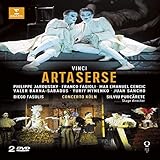
I can’t help but mention one of the more enlightening but weirdest baroque operas I have ever seen, Artaserse by Leonardo Vinci after a libretto by Metastasio.  It premiered in Rome in 1730 in a theater on the famous Via Margutta.

In those days, women were forbidden on the stage, and so male sopranos and castrati, also en travesti, sang the roles.

Now for the weird. (If that wasn’t strange enough.)

There was a production of Artaserse in 2012 with an all male cast, of countertenors.

It was an odd thing to watch, since the artistic approach seemed to blend in support aspects of Japanese Noh theater!  This is reflected in makeup and the fact that you see the stagehands in black, as if they are “invisible” and you are taken out of the stage and into the wings, which becomes part of the stage as a result. US HERE – UK HERE

It is hard to imagine that a male, human voice can do some of these things.

You have to imagine an over-the-top baroque theater in Rome in the early 18th century, full of people with wigs and snuff boxes, perhaps wearing cloaks and masks. 
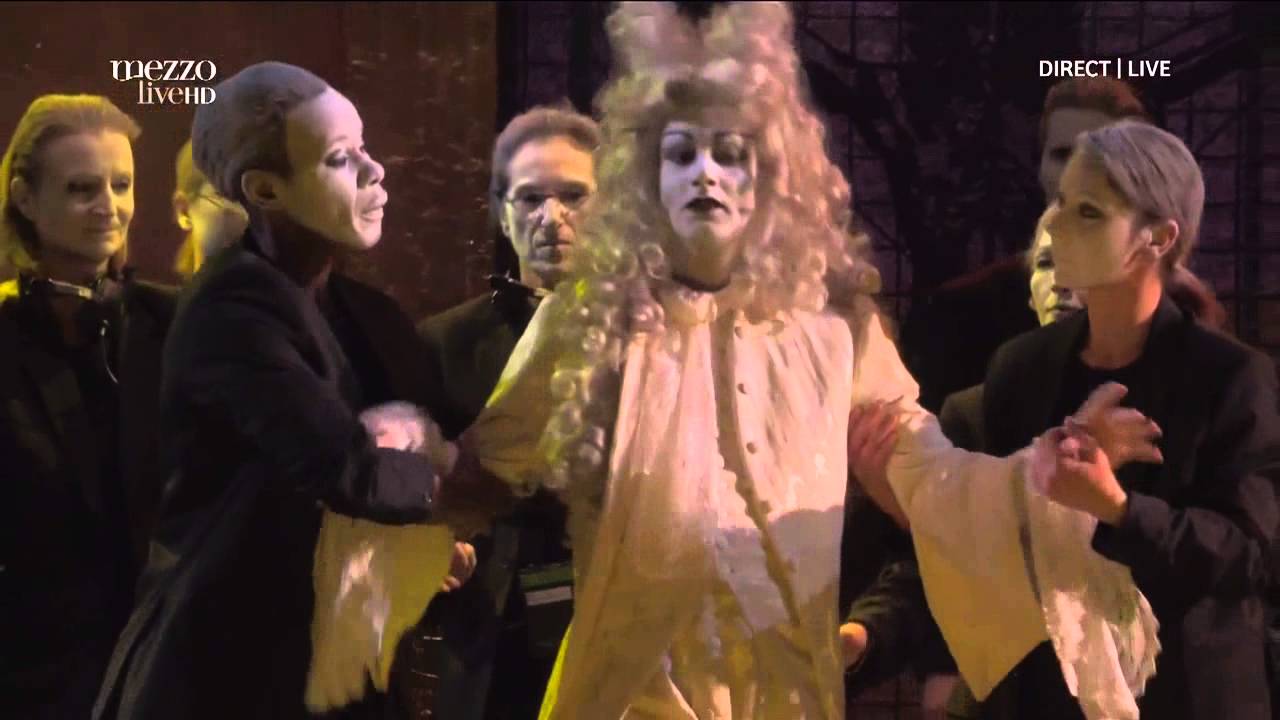
The opera premiered during carnovale on 4 Feb 1730.

The old Benedict XIII, Orsini, – instantly recognizable – once a Dominican friar, would die on 21 February.  (Probably not because of this opera… but who knows?)

Benedict XIII had dedicated the Spanish Steps built by the French as a gift to the city (and their own glory). He was a terrible ruler as Pope, who allowed a corrupt cardinal to run amok, later excommunicated by Clement XII.  Benedict’s cause has been opened and closed and opened several times, including in 2017!    We’ve seen really bad Popes…. haven’t we.

Try to get your mind around the fact that, in 1730, these singers, especially the famous castrati, were fanatically acclaimed, even more than great rock stars of our day. People went nuts for them. Composers, such as Handel, wrote operas around their voices, to showcase them.

Here’s Franco Fagioli… yes, you read that right… with “Vo solcando un mar crud”.  Note the Noh!

YouTube thumbnailYouTube icon

Artaxerxes… Ezra… Artaserse… Fagioli.  That’s how we got here.

Posted in SESSIUNCULA | Tagged
5 Comments

Daily Rome Shot 503, et al.

It’s Amazon PRIME DAY (still).  Great deals.

Please remember me when shopping online.  This is huge for me. Thanks in advance.  US HERE – UK HERE

Today in 1972 Robert James Fischer failed to show up for Game 2 of the World Championship Match with Boris Spassky.   Hence, after 2, Fischer 0 – Spassky 2.   Very hard to come back from a 2 point deficit.   1 point for a win and 1/2 for a draw.

Another easy puzzle from Chess.com today… White to move and crush.

Meanwhile, remember to patronize the great traditional Benedict monks of Le Barroux, who are making wines from the revived vineyards of the Avignon Popes. They feature now the Via Caritatis Vox Rosé.    HERE

10% discount with code: FATHERZ10

YouTube thumbnailYouTube icon

It is possible that some of you have never had a good Rosé.  I assure you, they do exist.

Posted in SESSIUNCULA | Tagged
1 Comment

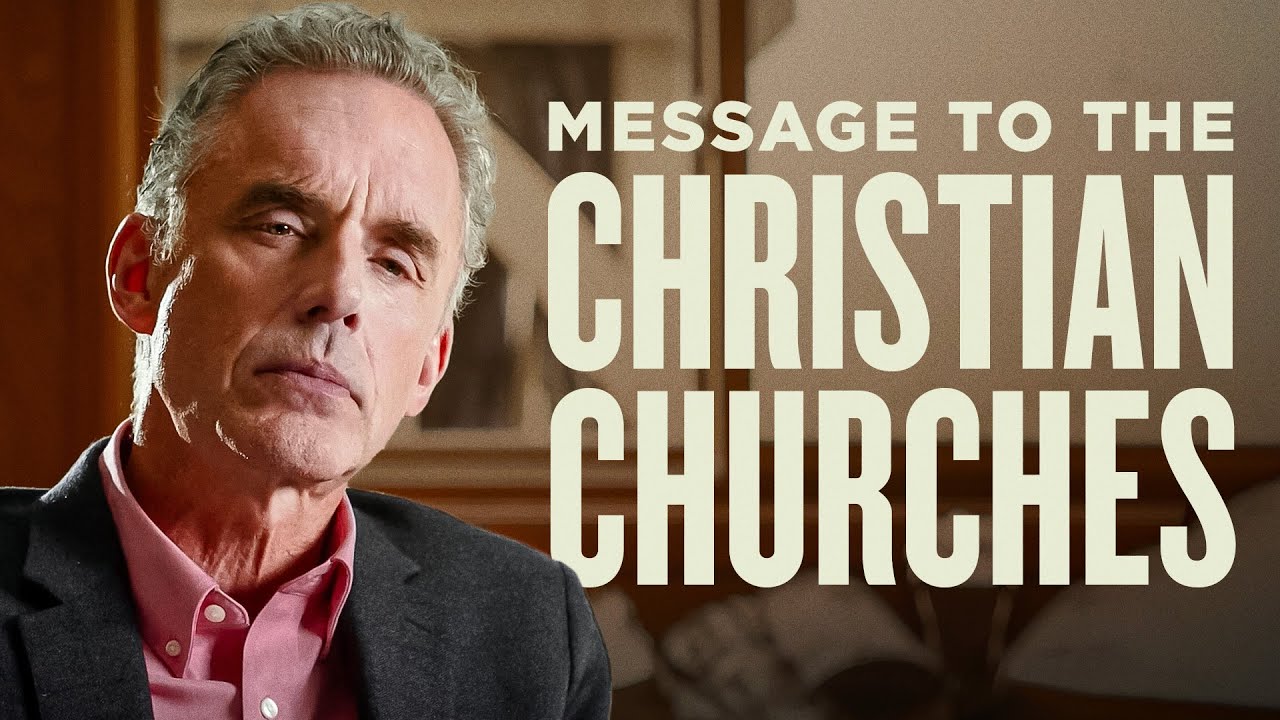
Jordan Peterson: Message to the Christian Churches

There is a lot to discuss in this.  At some point we should try for a transcript. Listen to the whole thing before reacting. I know, I know… there’s combox and some people click into full “OOGA BOOGA” mode and have to start spouting before they’ve even gotten past the title. Try for a little patience. It won’t hurt.

YouTube thumbnailYouTube icon

BTW… what group within the Catholic Church is more aligned with Peterson’s message than most others? And what does that say about those who are trying to suppress them?

Posted in "How To..." - Practical Notes, The future and our choices | Tagged
29 Comments

“There will be some friction points along the way, but they will begin to integrate.   That’ll be something to see.”

I have long observed that a demographic sinkhole is opening up under the Church here in these USA.   The fact is that lots of “nones” will stop even pretending to embrace the family religion.  Also, the inexorable movement of time is applying the “biological solution” to us all.  We will lose a lot of seasoned Catholics and, with them, their financial support.  Their children are already going and gone.

Corona lockdown melodrama has accelerated the opening of the sinkhole.  I suspect that quite a few people who barely went to church will disappear pretty much for good.  A stronger Church and stronger bishops would have made a little difference, however.  The weakness we showed, however, did huge damage.

That said, many traditional Masses kept going and traditional priests found creative ways to keep things going.  This did not go unnoticed, either by the rank and file nor by the powers that be.

I still believe that as the sinkhole widens, two main groups will stay strong, those who want Tradition and also those who are converts from an evangelical background along with charismatics with sound devotions.  These groups will find each other.  There will be some friction points along the way, but they will begin to integrate.   That’ll be something to see.

Thus I come to my point.  I saw a really interesting story that dovetails with what I describe above.

From Faithwire:

‘God Is Gonna Use Her’: Meet the Incredible McDonald’s Worker on Mission From God to Pray With and Inspire Customers

A Mississippi McDonald’s worker inspires customers and her community daily by sharing her faith — and prayer — with those who visit her restaurant.

Brenda Wilson’s story emerged after a photo of her impromptu prayer with a customer gained traction on social media. Now, she’s explaining why she takes the time to pray with those she encounters.

“Because all things are possible through Jesus Christ. If I didn’t have God, ain’t no way these folks are going to stand here and let me pray through the drive-thru and hold up their times,” Wilson told WLOX-TV. “We have times that we have to go through, but he allows me 15 seconds with each one that I pray with. It’s like, when they leave and have tears in their eyes, I know God touched your heart.”

She said she feels led by God to offer these prayers — and others agree.

A customer named Dylan Brooke shared a Facebook message last month detailing a recent interaction with Wilson, and it inspired thousands.

“She stopped me while I was going to get my drink and told me God told her she needed to pray for me right then and there,” Brooke wrote. “I’ve been silently struggling with a few things lately and having a hard time figuring it all out.”

Brooke said Wilson “got on her knees” and prayed over her struggles — issues she knew nothing about but was somehow still able to offer comfort. The customer said she “left in tears.”

“She hit every spot. Word for word, every issue. She knew,” Brooke wrote. “God works in mysterious ways.”

Wilson told WLOX-TV, while she now inspires others, her own life experience came with severe challenges. As a child, she was abused and faced difficulties that caused her to wonder, early on, if there even was a God.

[…]

Never underestimate the power of an invitation.

Fuse this sort of evangelical zeal, this level of personal skin in the game with the stability and clarity that is founded in the Traditional Latin Mass…

Posted in Hard-Identity Catholicism, Our Catholic Identity, The Coming Storm, The future and our choices | Tagged
11 Comments