Chilean Archbishop “forbids” Traditional Mass by internet. HA! HA! HA! HA! HA! HA! HA! HA! HA! HA! HA! HA!

This is just lunatic stuff. Do you suppose he still uses a rotary dial phone?

All the more reason for priests everywhere to start live streaming their TLM.

Posted in ¡Hagan lío!, Be The Maquis |
16 Comments

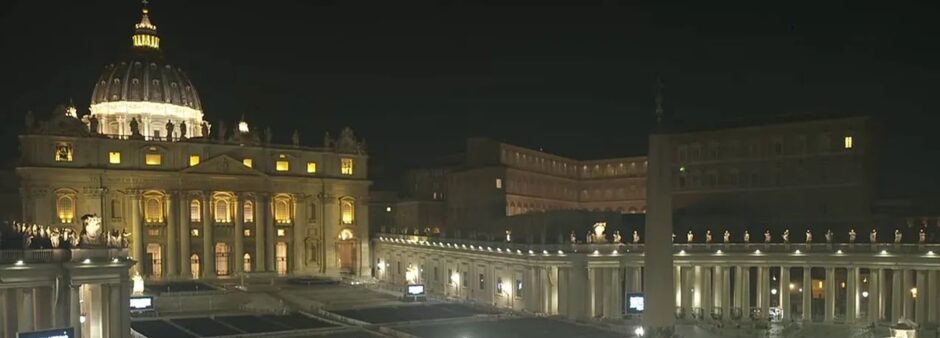
Rome Shot 246

Photo by The Great Roman™

click

Posted in SESSIUNCULA | Tagged
2 Comments

ASK FATHER: May a Catholic elope?

From a reader…

QUAERITUR:

May a Catholic elope? Is this a valid marriage? If not, how did one correct it?

GUEST PRIEST RESPONSE: Fr. Tim Ferguson

May a Catholic elope? Presuming said Catholic has a paramour of the opposite gender, sufficient finances to pay for the bus fare, and a free afternoon, certainly!

May a Catholic elope and have it considered to be a true and valid marriage? That’s perhaps a bit more complicated.

Catholics understand that marriage is a contractual, covenantal arrangement. Catholics understand that, between baptized persons, marriage has been raised by Christ the Lord to the dignity of a sacrament. Catholics understand that a wedding – the sharing of consent between two persons to bring about their lifelong commitment – manifests a living symbol of God’s love for His people, Christ’s love for His Church, and a remedy for that soul-achingly angsty question asked by each and every human soul: despite our uniqueness, we were not made to be alone. Marriage – and the wedding that sets it off – is not “about the couple” despite what decades of Hollywood and Madison Avenue solons have attempted to say. Marriage takes place within the context of a community. It belongs to all of us. Your family, friends, colleagues, compadres, associates, well-wishers, fellow parishioners, and even a few disinterested strangers have a reasonable expectation that they will be included in the wedding, and allowed to bask in the effluent grace emanating from your act of matrimonial consent. It need not be a big, complicated, and expensive affair. Flowers are optional, as are an elaborate ball gown, a rented tuxedo, a harpist, professional photographer, silken bags of Jordan almonds, and diminutive tumblers with bells on their slippers.

Centuries of literature about elopement demonstrate that there are situations and circumstances where a marriage can be done in this manner, and sometimes there are circumstances that warrant it. Personally, I think those circumstances are quite rare. If your father would fly into a murderous rage at the thought of you daring to marry a Montague, perhaps running off to Friar Lawrence (though I’m not sure that barely turning 14 is a good time for making such a life altering decision). If your village elders rigidly refuse to allow persons with considerable melanin in the basal layer of their epidermis to marry persons with very little melanin in their epidermis, traveling to the next county where more reasonable laws prevail might be justified.

Regardless, for the marriage of a Latin Catholic to be valid, the couple will need to marry in the presence of at least two witnesses and a qualified minister of the Church. The law presumes that the couple will marry at their own parish church, or at least at the parish church of one of them (canon 1115). If not, the couple should get permission from their pastor to marry elsewhere. If the couple were to elope without seeking their pastor’s permission, the marriage would still be presumptively valid, if they marry in the presence of the pastor of the church where they wed, or in the presence of a priest or deacon delegated by that pastor. Most pastors aren’t going to take kindly to a couple simply showing up on the front porch asking to be wed – some form of marriage preparation is customary, and in some dioceses, legislated. Six months seems to be the common average. Marriage is not something to rush into.

If a couple has eloped without getting their marriage officiated by a priest or deacon who is qualified to do so (e.g.,, if they ran off and got married in Vegas by an Elvis impersonator), they will need to have their marriage regularized. See your local, friendly pastor for advice on the steps that need to be taken to fix the situation, as there may be particular wrinkles that need to be ironed out.

Posted in "How To..." - Practical Notes, ASK FATHER Question Box, HONORED GUESTS | Tagged ,
3 Comments

From Hell’s Bible: “Pope Francis Is Tearing the Catholic Church Apart”

Yesterday Hell’s Bible (aka New York Times) published an op-ed which is a cri de coeur about what is going on in the Church today.   Take this together with Damian Thompson’s recent podcast.  My emphases and comments.


OPINION
GUEST ESSAY

Pope Francis Is Tearing the Catholic Church Apart
Aug. 12, 2021

By Michael Brendan Dougherty

Mr. Dougherty, a senior writer at National Review, has written extensively about faith and the Roman Catholic Church.

In the summer of 2001, I drove up to Poughkeepsie, N.Y., to find what we called “the traditional Latin Mass,” the form of Roman Catholic worship that stretched back centuries and was last authorized in 1962, before the Second Vatican Council changed everything. Back then, conservative Catholics called people who sought it out “schismatics” and “Rad Trads.”

The Mass-goers there weren’t exactly a community; we were a clandestine network of romantics, haters of Pope John Paul II, people who had been jilted by the mainstream church [lots of those] and — I believe — some saints.

There I learned that the Latin language was not the only distinguishing feature of this form of worship. The entire ritual was different from the post-Vatican II Mass. It wasn’t a mere translation into the modern vernacular; less than 20 percent of the Latin Mass survived into the new.

It took me a month to adapt to its rhythm. But in that thick August air, the long silence before the consecration of the host fell upon my heart, like sunshine landing on the bud of prayer for the very first time.

Years later, Pope Benedict allowed devotees of this Mass to flourish in the mainstream of Catholic life, a gesture that began to drain away the traditional movement’s radicalism and reconcile us with our bishops. Today, it is celebrated in thriving parishes, full of young families.  [If he knows anything accurate about Traditional Catholics one would think that Francis wants the radicalism and breaks with bishops to return.  Otherwise, … why the brutality?]

Yet this Mass and the modestly growing contingent of Catholics who attend it are seen by Pope Francis as a grave problem. He recently released a document, Traditionis Custodes, accusing Catholics like us of being subversives. To protect the “unity” of the church, he abolished the permissions Pope Benedict XVI gave us in 2007 to celebrate a liturgy, the heart of which remains unchanged since the seventh century.

For those of us who travel long distances to participate in it, its perseverance is a religious duty. For the pope, its suppression is a religious priority. The ferocity of his campaign will push these young families and communities toward the radicalism I imbibed years ago in Poughkeepsie, before Benedict. It will push them toward the belief that the new Mass represents a new religion, one dedicated to the unity of man on earth rather than the love of Christ.

In the Latin Mass, the priest faces the altar with the people. It never had oddities, as you sometimes encounter in a modern Mass, like balloons, guitar music or applause. The gabby religious talk-show host style of priest is gone. In his place, a priest who does his business quietly, a workmanlike sculptor. By directing the priest toward the drama at the altar, the old Mass opens up space for our own prayer and contemplation.

In the years after Pope Benedict liberalized the old rite, parishes began to bring back the mystical tones of Gregorian chant, the sacred polyphony written by long-dead composers like Orlando Lassus and Thomas Tallis as well as contemporary composers like Nicholas Wilton and David Hughes.

These cultural offshoots of the Latin Mass are why, after Vatican II, the English novelists Agatha Christie and Nancy Mitford and other British cultural luminaries sent a letter to Pope Paul VI asking that it continue. Their letter doesn’t even pretend to be from believing Christians. “The rite in question, in its magnificent Latin text, has also inspired a host of priceless achievements in the arts — not only mystical works, but works by poets, philosophers, musicians, architects, painters and sculptors in all countries and epochs. Thus, it belongs to universal culture as well as to churchmen and formal Christians.”

But the Vatican Council had called for a revision of every aspect of the central act of worship, so the altar rails, tabernacles and baldachins were torn up in countless parishes. This ferment was accompanied by radical new theologies around the Mass. A freshman religious studies major would know that revising all the vocal and physical aspects of a ceremony and changing the rationale for it constitutes a true change of religion. Only overconfident Catholic bishops could imagine otherwise.

The most candid progressives agreed with the radical traditionalists that the council constituted a break with the past. [I recall that Karl Rahner thought it was the most important event since the Council of Jerusalem.] They called Vatican II “a new Pentecost” — an “Event” — that had given the church a new self-understanding. They believed their revolution had been stalled in 1968 when Pope Paul VI issued “Humanae Vitae,” affirming the church’s opposition to artificial contraception, and then put it on ice in 1978 with the election of Pope John Paul II.

To stamp out the old Latin Mass, Pope Francis is using the papacy in precisely the way that progressives once claimed to deplore: He centralizes power in Rome, usurps the local bishop’s prerogatives and institutes a micromanaging style that is motivated by paranoia of disloyalty and heresy. Perhaps it’s to protect his deepest beliefs.

Pope Francis envisions that we will return to the new Mass. My children cannot return to it; it is not their religious formation. Frankly, the new Mass is not their religion. [What an incredibly sad thing to read. I am right now pondering the amazing grace I was given to have come into the Faith and the Church at St. Agnes in St. Paul, MN during the pastorate of Msgr. Richard Schuler.   But so many Catholics had simply to suffer the lunacy of the 60’s-90’s without any relief, not even a decently celebrated Novus Ordo Mass.  It is incredible that people still go to Mass at all in some places.] In countless alterations, the belief that the Mass was a real sacrifice and that the bread and wine, once consecrated, became the body and blood of our Lord was downplayed or replaced in it. With the priest facing the people, the altar was severed from the tabernacle. The prescribed prayers of the new Mass tended never even to refer to that structure anymore as an altar but as the Lord’s table. The prayers that pointed to the Lord’s real presence in the sacrament were conspicuously replaced with ones emphasizing the Lord’s spiritual presence in the assembled congregation.

The prayers of the traditional Mass emphasized that the priest was re-presenting the same sacrifice Christ made at Calvary, one that propitiated God’s wrath at sin and reconciled humanity to God. The new Mass portrayed itself as a narrative and historical remembrance of the events recalled in Scripture, and the offering and sacrifice was not of Christ, but of the assembled people, as the most commonly used Eucharistic prayer in the new Mass says, “from age to age you gather a people to Thyself, in order that from east to west a perfect offering may be made.”

For Catholics, how we pray shapes what we believe. [And vice versa.] The old ritual physically aims us toward an altar and tabernacle. In that way it points us to the cross and to heaven as the ultimate horizon of man’s existence. By doing so, it shows that God graciously loves us and redeems us despite our sins. And the proof is in the culture this ritual produces. Think of Mozart’s great rendition of faith in the Eucharist: “Ave Verum Corpus” (Hail True Body).

The new ritual points us toward a bare table, and it consistently posits the unity of humankind as the ultimate horizon of our existence. In the new Mass, God owes man salvation, because of the innate dignity of humanity. Where there was faith, now presumption. Where there was love, now mere affirmation, which is indistinguishable from indifference. It inspires weightless ditties like “Gather Us In.” Let’s sing about us!

I believe the practice of the new Mass forms people to a new faith: To become truly Christian, one must cease to be Christian at all. Where the new faith is practiced with a zealous spirit — as in Germany now — bishops and priests want to conform the religion’s teaching to the moral norms of the nonbelieving society around them. When the new faith was young, after the council, it expressed itself in tearing up the statues, the ceremonies and religious devotions that existed before.

I don’t know if bishops will adopt Francis’ zeal to crush the Latin Mass. I don’t know how painful they are willing to make our religious life. If they do, they will create — or reveal — more division in the church. The old slogan of the traditional Latin Mass movement comes to mind: We resist you to the face.

I have faith that one day, even secular historians will look upon what was wrought after Vatican II and see it for what it was: the worst spasm of iconoclasm in the church’s history — dwarfing the Byzantine iconoclasm of the ninth century and the Protestant Reformation.

Pope Benedict had temporarily allowed us to begin repairing the damage. What Pope Francis proposes with his crackdown is a new cover-up.

Michael Brendan Dougherty, a senior writer at National Review and a visiting fellow for the social, cultural and constitutional studies division at the American Enterprise Institute, is the author of “My Father Left Me Ireland: An American Son’s Search for Home.”


I am interested in your reactions to this.

Meanwhile, become a CUSTOS!  HERE

Posted in Cri de Coeur, Traditionis custodes | Tagged
43 Comments

The Lord promised that Hell would not ultimately prevail. But….

Holy Mother Church is indefectible.  The Lord promised that Hell would not ultimately prevail.

He didn’t, however, promise that it wouldn’t prevail quite a lot.

He made no promises about the mighty Church in N. Africa or Asia Minor… or these USA… or Rome.

Take 18 minutes and listen to Damian Thompson’s sobering new podcast.

HERE

I am reminded of an answer I got from a bishop as we were relaxing after a conference where we were both speakers.   I asked him about the state of the Church and, as a follow up, what we had to do to reverse the situation.  His answers, in rapid response…

“TERRIBLE!”

“The first thing we have to do it stop blowing sunshine up everybody’s …..”


Posted in The Coming Storm, The future and our choices | Tagged
7 Comments

Daily Rome Shot 245

Photo by The Great Roman™

Use your
phone’s camera

Posted in SESSIUNCULA | Tagged
9 Comments

ASK FATHER: What are the different kinds of exorcism, and why would one be used instead of another?

From a reader…

QUAERITUR:

I’ve heard mention on this site from time to time of various Titles of exorcism.  What are the different kinds of exorcism, and why would one be used instead of another?  Are certain kinds reserved for Popes, Bishops, or Abbots?  Can Deacons exorcise?

Frankly, any Christian might be able to exorcize.  One of the most awesome exorcists of the Medieval period was St. Catherine of Siena.   Also, the Lord dispatched his disciples to preach, to heal and to cast out demons.  They weren’t ordained yet.  And there were, as you remember, those whom the disciples rebuked because, although they were not in their circle, they were casting out demons in Jesus name (Mark 9:38).  The Jews, before the time of Christ, has exorcists (cf. Acts 19:13).  Heck, even handkerchiefs were used to drive out demons (Acts 19:12).  Moreover, among the minor orders conferred on MEN before ordination to the major orders of subdeacon, deacon, and priest (and bishop), there was ordination as an “Exorcist”.    This order went all the way back to at least the 3rd century.

Some people have this gift.  It is not something to be presumed upon, however.

This is serious business, on the one hand.  On the other, it ought to be fairly routine.   Remember that the Devil and demons are the “apes of God”.  They do nothing original.  They are like clowns, in a way.  They are at the same time to be considered with derision and taken quite seriously.  Though they are fallen, they remain angels, and that is not a joke of any sort.   Possession is their hideous way of aping the Incarnation.

The Church gets to regulate how sacraments are celebrated and how sacramentals are used.  Exorcism is a sacramental.   The Church has had for a very long time now carefully crafted Rites of Exorcism.  These have been developed through centuries of experience of what actually works.  Is there only way to perform an exorcism.  No.  However, it is a really good idea to be guided by the Church, the greatest expert on humanity and supernatural questions that there ever has been or ever could be.  To depart from that guidance would be folly.  It could be incredibly dangerous folly.

Let me add here that NO ONE – NO LAY PERSON should start trying to exorcize just because of what I wrote, above. That would be rash and hazardous.

That said, there are certain kinds of “deliverance prayers” and “minor exorcisms” that lay people can pray and they can be effective.  However, just as in the case of the full-blown Rite of Exorcism, the person saying the prayers had better be in the state of grace.  If you start poking at demons and you are in the state of mortal sin, you are asking for serious trouble.  JUST DON’T.

Now, pay attention.  I just wrote “JUST DON’T”.  That said, there is a kind of a self-exorcism, or, better, deliverance prayer, which a lay person can and should recite: Prayers to Break the Freemasonic Curse.  These are to be said by someone who was initiated into Freemasonry or by descendants of Freemasons, adjustments being made for the differences in, for example, British and American Freemasonry.   Freemasonry is evil.  It is of Hell.  Catholics are forbidden to belong to any type of organization with ties to Freemasonry.   It gives demons access and can result it oppression and possession.   Once involved, the ties with Freemasonry have to be renounced and broken, even by descendants, for that reason that parents have authority over their children, who are brought into the Freemasonic influence by their commitments.

There are exorcisms that are reserved.  For example, in the Roman Ritual in the section called Title XI, chapter 2 has the Rite of Exorcism of a person.  This is reserved to bishops (successors of the Apostles) and to those priests to whom the bishop delegates his authority.  The diocesan bishop is, after all, the THE exorcist in his diocese.  Were a priest to use XI,2 without the bishop’s mandate, the exorcism could be effective, but without question it would be more authoritative with the bishop’s mandate.  In effect, that mandate is so important, that priests shouldn’t try to exorcize without it.  Perhaps if there were a serious case of necessity, that might be an exception.  For example, if a group were stranded on an island with a priest and someone was possessed, the priest (who no doubt would have his copy of the Ritual with him) could go ahead.   But that priest had better make as perfect an Act of Contrition as possible, because exorcism in the state of mortal sin is potentially hazardous.  Even if the priest would succeed, that demon would want someone else to latch onto.  As a matter of fact, exorcists will tell you that everyone involved in an exorcism should be in the state of grace through confession and sacramental absolution.  Otherwise… bad.

As a matter of fact, the rubric at the beginning of XI.2 says, in Latin: “The priest delegated by the Ordinary, properly confessed, or at least in his heart detesting his sins, once the Most Holy Sacrifice of the Mass is finished, if that was practical to accomplish, and once divine help was begged by means of pious prayers, dressed in surplice and a violet stole, and having the obsessed person bound up before him, if there is danger…”.

The fact is that there is danger of physical harm in some exorcisms.  Sometimes people have to be restrained.   The demon has control of the energumen’s, the possessed person’s body and demons don’t like exorcists or those who help them.

An important take away in this is that, while GOD is the one who truly exorcizes, the personal state of the priest is important.  This is a sacramental, not a sacrament.  An unholy priest in the state of mortal sin, even a priest who is actually possessed, validly absolves and validly consecrates the Eucharist.  But a priest who is not living a holy life is, during an exorcism, going to have a really bad time with the demon, who knows what his problems are, and is also open to getting to be that demons next playground.

According to the Church’s present practice, the delegation to exorcise using XI.2 cannot be given to a deacon.

That’s for XI.2.  Then there is XI.3.

Title XI, Chapter 3 is an exorcism of a place or thing, not a person.   It contains the longer St. Michael Prayer.  It is my strong conviction that lay people should not use this prayer, even though it is included in the vernacular in some devotional books and traditional hand missals.  For example, I think that the fine Angelus Press hand missal has it.  The Rituale says that it can be used by bishops and by priests who have authority “ab Ordinario“… which is usually the diocesan bishop, although there are different kinds of “ordinaries”.  For example, a Vicar General is an Ordinary.  I’ve consulted with various expert exorcists and have come to understand that XI.3 can be used privately by priests, but if they are going to do something public, they have to have the authority from the Ordinary.  That certainly adds punch to it, because demons are the ultimate legalists.   So, Father could, were he to suspect that there was something nasty over in the church hall or perhaps the school … or the rectory… say XI.3 without anyone else around and then bless the place and see what the effect is.   But if, for example, some satanic loon busted up a statue of the Blessed Virgin outside the church, and left obvious signs and maybe even fortunas (cursed objects intended to cause possession) and if Father wanted to have a more public “cleansing” of the damage, he should either get the bishops (who is the true exorcist) or get his mandate to use XI.3 publicly.

BTW… the longer St. Michael Prayer, from Leo XIII, contains language that deals not just with demons, but also with their human cooperators and agents, which meant especially in Leo’s time, Freemasons.   Popes through history have clearly, resoundingly condemned Freemasonry, not only for its spiritual dangers but also for its mundane, secular work to undermine the Catholic Church for its deeper, Satanic aims.

To sum up, the Church regulates who can pray the major exorcisms.  Common sense and experience suggest that, if you are not a priest, you had better not dabble in this stuff, even the minor exorcisms, especially if you have the slightest doubt about being in the state of grace.  That said, there is a charism from God for casting out demons, and He can give it to whom it pleaseth Him to give it.  It should not be presumed.  It would have to manifest itself somehow, for example a possessed person reacting harshly to the presence of the person who has it, as they would to the presents of Holy Water, relics, etc.  Don’t go around trying to exorcize people to see if you’ve got it.  You would not only look foolish, you would authentically be foolish.

Finally, just to be clear.  Lay people, for the most part, leave all this stuff to priests.  Ask priests for their blessing.  If there is something manifesting itself in your life or in your house, get a sound, level-headed tradition-minded priest involved.  Go ahead and use sacramentals, properly blessed.  And remember that sacraments are more powerful than sacramentals.  If you GO TO CONFESSION! that will do more than your average half-grasped deliverance prayer.

And may I remind everyone that the mightiest verbal prayer of all, the prayer Our Lord taught us and told us to pray, contains… “libera nos a malo… deliver us from evil”!  If you think about is, that’s an exorcism prayer.

The moderation queue is ON.
Posted in "How To..." - Practical Notes, ASK FATHER Question Box | Tagged
5 Comments

Daily Rome Shot 244

Photo by The Great Roman™

click

Posted in SESSIUNCULA | Tagged
3 Comments

¡Hagan lío! Invitation to Bishops and Priests to Fast, Recite Leo XIII’s Exorcism Prayer on Vigil of the Assumption

I was sent this.  It seems like a good thing to do (pace certain prelates).


INVITATION
TO BISHOPS AND PRIESTS FROM AROUND THE WORLD
TO A DAY OF FASTING
AND THE RECITATION OF THE EXORCISM OF LEO XIII
ON THE VIGIL OF
THE ASSUMPTION OF THE BLESSED VIRGIN MARY INTO HEAVEN

In this moment of very serious spiritual and material crisis, in which the public Authorities support the plans of the New World Order and the Shepherds are silent accomplices in the face of the destruction of society and of the Church of Christ herself, it is our sacred duty to unite ourselves to the spiritual battle, aligning ourselves without hesitation under the banners of Christ our King and Mary our Queen.

The Lord has given to Bishops and Priests the power to cast out demons in His Name. Already on Holy Saturday of 2020 many of them welcomed my appeal with generosity and a supernatural spirit. Today I intend to renew this appeal. I ask, therefore, my venerable Brothers in the Episcopate and Priesthood to dedicate the Vigil of the Assumption of the Most Blessed Virgin Mary to prayer and fasting, and to reciting the Exorcismus in Satanam et angelos apostaticos of Leo XIII (Rituale Romanum, Tit. XII, Caput III) [NB: Title XI, not XII], at the hour of 12 noon in Rome. [EDT – 0600] This sacramental will be placed under the mantle of the most fearful Adversary of the infernal powers, so that the choral prayer of the Ministers of God will remove from the Church and the world the snares of the Enemy of mankind which today threaten society, families, individuals, and in a particular way the faithful of Christ.

The secularized world, and along with it not a few Shepherds, will be able to mock this appeal and the Exorcism itself, considering it the legacy of a past to be cancelled along with the Faith of our fathers. But we know well that, although we are unworthy sinners, a power has been given to us by Our Lord which terrorizes the Gates of Hell and its servants.

In the silence and fasting which prepares us for the Feast of the Assumption of the Queen of Heaven, let us invoke the Most Holy Virgin, terrible as an army set in battle array [Cant. 6:9], and Saint Michael the Archangel, the Patron of the Holy Church and Prince of the Heavenly Hosts.

+ Carlo Maria Viganò, Archbishop

12 August 2021
Sanctae Clarae Virginis


Speaking of being cancelled…

Posted in ¡Hagan lío!, ACTION ITEM!, Be The Maquis, Cri de Coeur, Priests and Priesthood, Save The Liturgy - Save The World | Tagged , ,
2 Comments

Fr. Murray on bishops, ‘c’atholic pro-abortion politicians (=Democrats), and Eucharistic coherence

CLICK ME

My friend Fr. Gerald Murray has a good piece at, surprisingly, the UK’s once great Catholic Herald. HERE He tackles the problem of catholic Democrat politicians who promote abortion while claiming to be faithful members of the Church.   Rightly, Fr. Murray says that the bishops, who theoretically might some day write a document about “Eucharistic coherence”, need to instruct these pro-abortion politicians for their own sake and for the sake of correcting the scandal they cause.

A couple of tastes….

They [73% of US who voted in favor of a document on Eucharistic coherence] have also given a clear sign that a sizeable majority of the bishops was not swayed by the claim that discussing the application of canonical norms (canons 915 and 916) in the case of pro-abortion elected officials is somehow a “politicisation” or “weaponisation” of the Holy Eucharist.

What can we say about the 27% other than that they may be perhaps to thick to get the problem or that they are quislings in bed – for whatever advantage there might be – with the politicians who promote the murder of the pre-born?

More…

Slam-word alarmist slogans, wielded as verbal hammer blows, do not have any real meaning, which is precisely what slogans are for: to act as substitutes for thought, designed to end any further discussion. The reasons for denying Holy Communion to Catholic elected officials, including President Joe Biden, who promote abortion are: firstly, to rebuke them and to call them to recognise their error, repent and retract. Secondly, to remind other Catholics that supporting abortion is seriously wrong and must be rejected if one is to be faithful to Christ. Thirdly, to proclaim to everyone that abortion is not a healthcare choice, but rather a barbaric practice that is offensive to God and is incompatible with any standard of human rights and justice in a civilised society.

Excellent.

Then Fr. Murray calls out the 60 catholic House Dems who wrote the incoherent, shameless, scandalous, intelligence-insulting letter to the Bishops.

You can see that on your own.  However, here are a couple more snips…

Our bishops should note that there is no need for further investigation and dialogue as the witnesses have come forward and volunteered their testimony.

The endless cant about dialogue with these people must end.

For sure, they [bishops who act correctly about pro-abortion pols re: can. 915, etc.] will be criticised by people who see the Catholic bishops as just another group of political players trying to sway voters.

The problem is that in the last few decades the bishops have collectively squandered virtually every scrap of moral capital that was ever attributed to them, merited or not.

We shall what they actually DO.  Deeds, not words, are all that count now.

I’m not holding my breath.

Meanwhile, having dealt with our own consciences, we need to pray for those politicians.  Even more we need to pray for our bishops… that they be bishops, who are not weak-kneed and who cave in under the slightest left-wing pressure.


Posted in Emanations from Penumbras, The Coming Storm, The Drill, The future and our choices | Tagged ,
4 Comments
























