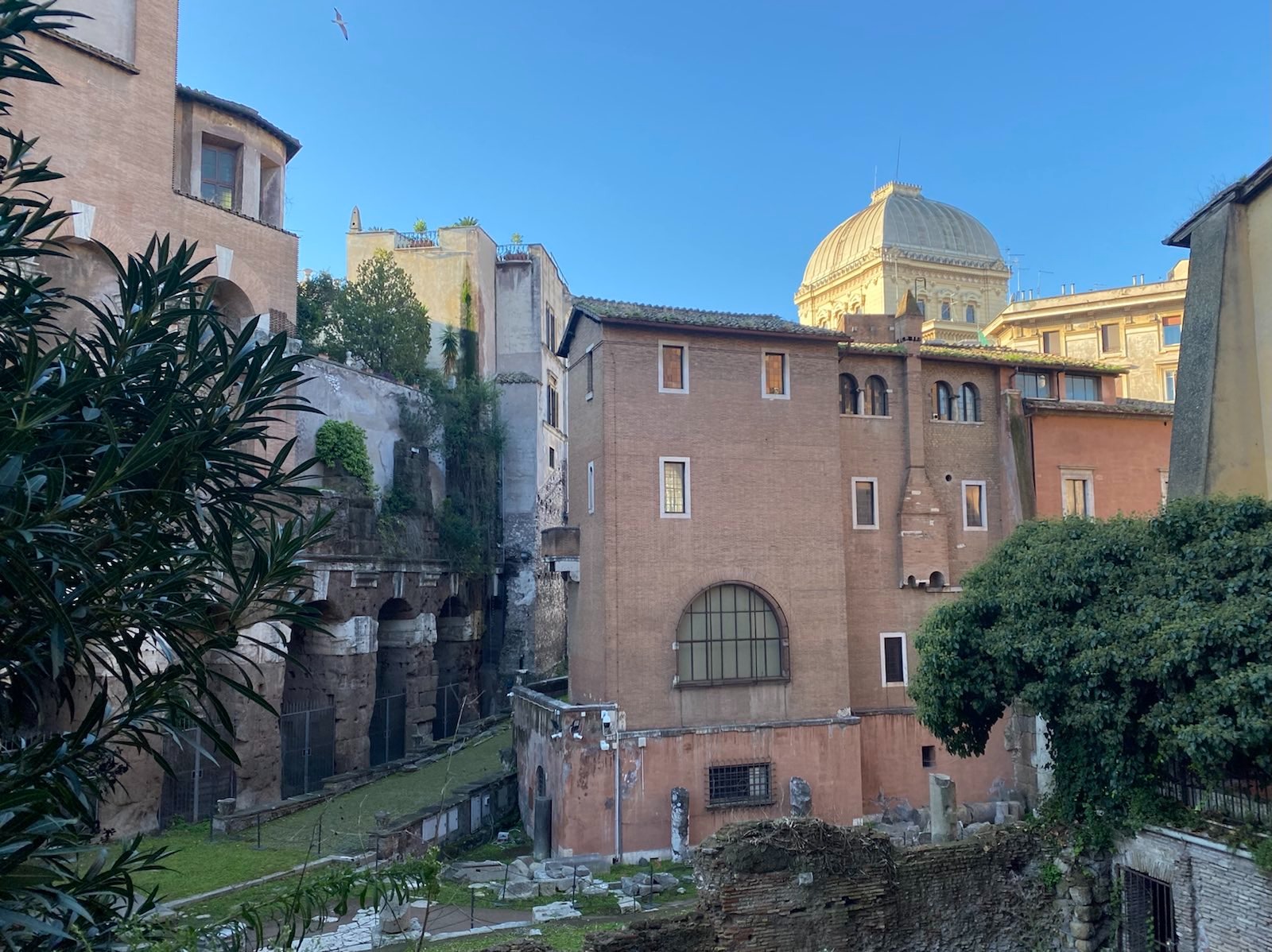
Archd. NEWARK – 18 July ’21: Celebration of O.L. of Mt. Carmel with PONTIFICAL SOLEMM MASS (TLM)

If I am not mistaken, this is Bp. Serratelli’s home parish. Also Bp. DiMarzio.

Fitting.

I participated in this one year.  It was fantastic.


Posted in Just Too Cool | Tagged
4 Comments

Analogies usually limp, but they are still helpful

I saw today sometime, I don’t recall where exactly for it has been busy day, that Joseph Ratzinger referred to the Church’s care of her sacred liturgical worship as like to tending a garden.

I like the analogy.  We prepare the soil and provide water and nourishing fertilizer. We weed and trim and prune.  We make sure that plants that need light are in the sun and those which are more delicate get less.  We know that some plants grown well next to others.  Occasionally we graft.  We can be gardeners, but only God makes things grow.   So, while imperfect, I like the analogy.

A “gardening” aspect that I enjoyed for a long time was the tending of bonsai trees.  These little trees came to mind today, with that gardening analogy.

The care bonsai trees is a good way of thinking about how Holy Church took care of the organic growth of her worship.   They can be carefully and patiently guided into pleasing shapes.  They need attention and prudent pruning at the right moments.  At times the pruning seems harsh, but it is always for the good of the tree, not its destruction.

Here is a nice little video that shows some trimming of a bonsai.  It’s just a couple of minutes. Think, as you are watching, of how the Roman liturgy developed from the time before St. Gregory the Great (+ 604) and until the 20th century.

YouTube thumbnailYouTube icon

Now that you have watched that, here is a video that gives us something of the attitude of Traditionis custodes.

Such progress!  We are now techno-masters of our worship.

YouTube thumbnailYouTube icon

Another thing.  The care and enjoyment of bonsai trees doesn’t make a lot of noise and it is is pretty well established insofar as what you need for it: simple tools, some patient techniques that take time and practice to master.

The tree harvesting, on the other hand, makes a real racket and also violates Laudato si in about a thousand ways.   You just need brute force and a big truck to haul away the haul after cutting a big swath through the woods.


Posted in Lighter fare | Tagged
5 Comments

READER REACTION: “My first inclination is, ‘Really? On the Feast of Our Lady of Mt. Carmel?'”

From a reader…

A couple of thoughts on this great Feast of Our Lady (sigh) …..

My first inclination is, “Really?” On the Feast of Our Lady of Mt. Carmel? It seems so disrespectful to co-opt her Feast day in this way…….. Yet, I find a certain comfort in it; it’s as if Our Lady has intercepted this document, and is telling us, ‘Don’t worry; I’ll handle this one myself.’

Second thought: Mt. Carmel is at the tip of St. Michael’s Sword; is this action a tipping point? Perhaps; I don’t know.

Also, in the children’s vision at Fatima, didn’t they see an angel (St. Michael?) who was about to touch the tip of his sword to the world, and Our Lady stopped him? ………. Recall that Francis had his papacy consecrated to Our Lady of Fatima the day after his election.

Third thought: Your recent post that reminded us that the idol was displayed/reverenced in the Church of Our Lady of Mt. Carmel in Rome.

Today someone quipped to me that Traditionis custodes is translated as Pachamama’s revenge.

If anyone thinks that what we saw today was not an important development in the spiritual battle raging around us – more and more – you are bizarrely, unaccountably naïve.

We will all do well to invoke the the intercession of the Mother of God, Our Lady of Mount Carmel, in this time of need.  I ask her, especially as Queen of Priests, to obtain many graces for her sons in Her Son’s priesthood that they do not lose heart.

POINT OF FACT: Several priests who contacted me who do NOT say the TLM, do not know how, are now more resolved than ever to learn it and use it.

I don’t think this legislation is going to have the result they think it will.

And let us not forget to bring this to St. Joseph, Patron of the Universal Church, Terror of Demons.   This is a special year for Joseph and we should be bringing our petitions to him.   I ask him, on top of continuing to help me with material support, which I now need more than ever, also to guard and protect His beloved Jesus’ priests as he himself protected the infant and growing High Priest.    St. Joseph, help me and help all priests now.

Posted in "How To..." - Practical Notes, Hard-Identity Catholicism, SUMMORUM PONTIFICUM |
28 Comments

“I urge everyone to think carefully about how to approach your local bishops.”

At Rorate there is a strong piece which examines the Motu Proprio. It is by a canonist writing with a nom de plume.

I’ve read it over a couple of times, along with Traditionis, and I’ve been contacted by, and have myself contacted, several canonists today who reference it.

It takes time and sometimes more than one set of eyes to get into a document like this, as well as commentary.

One of my first reactions to Traditionis is that it is not just cruel, it is sloppy.

For example, as the aforementioned canonist points out, Article 3 refers to “‘the “Missal antecedent to the reform of 1970.’ Strictly understood, the Missal antecedent to the reform of 1970 is the editio typica of 1965 with the alterations of Tres abhinc annos of 4 May 1967. This is not the 1962 Missal.”   Yes.  And no.  The 1962 was issued with an editio typica.  In 1965 and 1967 alterations were made, and books were prepared with vernacular translations and a new Ritus Servandus section, but there wasn’t an actual, technical typical edition of 1965 or 1967.

Please allow a digression.

A huge problem with this whole nasty business is that the people who are issuing these decrees and who will enforce them in general do not know the Traditional Roman Rite.  They are judging what they do not know.  If they don’t use it, they don’t know it.  They are working from incomplete knowledge, or perhaps faulty notions.  They are making decisions sometimes based on whether they like the people involved.

Look… the bottom line is this.  There is sloppy language in this document that, frankly, if carefully read with the interpretive principle odiosa restringi et favores convenit ampliari, there isn’t that much that would have to change in a diocese – depending on the bishop.   Sure the document is dreadful: it can be read in a severely restrictive way or be read in a lenient way.   Just as that dreadful footnote in Amoris could be read one way or the other.

I would add to the above the provision of can. 87 –

Can. 87 §1. A diocesan bishop, whenever he judges that it contributes to their spiritual good, is able to dispense the faithful from universal and particular disciplinary laws issued for his territory or his subjects by the supreme authority of the Church. He is not able to dispense, however, from procedural or penal laws nor from those whose dispensation is specially reserved to the Apostolic See or some other authority.

§2. If recourse to the Holy See is difficult and, at the same time, there is danger of grave harm in delay, any ordinary is able to dispense from these same laws even if dispensation is reserved to the Holy See, provided that it concerns a dispensation which the Holy See is accustomed to grant under the same circumstances, without prejudice to the prescript of can. 291.

So, a diocesan bishop can dispense from disciplinary laws, both universal laws and those particular laws made by the supreme ecclesiastical authority (read: Supreme Pontiff) for his territory and his subjects.  Since the provision that the Traditional Roman Rite ought not be celebrated in parish churches (cf. Traditionis Art. 3) is a disciplinary law, and has not been reserved to the Apostolic See, the diocesan bishop is free to dispense from that norm!

Do you want the TLM to continue in your parish church and not in the garage attached to the rectory, a hotel room or the nearby Lutheran church that the local pastorette will let you use for a contribution? Then calm down and think.

I urge everyone to think carefully about how to approach your local bishops and priests.

What sort of attitude and language are going to obtain what you desire?

Consider…

  • Joy and commitment to parish life?
  • Bitterness and being unengaged except for that hour or so on Sunday?

What have I been saying for YEARS?!?

You can lose what you have, people.  Now more than ever.

So, if you are inclined to lash out and make a big scene to your local bishop or priest, then consider how selfish you look in the eyes of those whose opportunities you are casting into the hazard.

This doesn’t mean roll over and let yourself be kicked.  It means think first.

MEANWHILE:

Archbishop Salvatore Cordiloeone of San Francisco told CNA July 16 that “The Mass is a miracle in any form: Christ comes to us in the flesh under the appearance of Bread and Wine. Unity under Christ is what matters. Therefore the Traditional Latin Mass will continue to be available here in the Archdiocese of San Francisco and provided in response to the legitimate needs and desires of the faithful.”

Arlington:

The Diocese of Arlington told CNA that all parishes that had planned on offering Masses in the Extraordinary Form would be able to do so.

I hope that that “planned” means that lots more were going to start it up!

And this from New Orleans:

UPDATE:

Detroit…

UPDATE:

Archbp. Hebda of St. Paul and Minneapolis HERE

D. Madison.

D. of El Paso HERE (good news, mostly)

UPDATE:

D. Grand Rapids.  HERE

Archbp. Gomez, President of the USCCB. HERE  (Remember that conferences can’t tell bishops what to do.  They have no power.)

Posted in "How To..." - Practical Notes, Hard-Identity Catholicism, Liturgy Science Theatre 3000, Save The Liturgy - Save The World | Tagged ,
35 Comments

Today, 16 July, is World Snake Day

Here’s an interesting factoid.

Today, 16 July, is World Snake Day.

Just saying.

Comments are OFF.


Posted in SESSIUNCULA |
Comments Off on Today, 16 July, is World Snake Day

First reactions to “Traditionis custodes”

Today, 16 July, is the Feast of Our Lady of Mount Carmel.  During the Amazonian Synod (“walking together”), it was at her church in Rome, near the Vatican, that the shrine to to the demon Pachamama was set up.

Today, 16 July, is the anniversary of the Great Schism in 1054, when a Bull of Excommunication (not a Pachamama bowl) was lain on the altar of Hagia Sophia.

Today, 16 July, the Manhattan Project for the first time successfully detonated a nuclear weapon. Today is the anniversary of the first nuke in 1945.

In each of those cases, it took a long time to weigh the implications.

It also takes times to absorb and weigh the implications of legislative documents.

That leads me to my first reaction to the Motu Proprio, Traditionis custodes, which effectively insults the entire pontificate of Benedict XVI and the pastoral provisions of John Paul II and all the people they have affected.

Speaking of nukes, while this is quite awful, it is also good in that the line has been drawn.  For all the cant about “unity” – which apparently is something to be forced not fostered – the divisions are now clearer.

Traditionis custodes.  One wonders if anyone in Rome thinks through the titles of documents (Amoris laetitia… The joy of sex…).   This one just screams the maxim of Juvenal: Quis custodiet ipsos custodes?  Without the whole sentence in Latin we can only guess at the meaning: “Overseers of betrayal…” is one option.  “Protectors of surrender…”?

Because it takes time to weigh the implications – questions are flooding my mailbox and phone – I note the following at the end:

Everything that I have declared in this Apostolic Letter in the form of Motu Proprio, I order to be observed in all its parts, anything else to the contrary notwithstanding, even if worthy of particular mention, and I establish that it be promulgated by way of publication in “L’Osservatore Romano”, entering immediately in force….

“entering immediately in force”

There is no vacatio legis.  There is no period of time between the promulgation and when it goes into effect.  There is no period during which questions can be answered, changes can be arranged, plans can be made.

BAM.

Now people are writing to me to ask what they are supposed to do on Sunday.  Priests are asking if they fulfil the obligation to say the Office with the Breviarium Romanum.  The questions multiply even as I write.   The first fruit of Traditionis is chaos.

Hence, I am forced to remark that the vulgarity of this document is matched only by its cruelty.

Even those who have been inveterate critics of Benedict’s provisions, who may even go so far as to hate not just the traditional forms of worship, but the people who want them, ought to be horrified by the brutality of his document.

If something so harsh can be done to one group, it can be done to you.

There is a great deal more to say.  However, I will leave you with this counsel.

Fathers… change nothing, do nothing differently for now.  It is not rational to leap around without mapping the mine field we are entering.  Keep Calm And Carry On.

Lay people… be temperate.  Set your faces like flint.  When you are on fire, it avails you nothing to run around flapping your arms.  Drop and roll and be calm.

Lastly, a note of thanks is in order.

To those of you who have put your heart and goods and hopes into supporting and building the Traditional Latin Mass, thank you.

Do not for a moment despair or wonder if what you did was worth the effort, time, cost and suffering.  It was worth it.  It still is.

By your efforts you made it possible for many people to come close to an encounter with Mystery.  That is of inestimable value and eternal merit.

By your efforts you supported many priests who deepened their appreciation of who they are, as priests, at the altar.  The TLM brings forth this awareness in a way that the Novus Ordo does not.  That’s why its enemies want to destroy it and to cut out your hearts like an Aztec on a ziggurat.  Do not let them dishearten – de-heart – you.

If the positive things you have done have had such a knock-on effect that you are now being brutally attacked from on high, remember that negative things you might be tempted to do will have their knock-on effect.  Don’t be selfish.  This isn’t over.  Alas, the chattering Id of trad-dom will probably have a spittle-flecked nutty about this.  I say to you: THINKPRAY.

Holy Mass, particularly according to the pre-Conciliar form, has been called “the most beautiful thing this side of Heaven”.   That cannot be contradicted.

However, let us remember that we are on this side of Heaven, and not the other.  Mass is a reflection of the heavenly liturgy before the throne of God.  Mass, while it is the renewal of the saving action of Christ, is nevertheless a passing act, lovingly and needfully repeated while we sojourn here.

You cannot be legislated out of Heaven.

Legislators can make it harder for you or easier, but, ultimately, they are not the boss of you.   At your judgment, you will not find popes, priests or bishops between you and your Savior.

On this Feast of Our Lady of Mount Carmel – where Elijah slew the priests of Baal – entrust all of this to Mary, Queen of Priests.

Posted in ¡Hagan lío!, "How To..." - Practical Notes, Hard-Identity Catholicism, Liturgy Science Theatre 3000, My View, Pò sì jiù, Save The Liturgy - Save The World, Si vis pacem para bellum!, The Coming Storm, The Drill, The future and our choices, Wherein Fr. Z Rants |
55 Comments

Motu Proprio Day

My desire for salvation constrains me from significant commentary at this time.

Accompanying Letter to Bishops: HERE (Italian, English, Spanish)

Motu Proprio: HERE  (Italian, English, Spanish)

Accompanying Letter:

Rome, 16 July 2021

Dear Brothers in the Episcopate,

Just as my Predecessor Benedict XVI did with Summorum Pontificum, I wish to accompany the Motu proprio Traditionis custodes with a letter explaining the motives that prompted my decision. I turn to you with trust and parresia, in the name of that shared “solicitude for the whole Church, that contributes supremely to the good of the Universal Church” as Vatican Council II reminds us.[1]

Most people understand the motives that prompted St. John Paul II and Benedict XVI to allow the use of the Roman Missal, promulgated by St. Pius V and edited by St. John XXIII in 1962, for the Eucharistic Sacrifice. The faculty — granted by the indult of the Congregation for Divine Worship in 1984[2] and confirmed by St. John Paul II in the Motu Proprio Ecclesia Dei in 1988[3] — was above all motivated by the desire to foster the healing of the schism with the movement of Mons. Lefebvre. With the ecclesial intention of restoring the unity of the Church, the Bishops were thus asked to accept with generosity the “just aspirations” of the faithful who requested the use of that Missal.

Many in the Church came to regard this faculty as an opportunity to adopt freely the Roman Missal promulgated by St. Pius V and use it in a manner parallel to the Roman Missal promulgated by St. Paul VI. In order to regulate this situation at the distance of many years, Benedict XVI intervened to address this state of affairs in the Church. Many priests and communities had “used with gratitude the possibility offered by the Motu proprio” of St. John Paul II. Underscoring that this development was not foreseeable in 1988, the Motu proprio Summorum Pontificum of 2007 intended to introduce “a clearer juridical regulation” in this area.[4] In order to allow access to those, including young people, who when “they discover this liturgical form, feel attracted to it and find in it a form, particularly suited to them, to encounter the mystery of the most holy Eucharist”,[5] Benedict XVI declared “the Missal promulgated by St. Pius V and newly edited by Blessed John XXIII, as a extraordinary expression of the same lex orandi”, granting a “more ample possibility for the use of the 1962 Missal”.[6]

In making their decision they were confident that such a provision would not place in doubt one of the key measures of Vatican Council II or minimize in this way its authority: the Motu proprio recognized that, in its own right, “the Missal promulgated by Paul VI is the ordinary expression of the lex orandi of the Catholic Church of the Latin rite”.[7] The recognition of the Missal promulgated by St. Pius V “as an extraordinary expression of the same lex orandi” did not in any way underrate the liturgical reform, but was decreed with the desire to acknowledge the “insistent prayers of these faithful,” allowing them “to celebrate the Sacrifice of the Mass according to the editio typica of the Roman Missal promulgated by Blessed John XXIII in 1962 and never abrogated, as the extraordinary form of the Liturgy of the Church”.[8] It comforted Benedict XVI in his discernment that many desired “to find the form of the sacred Liturgy dear to them,” “clearly accepted the binding character of Vatican Council II and were faithful to the Pope and to the Bishops”.[9] What is more, he declared to be unfounded the fear of division in parish communities, because “the two forms of the use of the Roman Rite would enrich one another”.[10] Thus, he invited the Bishops to set aside their doubts and fears, and to welcome the norms, “attentive that everything would proceed in peace and serenity,” with the promise that “it would be possible to find resolutions” in the event that “serious difficulties came to light” in the implementation of the norms “once the Motu proprio came into effect”.[11]

With the passage of thirteen years, I instructed the Congregation for the Doctrine of the Faith to circulate a questionnaire to the Bishops regarding the implementation of the Motu proprio Summorum Pontificum. The responses reveal a situation that preoccupies and saddens me, and persuades me of the need to intervene. Regrettably, the pastoral objective of my Predecessors, who had intended “to do everything possible to ensure that all those who truly possessed the desire for unity would find it possible to remain in this unity or to rediscover it anew”,[12] has often been seriously disregarded. An opportunity offered by St. John Paul II and, with even greater magnanimity, by Benedict XVI, intended to recover the unity of an ecclesial body with diverse liturgical sensibilities, was exploited to widen the gaps, reinforce the divergences, and encourage disagreements that injure the Church, block her path, and expose her to the peril of division.

At the same time, I am saddened by abuses in the celebration of the liturgy on all sides. In common with Benedict XVI, I deplore the fact that “in many places the prescriptions of the new Missal are not observed in celebration, but indeed come to be interpreted as an authorization for or even a requirement of creativity, which leads to almost unbearable distortions”.[13] But I am nonetheless saddened that the instrumental use of Missale Romanum of 1962 is often characterized by a rejection not only of the liturgical reform, but of the Vatican Council II itself, claiming, with unfounded and unsustainable assertions, that it betrayed the Tradition and the “true Church”. The path of the Church must be seen within the dynamic of Tradition “which originates from the Apostles and progresses in the Church with the assistance of the Holy Spirit” (DV 8). A recent stage of this dynamic was constituted by Vatican Council II where the Catholic episcopate came together to listen and to discern the path for the Church indicated by the Holy Spirit. To doubt the Council is to doubt the intentions of those very Fathers who exercised their collegial power in a solemn manner cum Petro et sub Petro in an ecumenical council,[14] and, in the final analysis, to doubt the Holy Spirit himself who guides the Church.

The objective of the modification of the permission granted by my Predecessors is highlighted by the Second Vatican Council itself. From the vota submitted by the Bishops there emerged a great insistence on the full, conscious and active participation of the whole People of God in the liturgy,[15] along lines already indicated by Pius XII in the encyclical Mediator Dei on the renewal of the liturgy.[16] The constitution Sacrosanctum Concilium confirmed this appeal, by seeking “the renewal and advancement of the liturgy”,[17] and by indicating the principles that should guide the reform.[18] In particular, it established that these principles concerned the Roman Rite, and other legitimate rites where applicable, and asked that “the rites be revised carefully in the light of sound tradition, and that they be given new vigor to meet present-day circumstances and needs”.[19] On the basis of these principles a reform of the liturgy was undertaken, with its highest expression in the Roman Missal, published in editio typica by St. Paul VI[20] and revised by St. John Paul II.[21] It must therefore be maintained that the Roman Rite, adapted many times over the course of the centuries according to the needs of the day, not only be preserved but renewed “in faithful observance of the Tradition”.[22] Whoever wishes to celebrate with devotion according to earlier forms of the liturgy can find in the reformed Roman Missal according to Vatican Council II all the elements of the Roman Rite, in particular the Roman Canon which constitutes one of its more distinctive elements.

A final reason for my decision is this: ever more plain in the words and attitudes of many is the close connection between the choice of celebrations according to the liturgical books prior to Vatican Council II and the rejection of the Church and her institutions in the name of what is called the “true Church.” One is dealing here with comportment that contradicts communion and nurtures the divisive tendency — “I belong to Paul; I belong instead to Apollo; I belong to Cephas; I belong to Christ” — against which the Apostle Paul so vigorously reacted.[23] In defense of the unity of the Body of Christ, I am constrained to revoke the faculty granted by my Predecessors. The distorted use that has been made of this faculty is contrary to the intentions that led to granting the freedom to celebrate the Mass with the Missale Romanum of 1962. Because “liturgical celebrations are not private actions, but celebrations of the Church, which is the sacrament of unity”,[24] they must be carried out in communion with the Church. Vatican Council II, while it reaffirmed the external bonds of incorporation in the Church — the profession of faith, the sacraments, of communion — affirmed with St. Augustine that to remain in the Church not only “with the body” but also “with the heart” is a condition for salvation.[25]

Dear brothers in the Episcopate, Sacrosanctum Concilium explained that the Church, the “sacrament of unity,” is such because it is “the holy People gathered and governed under the authority of the Bishops”.[26] Lumen gentium, while recalling that the Bishop of Rome is “the permanent and visible principle and foundation of the unity both of the bishops and of the multitude of the faithful,” states that you the Bishops are “the visible principle and foundation of the unity of your local Churches, in which and through which exists the one and only Catholic Church”.[27]

Responding to your requests, I take the firm decision to abrogate all the norms, instructions, permissions and customs that precede the present Motu proprio, and declare that the liturgical books promulgated by the saintly Pontiffs Paul VI and John Paul II, in conformity with the decrees of Vatican Council II, constitute the unique expression of the lex orandi of the Roman Rite. I take comfort in this decision from the fact that, after the Council of Trent, St. Pius V also abrogated all the rites that could not claim a proven antiquity, establishing for the whole Latin Church a single Missale Romanum. For four centuries this Missale Romanum, promulgated by St. Pius V was thus the principal expression of the lex orandi of the Roman Rite, and functioned to maintain the unity of the Church. Without denying the dignity and grandeur of this Rite, the Bishops gathered in ecumenical council asked that it be reformed; their intention was that “the faithful would not assist as strangers and silent spectators in the mystery of faith, but, with a full understanding of the rites and prayers, would participate in the sacred action consciously, piously, and actively”.[28] St. Paul VI, recalling that the work of adaptation of the Roman Missal had already been initiated by Pius XII, declared that the revision of the Roman Missal, carried out in the light of ancient liturgical sources, had the goal of permitting the Church to raise up, in the variety of languages, “a single and identical prayer,” that expressed her unity.[29] This unity I intend to re-establish throughout the Church of the Roman Rite.

Vatican Council II, when it described the catholicity of the People of God, recalled that “within the ecclesial communion” there exist the particular Churches which enjoy their proper traditions, without prejudice to the primacy of the Chair of Peter who presides over the universal communion of charity, guarantees the legitimate diversity and together ensures that the particular not only does not injure the universal but above all serves it”.[30] While, in the exercise of my ministry in service of unity, I take the decision to suspend the faculty granted by my Predecessors, I ask you to share with me this burden as a form of participation in the solicitude for the whole Church proper to the Bishops. In the Motu proprio I have desired to affirm that it is up to the Bishop, as moderator, promoter, and guardian of the liturgical life of the Church of which he is the principle of unity, to regulate the liturgical celebrations. It is up to you to authorize in your Churches, as local Ordinaries, the use of the Missale Romanum of 1962, applying the norms of the present Motu proprio. It is up to you to proceed in such a way as to return to a unitary form of celebration, and to determine case by case the reality of the groups which celebrate with this Missale Romanum.

Indications about how to proceed in your dioceses are chiefly dictated by two principles: on the one hand, to provide for the good of those who are rooted in the previous form of celebration and need to return in due time to the Roman Rite promulgated by Saints Paul VI and John Paul II, and, on the other hand, to discontinue the erection of new personal parishes tied more to the desire and wishes of individual priests than to the real need of the “holy People of God.” At the same time, I ask you to be vigilant in ensuring that every liturgy be celebrated with decorum and fidelity to the liturgical books promulgated after Vatican Council II, without the eccentricities that can easily degenerate into abuses. Seminarians and new priests should be formed in the faithful observance of the prescriptions of the Missal and liturgical books, in which is reflected the liturgical reform willed by Vatican Council II.

Upon you I invoke the Spirit of the risen Lord, that he may make you strong and firm in your service to the People of God entrusted to you by the Lord, so that your care and vigilance express communion even in the unity of one, single Rite, in which is preserved the great richness of the Roman liturgical tradition. I pray for you. You pray for me.

FRANCIS

__________________

[1] Cfr. Second Vatican Ecumenical Council, Dogmatic Constitution on the Church “Lumen Gentium”, 21 november 1964, n. 23 AAS 57 (1965) 27.

[2] Cfr. Congregation for Divine Worship, Letter to the Presidents of the Conferences of Bishops “Quattuor abhinc annos”, 3 october 1984: AAS 76 (1984) 1088-1089.

[3] John Paul II, Apostolic Letter given Motu proprio “Ecclesia Dei”, 2 july 1988: AAS 80 (1998) 1495-1498.

[4] Benedict XVI, Letter to the Bishops on the occasion of the publication of the Apostolic Letter “Motu proprio data” Summorum Pontificum on the use of the Roman Liturgy prior to the reform of 1970, 7 july 2007: AAS 99 (2007) 796.

[5] Benedict XVI, Letter to the Bishops on the occasion of the publication of the Apostolic Letter “Motu proprio data” Summorum Pontificum on the use of the Roman Liturgy prior to the reform of 1970, 7 july 2007: AAS 99 (2007) 796.

[6] Benedict XVI, Letter to the Bishops on the occasion of the publication of the Apostolic Letter “Motu proprio data” Summorum Pontificum on the use of the Roman Liturgy prior to the reform of 1970, 7 july 2007: AAS 99 (2007) 797.

[7] Benedict XVI, Apostolic Letter given Motu proprio “Summorum Pontificum”, 7 july 2007: AAS 99 (2007) 779.

[8] Benedict XVI, Apostolic Letter given Motu proprio “Summorum Pontificum”, 7 july 2007: AAS 99 (2007) 779.

[9] Benedict XVI, Letter to the Bishops on the occasion of the publication of the Apostolic Letter “Motu proprio data” Summorum Pontificum on the use of the Roman Liturgy prior to the reform of 1970, 7 july 2007: AAS 99 (2007) 796.

[10] Benedict XVI, Letter to the Bishops on the occasion of the publication of the Apostolic Letter “Motu proprio data” Summorum Pontificum on the use of the Roman Liturgy prior to the reform of 1970, 7 july 2007: AAS 99 (2007) 797.

[11] Benedict XVI, Letter to the Bishops on the occasion of the publication of the Apostolic Letter “Motu proprio data” Summorum Pontificum on the use of the Roman Liturgy prior to the reform of 1970, 7 july 2007: AAS 99 (2007) 798.

[12] Benedict XVI, Letter to the Bishops on the occasion of the publication of the Apostolic Letter “Motu proprio data” Summorum Pontificum on the use of the Roman Liturgy prior to the reform of 1970, 7 july 2007: AAS 99 (2007) 797-798.

[13] Benedict XVI, Letter to the Bishops on the occasion of the publication of the Apostolic Letter “Motu proprio data” Summorum Pontificum on the use of the Roman Liturgy prior to the reform of 1970, 7 july 2007: AAS 99 (2007) 796.

[14] Cfr. Second Vatican Ecumenical Council, Dogmatic Constitution on the Church “Lumen Gentium”, 21 november 1964, n. 23: AAS 57 (1965) 27.

[15] Cfr. Acta et Documenta Concilio Oecumenico Vaticano II apparando, Series I, Volumen II, 1960.

[16] Pius XII, Encyclical on the sacred liturgy “Mediator Dei”, 20 november 1947: AAS 39 (1949) 521-595.

[17] Cfr. Second Vatican Ecumenical Council, Costitution on the sacred liturgy “Sacrosanctum Concilium”, 4 december 1963, nn. 1, 14: AAS 56 (1964) 97.104.

[18] Cfr. Second Vatican Ecumenical Council, Costitution on the sacred liturgy “Sacrosanctum Concilium”, 4 december 1963, n. 3: AAS 56 (1964) 98.

[19] Cfr. Second Vatican Ecumenical Council, Costitution on the sacred liturgy “Sacrosanctum Concilium”, 4 december 1963, n. 4: AAS 56 (1964) 98.

[20] Missale Romanum ex decreto Sacrosancti Oecumenici Concilii Vaticani II instauratum auctoritate Pauli PP. VI promulgatum, editio typica, 1970.

[21] Missale Romanum ex decreto Sacrosancti Oecumenici Concilii Vaticani II instauratum auctoritate Pauli PP. VI promulgatum Ioannis Pauli PP. II cura recognitum, editio typica altera, 1975; editio typica tertia, 2002; (reimpressio emendata 2008).

[22] Cfr. Second Vatican Ecumenical Council, Costitution on the sacred liturgy “Sacrosanctum Concilium”, 4 december 1963, n. 3: AAS 56 (1964) 98.

[23] 1 Cor 1,12-13.

[24] Cfr. Second Vatican Ecumenical Council, Costitution on the sacred liturgy “Sacrosanctum Concilium”, 4 december 1963, n. 26: AAS 56 (1964) 107.

[25] Cfr. Second Vatican Ecumenical Council, Dogmatic Constitution on the Church “Lumen Gentium”, 21 november 1964, n. 14: AAS 57 (1965) 19.

[26] Cfr. Second Vatican Ecumenical Council, Costitution on the sacred liturgy “Sacrosanctum Concilium”, 4 december 1963, n. 6: AAS 56 (1964) 100.

[27] Cfr. Second Vatican Ecumenical Council, Dogmatic Constitution on the Church “Lumen Gentium”, 21 november 1964, n. 23: AAS 57 (1965) 27.

[28] Cfr. Second Vatican Ecumenical Council, Costitution on the sacred liturgy “Sacrosanctum Concilium”, 4 december 1963, n. 48: AAS 56 (1964) 113.

[29] Paul VI, Apostolic Constitution “Missale Romanum” on new Roman Missal, 3 april 1969, AAS 61 (1969) 222.

[30] Cfr. Second Vatican Ecumenical Council, Dogmatic Constitution on the Church “Lumen Gentium”, 21 november 1964, n. 13: AAS 57 (1965) 18.

[01015-EN.01] [Original text: Italian]

MOTU PROPRIO:

APOSTOLIC LETTER
ISSUED “MOTU PROPRIO”
BY THE SUPREME PONTIFF

FRANCIS

“TRADITIONIS CUSTODES”

ON THE USE OF THE ROMAN LITURGY PRIOR TO THE REFORM OF 1970

Guardians of the tradition, the bishops in communion with the Bishop of Rome constitute the visible principle and foundation of the unity of their particular Churches.[1] Under the guidance of the Holy Spirit, through the proclamation of the Gospel and by means of the celebration of the Eucharist, they govern the particular Churches entrusted to them.[2]

In order to promote the concord and unity of the Church, with paternal solicitude towards those who in any region adhere to liturgical forms antecedent to the reform willed by the Vatican Council II, my Venerable Predecessors, Saint John Paul II and Benedict XVI, granted and regulated the faculty to use the Roman Missal edited by John XXIII in 1962.[3] In this way they intended “to facilitate the ecclesial communion of those Catholics who feel attached to some earlier liturgical forms” and not to others.[4]

In line with the initiative of my Venerable Predecessor Benedict XVI to invite the bishops to assess the application of the Motu Proprio Summorum Pontificum three years after its publication, the Congregation for the Doctrine of the Faith carried out a detailed consultation of the bishops in 2020. The results have been carefully considered in the light of experience that has matured during these years.

At this time, having considered the wishes expressed by the episcopate and having heard the opinion of the Congregation for the Doctrine of the Faith, I now desire, with this Apostolic Letter, to press on ever more in the constant search for ecclesial communion. Therefore, I have considered it appropriate to establish the following:

Art. 1. The liturgical books promulgated by Saint Paul VI and Saint John Paul II, in conformity with the decrees of Vatican Council II, are the unique expression of the lex orandi of the Roman Rite.

Art. 2. It belongs to the diocesan bishop, as moderator, promoter, and guardian of the whole liturgical life of the particular Church entrusted to him,[5] to regulate the liturgical celebrations of his diocese.[6] Therefore, it is his exclusive competence to authorize the use of the 1962 Roman Missal in his diocese, according to the guidelines of the Apostolic See.

Art. 3. The bishop of the diocese in which until now there exist one or more groups that celebrate according to the Missal antecedent to the reform of 1970:

§ 1. is to determine that these groups do not deny the validity and the legitimacy of the liturgical reform, dictated by Vatican Council II and the Magisterium of the Supreme Pontiffs;

§ 2. is to designate one or more locations where the faithful adherents of these groups may gather for the eucharistic celebration (not however in the parochial churches and without the erection of new personal parishes);

§ 3. to establish at the designated locations the days on which eucharistic celebrations are permitted using the Roman Missal promulgated by Saint John XXIII in 1962.[7] In these celebrations the readings are proclaimed in the vernacular language, using translations of the Sacred Scripture approved for liturgical use by the respective Episcopal Conferences;

§ 4. to appoint a priest who, as delegate of the bishop, is entrusted with these celebrations and with the pastoral care of these groups of the faithful. This priest should be suited for this responsibility, skilled in the use of the Missale Romanum antecedent to the reform of 1970, possess a knowledge of the Latin language sufficient for a thorough comprehension of the rubrics and liturgical texts, and be animated by a lively pastoral charity and by a sense of ecclesial communion. This priest should have at heart not only the correct celebration of the liturgy, but also the pastoral and spiritual care of the faithful;

§ 5. to proceed suitably to verify that the parishes canonically erected for the benefit of these faithful are effective for their spiritual growth, and to determine whether or not to retain them;

§ 6. to take care not to authorize the establishment of new groups.

Art. 4. Priests ordained after the publication of the present Motu Proprio, who wish to celebrate using the Missale Romanum of 1962, should submit a formal request to the diocesan Bishop who shall consult the Apostolic See before granting this authorization.

Art. 5. Priests who already celebrate according to the Missale Romanum of 1962 should request from the diocesan Bishop the authorization to continue to enjoy this faculty.

Art. 6. Institutes of consecrated life and Societies of apostolic life, erected by the Pontifical Commission Ecclesia Dei, fall under the competence of the Congregation for Institutes of Consecrated Life and Societies for Apostolic Life.

Art. 7. The Congregation for Divine Worship and the Discipline of the Sacraments and the Congregation for Institutes of Consecrated Life and Societies of Apostolic Life, for matters of their particular competence, exercise the authority of the Holy See with respect to the observance of these provisions.

Art. 8. Previous norms, instructions, permissions, and customs that do not conform to the provisions of the present Motu Proprio are abrogated.

Everything that I have declared in this Apostolic Letter in the form of Motu Proprio, I order to be observed in all its parts, anything else to the contrary notwithstanding, even if worthy of particular mention, and I establish that it be promulgated by way of publication in “L’Osservatore Romano”, entering immediately in force and, subsequently, that it be published in the official Commentary of the Holy See, Acta Apostolicae Sedis.

Given at Rome, at Saint John Lateran, on 16 July 2021, the liturgical Memorial of Our Lady of Mount Carmel, in the ninth year of Our Pontificate.

FRANCIS

________________________

[1] Cfr Second Vatican Ecumenical Council, Dogmatic Constitution on the Church “Lumen Gentium”, 21 november 1964, n. 23 AAS 57 (1965) 27.

[2] Cfr Second Vatican Ecumenical Council, Dogmatic Constitution on the Church “Lumen Gentium”, 21 november 1964, n. 27: AAS 57 (1965) 32; Second Vatican Ecumenical Council, Decree concerning the pastoral office of bishops in the Church “Christus Dominus”, 28 october 1965, n. 11: AAS 58 (1966) 677-678; Catechism of the Catholic Church, n. 833.

[3] Cfr John Paul II, Apostolic Letter given Motu proprio “Ecclesia Dei”, 2 july 1988: AAS 80 (1988) 1495-1498; Benedict XVI, Apostolic Letter given Motu proprio “Summorum Pontificum”, 7 july 2007: AAS 99 (2007) 777-781; Apostolic Letter given Motu proprio “Ecclesiae unitatem”, 2 july 2009: AAS 101 (2009) 710-711.

[4] John Paul II, Apostolic Letter given Motu proprio “Ecclesia Dei”, 2 july 1988, n. 5: AAS 80 (1988) 1498.

[5] Cfr Second Vatican Ecumenical Council, Costitution on the sacred liturgy “Sacrosanctum Concilium”, 4 december 1963, n. 41: AAS 56 (1964) 111; Caeremoniale Episcoporum, n. 9; Congregation for Divine Worship and the Discipline of the Sacrament, Instruction on certain matters to be observed or to be avoided regarding the Most Holy Eucharist “Redemptionis Sacramentum”, 25 march 2004, nn. 19-25: AAS 96 (2004) 555-557.

[6] Cfr CIC, can. 375, § 1; can. 392.

[7] Cfr Congregation for the Doctrine of the Faith, Decree “Quo magis” approving seven Eucharistic Prefaces for the forma extraordinaria of the Roman Rite, 22 february 2020, and Decree “Cum sanctissima” on the liturgical celebration in honour of Saints in the forma extraordinaria of the Roman Rite, 22 february 2020: L’Osservatore Romano, 26 march 2020, p. 6.

[01014-EN.01] [Original text: Italian]

Posted in SESSIUNCULA |
111 Comments

Daily Rome Shot 219


Posted in SESSIUNCULA | Tagged
Comments Off on Daily Rome Shot 219

This story has it all. Grand backdrops! Carabinieri … in clerics? JESUITS!

When the movie is made, it must star Peter Sellers as the Capo of the Guardia di Finanza‘s Bunko Squad on load from the Paris Sûreté, at one point impersonating an Argentinian in white.

From Crux:

Undercover as priests, Italian cops bust $2 million fake cardinals scam

ROME – A group of con men who dressed up as cardinals to swindle victims out of millions of dollars have been caught by Italian police, in an undercover sting operation conducted by officers who were disguised as priests.

Members of the Carabinieri, the Italian military police who enjoy broad authority in Italy, set the trap at the Basilica of Holy Mary of Angels and Martyrs in central Rome after receiving complaints from two hotels that were scammed out of 20,000 euros ($23,631) and 75,000 euros ($88,616) in 2017.

Since 1988, the group of five con men, aged between 58-75, pretended to be priests, monsignors, and even cardinals, presenting themselves as “intermediaries of the Vatican” who could offer business owners in financial trouble, mostly in northern Italy, advantageous loans either from the Vatican bank or a non-existent Luxembourg financial company called “Eurozone,” without requiring personal financial guarantees.

It wasn’t difficult for the grifters to get the fake attire, since Rome boasts dozens of shops selling clerical garments, including some that specialize in cardinals’ outfits. No special status or identification is required to purchase the clothing, in part because it’s often customary for friends and family of a cardinal to buy the required garments for him.

To be credible, the fraudsters, who met at a café in the Centocelle neighborhood in southeastern Rome every morning to discuss potential scams, would set up various meetings and exchange emails and contacts with their marks.

In order to sell the impression that they were priests or cardinals, calling themselves “Don Luca” or “Don Giuseppe,” many of the meetings took place near the Vatican. In one case an appointment took place at the Pontifical Gregorian University, which is run by the Jesuits and attended by a swath of priests, seminarians, and religious studying in Rome.

[…]

There’s more but that’s enough.

This story has it all.

Grand backdrops!

Carabinieri … in clerics?

JESUITS!

Posted in Lighter fare |
9 Comments

D. Richmond: Another cancelled priest

The internecine war on priests continues.

Fr. Mark White has been in the news before. He is a priest of the Diocese of Richmond. He wrote on his blog about the sex abuse crisis until the Bishop of Richmond told him to stop. He did. During COVID Theatre he started again. Now the bishop kicked him out of his parish and, directly after the announcement, changed the locks on the rectory.  The bishop is seeking to have him laicized.

CANCELLED PRIEST

Even with the caveats that there are two sides to these stories, this is awful.

At the bottom of the piece I link here find links to previous articles about Fr. White.

From WRIC:

RICHMOND, Va. (WRIC) — A Virginia priest could be removed from the priesthood. He continued to blog about the Catholic Church sex abuse scandals even after the Catholic Diocese of Richmond Bishop ordered him to keep quiet.

8News first began digging into this story back in early 2020. Father Mark White at first obeyed an order to stop blogging. However, he restarted the online conversation once COVID hit and in-person church services halted. That has now prompted Bishop Barry Knestout to take their battle to Pope Francis.

The dispute heated up when in a surprise move, Bishop Knestout suddenly showed up at St. Francis of Assisi in Rocky Mount and took over mass. Father Mark White was the pastor at the Church. He also served as Pastor at St. Joseph’s in Rocky Mount.

During the televised service Bishop Knestout told viewers, “Father White and I are at odds.”

In the video shared with 8News, you see Pastor White is forced to stand in the background.

“Father White claims that I injured him. I claimed earlier that he injured me,” the Bisphot [sic] said during the service.

Shortly after that mass, White was locked out of the churches, his apartments, and essentially kicked to the curb.

“Thanks be to God I had a parishioner that was able to provide me with a place to live,” White said.

Now the embattled priest could lose his collar.

Bishop Knestout told White he’s petitioned Pope Francis to have him formally removed from the clergy state. [Over reaction much?!?]

“It breaks my heart. I can’t see myself doing anything else,” White said.

Parishioners like Christy Hall are angry.

They changed the locks on his apartment with no warning, I mean this is just goofy, childish stuff,” she said. “It is as about as un-Catholic as you get.

[…]

When the one whom you ought to be able to rely on the most is the one who trashes you, it hurts all the more.

Men try to work things out.

This is the time God chose for us to be alive.  Not some other time and place, but here and now.   We are His team here on Earth and we are His war fighters.  The harder the fight, the greater the merit.


Posted in Cancelled Priests, Priests and Priesthood | Tagged
21 Comments