28 April – PONTIFICAL TLM at Shrine of the Immaculate Conception

___ Originally Published on: Apr 5, 2018

Do you remember that glorious, traditional Pontifical Mass that was celebrated by Bp Slattery in the National Shrine of the Immaculate Conception in Washington DC?  His sermon HERE.

Later this April His Excellency Most Rev. Alexander Sample, Archbishop of Portland, will pontificate in the Shrine.

I was slated to be the deacon for the Mass, but, alas, due to a previously pledged engagement I had to decline.  I can’t tell you how frustrating that is.   This is going to be great.

The Paulus Institute still needs to raise some money for this event.

Posted in ¡Hagan lío!, "How To..." - Practical Notes |
21 Comments

Some views from the journey: blue water and water buffalo

Blue water near Naples. Not so shabby.

And then….

We went to visit an organic mozzarella producer.  The buffaloes get massages from gizmos that look like they belong in car washes and they listen to classical music.

The results are extraordinary.  It is the platonic form of mozzarella.

And with fresh artichokes.

All of this near ancient Paestum where some of the finest temples of the ancient Greek world are preserved.

We stopped at a beautiful church along the Amalfi coast, a Basilica dedicated to La Madonna del Lauro.

Evening, brings Campari and soda in its simplicity….

And a saute of mussels and clams in its simplicity.

I’m feeling a little under the weather.  It feels like bronchitis trying to get its hold.  I would appreciate a prayer, perhaps to La Madonna del Lauro, for some help.

Posted in On the road, What Fr. Z is up to |
6 Comments

Happy Birthday, dear universe, happy birthday to you!

Johannes_KeplerFun!

This is from History:

On this day in 4977 B.C., the universe is created, according to German mathematician and astronomer Johannes Kepler, considered a founder of modern science. Kepler is best known for his theories explaining the motion of planets.
Kepler was born on December 27, 1571, in Weil der Stadt, Germany. As a university student, he studied the Polish astronomer Nicolaus Copernicus’ theories of planetary ordering. Copernicus (1473-1543) believed that the sun, not the earth, was the center of the solar system, a theory that contradicted the prevailing view of the era that the sun revolved around the earth.
In 1600, Kepler went to Prague to work for Danish astronomer Tycho Brahe, the imperial mathematician to Rudolf II, emperor of the Holy Roman Empire. Kepler’s main project was to investigate the orbit of Mars. When Brahe died the following year, Kepler took over his job and inherited Brahe’s extensive collection of astronomy data, which had been painstakingly observed by the naked eye. Over the next decade, Kepler learned about the work of Italian physicist and astronomer Galileo Galilei (1564-1642), who had invented a telescope with which he discovered lunar mountains and craters, the largest four satellites of Jupiter and the phases of Venus, among other things. Kepler corresponded with Galileo and eventually obtained a telescope of his own and improved upon the design. In 1609, Kepler published the first two of his three laws of planetary motion, which held that planets move around the sun in ellipses, not circles (as had been widely believed up to that time), and that planets speed up as they approach the sun and slow down as they move away. In 1619, he produced his third law, which used mathematic principles to relate the time a planet takes to orbit the sun to the average distance of the planet from the sun.
Kepler’s research was slow to gain widespread traction during his lifetime, but it later served as a key influence on the English mathematician Sir Isaac Newton (1643-1727) and his law of gravitational force. Additionally, Kepler did important work in the fields of optics, including demonstrating how the human eye works, and math. He died on November 15, 1630, in Regensberg, Germany. As for Kepler’s calculation about the universe’s birthday, scientists in the 20th century developed the Big Bang theory, which showed that his calculations were off by about 13.7 billion years.

Well… a billion here a billion there…

Posted in Look! Up in the sky! | Tagged
27 Comments

ASK FATHER: Confession time frustration

From a reader…

QUAERITUR:

Hoping you can help me approach this situation correctly in future. Confession at parish is daily from 11:30 to 12 and mass starts at 12:10. Many times I arrive early and there is already a line so I do not make it to confession and have to come back. Today I arrived around 12:45 and two people were ahead of me. Father came out at 12:55 and stated that he had no more time for confession “next time come earlier”. I would have gladly waited until after mass. It he kept repeating louder and louder “no come earlier next time I waited 10 minutes and no one came.” This was very frustrating and embarrassing because people waiting for mass were now turning to see why father was speaking so loudly. Two other penitents and I left and drove away and I was saddened for them as well. Unfortunately since I work I can only come for confession during a small window of time so now I will go without Eucharist for another weekend probably until next week when I can go again. How can I approach this better? Should I look for another parish with a different time or ask to make an appointment? Thanks for your advice.

You might consult this:

Arriving on time for confessions is a good idea.  It is one of my tips.

Another tip is that priests sometimes have bad days.

Moreover, bearing wrongs patiently is a work of mercy.

You might share with that priest what you shared with me.  Tell him how you felt about all that.

At the same time, it is good that Father is going to church to hear confessions.  In some places they don’t get off their backsides and go over to sit in the box at all.

You are going to have to work the timing of this out on your own.  If you need to go earlier, go earlier.

And don’t be one of those people who ramble on and on and on, taking up all the time for confessions.

Please?

And FATHERS!   Be BRIEF!   You ramble too.  Oh how many times have I pounded my head gently against the grate thinking, “Just give me absolution”, as the priest shared yet another pearl of his wisdom from the sermon that he was going to preach later in the afternoon.

Everyone.  Do your good examination BEFORE.  Fathers, keep it BRIEF and don’t let people just ramble.

Thanks in advance.

And GO TO CONFESSION!


Posted in GO TO CONFESSION, Liturgy Science Theatre 3000 | Tagged ,
21 Comments

Some views from the journey: licorice and vistas

Some of you have been asking for photos of the pilgrimage. Here are some photos. Of course others blame me for posting photos from trips. Sigh.

Anyway, trips don’t always have to include the “standards”. Yawn. For example, we visited in Calabria the factory of the best known Italian licorice, Amarelli. If you think you know licorice, and you haven’t tried this, you don’t know licorice.

It is made rather like coffee.  The wild roots are collected, shredded, ground and put through high pressure and water.  Eventually they extrude long ribbons of black stuff that is workable, shapeable.  Here is some cut for “chicchi”.  It has a dull finish here, but they apply steam and it winds up shiny and polished.

Here are some piles of licorice root.

On the other end, we are in the process of pizza.  The great Mimmo makes his best.

Along with a nice grill of meats.

There are nice views in Italy outside their cathedrals and along the coast.

There are nice views in Italy inside their cathedrals.  Here is the Duomo of Naples.

It is a small world: in sacristy I ran into a priest friend from the USA.

Alas, this doesn’t convey the impact of the quantity of silver.

Down the street is one of Caravaggio’s greatest hits: the 7 Corporal Works of Mercy.

Talk about feeding the hungry, mozzarella as it should be.  A material proof of God’s love.

Rest time.  Mass comes early.

Posted in On the road, What Fr. Z is up to |
6 Comments

25 April – St. Mark and Major Rogation Day

Years ago I heard an old Italian bishop, tired of the yakking inside the meeting of their conference, react to my description of a Corpus Christi procession in the Vatican Gardens and say: “Meno chiacchiere – più processioni. … Less jabbering – more processions.”

Today, 25 April, the Feast of St. Mark, is when Holy Church traditionally had it’s “Major” Rogation Day, with the singing of litanies and a procession asking God to bless new crops, etc. The “Minor” Rogation Days occur from Monday through Wednesday before Ascension Thursday… THURSDAY.

“Rogation” comes from rogo “to ask”.

The procession, which often went about the boundaries of a parish, was called the “beating of the bounds”, handy back when there were no or few maps for keeping boundaries in the common knowledge.

Another wonderful tradition which should be revived.   The Church’s calendar was intimately bound up with the journey of your planet around its yellow star.

Præsta, quaesumus, omnípotens Deus: ut, qui in afflictióne nostra de tua pietáte confídimus, contra advérsa ómnia, tua semper protectióne muniámur.

Grant, we beseech Thee, O almighty God, that we, who in our affliction put our trust in Thy mercy, may ever be defended by Thy protection against all adversity.

I would add… “adversity from without and from within”.

Posted in Liturgy Science Theatre 3000, The future and our choices | Tagged
4 Comments

A way to undo the knot of Pope Francis’ words about “truth idols”?

The other day – yesterday? the days are a blur as I am on this voyage in S. Italy – I posted on the seriously confusing remarks of the Pope about making “truth idols” along with Fr. Murray’s observations.   What to say?  The way the Pope’s words were conveyed make his thought hard to reach.

Last night, however, I read a bit in a book on 20th c. Catholic theology by Fergus Kerr.  In a chapter about Yves Congar I found the following.  I wonder if this has anything to do with what the Pope was grasping at.

Vraie et fausse reforme dans l‘Église runs to 650 pages. In the first part Congar deals with sin in the Church (chapter 1); how reform should take place (chapter 2); and the part played by reforming prophets (chapter 3). The second part lays out four conditions for reform without schism: acknowledging the primacy of charity; remaining in communion with the whole Church; patience; and renewal by ressourcement, return to the sources. The third part deals with the Reformation, principally with Luther, contending that the mediatory role of the visible Church falls away into oblivion. In the conclusion Congar admits understandable reservations and hesitancies but argues that the time is ripe, especially in France: there is nothing ‘modernist’ or ‘revolutionary’ to fear; the bishops are welcoming, the would-be reformers are loyal Catholics; the reform required obviously issues out of pastoral concern. Nevertheless Congar acknowledges the problem of a split—une scission spirituelle – among Catholics, between one country and another, between France and (say) Flanders, Quebec, the Netherlands, Ireland; and also between Catholics in the same country! Accordingly, the book ends with 18 pages on intégrisme in France. Modernism, as it existed from 1895 to 1910, Congar says, was indeed a heresy. He happily quotes Pope Pius X against it. lutegristes, [sic – integristes, surely] on the other hand, maximize orthodoxy so much that this also becomes a way out of Catholicism. He adapts Newman, writing to W.G. Ward: Pardon me if I say that you are making a Church within a Church, as the Novatians of old did within the Catholic pale, and, as outside the Catholic pale, the Evangelicals of the Establishment … you are doing your best to make a party in the Catholic Church, and in St Paul’s words are dividing Christ by exalting your opinions into dogma … I protest then again, not against your tenets, but against what I must call your schisnratical [sic – schismatical, surely] spirit.83 This sectarian tendency to maximize whatever is settled by authority slips into condemning all openness, research, and questioning of received ideas. A Catholic’s orthodoxy becomes measurable by the degree of hatred that he shows for those he suspects of heterodoxy. The problem with integrisme is, finally, Congar thinks, that it has too little confidence in the truth, insufficient love of the truth – ‘Lord enlarge my soul, as Catherine of Siena prayed.’

Kerr, Fergus. Twentieth-Century Catholic Theologians (pp. 40-42). Wiley. Kindle Edition.

The Kindle text is a bit of a mess, but the sharp reader can navigate the typos.

I suspect that this is what the Pope was driving at.

Allow me to say that I am not sure that Congar is right.  I am not sure that this is what the Pope was trying to say.   I am not sure that the Pope was right if he was trying to say this.  However, since it is intolerable to imagine a Vicar of Christ who says that “truth” can be turned into an idol, such that it takes one away from “truth”… well.  What to do?   This commentary from Congar, in Kerr might provide a lens through which we can read Pope Francis’ comments.

Yes?  No?

And please don’t bother posting comments which simply bash the Pope without any additional thought.  Not only are they not helpful for a discussion, they aren’t helpful at all.   I know that many of you are frustrated and that you need to vent somewhere, somehow.  That said, think before posting?

Posted in The Drill | Tagged
36 Comments

Know the truth and the truth will make you … an idolator?

My friend Fr Gerald Murray has a very good essay at The Catholic Thing.  He posted it a couple days ago, so you may already have seen it.  It deserves some attention because it touches on something fundamental even to our daily peace: truth.

Channel your inner John Lennon or Thomas Hobbes for a moment and imagine a world without stable, objective truth.  Our existence would soon become nasty, brutish and short.

In the absence of truth, we have the imposition of will.  And if I am stronger than you, then you had better do what I say.  Or else.

Fr. Murray takes a look at something that the Holy Father said during the sermon for his Chrism Mass on Holy Thursday.

We must be careful not to fall into the temptation of making idols of certain abstract truths. They can be comfortable idols, always within easy reach; they offer a certain prestige and power and are difficult to discern. Because the “truth-idol” imitates, it dresses itself up in the words of the Gospel, but does not let those words touch the heart. Much worse, it distances ordinary people from the healing closeness of the word and of the sacraments of Jesus.

What on earth does this mean?

Is it possible to turn truth, which is a transcendental, into an idol?   Truth reflects God.  God is truth.  Can you turn God into an idol?

It could be that what the Pope is driving at is that it is – perhaps – possible to stress something that it true to an exaggerated degree, at which point it becomes something detrimental.  I know that it is hard to get your head around the idea that truth can be detrimental in anyway.  The truth will set us free (cf John 8:31) not reduce us to idol-worshippers.

So, what does the Holy Father mean?   What truths or true statements is he talking about? Is he talking about the Church’s dogmatic teachings?  Dogma, after all, is rooted in Scripture (cf. “dresses itself up in the words of the Gospel”).   Is that what he means?   Is this a criticism of, for example, the memorization of formulas, as one might teach children with the classic Baltimore Catechism?   Is this an assertion that, even though something might be true, we don’t always have to behave as if it is?   What to do with “truth idol”?

I very much want to take what all Popes say seriously and on face value.  But figuring out what this means, on the face of it, seems to lead into a cul de sac of contradiction.   Fr. Murray has his view:

[I]s it possible to make the truth into an idol? Can Catholic dogmatic teachings and the truths of the moral law become false gods that we worship so as to gain “a certain prestige and power”? It’s not possible. The truth as taught by the Church is what unites us to the true God and frees us from the errors of idolatry. Truth is not an idol, it is the remedy to idolatry.

Pope Francis states that “the ‘truth-idol’ imitates, it dresses itself up in the words of the Gospel, but does not let those words touch the heart.” Is the Gospel obscured or falsified by truths taught by the Magisterium of the Church – which are drawn from that Gospel?

If the truth could be an idol, then naturally any use of the Scriptures to illustrate that particular truth would be a charade. But the truth of God cannot be an idol because what God has made known to us is our means of entering into His reality – the goal of our existence.

Francis states that this “truth-idolatry” in fact “distances ordinary people from the healing closeness of the word and of the sacraments of Jesus.”  [Does the Pope mean, “Teaching people formulas that express the Church’s dogma without also engaging in works of mercy?”]

Here we have the interpretative key to what I think he is getting at. He is defending his decision in Amoris Laetitia to allow some people who are living in adulterous unions to receive the sacraments of penance and the Holy Eucharistic while intending to continue to engage in adulterous relations.

This doctrinal and disciplinary innovation, which contradicts all previous papal teaching and legislation, was confirmed as his unequivocal intention in his letter to the Argentinian bishops of the Buenos Aires region.

Those who defend the Church’s constant teaching and practice on this matter have been subjected to various aspersions. Now they are being categorized as engaging in a horrific violation of the First Commandment because they treat Catholic doctrine as inviolable, and thus binding upon all believers.  [A sad consequence of the lack of clarity in this regard has been that band of camp-followers label those who uphold the Church’s perennial teachings and disciplines as being stupid, or haters, or afraid.  It’s a typical liberal tactic.]

If truth could ever lose its quality of being the means to know the will of God, and become something false, and thus evil, then mankind is lost. Without immutable truth, we have no way to live in unity with God, with reality, and with one another.  [Life would, as I mentioned, rapidly become nasty, brutish and short.]

The good news is that truth can never be false. It’s not an idol, and to defend the truth is not to lead people away from God towards false worship, but rather to invite them to embrace what is, in fact, their deepest desire for goodness, happiness, and peace.

The truth will set you free, it will not enslave you in error and darkness. Those who seek to be healed by coming close to Christ in his sacraments will only realize that goal by knowing and doing what Jesus asks of them. To reject in practice his words about the permanence of marriage and the obligation to avoid adultery, and then assert a right to receive the sacraments risks making an erroneous opinion into an idol.

Mercy can never been divorced from truth.   Mercy, divorced from truth, would become mere caprice, my whim at this moment, the imposition of my will… this time for your advantage, the next time for my advantage.

Pope Francis is hard to understand sometimes.  One good thing that results from his lack of clarity is that we then are bound to think through carefully what he is saying and the implications of what he says.  For my part, I am promptly driven back to Scripture and sources such as the Roman Catechism and the Catechism of the Catholic Church to make sure that I have my feet on the ground.
Posted in The Drill | Tagged , , ,
32 Comments

My View For Awhile: Mezzogiorno Edition

I’m heading out on an adventure as chaplain to a pro-life pilgrimage group which will travel in S. Italy, where I have never been: Puglia, Calabria, Sicily with some time in Naples and, on my own, a few days in Rome at the end.

I’m hoping for good connectivity along the way.

May I ask for prayers for the safety of all who are traveling and for a successful journey for all.

UPDATE

Do you have one of these for your inflight power with your phone?

You should have one. Use the amazon search box on the side bar.

Posted in On the road, What Fr. Z is up to |
11 Comments

20 April 2007 – Msgr. Richard Schuler – RIP

Today is the anniversary of the death of Msgr. Richard Schuler, a well-known Church musician and pastor for many years of the Church of St. Agnes in St. Paul, MN.

This was a man who fought the good fight, in hard years, for sacred Church music and excellence in liturgy.  In his 33 years as pastor of St. Agnes, there were some 30 First Masses offered.

Papa Ratzinger knew Msgr. Schuler well, and Schuler was a friend of the Holy Father’s brother Msgr. Georg Ratzinger, who himself was a great Church musician in his day.

Card. Ratzinger would often express interest to me when I would run into him at the Palazzo Sant’Uffizio, where I worked for some years, about the music program at St. Agnes and ask about Msgr. Schuler.  Each year I would give him a program of the sacred music at St. Agnes and he always immediately looked through it with comments, “Theresienmesse… I like that one”, and so forth through the whole year.

When I heard that Msgr. Schuler had died, I sent a note to Msgr. Gänswein (now Archbishop), the personal secretary to His Holiness, asking him to inform the Pope.  I requested that Pope Benedict send a telegram, if he deemed it opportune.  His Holiness sent a telegram to St. Agnes parish in St. Paul in time for Monsignor’s Requiem (Mozart) wherein it was read to the congregation.

How many parish priests get for their funerals a telegram from the Pope?

Perhaps in your charity you would stop and say a prayer for the repose of his soul.

Also, I had made a PODCAzT in which I talk about him sometime ago.  A great many people owe him a great deal.  I trust that God has been merciful to him and that he now enjoys the heavenly choirs.

PODCAzT 21: Leo the Great on Peter – Msgr. Schuler

There’s a book of essays (Festschrift) in his honor.  Cum Angelis Canere.

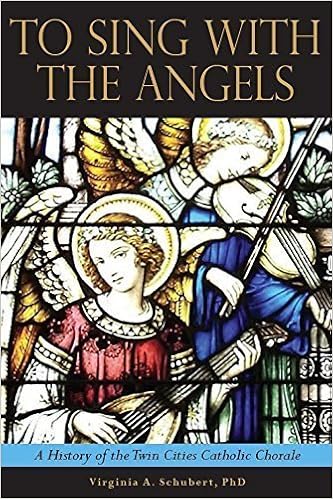
And there…  To Sing With The Angels

Posted in Linking Back, PRAYER REQUEST | Tagged
7 Comments