4 May – St Monica, intercessor for children who have fallen away from the Faith

In the older, traditional Roman calendar today is the feast of the mother of St. Augustine, St. Monnica, widow.  She died in Ostia (Rome’s port) in 387, when she and her family were heading back to North Africa after Augustine’s conversion and baptism by St. Ambrose.  She caught a fever during a blockade of the port.

(Yes, you can spell her name “Monnica”, more consistent with her Punic origins.)

In the chapel of The Cupboard Under The Stairs I have a first-class relic of this marvelous woman.

20130504-094844.jpg

In the post-Conciliar calendar, her feast was moved to be next to that of her son.

As she lay dying in Ostia near Rome, Monnica told Augustine (conf. 9):

“Lay this body anywhere, let not the care for it trouble you at all. This only I ask, that you will remember me at the Lord’s altar, wherever you be.”

She was buried there in Ostia. Her body was later moved to the Church of St. Augustine in Rome across the street from where I lived for many years.

May she pray for us, for widows and for parents of children who have drifted from the Church.

Be sure to pray for the departed. Pray for them! Don’t just remember them. Don’t just think well of them. Don’t just, as the case may be, resent or be angry at them. Pray for them!

Read about St. Augustine

Prayer for the dead is a spiritual work of mercy.

Also, I’ll remind you of a newish book on Augustine:

REVIEW: The book on Augustine which Pope Benedict would have wanted to write.

Also, if you want a really interesting book on the Doctor of Grace, check out Serge Lancel‘s volume.  UK HERE

BTW… read about how here original epitaph inscription was found by some kids.  HERE

Posted in Liturgy Science Theatre 3000, Saints: Stories & Symbols | Tagged
4 Comments

ASK FATHER: Traditional Baptism but with parts in English?

From a priestly reader…

QUAERITUR:

I am a parish priest who often does an Ad Orientem Novus Ordo Mass. I was approached by a family asking for a baptism using the Extraordinary Form. I am happy to do so, given the evident power of the prayers, but then they also wondered if it could be done using an English translation they showed me [from sanctamissa.org]. Do you know if that is licet?

First, thank you for being open to doing this!  I must warn you, however, once you start using the traditional rite you are probably going to want to continue to use it all the time.

To the question, yes, much of the older, traditional form of the Latin Church’s rite of baptism can be done in English. This is useful and often disarming for some people in attendance.

However, when permission was given way back when for some vernacular languages to be used for baptism, certain parts had to be done in Latin.  For example, the exorcisms and blessings of salt and water must be in Latin, the exorcism of the one to be baptized, the form of the sacrament, the anointings must be in Latin.  That’s what was in force in 1962 and that’s what Summorum Pontificum designates as our reference point.  Hence, in 1962 that’s what we could do, so that’s what we do today.

Some editions of the Collectio Rituum (a small compilation of the most used items in the more comprehensive Rituale Romanum) have this laid out clearly so that you know which parts can be English and which must be Latin, and also provide the English even of the part that must be in Latin.

There are, or at least were, very good booklets for the participants in the rite published by Angelus Press.  At the time of this writing, I am in a moving vehicle and can’t hunt it up.

I think you and your people will be edified by the older, traditional form of baptism which is richer in its symbols.  Thanks to the provisions of Summorum Pontificum 9  § 1 priests can also use the older Rituale Romanum for this foundational sacrament.

All Roman priests should be familiar with the older books and their Roman rites.   Don’t you think that priests should know the rite for which they were ordained?

Posted in "How To..." - Practical Notes, ASK FATHER Question Box, Liturgy Science Theatre 3000, Mail from priests | Tagged ,
3 Comments

Some Views From The Journey: Castra moventur

Castra moventur.

That shot just about sums up preparation for the transfer to a new statio.

And here’s a statio on the way to the statio.  A nice outdoor lunch.

With hedges of blooming jasmine.

Some lavender.

And even artichokes.

Homemade pasta and eggplant and caccioricotta.

Some grilled veggies.   This food is soooo easy and so easy on you.

Granita di limone.

And off we go again… WESTWARD!

That photo just about sums it up.

Posted in On the road, The Feeder Feed |
7 Comments

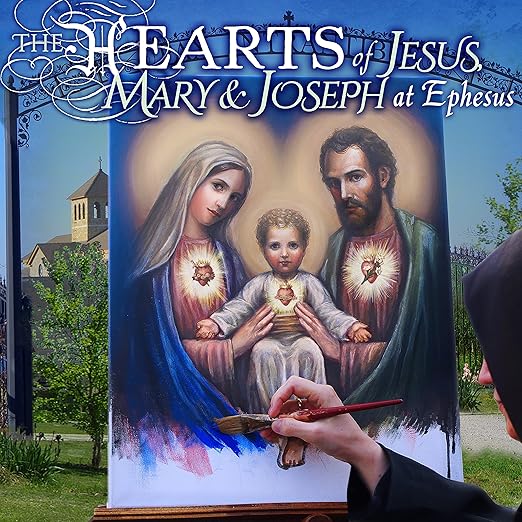
New music disc from the Benedictines of Mary, Queen of Apostles

The wonderful Benedictines of Mary, Queen of Apostles have produced another great CD of music.

The Hearts of Jesus, Mary & Joseph At Ephesus

US HERE – UK HERE

Enjoy this video! You can hear music from the new disc and see shots of the new church they are building.

Posted in Just Too Cool, The Campus Telephone Pole | Tagged
Comments Off on New music disc from the Benedictines of Mary, Queen of Apostles

1 May: Feast of St. Jeremiah, Old Testament Prophet


Today is not only the feast of St. Joseph the worker, but also the feast of the prophet Jeremiah.

Some people do not know that many figures of the Old Testament are considered saints by the Catholic Church.  They are not celebrated on our main liturgical calendar but they are in the Roman Martyrology, an official liturgical book.

Here is the text of the 2005 MartRom, which I will leave to you readers to work through animi caussa (just for fun)!

Commemoratio sancti Ieremiae, prophetae, qui, tempore Ioachim et Sedeciae, regum Iudae, Civitatis Sanctae eversionem populique deportationem monens, multas persecutiones passus est, quam ob rem Ecclesia eum habuit ut Christi patientis figuram.  Novum aeternumque insuper Testamentum in ipso Christo Iesu consummandum praenuntiavit, quo Pater omnipotens legem suam in imo filiorum Israel corde scriberet, ut esset ipse iis in Deum et essent illi ei in populum.

Enjoy!

The moderation queue is ON so that you can work on your own English version without the distraction of someone else’s. I’ll release them later in the day.

Posted in Liturgy Science Theatre 3000, Saints: Stories & Symbols | Tagged
Comments Off on 1 May: Feast of St. Jeremiah, Old Testament Prophet

Solemn Pontifical Mass in thanksgiving for #SummorumPontificum with @ArchbishpSample

How I would have loved to have been there.

YouTube thumbnailYouTube icon

Sermon: 54:00

Posted in Just Too Cool, Liturgy Science Theatre 3000, SUMMORUM PONTIFICUM | Tagged ,
15 Comments

ASK FATHER: Same amount of grace at every Mass?

From a reader…

QUAERITUR:

My Spiritual Director tells me the NO and TLM are the same. The same amount of grace is dispensed in both. His statement does not give me peace of soul. This priest offers the TLM 1/month for the past 1.5 years. I have attended nearly every one of them. Should I even respond to this, if so, how? Or just pray for him? Does the Lord offer the same amount of grace at every Mass? High Mass vs Low Mass or NO? The amount of grace received depends on the disposition of the person? …I just desire to give the Lord my utmost reverence for all the irreverence He endures. I live in [an admittedly remote place].  Very little TLM support here. Only 2 priests in the diocese offer it. We have requested more from our Bishop to which he says he has no solutions to offer at this time. Please pray for our Bishop and our priests…that they desire the TLM in their own hearts. +JMJ+

Whew.  Lots of things going on in there.

I ask the readership to stop and to pray for that bishop and those priests.

There… done.

First, you have an advantage: in though you are in a remote place you have a priest who can and does say the TLM.  That’s great.   That’s more than many have in less remote places.  Perhaps Father can be persuaded to offer the TLM more often.

Second, bishops aren’t always the best people to turn to for solutions.  Form a strong group of lay people ready to sacrifice time and spend money and then work with your local priest.  Moreover, put some money down on your future by supporting seminarians and other young priests in the diocese.

Third, have your TLM group regularly write kind notes to the bishop and the priest with spiritual bouquets.

Now… the hard stuff.

At both the TLM and the NO the Word of God is proclaimed and the Eucharist is confected according to rites that the Church has approved.   Mass is celebrated: the Eucharist is confected in a two-fold consecration and then consumed by the priest.  The Sacrifice of Calvary is renewed sacramentally.  You are offered the opportunity to receive Communion.

That’s a pretty solid basis.

However, there is more to a rite of Mass than the bare minimum.

Liberals often reduce Mass to what is the minimum for validity and they think that they can do what they want with the rest of the rite.

On the other hand, for centuries the Church thought that even the small elements of Mass are important and meaningful.  Everything in Mass works for – or, sometimes, against – authentic full, conscious and active/actual participation in the sacred liturgical rites in which Christ is the true Actor and in which you are – hopefully – brought into a contact with his transforming graces.

Some argue (I am among them) that well-prepared Catholics are provided a greater opportunity to benefit from the older rites and the newer rites.

Moreover, the outward signs of the Solemn Mass bring another level of opportunity, not a guarantee of more.

When the readings are spoken or sung at the TLM or NO, is there more or less “Word of God”?  When the Host is elevated at a Solemn Mass is there “more Jesus” present?

The outward sings and rites are there to dispose us – and not just in this Mass but also over the years of our lives – to receiving what the Lord wants to give.

Just as sometimes we have simple meals and sometimes special, or other occasions, so too do we elevate some Masses.   Our Catholic instincts, when well-formed, always desire more and more and more glory for our rites, because we know that they reflect the heaven we long for.  That said, you can’t always dine on Chateaux Yquem and fois gras.   You can give it a try, of course, but I suspect that you will be happier with some variety, including the very simple so that the grand is great rather than “Ho hum, Yquem… again?”

Mind you… not everyone is ready for the Sauternes.  They have to get there, and that takes some time.

I can hear people grousing, “But Father! But Father!  You think the TLM is like … Chat… Shat… Shatix Whykim and foiz grass… which is unethical and should be banned.  You are a horrible person for even thinking about liking that.  But that also means you think that the NO is like Diet Coke and cocktail weenies.  Do you know why?  Because YOU HATE VATICAN II!”

No, I don’t think that the NO is like cocktail weenies, which I like sometimes, or Coke Zero, which I had today at a truck stop.   I do, however, think that in the scheme of things, Château d’Yquem is better than Coke Zero.  If you don’t get that… and you won’t if you are a liberal… then we can’t help you right now.

Also, I not only don’t hate Vatican II, I respect it enough not to lie about it.  The Council called for full, conscious and active/actual participation in the sacred liturgical worship.  That’s what I am all about.  That’s my relentless effort.  I simply think that there is baby food and grown up food.  Some rites are better for certain people until others will be better.

Next, there is a phrase from philosophy that applies.  You touched on it in your question.  “What is received is received in the manner of the one receiving it.”  If you are properly disposed, you are able to receive the graces that God wants to give you in the sacred rites of Holy Mass.   Does the TLM help you better to receive those graces?  It depends.  I’ve written a lot about this elsewhere.  These days, some are ready for the TLM and some are not.

BTW… I think that some people can get so bogged down in certain aspects of the TLM ritual that their presence at Mass is rather like an aesthetic exercise.

As for quantity of grace… wow.  That’s waaaaaay above my pay grade.  I’m in sales, of course.  I want more graces and, well, better everything for everyone.  God gives greater graces to some than to others.  That’s clear.  But I don’t have a grace calculator.  We might be able to make educated guesses.  But I am not sure how helpful that is.

It may be best simply to focus on being all that you can be according to your vocation and being as receptive and actively docile as you can as a participant at Holy Mass in whichever of the two forms you find yourself.

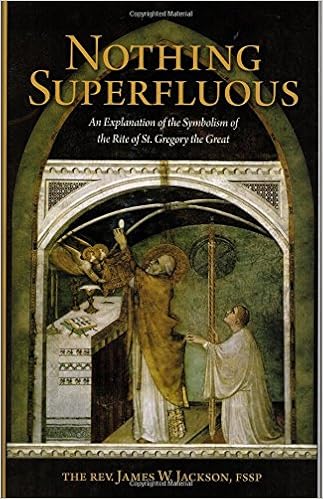
I think you would enjoy reading my friend Fr. Jackson’s book:

Nothing Superfluous: An Explanation of the Symbolism of the Rite of St. Gregory the Great 

US HERE UK HERE
Posted in "How To..." - Practical Notes, ASK FATHER Question Box, Liturgy Science Theatre 3000 | Tagged , ,
26 Comments

ASK FATHER: Am I obliged to receive Communion?

From a reader…

QUAERITUR:

As a recently baptized Catholic (2016, entirely in the traditional form), I am used to attending the TLM or a NO mass at a monastery (and so without EMHCs). I occasionally sing in a choir at a Sunday afternoon mass (NO) at the cathedral near my home. I was just “called out” by one of my fellow singers (who is a friar from a new community in the area) for not receiving communion during the mass. He claimed that all faithful rightfully disposed are obliged to receive communion at each mass they attend. While I know this is not entirely correct, and I was quite bothered by his intrusion into my personal life (“Did you not go to confession?”, etc.), upon reflection, I did realize that, besides other “normal” reasons like not having gone to confession, already attending mass with my family in the morning, etc., I have not received communion while singing in the choir because it is distributed by a friar, who is not a priest, from a choir loft tabernacle. I have also been bothered by the speed of communion and the audible crunching noises as everyone has “chomped down” on the host in order to sing the next piece of music. Also, with all the singing (since I am a professional musician), I sometimes feel that I’m fulfilling a role as a singer at that moment, more than participating in the mass as a member of the faithful, especially since the cathedral mass isn’t the mass I attend with my family. Am I within my bounds here, Father? These are events that troubled my soul at the moment of communion, but should I have been looking past them, especially my “concerns” about the person handling the host? I would appreciate any clarification you could offer on this manner.

There are a lot of issues in what you wrote.   Certainly the manner of reception of Communion by others, when irreverent, is off-putting.  You wonder if they believe in the Eucharist.   Then again, you wonder if they have ever seen anything else, from their parents or parishioners or co-religionists (of whatever religion it is that they think they belong to).

However, let’s make this part clear.  You are obliged by the Church’s law to receive Holy Communion once a year, at Easter or in the Easter season (can. 920).  You are obliged to confess and receive sacramental absolution once a year (can. 989).  The two obligations are logically connected, if not formally connected.

That is what your obligation is.   You are not obliged to receive Communion at any other Mass during the rest of the year.

You are obliged to attend Mass on all days of obligations (i.e., all Sundays and some of the great feasts, etc.).  You are not obliged to receive Communion at all Masses of obligation.   As a matter of fact there are times when you may be obliged not to receive, as when you know you are not in the state of grace or properly disposed by a fast to which you are bound.

Many people find it beneficial to receive Communion more than once a year.  The Eucharist has been described as the “source and the summit” of the Church’s activity.  If that is so, then our own activity as Catholics is bound to the Eucharist and to the Eucharist’s celebration, which is Holy Mass.

Receiving Communion in the state of grace is the apex of our “active participation” at Mass.

Friar Buttinsky should mind his own business.    Similarly, perhaps you would also do well to take less note of how others may be receiving.   Barring actual nefarious sacrileges, you should mind your own manner of receiving.

Posted in ¡Hagan lío!, 1983 CIC can. 915, ASK FATHER Question Box, Liturgy Science Theatre 3000, Our Catholic Identity | Tagged , ,
19 Comments

ASK FATHER: Non-Catholic in a confessional… does the Seal apply?

From a reader…

QUAERITUR:

A person enters the confessional and starts with the usual: “Forgive me, Father, for I have sinned…” She recount a sin, and ask for advice about it: what should she have done, what should she do about that sin now that she has done it – should she tell X, etc. When Father is done giving her advice and is about to start the absolution, she says “Oh no, Father, I am not a Catholic, so you can’t absolve me.” Obviously, she could have done things differently, such as making an appointment with Fr. instead of taking up confession time for others. But my question is this: is the priest still bound to secrecy in the matter? Since it wasn’t a confession, and couldn’t have been, (i.e. it’s not lack of disposition that makes it not confession), it’s not a defective confession such as a sacrilegious one. It just isn’t confession. Does the seal of the confessional cover it anyway, just for the sake of certainty and to avoid the appearance of a failure to keep the seal?

Let’s get a couple things clear.

The confessional is the privileged – even legendary – place of secrets.  A person gets into the confessional with the expectation that what is said in there, stays in there.  Period.

They met in a confessional, not at a bus stop or the corner bar.

A non-Catholic can ask for advice in a confessional, but she should be up front – from the get go – that she isn’t Catholic.  Then the priest can let her know what his parameters are.

Whatever else that meeting was, it was a meeting in the “internal forum” as we call meetings that involve privileged information, as would a doctor’s appointment or a lawyer’s appointment.

The priest is obliged by the Seal even if it was not a sacramental confession.   If a Catholic made a confession and did not show any intention to amend her life of sin and if the priest subsequently denied absolution it would not have been a sacramental confession, but the priest would be equally bound to keep everything he heard under his hat as in the case of every confession in that context.

Everyone… GO TO CONFESSION!

Confess all mortal sins in kind and number, holding back nothing.

The priest cannot, will not, break the Seal.  What you say in there, stays in there.

Posted in "How To..." - Practical Notes, ASK FATHER Question Box, GO TO CONFESSION, Liturgy Science Theatre 3000 | Tagged
1 Comment

ASK FATHER: Can I teach at an SSPX school?

From a reader…

QUAERITUR:

Minimal background for context: Recently, the SSPX sent out an e-mail looking for teachers for their schools, including one in my area. […]  [S]o even after over 2 years of job hunting, I haven’t been able to get hired into ANYTHING, no matter how high or low on the ladder it is. Mid-level, junior-level, entry-level, minimum wage, I’ve been rejected for all of it because of a lack of “experience.” (What Catch-22?)

Question: Would it be “schismatic” or otherwise inadvisable to teach in an SSPX grade school? As desperate as I am for money, I’m asking about this because I value a proper relationship with Rome and my local See even more than anything else :(

God bless you and I thank you for your work!

Let’s think about this.

A Catholic can go to SSPX chapels for confession (thanks to Pope Francis).

A Catholic can go to an SSPX chapel to be married (thanks to Pope Francis).

A Catholic can fulfill his Sunday obligation at a chapel of the SSPX (thanks to Canon Law).

A Catholic can work for a non-Catholic church as a janitor or choir director.

A Catholic won’t be asked by the SSPX to reject the Pope or unity with him.

Can a Catholic teach for an SSPX elementary school?

I think so.

The rest, about unity with your local church, is up to you.

Posted in "How To..." - Practical Notes, ASK FATHER Question Box, SSPX | Tagged
6 Comments