Today, 19 April, is the 13th anniversary of the election of Benedict XVI.
I’ll bet you remember where you were.
How time flies.
I was with FoxNews at the time. Here’s the coverage…
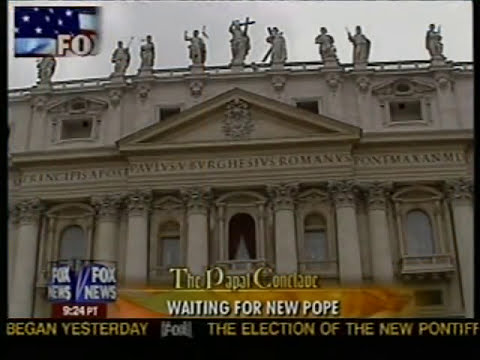


Today, 19 April, is the 13th anniversary of the election of Benedict XVI.
I’ll bet you remember where you were.
How time flies.
I was with FoxNews at the time. Here’s the coverage…
 In his preaching and writings, St. Augustine of Hippo (+430) frequently presents Christ as Medicus, or doctor/physician of the soul. Christ heals the ills of man brought upon ourselves by sin. This is hardly a surprise, given that in the Gospels Christ conspicuously heals people and forgives their sins.
Christian polemicists before Augustine dealt with the pagan attacks on the faith through their claims about the healer god Aesclepius.
St. Ambrose, to whom Augustine listened with fixed attention, referred to Christ as the Physician in whom we find shelter, whose grace is medicine. For Jerome, Christ is verus medicus, solus medicus, ipse et medicus et medicamentum. He is the true healer and medicine, as opposed to the false.
In his Ennarationes in psalmos 35, Augustine has a stark image of the process of healing which the sinner undergoes under the ministrations of the True Doctor. Keep in mind ancient medicine, which didn’t have anesthesia, etc.
For a Physician He was (medicus enim erat), and to cure the insane patient He had come. Just as a human physician does not care whatever insulting remarks he may hear from an insane patient, [not necessarily “crazy”, but, “sick”] but how the mad person recover and become sane; nor even if he receive a blow from the insane patient does he care, but while the mad person inflict new wounds upon him, he cures the patient’s old fever: so also the Lord came to the sick man, came to the mad man to pay no heed to whatever He may hear, to whatever he may suffer, by this very example teaching us humility that, being taught humility, we might be healed from pride.
You’ve seen scenes in movies and read in books about how the wounded in wars would scream and beg as the doctor in the field hospital or the below decks on the ship prepared to saw off a limb ruined beyond saving.
Before Augustine, Tertullian in Ad scorpiacem also uses the image of a doctor being cruel to be kind. Defending the moral value of Christian martyrdom against the errors and attacks of the Gnostics, Tertullian writes that God only seems to be cruel when He cuts and cauterizes. He says in Adversus Marcionem 3 that it is wrong to find fault with God’s ways of healing sin, just as it is wrong to fault the cauterizing iron, the blade, the saw.
And for those of you who are timid in confessing some embarrassing sins, Tertullian describes in De paenitentia 10 how some people die because they hesitate to reveal a problem with their more private areas.
In a nutshell, the patient has to reveal the truth before the healing can begin and the doctor doesn’t stop cutting just because the patient is screaming at him to stop.
These days there is some talk again about the image that Pope Francis used for the Church. For example, a new article in First Things brings it up. Francis described the Church as being like a “field hospital after battle”. BTW… Professor of Divisive catholic Studies at Villanova, Massimo “Beans” Faggioli weaponized that article in order to widen the gap even more:
The real problem is that Francis’ metaphor of the Church as a “field hospital” is unbearable for those who thought that they had chosen Catholicism as an ideological and “Weltanschauung” house and had title of that house https://t.co/oyJXL2WMr6
— Massimo Faggioli (@MassimoFaggioli) April 19, 2018
Sad. No? Did that really help? I guess it depends on what you are trying to accomplish. The bread of his buttering seems to be precisely in the conflict he is stirring.
Of course the Holy Father is exactly right! “Field hospital” is a great image for the Church, even though it isn’t terribly original. As a matter of fact, Pauline Phillips (aka Abigail van Buren, aka Dear Abby) quipped that, “A church is hospital for sinners, not a museum for saints.” And we have seen that the medical image is nothing new in Christian thought. No matter. It can be brought back out and made available, as the master of the household’s things both old and new.
But let’s now think about a field hospital.
For natural disasters and for battlefields alike field hospitals are set up. These are temporary places (while the Church is enduring). Many wounded, not all wounded, are admitted. A process of triage takes place either outside or just inside, to determine the likely prognosis before time and effort is applied in sometimes frenzied conditions. Triage is rather cold-blooded when it is going on, though afterward it is heart-rending for the doctors who perform it. They’re task is to determine the truth of the patient’s condition in the here and now, with an eye on future recovery, resources, etc. They have to be realistic.
Inside the field hospital, there’s a lot of screaming. In modern times, the screaming is a bit reduced because of modern drugs, etc.
It doesn’t smell very good. The combination of charred flesh, burnt clothing, blood, bowel, fear combine for … an intense experience.
Some people have to be patched up so they can be sent along to a better facility. That’s the point of a field hospital. After the medic in the field, it’s only the first stop. Patch the guy up here, get him stable, move him to a better facility.
Medic, field hospital, trauma center, rehab facility, counseling, etc. We have a continuum of care for the wounded.
The brutal stuff happens in each of these places, medic in the field, field hospital, trauma center, rehab gym, counseling, with as much compassion as possible, but not at the expense of the truth.
And of course, at a field hospital some people have to kept as comfortable as possible because they are, in fact, not going to make it.
People die in field hospitals. It a fantasy that everyone makes it out alive and intact.
Is the Church like a “field hospital”? Yes.
AND … not everyone in the Church will, in fact, be saved. Nor is their contact with the Church always going to be daisies and sunshine.
Where the analogy breaks down, and all analogies break down, is that whereas the patient often has no control over his bodily wounds, he does have control over his spiritual wounds.
Whereas the field hospital is mostly concerned with wounds inflicted in disaster or war, the Church generally contends with wounds to the soul that are self-inflicted through sin. Field hospitals are temporary, but the Church will endure to the end of the world. Parishes are temporary, however, and on the front lines or in the places where they are needed.
Perhaps Catholic parishes are the Church’s field hospitals? So, the analogy is not perfect, but it is still pretty good.
The wounded soul comes to the Church’s field hospital, which might take the form of a rectory door, a soup-kitchen where there’s a smile and a friendly ear, or the ultimate, the confessional.
That’s when the triage and truth must be explored: What is the true condition of the suffering soul?
Another problem with the analogy.
In a field hospital, you might find the kind nurse or doctor or fellow warrior holding the hand of the dying man, saying during his last few minutes of life, “You’re okay. Everything’s going to be alright.”… when it really isn’t. You do nothing except comfort, because there’s nothing else to be done.
You can’t do that in the Church’s field hospital. You can’t “hold the hand” of the person dying in self-inflicted sins and say, “Don’t worry. You’re okay.” No. Everything is NOT okay.
It is true that, if the penitent is ready to get to work and suffer a bit, things will be okay down the line. The fact is that, right now, things are kind of awful. The person is spiritually dead in mortal sins. But it doesn’t have to be that way! Conversion is possible and God is fire-hosing grace at the person even while the cutting and clamping is underway.
Remember. Christ the Doctor and alter Christus must cut, even if the patient screams.
In no way am I advocating harshness in the confessional. As St. Alphonsus Liguori teaches in his advice to confessors, tough medicine is sometimes to be applied, sternness, but not often and not by the hands of the “intern”.
Harshness, no. TRUTH, yes. Application of the truth can result in screams.
Sometimes, for a wound to heal, you have to remove the necrotic tissue which would cause problems and slow the healing process. Debridement of wounds is a careful and gentle process. Only in the most extreme cases of necessity – as in the environment of a field hospital? – does one just go in and scrape and cut, never mind the screaming. The usual approach is, in a stable environment, to work carefully, slowly, gently.
But debridement must be honest, just as triage must be honest, just as diagnosis and prognosis must be honest.
Lying and fantasy does no good. Before you can really treat the wound, you have the dig out the shrapnel and cut off the burned or jellied stuff.
Debridement must be a gentle as possible, but it must be done. For individuals, this involves hearing the truth, serious examination of conscience, and then a program of life to overcome vices through self-denial and suffering.
For the larger Church, this involves applying censures, such as excommunication, which are always “medicinal”.
Telling people that they can receive Communion if they are in the state of mortal sin and they have no firm purpose of amendment is a lie and a fantasy.
Telling people that they can receive Communion if they don’t believe what the Church teaches about Communion, is a lie and a fantasy.
NOT applying necessary medicines or tools as a doctor is to betray the oath to heal and to do no harm.
NOT to apply censures in the Church, is a betrayal of her discipleship with Christ the Doctor.
NOT to deal in the truth is diabolical.
The Church is indeed a field hospital and field hospitals are simultaneously places of brutal horror and heroic wonder. They are as real as life gets. To quote the poet, life is real, life is earnest, and the grave is not its goal. We have souls to save and that involves more than just present, earthly comfort.
The Church is not a comfy Lord of the World euthanasia resort.
GO TO CONFESSION!
 Coming up this weekend…
Those who generally frequent Holy Mass with the traditional form of the Roman Rite heard the Gospel about the Good Shepherd last week. In the Novus Ordo, that Gospel is read this week, for the 4th Sunday of Easter.
It’s really too bad that there is a disconnect. I’m not sure why the experts of the Consilium thought it was so important to break the continuity of hundreds of years like that. But let’s keep moving.
For this 4th Sunday of Easter, Novus Ordo Good Shepherd Sunday, we have a little gem for a Collect which goes back to the time of the Gelasian Sacramentary.
Omnipotens sempiterne Deus, deduc nos ad societatem caelestium gaudiorum, ut eo perveniat humilitas gregis, quo processit fortitudo pastoris.
Whoever wrote this was a true master of faith, thought and language.
Note the nice eo…quo construction and the rhythmic endings of clauses which makes the prayer so singable. There is synchesis in the last part, a parallelism of grammatical forms “ut A-B-C-D, A-B-C-D”.
The prayer’s structure resembles the orderly procession which the vocabulary invokes.
Procedo is “to come forth” as well as “to advance, proceed to.” It comes also to mean, “to result as a benefit for” someone or something. Think of English “proceeds”, as in money raised for a cause. “Procession” (apart from the liturgical meaning) is a theological term describing how the Persons of the Trinity relate to each other.
A societas is “a fellowship, association, union, community”, that is, a group united for some common purpose. I’ll render it as “communion”, which gets to the relationship we will have in heaven and, in anticipation, as members of Holy Church.
There is a nice contrast in humilitas and fortitudo. They seem to be opposites. (Hint: they’re not.)
True to the ancient Roman spirit, humilitas has the negative connotation of “lowness”, in the sense of being base or abject: humus means “soil”. On the other hand, fortitudo means “strength” and even “the manliness shown in enduring or undertaking hardship, bravery, courage.” In the 8th century Gelasian Sacramentary, whence comes today’s prayer, that fortitudo was originally celsitudo (“loftiness of carriage”, also a title like “Highness”). Fortitudo could poetically refer to Christ’s moral strength and endurance in His Passion and death. Moreover, Our Lord chooses the weak and makes them strong with His strength, His fortitudo (cf 1 Corinthians 1:26-28).
Weakness and strength are not to be measured by worldly successes.
LITERAL ATTEMPT:
Almighty eternal God, lead us unto the communion of heavenly joys, so that the humility of the flock may attain that place to which the might of the shepherd has advanced.
OBSOLETE ICEL (1973):
Almighty and ever-living God, give us new strength from the courage of Christ our shepherd, and lead us to join the saints in heaven.
CURRENT ICEL (2011):
Almighty ever-living God, lead us to a share in the joys of heaven, so that the humble flock may reach where the brave Shepherd has gone before.
Translators occasionally turn an abstract idea that sounds like a possessive (a trope called synecdoche), as in “the humility of the flock” or “the might of the shepherd”, into a characteristic of the possessor, as in “the humble flock” or “the mighty shepherd”. I think we lose something beautiful in that exchange. You decide.
In our Collect is the image of Christ as shepherd. In mighty resolve He goes before – precedes us, the humble flock. He leads us back to that from which He first proceeded, communion with the Father and the Spirit.
Going forth. Turning. Going back.
In the Greek Neo-Platonic philosophy that informed early Christian thought we often find the paradigm of going forth (proodos, or Latin exitus), a turning around, and returning back (epistrophe, reditus). This common ancient pattern is echoed in today’s ancient prayer.
This Collect also reminds me of mosaics in the apses of Christian basilicas.
Mosaics are assembled from tiny bits of colored stone, tesserae, into beautiful spiritual works with many symbols. Up close, individual tesserae are unremarkable, often flawed. Once a great artist gathers and arranges them according to a plan, they proceed to dazzle and amaze.
Holy Church is like a mosaic.
Just as one tessera makes the others more beautiful, we small individual Catholics, with different vocations, in diverse places, and even distant eras in history, play important roles in a larger societas.
 The mosaics in apses of ancient and Romanesque churches often depict Christ dressed in glorious imperial trappings. Apostles and saints, His celestial court, stand on either side bracketed in turn by Bethlehem or the earthly and heavenly Jerusalem. Beneath the feet of Christ, mighty Shepherd King, are lines of courtly sheep, hooves elegantly raised as they process into a green safe place where water flows, symbolizing the river Jordan and our baptism, the refrigerium we evoke in the Roman Canon.
The Second Person of the Trinity, the Son, proceeded from the Father from all eternity. He proceeded into this world in a mighty gesture of self-emptying in order to save us from our sins, turn us away from sin and death, and open for us the way to salvation.
In His first coming, Christ came in humility to take up our fallen societas, our humilitas, His grex, into an indestructible societas with His divinity.
In His second coming, clothed in His own fortitudo He will shepherd us into a new societas in heaven.
If you are a sheep who has strayed, come back now to His fold, Holy Catholic Church. GO TO CONFESSION!
I include in this category of straying sheep those who dissent from the doctrine of the Church the Good Shepherd founded.

 I have on occasion written about the important Apostolic Pardon or also Blessing, to be imparted to a person who is close to death.
The Apostolic Pardon imparts to a person who is properly disposed, please God through the last sacraments, a plenary indulgence (Enchiridion Indulgentiarum 28). Hence, all temporal punishment due to sin is remitted to that person through the exercise of the “keys” by the Church and by the application of the merits of Christ and His saints to the person who is dying.
It is a magnificent gift from Christ and the Church which priests can wield.
A fellow wrote to me a little while ago saying that, after he had read about the Apostolic Pardon on this blog, he was able to make sure that his sister-in-law, a Carmelite nun, received said Pardon as she passed away.
Having pondered that experience, he took it upon himself to write a letter about the Apostolic Pardon to 177 archbishops and bishops in these USA. He wrote, asking:
I ask that you, in collaboration with the USCCB, or on your own, if necessary, implement a plan to communicate and administer the Pardon in all of your parishes. You should also insure that it is given proper instruction to all your seminarians.
Entirely reasonable and, frankly, EXACTLY the sort of thing that a bishops conference ought to be busy with.
Now I have received a note from the same fellow with excerpts of replies he has received back from bishops, including:
From an Archbishop – “Thank you for your letter regarding the Apostolic Pardon. I know that several of our priests do offer this gift to those who are approaching death. However, I will discuss it with priest leaders and review how we might better make this gift available to the people in our archdiocese. With gratitude for your love for Jesus and His Church and concern that those approaching death receive all of the graces available to them, I remain…”.
From a Bishop – “Thank you very much for your letter of April, 2018, regarding the Apostolic Pardon. I have already spoken about the Apostolic Pardon to our priests and, through your inspiration, I will explain it to the faithful of this diocese. Thank you for taking the time to write your letter to the bishops. It has made a difference to me.“
“It has made a difference to me.”
Did you dear readers get that?
Friends, don’t be afraid to make yourselves and your concerns and your aspirations known to your pastors. It could make a difference. Be always kind and respectful, of course, as well as brief.
Immense Fr. K kudos and a Gold Star for the YEAR to this fellow who wrote to the bishops about the Apostolic Pardon.
Many priests don’t know about it.
Many priests who did know have let it slip from their radar.
This reminder was salutary.
Think about this.
You are GOING TO DIE! Hence, GO TO CONFESSION!
You are on your death bed and you can feel it coming. The priest came, who forgave your sins with the Sacrament of Penance and then Anointed you for final perseverance and readied you for your last breath. You may have even received Viaticum. As your lights fade, you see the priest’s hand raised in the sign of the Cross as he says (in the traditional version):
“By the Faculty which the Apostolic See has given me, I grant you a plenary indulgence and the remission of all your sins, and I bless you. In the Name of the Father and the Son + and the Holy Spirit. Amen.”
“Ego facultate mihi ab Apostolica Sede tributa, indulgentiam plenariam et remissionem omnium peccatorum tibi concedo et benedico te. In nomine Patris, et Filii, + et Spirtus Sancti, Amen.”
Sins forgiven. CHECK
Fortified with the Sacraments. CHECK
Apostolic Pardon. CHECK
All temporal punishment remitted. CHECK
Straight to the Beatific Vision.
My Jesus, mercy and thank you.
From a sudden and unprovided death, spare us, O Lord.
I’m sure that with this first shot, many of you will be able to tell where this is.

If that elevated hint wasn’t enough.

And then there’s this. It was pretty cold out there, I can affirm. But the 2nd row seats were great.


In the last few months I have learned about the esoterica of Chicago.
For example, I now know that when I order a hot dawg (I believe that’s the correct transliteration), you should tell them to “drag it through the garden“. No, really. That’s what people say and the guy behind the counter doesn’t blink.
I am fairly certain that the use of ketchup is strongly frowned upon if not outright verboten.

Also, continuing with the mysteries, this is, apparently, how you eat popcorn: cheddar and caramel… together… at the same time… simultaneously. Garrett’s Popcorn seems to be the best. US HERE – UK… ummm…. sorry.

It’s a mysterious place, but it’s my kinda town, Chicago is.
Too bad about the current… well… never mind. I’ll consign that to mystery.
This player of legend is, however, no mystery.

When I shot that, yesterday evening, it happened to be the 3rd anniversary of the passing of the former Archbishop of Chicago, Francis Card. George (+ 17 April 2015). He is greatly missed. Do say a prayer for the repose of his soul. Perhaps there will soon be a statue of him in a prominent place.
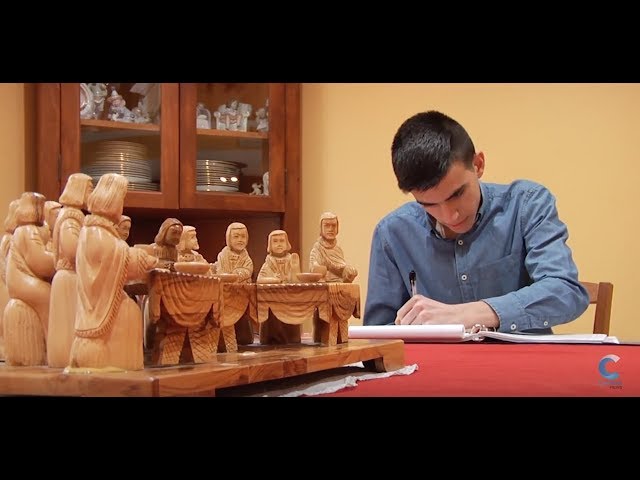
A study shows that men who are home-schooled enter the seminary at a higher rate than those who were in Catholic schools.
1 in 10 priests were home-schooled at some point and are 4 times more likely to enter seminary than those educated in Catholic institutions.
 From a reader…
QUAERITUR:
Thank you for the delightful and edifying omnibus that is your blog. It is my understanding that Pope St. John XXIII or his delegate created a syllabus of works to be read when studying Latin. Do you have a copy of this for those studying at home? Also, my 4 y.o. Is insisting upon saying her prayers in Latin. Do you or the readers know of any resources for young children to study or read in Latin? Thank you.
Everyone should read St. John XXIII’s … not Encyclical … not Apostolic Exhortation… not daily fervorino… but Apostolic Constitution Veterum sapientia in the importance of Latin.
I’d be a lot more impressed with those who say dopey things like “2+2=5!” or “Anyone who resists Francis is against Vatican II!” or who think that the Second Vatican Council was the most incredible thing since the Council of Jerusalem, if they would actually do what the Council asked as far as liturgy, music and Latin is concerned.
As far as resources are concerned, I’ll open the floor to the readership.
Here is a great tweet from Most Rev. Thomas J. Tobin, Bishop of Providence in Rhode Island.
It struck me during a Funeral Mass today – most of the mourners, family and friends, were wearing black. The priests were all wearing white. Question: Why do we have that disconnect with the instincts of the faithful?
— Thomas J. Tobin (@bishoptjt) April 14, 2018
Fr Z kudos to Bp. Tobin – a BISHOP – for saying it. Thank you.
Here’s the thing about libs. They always demand that you deny common sense and facts – those stubborn things – right in front of your eyes.
Libs say: “Everything has been great for the last 50 years! It’s springtime in the Church!”
Fact check, anyone?
“2+2=5!”
Tell that to the IRS.
“White vestments are so wonderful and surely everyone goes straight to heaven!”
Uh huh. Good luck with that.
When I die, and I will, please pray for me. FOR me. For God’s MERCY on me. Please perform indulgenced works for me. Have Masses said for me. Please.
BACK THE BLACK!
 FATHERS! This fellow’s note gives another example of why we priests must must must be careful and precise when giving absolution to penitents.
Use the prescribed form of absolution in Latin or appropriate vernacular language and say the essential words in the form precisely. If you are doing something other than that…
STOP BEING JACKASSES AND DO IT RIGHT!
From a reader…
QUAERITUR:
I’ve been going to a local priest for confession for some time now, and I only noticed recently one time in confession that when reciting the formula for absolution, when he got to the actual words of absolution he said “‘solve you of your sins in the name, etc…”. Now, I thought he was just out of breath or something, and assumed that he at least intended the words and perhaps therefore they were valid.
I’ve gone a couple of more times, and each time he has begun with the half word “‘solve”, leaving out “I ab”. In charity, I won’t speculate as to why he is doing this.
My question is, does this render the absolution invalid? I assume that it does. If so, must I confess any mortal sins again? What if I can’t even remember them all from the several past confessions I’ve made since noticing this quirk?
I intend to confront Father charitably, either in person or in writing. Thank you in advance for any response and help you may have for me. This is now beginning to weigh heavily on my conscience.
This is troublesome.
I want to assume that the priest really is saying properly the essential words in the form, “I absolve you from your sins….”
You could be wrong about this. Or… you could be right.
You say that you intend to “confront” the priest. Perhaps “confront” isn’t the best way to do this. You can, however, approach him and share your concern. You might try telling him what your experience has been, what you have heard, rather than telling him what he is doing wrong.
If the absolutions have been of doubtful validity … no, I don’t think that you have to confess all those mortal sins again, which could be hard to recall. You have done your best. If it would greatly ease your conscience, you can indeed confess them and perhaps add the reason why you would like to do that, so that the confessor has the lay of the land.
If you bring this up with the priest, and if you don’t get any sort of satisfaction in either his response or in a change in how he gives you absolution, you might give it another try at another time. If that doesn’t produce a change, then you should probably talk to the pastor of the parish or contact the local bishop.
Assume the best about the priest. Don’t just go at him. However, you also have the right to know that you are being absolved properly. Be careful and kind.
 I am deeply grateful to all of you who have subscribed to be monthly donors. My usual practice is to write email “thank yous” when I get notifications that donations have come in. This month it has been…let’s say hard to do that. Nevertheless, I take note of each one with gratitude.
I remember benefactors in my prayers. That is my duty and pleasure.
During this coming week I will say Mass for the intention of you benefactors, who have sent donations regularly, occasionally or who have sent items from my wish lists.
If this blog is useful to you, I invite more of you regular readers to consider signing up for a regular monthly donation.
Doing my taxes reveals is that the donor base has not grown… it has shrunk. There are some pretty thin days.
If one in ten of you regular visitors would help…
In your goodness, dear readers, consider donations.
 This blog is possible because there are donors and because you use my link to shop online at amazon, etc. Amazon – darn them! – changed the way the links work and eliminated that handy search box. But if you click that graphic on the sidebar, it’ll work the same way.
Also, please consider checking out the ads on the sidebar. There are some great causes there, including some religious communities who depend on sales of their products for their income.
People sometimes write to ask how they can help or what they can send for occasions such as anniversaries, etc., beyond the donation option. Here are some options which might come in handy also as you also think about your local priests.
Spiritual bouquets and Masses are welcome. The older I get, the more the need for prayers weighs on me.
Delta (sigh) gifts cards would help. My mother would sure appreciate more visits, if you get me. Send that or any other online card or certificate to

Gift cards are handy for priests, by the way. If you are ever puzzled about getting something for your local priests for birthdays or Christmas or an anniversary, etc., find out what Father uses or does – hobbies like fishing or a restaurant he likes or Amazon so he can chose books, etc. – and give your priests a hand with gift cards. They provide flexibility. Also, you might pool your resources with some other people and then find out if Father needs vestments or perhaps a trip to St. John Cantius or Denton, NE or other places in the UK for TLM training.
Here’s a thought. Range time or ammo for the range (HERE or HERE). It is amazing how many priests are both training and carrying. Yes, I can sense the nasty emails even now as the hater libs go ballistic. Here’s another thought. Give your priests life memberships to the NRA. Heh.
Also, since I am working on refreshing or acquiring new languages, perhaps Rosetta Stone online subscriptions would be handy. Today there is a sale, as a matter of fact . As I write, it ends in about 11 hours at about Midnight CDT. You might get a subscription for yourself, too. The languages I would be delighted to receive in order of priority would be Chinese (Mandarin), Spanish (Spain – NOT Latin America), Russian, German. If someone were to send, say, Urdu, that would not be near the top of my list, but I’d probably look at it anyway. Learning a language opens new doors.
Don’t forget challenge coins! I’ll happily exchange. It has been a while since one came in.
I am always pleased when people help out the TMSM, of which I am the present prez. Another cause I admire is Our Lady of Hope Clinic. And help vocations in the Diocese of the Extraordinary Ordinary. Tell them Fr. Z sent you.
In addition, I am always happy to receive a note from a reader describing how this blog has been helpful. Believe me, positive feedback really makes my day. Recently one fellow from Philly wrote: “Been reading for quite a few months now; my spiritual life and general knowledge are transforming thanks to you. The beauty and generosity of your daily Lentcazts are what really inspired me to a higher level of support.” Another said, “Thank you for many years of enjoyable and useful reading. You have changed my understanding of what it means to be Catholic.” Yet another wrote: “I appreciate your blog so much because of all that I learn everyday from you and some of the other commenters. It gives me the courage to do battle in my own small way and not get too discouraged.”
Note that he said: “other commenters”. We are all in this together.
Anyway, those are a few pointers.
This sort of post is a pleasure to write insofar as I get to thank people for their generosity.
It is not so pleasurable to communicate that, well, things could be better. I suspect many of you have that same sense these days.
Many hands make light work.
Anyway, I’m out here busking on the cyber-sidewalk with the case open.
Blessings and best.
UPDATE:
Thanks to NEW MONTHLY donor: DM, SK
Thanks for ad hoc donations: AS!!, DH, TE, AC, MK, TO, MH, PP, SK, MK, BK, SR, RM, JH, Marian Sisters of Santa Rosa, BK
Thanks for a Rosetta Stone language: JS (6 mo credit)

Coat of Arms by D Burkart









A Daily Prayer for Priests


They find you a pro-life agent in your area who commits to giving a portion of the fee to a pro-life group!

PLEASE subscribe via PayPal if it is useful. Zelle and Wise are better, but PayPal is convenient.
A monthly subscription donation means I have steady income I can plan on. I put you my list of benefactors for whom I pray and for whom I often say Holy Mass.
In view of the rapidly changing challenges I now face, I would like to add more $10/month subscribers. Will you please help?
For a one time donation...



Help Monks in Wyoming (coffee – UPDATED LINK) and Norcia (beer) and the wonderful "Soap Sisters" of Summit, NJ!


Please follow me on Twitter!










Visits tracked by Statcounter
since Sat., 25 Nov. 2006:

