Daily Rome Shot 78

Posted in SESSIUNCULA | Tagged
2 Comments

Daily Rome Shot 77

Photo by Bree Dail.

Posted in SESSIUNCULA | Tagged
4 Comments

ASK FATHER: Blessing ashes at home

From a reader…

QUAERITUR:

Peace and good times, Father Z. [Right now, I’d settle for okay times.]
May the blessing and distribution of ashes be done at home in this time of pandemic? Our Archdiocese (in the Philippines) and the Episcopal Commission on Liturgy here is drafting an Ash Wednesday Ritual for the Use at Home for those who cannot participate physically (due to the pandemic).  A striking note is that the first prayer in the current Missal is recommended for a layperson (they say, the elder/the father in the household) to pronounce the blessing.

I know, Father, that the most important thing in Lent is we truly be sorry for our sins and a change of heart for God. Yet I’m concerned with how these blessings reserved to priests and deacons be commended to laypersons.

By “current Missal” I think you mean the Novus Ordo Missale Romanum.  In fact, the 1962 Misssale is also a “current Missal”.  Don’t fall into that trap.

It would be far better were the ashes to be blessed before they are distributed to the lay faithful.  In fact… isn’t that what the rites of the Church foresee?  Bless them before distribution?  That’s how it would be done in church, right?

Instead we have another symptom of the erosion of the concept of “blessing”, which is found even in official liturgical books now: the reduction of constitutive blessings to invocative blessings.  Some blessings call God’s grace down upon someone and others constitute the thing, place or person as blessed, in an enduring way, set apart for God.

As a direct response, whatever you do, don’t try to bless the ashes in the manner of a priest, with the sign of the cross over them.  I like the idea that the father of a family will bless his family, but I don’t like this confusion of roles.  Particularly when the ashes could be blessed by the priest or bishop before distribution.

I fear that this sort of thing reduces an important rite – we are our rites – to a kind of sentimentality.

The first prayer in the Novus Ordo Missale runs like this:

Deum Patrem, fratres carissimi, suppliciter deprecemur, ut hos cineres, quos paenitentiae causa capitibus nostris imponimus, ubertate gratiae suae benedicere dignetur. … Dearest brethren, let us humbly pray that God the Father will the abundance of His grace deign to bless these ashes, which for the sake of penance we put on our heads.   [NB: and explicit reference to blessing the ashes]

There is a moment of silence and the priest continues, hands extended:

Deus, qui humiliatione flecteris et satisfactione placaris, aurem tuae pietatis precibus nostris inclina, et super famulos tuos, horum cinerum aspersione contactos, gratiam tuae benedictionis + effunde propitius, ut, quadragesimalem observantiam prosequentes, ad Filii tui paschale mysterium celebrandum purificatis mentibus pervenire mereantur. … O God, who are swayed by an act of humility and are placated by reparation, incline your merciful ear to our prayers, and kindly pour out the grace of your + blessing on your servants, marked by the aspersion of these ashes, so that, pursuing the Lenten observance, they may with purified minds attain to the celebration of the Paschal Mystery of your Son.

[NB: This does not bless the ashes.  It is an invocative blessing on those who will have received them.]

There follows an optional alternate prayer, which explicitly does bless the ashes.

In the Novus Ordo Missale, there are two prayers, one invocative and an alternate which is constitutive.  This is a symptom of the incoherence in some of our liturgical books that follows when some in high places want to eliminate the distinction of constitutive and invocative.  We find this in the so-called “Book of Blessings”, in which the prayers bless nothing, but call down blessings on some who, for example, might look at the statue in question.  It is an attack on sacramentals, in essence.

When we use the current traditional edition of the Missale Romanum, there are four prayers, all of which must be said.

Contrast with the Novus Ordo invocative version.

[Not my translations:]

O almighty and eternal God, spare those who are penitent, be merciful to those who supplicate Thee; and vouchsafe to send Thy holy Angel from heaven, to bless + and sanctify + these ashes, that they may be a wholesome remedy to all who humbly implore Thy holy name, and accuse themselves as a result of the consciousness of their sins, deploring their crimes before Thy divine clemency, or humbly and earnestly beseeching Thy sovereign mercy : and grant through the invocation of Thy most holy name that all who may be sprinkled with them for the remission of their sins may receive health of body and safety of soul. Through Christ our Lord. Amen.

O God, who desirest not the death of sinners, but rather their repentance, look down most graciously upon the frailty of human nature, and in Thy goodness vouchsafe to bless + these ashes which we intend to put upon our heads in token of humility and that we may obtain pardon; that we who know that we are dust, and for the penalty of our guilt must return unto dust, may deserve to obtain of Thy mercy the pardon of all sins, and the rewards promised to penitents. Through Christ our Lord. Amen.

O God, who are moved by humiliation, and appeased by satisfaction : incline the ear of Thy goodness to our prayers, and favourably pour forth upon the heads of Thy servants sprinkled with these ashes the grace of Thy blessing, that Thou mayest both fill them with the spirit of compunction, and effectually grant what they have justly prayed for : and ordain that what Thou hast granted may be permanently established and remain inviolate. Through Christ our Lord. Amen.

Almighty and eternal God, who didst grant the remedy of Thy pardon to the Ninivites doing penance in ashes and sackcloth, mercifully grant that we may so imitate them in our attitude that like them we may obtain forgiveness. Through our Lord. Amen.

Posted in "How To..." - Practical Notes, ASK FATHER Question Box, Hard-Identity Catholicism, Liturgy Science Theatre 3000, Pò sì jiù, Save The Liturgy - Save The World, The future and our choices | Tagged , ,
5 Comments

ASK FATHER: If someone desecrates Hosts, does the Real Presence remain?

From a reader…

QUAERITUR:

If someone breaks the tabernacle takes the consecrated Hosts
desecrates (throws away to the gutters or dirty place) does the real presence exists?

There are some distinctions to be made here.

Firstly, the person who does such a thing would be committing a crime (breaking the tabernacle and theft) and also, objectively, a terrible sin (because the Eucharist isn’t just a thing, it is the Body, Blood, Soul, and Divinity of Christ).   If such a person knew that and, being of sound mind, willingly did it anyway, she would be guilty of a truly horrible sin.

Also, such an action, throwing away the Blessed Sacrament, would under the usual conditions (commission of the mortal sin) incur automatically an excommunication which could only be lifted by the Holy See.

In the Latin Code of Canon Law we find:

can. 1367: Qui species consecratas abicit aut in sacrilegum finem abducit vel retinet in excommunicationem latae sententiae Sedi Apostolicae reservatam incurrit; clericus praeterea alia poena, non exclusa dimissione e statu clericali, puniri potest … A person who throws away the consecrated species or takes or retains them for a sacrilegious purpose incurs a latae sententiae excommunication reserved to the Apostolic See; moreover, a cleric can be punished with another penalty, not excluding dismissal from the clerical state..

The word abicit, abicere, means here “throw away”, and this was clarified by the Pontifical Council for the Interpretation of Legislative Texts, at their plenary session on 4 June 1999, as not … NOT… being restricted to “throw away” in a spirit of contempt, or intent to do dishonor.  It really does mean “throw away”, which is what happens when you put a consecrated Host or the Precious Blood down a sacrarium without first making sure that the substance of the same is first broken down (by dissolving).  Precious Blood, of course, should be consumed.

That said, in the case of any objectively sinful act which incurs an excommunication (e.g., throwing away the Eucharist), there are always the circumstances to be considered (e.g., the person’s will and knowledge, external compulsion, fear, etc.).

Redemptionis Sacramentum distinguished different levels of liturgical abuses.  The worst are in the category graviora delicata (graver crimes).  Among the graviora delicta is throwing away the Eucharist (cf. RS 172).   This grave crime is reserved to the Congregation for the Doctrine of the Faith.

Whether the Real Presence continues or not depends on the condition of the Hosts.

So long as the outward appearance, the accidents, of bread remain recognizable, the Eucharist remain, the Real Presence of Christ remains.  As soon as the hosts break down and are no long recognizable in their accidents as bread, then what is there is not the Eucharist, Christ’s presence is no longer there.    If the place is very wet, that will happen faster.  If a little damp, slower.  Much depends on the place where they are thrown.

There are, however, also cases of Eucharistic miracles, namely, when Hosts have been preserved from dissolution in very harsh conditions or for a very long period.   For example, in 1730 in Siena, Italy, thieves stole a tabernacle that contained hosts.  Some days later, the hosts were fond in an alms box in a church.   The hosts were cleaned and venerated out of reparation for the terrible sacrilege that had been committed.  The hosts were then preserved.  Over the years, they remained perfectly normal, without any indication of dissolution or decay, which will happen to host over time with changes of humidity, etc.  Fifty years later, the bishop had the remaining hosts reserved.   At one point, some unconsecrated hosts were preserved in a similar way, but they were soon reduced to dust or eaten by worms.     Over the years the miraculous hosts have been examined.   They miraculously remain to this day, contrary to all laws of nature.


Posted in "How To..." - Practical Notes, ASK FATHER Question Box, Canon Law | Tagged , , ,
1 Comment

Daily Rome Shot 76

Photo by Bree Dail.

Posted in SESSIUNCULA | Tagged
5 Comments

ACTION ITEM! Ludi Domestici

The late Fr. Reginald Foster died recently.  He was not able to see while on earth the second volume of his presentation of the Latin language.  Rest in peace.

I had a note today that Volume II is soon to be on its way.  Read about it HERE

NB: I saw Foster’s helper in the project still has a general call out to anyone who studied with Foster in Rome who has kept sets of the famous ludi domestici.   They are needed for the fourth volume.  (This is the one I’m really looking forward to.)     HERE

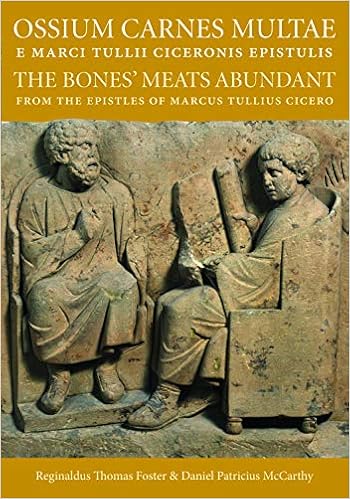
The second book in the series…

Ossium Carnes Multae e Marci Tullii Ciceronis epistulis: The Bones’ Meats Abundant from the epistles of Marcus Tullius Cicero

US HERE  – UK HERE (If it says “out of stock” they may need to replenish with the new copies – and you can order from the publisher)

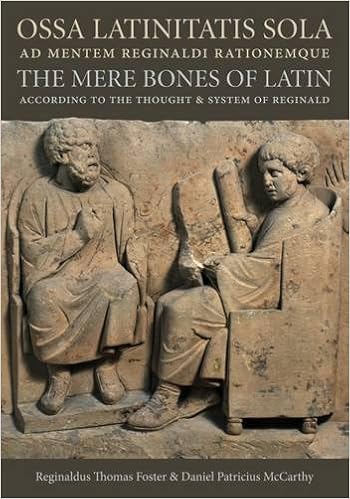
The first book…

Ossa Latinitatis Sola ad Mentem Reginaldi Rationemque: The Mere Bones of Latin According to the Thought and System of Reginald by Reginaldus Thomas Foster

US HERE – UK HERE

The whole project will include five books.

Posted in ACTION ITEM!, Latin | Tagged , ,
1 Comment

ASK FATHER: COVID-1984 and Ash Wednesday 2021: sprinkling ashes instead of tracing a cross

From a reader… actually, more than one…

QUAERITUR:

Question on Ash Wednesday TLM ‘62 Missal; would the Priest be distributing ashes by sprinkling over head or would TLM be exempt and have ashes distributed as in previous years ( Communion Rail on forehead as a cross). Announcements have been made about 2021 ashes however parishes I attend mass at have Novus Oreo and Extraordinary Form.

Sorry, but my psychic powers don’t give me special insight into what will happen where you are.

That said, there was a document from the Congregation for Divine Worship that pertains to the Novus Ordo about the distribution of ashes on Ash Wednesday.  If I recall, it says that the priest can say the form for administration of the ashes once for everyone and then sprinkle them on the heads of the people without saying anything.    It did not, however, seem to me that that is the obligatory way to do it.  I think it is an option.

It doesn’t concern me that much because I will be saying the Traditional Mass on Ash Wednesday, and that document from the CDW doesn’t pertain.   I may, however, say, those of you who want ashes on the forehead, come to the rail on the Epistle side, and those who want them sprinkled go to the Gospel side.

Take note that sprinkling the ashes is how it is done in Rome.  It isn’t some strange modernist innovation.

There are different customs in different places for distribution of ashes.   In these USA and perhaps elsewhere we have a practice of tracing the cross with ash from the incinerated blessed palms of the year before.  In Rome, however, it is the practice to sprinkle ashes on the top of the head.  Clerics with tonsures, would have the ashes sprinkled on the shaved tonsure spot.

Hence, there is nothing wrong with using the sprinkling method in these USA.  It’s the Roman way to do it, after all.  It might be strange for people who are accustomed to the tracing of the cross, but it isn’t a wrong way to do it.

Also, in the traditional Missal, for imposition of ashes the rubric says that the the priest with highest dignity imposes ashes on the celebrant.  It doesn’t say how: imponit cineres celebranti.  If the priest is alone, without another priest present, he imposes ashes on himself on the head: sibi ipsi cineres imponit in capite.  On the head.  It doesn’t say how.  The Roman way is to sprinkle them.  For example, here is Pope Benedict receiving ashes at the Station church, the Basilica of Santa Sabina.  The one imposing them is the titular Cardinal of that basilica.

One thing I would add, is that, just as in tracing the cross on the forehead, especially with children, be careful not to use so much ash that it could fall into people’s eyes.

Concerning ashes on chapel veils … I dunno.

And… this is important, Fathers…  when someone comes up and by habit sticks her tongue out…. resist!

Resist.

Posted in "How To..." - Practical Notes, ASK FATHER Question Box | Tagged ,
10 Comments

ACTION ITEM! 200 Novena Participants

Let’s get
200 Novenas!

UPDATE:

Keep it going!

Some of you have told me what Novena you are using:

St. Michael 10
St. Joseph 14
O.L. Perpetual Help 2 +1
54 day Rosary Novena for my pressing intentions – 3
St. Maximillian Kolbe 10
Sacred Heart 1
Daily Prayer for Priests 4
St. Gabriel 1
O.L. Undoer of Knots 3
St Christopher 1
St. Benedict 1
Litany of Loreto 1
St Anthony of Padua 1
St Anne de Beaupré 1
Infant of Prague 1
St. Dominic Savio 1
St. Anne 1
Fr. Dolondo Ruotolo’s Surrender Novena 1
Divine Mercy 1
Litany of Loreto 1
Chaplet of Reparation for Priests “In Sinu Jesu.” 1
unnamed 2

This won’t add up with the thermometer because a couple of you are doing more than one!

___

From a reader:

QUAERITUR:

Ever since I emailed with you a few weeks ago, I have been trying to pray a novena for you. Now I am on my FOURTH attempt. You must be doing something great because the enemy is so opposed to a novena. I don’t normally have this problem, and I am using the “pray more novenas” app. I think we need to pull out the big guns. Let’s get more readers involved! Would you ask your readers to join me in a novena for you?

I am using the St Maximillian Kolbe Novena. I can imagine the Church Triumphant being bombarded with novenas from us.

Viva Christo Rey!!!

I thank you from the bottom of my heart for these prayers.

I like this especially because St. Maximilian was a ham radio operator, and also because I have a rare 1st class relic of St. Maximilian!

Dear readers, when I posted about my recent travails, sparked by an organized campaign of cancel terror, I asked for your prayers and also a financial boost through more monthly subscriptions for donations. HERE Many of you wrote beautiful notes of encouragement. They are still coming in.  They really helped.

May I ask you also to participate in this request from a fellow reader for a Novena?

If I started with a campaign for 200 subscriptions, and got more, could we have a campaign for at least 200 Novena participants?

I suggest ANY NOVENA of your choosing.

However, for what it’s worth, I am praying to:

  • St. Joseph for material help
  • Mary, Queen of the Clergy for ecclesiastical help

Perhaps a Novena to St. Joseph or, one of my favorites, Our Lady of Perpetual Help by St. Alphonsus.  And there is always…. HERE

Lots of Novena HERE.  And they send reminders which is really helpful.

And you can also, please, pray for a truly hero priest, Fr. Dana Christensen, whose ALS is advancing.  HERE

So MANY priests and bishops to pray for.  So many.

It may be that you are not familiar with the spiritual practice of novena, nine days of prayers for an intention.   It is as Catholic as you can get.

Getting more people to pray more novena could be an important element in the revitalization of our Catholic identity in the face of what is surely coming our way in the near future.

Please, dear readers, pray a novena, any novena of your choosing, for me and also for others whom you know to need the assistance of Heaven.

If you are registered, chime in below.  Otherwise, you can write to me and tell me what you have chosen: HERE and put NOVENA in the subject line.

Posted in ACTION ITEM!, Our Catholic Identity, Si vis pacem para bellum!, Urgent Prayer Requests | Tagged ,
26 Comments

Daily Rome Shot 75

Posted in SESSIUNCULA | Tagged
3 Comments

Daily Rome Shot 74

Photo by Bree Dail.

Posted in SESSIUNCULA | Tagged
3 Comments