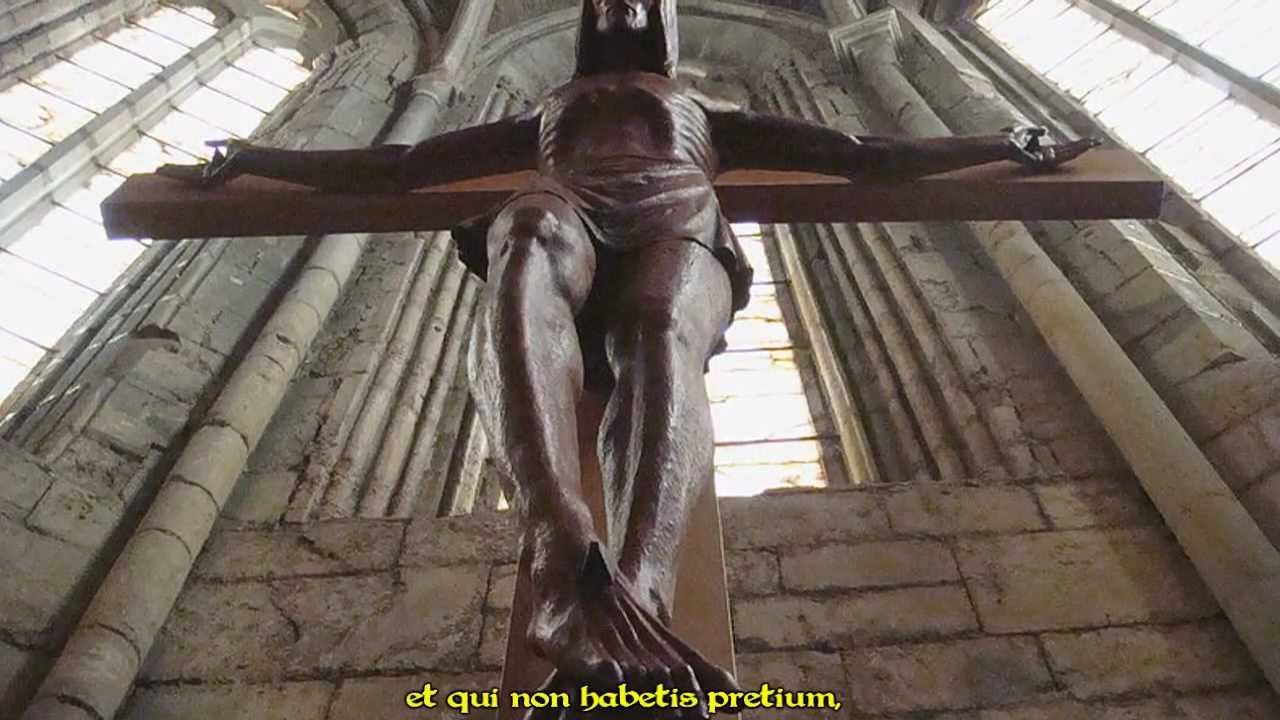
LIVE VIDEO – 11 Feb 2021 – 1200 NOON CST – Traditional Latin Mass – Apparition of O.L. of Lourdes

Click to buy.

I’ve resumed, for a while at least, the live-stream of my daily Traditional Latin Mass at NOON Central Standard Time (= UTC -5 and ROME 1800h).  (Check out LatinMass.live)

BEFORE MASS: Angelus, Statement of Intention
MASS: Apparition of Our Lady of Lourdes
PRAYERS ADDED: For friends
AFTER MASS: Leonine Prayers, Prayer against the Pandemic

Use phone camera

Angelus Press Missal: p. 1120 and HERE

LINK TO VIDEO HERE

THANK YOU to my donors!   HERE


Posted in SESSIUNCULA |
Comments Off on LIVE VIDEO – 11 Feb 2021 – 1200 NOON CST – Traditional Latin Mass – Apparition of O.L. of Lourdes

Outstanding challenge coins

A question at large to the readership with whom I may have had correspondence about my 25th anniversary challenge coin.

Do I have any outstanding – that is unfulfilled – exchanges with any of you?

If we had an exchange about an exchange, and you sent but I have not resent… PLEASE let me know right away so I can get one of my coins to you, ASAP.

Write HERE and put CHALLENGE COIN in the subject line.

Sometimes life get’s busy.

I still have a good number of my 25th anniversary coins, even as I look toward both my 30th and also hitting the 100 million visitors mark for the blog.


Posted in ACTION ITEM! | Tagged
Comments Off on Outstanding challenge coins

ASK FATHER: How to suggest more Latin and Gregorian Chant in a Novus Ordo Parish without being annoying?

From a reader…

QUAERITUR:

How do you suggest a layman approach the question of getting more Latin used in a NO mass (or even of suggesting a traditional mass) without coming off as though I am telling the priest how to do his job because I know better, or without coming off as a “‘Can I speak to the manager” type? Since you are a priest, I thought you could give some insight as to how to not annoy a priest with a “suggestion” that looks like a complaint.

Some context, if it is helpful:

My parish is small, Novus Ordo, and mostly of the boomer generation (though fairly mixed racially—we are in BC, Canada). The demographic sinkhole you’re talking about is gaping: my wife and our baby are I think the only young family at this parish.

We recently got a new priest, a convert, fairly young, and really a good one. It’s precisely because I like the guy that I don’t want
to come off as a complainer.

In any case like most NO parishes not a word of Latin is spoken in the entire mass, not even for the Sanctus or Gloria. The music is all English as well—Gregorian chant certainly does not hold pride of place. My understanding is that this is just how they have “always” done things.

My dream of dreams would be to get this guy to offer a Latin mass, but I don’t know how he’d respond to it. But in the short term I would at least like to see some more traditional elements in the NO masses.

If relevant, our Coronavirus status is that literally everything is allowed to operate here except churches. (I know). Our churches do distribute the Eucharist after mass.

I had thought of mentioning that I am the Latin teacher at a local traditional Catholic school as a way of introducing the idea, but was not sure if that would be likely to help.

Thank you for your time, Father.

GUEST PRIEST RESPONSE: Fr. T. Ferguson

Each situation will have to be handled differently – one size does not fit all. Being a Latin teacher at a Catholic school, you have a couple good openings. “Father, I was teaching my students about the rich treasury of Latin prayers the Church has. Would you be interested in coming to the class some day and talking to the students about that? I’d love, someday, for my students to be able to experience Latin in the liturgy. It’s been so meaningful to me when I’ve been able to experience it.”

Father, being relatively young, and relatively new to the parish is probably going slow, which is usually a good thing. He might not be interested himself (which would be sad, but is a reality with some young priests) or, more likely, he’s gauging the parish before making any changes. If the predominant demographic, and the zeitgeist has been the aging boomer crowd, things may have to move very slowly, at least at first. If, as you say, there’s a racial mix (being Canada, I’m going to assume it’s a mix of anglophone, francophone, European, Asian, and perhaps First Nations?) bringing up Latin might be a way to bridge the cultural divide.

In presenting an idea to the pastor, take into account the fact that he’s probably overwhelmed with work already. Anything that sounds like more work for him is likely going to get a look of fear on his face. “Father, I was wondering if I could help you out in any way? Do you need adult male servers, or men to recruit and train the altar boys? I’d be happy to take that on!” That goes much further than, “Father, we don’t have enough servers, and the altar boys are clearly not doing a good job, when are you going to do something about that?” Similarly, “Father, I don’t have a great voice, but I can do some Gregorian chant. Would you like me to see if I could pull together a schola and maybe add some music to the daily Mass?” would be better than, “Father, why don’t we have any Gregorian chant at Mass? When are you going to do something about it?”

Get to know him before offering any suggestions. Offer to have him come over to dinner, to bless your house. Wait for awhile until you know what his thoughts are on things before employing a full court press. Brick by brick and all, but before you even buy the bricks, you have to make sure the site will hold a building, everything is level, there’s a decent foundation in place, and all the appropriate permits are in order. Father, being a convert, and having gone to seminary in Canada, will probably not have had a whole lot of exposure to traditional liturgy (or, he may have – you have to get to know him first). He may be hostile, apathetic, curious, intrigued, eager, or oblivious. Your strategy should be different depending on who he is and what his thoughts are. Play the long game.

Depending on the situation, it might be best not to go directly to the priest at first. Is there someone in charge of music at the parish? Is there <shudder> a liturgist on staff? Approaching them, usually in a non-threatening manner might be a good first step. “Hi, Judy. What an up-tempo version of ‘Lord of the Dance’ at the Offertory today! Where do you get your ideas for music choices?” (If she says, “Oh, I subscribe to Modern Liturgy,” or “At this wonderful workshop last year with Marty Haugen…” or “I usually go to the LA Religious Ed Conference,” you’re not going to get anywhere, so smile and walk away.

Fr. Z adds:

Fr. Ferguson’s suggestions are good.   You have to assess your particular situation.  There isn’t going to be a “one size fits all” strategy.

That said, it occurs to me that if you were to have a schola already formed and singing well before you go to the priest, that might be helpful, especially if the schola is good.

Perhaps you could build up a schola cantorum and start singing together for a while.  Get good.  Learn really well a few of the useful Masses.   There are good resources, such as HERE and HERE.  Get comfortable with reading the notation, pronouncing the Latin, and get those good Gregorian dynamics in place (so often ignored, to the detriment of all).

I am imagining a scenario along the lines of, “Hey Father, come into the church.  We have something to show you.”  And when he enters, start up with the Introit for the coming Sunday’s Mass.


Posted in "How To..." - Practical Notes, ASK FATHER Question Box, HONORED GUESTS, Liturgy Science Theatre 3000, Our Catholic Identity, Save The Liturgy - Save The World | Tagged ,
6 Comments

Daily Rome Shot 73

Photo by Bree Dail.


Posted in SESSIUNCULA | Tagged
2 Comments

ASK FATHER: Interfaith marriage – Catholic and Muslim

From a reader…

QUAERITUR:

Hello Father, i have a question about interfaith marriages. I’m Muslim and the woman I’ve been thinking of marrying a nondenominational Christian, but she fears it is sinful, there is a verse that suggests not to be unequally yoked with a nonbeliever, but i argue that Muslims are believers, for the reason we believe in Jesus Christ, and God with the capital G. I would love to hear your interpretation of such issue.

GUEST PRIEST RESPONSE: Fr. T. Ferguson

I can only speak from the Catholic perspective. A marriage between a Catholic and an unbaptized person can only be allowed if the bishop grants a dispensation.

This is out of a recognition of the great difficulty (not impossibility) of the success of a marriage between one person who believes that Jesus Christ is the sole source of salvation, and the Sacraments of the Church are the vehicle used to effect that salvation for a believe, and another person who does not believe this.

How is this disagreement solved in a marriage? By avoiding the issue? By constant bickering?

Moslems may “believe” in Jesus Christ, but they do not believe Him to be the only begotten Son of God, nor do they believe Him to be the sole source of salvation, otherwise they would not be Muslims.

Christians and Muslims also have strong differences in their understanding of marriage.

Muslims believe that the marriage contract can be voided. Either party is free to seek divorce. Christians (though many denominations have neglected this teaching) accept Jesus’ teaching that marriage is binding for life.

Those two very different understandings of the nature of marriage would seem to make a marriage between these two people difficult at best.

Posted in "How To..." - Practical Notes, ASK FATHER Question Box, Canon Law, Hard-Identity Catholicism, HONORED GUESTS, One Man & One Woman, Our Catholic Identity, The Religion of Peace |
7 Comments

ASK FATHER: Why is a Mass during Lent called “Sitientes”?

From a reader…

QUAERITUR:

Good morning, Father!
Greetings from snowy Colorado! I was setting up my new Android calendar on my phone because I’m no longer using google, etc.  As I was making notations for the TLM calendar for March 20, 2021, I saw this phrase on the FSSP calendar for the day: Feria of Lent (Sitientes)

I grabbed my trusty Dr. Traupman Latin/English dictionary: “adj thirsting, thirsty; arid, parched; parching; (w. gen) thirsting for, eager for ”

I looked it up online and could not find a liturgical explanation. Could you explain this, please?

Thank you very much! God reward you for what you do for us!
Pax et bonum!

Good question.  Thanks.

Aim phone camera

Sitientes is what that Mass formulary is called because the first word of the first antiphon, or Introit, of the Mass is, in fact “Sitientes“.  “Sitientes, venite ad aquas, dicit Dominus…“.  This is the Mass formulary for the last day in Lent before Passiontide begins, in other words, Saturday in the 4th Week of Lent, just before 1st Passion Sunday.

Sometimes formularies are called by their Introits.  Say you are looking at Masses in the Common of Martyrs.  You will see the Mass “Statuit ei Dominus” or “Sacerdotes Dei” or “In virtute tua“, etc.   The Mass for Quinquagesima coming up can be called “Esto mihi“.

If you look at the great resource page latinmass.live right now you will see in the list of upcoming Masses that, at the beautiful church St. Eugene in Paris, tomorrow they will celebrate St. Scholastica with the Mass “Dilexisti“.  There are two Mass formularies “Pro virgine tantum”.  The first word of the Introit tells you which to follow.

That’s the story behind “Sitientes“.

Thanks for being thirsty for an explanation.

And as a bonus, here the Introit Sitientes sung by the nuns of Santa María de Benifassà.

YouTube thumbnailYouTube icon

Posted in "How To..." - Practical Notes, ASK FATHER Question Box, Liturgy Science Theatre 3000 | Tagged
1 Comment

“Prisoner 5993, you have been denounced as having attempted to communicate with a mythical transcendent being for the sake of petitioning a selfish and criminal outcome.”

At First Things read this carefully: “Prohibiting Prayer in Australia” by Carl R. Trueman

The core with my emphases and comments:

[…]

The state of Victoria in Australia … just passed a bill that will considerably intensify the conflict between religious freedom, individual choice, and identity politics. And it might well become a model for laws elsewhere in the democratic world.

The legislation that just passed is the Change or Suppression (Conversion) Practices Prohibition Bill 2020. Its basic intention is “to ensure that all people, regardless of sexual orientation or gender identity, feel welcome and valued in Victoria and are able to live authentically and with pride.” It is hard to argue with that, both because the aim seems laudable enough (who wants to live in a place where she does not feel valued?) and because it embodies the nebulous jello-speak of our current therapeutic age. Feeling valued and living authentically are useful, empty phrases that sound wonderfully reassuring but can be given whatever content the month dictates. [This could also describe the state of belief in the Church’s teaching on the Eucharist in many places, where not the Catholic Faith reigns but rather a moralistic (or not!) therapeutic deism.] I assume, or at least hope, that those whose “sexual orientation” leads them to abuse underage minors are unlikely to feel welcome and valued in Victoria despite this new legislation.

The law defines a change or suppression practice as follows:

a practice or conduct directed towards a person, whether with or without the person’s consent on the basis of the person’s sexual orientation or gender identity; and for the purpose of changing or suppressing the sexual orientation or gender identity of the person; or inducing the person to change or suppress their sexual orientation or gender identity.Note that the consent of the person is immaterial to the legal point: The change or suppression practice is illegal regardless of the attitude of the person involved.

But the really important part of the bill from a religious perspective is its list of “change or suppression practices.” This includes: “carrying out a religious practice, including but not limited to, a prayer-based practice, a deliverance practice or an exorcism.

[NB…] In short, if someone asks a pastor, a priest, or a Christian friend to pray for him that his sexual desires or gender dysphoria might be changed, that pastor, priest, or friend runs the risk of committing a criminal offense. Presumably this also applies to parents praying for their children—or perhaps even parents teaching their children that untrammeled expressions of sexual desire (at least within the canons of contemporary bourgeois taste) are inappropriate.

This provision is clearly not based on any coherent metaphysical objection to the practice of prayer. If the legislators believe God exists, they presumably believe that he is wise enough to ignore such prayers if they are indeed truly harmful. And if they do not think he exists, then it seems reasonable to assume they would regard such prayer as a rather pointless, even nonsensical, exercise.

[…]

Again, the concept of coherence enters in, as it did in Weigel’s piece the other day about abortion promoting Catholic politicians, Communion, and the bishops who won’t act like bishops.

But that’s the inevitable liberal outcome, isn’t it: truth isn’t rooted in anything objective, it is rooted in how much power I have over you, in my will.  It is the lie of the serpent in the garden: You shall be as gods, determining your truths.  No matter matter if other people have their own truths that differ from yours: you are more powerful than they are, so they are screwed and your truth prevails.  Black is white, up is down, in is out, 2+2=5, women can be ordained, adulterers can receive Communion, masks are a sacrament… whatever the hell they want you to accept.

Scene: an interrogation room with a one-way glass window by a heavy metal door.  Guards with truncheons flank a uniformed interrogator of indeterminate sex.  From above the window, bright lights are focused on a man shackled to the opposing wall.

“Prisoner 5993, you have been denounced as having attempted to communicate with a mythical transcendent being for the sake of petitioning a selfish and criminal outcome.  In outdated terms, you “prayed”.  Your accuser, an autonomous individual with whom you share DNA from the same biological pairing, filed a charge of praying against you.  Your DNA corelative stated that, in the time before the Great Reset, xe had fallen into the error of questioning xis desire to alter xis gender identity and asked you to pray for xem, because you were, at the time, still involved in the illegal activity of a so-called ‘priest’.”

The interrogator swipes through some views on a hand-held screen.

“While you offered those infamous petitions before the change to the laws of this now free and borderless domain, Article 2 of the Democrat Reset Reformation Act makes that which is now criminal also retroactively criminal and subject to the Pelosi guidelines of the Build Back Better Proclamation.”

More screens are consulted.

“It appears, Prisoner 5993, that you have also been observed moving your lips when alone while – and we can hardly bring ourselves to say this – you have been present with us as a recipient of the State’s benevolent rehabilitation efforts.  That constitutes a crime under Ordinance 32 of the Harris Act, which specifically outlaws attempts to communicate with mythical beings deemed by the ignorant to be transcendent.”

The guards being to tap their truncheons into their free hands.

The interrogator turns to address those who are unseen behind the glass.

“Prisoner 5593’s lack of gratitude and attitude of defiance even while receiving such munificent remedial treatment has been noted.  As a result of xis unacceptable defiance, it has been deemed both necessary and generous to make certain adjustments to xis program of self-recognition and renewal.  This decision for continued forbearance is for the moment taken in place of the usual proscription and termination. Please make the official log entry after witnessing the State’s leniency.  Please begin the video recording for for educational broadcasts.  Ministers of grace, please apply the Prisoner’s care.”

The guards take a step forward.

Posted in Pò sì jiù, The Coming Storm, The future and our choices | Tagged
10 Comments

Daily Rome Shot 72

Posted in SESSIUNCULA | Tagged
6 Comments

ASK FATHER: A one-page info sheet to help get the TLM started in a parish. ACTION ITEM!

From a reader…

QUAERITUR:

We’ve communicated a few times in the past concerning efforts to get the TLM going our parish. Thanks for your advice and input along the way. We are making progress.

Can you suggest a simple one-pager that could be made available to first-time attendees at the TLM to help them follow along and get the big picture? If not, what would you suggest?

I found Treasure and Tradition a great resource as a follow-up for those who want to understand and appreciate the Mass at a deeper level.

Looking for something much simpler and easy to absorb, if there is anything.

I figured you would know about it if there is anything. Thanks again for all your help.

Firstly, I can’t speak highly enough of Treasure and Tradition.  It is spectacular.  US HERE  There is also a Spanish version.  HERE  Also, if you buy in quantity directly from the publisher, St Augustine Academy Press, there is a discount.

To your question: a simple one-pager.

I don’t have one.   However, I’ll bet there are some readers, including priests who have implemented the TLM in their parishes, who have created something like that.   It could be good to gather them into one place (here!) for people to use as starting points for their own parish’s liturgical catechesis.

I invite any of you readers out there to send me via email the resources you created… bulletin series, inserts, pamphlets, etc.   Write to me HERE.  Put TLM RESOURCE in the subject line.  I’ll write back and you can, in response, attach your scans, files, or photos of your examples.  I’ll see what I can do about putting them into a useable format for consultation.

This was a good question with a good idea.

Posted in "How To..." - Practical Notes, ACTION ITEM!, ASK FATHER Question Box, Liturgy Science Theatre 3000, Save The Liturgy - Save The World | Tagged ,
8 Comments

Daily Rome Shot 71

Posted in SESSIUNCULA | Tagged
7 Comments