#ASonnetADay – 60. “Like as the waves make towards the pebbled shore…” pic.twitter.com/0Wc6um21RS
— Fr. John Zuhlsdorf (@fatherz) October 12, 2020

#ASonnetADay – 60. “Like as the waves make towards the pebbled shore…” pic.twitter.com/0Wc6um21RS
— Fr. John Zuhlsdorf (@fatherz) October 12, 2020
You might remember frequent comments here from Marie Dean, “Supertradmum”, who had her own blog. I ran into my post about her passing, 1 year ago yesterday.
In your kindness you might say a prayer for her.
This comes a little late in the day, but on 10 October in 1982 John Paul II canonized St. Maximilian Kolbe.
Paul VI had beatified him as a confessor, but JP2 canonized him as a martyr. St. Maximilian’s case is a good example of the “third way” between the heroic life of virtue and martyrdom: oblatio vitae… offering of life. I’ve written about this HERE. This involves the offering of one’s own life having live a life of virtue in at least an ordinary way. For example, St. Max, a virtuous guy, offered his life for another in a Nazi death camp. His offering, down the line, resulted in his death. St. Gianna decided not to abort her child, which eventually resulted in her death.
Three things.
First, St. Maximilian is the patron saint of HAM RADIO OPERATORS!

Second, I have a 1st class relic of St. Maximillian. These are rare.

Third, I saw a great colorized photo of the saint today.

#ASonnetADay – 59. “If there be nothing new, but that which is…” cf. Ecclesiastes 1:1-11 pic.twitter.com/jVbKKrUvF1
— Fr. John Zuhlsdorf (@fatherz) October 11, 2020
The snippers and stitchers of the Consilium allowed this Sunday’s prayer to survive unscathed in the post-Conciliar editions of the Missale Romanum. The Collect still echoes the ancient sentiments of Holy Church wherever the Roman Rite’s Ordinary Use of Holy Mass is offered in Latin on the 32nd Sunday of Ordinary Time.
COLLECT (1962MR):
Omnipotens et misericors Deus, universa nobis adversantia propitiatus exclude: ut mente et corpore pariter expediti, quae tua sunt, liberis mentibus exsequamur.
In your distinguished Lewis & Short Dictionary you will find that pariter is an adverb, “equally, in like manner” and “at the same time”, connecting mens and corpus (think of the adage mens sana in corpore sano… “a healthy mind in a healthy body”). Adversantia, neuter plural active participle, is from adversor “to stand opposite to one, to be against, i.e. to resist or oppose (in his opinions, feelings, intentions, etc.); while resistere and obsistere denote resistance through external action.” It is constructed with the dative, which explains the nobis.
The distinction between “internal” and “external” is useful crowbar to pry open this Collect.
We encounter many difficulties and challenges in life. There is resistance and adversity. Indeed, there is an Adversary. We are opposed from without and from within. We must constantly cope with the unreconstructed effects of original sin together with the diabolical workings of the enemy of the soul, who stirs up passions, memories, and implants wicked thoughts and images. Very wisely Holy Church prayed at Compline every night (with the Roman Breviary and Antiphonale Monasticum – but in the Liturgy of the Hours only on Tuesdays!) the passage:
“Be sober and vigilant: for your adversary (adversarius) the devil is going around like a roaring lion seeking whom he might devour: whom you must resist (resistite), strong in the faith. But you, O Lord, have mercy on us” (1 Peter 5: 8-9).
God truly is a God of mercy, to protect us so from such a dire foe.
Excludo literally means, “to shut out, exclude; to cut off, remove, separate from any thing.” Therefore it also means, “to drive out, thrust out, hinder, prevent.” We pray to God to keep away from us all things that actively hinder and oppose us and, if we stick closely to the distinction made between adversor, resisto, and obsisto, particularly interior dangers.
How will that come about? God must be appeased. God must be favorable towards us.
In the Collect we find the word propitiatus, a perfect passive participle from propitio, “to render favorable, to appease, propitiate.” Propitiatus is “having been appeased.” Many forms of propitio appear in our liturgical prayers. Its use reflects our recognition that as a race and as individuals we have sinned in His sight and offended Him. Our offense required a Redeemer capable of appeasing the Father. We offend God as a society or as groups only on the basis of the personal sins of individuals. Individuals sin, not systems. We must seek to make amends, as individuals or as groups, but our efforts would be in vain without the merits of Christ’s sacrifice mediated through the Church.
This is why our liturgical worship of God is so important: it is our starting point and the earthly terminus. Better yet, perhaps, “round about”, for it sends us back out to our work again.
The word expediti is from expedio, “to extricate, disengage, let loose, set free, liberate any thing entangled, involved.” When applied to persons, is means “to be without baggage”. Thus, the noun expeditus, i, m., is “a soldier lightly burdened, a swiftly marching soldier.” You might have heard of a “St. Expeditus” (feast day 19 April) a patron saint of procrastinators and computer programmers… for reasons which are perfectly clear.
 Expeditus is appropriately depicted as a Roman soldier holding aloft a Cross on which is written “HODIE… TODAY”. Expediti refers, course, our freedom from the chains of sin which would have doomed us to eternal hell. Put aside is the word “CRAS… TOMORROW”.
God wants your heart and service NOW.
Going on, exsequor is “to follow, go after, pursue” as well as “to follow up, prosecute, carry out; to perform, execute, accomplish, fulfill”. Finally, that quae tua sunt is literally “things which are yours”. There isn’t room here to get into why but it refers to God’s will which for us are God’s commands. Think of it this way, Jesus told His Mother and Joseph, “I must be about my Father’s business” (cf. Luke 2:49).
SLAVISHLY LITERAL TRANSLATION:
Almighty and merciful God, having been appeased, keep away all things opposing us, so that, having been unencumbered in mind and body equally, we may with free minds accomplish the things which You command.
OBSOLETE ICEL (1973 translation of the 1970MR 32nd Ordinary Sunday):
God of power and mercy,
protect us from all harm.
Give us freedom of spirit
and health in mind and body
to do your work on earth.
Notice that the old ICEL version does nothing with the concept of propitiation. The Latin makes a connection between the Father’s power, His mercy, and what was done according to His plan so that we could be saved. Also, the Obsolete ICEL version refers to “freedom”. The Latin does so also but with a sense that we are impeded or encumbered… or could be. The real objection to the old ICEL version, however, must be how bland it is: it is entirely unremarkable.
For those of you who may need to preach, or who want to drill more deeply into what our Collect really says, notice that it is cited in the Catechism of the Catholic Church 1742 in the section on “Human Freedom in the Economy of Salvation”, but with a different, more accurate translation than the Obsolete ICEL was:
“Almighty and merciful God, in your goodness take away from us all that is harmful, so that, made ready both in mind and body, we may freely accomplish your will.”
You could look up that section of the Catechism and study it, perhaps reflection during this election cycle about how human freedom doesn’t mean that we can do anything it pleases us to do, but rather that our actions must conform to our dignity as God’s living images, and that we must respect that image in others, at every stage of human life. God has a plan in the economy of salvation for every one of His images, from conception to death.
Our Collect’s military language reminds me of the three-fold understanding of the Church: Militant, Suffering, and Triumphant.
We are lightly burdened foot soldiers (expediti) of the Church Militant on an urgent mission. Enemies are all around. Obstacles abound without and within (adversantia). Before going into battle soldiers shed their heaviest gear so they can move more freely. They take only what they need for clash about to begin and to fulfill commands (quae tua sunt). Their training was grueling, repetitious, often boring. Their bodies are now strengthened, hardened. They developed habits through the tedious drills so that when danger looms their minds are freed up (liberis mentibus). Though they may be afraid, they can act with confidence when their commanders act with sure and true competence.
This is the ideal for the soldier. It is the ideal for every Christian.
Virtues are habits developed over time by repetition and discipline. Our Church’s pastors are our officers who must lead us through adversities towards our objective of heaven. We must diligently learn and review the content of our Faith, especially in the fundamentals, basic catechism. With discipline we must frequent the sacraments. We must train our children, din into them the catechism use of the sacraments. They must be given a rule of life which, after a measure of time, becomes so much a part of them that it is nearly automatic. We must foster it in ourselves as well. It will carry us through even the worst things we might have to face.
Years ago I had an experience which confirmed the value of old-fashioned methods of catechism: rote memorization and repetition aloud, “dinning” it in.
I was called to a hospital to assist in a man’s difficult death. I gave him Last Rites and talked with the family as they struggled with the end of their loved-one’s life. An estranged daughter, beyond her middle years, which had clearly been pretty rough, was severely bitter. She cursed life, fate and God for the cruelty her father’s dying. She shouted at me, “Why did God make us if this is ALL THERE IS?” I responded asking, “You tell me. Why did God make you?” She became very still. Then she said, “God made me to know Him, to love Him, and to serve Him in this world, and to be happy with Him forever in the next.” I continued, “What must we do to save our souls?” On cue she responded with something that she hadn’t probably thought of for decades: “To save our souls, we must worship God by faith, hope, and charity. We must believe in Him, hope in Him, and love Him with all our heart.” “Did your father do that?”, I asked. “Oh, yes”, she said, “…. oh yes.”
She had been taught well as a child. Someone loved her enough to din that into her, perhaps even under protests. Without question there were times when she had to be forced to learn and to repeat over and over what seemed boring and pointless. She had been drilled at school, perhaps, by the Sisters, the sort in habits with rulers, whom we now see mocked in the media by ungrateful cads who benefited from their dedication. Her parents did their duty and gave her what she would one day need.
By the grace of God the gift her dying father pressed on her years before was rediscovered – in the moment when the battle over her soul was joined.
Many today criticize the old method of education by memorization and repetition. They say that children just mouth things they do not understand. Children might not understand what they are learning at that moment, but one day they will. It will be ready for them. They will have it because it had been given them. Soldiers, sailors and Marines gripe about their training and entertain homicidal thoughts about their drill instructors. But when the time comes, they have the skills that win battles and save lives. Not a few Marines return to their DI to shake his hand and thank him. We are pilgrim soldiers of the Church Militant. To reach our goal of heaven, we need training, sacrifice, and leadership.
 Since the days of the pontificates of St. John Paul II and of Pope Benedict XVI, I believe we were, and still are, seeing a recovery of Catholic identity through a renewal of authentic worship in continuity with our tradition. Even as we see huge attacks on the Church from within and without, as we see a vast demographic sinkhole opening beneath us ready to swallow up up the beige, there are also instances of strong leadership among our bishops and priests. Many are not permitting Holy Church to be shoved off the field of battle. They aren’t entirely willing to be pushed around, even by other leaders in the Church. While over the last few years this is weakening at bit, there are still strong leaders in the Church, willing to push, and to admonish, and to din, and the make the hard call to attain good goals.
Do all you can to support our bishops and priests. Pray and fast for them. Support their needs and projects. Express that support to them. And in your march of life be prepared always to give reasons for the hope that is in you (cf. 1 Peter 3:15).
From my youth I have been a hockey fan. I get that the Stanley Cup is a big deal. It would be pretty exciting to have that on display at a high school!
A reader dropped me an email…
I can’t seem to find [Rubrics for Veneration of the Stanley Cup] in Collins, O’Connell, or Fortescue. Would you know where to look?
In seriousness, this is at Jesuit High School Tampa. I’m told it was a momentary gaffe but the fact that this photo is still on their Facebook page makes me doubt that.
Please keep the students and faculty in your prayers; JHS Tampa has come a long way under the current president, but as this photo demonstrates they clearly have a lot further to go.

If this had been St. Francis Xavier in Manhattan, they would have put it on the altar and then done hot naked yoga around it.
Frankly, don’t understand why they had to do this in their chapel. The school has a gymnasium since they have a basketball team. Could they not have had adoration of the sports trophy in the sport venue?
In a larger version of the photo, above, it looks as if there is a veil on the tabernacle, which suggests that the Blessed Sacrament has not been removed.
No… I don’t get this.
This looks like quite a school. The chapel is nice, reflecting care and generosity. There are a few photos on their page of liturgical moments. The fact that there are few of liturgy, doesn’t surprise me (…. Jesuits, after all). But the few I saw were decent. I saw a lovely statue of Mary, crowned with flowers and what looks like Exposition of the Blessed Sacrament outside at night with a large gathering.
What does it say to the students about the centrality of the Eucharist and the sacred nature of the chapel? What are they REALLY saying to the students?
 I remind the readership that the second Saturday of October is designated as
National Chess Day.
Don’t be board. Get out there and start mating! I’ll check on your progress.
Also, en passant, many thanks to the readers who, some time back, sent some chess equipment. It was my intention to invite the formation of a chess club, but… COVID-1984. That’s going to have to wait.
An old post on chess and LATIN. HERE
In honor of the day, here is a story I shared back in 2016:
 From the often amusing Eye Of The Tiber:
Society of St. Pius X chess grandmaster Larcel Mafebvre has turned four of his pieces into bishops without approval from the World Chess Federation, officials have confirmed.
“Mr. Mafebvre has, without approval from the Federation, created bishops out of pawn pieces,” said World Chess Federation head Antonio Salamanca. “After speaking with Mr. Mafebvre regarding abiding by the new chess rules, wherein players are given the freedom to concelebrate the match, and to say the words of ‘checkmate’ in the vernacular, he has sadly decided to ignore our requests.”
Salamanca went on to tell reporters that Mafebvre had automatically incurred excheckommunication because of his disobedience.
“I must do what is in my conscience to preserve the dignity of the game,” Mafebvre told EOTT in an exclusive interview. “Therefore, I have decided to consecrate four of my pieces into bishops to help my depleted side, for, from some Fischer, the smoke of Satan has entered the chessboard of God.”
At press time, one time follower of Larcel Mafebvre’s, Bavid Dawden, told EOTT that he has decided to become head of the World Chess Federation, though he only has three pawns to play with.
BTW… when I get my CW up to scratch, it could be fun to have a game, by sched, with someone out there. CQ CQ CQ de W9FRZ e4.
UPDATE:
And on this day….
BREAKING: World Champion @MagnusCarlsen‘s undefeated streak and “World Record” ends on 125 games after 2 years, 2 months and 10 days as he is beaten by World #15, Poland’s Jan-Krzysztof Duda, in R5 of #NorwayChess. pic.twitter.com/WCBNrVJuvj
— Tarjei J. Svensen (@TarjeiJS) October 10, 2020
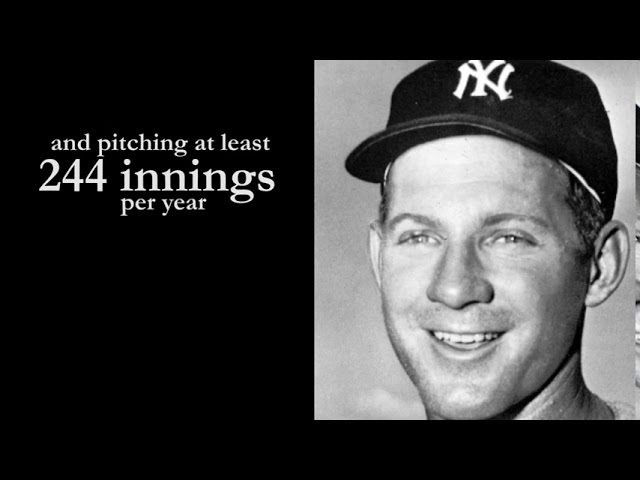
Whitey Ford died today. It is the end of Sukkoth
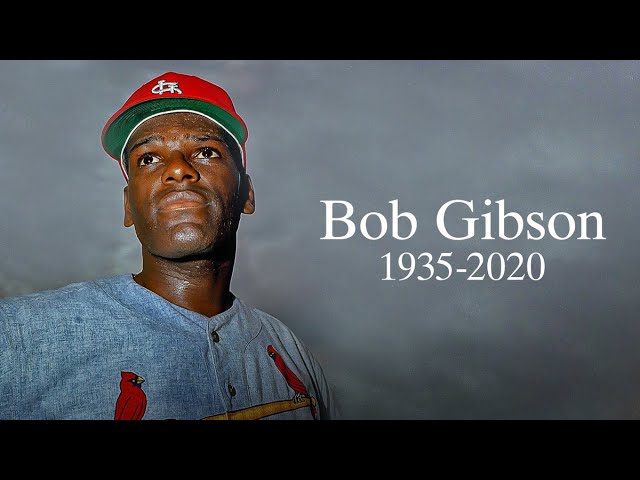
Bob Gibson died on 2 October, the beginning of Sukkoth.

I’m looking forward to the end of 2020.
#ASonnetADay – Dorothy Parker – “Portrait” pic.twitter.com/BPvQLT8Ybr
— Fr. John Zuhlsdorf (@fatherz) October 10, 2020
#ASonnetADay – 58. “That god forbid, that made me first your slave…” pic.twitter.com/89uR3iGb6k
— Fr. John Zuhlsdorf (@fatherz) October 9, 2020

Coat of Arms by D Burkart









A Daily Prayer for Priests


They find you a pro-life agent in your area who commits to giving a portion of the fee to a pro-life group!

PLEASE subscribe via PayPal if it is useful. Zelle and Wise are better, but PayPal is convenient.
A monthly subscription donation means I have steady income I can plan on. I put you my list of benefactors for whom I pray and for whom I often say Holy Mass.
In view of the rapidly changing challenges I now face, I would like to add more $10/month subscribers. Will you please help?
For a one time donation...



Help Monks in Wyoming (coffee – UPDATED LINK) and Norcia (beer) and the wonderful "Soap Sisters" of Summit, NJ!


Please follow me on Twitter!










Visits tracked by Statcounter
since Sat., 25 Nov. 2006:



