Card. Müller: Let’s have the argument! Fr. Z POLL!

Cardinale-MullerHave you noticed that one side of the ongoing debates in the Church today want to close down dialogue and avoid having the arguments that are screaming to be had?  By avoiding real debate – just as nature abhors a vacuum – discourse is devolving into incivility.

Card. Müller has something to say about that.

But first, something fun and, surprisingly, appropriate!

The other day I systematically worked the Prado in Madrid, where I spotted wonderful canvases by Pedro Berruguete (+1504).  In one painting, we see a dramatic moment of a theological debate between Dominicans and heretical Cathars in which books are being put to the test… by fire.  Books are tossed into the flames.  The bad books burn.  The good books reveal their goodness by leaping out of the fire!

Note the book which has ejected itself from the flames in mid air.  Action shot!

IMG_5071

There is a high res version HERE.

In the Middle Ages there were organized theological debates, called Disputationes, with strict rules, intended to get at the Truth of disputed questions.

This, from the former Prefect of the Congregation for the Doctrine of the Faith, Gerhard Ludwig Card. Müller as reported by the best English language correspondent working in Rome right now, Ed Pentin of the National Catholic Register.  Some excerpts to get you thinking…

Cardinal Müller Suggests Pope Francis Appoint Group of Cardinals to Debate His Critics [I like it.]

The prefect emeritus of the Congregation for the Doctrine of the Faith says the Pope deserves ‘full respect’ and his ‘honest critics deserve a convincing answer’ as the Vatican declines to comment on a filial correction of the Holy Father, made public on Sunday.

To resolve the impasse between Pope Francis and those who have grave reservations about his teaching, Cardinal Gerhard Müller has proposed that one solution to this “serious situation”[growing more serious by the day] could be for the Holy Father to appoint a group of cardinals that would begin a “theological disputation” with his critics[It should be PUBLIC, right?  Fat chance.  Fat chance that it will happen, too.]

In comments to the Register Sept. 26, the prefect emeritus of the Congregation for the Doctrine of the Faith said such an initiative could be conducted with “some prominent representatives” of the dubia, as well as the filial correction which was made public on Sunday.

Cardinal Müller said a theological disputation, a formalized method of debate designed to uncover and establish truths in theology, would be specifically about “the different and sometimes controversial interpretations of some statements in Chapter 8 of Amoris Laetitia” — Francis’ apostolic exhortation on marriage and the family. [It sounds positively medieval, like the debates between Franciscans and Dominicans.]

The Church needs “more dialogue and reciprocal confidence” rather than “polarization and polemics,” he continued, adding that the Successor of St. Peter “deserves full respect for his person and divine mandate, and on the other hand his honest critics deserve a convincing answer.”

“We must avoid a new schism and separations from the one Catholic Church, whose permanent principle and foundation of its unity and communion in Jesus Christ is the current pope, Francis, and all bishops in full communion with him,” he said.

[…]Vatican: Response Unwarranted

The Register has learned that senior officials believe a response is not warranted, partly because they say it has been signed by only a relatively small number of Catholics they consider not to be major names, and because one of them is Bishop Bernard Fellay, superior general of the Society of St. Pius X, whom they view as a renegade in charge of a priestly fraternity not in full communion with Rome.  [They’ll dialogue with the likes of Paul Ehrlich.  They’ll put a pro-abortion Anglican on the Pontifical Academy for LIFE.  But… SSPX Bishop Fellay?  Nope.  That’s a bridge too far.]

[…]


Check out the rest there.

It’s a great idea.

I just had the flash of Pope BENEDICT presiding over the Disputation!

Let’s have a POLL.

Choose your best answer.  Anyone can vote.

Explain in the combox, if you wish.  You have to be registered and approved to post a comment.

Should Pope Francis hold a formal Theological Dispute about Amoris Laetitia, etc.?

View Results

Posted in The future and our choices | Tagged , ,
61 Comments

Today’s provocative reading

Provocative reading met my eyes this morning, fresh from Mass, office, coffee and two of those little biscuit things which I like, not to sweet, not too dull.

First, there is a great offering at Crisis by one Jason Morgan, once here in the Diocese of the Extraordinary Ordinary but now with ties in Japan.  Cool.  Anyway, he drills into the present – deeply stupid but oxygen consuming and yet symptomatic – controversy about standing or “taking a knee” in protest during the national anthem.  My personal view is that they who show decadence engendered disrespect to the flag and country for which men fought and died so that we could have a good life and liberties should be drafted… and not in the football way.  But I digress.  Morgan’s piece, which is about “virtue signalling” has a good paragraph:

Long before Tim Tebow was born, of course, the takeover of America’s institutions by cultural Marxists and dyed-in-the-wool atheistic communists was well underway. By now, no one should be surprised to hear that most mainline churches are in full, fawning thrall to homosexual “marriage,” for instance. Recently, to take just one example, Fr. James Martin, a Jesuit who has made a career out of bending his own knee to the idols of the age, published a book which surely charts a course toward the homosexualization of even the Catholic Church. But it isn’t just churches. Academia, print media, broadcast media, the armed forces, the courts, the intelligence services, the Boy Scouts, the Girl Scouts, the medical profession, the public schools, charities, large corporations, and every last labor union in the country—all have been swamped by politics. And politics, for the cultural Marxists, is a way of freezing natural human interaction and paralyzing resistance to infiltration. The strategy has worked everywhere it has been tried.

Read the whole thing there.  That was well-written, wasn’t it?  That “freezing interaction” observation was dead on.  Who else describes that tool for the Left to neutralize opposition?  Yes, of course, that was too easy.  Saul Alinsky in his Satanically-dedicated Rules For Radicals [US HERE] recommends this technique:

  • RULE 12: Pick the target, freeze it, personalize it, and polarize it.” Cut off the support network and isolate the target from sympathy. Go after people and not institutions; people hurt faster than institutions.

That’s what the Catholic Alt-Left is doing to, for example, me right now.  For example, the quacksalvers at RNS have this:

[M]artin was disinvited from speaking at Catholic University’s Theological College and a couple of other places, thanks to a campaign by what we might call the Catholic Alt-Right — specifically the websites Church Militant and Father Z.

One of the things that this shows is that I must be pretty powerful.  Right?  HAH!  This is pure Alinsky.

Quaksalvers.

UPDATE:

Marco Tossati touches on the point of “freezing” with a label. HERE in Italian.   I don’t often link to Rorate because of their seeming unwillingness to close ranks for the sake of unity but… over there you can find an adequate English rendering of Tosatti’s good remarks.  It’s time to stop fooling around, folks.  Divisions just keep us all weak.  Once again I apply the “Olive Branch” tag.

___

Another interesting piece comes, surprise, Jesuit-run Amerika Magazine.  While I don’t subscribe to everything that the writer offers, I do underwrite the general sense of the piece by Pascal-Emmanuel Gobry entitled:

Do our fights over Pope Francis have to be this dumb?

Gobry sides with the libs… it’s Amerika after all… but he’s right, isn’t he.  I’ve read mind-annihilatingly dopey stuff lately on the interwebs on both sides.   

Please, people, do us all a favor and …

GO TO CONFESSION!

The old adage is “Sin makes you stupid.”  I am pushed to the conclusion that some otherwise bright people out there are in need of stepping back into their closed rooms, making an examination of conscience, and then seek to be shriven at the earliest possible opportunity, ideally before putting fingertips to keyboard again.

I know that I won’t miss my regular date with the confessor.

Back to Gobry.  Again, I am not signing off on everything he proposed.  However, he’s on to something when he says:

I am not being acidly sarcastic for its own sake. There is a serious theological point, which I will make despite my distinct lack of theological degrees, which is that nothing could be further from the spirit of the Christian faith than the idea that faith and morals are accessible only to the learned and or that the best way to divine them is to tally up the views of the powerful.

In the future we will hear more and more about the sensus fidei fidelium and about “reception” of doctrine.  The faithful have a sense of the Faith.  But remember that you have to be faithful to have that sense of the faithful.  Be wary of those who suggest that if you don’t have various degrees on your Ego Wall, you can’t have a clear-eyed view of faith and morals.

Having suggested these articles for your consideration, I’ll offer another point.

There is a fight going on, and the fight is worth the fighting.  The stakes involve the salvation or the damnation of souls.   Hence, the necessity of the fight.  But, please, can we smarten up?

ON is the moderation queue.


Posted in "How To..." - Practical Notes, Cri de Coeur, Olive Branches, The Coming Storm, The future and our choices | Tagged , , ,
9 Comments

Access to #FilialCorrection Crimethink webpage blocked in the Vatican

crimethink_posterUPDATE: See comments, below, for possible alternative explanations involving filters.

As reported by Corriere, the Vatican spokesman said: “nessun blocco, la notizia e falsa”… “ma figuratevi se facciano questo per una lettera di sessanta persone”.  Also the head of the Vatican Communications office denied the block.
____

The Italian news agency ANSA reports that the Vatican internet office has blocked access to the site with the Filial Correction from any devices provided by the Vatican City State.

Interesting.

The Secretariat for Communications of the Holy See has blocked access to the web page that adheres to an initiative that accuses the Pope of here, connected to what he wrote in “Amorislaetitia”.  From the Vatican’s computers you can no longer go to the page in question, in any language.  Outside the Vatican, however, the page is accessible.

“Access to the web page that you are trying to visit has been blocked in accord with institutional security policies.”

No Badthink or Crimethink!

It’s Doubleplusungood.

Be submissive. The speakwrite registers all your oldspeak and malquotes. You will be remanded to joycamp until you have been either rectified or your status changes to Unperson.

Commentmodqueue is listening.

UPDATE:

I was out tonight with a Polish priest.  He quipped, “What is this? North Korea?”

UPDATE:

This is a screenshot.

17_09_25_ANSA_screenshot

Posted in ¡Hagan lío!, Throwing a Nutty, You must be joking! | Tagged , , , ,
37 Comments

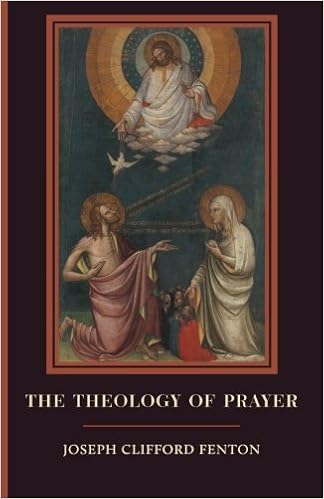
BOOK RECOMMENDATION: The Theology of Prayer

One of you readers sent a book from my Amazon wishlist (thanks, S).  I have started to dig in and it is great.

Joseph Clifford Fenton’s The Theology of Prayer

US HERE – UK HERE

I was immediately struck by the different style of language than that which we often see these days.  This book was written in 1939 in happier days of clarity and charity.  Msgr. Fenton was a profession of theology at Catholic University of America between 1944-1963.  This volume updates some notes, etc.

Fenton was a peritus for Cardinal Ottaviani at the Second Vatican Council.  That should give you an idea of his reliability.

Here are shots of a couple of pages,to give you an idea of how crisp this book is.

This is a keeper.


Posted in REVIEWS, The Campus Telephone Pole | Tagged ,
8 Comments

For the record…

There have been lots of stories about the meanies who caused homosexualist activist Jesuit Fr. James Martin to be dis-invited from certain speaking gigs.   Inevitably, as these liberal catholic sources – in the spirit of Proverbs 26:11 – recycle and recycle the same talking points, they convey factual errors through sloppiness and innuendo.

Here is an example from the National Sodomitic Reporter (aka Fishwrap):

A focus on Jesus was also scheduled for Martin’s now-canceled Oct. 4 talk at Theological College, and was the topic on Tuesday when he addressed 2,500 principals and teachers of the New York archdiocese. Jesus was also the theme set for the Jesuit’s talks late in October during a dinner of the Order of the Holy Sepulchre in New York City, and at a lecture in London for Cafod, the official overseas aid agency of the Catholic Church in England and Wales.

All three of those gigs were called off amid a wave of protests from far-right Catholic groups, including Church Militant, LifeSiteNews and Fr. John Zuhlsdorf (“Fr. Z”), [I guess I’m a “group”.] who opposed Martin’s appearances at those events due to objections with his recent book Building a Bridge: How the Catholic Church and the LGBT Community Can Enter Into a Relationship of Respect, Compassion, and Sensitivity.

That description gives the impression that I was involved in getting Martin disinvited from the Holy Sepulcher event in NYC and the Cafod event in England.   I was not.  I didn’t even know about the Cafod thing or the Holy Sepulcher thing until after he was disinvited.

did write about the gig at Theological College.  However, I didn’t mount a campaign.  I asked sincere questions.

Apparently I asked the right questions.

My main concern was that Theological College is a major seminary celebrating its 100th anniversary.  Martin being there … meant something.  I wanted to know what it meant.  I asked questions that I would ask again.

However, I am being lumped together with Martin’s dismissal from other events.  I didn’t have anything to do with those, not that I’m disappointed that those organizations made their own choices.  But they made those choices without my help.

Also, I have never been contacted by any of the “news outlets” to verify anything or ask me any questions.

They are unprofessional ideologues with biases.

But, given the stakes they have, you wouldn’t expect them to be fair.

In any event, we just have to keep – in the spirit of Proverbs 27:22 – chipping away, little by little, relentlessly.


Posted in Biased Media Coverage, Green Inkers |
1 Comment

ASK FATHER: How early can seminarians start learning to say Traditional Latin Mass

Gernetzke practice MassFrom a seminarian…

QUAERITUR:

I recently read your post encouraging priests to learn the TLM. It made me think, how early should a seminarian begin to learn it? Would it be jumping the gun for someone in 1st Theology to begin watching the videos and practicing? I won’t be able to learn it from the seminary … , so I will have to learn on my own.

First, you are to applauded as loudly as the seminary is to be booed and hissed.  Shame on them for not preparing seminarians adequately in the knowledge of their Rite!

Second, it is NOT too early to start working on this.   The sooner the better.

I started to learn the TLM in the summer before my 3rd year of seminary.  I had moved to Rome by then and a priest friend coached me as I did “dry Mass” walk-throughs, correcting and offering suggestions.  I had already read through the rubrics, etc., since my Latin was great.  The Latin wasn’t anywhere on the horizon as a problem. At the time I was speaking rather comfortably and writing with ease.

Also, these days, there are many many more resources to help you than there were back in my day.

However, be discreet… discreet… discreet!

Don’t let the left hand know what the right hand is doing.  If there is a priest whom you can trust completely where you are, get to work on it.  However, don’t tell anyone else, even seminarian friends.  Go about your work quietly.

I would say the same, by the way, about your private initiatives to learn Japanese or Calculus or small-engine repair.


Posted in "How To..." - Practical Notes, ASK FATHER Question Box, Liturgy Science Theatre 3000, Seminarians and Seminaries, SUMMORUM PONTIFICUM | Tagged ,
4 Comments

ASK FATHER: Congregation during Traditional Missa Cantata

José Gallegos y Arnosa faithful at massFrom a reader…

QUAERITUR:

While at Missa Cantata yesterday there was clearly some confusion on the part of the servers and consequently the congregation as to when they should stand rather than kneel.

The MC said the servers should be standing for the orations, Gloria & Creed, Preface, Pater Noster and last Gospel.  A video at St John Cantius has acolytes kneeling throughout like a low mass!  It seems like there is various opinion about this.

Is there flexibility, or a standard?

This is a good question.  However, I don’t have time to answer it.

Can you good people help this questioner.


Posted in "How To..." - Practical Notes, ACTION ITEM!, Liturgy Science Theatre 3000 | Tagged
19 Comments

Usher stops shooting attack in church

From the Possenti Society.

“The St. Gabriel Possenti Society commends Robert Engle of the Burdette Chapel Church of Christ in Antioch, Tennessee for stopping with his handgun a mass murder of congregants during services on Sunday, September 24,” Society chairman John M. Snyder said here today.

“Sunday’s handgun rescue action by Robert ‘Caleb’ Engle, called a ‘hero’ by Nashville police chief Steve Anderson, reflects the 1860 handgun rescue action by St. Gabriel Possenti in Isola del Gran Sasso, Italy,” noted Snyder.


[…]During that event, Emanuel Kidega Samson, 25, wearing a ski mask, allegedly rampaged through the church, carrying two handguns.  He allegedly shot seven people, including the pastor, Joey Spann, and one woman, Melanie Smith, who died.  Samson attacked Engle by “pistol-whipping” him and causing him “significant injuries,” including “injury to the head.”  Samson accidentally may have shot himself.

Engle, an usher at the church who has a valid permit to carry a concealed firearm, went to his car and retrieved his handgun. [Pretty far away!]  He trained it on Samson and forced him to desist from his murder spree until police arrived.

Samson has been charged with murder and attempted murder.

Dan Aaron, a spokesman for the Metropolitan Nashville Police Department, said of Samson, “It would appear he was not expecting to encounter a brave individual like the church usher.

Chief Anderson praised Engle for intervening, according to The Washington Post, saying, “We believe he is the hero today.”

“Engle truly is a hero,” said Snyder.  “His action underscores scholarly estimates that there are two to four million defensive gun uses in the United States each year.

[…]

Coverage also at CNN, CBS, JS, etc.

Comment moderation queue is ON.

Posted in "How To..." - Practical Notes, Going Ballistic, Semper Paratus, The Coming Storm, The future and our choices | Tagged ,
8 Comments

A veritable banquet of rich and useful reading: @RobertSRoyal and Kwasniewski

This morning I awoke to a veritable banquet of rich and useful reading.

First, I direct your attention to a post at The Catholic Thing by Robert Royal, who never disappoints.  (He also writes about Dante. YAY! US HERE – UK HERE)

He begins with brief and laudatory comments about the recent Correctio Filialis. Then he drills in and hits gold.

Pope Francis, Fr. Martin, and Faith without Reason

[…]

And there’s an even deeper problem, of which the seven false teachings are examples, [elencated in the Correctio] that’s beginning to characterize wide swaths of the Church.

We’re witnessing a period in which the Church is trying to have Faith without the full benefits of Reason. [In 1998 Pope St. John Paul issued an Encyclical entitled Fides et Ratio. It’s title harked to a homonymous Encyclical of the great Leo XIII.  These days we are witnessing concerted attempts to snuff out the Magisterium of Pope John Paul II.] This is odd, in a way, because it’s usually thought that the only Christians who forsake reason are impossible-to-reason-with fundamentalists. In the current moment, we have a progressive group in Rome and beyond that seems to think that Reason in any strong sense distorts or even blocks Faith.

They know the outcomes they want and aren’t about to let the logical contradictions theologians, philosophers, or ordinary believers notice, stop them.  [When questioned, they tend to respond with the classics, such as, “Don’t bother us with facts!” or issue explanations amounting to, “Shut up.”]

It’s an old philosophical truth that that once you abandon the principle of non-contradiction, you can prove anything. And here is proof positive.

For example, Father Antonio [“2+2=5”] Spadaro, S.J., of La Civiltà Cattolica has argued [NB:] that, as a good Jesuit, the Holy Father does not take something and explore its logical consequences, but instead looks directly at it and seeks inspiration of the Holy Spirit. Perhaps so (we can’t be sure that anyone really speaks the Holy Father’s mind).  [Spadaro, is really into Pier Vittorio Tondelli – he created his own website about him (HERE)]

But behold the confusions this leads to in the Church:

In Amoris Laetitia, as we’ve been told by various interpreters, sexual relations between the divorced/remarried are sometimes the best that can be done in the circumstances. That ceasing sexual relations may harm the family and the good of children.

[… Then he looks at Jesuit “celebrity priest” Fr. James Martin… ]

And is any teaching universally binding and Catholic if someone hasn’t “received” it? [Which is what Martin claims.] Once we go down this path, we’re very close to some form of radical Protestantism.

I do not know whether Pope Francis or Fr. Martin wish such an outcome. I do know that beyond the short radius of their ideas lie consequences they may find unwelcome.

Because neither is a serious theologian nor even a serious thinker, they regard anyone who raises questions about consequences as an irrational enemy (rigid, homophobic, etc.) rather than – as we’ve always had in the Church – someone trying to develop a deep and consistently rational way of understanding what Our Lord asks.

[…]

I think Royal is on to something.

But now something completely different and wondrous in its own way.  As a matter of fact, I am going to print out the post I am about to name and tuck it into the cover of a book by the same writer.

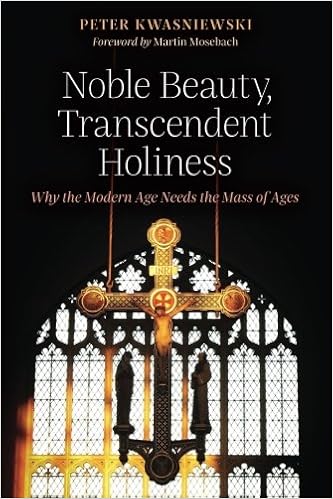
After absorbing Royal’s piece, go to NLM and take in Peter Kwasniewski’s post, in which he responds to a question raised by his recent book Noble Simplicity  [US HERE – UK HERE] which I can’t recommend highly enough.

A questioner raised the idea that perhaps the greatest challenge to a reclamation of Tradition is not, in fact, heterodoxy, but rather doctrinally acceptable but anti-intellectual, amotionally enthusiastic Life Teen stuff.  The questioner then raised the “Benedictine–Jesuit divide in terms of liturgy”, in  light of St. Augustine and contrast of pride and humility, “objective” and “subjective” spirituality.  In a nutshell: For Benedictines, “Salvation comes through conforming yourself to the mediated image” whereas for Jesuits, experience becomes the ground of prayer and rubrics, etc.,  “put a damper on experience.”

Peter K responds masterfully.

WHY, I must ask, was Peter Kwasniewski not invited to speak at the Summorum Pontificum conference in Rome for the 10th anniversary of the Motu Proprio?  People need to ask that question.  The organizers of that good conference neglected to include a single Anglophone or American – North or South – speaker or liturgical actor, as far as I could tell, even though in the first talk of the conference we heard that the greatest growth of the use of traditional forms were in the Americas.  WHY the blinkered Eurocentrism?  But I digress.

Back to it.

Peter makes a good point, which echos what I have been writing for 10 years now, as a matter of fact, I first raised it on 14 September 2007, the very say Summorum Pontificum went into effect.

[…]

Now let us consider worship as an action, and religious experience as a pleasure. [Or even “play”, which, like worship, Aquinas describes as something done for its own sake.]Liturgical action, when pursued for its own sake, i.e., in adoration and praise of God, is accompanied by the best religious experience. But if we seek the experience as our goal, we will be denied the experience at its best, which comes only from pursuing something nobler than a mere experience. Hence, the person who will be most delighted in worship is the one whose motto is: “I want to find God” — not the one whose motto is “I want to have an experience of God.[The deep point of sacred liturgical is to encounter transforming Mystery.  Hence, worship must stress the transcendent and not exclude the apophatic elements which are hard and challenging.]

One may draw a parallel here with marriage. [This is good…] If a partner begins with the attitude: “I want an experience of a deep relationship,” the marriage is doomed. If he or she begins with the attitude: “I want to do right by this person, no matter what,” the marriage can flourish. What is vitally important is that the aim be not some experience gained by using another, but simply the other himself or herself: he or she is the aim.[2] It is the same with having children. For a parent to think “I want to have the experience of being a parent/having a child” is a subtle form of selfishness. The parent who thinks instead: “I want to bring a child into the world for his or her own happiness” is focused on the good of the other and willing to sacrifice himself/herself to accomplish it.

The result of this analysis is that we should not set form or objectivity over against experience, as if they are in opposition. Rather, form, or a formal action, will always come with an experience. A higher form will come with a higher experience. A lower form will be accompanied by a lower experience.[3] This, I believe, is exactly what Augustine is saying throughout the Confessions and other works.  [This is a more sophisticated way of saying what I write and say in a jocular way: The newer form of Holy Mass and the Traditional form can be likened to the kiddie Mass and the adult Mass, or baby food and grown up food.  Before you freak out, consider that baby food is exactly what the young need!  It is great for them.  They don’t have to “work” to benefit from it.  As they get older, children need more and adults need more than that to satisfy.  Richer and more complex nourishment requires more and more work to prepare and then to consume and absorb.  It’s hard.  It is precisely in the hard elements and the work they cause that we have a preparation for the goal.  Catholics are now at widely differing stages of readiness to approach the encounter with Mystery which worship should propose, an encounter which is tremendum et fascinans, alluring and terrifying, precisely because the encounter makes us face our fear of death.  Hopefully they mature, sense the need for more, and seek it out.  Hopefully there will be bishops and priests ready and apt to provide what they sense they need!]

That a lower form will be accompanied by a lower experience is what we see in a phenomenon like like Life Teen.[4] It’s easy to get the immediate emotional experience; it requires so little in the way of form or action. But it is correspondingly shallow and unsatisfying for that reason, and must be repeatedly sought, perhaps with attempts made at intensifying the same experience. In this way it is somewhat like drugs, where people start with small doses and eventually try bigger doses or move to more potent drugs, because they are seeking more of that experience, more of that pleasure.  [Eventually, those who have the enthusiastic experience may grow up and need more.]

With traditional worship, it is quite different. At first, the form is lofty and remote, the action difficult for our nature. We may feel dry, at a loss, perplexed, even offended at the lack of consideration for our feelings and (what we think to be) our needs. We are confronted with the otherness, the strangeness of God. [YES!] But if we stick it out, something calls to us in our remoteness from Him. As we dwell with it more, it slowly seizes hold of us and lifts us up to a higher level, to higher perceptions of the truth of what we are doing and Whom we are dealing with. As this worship becomes more connatural, we experience more delight. [And we are dealing properly with timor mortis.] The delight does not grow stale or cloying but, in fact, builds upon itself without limit, because it is of a spiritual or intellectual order (although not separated from the physical domain). At the limit, beyond this life, we enjoy the beatific vision, where the experience and the objective reality, the form, are utterly at one.

[…]

Okay, do you see what I mean?  A veritable banquet of rich reading today.

Also… BUY THIS BOOK.  Don’t hesitate, get a few copies if you can and spread them around.  Perhaps start a reading group and invite a few people who are not interested in the Traditional Roman Rite!  Reading this might move them towards a desire for richer fare.

US HERE – UK HERE
Posted in Francis, Hard-Identity Catholicism, Liturgy Science Theatre 3000, The Drill | Tagged ,
8 Comments

“Se mi sbaglio mi corrigerete!”

From 16 October 1978:

YouTube thumbnailYouTube icon

Posted in Just Too Cool, Linking Back | Tagged
17 Comments