Daily Rome Shot 1420 – LINGUA

A nice starter at a favorite place near The Parish™:  Pizza bianca with sliced beef tongue, homemade mayonnaise and a slightly vinegary sauce of herbs.  I’d have this any day of the week… except most Fridays.

Holy Mass today will be offered for my benefactors, those who regularly donate, donate occasionally, or send items from my wish list.  This week a couple of readers sent cans of tuna and another bottles of a hot sauce recommended by an exorcist… which makes you think a little.   In any event, it is my pleasure and duty to pray for my benefactors.  And when I hear that one has passed away, I keep them on my list.

Welcome Registrant:

Downy

Not sure what this means, but it seems not good.

And…

And…

In chessy news… I see that the Global Chess League will start up again in a 3rd Season in India during December. And the Duck Chess Championship is coming up this week at chess.com. Sign up! Maybe we can get some readers going…. for standard, not duck chess.

Interested in learning?  Try THIS.

Please remember me when shopping online and use my affiliate links.  US HEREWHY?  This helps to pay for health insurance (massively hiked for this new year of surprises), utilities, groceries, etc..  At no extra cost, you provide help for which I am grateful.

Posted in SESSIUNCULA |
5 Comments

Daily Rome Shot 1421 – BWAH HAH HAH HAH!

The counterpart.   Tempus fugit.

Please remember me when shopping online and use my affiliate links.  US HEREWHY?  This helps to pay for health insurance (massively hiked for this new year of surprises), utilities, groceries, etc..  At no extra cost, you provide help for which I am grateful.

This is foolishness of the highest degree.

The National Sodomitic Reporter has an opinion piece by Jesuit Thomas Reese who doesn’t believe in transubstantiation: “I just don’t believe in transubstantiation, because I don’t believe in prime matter, substantial forms, and accidents that are part of Aristotelian metaphysics.”  HERE HERE HERE  Reese, as a Jesuit, is likely as famously well-formed as most Jesuits regarding things liturgical.

He thinks the present English 2011 translation of the Novus Ordo Missale Romanum should be scrapped and the (rejected) 1998 translation should be adopted.   He wrongly calls the 2011 version a “word-for-word translation” three times and opposes it to the 1998 which is says “conveyed the meaning of the text but was understandable when spoken aloud to contemporary Americans.”   He sees an opportunity because there is now a Pope who speaks English and because Roche is at DDW and because Francis issued Magnus principium.

Enough of that folly.

Instead…

And…

Posted in SESSIUNCULA |
14 Comments

Daily Rome Shot 1420

Welcome Registrants:

Downy
rlp000

Please remember me when shopping online and use my affiliate links.  US HEREWHY?  This helps to pay for health insurance (massively hiked for this new year of surprises), utilities, groceries, etc..  At no extra cost, you provide help for which I am grateful.

And…

Jesuit liturgical antics… I am not sure I can embed this from fakebook.   I’ll try It’s cringeworthy.

https://www.facebook.com/share/p/1CSmH88Hc3/

Meanwhile… White to move and behead black in 4.

NB: I’ll hold comments with solutions ’till the next day so there won’t be “spoilers” for others.

Posted in SESSIUNCULA |
6 Comments

The Beheading of John the Baptist and Mass ‘ad orientem versus’

Here is a thought which I offered during my live stream for this Feast of the Beheading of John the Baptist (which is my name day more than the Nativity of the Baptist for reasons which over the years have become obvious).

From your liturgical formation and sacramental formation you know that at Mass the ordained priest acts in persona Christi… in the person of Christ.   He is alter Christus.  When he speaks and gestures during Mass, Christ is speaks and gestures.

However, there is a striking moment – and I mean that literally – when his role shifts.  Even when Mass is celebrated versus populum this can be a psychologically powerful moment.

At Communion time, if Communion is being distributed, during Mass according to the rubrics of the Missale Romanum, the celebrant turns toward the communicants with the Eucharistic Host and proclaims like John the Baptist, “Behold the Lamb of God” (John 1:29 and 36).

In that moment, the priest speaks NOT the words of Christ, but rather he takes the role of John the herald.

The priest steps away from himself as speaking in persona Christi for a moment, he de-persons himself, he gets himself out of the way, he, defaces himself as alter Christus to become for a moment another John the Baptist. He decreases in order to herald the coming to you of one far greater than he, the Lord Himself in the Eucharist.

The priest is, in a sense, beheaded.  All attention goes to Christ in the Eucharist.

It is one more argument in favor of ad orientem worship, because it makes the Ecce agnus Dei that much more striking.

Posted in Liturgy Science Theatre 3000 | Tagged
3 Comments

29 August – Feast of the Beheading of John the Baptist: Corruption exposed

I celebrate as my onomastico or “name day” the Feast of the Beheading of John the Baptist, 29 August.  “He must increase,” said the Baptist, “I must decrease” (John 3:30).  I need that rule of life.

St Augustine of Hippo (d 430) connected John’s sudden, violent “decrease”, his head’s removal from his shoulders, with the autumnal shortening of daylight, while the feast of John’s birth coincided with the vernal lengthening of days.

In the Art Institute of Chicago, there is a tempera on panel depiction of the Beheading of the Baptist by the Sienese painter Giovanni di Paolo (d 1482).

You view the instant after the deed.  Seen from outside the prison, John leans out of his window, guillotine like, his headless shoulders and angled arms still in place as a massive gout of blood jets forth the jutting neck.  A servant with a platter stoops for his head.  The executioner sheathes his man-length blade.

John was not only a martyr for the Truth.

The miraculous son of the elderly priest Zechariah was a priestly martyr.

John stood against Herod and his crony cadre of corrupted priests who backed his violation of the truth of sexuality and marriage.

Herod used his power to sin.  John’s blood exposed also priestly corruption in a way that no one could ignore.

By the way, Herod’s command to kill John, the incorruptible priest, came from his lust for a child.  Salome was a “little girl” (Greek korásion).

That’s the direction, of course, of the radical and aggressive homosexualist agenda. Their ultimate goal is the lowering of the legal age of consent.  That’s their brass ring.

Korásion occurs 8 times in the Synoptic Gospels involving two events, the raising of the daughter of Jairus (Matthew 9:24-25; Mark 5:41-42) and the beheading of John the Baptist (Matthew 14:11; Mark 6:22, and in v. 28 two times).   Both events involve a young girl.  One ends in life, the other in death.

Posted in Saints: Stories & Symbols |
1 Comment

St. Augustine: Books and comments on a painting

Some years ago I posted a round up of books about St. Augustine.   Rater than reproduce it here, I’ll link to it HERE

However, I want to update with a couple of additional volumes.   Books and articles on Augustine pour forth.

Here is a recent offering from Emmauus Road Press

US HERE

Return to the Heart: The Biblical Spirituality of St. Augustine’s Confessions  by Shane Owens

Christ and the Altar Fire: Sacrifice as Deification in Matthias Scheeben by David Augustine

US HERE

One of my favorite images of St. Augustine is a painting by Philippe de Champaigne. Right click for much larger.

Firstly, you will note the flaming heart and the light on the left with the word “veritas… truth”. There is a quill, for Augustine was a writer. There are texts under foot with the names of heretics like Pelagius , Celestinus, and Julian of Eclanum. On a stand is the Bible with its pages in motion, perhaps to indicate that Scripture is in-breathed by the Holy Spirit.

Augustine peers towards divine truth. His burning heart’s flames are stretching towards the truth through Augustine’s head. The affective affects the intellective in accordance with the Augustinian phrase, “Nisi credideritis non intelligetis… unless you will have first believed you will not understand”.

What’s going on with that heart? Augustine, who authored the unforgettable “our hearts are inquiet/restless until they rest in Thee”, described us and our love as working like gravity, which in the thought of the ancients was a force within a thing that sought to go to its proper place of balance in relation to all other things.

Amor meus pondus meum” (conf 13, 9, 10) said Augustine, “My love is my weight”, drawing the restless soul to God, the only source of lasting peace.

We are all made in God’s image and likeness, made to act as God acts. He reveals something of His will to us. When we obey Him we act in accordance with the way He made us and what He intended for us. All things that live and move and have their being must come to rest in God or forever be in conflict with themselves and the cosmos.

In the painting the burning heart is by it’s internal need striving to go to the divine light.  In turn it enflames the intellect which can then find its way to the divine light of Truth.

In the dynamic of this tension, Augustine is writing under the illumination of Truth and the insights of the inquiet heart.

One might be tempted to subtitle this work “continuous conversion” or “work in progress”.

Posted in SESSIUNCULA |
3 Comments

From “The Private Diary of Bishop F. Atticus McButterpants” – 25-08-24 – Another visit to a Hispanic parish, Fr. Luis update

August 24th, 2025

Dear Diary,

Back to Christ The King today.   Its been a while.  In our weekly planning meeting I quipped it ought be Christ The Ever Expanding because of all the undocumenteds pouring in.   Somebody mumbled Atticus The Ever Expanding but I couldn’t see who it was.  Funny, tho, sort of.

Fr. Ernesto had met me at the door of the rectory, dripping sweat and talking about “fund-raising.” The AC was out. I signed whatever paper he shoved at me.

The parish has visibly increased in attendance, though I can’t follow the announcements since they were all in Espaniol.    To think that I sent Fr. Luis there two? years ago to improve his English.  Luis bounced into the sacristy to concelebrate with me and Fr. Ernesto, all smiles.  His English has not improved.  He said, “Hellow Beeshup” and then launched into a paragraph of … something.  When I said, “How’s your English practice?” he answered, “Ekselente!”, so I congratulated him anyway, which made him smile. He seems happy and I haven’t had a complaint from Ernesto.  Sleeping dogs, I guess.

After Mass I blessed three dozen scapulars – haven’t done that since Fr. Tommy was around more – a pickup truck and a rooster.  In the hall they sat me down near the food tables. I was brought tamahlees and something that looked like pancakes but fought back when I cut them.   Poo-poo-something.  Hah!  Had those before.  A lady brought Fr Gilbert a little foil pack with a note which he tried to get out of my line of sight.  It had a note like “NO PAR EL OPISBO”.  When I unwrapped it were things I thought was a kinda candy for dessert.  Boy was I wrong.  I might have seen part of my life flash before my eyes.  I guess they’ve gotta be tough to eat that stuff all the time.  Gilbert told me that the note said “not for the bishop” because they were really hot.   What’s the phrase?  “The sheep know me”?  Must remember: Don’t eat those chileetoes.

So CTK is in pretty good shape, though now with a lot more Spanish. I must prepare for the next visit by practicing the local linguo.

Since August is wrapping up things will start coming from Rome I suppose.  I wonder how fast.

Posted in Diary of Bp. McButterpants | Tagged ,
6 Comments

Daily Rome Shot 1419 – Prayers for the faithful of Charlotte

Please remember me when shopping online and use my affiliate links.  US HEREWHY?  This helps to pay for health insurance (massively hiked for this new year of surprises), utilities, groceries, etc..  At no extra cost, you provide help for which I am grateful.

In chessy news… I am, of course, delighted.

Annunciation Church in S. Minneapolis posts the confession schedule outside along with Mass times.  Kudos.


Posted in SESSIUNCULA |
2 Comments

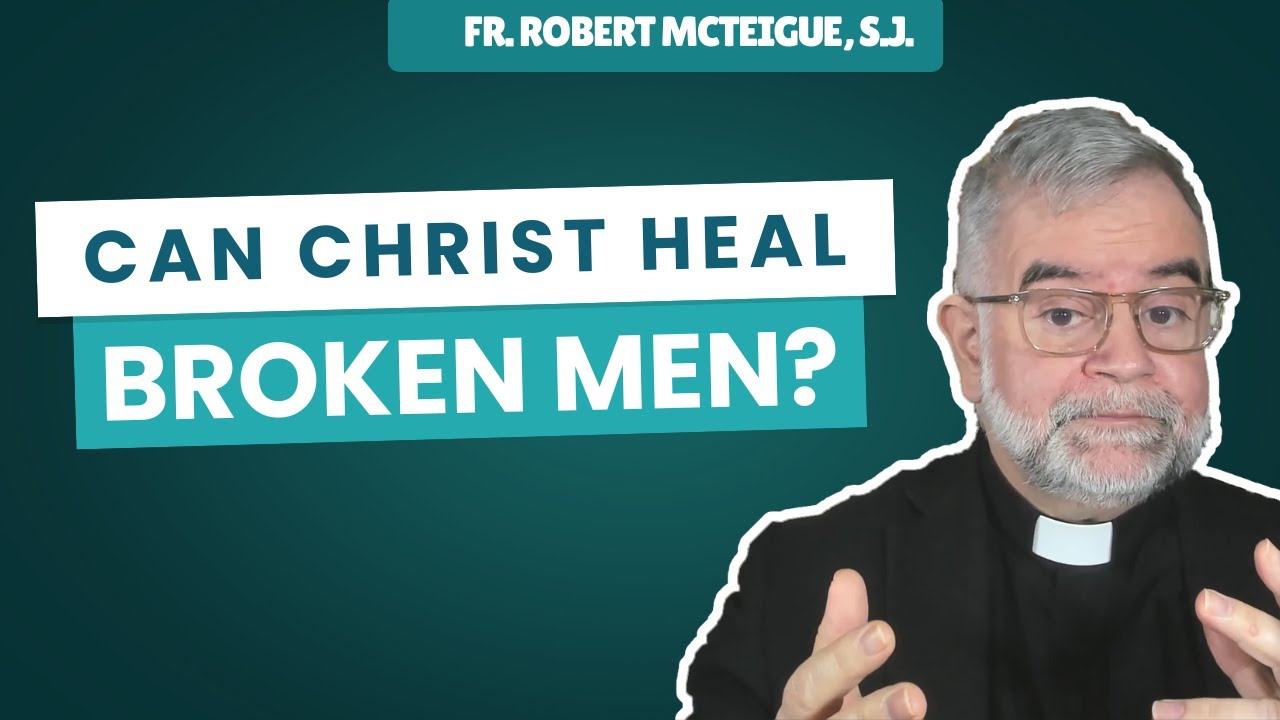
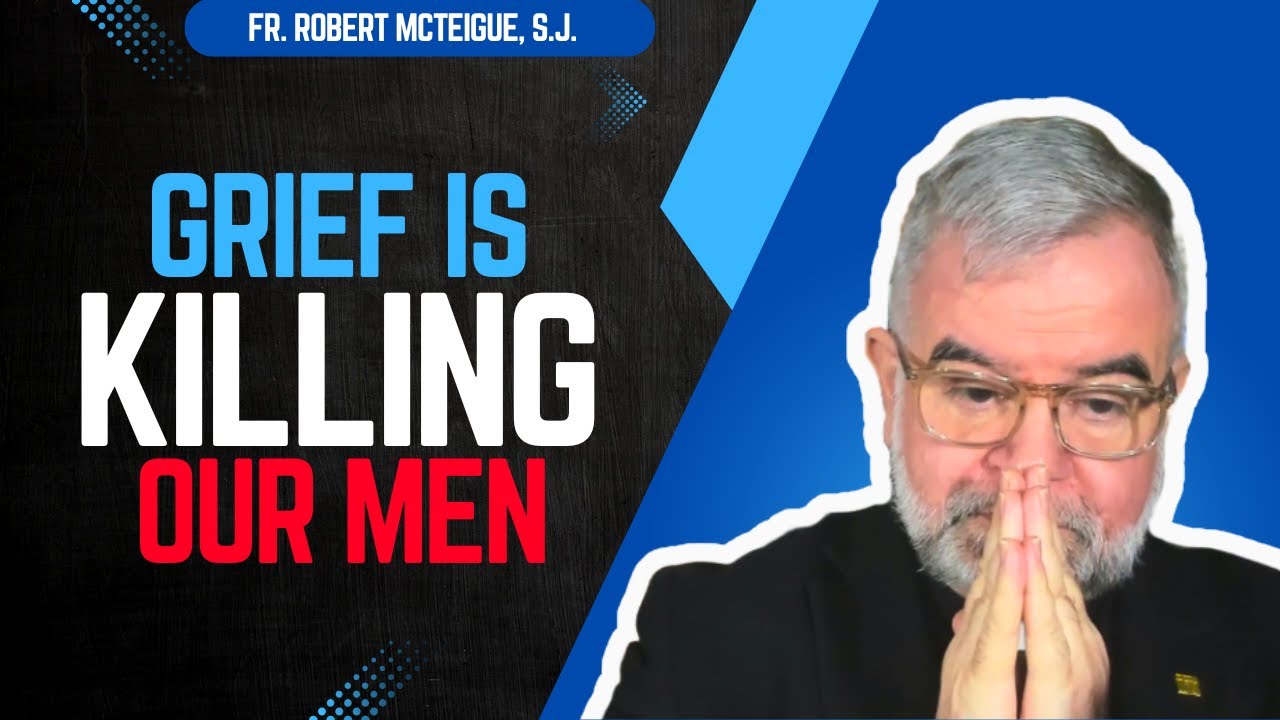
Fr. McTeigue again… kaBLAM! Video offerings: Can Christ Heal Broken Men? & Want Priests? Stop Hating Men!

I must share these videos.

First, among his defense of manhood, which is enough…  his description of “Fr. Cheerful at St. Typical’s”… oh my.  When he describes the banality of what many men find in parishes … oh my.

YouTube thumbnailYouTube icon

Excerpt

You’ve heard me talk about St. Typical’s before. It’s an outpost of the business of churchianity. It’s the place where you have your weekly anti-hell insurance renewed every week. So you show up on Saturday and Sunday. You endure painfully bad music. You endure an even worse sermon. You get your liturgical participation trophy in one hand to facilitate your hasty exit. You put a couple bucks in God’s tip jar. And the deal is, as long as it doesn’t take too long and as long as you pay up, you can run out the door and get on with real life. And if by bad luck you die that week, it’s okay, because God owes you heaven.

So, long as you “pay up”. Yeah… where did we hear that recently?

And there is this one…

YouTube thumbnailYouTube icon

From this one:

There are all sorts of people to blame: families, absent fathers, the schools, the culture, the internet, the churches, Christian communities. But I want to give a shout-out to my brother priests, and in particular, to my brother priests who are pastors at St. Typicals. Guys, you know who you are. You say, “We’re a welcoming community,” which usually means you don’t work very hard at enforcing standards because some people might get snippy or complain. You say, “We meet people where they’re at.” True story: 99.99% of the priests who tell me that phrase—“we have to meet people where they’re at”—have absolutely no plan for leading people anywhere once they meet them where they’re at.

And

YouTube thumbnailYouTube icon

Extended quote…. but listen to the WHOLE THING…

How are we going to fix this? How are we going to make it better? Well, here’s how not to make it better. Imagine saying to a group of young men, “Hey guys, have you ever thought about being a priest? Because here’s what you’ll do. We’ll send you to a parish and you’ll be in charge. And by being in charge, what we really mean is that if things go wrong, you’ll be in trouble. You’ll get fired. Your name will be on the lawsuit. And it’ll be great because you’ll be the spiritual father—insofar as you’ll be calling meetings. And you’re going to show a lot of masculine initiative and courage and daring by…listening. You will be the spiritual father by listening a lot to committees and assemblies and congresses and councils and senates and more committees and more listening. And people whom you don’t know very well, whose competence and goodwill are not readily apparent to you, are going to tell you what to do. Won’t that be great? And on top of that, whenever there’s an HR dispute, you’ll have to fix it. Whenever the toilet backs up, you’ll have to fix it. Whenever it snows outside and the roof leaks, you’ll have to fix it. And when other people get your community into debt, you’ll have to fix it. And in exchange we’ll ordain you and demand that you be celibate. Won’t that be great? And we’ll teach you to think of your celibacy only as a restriction, only in terms of the things you can’t do, and we’ll never really tell you why it’s worth it.”

And that’s what we’re telling our young men over and over again: do this difficult, demanding, largely not-masculine thing. Sacrifice home and family and spouse and freedom. And then we’re going to make you a bureaucrat and an HR manager and a property manager. And every now and again you’ll do some sacramental something. Then we’ll badger you for not praying, and we’ll mock you because you don’t have the time to prepare a decent sermon. You know, that’s what we’ve been doing for decades. And the proof of that is the nearly universal decline in numbers in seminaries and ordinations. There are exceptions of course, and I’m sure you’ll tell me about them. But those are the exceptions.

So what we need to do is recapture the transcendent, mystical, spiritual aspect of being a man—to reclaim the masculine archetypes of pilgrim and warrior and to be united with Christ in his role as priest, prophet, and king.

Posted in Mail from priests, Priests and Priesthood, Seminarians and Seminaries, The Coming Storm, The Drill, The future and our choices | Tagged
4 Comments

27 August – St. Monica: “put my body anywhere”

Here is an oldie post, appropriate for the day:

Today in newer, Novus Ordo calendar of the Holy Roman Church is the feast of St. Monica, the mother of St. Augustine of Hippo.

In the traditional calendar her feast was back in May.

Her name, which is Punic in origin, is also properly spelled Monnica.

This is the chapel in the church of St. Augustine in Rome where the mortal remains of St. Monica (+387), the mother of Augustine of Hippo now rest.

To the right is a shot of the chapel on the day some years ago when the bones of her son, St. Augustine, were brought from their resting place in Pavia (near Milan) to Rome.

How did St. Monica’s tomb wind up here? 

Here is an excerpt from an article I wrote for Inside the Vatican (December 2004) on the above mentioned event.  I used the alternate (Punic) spelling of the saint’s name – “Monnica” (emphasis not in the original):

Most visitors to the Eternal City find it puzzling and wondrous that Monnica’s remains would be in Rome and even more so that Augustine’s should be in northern Italy, or that we have them at all.  How did this come to pass?  Monnica died at age 56 of a malarial fever at Ostia, Rome’s port city, not far from where modern Rome’s port, DaVinci airport, is situated.

After Augustine’s baptism in 386 by Milan’s bishop St. Ambrose (+ AD 397), Monnica and Augustine together with his brother Navigius, Adeodatus the future bishop’s son by his concubine of many years whom Monnica had forced Augustine to put aside, and friends Nebridius, Alypius and the former Imperial secret service agent (agens in rebus) Evodius were all waiting at Ostia to return home to Africa by ship.  They were stuck there for some time because the port was blockaded during a period of civil strife.

As she lay dying near Rome, Monnica told Augustine (conf. 9): “Lay this body anywhere, let not the care for it trouble you at all. This only I ask, that you will remember me at the Lord’s altar, wherever you be.”  She was buried there in Ostia.  In the 6th century she was moved to a little church named for St. Aurea, an early martyr of the city, and there she remained until 1430 when her remains were translated by Pope Martin V to the Roman Basilica of St. Augustine built in 1420 by the famous Guillaume Card. D’Estouteville of Rouen, then Camerlengo under Pope Sixtus IV.  As fate or God’s directing have would have it, in December 1945, some children were digging a hole in the courtyard of the little church of St. Aurea next to the ruins of ancient Ostia.  They wanted to put up a basketball hoop, probably having been taught the exciting new game – so different from soccer – by American GIs.  While digging they discovered the broken marble epitaph which had marked Monnica’s ancient grave.  Scholars were able to authenticate the inscription, the text of which had been preserved in a medieval manuscript.  The epitaph had been composed during Augustine’s lifetime by no less then a former Consul of AD 408 and resident at Ostia, Anicius Auchenius Bassus, perhaps Augustine’s host during their sojourn.

It is possible that Anicius Bassus placed the epitaph there after 410 which saw the ravages of Alaric the Visigoth and the sacking of Rome and its environs.  One can almost feel behind these traces of ancient evidence Augustine’s plea to his old friend sent by letter from the port of Hippo Regius over the waves to Ostia.

Hearing of the devastation to the area, far more shocking to the ancients than the events of 11 September were for us, did Augustine, now a renowned bishop, ask his old friend to tend the grave of the mother whom he had so loved and who in her time had wept for her son’s sins and rejoiced in his conversion?

Looking for a great book on Augustine?  Try this!

Meanwhile, in here is my relic of St. Monica.

May she pray for us, for widows, and for parents of children who have drifted from the Church.

Be sure to pray for the departed.  Pray for them!  Don’t just remember them.  Don’t just think well of them.  Don’t just, as the case may be, resent or be angry at them.  Pray for them!  Prayer for the dead is a spiritual work of mercy.

Finally, I want to remind you of a book on Augustine

REVIEW: The book on Augustine which Pope Benedict would have wanted to write.

I had a note that when I originally posted this, the publishers at Oxford had to have a meeting to figure out what to do because your purchases outstripped their supplies.

Posted in Saints: Stories & Symbols |
Comments Off on 27 August – St. Monica: “put my body anywhere”