Daily Rome Shot 1419 – Prayers for the faithful of Charlotte

Please remember me when shopping online and use my affiliate links.  US HEREWHY?  This helps to pay for health insurance (massively hiked for this new year of surprises), utilities, groceries, etc..  At no extra cost, you provide help for which I am grateful.

In chessy news… I am, of course, delighted.

Annunciation Church in S. Minneapolis posts the confession schedule outside along with Mass times.  Kudos.


Posted in SESSIUNCULA |
2 Comments

Fr. McTeigue again… kaBLAM! Video offerings: Can Christ Heal Broken Men? & Want Priests? Stop Hating Men!

I must share these videos.

First, among his defense of manhood, which is enough…  his description of “Fr. Cheerful at St. Typical’s”… oh my.  When he describes the banality of what many men find in parishes … oh my.

YouTube thumbnailYouTube icon

Excerpt

You’ve heard me talk about St. Typical’s before. It’s an outpost of the business of churchianity. It’s the place where you have your weekly anti-hell insurance renewed every week. So you show up on Saturday and Sunday. You endure painfully bad music. You endure an even worse sermon. You get your liturgical participation trophy in one hand to facilitate your hasty exit. You put a couple bucks in God’s tip jar. And the deal is, as long as it doesn’t take too long and as long as you pay up, you can run out the door and get on with real life. And if by bad luck you die that week, it’s okay, because God owes you heaven.

So, long as you “pay up”. Yeah… where did we hear that recently?

And there is this one…

YouTube thumbnailYouTube icon

From this one:

There are all sorts of people to blame: families, absent fathers, the schools, the culture, the internet, the churches, Christian communities. But I want to give a shout-out to my brother priests, and in particular, to my brother priests who are pastors at St. Typicals. Guys, you know who you are. You say, “We’re a welcoming community,” which usually means you don’t work very hard at enforcing standards because some people might get snippy or complain. You say, “We meet people where they’re at.” True story: 99.99% of the priests who tell me that phrase—“we have to meet people where they’re at”—have absolutely no plan for leading people anywhere once they meet them where they’re at.

And

YouTube thumbnailYouTube icon

Extended quote…. but listen to the WHOLE THING…

How are we going to fix this? How are we going to make it better? Well, here’s how not to make it better. Imagine saying to a group of young men, “Hey guys, have you ever thought about being a priest? Because here’s what you’ll do. We’ll send you to a parish and you’ll be in charge. And by being in charge, what we really mean is that if things go wrong, you’ll be in trouble. You’ll get fired. Your name will be on the lawsuit. And it’ll be great because you’ll be the spiritual father—insofar as you’ll be calling meetings. And you’re going to show a lot of masculine initiative and courage and daring by…listening. You will be the spiritual father by listening a lot to committees and assemblies and congresses and councils and senates and more committees and more listening. And people whom you don’t know very well, whose competence and goodwill are not readily apparent to you, are going to tell you what to do. Won’t that be great? And on top of that, whenever there’s an HR dispute, you’ll have to fix it. Whenever the toilet backs up, you’ll have to fix it. Whenever it snows outside and the roof leaks, you’ll have to fix it. And when other people get your community into debt, you’ll have to fix it. And in exchange we’ll ordain you and demand that you be celibate. Won’t that be great? And we’ll teach you to think of your celibacy only as a restriction, only in terms of the things you can’t do, and we’ll never really tell you why it’s worth it.”

And that’s what we’re telling our young men over and over again: do this difficult, demanding, largely not-masculine thing. Sacrifice home and family and spouse and freedom. And then we’re going to make you a bureaucrat and an HR manager and a property manager. And every now and again you’ll do some sacramental something. Then we’ll badger you for not praying, and we’ll mock you because you don’t have the time to prepare a decent sermon. You know, that’s what we’ve been doing for decades. And the proof of that is the nearly universal decline in numbers in seminaries and ordinations. There are exceptions of course, and I’m sure you’ll tell me about them. But those are the exceptions.

So what we need to do is recapture the transcendent, mystical, spiritual aspect of being a man—to reclaim the masculine archetypes of pilgrim and warrior and to be united with Christ in his role as priest, prophet, and king.

Posted in Mail from priests, Priests and Priesthood, Seminarians and Seminaries, The Coming Storm, The Drill, The future and our choices | Tagged
4 Comments

27 August – St. Monica: “put my body anywhere”

Here is an oldie post, appropriate for the day:

Today in newer, Novus Ordo calendar of the Holy Roman Church is the feast of St. Monica, the mother of St. Augustine of Hippo.

In the traditional calendar her feast was back in May.

Her name, which is Punic in origin, is also properly spelled Monnica.

This is the chapel in the church of St. Augustine in Rome where the mortal remains of St. Monica (+387), the mother of Augustine of Hippo now rest.

To the right is a shot of the chapel on the day some years ago when the bones of her son, St. Augustine, were brought from their resting place in Pavia (near Milan) to Rome.

How did St. Monica’s tomb wind up here? 

Here is an excerpt from an article I wrote for Inside the Vatican (December 2004) on the above mentioned event.  I used the alternate (Punic) spelling of the saint’s name – “Monnica” (emphasis not in the original):

Most visitors to the Eternal City find it puzzling and wondrous that Monnica’s remains would be in Rome and even more so that Augustine’s should be in northern Italy, or that we have them at all.  How did this come to pass?  Monnica died at age 56 of a malarial fever at Ostia, Rome’s port city, not far from where modern Rome’s port, DaVinci airport, is situated.

After Augustine’s baptism in 386 by Milan’s bishop St. Ambrose (+ AD 397), Monnica and Augustine together with his brother Navigius, Adeodatus the future bishop’s son by his concubine of many years whom Monnica had forced Augustine to put aside, and friends Nebridius, Alypius and the former Imperial secret service agent (agens in rebus) Evodius were all waiting at Ostia to return home to Africa by ship.  They were stuck there for some time because the port was blockaded during a period of civil strife.

As she lay dying near Rome, Monnica told Augustine (conf. 9): “Lay this body anywhere, let not the care for it trouble you at all. This only I ask, that you will remember me at the Lord’s altar, wherever you be.”  She was buried there in Ostia.  In the 6th century she was moved to a little church named for St. Aurea, an early martyr of the city, and there she remained until 1430 when her remains were translated by Pope Martin V to the Roman Basilica of St. Augustine built in 1420 by the famous Guillaume Card. D’Estouteville of Rouen, then Camerlengo under Pope Sixtus IV.  As fate or God’s directing have would have it, in December 1945, some children were digging a hole in the courtyard of the little church of St. Aurea next to the ruins of ancient Ostia.  They wanted to put up a basketball hoop, probably having been taught the exciting new game – so different from soccer – by American GIs.  While digging they discovered the broken marble epitaph which had marked Monnica’s ancient grave.  Scholars were able to authenticate the inscription, the text of which had been preserved in a medieval manuscript.  The epitaph had been composed during Augustine’s lifetime by no less then a former Consul of AD 408 and resident at Ostia, Anicius Auchenius Bassus, perhaps Augustine’s host during their sojourn.

It is possible that Anicius Bassus placed the epitaph there after 410 which saw the ravages of Alaric the Visigoth and the sacking of Rome and its environs.  One can almost feel behind these traces of ancient evidence Augustine’s plea to his old friend sent by letter from the port of Hippo Regius over the waves to Ostia.

Hearing of the devastation to the area, far more shocking to the ancients than the events of 11 September were for us, did Augustine, now a renowned bishop, ask his old friend to tend the grave of the mother whom he had so loved and who in her time had wept for her son’s sins and rejoiced in his conversion?

Looking for a great book on Augustine?  Try this!

Meanwhile, in here is my relic of St. Monica.

May she pray for us, for widows, and for parents of children who have drifted from the Church.

Be sure to pray for the departed.  Pray for them!  Don’t just remember them.  Don’t just think well of them.  Don’t just, as the case may be, resent or be angry at them.  Pray for them!  Prayer for the dead is a spiritual work of mercy.

Finally, I want to remind you of a book on Augustine

REVIEW: The book on Augustine which Pope Benedict would have wanted to write.

I had a note that when I originally posted this, the publishers at Oxford had to have a meeting to figure out what to do because your purchases outstripped their supplies.

Posted in Saints: Stories & Symbols |
Comments Off on 27 August – St. Monica: “put my body anywhere”

Minneapolis church murderer and YOU

You’ve no doubt seen news by now about the shooter in S. Minneapolis (my native place) at Annunciation Church during a morning school Mass. first of the new school year. The killer – “trans” – killed children (8 and 10), injured many, and killed himself.

Pray for the victims and their families, perhaps a chaplet of the Rosary.

One of the most important petitions raised to Heaven by the Church is in the Litany of Saints which is sadly used infrequently.

A subitanea et improvisa morte… From a sudden and unprovided death, spare us O Lord.”

A sudden death can be a blessing.

A sudden and unprovided death is a horrifying prospect.

Unprovided means no access to the sacraments.  No time to make an act of contrition much less make a confession, be absolved or anointed. No Viaticum.  No Apostolic Blessing.

We don’t know when our time will be up.

It could be unforeseen.  It could be soon.

Say it with me?

GO TO CONFESSION!

Posted in Four Last Things, GO TO CONFESSION |
4 Comments

Daily Rome Shot 1418

The tomb of St. Joseph Calasanz.

In the sacristy of The Parish™ in Rome there are four large paintings showing the activities of the members of the Archconfraternity of the Most Holy Trinity , especially with St. Philip Neri the founder.  In this detail you see well the habit of the archconfraternity for lay members (right) and priests (left) which is a portrait of St. Joseph Calasanz, Universal Patron of all Christian popular schools in the world.

Please remember me when shopping online and use my affiliate links.  US HEREWHY?  This helps to pay for health insurance (massively hiked for this new year of surprises), utilities, groceries, etc..  At no extra cost, you provide help for which I am grateful.

Welcome Registrants:

Charlotte Nancy
IanStFrance

White to move and mate in 4.

NB: I’ll hold comments with solutions ’till the next day so there won’t be “spoilers” for others.

In St. Louis, the Sinquefield Cup wraps up. Fabiano is is 1st followed by Prag and Wesley (tied with Levon in 3rd). Yesterday Wesley with black drew against Prag after getting a dicey position out of the opening.

Posted in SESSIUNCULA |
2 Comments

ASK FATHER: Latin Catholic father, Ukrainian Greek Catholic mother – To which Church does our child belong?

From a reader…

QUAERITUR:

I am Latin Catholic and my wife is Ukrainian Greek Catholic.

Our fourth child was born recently.  We would have liked to have our child be baptized utilizing the Extraordinary Form of the Roman Rite, but despite the desire of our pastor and the chancery to grant this to our family, they feel that Traditionis Custodes too severely restricts the sacraments in this regard.

We are going to have the child baptized (though, not confirmed or communed) utilizing the Rite in the Ukrainian Greek Catholic Church but not have the child be Ukrainian Greek Catholic and remain Latin Catholic.

My question is: how do we get the baptismal records to reflect that the child is Latin Catholic and for that record to be stored at the Latin Rite parish?

The sooner we are emancipated from that dreadful act of cruelty that is Taurina cacata the better.

Since the promulgation of the 1990 Code of Canons of the Eastern Churches (CCEO), some things which were murky have become clearer. One of those things is what canon law refers to as “ritual Church ascription.”

Every Catholic is, at the time of his or her baptism, ascribed to a Church sui iuris. In the old days, they were sometimes called “Rites” but the new terminology is clearer. A rite is way of celebrating the liturgy. A Church is an institution with its own laws, customs, and practices. There can be multiple rites within one Church sui iuris (for example, the Latin Church has the Roman Rite, the Mozarabic and Ambrosian Rites Etc.) There can be multiple Churches which use the same or (same-ish) rite (for example the Ukrainian Catholic Church and the Melkite Catholic Church both use the Byzantine Rite).

But I digress.

The CCEO states (can. 29) that a child under the age of 14 is

“ascribed in the Church sui iuris of the Catholic father, or the Church sui iuris of the mother if only the mother is Catholic, or if both parents by agreement freely request it.”

The default position – regardless of what ritual is used for the baptism – is that the child is ascribed to the father’s Church.

The parents could, by mutual agreement, if both are Catholic (as in your case) choose to have their children ascribed to the mother’s Church.

The CCEO doesn’t give specifics of how this is to be recorded.   Falling back on the ancient axiom “scripta manet” is probably best to have it in writing.

You can perhaps do this.  Both of you, father and mother, sign a note stating your desire to have little “Eusebius” ascribed to the Latin Church. Ask the Ukrainian pastor to note that in the baptismal register of the Ukrainian parish. The record would be kept at the Ukrainian parish where the baptism took place, not at the Latin parish. It would be possible, if the pastor agrees, to make a notation in the Latin register along the lines of this:

BORGIA, Eusebius, born 4 July 2025 to Rodrigo Borgia and Sophia (née) Kravchenka, was baptized on 29 September 2025 at St. Josaphat Ukrainian Catholic Church in Pigs’s Eye, Minnesota, by Msgr. Stephen Knapp. By agreement of the parents and in accord with can. 29 of the CCEO the child is ascribed to the Latin Church of his father.

Posted in Canon Law, SESSIUNCULA |
15 Comments

IMPORTANT: At First Things by canonist and civil lawyer Michael Mazza – “A Solution to a Kafkaesque Clerical Conundrum”

At First Things find a piece by Michael J Mazza who is one of the best canon lawyers around and who is also a civil lawyer. He has done yeoman’s work in defense of priests and their good reputations.

Someone must have slandered Josef K., for one morning, without having done anything wrong, he was arrested.” When Franz Kafka wrote the opening line of his famous story The Trial a century ago, the clerical sexual abuse crisis in the Catholic Church was a long way off. Yet Josef K.’s tragic fate parallels the experience of many Catholic priests in twenty-first-century America.

Hyperbole? Think again. An elderly priest, still hard at work as pastor of a town parish, may easily find himself removed from his rectory, indefinitely and immediately, without having done anything wrong. The Essential Norms, adopted by the U.S. bishops in 2002 at the same time as the Dallas Charter, require a priest to be removed from ministry the instant there is “sufficient evidence” of an accusation of child sexual abuse. In many situations, the “evidence” supporting an allegation comes only within the pages of a civil complaint, filed by a plaintiff’s attorney on behalf of an alleged victim.

By its very nature such a statement has yet to be proven and is “substantiated” only if and to the extent it is supported by the unilateral affirmations contained in the complaint. While some complaints may contain very detailed assertions, including dates, times, and places where the alleged abuse occurred, other complaints are extremely vague and do not rise to the level of “sufficient evidence.” They are mere allegations.

Dioceses, religious orders, and their liability insurers—eager to put years of scandal behind them—often cut deals that leave priests vulnerable and unable to defend themselves. The plaintiffs’ firms know this. So the lawsuits mount.

[…]

Most of the article visible, but First Things – annoying – put a paywall blocker at the lower part. One might make a guess what it covers up… the last part might go something like this:

While the evil of clerical sexual abuse of minors is a scourge that must be stopped, the answer to the problem does not lie in the intentional abandonment of the rule of law or the deliberate neglect of due process for accused priests. There is no room in the Church for Kafkaesque narratives. Understood in the correct way, as described above, a careful reading of the Essential Norms and a thoughtful application of canon 88 may serve to be powerful tools in the hands of a Catholic bishop or religious superior who seeks to do the right thing in a difficult situation, rendering justice to all parties.

Posted in Cancelled Priests, Canon Law, Priests and Priesthood | Tagged , , , ,
4 Comments

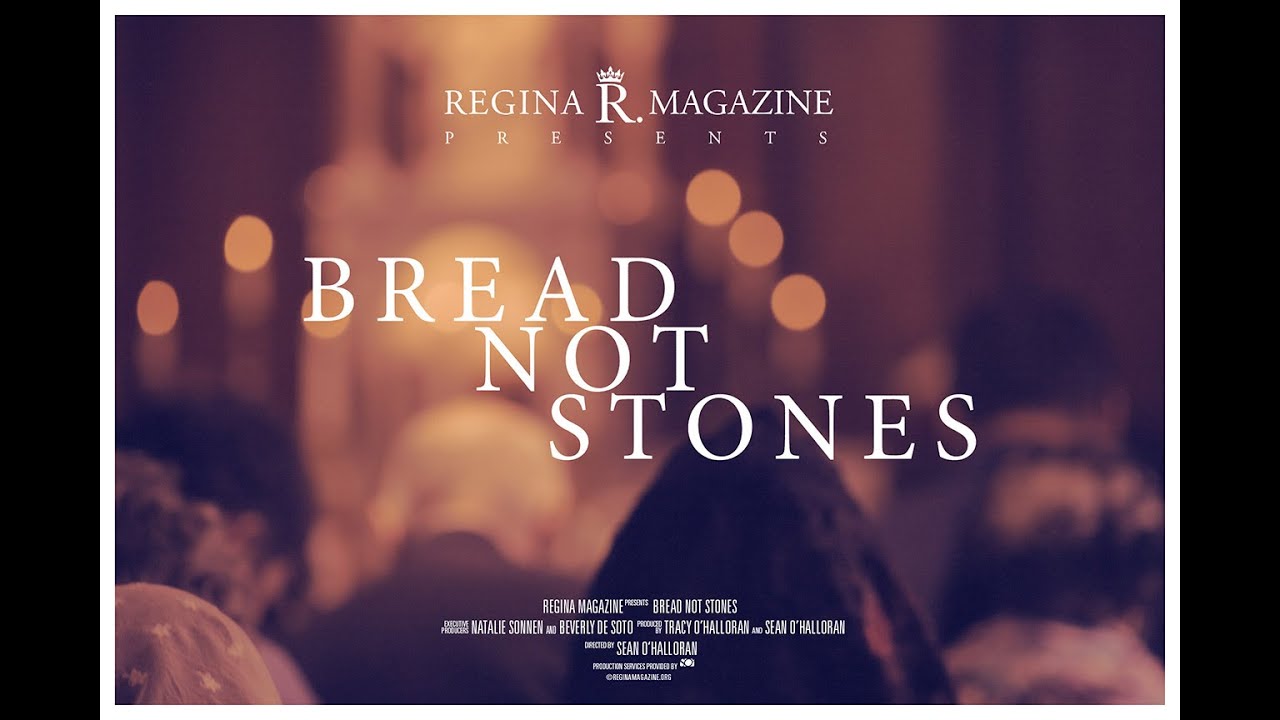
FILM: Bread Not Stones – about the impact of Traditionis Custodes upon a faith community (Diocese of Charlotte)

Spread this around. Share it. Use the share buttons.

Regina Magazine has produced a film about the plight of the faithful in the Diocese of Charlotte, where the local bishop has conducted what amounts to a pogrom against those who desire traditional expressions of their Catholic Faith.

YouTube thumbnailYouTube icon

The film, “removes the polemics and simply shows real people, with real names and faces who are suffering”.

This film touches on so many themes which we’ve explored on this blog for… decades, now. It’s as if this blog wrote the story board about the knock on effects of the Traditional Latin Mass on priests and the faithful.

Reverence
Silence
Ad orientem
A birthright stolen
Conversions to the Church
Priests not the same after learning the TLM
Going deeper
Processions
Unity of groups in Latin
Sense of peace
Young people, families
Vocations
Disruption caused by suppression
Heartbreak

Posted in Traditionis custodes |
5 Comments

Pope Leo to MALE alter servers: “be attentive to the call…”

Pope Leo XIV had an audience with altar BOYS (maybe some older, too) from France. English HERE – French HERE Among other things, he said this:

I also express the wish that you may be attentive to the call that Jesus might address to you, inviting you to follow Him more closely in the priesthood. I speak to your consciences as young men, enthusiastic and generous, and I will tell you something you need to hear, even if it may trouble you a little: the shortage of priests in France is a great misfortune! A misfortune for the Church, a misfortune for your country! May you gradually, Sunday after Sunday, come to discover the beauty, the joy, and the necessity of such a vocation. How wonderful is the life of a priest, who, at the heart of each of his days, encounters Jesus in so extraordinary a way and gives Him to the world!

Posted in SESSIUNCULA | Tagged ,
12 Comments

WDTPRS – 11th Sunday after Pentecost: healthy “pessimism”, a realistic view of who we are and who we aren’t

With a minor variation this week’s Collect was in the ancient Gelasian Sacramentary.  It survived the cut to live on in the Novus Ordo Missale Romanum as the Collect on the 27th Sunday of Ordinary Time.

Omnipotens sempiterne Deus, qui abundantia pietatis tuae et merita supplicum excedis et vota: effunde super nos misericordiam tuam; ut dimittasquae conscientia metuit, et adicias quod oratio non praesumit.

Our information-oozing Lewis & Short Dictionary, says votum means “a solemn promise made to some deity; a vow.”  It is therefore also the thing promised or vowed.  In a more general sense it is a “wish, desire, longing, prayer.”

Supplex is an adjective, used also as a substantive, meaning “humbly begging or entreating; humble, submissive, beseeching, suppliant, supplicant.”  This and other derivative forms are commonly used in our Latin prayers; for example, now and again we see the adverbial form suppliciter.

I never get tired of this word. 

As we have seen the L&S says supplex is from sup-plico, “bending the knees, kneeling down”.  The article on supplex in the French etymological dictionary of Latin by Alfred Ernout and Antoine Meillet offers that supplex comes not from plico but from plecto, “to plait, braid, interweave”.  E&M offers also the possibility that it is from placo, “to reconcile; to quiet, soothe, calm, assuage, appease, pacify”.   The former describes the physical attitude of the suppliant.  The latter describes his moral attitude.  The more probable plecto gives us much the same impact as plicoL&S also says plico and plecto are synonyms.  Thus, the imagery I have invoked in the past of the supplicant being bent over or folded in respect to his knees (i.e., kneeling or bent low toward the floor) works well.  Also, in the ancient world it was usual for the supplicant to wrap his arms around (plecto) the knees of the one from whom he was begging his petition.

Let’s keep drilling into supplex for a moment.   In many places during Holy Mass instead of abasing ourselves humbly before the Real Presence of Almighty God, we celebrate ourselves in remembrance of Jesus our non-judgmental buddy.  The concept of humility, inherent in supplex, was systematically expunged from translations of prayers, contemporary music in parishes, and (in churches now lacking kneelers) architecture.

If I am not mistaken, in art sometime the Devil is depicted without knees.

You can understand why a comparison of the over-arching tone and content of the orations of the Vetus and the Novus could lead one to think that they belong to different denominations. 

This is not to say that what the Novus emphasizes is bad.  It is just that certain really important things are lacking.

If the Novus stresses the eschatological hope and joy of heaven (not a bad thing), we still have to get there.  That means penance… propitiation… recognition of sin… guilt… the attack of the Enemy.  These were systematically expunged from the Novus Ordo orations.

The “spirit of Vatican II” is wrapped around an overweening optimism about man and a strong streak of anthropocentrism.  Surely this is the “spirit” that also informed the choice to edit down the ancient prayers and compose new ones reflecting that optimism and man-centeredness.

This is also why certain of the New catholic Red Guards, the papalotrous especially of the former regime, are so triggered by the Vetus Ordo.  They see it as being out of continuity with the “spirit of Vatican II”, which is, for them, the lens that allows them to reinterpret all of Tradition and even the teachings of the Lord in the Gospels.   In fact, it is the “spirit of Vatican II” that is the break in continuity.

They reversed it so that Tradition is a break from the Vatican II, which is plainly absurd.  But that’s their game.

No, we need a healthy “pessimism”, a realistic view of who we are and who we aren’t. 

Our prayers should reflect both the positive goals of heavenly joy, but also what we have to do to get there, the hard stuff.

One of the most “Catholic” of prayers, nearly eliminated after Vatican II, underscores an important dimension of healthy spirituality.  In the once familiar Dies irae, the haunting sequence of the Requiem Mass by the Franciscan friar Thomas of Celano (+ c.1270).  Sung amidst the inky vestments symbolizing our death to sin and the things of this world, in the Dies irae we contemplate our inevitable judgment by the Rex tremendae maiestatis… the King of fearful majesty, who is iustus Iudex, our just Judge.  In two of the verses we pray:

“Once the accursed have been confounded,
once they have been delivered to the stinging flames,
call me with the blessed.
(Knees) bent and leaning over (supplex et acclinis),
My heart worn down like ash, I pray:
Have a care for my end.”

The use of supplex in our Catholic prayers conveys an attitude of contrition for our sins which then shapes other more joyful and confident prayers.  This lowly attitude keeps in close view the reality of our sins, God’s promises of forgiveness, the ordinary means of their cleansing (confession) and thus the joyful comfort we have when we surrender to this merciful plan.

God takes our sins away, but only when we beg Him to.

We retain the memory of actual sins, but not their stain.  When we reduce ourselves to the ashes of humility and confess our sins we know those sins are not merely covered over; they are washed away clean.  Before modern times, soaps were made partly from ashes.

GO TO CONFESSION!

The Dies irae is not forbidden in Masses with the Novus Ordo, it simply is no longer obligatory.  The Church’s documentation on the use of sacred music establishes that suitable (i.e., truly sacred and truly artistic) pieces can be substituted into the Mass for the proper purpose and occasion.   Nothing is more suitable for Catholic piety than the use of the Dies irae.

LITERAL WDTPRS TRANSLATION:

Almighty and everlasting God, who in the abundance of Your mercy surpass both the merits and the prayers of suppliants, pour forth Your mercy upon us, so that You set aside those things which our conscience fears, and grant further what our prayer does not dare.

That last line of the Collect is consoling: adicias quod oratio non praesumit…add that which prayer does not dare… or rather … anticipate.  Praesumo also means “foresee” or do something “in advance”.  With our limited powers of discernment we cannot see or pray about every contingency we must face in life, but God knows them all.  He can mitigate our fears, both about the sins we remember as well as the things we worry over and can only guess at.

I am glad that this Collect was preserved in the Novus Ordo Missale Romanum.  Being ancient, it retains a recognition that we need mercy and that we have something to fear.  It is a healthy prayer.

Let’s see what is used on the 27th Sunday of Ordinary Time in the Novus Ordo.  First, the bad old days.

OBSOLETE ICEL (1973):

Father,
your love for us
surpasses all our hopes and desires.
Forgive our failings,
keep us in your peace
and lead us in the way of salvation
.

I actually had to double-check to make sure I matched the correct Sunday in the respective editions of the Missal.

Try reading these versions, my literal version and the old ICEL’s, bit by bit, alternately: “Almighty and everlasting God” becomes “Father”; “abundance of Your goodness” is reduced to the nebulous ICEL catch-all “love”;  “the merits and the prayerful vows of suppliants” is banalized into “our hopes and desires”; “pour forth Your mercy upon us” becomes “Forgive our failings” (not sins! … they’re just boo boos); “those things which our conscience fears” (our sins, the everlasting punishment of hell and having offended God) is rendered down to the amorphous “keep us in your peace”; and “what our prayer dares not” veers away from the misery of our true state into “lead us in the way of salvation”.

CURRENT ICEL (2011):

Almighty ever-living God,
who in the abundance of your kindness
surpass the merits and the desires of those who entreat you,
pour out your mercy upon us
to pardon what conscience dreads
and to give what prayer does not dare to ask.

Some Collects we have encountered seem to refer to the Lord’s Prayer.  Perhaps this one does as well.  First, we have the word oratio.  In Latin the Lord’s Prayer is oratio dominica where dominica is an adjective, “lordly; of or pertaining to the Lord.”  In our Collect the “prayer”, oratio, is grammatically the subject of that last verb adicio.  After the Eucharistic Prayer the priest introduces the recitation of the Lord’s Prayer saying “audemus dicere…. we dare to say….” On our own we could never presume or dare to raise any petitions to the Father if the Son had not already enjoined them on us, given us permission, nay command, and made us members of His own mystical Person as coheirs.   A noble and even courtly style of speech our prayer helps us avoid being presumptuous.  The banal, humility-stripped style of the obsolete ICEL versions? Not so much.

In today’s Collect we must make a tricky translation choice.  In dimitto (used also in the Lord’s Prayer) we have “to send away; separate” and thus logically “to forgive”.  The verb ad(j)icio is “place a thing near; add as an increase, apply”.  It is hard to get the impact of this “spatial imagery” into English without circumlocutions.  We want to have sins and their lethal effects separated far away from us, but we want God’s favors and promises to stick to us.

Our Latin Collect gives us a model for an attitude of prayer.  We see the figure of one who is bowed down, folded, knees bent (supplex, – plico).  This suppliant is frightened by what the just Judge will apply to him because of the sins which bother his conscience.  This lowly beggar prays and prays, entwining (– plecto) his arms about the knees of his Lord.  He petitions the Almighty Father, merciful and good, to allay his fears by totally removing his damning sins and then supply him with whatever he dares not ask or does not even know he ought to beg for (non praesumit).  He simultaneously has the humility of the kneeling suppliant but also the boldness of sonship.

He can dare what is beyond his own ability because God the Father Himself made him His son through a mysterious adoption.  He is emboldened to ask many things of the Father with faith and confidence (cf. Mark 11:24 and 9:23).

The Gospel of Luke recounts (cf. ch. 11 and 18) three parables of Jesus about persistent, even audacious, prayer of petition.  When we pray with the right attitude, particularly during Holy Mass before the altar of sacrifice, turned in hope to the liturgical East with our mediator the priest, Christ makes up for what we are cannot do.  He takes our hearts, minds, voices, gestures and makes them his own so they may be raised to the merciful Father.

St. Augustine (+430) says that Jesus

“prays for us as our priest, prays in us as our Head, and is prayed to by us as our God.  Therefore, let us acknowledge our voice in Him and His in us” (en Ps 85, 1).

Holy Mass is all about what Christ does for us.

Mass is a sacred action in which God is the principal actor.  By our baptism we participate actively in His sacred action.  Christ is the Head, we the Body.  He takes our voices and makes them His own.  Our actions become His.  We must therefore never usurp the liturgy, change it around to suit our tastes.  With Christ’s own authority Holy Church gives us the Mass. She alone provides the proper prayers and rubrics.

When we pray as Holy Church directs, bending our will to hers, our earthly voices ring authentically with the celestial, and ecclesial, voice of the Risen Christ.

Posted in WDTPRS | Tagged
5 Comments