Anniversary of sad hilarity.

Since I am in Chicago, I post today a link to a story from this date in 2023, 4 August 2022, about the Archdiocese and the Institute of Christ the King.

HERE

You might remember that the local Archbishop said to the Institute, whose raison d’être is the use the traditional form of the Roman Rite, that they had to accept the patently and false and manifestly stupid claim that the Novus Ordo “is the only expression of the Roman Rite” or they couldn’t celebrate any Masses in their church. In other words, they offered the Institute an unjust choice: Accept the lie we are forcing on you, or you can’t functioning as priests… and it’s YOUR fault.

This sort of thing is a manifestation of what so often results for priests as moral injury.

Remember: It’s not just the rite, the Vetus Ordo, that they fear and hate, its the people who want those rites.  It’s the people.

Adding to the sadness, even though a new pontificate in underway with Leo XIV, even though 99% of local bishop don’t know what his thinking is about the matter is, some bishop are moving against the people who want the traditional Mass (cf. Detroit, Charlotte, Valence, etc.).


Posted in SESSIUNCULA |
4 Comments

Daily Rome Shot 1407

Not Roma, but Bologna on the Feast of St. Dominic.

Welcome registrant:

Quodscripsi61

Kinda like … well… I won’t say.

Please remember me when shopping online and use my affiliate links.  US HEREWHY?  This helps to pay for health insurance (massively hiked for this new year of surprises), utilities, groceries, etc..  At no extra cost, you provide help for which I am grateful.

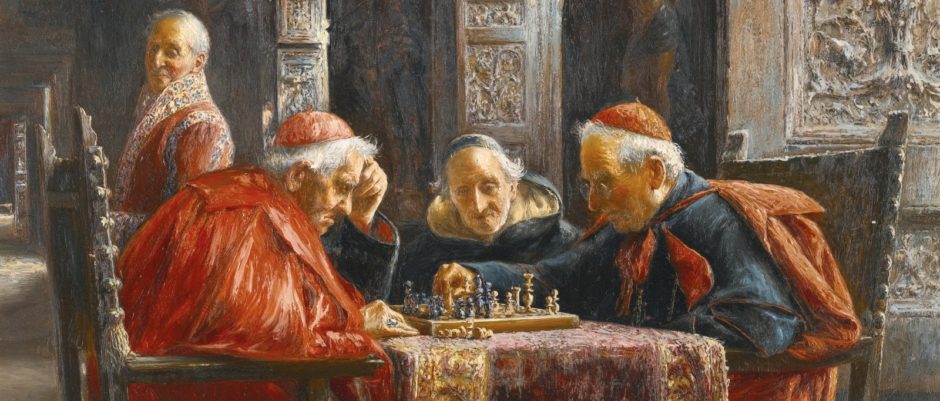
You can see where this is going, right?

Black to move.

And today marks 13 years of activity for the Mars Rover Curiosity! HERE

They’ve upgraded the software so that it is more energy efficient and can multitask. Also, it’s tread is a good shape and it can keep going for a long time yet. It’s an interesting article.

Posted in SESSIUNCULA |
7 Comments

ACTION ITEM: IMPORTANT – On the use and, especially, abuse of Newman’s “development of doctrine”

At the substack of Catholic Unscripted (three great brits) there is a piece by Rev. Stephen Morgan, whom I have known for years.  Brilliant and “good value” (a phrase I learned from him), a convert, who is now heading up a Catholic University in Macao (after working in finance and obtain multiple serious degrees).

He wrote “the book” on John Henry Newman’s key concept, which many cite and few grasp.

John Henry Newman and the Development of Doctrine: Encountering Change, Looking for Continuity

US HERE

At Catholic Unscripted, his piece – NOT behind a paywall because it is that important –  is called… I’ll give you a taste…

Hijacked Development
Rescuing Newman from Misuse in the Church’s Moral Crisis
By Stephen Morgan

In February 2023, the Anglican Archbishop of York, Stephen Cottrell, addressed the Church of England Synod with a bold theological claim. Seeking to justify the blessing of same-sex unions, he invoked St. John Henry Newman’s theory of doctrinal development to argue that revealed truth can change into its opposite. What was once considered sin could now, under the banner of “development,” be embraced as sacramentally significant.

The invocation was more than theologically strained—it was ironic. Newman had left Anglicanism precisely because his theory of development, written in the dying days of his life as an Anglican, but in fact worked out over the previous twelve years, demonstrated that the Church of England lacked doctrinal coherence, lacked the authority to validate the changes it had made to the Catholic and Apostolic faith. Yet today, even within the Catholic Church, Newman’s name is misused in precisely the same way: to provide theological cover for innovations that appear, under scrutiny, to contradict apostolic teaching.

Cardinal Víctor Manuel Fernández, Prefect of the Dicastery for the Doctrine of the Faith, has repeatedly cited Newman’s Essay on the Development of Christian Doctrine (1845) to defend controversial interpretations of documents such as Amoris Laetitia and Fiducia Supplicans. In both cases, Newman’s theory has been used to claim that the Church is not reversing her teachings but developing them—suggesting that it was possible to adapt pastoral practice while preserving doctrinal principle, as if the one does not act upon the other in the order of reality.

[…]

I think you can see where this is going.

I urge you to take a few minutes and read Morgan’s piece at Catholic Unscripted.

Some popping quotes from the piece:

“Despite the clarity of Newman’s method, recent years have seen it misappropriated by those seeking to justify changes that clearly fail his tests.”

“The misuse is particularly offensive because it both seeks to endorse grave moral evil and leverages Newman’s authority to undermine the very tradition to which the end point that the logic of the Essay on Development…”.

“A true development builds on what came before without undermining it. This is not what Amoris Laetitia does.

The 2023 declaration Fiducia Supplicans intensified this misuse.”

“The original purpose of Newman’s Essay was to demonstrate Catholicism’s consistency with apostolic faith. Today, that same essay is cited to justify inconsistencies. The difference could not be starker. Newman offered a grammar of development—what is now being practiced is a rhetoric of change.”

“In declaring him a Doctor of the Church, Pope Leo XIV has rightly recognized Newman’s genius. But that genius must be honoured with fidelity, not reinterpreted beyond recognition. If the Church is to remain credible in the eyes of the faithful and the world, it must cease weaponising Newman’s name and begin applying his method.”

See?

This is an important essay.  Please give it attention and perhaps drop a note of thanks to Catholic Unscripted for getting it out there!

Posted in ACTION ITEM!, The Drill | Tagged , ,
7 Comments

Daily Rome Shot 1406

Pope Leo at Mass for the swarms of young people in Rome for the Jubilee.

Anything missing from the altar?

I suspect there will be a conversation with someone about that.

At the Shrine of Our Lady of Guadalupe for a conference. The Feast of their Dedication was celebrated with Card. Eijk, Archbishop of Utrecht, as the homilist.  HERE

Card. Eijk was a contributor to the important book on “sense of the faithful” which I describe more at length HERE  So was Dr. Echeveria who was brutally fired from Sacred Heart Seminary.

Why is this move brilliant?  Explain.

Posted in SESSIUNCULA |
11 Comments

My View For Awhile: 2nd City Edition – ARRIVED!

I’m heading north to Chicago and the the Shrine of Our Lady of Guadalupe for a conference.

Meanwhile, what is going on there?   The Feast of their Dedication was celebrated with Card. Eijk, Archbishop of Utrecht, as the homilist.  HERE

My first leg is delayed but that won’t affect me on the other end provided it isn’t delayed for hours. Long layover. I don’t book close flights anymore.

UPDATE

Another prehistoric Boeing. Pray for me.

It’s great to get that text that your bag has been put into the same plane you are on.

UPDATE:

In Atlanta an exterior view of the C Concourse lounge where there will be room for me.

Instead there is room at the T lounge.

They manage to keep their carpet attached to the floor.

Unlike at the Panera in the same spot for years now.  We’ve mentioned it and a couple of our players have tripped and fallen when getting up!   But fix it?

There are experts about everything out there.  What sort of glue would work?   The manager said he tried.  It is hard to believe.   Discuss.

Meanwhile, I am in the lounge and reading the superb essay I just posted about HERE.

This is the laptop that died and rose again to new life.

Later.

UPDATE

Really?

UPDATE

The gate guy got us all going bam bam bam. But it was cooler in the bridge than the airport.

Back in the 21st century.

UPDATE

Coming in to the Windy City.  Little did I know that…

… the War of the Worlds had started.

We taxied for 25 MINUTES once on the ground.

Awaiting me were a two different types of pizza.  Guess which one this is.

Which hot pepper flakes are mine?

Posted in SESSIUNCULA |
10 Comments

WDTPRS – 8th Sunday after Pentecost (1962MR): True freedom

Today’s Collect – for Mass and the Office on this 8th Sunday after Pentecost – is found in the ancient Veronese Sacramentary and the Gelasian and the so-called Gregorian. It survived the liturgical tailors with their scissors and thread to live on in the post-Conciliar Missale Romanum on Thursday of the 1st week of Lent. However, there is a minor adjustment in the Novus Ordo version.

Let’s drill into what our prayer really says.

COLLECT (1962MR)

Largire nobis, quaesumus, Domine, semper spiritum cogitandi quae recta sunt, propitius et agendi: ut, qui sine te esse non possumus, secundum te vivere valeamus.

In the Novus Ordo version that oddly placed propitius (“propitiously”) is replaced by promptius (“more readily/openly”). In the critical edition of the ancient Veronese Sacramentary, you find promptius. The reformers preferred the version that pre-dated the “Tridentine” editio princeps of 1570. What happened? Probably some ancient copyist made a mistake in reading an old manuscript’s ink squiggles in – mpt – and – pit -. Easy to do.  Why the reversion was thought necessary, after having prayed the perfectly good collect for so many centuries, beats me.   I’m not sure that, as the Council Fathers commanded, the good of the Church “genuinely and certainly” required it (Sacrosanctum Concilium 23).

One meaning of secundum in the prestigious Lewis & Short Dictionary is “agreeably to, in accordance with, according to”. Remember that largire is an imperative of a deponent verb, not an infinitive. The famous verb cogito is more than simply “to think”. It reflects deeper reflection, true pursuit in the mind: “to consider thoroughly, to ponder, to weigh, reflect upon, think”.

LITERAL ATTEMPT

We beg you, O Lord, bestow upon us propitiously the spirit of thinking always things which are correct, and of carrying them out, so that we who are not able to exist without You may be able to live according to Your will.

In my peregrinations though the writings of St. Augustine of Hippo (+430) I found a text which harks to at least part of the content of this prayer (In io. eu. tr. 51,3):

“For Christ, who humbled Himself, made obedient unto death, even the death of the Cross, is the teacher of humility. When He teaches us humility He doesn’t thus let go of His divinity: for in it (His divinity) He is the equal of the Father, while in this (His humility) He is like unto us; and in that He is the Father’s equal He created us in order that we might exist; and in that He is like to us, He redeemed us so that we would not perish.”

In Acts 17:28, we read about our God, “in whom we live and move and have our being”, a concept perhaps influenced by the legendary Epimenides of Knossos (6th c?).   He was a Cretan, of course, and is famous for the paradoxical “All Cretans are liars.”  Today, we might update that by having, say, a famous Jesuit say… wellll…. never mind.  St. Paul seems to have known the Epimenides Paradox.  In Titus, he writes:

For there are many insubordinate men, empty talkers and deceivers, especially the circumcision party; 11 they must be silenced, since they are upsetting whole families by teaching for base gain what they have no right to teach. 12 One of themselves, a prophet of their own, said, “Cretans are always liars, evil beasts, lazy gluttons.” 13 This testimony is true. Therefore rebuke them sharply, that they may be sound in the faith, 14 instead of giving heed to Jewish myths or to commands of men who reject the truth. 15 To the pure all things are pure, but to the corrupt and unbelieving nothing is pure; their very minds and consciences are corrupted. 16 They profess to know God, but they deny him by their deeds; they are detestable, disobedient, unfit for any good deed.

Moving on from the Jesuits, and back to our prayer….

We are made to act as God acts: to know, will and love.

When we cleave to God, seeking what is good and true and beautiful through the tangle of our wounded intellect, we are really seeking God.

Once we know what is good, true and beautiful, either because we reasoned to it or perhaps an authority helped us, then we must act in accordance with the good, truth and beauty we found.

Today we pray to God in our Collect to give us the actual graces we need in order to live properly according to His image within us.

We are even more ourselves, even freer when, eschewing our own errant wills, we embrace the One who is Goodness, Truth and Beauty.

Yet there are times when we purposely (and thereafter habitually) choose against what reason and authority point to as the Good, True and Beautiful. We make the choice to stray and sin. In doing so we diminish ourselves. After all, we have our very existence from the One whom we choose to defy. We must return to the correct path, as Dante did in his Divine Comedy. His fictional self strayed into the dark woods after leaving the path of the right reason.

We could so often avoid sin if we would just act readily on those impulses of our minds and consciences toward what is good and true and beautiful. In a way, the phrase of the Nike commercial (níke means “victory” in ancient Greek) sums it up: Just Do It. And we have many helps in discerning the good, especially in the authoritative teachings of the Church. Over time we build up good habits of acting at the right time and measure, so that we have the habits that are virtues.

A problem rises when circumstances and our passions confuse us and we must ponder to discern the correct path. Most of the time we get ourselves into trouble by hesitating about doing what we know is right. We mull, dawdle, pick and get ourselves into a hornet nest of problems.

Strive, in accord with a conscience formed by the Church’s teachings and according to common sense, after the good, true and beautiful, which are ultimately reflects of God.
Posted in WDTPRS |
Comments Off on WDTPRS – 8th Sunday after Pentecost (1962MR): True freedom

Your Sunday Sermon Notes: 8th Sunday after Pentecost (N.O. 18th Sunday)

Too many people today are without good, strong preaching, to the detriment of all. Share the good stuff.

Was there a GOOD point made in the sermon you heard at your Mass of obligation for the this 8th Sunday after Pentecost?  18th Sunday of Ordinary Time in the Novus Ordo.

Tell about attendance especially for the Traditional Latin Mass.

Any local changes or (hopefully good) news?  I know there is a lot of BAD news.  How about some good news?

A taste of my thoughts from the other place: HERE

[…]

The challenge of the parable lies in the commendation of the steward’s cleverness. The Fathers grappled with this. St. Jerome even wrote to St. Augustine to ask what it meant. Augustine saw here an argumentum a minori ad maius: if the unjust steward is praised for prudence in temporal affairs, how much more should the children of light be shrewd in the things that secure eternal life. The Lord praises not the fraud but the foresight.

[…]

Posted in Sermons | Tagged
5 Comments

17 July ’25: Dutch Card. Eijk of Utrecht warmly commended Card. Burke for how endured criticism from inside the Church (including some in particular) – VIDEO

https://guadalupeshrine.org/mass-live-stream/

Posted in Just Too Cool, The Campus Telephone Pole | Tagged ,
Comments Off on 17 July ’25: Dutch Card. Eijk of Utrecht warmly commended Card. Burke for how endured criticism from inside the Church (including some in particular) – VIDEO

2 August until midnight: “Portiuncula” Plenary (or Partial) Indulgence

I’ll get out ahead of this this year.

From midnight 1 August (some say evening of 1 August) to midnight 2 August, you can gain the “Portiuncula” Indulgence.

This indulgence seems to have been granted directly by Christ Himself in an appearance to St. Francis.  The Lord them told Francis to go to Pope Honorius III, who, as Vicar of Christ, who wielded the keys, would decree it.

Catholic Encyclopedia

St. Francis, as you know, repaired three chapels. The third was popularly called the Portiuncula or the Little Portion, dedicated to St. Mary of the Angels. It is now enclosed in a sanctuary at Assisi.

The friars came to live at the Little Portion in early 1211. It became the “motherhouse” of the Franciscans. This is where St. Clare came to the friars to make her vows during the night following Palm Sunday in 1212 and where Sister Death came to Francis on 3 October 1226.

Because of the favors from God obtained at the Portiuncula, St. Francis requested the Pope to grant remission of sins to all who came there. The privilege extends beyond the Portiuncula to others churches, especially held by Franciscans, throughout the world.

A plenary indulgence is a mighty tool for works of mercy and weapon in our ongoing spiritual warfare. A plenary indulgence is the remission, through the merits of Christ and the saints, through the Church, of all temporal punishment due to sin already forgiven.

To obtain the Portiuncula plenary indulgence, on 2 Augusta until midnight a person can visit a Minor Basilica, a cathedral, or one’s parish church and (sources differ) prayer one Our Father, one Apostle’s Creed, and on other prayer of your choice (a Hail Mary seems good) and pray for the intentions designated by the Roman Pontiff (a Memorare and Glory Be could be good for this).

Conditions: You must intend to gain the indulgence and, for the indulgence to be plenary, you must be at least intentionally free from attachment to sin.  Moreover, you must make a good confession and receive Communion within 20 days of 2 August.

You should be free, at least intentionally, of attachment to venial and mortal sin, and truly repentant.

BTW… the faithful can gain a plenary indulgence on a day of the year he designates (cf. Ench. Indul. 33 1.2.d). You might choose the anniversary of your baptism or of another sacrament or name day.

My friend the great Fr. Finigan, His Hermeueticalness, has some excellent points and suggestions in his post about the Porticuncula indulgence.  HERE

Also, HERE, Fr. Finigan wrote about the requirement that we not have any attachment to sin, even venial.  He offers quite a hopeful view of what sounds like a difficult prospect.  I warmly recommend it.

Regarding “the Pope’s intentions”, this means intentions designated by the Pope.  However, some people have wondered how strict this is, or what to do it the intention is… odd.   I wrote about this issue HERE.  Read that post.  However, here’s an excerpt:

Click

Because we are Unreconstructed Ossified Manualists, and we love our old dependable compendia of theology with its sober and thorough analyses, we can turn to the manual by Prümmer.

Prümmer says that the intentions of the Holy Father for which we are to pray have a tradition of five basic categories which were fixed:

1. Exaltatio S. Matris Ecclesiae (Triumph/elevation/stability/growth of Holy Mother Church)
2. Extirpatio haeresum (Extirpation/rooting out of heresies),
3. Propagatio fidei (Propagation/expansion/spreading of the Faith)
4. Conversio peccatorum (Conversion of sinners),
5. Pax inter principes christianos (Peace between christian rulers).

These five categories were also listed in the older, 1917 Code of Canon Law, which is now superseded by the 1983 Code.

However, they remain good intentions all.


Posted in "How To..." - Practical Notes, Hard-Identity Catholicism |
6 Comments

1 August: Blessed M. Stella and her Ten Companions, the Martyrs of Nowogrodek

Trying to get this under the wire.

1 August is the Feast of Blessed M. Stella and her Ten Companions, the The Martyrs of Nowogrodek, in Nazi occupied Poland in 1943.  Now in Belarus.

I wrote about them HERE.

Our battle for the Church in these troubled time, The Present Crisis, has to be fought on many levels.

What might not be wrought through the intercession of these Eleven Sisters?

The artwork for the Beatification image painted by Jerzy Kumala (1998).

Posted in Modern Martyrs, Saints: Stories & Symbols |
2 Comments




















