I very much liked this tweet…
In case you need a flow-chart to help you arrive at the obvious conclusion… pic.twitter.com/W5dkuES7xc
— SuperNerd Media (@SuperNerdMedia) February 15, 2019
I very much liked this tweet…
In case you need a flow-chart to help you arrive at the obvious conclusion… pic.twitter.com/W5dkuES7xc
— SuperNerd Media (@SuperNerdMedia) February 15, 2019
While Ham Radio operators are vexed by the lack of spots on your planet’s yellow star, there is still activity.
Frankly, having read recently 48 Hours by William Forstchen – US HERE – UK HERE – this sort of story makes me edgy enough to push me to an examination of conscience. Scary stuff.
From SpaceWeather.
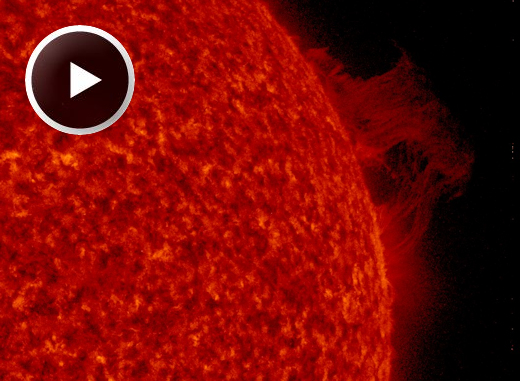
BIG ACTIVITY ON THE SUN: A gigantic filament of plasma is dancing along the northwestern edge of the sun, rising more than 150,000 km above the solar surface. How large is that? It’s fully 1/10th of the sun’s diameter and almost a dozen times taller than our entire planet. Click to view a 2-day movie from NASA’s Solar Dynamic Observatory:
This is called a “hedgerow prominence.” Hot glowing plasma inside the structure is held aloft by unstable magnetic fields. If the magnetic support collapses, plasma can fall back to the solar surface, exploding in a Hyder flare–a type of solar flare that can occur with no underlying sunspot.
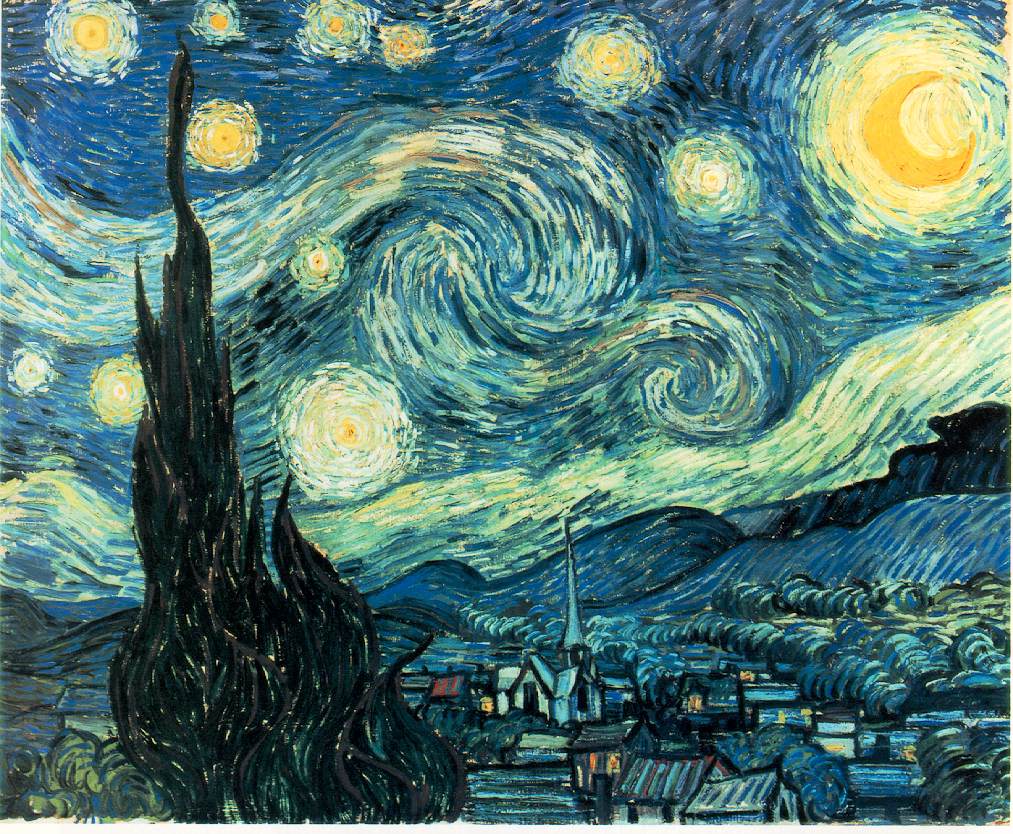
NASA and Japanese space telescopes have taken high resolution images of similar prominences and seen some amazing things such as (1) tadpole-shaped plumes that float up from the base of the prominence; (2) narrow streams of plasma that descend from the top like waterfalls; and (3) swirls and vortices that resemble van Gogh’s Starry Night.
I like that reference to Van Gogh.
Did ya’ll see the movie Loving Vincent? US HERE – UK HERE
This tells something of the painter’s rather sad story, but in an amazing way. They found a way to animate some 90+ paintings… portraits, landscapes, stills, etc… It is a painted movie…. a motion painting. There is a sample of one his “Starry Night” paintings in the trailer, moving like the SpaceWeather piece suggests.



Podcast: Play in new window | Download
Subscribe: RSS
May I have a moment of your time to plug a book?
Since it has been a loooong time since I’ve had formal courses in Scripture (and some of that wasn’t so great), I’ve determined I need some refreshers. I’ve been gathering materials and doing a little each day.
Regarding the Old Testament, may I recommend to my fellow priests, especially, A Catholic Introduction to the Bible: The Old Testament by John Bergsma and Brant Pitre published by Ignatius Press?

This is turning out to be a very good resource, especially in the sometimes murky front of the Bible.
These guys get the need to maintain an excellent approach to texts according to modern tools of scholarship. At the same time, they are rock solid faithful to the Church’s teachings and traditions. They seem to have taken their marching orders from Benedict XVI and his Verbum Domini. They’ve sought an integrated approach.
You might remember that Benedict, in the introduction to one of his Jesus of Nazarth volumes, said that we need to recover a way of Scripture that is faithful to the texts’ content, much as the Fathers read it. Without, of course, abandoning modern scholarship.
Also, quite helpful in the book, are frequent references to the CCC.
That said, I would like there to have been much more on the Psalms. As I’ve been reading the Office lately, I’ve been marking things mentally and then seeking greater understanding through some online resources (there are some good Protestant Scripture tools online with interlinear texts, etc.). The authors, while stressing the importance of the Psalms, don’t devote much time to them. One might respond that that, in itself, would take a large book and this book is intended as an introduction. They make the introduction, and move along. However, good bibliography is provided for further reading.
I warmly recommend this.
How sad. Mars rover Opportunity seems to have come to the end of its mission. HERE
Low batteries and a bad dust storm. That was it.
A 3 month mission lasted almost 15 years.

There is a poll at the ridiculously liberal blog Pray Tell which some of you readers might want to look at.
The question of the poll:
Should additional prayer texts be recited communally after the dismissal of the Mass?
While this might have something to do with special petitions for important concerns in a parish or diocese, it seems that this really has to do with the recitation of the traditional “Leonine Prayers” after Mass, or at least part of them, such as the Prayer to St. Michael the Archangel.
Some bishops asked for the recitation of the St. Michael Prayer in response to the homosexual crisis in the Church which is at the root of abuse of minors and of seminarians, etc. That has, apparently, upset the curator of Pray Tell.
Right now there are not many results in their poll. I doubt there would be anyway, since it isn’t widely read. As I write, the score is NO-10, YES-4.
Because they have a thin readership, you might want to help them out and give them a larger sample in their informal poll.
Meanwhile, this is where you can find their poll, right now. I added some indications about other items they have going, in red.

From Matins today:
Lesson from the second letter of St. Paul the Apostle to Timothy (2 Tim 3:1-5)
Know also this, that, in the last days, shall come dangerous times.
Men shall be lovers of themselves, covetous, haughty, proud, blasphemers, disobedient to parents, ungrateful, wicked,
Without affection, without peace, slanderers, incontinent, unmerciful, without kindness,
Traitors, stubborn, puffed up, and lovers of pleasures more than of God:
Having an appearance indeed of godliness, but denying the power thereof. Now these avoid.
Our Lady at Akita, Japan:
October 13, 1973
“My dear daughter, listen well to what I have to say to you. You will inform your superior.”
After a short silence:
“As I told you, if men do not repent and better themselves, the Father will inflict a terrible punishment on all humanity. It will be a punishment greater than the deluge, such as one will never seen before. Fire will fall from the sky and will wipe out a great part of humanity, the good as well as the bad, sparing neither priests nor faithful. The survivors will find themselves so desolate that they will envy the dead. The only arms which will remain for you will be the Rosary and the Sign left by My Son. Each day recite the prayers of the Rosary. With the Rosary, pray for the Pope, the bishops and priests.”
“The work of the devil will infiltrate even into the Church in such a way that one will see cardinals opposing cardinals, bishops against bishops. The priests who venerate me will be scorned and opposed by their confreres…churches and altars sacked; the Church will be full of those who accept compromises and the demon will press many priests and consecrated souls to leave the service of the Lord.
“The demon will be especially implacable against souls consecrated to God. The thought of the loss of so many souls is the cause of my sadness. If sins increase in number and gravity, there will be no longer pardon for them”
“With courage, speak to your superior. He will know how to encourage each one of you to pray and to accomplish works of reparation.”
“It is Bishop Ito, who directs your community.”
And She smiled and then said:
“You have still something to ask? Today is the last time that I will speak to you in living voice. From now on you will obey the one sent to you and your superior.”
“Pray very much the prayers of the Rosary. I alone am able still to save you from the calamities which approach. Those who place their confidence in me will be saved.”
Our Lady at Quito in 1610. Brrrrrr! Read that yourself. HERE
 The other day I posted about priests who are bullied when they do the right thing. In my email I got notes from people offered financial help, a place to live, pro bono counseling, etc. Some of you readers are simply amazing. You keep me going on a daily basis.
On the sidebar of this blog, I have an item you can click to say a daily prayer for priests. The prayer, which has been around for awhile, was renewed through an imprimatur given by the late, great, Extraordinary Ordinary, Bp. Morlino, who understood the needs of priests none better.
This morning another thing came to mind. Hence, below, I repost something I wrote back in August 2018.
Originally Published on: Aug 18, 2018
Terrific movement of prayer for priests: Seven Sisters Apostolate
Recently, I’ve written about some things that bishops and priests should do in this crisis time. I’ve also made suggestions to lay people about things they can do.
However, there is one thing that lay people can do… especially lay women… which will be of enormous value in the coming days.
Last June, I attended a party arranged for the 90th birthday of a priest friend in my native place at the parish where he still helps on Sundays. The pastor there is also an old friend. While I was there, I kept hearing references to the “Seven Sisters”. I inquired and learned of this great apostolate.
This is a bit of a movement, actually.
In essence, 7 women and perhaps a couple alternates, commit for 1 year to 1 hour of prayer for 1 priest each week. Hence, there is a lady on Monday, one on Tuesday, etc., ideally in the presence of the Blessed Sacrament.
In some cases, though this is not obligatory, the priest or bishop may not even know who they are.
There are good resources at their site.
This is a terrific apostolate. They are in the process of having the movement designated as an association of the faithful.
May I suggest to some of you women who read here regularly that you might contact them and seek to start a local group for your local bishop and priests, the pastor of your parish, a retired priest, where you are?
Also, I would not object were a group of Seven Sisters might consider praying for me. Perhaps one of you know six others where you live who also read this blog.
 Here’s some news from today’s Bolletino.
Francis met with the Prefect of the Congregation of the Causes of Saints and he approved some decrees. Among them…
il miracolo, attribuito all’intercessione del Beato Giovanni Enrico Newman, Cardinale di Santa Romana Chiesa, Fondatore dell’Oratorio di San Filippo Neri in Inghilterra; nato a Londra (Inghilterra) il 21 febbraio 1801 e morto a Edgbaston (Inghilterra) l’11 agosto 1890;
That is, a miracle was authenticated by the intercession of John Henry Newman. Since he has already been beatified, the way is open to his canonization.
And also…
le virtù eroiche del Servo di Dio Giuseppe Mindszenty, Cardinale di Santa Romana Chiesa, già Arcivescovo di Esztergom e Primate di Ungheria; nato a Csehimindszent (Ungheria) il 29 marzo 1892 e morto a Vienna (Austria) il 6 maggio 1975;
The heroic virtues of József Card. Mindszenty have been recognized. That means he will now be called “Venerable” and, with a miracle, the way is open to his beatification.
 From a reader…
QUAERITUR:
When a priest arrives at a sick person’s house in order to provide Communion, should the Communion rite happen immediately upon arrival?
I presume that tea, biscuits and chatting should certainly not happen beforehand?
I was recently put into this situation: bonhomie taking place for at least an hour before Communion. I wasn’t sure that the Blessed Sacrament was present at first, but when this was made apparent I was shocked and upset.
I raised this with the assistant priest, one of the two who had visited. He said that the parish priest (he was the other who had visited) likes to give Communion at the end so all can leave in silence (which on my recollection didn’t happen anyway.) The assistant priest conveyed my thoughts to the parish priest, and apparently his suggestion was that they leave the Blessed Sacrament in the glove box of the car until it’s time.
I have to commend the priests on their pastoral care; I’ve seen priests with no attention to this whatsoever and I think it’s important, but not at the expense of proper treatment of the Blessed Sacrament.
Thanks for also adding your positive comments about your priests.
“tea, bicuits beforehand”
“leave the Blessed Sacrament in the glove box”
I am sure that these priests have no intention of showing a lack of respect for Christ in the Eucharist.
However, as soon as I read this, a phrase flooded into my mind:
Nihil anteponendum dilectioni Christi.
Flooded with this phrase, I had to look it up. I had it almost right. The true phrase is: “dilectioni Dei et Christi nihil praeponendum … nothing is to be set before/preferred to the love of God and Christ”. This is St. Cyprian of Carthage (+258) Ad Quirinum 3, 18.
One of the things priests learn when they use the traditional forms of our sacred liturgical rites is that, indeed, nihil anteponendum when it comes to the Eucharist. This principle guides even the order in which a priest carries out certain tasks.
For example, after Holy Communion he must purify vessels. First, he consumes whatever of the Precious Blood might be in the chalice. Then he begins the ablutions. If there is a ciborium to be purified, he pours the ablutions into the ciborium and consumes everything from it. In reposing the Blessed Sacrament after exposition, the lunette is handled as little as possible. Therefore, tabernacle is opened, pyx is readied, etc. Then the Host is removed, put into the pyx, reposed in the tabernacle, door closed before anything is done with the monstrance, etc. Everything is readied so that when it is time to do something with the Blessed Sacrament, no other object or activity interrupts. Anything having to do with the Eucharist has priority of attention and action.
Nihil anteponendum.
Another clue is taken from the rite of visiting the sick itself. The very first thing that the priest does when he arrives at the place and enters, he says, “Pax huic domui! Peace to his house!” The rite continues from there without interruption… for biscuit or chats or anything. Also, knowing that the priest is coming, people should have everything ready for the visit. Households had sick call sets. I’ve written about them HERE. Everything should be ready for the arrival of the King. With all things set out beforehand, when the priest arrives he should be brought directly, without delay, to the person who will receive Communion. There’s time for other things after the more important things are completed.
Nihil anteponendum.
Hence, I cannot go along with anything that is put before proper attention to the Blessed Sacrament when it comes to sick calls.
This must must must also be hammered into any lay people who take the Eucharist to the sick or shut it. If you are given the tremendous task, do nothing to interfere with your duty. Don’t stop for gas (get it beforehand. Don’t go through the Taco Bell drive-thru (go later). Don’t … don’t… don’t. Just go straight to the place you must go and carry out your task. The same then applies to purification of the pyx. Christ is present even in small fragments of the Host.
Nihil anteponendum.

Coat of Arms by D Burkart









A Daily Prayer for Priests


They find you a pro-life agent in your area who commits to giving a portion of the fee to a pro-life group!

PLEASE subscribe via PayPal if it is useful. Zelle and Wise are better, but PayPal is convenient.
A monthly subscription donation means I have steady income I can plan on. I put you my list of benefactors for whom I pray and for whom I often say Holy Mass.
In view of the rapidly changing challenges I now face, I would like to add more $10/month subscribers. Will you please help?
For a one time donation...



Help Monks in Wyoming (coffee – UPDATED LINK) and Norcia (beer) and the wonderful "Soap Sisters" of Summit, NJ!


Please follow me on Twitter!










Visits tracked by Statcounter
since Sat., 25 Nov. 2006: