YOUR URGENT PRAYER REQUESTS

Please use the sharing buttons! Thanks!

Registered here or not, will you in your charity please take a moment look at the requests and to pray for the people about whom you read?

Continued from THESE.

I get many requests by email asking for prayers. Some are heart-achingly grave and urgent.

As long as my blog reaches so many readers in so many places, let’s give each other a hand. We should support each other in works of mercy.

If you have some prayer requests, feel free to post them below.

You have to be registered here to be able to post.

I still have pressing personal petitions.

  1. Healing after my accident. I have to travel on Friday.
  2. A good bishop for Madison.
  3. Personal.
Posted in PRAYER REQUEST |
23 Comments

When tweets become problematic

A few days ago a priest friend texted me saying that Newark’s Archbishop Card. Tobin had begun to tweet again.  There was a hiatus in his tweeting after an… unfortunate incident.

I’m wondering if someone can verify whether or not this is really an account of Card. Tobin or if it is a fake.   The question arises after reading this…

At best this is awkward.  At worst this is heresy.  That phrase, “seeking redemption” goes with… Jesus? Sinners?  Who was “seeking redemption”?  “He stood…. seeking redemption.”  or “with sinners (who were) seeking redemption.”

The Redeemer was reborn in grace?  How could any “rebirth” be needed?  As an “example”?  What sort of example would that be, the sort that Pelagius would understand?

There’s a lot in that short tweet, isn’t there.

A lot of people reacted badly to that tweet. So many that a clarification was issued.

Okay.

The moderation queue is ON.

Posted in The Drill | Tagged
26 Comments

4th Letter from Archbishop Viganò

From the Lepanto Foundation, I have the text of a 4th letter made public by Archbishop Carlo Maria Viganò.

It is addressed to McCarrick.

Letter from Archbishop Carlo Maria Viganò to Cardinal Theodore McCarrick

We today publish a fourth document by His Excellency Carlo Maria Viganò, dated Sunday January 13th, released on the occasion of the feast of the Baptism of the Lord and of St. Hilary of Poitiers, the indomitable French bishop who, together with Saint Athanasius, kept the faith during the 4th century Aryan heresy. The document is an open letter to Cardinal McCarrick to urge him to repent.

Dear Archbishop McCarrick,

As has been reported as a news by the Congregation for the Doctrine of the Faith, the accusations against you for crimes against minors and abuses against seminarians are going to be examined and judged very soon with an administrative procedure.

No matter what decision the supreme authority of the Church takes in your case, what really matters and what has saddened those who love you and pray for you is the fact that throughout these months you haven’t given any sign of repentance. I am among those who are praying for your conversion, that you may repent and ask pardon of your victims and the Church.

Time is running out, but you can confess and repent of your sins, crimes and sacrileges, and do so publicly, since they have themselves become public. Your eternal salvation is at stake.

But something else of great importance is also at stake. You, paradoxically, have at your disposal an immense offer of great hope for you from the Lord Jesus; you are in a position to do great good for the Church. In fact, you are now in a position to do something that has become more important for the Church than all of the good things you did for her throughout your entire life. A public repentance on your part would bring a significant measure of healing to a gravely wounded and suffering Church. Are you willing to offer her that gift? Christ died for us all when we were still sinners (Rom. 5: 8). He only asks that we respond by repenting and doing the good that we are given to do. The good that you are in a position to do now is to offer the Church your sincere and public repentance. Will you give the Church that gift?

I implore you, repent publicly of your sins, so as to make the Church rejoice and present yourself before the tribunal of Our Lord cleansed by His blood. Please, do not make His sacrifice on the cross void for you. Christ, Our Good Lord, continues to love you. Put your entire trust in His Sacred Heart. And pray to Mary, as I and many others are doing, asking her to intercede for the salvation of your soul.

“Maria Mater Gratiae, Mater Misericordiae, Tu nos ab hoste protege et mortis hora suscipe?. Mary Mother of the Grace, Mother of Mercy, protect us from the enemy and welcome us in the hour of death.
Your brother in Christ,

+ Carlo Maria Viganò

Sunday, January 13, 2019
The Baptism of the Lord
Saint Hilary of Poitiers

Posted in SESSIUNCULA | Tagged ,
20 Comments

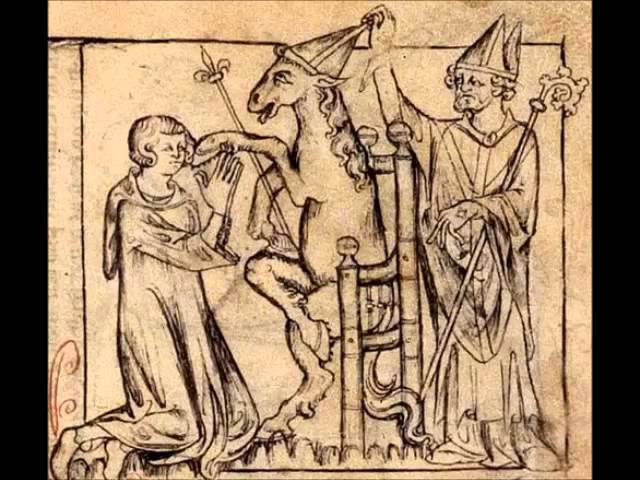
14 January – Happy Feast of the Ass!

Today, 14 January, is the Feast of the Ass, Asses… the Festum Assinorum (in Latin, plural… inclusive!).

No, I am not talking about whom you think I’m talking about.  And, no, it’s not a special Jesuit feast.

The feast which became popular in France, could have stemmed from the so-called “feast of fools”.  It may tendrils into biblical donkeys, or the integration of the ass into the nativity narrative.  It could have been in part inspired by a sermon of pseudo-Augustine.

The day included the tradition of a parading a couple of kids (not goats) on an ass (not a Jesuit) right into the church, next to the pulpit during the sermon.  The congregation would respond with loud “hee haws”.

Who said that the Middle Ages were dreary?

In any event, it was celebrated for a long time and then faded out.

Here are possible greeting cards.

One for your parish priests….

Dear Fr. ___

There is a rather long entry about this at Wikipedia.  It includes a liturgical note:

At Beauvais the Ass may have continued his minor role of enlivening the long procession of Prophets. On the January 14, however, he discharged an important function in that city’s festivities. On the feast of the Flight into Egypt the most beautiful girl in the town, with a pretty child in her arms, was placed on a richly draped ass, and conducted with religious gravity to St. Stephen’s Church. The Ass (possibly a wooden figure) was stationed at the right of the altar, and the Mass was begun. After the Introit a Latin prose was sung.

The first stanza and its French refrain may serve as a specimen of the nine that follow:

Orientis partibus
Adventavit Asinus
Pulcher et fortissimus
Sarcinis aptissimus.
Hez, Sire Asnes, car chantez,
Belle bouche rechignez,
Vous aurez du foin assez
Et de l’avoine a plantez.

(From the Eastern lands the Ass is come, beautiful and very brave, well fitted to bear burdens. Up! Sir Ass, and sing. Open your pretty mouth. Hay will be yours in plenty, and oats in abundance.)

Mass was continued, and at its end, apparently without awakening the least consciousness of its impropriety, the following direction (in Latin) was observed:

In fine Missae sacerdos, versus ad populum, vice ‘Ite, Missa est’, ter hinhannabit: populus vero, vice ‘Deo Gratias’, ter respondebit, ‘Hinham, hinham, hinham.’

(At the end of Mass, the priest, having turned to the people, in lieu of saying the ‘Ite missa est’, will bray thrice; the people instead of replying ‘Deo Gratias’ say, ‘Hinham, hinham, hinham.’)

Here’s a treat for the Feast of the Ass.

Judging from the lyrics, this seems to be the festive installation of the “bishop” …who’s seems, appropriately, to be an ass. Cliche today, perhaps, but still fun.

YouTube thumbnailYouTube icon

Have you sent a greeting card to someone?

BTW… there is a musical setting. HERE

Posted in Lighter fare | Tagged
6 Comments

Your Sunday Sermon Notes

Was there a good point made in the sermon you heard as you fulfilled your Sunday Mass obligation?

Let us know.

Posted in SESSIUNCULA |
8 Comments

ASK FATHER: Standing on altar to change sanctuary lamp.

From a reader…

QUAERITUR:

What is the consequence of standing on the alter table to change a hanging sanctuary lamp? (I just saw this after mass today)

Consequences can be dire, especially for the ladies of the altar guild who have to clean the altar cloths.  Those footprints are pesky.

Also, the rubrics say that the perpetrator is to be caused to write “I will not stand on the altar” 10,000 times, after which he is to be fed only on bread and water until the following Sunday, when he must publicly do penance by sitting in the back corner of the church with headphones listening to recordings of the priests past sermons.

Frankly, depending on the layout of the sanctuary, there aren’t a lot of options for doing certain things.  For example, shifting large candle sticks on a top gradine or changing their candles… or sometimes lighting them.  Putting up the veils over images on Passion Sunday comes to mind.  Having help with the ability to levitate really helps.  Believe me.

I wouldn’t worry about this, even though it was jarring to see.  It would have been better for that to have been done when people were not in church.   Everything that happens on or near the altar is important.  Catholics, as you did, sense that.

Also, one must consider the reason why one might stand on an altar.  It is one thing to change a lamp (which shows respect to the Blessed Sacrament).  It is another thing to climb up and start shouting about abortion rights, as a protestrix might do.  I think this happened in Notre-Dame in Paris.

On the other hand, it could be that, if the sanctuary lamp hadn’t been changed because people were there, I might have gotten a question about the consequences for not having changed the sanctuary lamp.

Posted in "How To..." - Practical Notes, ASK FATHER Question Box, Liturgy Science Theatre 3000 | Tagged
22 Comments

ASK FATHER: Feasts of new saints in the Traditional Latin Mass

From a reader…

QUAERITUR:

I was able to attend the talk by Dr. Peter Kwasniewski the other night in Minneapolis but so many hands were going up I was not able to ask my question. Do you think at some point the 1962 Missal will be revised, even if in another century? Just thinking it’d be good to add some saints like St. Theresa of Kolkata. Your opinion on this please.

Ah, the nearly-ubiquitous Dr. K in my native place.  I’m sure that was engaging.

To the question.

YES and the sooner the better.   The traditional Missal can and ought to be updated in respect to the “Sanctoral Cycle”, the Propers for Saints.  This would be an obvious element of “mutual enrichment” from the newer to the older form in a way that the older form would be left stable and unsullied.

This sort of change is simultaneously extremely easy and normal, and also very thorny and difficult.

It is easy and normal in that the Missal was constantly updated as new saints were canonized and feasts were introduced into the calendar.  Pius V issued the Roman Missal in 1570.  Already in 1571 Pius introduced the new Feast of Our Lady of Victory.   This is what we do: we adjust and adapt those things which can shift according to time and trends.  Devotion to particular saints rises and falls off over time, depending on the needs of the time.   We have always adjusted the calendar and our Missal in accord with the times, in respect to the sanctoral cycle.

It is thorny and difficult in that we have two active calendars right now in the Roman Rite.   The Novus Ordo calendar has been massively changed around, eliminating seasons and octaves, moving feasts of saints around, etc.   New saints have been introduced all along the way in the Novus Ordo.  There is, therefore, a big disconnect with the older, traditional calendar, which froze at 1962.

So, changes like introducing new saints into the traditional calendar is both easy and not easy at all.  It is easy, because we have always done it.  It is hard, because it opens the can of worms which is the task of harmonizing two calendars which are hard to harmonize.

I don’t think it is impossible to do this, but it won’t be easy.  One reason why it won’t be easy is that some few people will completely freak out at the idea of changing one tittle or jot on any page of the 1962 Missal.   I can sympathize, because we need a long period of stability in the use of the Roman Rite in the older, traditional form.   However, we can maintain that stability and introduce the feasts of new saints with their own propers.

It seems to me entirely appropriate that we have available for the traditional Latin Mass, a Feast of St. Gianna Beretta Molla with her own proper, rather than use the generic Common.   We should have propers for saints who are important for our time, such as Sts. Maximilian Kolbe, Josephine Bakhita, Charles Lwanga, the Martyrs of Otranto, etc.

Happily, I know that some of these issues are being studied in Rome.  I don’t know what effect the transformation or suppression of the Pontifical Commission “Ecclesia Dei” might have on the project.  It seems to me that it won’t be wholly positive.

Posted in "How To..." - Practical Notes, ASK FATHER Question Box, Liturgy Science Theatre 3000, Saints: Stories & Symbols | Tagged , ,
31 Comments

Good points in Lawler’s recent book: The Smoke of Satan…

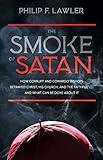
I have now read Philip Lawler’s recent book

The Smoke of Satan: How Corrupt and Cowardly Bishops Betrayed Christ, His Church, and the Faithful . . . and What Can Be Done About It.  US HERE – UK HERE

Here is an excerpt from Chapter 6: A Patrimony Squandered.   Lawler seems from afar to be channeling my own thinking.  This chapter deals a great deal with liturgical practice, church architecture, music, etc.  He is dead on right.  One of the points he makes at the beginning of the chapter comes from an experience he had of entering St. Peter’s Basilica.    As he gazed at the amazing space, he had the reaction, “This is all mine!”.  EXACTLY.   Our tradition is our patrimony.   Stories of the saints are our family history.  Our liturgy is our very flesh and bone: we are our rites.   When we squander our inheritance, we do terrible damage to our identity.  Recovering our patrimony is an urgent task pressing on us all.  We all have a role in this mission.

Anyway, here is the excerpt from the end of Chapter 6.  My emphases and comments.

Parish closings are commonplace in America today, and prelates are praised for their smooth handling of what is seen as an “inevitable” contraction of the Church. A question for the bishops who subscribe to such a defeatist view. Why is it inevitable?

The closing of a parish is an admission of defeat. If the faithful could support a parish on this site at one time, why can they not support a parish today? American cities are dotted with magnificent church structures, built with the nickels and dimes that hard-pressed immigrant families could barely afford to donate. Today the affluent grandchildren of those immigrants are unwilling to keep current with the parish fuel bills and, more to the point, to encourage their sons to consider a life of priestly ministry. [See the connection? That’s why the vocation prayer I have promoted is so important.  HERE and HERE]

There are times, admittedly, when parishes are doomed by demographic shifts. There are city neighborhoods in which two Catholic churches were built, literally across the street from one another: one for the benefit of French-speaking families, the other for their German-speaking neighbors. Such cases, however, account for only a small proportion of the parish closings that we see in the US today. More typically, the parish slated for closing is located in a comfortable, populous neighborhood, with no other Catholic church particularly close at hand and no special reason why the community that supported a thriving parish in 1960 cannot maintain the same parish now, fifty years later. No reason, that is, except the decline of the Catholic faith. Parishes close because Catholic families don’t care enough about the Faith to keep them open.

Why don’t families care enough? Why is there such a widespread indifference to the treasures of the Catholic faith? At least one powerful factor is surely the attitude that lay Catholics have observed in their priests and their bishops. If the clergy, the stewards of the patrimony, are content to act as bystanders as the Catholic patrimony is degraded, their indifference becomes infectious.

In other instances, the parishes close because although the neighborhood is still populous, the Catholic families have moved out and the new residents come from different religious backgrounds or come without religious beliefs. In such cases, we are told, the Church must accept the new reality and realize that the neighborhood cannot support a parish. But why make such a concession? Why should we admit that it is impossible to convert the new residents to our faith? A Catholic fired with apostolic zeal, discovering a neighborhood in which the population is mostly non-Catholic, should set out to convert the people, not to close the church. In at least a few cases with which I am personally familiar, parishioners have asked their bishop to leave the parish open for a few years to give them an opportunity to build up a new model of evangelical outreach, to bring new converts into the parish and make it financially viable once again. When those appeals have been rejected, the parishioners have concluded, not illogically, that their bishop does not share their trust in the winning power of the Gospel.

When St. Patrick, having escaped slavery in Ireland, arrived again as a missionary, the country was pagan. By the time he died, the country was Catholic. He came into a “neighborhood”—an entire nation—that could not support a parish. But he did not accept what lesser souls might have considered inevitable. Instead, he changed the conditions of the neighborhood, and soon a parish was created. And another and another and another. During his years of ministry in the once-pagan country, he is said to have consecrated over three hundred bishops. In Ireland today there are seven dioceses—not parishes, dioceses—that trace their foundation to St. Patrick’s missionary work.

If as a bishop and missionary St. Patrick could convert an entire nation, why can’t his successors at least strive to match his success? We have material advantages that would have left St. Patrick gasping: the ability to travel hundreds of miles in a day, the capacity for instant communication across the globe. Is the content of the Catholic faith less viable today than it was in the fifth century? Is the guidance of the Holy Spirit less valuable? I know how St. Patrick would answer those questions.

In another section, Lawler makes an excellent point that I had not thought of.   The Church’s pastors started squandering and destroying our patrimony right around the time that the birth rate began to drop with the rise of the sexual revolution, contraception and abortion.    Here’s how he puts it.

Incidentally, the general appreciation of our Catholic heritage began to lag at roughly the same time that the American birth rate went into a steep decline, eventually dipping below the “replacement rate” at which population would hold steady without immigration. Is it surprising that we, as a people, stopped thinking so much about what we would pass along to our children, during the same years that we stopped having so many children—that we turned our attention away from our heritage, as we chose not to have so many heirs?

Right!

Posted in ¡Hagan lío!, "How To..." - Practical Notes, Be The Maquis, Brick by Brick, Cri de Coeur, Pò sì jiù, Si vis pacem para bellum!, The Coming Storm, The Drill, The future and our choices | Tagged
14 Comments

Two cordial warnings to readers

I have two cordially offered warnings for readers.

First, when you make French Toast from old pannetone, and you determine that it would be good with a little maple syrup, double check that you have taken the correct bottle from the cupboard. One of them might contain super hot Chinese red pepper oil.

Next, if you want to write something to me, use the email contact form on the top menu. If you don’t, I’ll probably delete your mail unread. If you have an ASK FATHER question, use the ASK FATHER contact form, linked also from the top menu. If you don’t, I’ll probably delete your mail unread. These two forms help me to identify and triage my email, of which I get a great deal. As I write, for example, my phone says I have some 317 unopened waiting for me.

Posted in SESSIUNCULA |
Comments Off on Two cordial warnings to readers

ASK FATHER: Excessive pious gestures during Mass

From a reader…

QUAERITUR:

Folks at my (exclusively Extraordinary Form) parish genuflect when the cross and then the priest pass them during the procession and recession. They also bless themselves everytime the priest does during the mass. I did not seen this at another traditional parish in a different state and I’m wondering if this is just a cultural thing for people from certain countries or maybe just the newness and unfamiliarity most of us have with the EF. It seems excessive to me.

May I suggest that you do what you choose to do and allow others to do what they choose to do?

There are no indications in the traditional Missal about what the congregation is to do.   As a matter of fact, there are far more indications for the congregation in the Novus Ordo.

There are traditional practices which vary from place to place.  However, some gestures make sense.  For example, kneeling for the consecration, singing responses, making the sign of the Cross when receiving an absolution or blessing, etc.

If someone wants to make the sign of the Cross at the same time as the priest… what’s wrong with that?  It seems to me that that isn’t an intolerable confusion of roles of laity and priest.

It seems to me a reasonable thing to make a pious gesture as a processional Cross – the symbol of our salvation – is formally brought into the sacred space of the church at the beginning or end of Holy Mass.

People don’t have to be in lockstep.   Provided that they are not a massive distraction to others, congregants have freedom.


Posted in Liturgy Science Theatre 3000 | Tagged
31 Comments