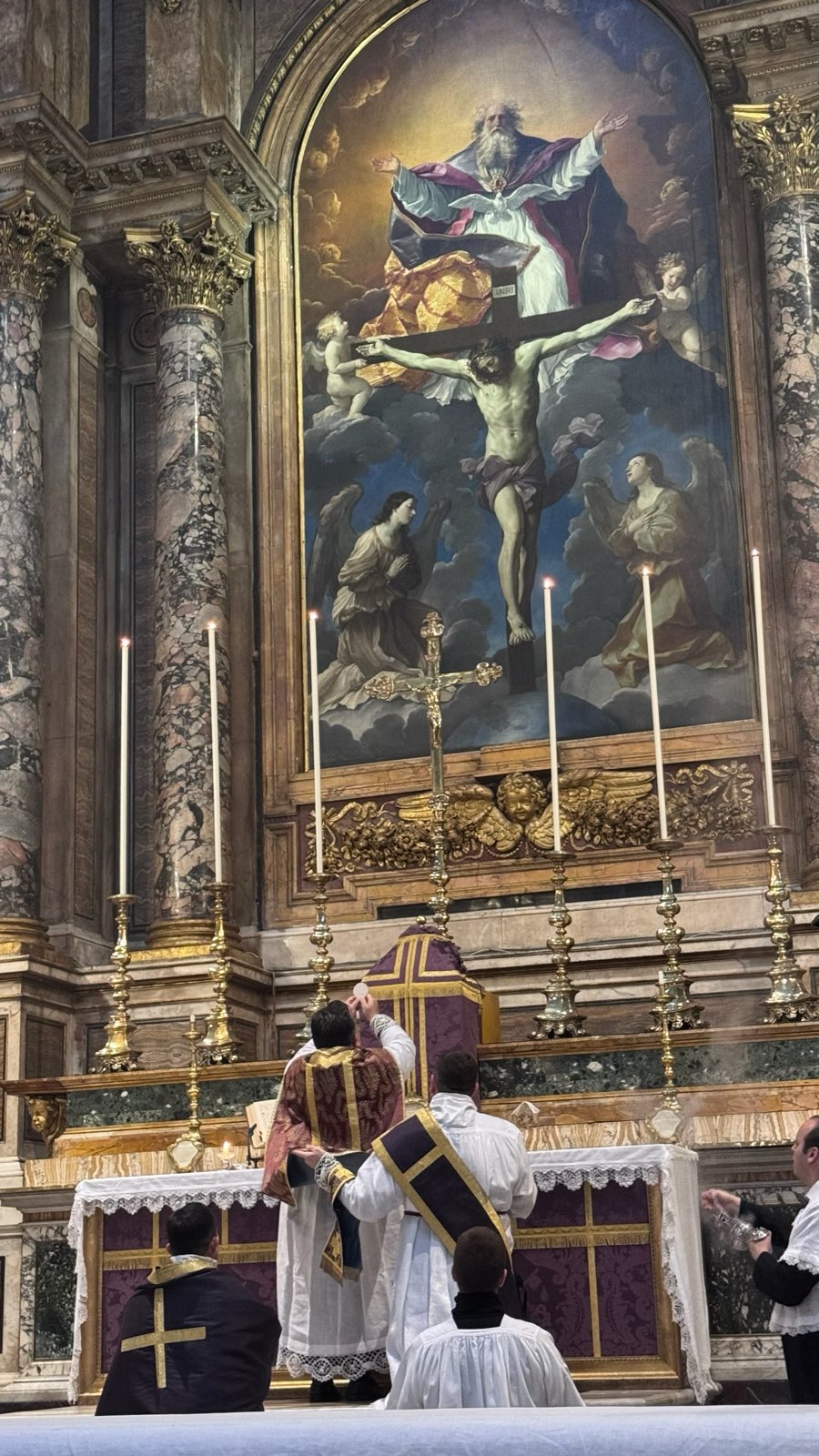
Daily Rome Shot 1503

Welcome registrant:

CuriousCatholic

Please remember me when CHRISTMAS shopping online and use my affiliate links.  US HERE – WHY?  This helps to pay for health insurance, utilities, groceries, etc..  At no extra cost, you provide help for which I am grateful.

Here is a puzzle from a famous game.  Black to move.  Can you spot the move that, in most lines that follow, can either force mate or just win for black?

This is not so easy.

NB: I’ll hold comments with solutions ’till the next day so there won’t be “spoilers” for others.

And, speaking of sneaky …

And there’s this.

OH NO! I’ll never use Calibri for my drafts again!

From the NYP:

Marco Rubio instructs diplomats to use Times New Roman font, eliminating Biden-era DEI initiative

WASHINGTON — He’s font and center in the State Department.

Secretary of State Marco Rubio directed all diplomats to revert to using the Times New Roman typeface in official communications and criticized his predecessor for shifting to Calibri, a font deemed too woke for the Trump administration.

I wonder what fount I should use for drafting… I prefer sans serif for drafts.  Any thought?  I am often prompted to use Aptos.

Posted in SESSIUNCULA |
14 Comments

“Babes in Arms” Meets “Universi Dominici Gregis” – Hijinks Ensue

A lot of you are interested in Latin and the documents written in that venerable language, still (I think) the official language of the Holy See.

However, I saw document today that demonstrates that, all this time, we’ve been duped.

It seems that the conclave that elected Benedict XVI was invalid because… reasons … and bad things that happened… and other things.

What to do in such a dire situation is indeed vexing.

What any diligent member of the faithful would do: hold your own conclave and elect a new Pope to set in order those… you know… reasons … and bad things that happened… and other things.

We have proof that it took place because the chaps (I assume no women were involved except perhaps to sew the costumes) cobbled up a really convincing document which PROVES that the new Pope is named

HILDEBRAND.

Wanna see it? It is at the new official website of the new official “Holy See”. They call the document a “Rogitum”, which in a broader context is not inaccurate. In stricter sense, the “Rogitum” is the official document sealed in a tube placed in the coffin of a dead Pope giving some details of his pontificate. In a broad sense, in ecclesial Latin, “rogitum” (from rogo “to ask”) can be a formal request or written act presented for approval. It is mainly used for petitions, as in “Instrumentum hoc ex rogito fidelium conscriptum est.”. In the Apostolic Constitution (apparently violated because of reasons and things so that Benedict XVI wasn’t really elected… or was it Francis?… whatever… reasons… bad things…) Universi Domini gregis, the document drawn up confirming the election of a new Pope is called the “instrumentum de acceptione“.  It is not called a “rogitum”.

Okay, let’s see the “Rogitum” they cobbled up for the election of Hildebrand.  Click for larger.

Impressive, right?

What really impresses me about this is how authentic and how legitimate it looks because of the use of the “long-s” (aka swash), that s which in old documents both written and printed looks sort of like an f. In hand writing it will sometimes extend both below and above the other letters.

Here… I’ll show you close up (with my additions).

Firstly, I was unaware that there was an extra e in “SanctissimEae”. Ooops. And there’s an extra i in “SpiIritus”!  And I am unsure as to why “sancti” isn’t uppercase.  But, hey!  It sure looks official.

Next, there is the problem not just in the title but throughout. The long-s is initial and medial, but not final. That is, it can be used at the beginning of a word, within a word, but not at the end. Also, in the case of two ss standing side by side, with some rare exceptions only the first is “swashed”. Hence, using English words for examples, “possess” would be “poſſeſs” or “poſseſs” for “possess”, but never “poſſeſſ”). So… that “SanctiSSimeae” is pretty screwed up.

In any event, I think the conclave should get their money back.

BTW… these folks – I imagine them to be almost close to double digits in number – have worked on conclaves before at some hotel near Rome, if memory serves.  But I don’t remember that habuimus Papam at the time.  Rather… habuiimuſ Papam.

What does thiſ remiind meae of?

Play video


Posted in Lighter fare, SESSIUNCULA, You must be joking! |
9 Comments

ADVENTCAzT 2025: 12 – Thursday 2nd Week of Advent

A 5 minute daily podcast to help you in your Advent preparation.

Joseph Ratzinger riffs on the person of the Baptist and the Christian imperative of metanoia.

Card. Bacci forcefully admonishes us about reception of the Word.

Fulton Sheen is, as usual, brilliant.

Yesterday’s podcast HERE.

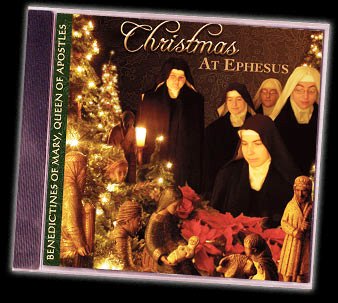
You hear also the Benedictine nuns of Gower Abbey, the Benedictines of Mary, Queen of Apostles.

Posted in ADVENTCAzT, PODCAzT | Tagged , , ,
3 Comments

A few good causes for end of the year giving

A few good causes for end of the year giving.

At the end of a calendar year, good people like you readers are looking for good causes to support with their giving dollars.

We can’t trust many organizations which have the world “Catholic” in their title. Off hand, I can think of about… nope, not enough time or room.

I like and trust the Archdiocese for the Military Services. HERE

I like and trust Our Lady of Hope Clinic. HERE

I like and trust the Tridentine Mass Society of Madison. HERE


Posted in SESSIUNCULA |
Leave a comment

I INSTANTLY added this book to my list! (Fr. Z POLLS)

Not all that glitters is gold, unless it is from the pen of Peter Kreeft.

I INSTANTLY added this one to my wishlist list and I will promote it here and now – contrary to my usual MO – even though I haven’t yet read it.

That’s how trustworthy Kreeft is.  And this is a fascinating premise.

If you want to be one of those who are not lost when they wander, get this one. And it would be a great Christmas gift.

The Two Greatest Novels Ever Written by Peter Kreeft

US HERE – UK HERE

The Lord of the Rings by J.R.R. Tolkien
The Brothers Karamazov by Dostoevsky

I can’t think of a lot of great novels, including Crime and Punishment and Don Quixote.  But these two… yup.

Gotta love that cover, with the juxtaposition of Cyrilic and Quenya.

PS: Kreeft is pronounced “crayft” (like the color gray) not “creeft” (like the e in creed).

Let’s have a poll.   Anyone can vote.  Registerd/approved members here can also comment.

The Brothers Karamazov...

View Results

Loading ...

Let’s have another poll.

VERSION 1: The Hobbit and The Lord of the Rings... lets include the Hobbit because it makes sense to...

View Results

Loading ...

And one more.

VERSION 2: The Hobbit and The Lord of the Rings... let include the Hobbit because it makes sense to...

View Results

Loading ...


Posted in POLLS, SESSIUNCULA, The Campus Telephone Pole |
22 Comments

ADVENTCAzT 2025: 11 – Wednesday 2nd Week of Advent

A 5 minute daily podcast to help you in your Advent preparation.

Today I found a passage wherein Joseph Ratzinger investigates the world-mired mindset of those who resist the teaching of the Virgin Birth.  I wonder it pertains (via modernism) today and the reduction of titles of Mary.

Then we hear about how to attain peace of soul in this world.

Yesterday’s podcast HERE.

Posted in ADVENTCAzT, ADVENTCAzT, PODCAzT | Tagged , , ,
1 Comment

Daily Rome Shot 1502

Quaeso, mei memento cum Natalicio tempore per interrete mercaris et nexibus meis affiliatis utere. USA HIC – CUR? Hoc adiuvat ad salutem, impensas publicas, cibaria, et cetera necessartia solvenda. Sine ullo pretio addito, auxilium praebes, pro quo gratiam habeo.  Oro libenter meis pro benefactoribus.

Interim, motus ad lusorem cum militibus albis pertinent. Scaccus mattus, scilicet mors regis, duobus in motis veniat.

NB: Detineam explicationes in crastinum, ne vestrae interrumpantur commentationes.

Interim…

Present ideas…

Posted in SESSIUNCULA |
5 Comments

An image drawn by a Cistercian nun provokes thoughts about the Immaculate Conception and the Tears of Eve. Wherein Fr. Z rants.

Today on Twitter I ran across an image HERE made by a Cistercian Trappist Sister of Our Lady of the Mississippi Abbey   They have an online store for the support of their community HERE which includes prints of the image and assortments of caramels and chocolates – great Christmas gift ideas – as well as fruit cake.  They wouldn’t be Trappists otherwise, I think, without fruitcake.

The site where I found the image has some theological reflection about the image, which is good.  However, I have a different idea founded on my Patristic background.

Initial thoughts before I get to the real point.

One thing I noticed right away is the shape of the leaves and the fruit.  These are not apples, they are figs.    The forbidden fruit of the Garden, was the fig, not the apple (even though that is what Eve is holding… and it has a bite mark).   I note, however, that the fruits in the image look rather like pears, which makes me think of Augustine’s youthful sin in Confessions 2:

We carried off a huge load of pears, not to eat ourselves, but to dump out to the hogs, after barely tasting some of them ourselves. Doing this pleased us all the more because it was forbidden. Such was my heart, O God, such was my heart–which thou didst pity even in that bottomless pit. Behold, now let my heart confess to thee what it was seeking there, when I was being gratuitously wanton, having no inducement to evil but the evil itself.

Eve’s choice and Adam’s failure echoing through the ages.

The way the figs leaves surround the two figures is reminiscent of the hortus conclusus theme of medieval paintings of the Blessed Virgin.

The hortus conclusus, the enclosed garden, is drawn from the Song of Songs 4:12, “hortus conclusus, soror mea, sponsa; hortus conclusus, fons signatus”.  The Fathers and medieval exegetes took this as a prophetic figure of the Virgin Mary: wholly belonging to God, inviolate, fruitful through divine grace. In paintings from the late Middle Ages through the Renaissance, the enclosed garden becomes the setting for the Annunciation or the Madonna and Child. Artists often fill the space with carefully chosen symbolic flora whose meanings echo Marian titles such as the lily for purity, the rose for charity, the columbine for sorrows.     Theologically the hortus conclusus signifies not only Mary’s perpetual virginity but also the interior sanctuary where God’s Word takes root. Mary is the “garden sealed” because the Incarnation is entirely God’s initiative. She is at once receptive and protected, a new Garden of Eden in whom the divine presence dwells without corruption. Ildefonso Schuster notes that Marian iconography often renders this garden as both earthly and paradisal, suggesting that in Mary humanity begins again. The hortus conclusus thus is visual catechesis, a proclamation of Mary as pure, fruitful, and uniquely prepared to receive and bear the Savior.

We must give due attention to the serpent.

Old Scratch entangles the feet of Eve, only to have its head crushed by the foot of Mary.

How heavy that foot upon the deceiver!

I am minded that the Latin word for pregnancy is graviditas from gravis, meaning “heavy”.  Graviditas was a rich theological metaphor.  Patristic authors use terms of physical generation to illuminate the mystery of the Incarnation, and graviditas is especially apt for describing the pleroma, the fullness of divine life, present in Mary and, by extension, in the Church.   The phrase graviditas Virginis appears in early Latin homiletic traditions to highlight the paradoxical union of virginity and fecundity. Mary’s graviditas signals her interior plenitude of grace. Augustine speaks of Mary conceiving Christ in her heart before conceiving Him in her womb… in mente prius quam in ventre (s. 215.4).  In this sense her graviditas is the fullness of faith, obedience, and charity that makes her not just hortus conclusus but also the living ark of the covenant.  The Church Fathers describe the Church as gravis or gravida with the faithful, using maternal imagery to articulate the Church’s role in bringing forth new life through baptism and catechesis. Thus graviditas Ecclesiae expresses the community’s fertile receptivity to the Word and its mission to “bear” Christ into the world.  In fact, the newly baptized were called “infantes“.  Medieval writers extend the metaphor to the soul. A believer “gravidus verbo… pregnant with the Word” is one who has allowed divine wisdom to take root and grow, producing virtuous action. Here graviditas indicates interior transformation, a heaviness not of burden but of divine presence.   Thus, graviditas is theological shorthand for fruitful receptivity to God, a symbol of how grace fills, shapes, and brings to birth the life of Christ within persons, Mary above all.

And now, after those tangents, to my point.

St. Cyril of Jerusalem in his Catechesis 12 wrote (I’ll give you some context):

Hear, O man, the mystery:
how the Creator of all is born of a Virgin,
how He who holds the world in His hands is wrapped in the swaddling-clothes of an infant.
Today there is joy for the heavenly ones and peace for those on earth;
today the tears of Eve have been dried through the Virgin;
today the curse has been undone and the blessing has sprung forth;
today death has vanished, and life has reigned.
Today Adam is called back to his inheritance, and Eve has found her liberty;
through the Virgin the bond of condemnation has been loosed;
through the Virgin immortality has entered among men;
through the Virgin salvation has poured forth like an unfailing fountain.

Cyril stands squarely in the patristic tradition that sees Mary as the New Eve, a title rooted deeply in second-century theology. His phrase “Eve’s tears are dried through the Virgin” is a precis of salvation history.

We can take Eve’s tears to represent, the sorrow of the fall (Gen 3:16), humanity’s exile and mortality, and the rupture between God and man. Tears symbolize the broken inheritance of the human race.

Cyril’s litany-like “Through the Virgin” produces what?  The tears cease, the curse dissolves, immortality returns, salvation is poured out.  Mary is the instrument chosen for the Incarnation, the hinge of the world’s re-creation.

Where Eve listened to the serpent, Mary listens to the angel.
Where Eve’s act led to exile, Mary’s fiat brings restoration.
Where Eve’s act introduced death, Mary’s obedience introduces Life Himself.

For Cyril, Mary’s divine maternity is the turning point of history: creation begins again in her womb.

BTW… Even apart from her perfectly united will at Calvary, does this all sound like Co-Redemptrix to you?

Lastly, do visit the store of the Trappist Sisters.  HERE

Posted in Our Solitary Boast, Patristiblogging, SESSIUNCULA, Wherein Fr. Z Rants, Women Religious | Tagged
4 Comments

9 December – Feast of St. Juan Diego. The AMAZING miracle for his canonization!

Remember…

If we do not believe in miracles, we do not ask for them. If we do not ask for them, they will not be granted.

We are not alone: the Church Militant and the Church Triumphant are closely knit, interwoven in charity. We on earth must intercede for each other and believe and ask for the intercession of the saints.

Today is the Feast of St. Juan Diego, of Our Lady of Guadalupe fame.  Mexican, native-American St. Juan Diego Cuauhtlatoatzin (+1548), was granted an apparition by Our Lady Virgin Mary four times on the hill of Tepeyac.   He had been declared Venerable in 1987.

St. John Paul II decided to beatify him without the approved miracle.  He was beatified on 6 May 1990.

Under normal circumstances, for a beatification there must be a miracle which has been rigorously studied and approved by the Congregation for Causes and Saints accepted by the Holy Father.   St. John Paul bypassed the process.  Pope Benedict did done the same occasionally.

There was a miracle for Juan Diego’s canonization, however. 

It is quite a story.

Here it is.

Juan Jose Barragan Silva, of Mexico City, was a drug addict from his adolescence.  He and his mother had been abandoned by his father.

On 3 May 1990 – note the date – Juan Jose, after getting drunk and high on marijuana with a friend, went home and started to cut himself on the head with a knife.  His mother, Esperanza, tried to get the knife away but failed.  She implored him to stop abusing himself and give up the alcohol and marijuana.   He shouted that he didn’t want to live any more so loudly that the neighbors came to see what was going on, but the door was locked.

Juan Jose threw himself off the balcony of their second floor apartment (in the USA this would be counted as the third floor).

In that moment, Esperanza had a “flash”.  Knowing that Pope John Paul was to be in Mexico for the beatification of Juan Diego, she called on Juan Diego to intercede for her son.

Juan Jose fell about 10 meters and landed close to a friend of his, Jesus Alfredo Velasquez Ramirez, who saw him land on his head on the concrete pavement.  Juan Jose was bleeding copiously from the mouth, nose and ears.  They covered him, thinking he was dead.  He suddenly sat up, rose and went to the stairs leading to his apartment.  On meeting his mother coming down the stairs he asked his mother’s forgiveness.  They embraced and remained that way for another ten minutes or so before the ambulance came.

During the ambulance ride Juan Jose said he had lost his vision.  He was able to say a Our Father.  He was registered at Sanatorio Durango at 1830.

The medical prognosis was very pessimistic.

The doctor, Juan Homero Hernandez Illescas, later explained that it was already incomprehensible that he was still alive.

They did tests immediately and found that Juan Jose had a fracture of the epistropheus, a large hematoma in the right temporal-parietal region extending to the lateral part of the neck and lacerations of the muscles about the parapharyngeal space,  fractures from the right orbital to the clivus, intracranial hemorrhages and air in the cranial cavity and in the cerebral ventricles.

Fr. Manuel Ponce gave him the last rites under the impression that Juan Jose would soon be dead.

He continued to live.

Fore the first few days Juan Jose was sedated. On the fifth, doctors found that his pupils were symmetrical and reactive and that he could move his arms and legs.  On the sixth day he was released from the ICU to a regular ward.  On the seventh day his feeding tube was removed.  He was released on the tenth day after the fall.   Subsequent tests by neurologists and other specialists showed a total recovery.  Juan Jose subsequently gave up his drug habit and started school.

It was determined that his change of condition came on 6 May at the very time John Paul II – in Mexico City – declared Juan Diego to be “Blessed”.

For a miracle of curing to be authenticated as such, the cure has to be sudden, complete and lasting.  It has to be inexplicable by science. It has to be demonstrated that the venerable or blessed was invoked in a particular way.  There are usually spiritual effects, such as conversion of life of the person cured and also witnesses.

The decree concerning this miracle was promulgated on 20 December 2001.  Holy Father Pope John Paul II canonized St. Juan Diego on 31 July 2002.

Friends, if we want miracles… we have to ASK for them!

Let’s ask St. Juan Diego and our Lady of Guadalupe to intercede for some miracle.

You might, in your prayers, mention my mother for healing.

Posted in Saints: Stories & Symbols | Tagged
6 Comments

ADVENTCAzT 2025 – 10 – Tuesday 2nd Week of Advent

A 5 minute daily podcast to help you in your Advent 2025 preparation.

Today Fr. Troadec talks great sense about REALITY and spiritual progress.
Card. Bacci administers a dose of medicine.

Yesterday’s podcast HERE.

Posted in ADVENTCAzT, ADVENTCAzT, PODCAzT | Tagged , , ,
1 Comment