QUAERITUR: If something is in the Catechism, do I have to give in, believe it even though it is different from what the Catechism taught before?

I am getting questions from lots people about Pope Francis’ move to change the Church’s doctrine concerning capital punishment.

QUAERITUR:

If this is in the Catechism, do I have to give in and believe it even though this is different from what the Catechism taught before?

QUAERITUR:

What is required of Catholics regarding the change to the teachings on capital punishment? I don’t agree with the change, and what’s worse, I don’t believe what the Holy Father has written is Church teaching.

These changes disturb my peace and cause me to question if I can recieve communion.

At the very least Francis seems to have cut the legs out from under the authority of the Catechism, if not the Catholic Faith, by introducing something into that Catechism which seems to contradict the Church’s perennial teaching.

What is the authority of the Catechism?  

I often tell people that, when they hear something confusing, go to the CCC.   That is a bit more difficult now, but I stand on it.  Why?

Teachings found in the Catechism are not true, reliable and sure because they are in the Catechism. 

Teachings are true because they’re true.

Teachings have authority in themselves, because they are rooted in natural law, revelation, the Church’s entire body of teaching and the Rule of Faith, going back to Apostolic Times.

The Catechism is a sure reference and authoritative because it has sure teachings in it.

Teachings don’t become sure because they are included.

In Introduction to the Catechism of the Catholic Church (US HERE – UK HERE) Joseph Ratzinger wrote:

The individual doctrines which the Catechism presents receive no other weight than that which they already possess. The weight of the Catechism itself lies in the whole. Since it transmits what the Church teaches, whoever rejects it as a whole separates himself beyond question from the faith and teaching of the Church.

In the same section, Ratzinger said that the CCC is not a “super-dogma”, which can repress theologians in their free explorations.

Let’s stress: “as a whole”.

It is possible that some point in the Catechism will have greater authority on the mind and conscience of a Catholic than another.  For example, what the Catechism contains concerning the Holy Trinity is far more binding on the minds and hearts of Catholics than what it says about religious liberty or the death penalty or other matters of contingent moral decision making.

Even within matters that concern moral decision making, some issues have more weight than others.  For example, the right to life of the innocent is found within the Church’s teaching on abortion and euthanasia, which is unquestionable.  However, capital punishment concerns NOT the taking of the life of an innocent person, but rather of a guilty person who has in some way demonstrated a lack of respect for the right to life of others.   This point about innocence or guilt has always been at the heart of debates about the legitimacy of capital punishment.

So, if you say “I reject the content of the CCC” you reject the Catholic Faith in its entirely: it is comprehensive.  If you say that you reject a doctrine in the CCC which is at the very core of the Catholic Faith, such as the Trinity or the Incarnation or the Resurrection, you reject the Catholic Faith: you cannot believe as a Catholic if you reject the Trinity.  If you reject some highly controverted teaching that involves moral contingencies, such as the just war teaching of the Church or such as capital punishment, you do not reject the whole of the Catholic Faith, for the Faith doesn’t depend on those murky issues.

Let’s pretend for a moment – and it doesn’t take much – that baseball’s designated hitter rule is a matter for the Church’s Magisterium.   If I, Pope Clement XIV The Second, were to drop into the Catechism a paragraph stating that the designated hitter is wrong and inadmissible, that opinion’s presence in the Catechism wouldn’t make that statement true and necessary for belief.

Things in the Catechism don’t become true when they are put into the book.  They are put into the book because they are true.  The fact is, you can argue about the designated hitter forever.

So what happens if something blatantly false is put into the Catechism, such as, “abortion is not intrinsically evil”.  That would be a serious violation of the purpose of the Catechism and it would reveal the insertor as a heretic.  But what about the insertion of something ambiguous?   For example, stick into the CCC that, because of the human dignity of the person, the capital punishment is “inadmissible”.  I suppose we can argue about what “inadmissible” means.  It doesn’t manifestly state that capital punishment is intrinsically evil, as abortion and euthanasia is intrinsically evil.

The Church in CCC 2271 teaches what she has always taught from the earliest times: abortion is a grave moral evil.  That teaching is in the CCC because the Church has always taught that.

The Church in the CCC 2277 teaches that direct euthanasia is, in English, “morally unacceptable”.  Not too different from “inadmissible”, right?  But it goes on to call it “murder gravely contrary to the dignity of the human person… a murderous act”.

What Pope Francis wrote about capital punishment doesn’t call it intrinsically evil or a murderous act.

But he does say that it is “inadmissible”… “not allowable”.

Is that a hedge?   It is hard to take it as a hedge.

There is going to be a lot of ink spilled about this.

Finally, it seems to me that Pope Francis has emphasized the Church’s outward, pastoral policy which she desires to argue before the state: don’t put people to death.

Having thought about it, I am not entirely convinced that Pope Francis didn’t attempt to change the Church’s teaching about capital punishment.  At the very least, he made it far murkier than before.

It seems to me that someone could place the new paragraph side by side with the rest of the body of the Church’s teachings on capital punishment and then make a well-informed choice to stick with the traditional teaching, while embracing the pastoral policy of diminishing the application of the death penalty.

The admissibility of the death penalty WAS, in fact, in the Catechism.  And it was there for a reason: it is the traditional teaching of the Church and, therefore, TRUE.

Meanwhile, we seem to be pushing outrage about McCarrick out of the news cycle.

Posted in ¡Hagan lío!, ASK FATHER Question Box, Emanations from Penumbras, Our Catholic Identity, The Drill | Tagged , ,
42 Comments

Wherein Fr. Z asks a question about “reception” of a controversial doctrine

Libs are always saying that they don’t have to accept a teaching of the Church when they don’t like it.  For example, when it comes to Ordinatio sacerdotalis or Humanae vitae, they claim that the teachings haven’t be “received”.  Hence, they are not binding.

The “faithful” haven’t accepted that women can’t be ordained.  Therefore, I don’t have to believe what John Paul wrote.  The “faithful” haven’t “received” what Paul wrote about contraception.  As a result, I am not bound by it.

However, what will they respond when Catholics don’t “receive” this change to the CCC about capital punishment?

The argument about “reception” cuts both ways.  Will they come to regret it?

Nooooooo…. they’ll ignore the inconsistency and turn to raw power, threats, and obfuscation to push what they want.

Posted in SESSIUNCULA | Tagged
29 Comments

2 August until midnight: “Portiuncula” Plenary (or Partial) Indulgence

From midnight tonight to midnight 2 August, you can gain the “Portinuncula” Indulgence.  This indulgence seems to have been granted directly by Christ Himself in an appearance to St. Francis.  The Lord them told Francis to go to Pope Honorius III, who, as Vicar of Christ, who wielded the keys, would decree it.

Catholic Encyclopedia

St. Francis, as you know, repaired three chapels. The third was popularly called the Portiuncula or the Little Portion, dedicated to St. Mary of the Angels. It is now enclosed in a sanctuary at Assisi.

The friars came to live at the Little Portion in early 1211. It became the “motherhouse” of the Franciscans. This is where St. Clare came to the friars to make her vows during the night following Palm Sunday in 1212 and where Sister Death came to Francis on 3 October 1226.

Because of the favors from God obtained at the Portiuncula, St. Francis requested the Pope to grant remission of sins to all who came there. The privilege extends beyond the Portiuncula to others churches, especially held by Franciscans, throughout the world.

A plenary indulgence is a mighty tool for works of mercy and weapon in our ongoing spiritual warfare. A plenary indulgence is the remission, through the merits of Christ and the saints, through the Church, of all temporal punishment due to sin already forgiven.

To obtain the Portiuncula plenary indulgence, a person must visit the Chapel of Our Lady of the Angels at Assisi, or a Franciscan sanctuary, or one’s parish church, with the intention of honoring Our Lady of the Angels. Then perform the work of reciting the Creed and Our Father and pray for the Pope’s designated intentions. You should be free, at least intentionally, of attachment to venial and mortal sin, and truly repentant. Make your sacramental confession 8 days before or after. Participate at assist at Mass and receive Holy Communion 8 days before or after.

BTW… the faithful can gain a plenary indulgence on a day of the year he designates (cf. Ench. Indul. 33 1.2.d). You might choose the anniversary of your baptism or of another sacrament or name day.

My friend Fr. Finigan, His Hermeueticalness, has some excellent points and suggestions in his post about the Porticuncula indulgence.  HERE

Also, HERE, Fr. Finigan wrote about the requirement that we not have any attachment to sin, even venial.  He offers quite a hopeful view of what sounds like a difficult prospect.  I warmly recommend it.


Posted in Just Too Cool | Tagged
4 Comments

Pope Francis changed the Catechism about the death penalty. What next? Wherein Fr. Z opines.

US HERE – UK HERE

I wonder if the recent move of the Holy Father to change the text – the teaching of the Church – of the paragraph in the Catechism of the Catholic Church about the death penalty will generate enough buzz to knock anger at McCarrick and Rodriguez Maradiaga’s seminary out of the news cycle.

With a Rescript, the Pope changed the Church’s teaching on capital punishment. 

Being concerned about this move does not mean that a person is for the death penalty, even in only extremely restricted conditions.  Concern about this stems from other considerations.  You can be entirely against the death penalty and still be deeply concerned about what this change means.  I’ll spin that out, below.

Letter from the Prefect of the CDF. Card. Ladaria, states that this is an authentic development of doctrine.   The Rescript provides the changes in major modern languages but has, inexplicably, excluded Latin.

This is tedious, but let’s look at the texts, before we think more about them and this change with my emphases:

2267 Traditionalis doctrina Ecclesiae, supposita plena determinatione identitatis et responsabilitatis illius qui culpabilis est, recursum ad poenam mortis non excludit, si haec una sit possibilis via ad vitas humanas ab iniusto aggressore efficaciter defendendas.

Si autem instrumenta incruenta sufficiunt ad personarum securitatem ab aggressore defendendam atque protegendam, auctoritas his solummodo utatur instrumentis, utpote quae melius respondeant concretis boni communis condicionibus et sint dignitati personae humanae magis consentanea.

Revera nostris diebus, consequenter ad possibilitates quae Statui praesto sunt ut crimen efficaciter reprimatur, illum qui hoc commisit, innoxium efficiendo, quin illi definitive possibilitas substrahatur ut sese redimat, casus in quibus absolute necessarium sit ut reus supprimatur, « admodum raro […] intercidunt […], si qui omnino iam reapse accidunt ». 177

(177) Ioannes Paulus II, Litt. enc. Evangelium vitae, 56: AAS 87 (1995) 464.

2267 The traditional teaching of the Church does not exclude, presupposing full ascertainment of the identity and responsibility of the offender, recourse to the death penalty, when this is the only practicable way to defend the lives of human beings effectively against the aggressor.
“If, instead, bloodless means are sufficient to defend against the aggressor and to protect the safety of persons, public authority should limit itself to such means, because they better correspond to the concrete conditions of the common good and are more in conformity to the dignity of the human person.
“Today, in fact, given the means at the State’s disposal to effectively repress crime by rendering inoffensive the one who has committed it, without depriving him definitively of the possibility of redeeming himself, cases of absolute necessity for suppression of the offender ‘today … are very rare, if not practically non-existent.'[John Paul II, Evangelium vitae 56.]

THE NEW TEXT of 2267 removes language about “traditional teaching” and “not exclude”:

2267. Recourse to the death penalty on the part of legitimate authority, following a fair trial, was long considered an appropriate response to the gravity of certain crimes and an acceptable, albeit extreme, means of safeguarding the common good.

Today, however, there is an increasing awareness that the dignity of the person is not lost even after the commission of very serious crimes. In addition, a new understanding has emerged of the significance of penal sanctions imposed by the state. Lastly, more effective systems of detention have been developed, which ensure the due protection of citizens but, at the same time, do not definitively deprive the guilty of the possibility of redemption. [the death penalty did not deprive the guilty of redemption either]

Consequently, the Church teaches, in the light of the Gospel, that “the death penalty is inadmissible because it is an attack on the inviolability and dignity of the person”,[1] and she works with determination for its abolition worldwide.

_______________________

[1] Francis, Address to Participants in the Meeting organized by the Pontifical Council for the Promotion of the New Evangelization, 11 October 2017: L’Osservatore Romano, 13 October 2017, 5.

Note well that word: “inadmissible”.  The Italian says: “inammissibile”.  The French says: “une mesure inhumaine”.  The German says: “unzulässig”.  The rest of the languages are along this line.  French is not.  We don’t know what the official text is.  However, we can be pretty sure that it won’t go farther than “inadmissible”.

It does not and will not say in Latin that the death penalty is “intrinsically evil”.

Back in October 2017, Francis talked about changing the Catechism.  At that time he said that the death penalty is “per se contrary to the Gospel” and it was “dictated by a mentality more legalistic than Christian.” Hence, the death penalty is “inadmissible.”

How do we square that with innumerable sources which affirm that the Church has always taught, from Apostles times through the Pontificate of John Paul II in Evangelium vitae, that the death penalty – though highly cautiously – admissible?

Christ Himself upholds Pilate’s authority to kill Him (John 19:11).  St. Augustine, writing to the prefect of Africa Macedonius, begged for clemency for a man condemned to death, but he upheld the rights of the state (epp. 152-155).   St. Thomas Aquinas, though his teaching is not coterminous with the Church’s, taught in the Summa Theologiae and in the Summa Contra Gentiles in support of the death penalty.  Thomas’s arguments are subtle and in no way “dictated by a mentality more legalistic than Christian.”  Neither did John Paul’s.  Numerous examples are found between Christ and modern pontificates.

The student of theology and Joe Bagofdonuts in the pew will want to know how this change to the Church’s teaching is an “authentic development of doctrine” when it seems to fly in the face of the pretty much universally accepted explanation of development of doctrine described by Bl. John Henry Newman: Essay on the Development of Christian Doctrine. 

In essence, Newman points out that when a development changes the doctrine so that it no longer is what it was, then that is not authentic development of the doctrine.  He would call that a “corruption” of doctrine.

Granted that Newman’s view is not coterminous with the teaching of the Church, Francis does not seem to understand “authentic development” in the same way that Newman does.

Remember, too, that Francis seems to think, given his teaching in Amoris laetitia that the teachings of the Lord and of the Church concerning marriage and adultery are some sort of idea to which people – at least all people – cannot be expected to adhere.  Some can’t.  Hence, they can legitimately receive the Eucharist even though, objectively, they are committing what the Church has always identified as mortal sins.

All this is tied into the notion of theology based on “lived experience” and, as Francis puts it – indeed, one of the four principles inscribed in Evangelii gaudium which he gleaned from the 19th c. Argentinian caudillo Juan Manuel de Rosas:

Realities are more important than ideas.

So, if there is an idea (the Church has always permitted the death penalty though in highly restricted cases) the reality is that, as the CDF Letter to Bishops states, there is “a growing public opposition to the death penalty” and “growing number of countries”.   This is lived experience, you see.

While the Letter does in fact mention public order and legitimate defense of society, it emphasized the increasing recognition of dignity of the human person.  Hence, it also cites the fact that there are better prisons and an emphasis on reform of criminals.

I suppose we should assume that less developed nations should have these also, even though I don’t think we should assume that, right now, they want them.  In other words, those countries have been judged to be backwards: they should be like us.  I guess that we are someone who can judge.

I have to ask myself: is there really a growing public opposition to the death penalty?  I’m not expert on this matter, but I wonder about that.  Maybe, since John Paul II, more countries have abolished the death penalty.  I don’t know.  However, what sheer numbers of people think and how many countries have this or that law has never and must never be the basis for a doctrine of the Church.  Also, this “growing” might be among those who do not practice their Catholic Faith, or any other faith.

But this seems to be part of the grounding of the “lived experience” approach that turns doctrines into ever shifting, morphing, vanishing, reappearing targets.

So, setting aside the thorny problem of whether or not there really is a “growing” opposition to the death penalty and growing move to reform, etc., what are we left with?

I ask, if we are now setting aside Newman’s view of development of doctrine, as this move to change the Catechism suggests, then will we see this new notion of development of doctrine applied to other issues, hitherto thought to have been long-settled?

How much do you want to bet?

As a mind exercise, I tried to substitute some terms into the basic argument of the Letter to Bishops.  Without being closely systematic, how does this strike you?

Marriage is a building block of society.

Society must be defended from undermining by same-sex marriage.

But, today, there is growing approval of same-sex marriage.

Many countries have abolished laws about homosexuality and have legalized same-sex marriage.

The Church teaches that we must in all ways respect the dignity of homosexuals.

While the Church today affirms that society must be defended from forces that undermine it, realities are greater than ideas.   There are ideals and there is reality lived day to day.

Hence, because it doesn’t seem that same-sex marriage is really harming anyone, we recognize by our lived experience as a authentic development of doctrine the right of same-sex couples to marry.

How does that strike you?

Wile E. Defarge, thwarted in one aspiration might be happy in the long-run.

Now two major camps will be at odds: One camp will struggle to show that this change is coherent with what the Church has always held and that it is an authentic development of doctrine.  The other large camp will adhere to the traditional teaching and will work to show that this change is not authentic development.

In fact, we might see several camps, even within camps: One camp will work to show how this change to the Catechism is an “authentic development of doctrine”.  another camp will swiftly apply the reasoning in this argument to approve of sodomy and various other strange things, like Communion for, basically, anyone.  Another other camp will work to show that Pope Francis has now taught heresy.  Some will focus on the fact that the change says “inadmissible”, which is pretty weak, hence people can still believe the “traditional teaching” without being a heretic.  Yet another, simply assuming that he has, without further proofs, will argue that Francis has lost his office or that, after a trial for heresy, will lose his office.

Whatever we see will not be unity in doctrine.

Some reading is in order.

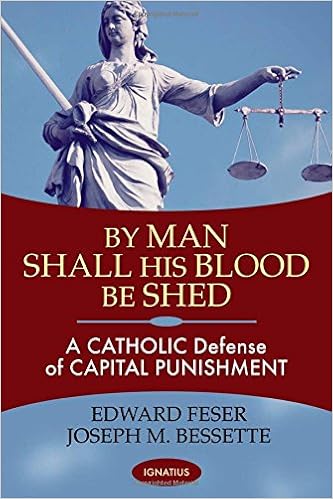
Start with Edward Fesser and Joseph M. Bessette

By Man Shall His Blood Be Shed: A Catholic Defense of Capital Punishment (May 29, 2017)

US HERE – UK HERE

More… check out the late Avery Card. Dulles 2001 article on capital punishment in First Things.   Dulles puts his finger already on the argument that Francis would use about human dignity.

His article pretty much puts apart the argument that seem to inhere in the CDF Letter to Bishops.

Posted in The Coming Storm, The Drill, Wherein Fr. Z Rants | Tagged , , , , , , , , ,
75 Comments

Concerning beautiful liturgical vestments

The other day a friend and patron of this blog set a suggestion for a new set of vestments.

Nice, huh?  Take a closer look!

I am in the process of having fabrics, custom damasks, woven for upcoming sets of vestments.  It is an interesting process, though it is dragging out.  I am running out of time!

We will have a black/black woven.  We will have a gold/gold woven, to match as closely as we can the color of the gold silk set I had made some time ago.  There wasn’t enough fabric for, for example, an antependium.  I want to complete that set, even though the patterns of the weave won’t match.   I have the options also of gold/metallic gold, which would be amazing and, blue/gold… remember, I want to make a Pontifical set in blue, but if the blue and the gold are balanced in quantity, it can work both ways.

Anyway, here are some shots of the “dips” of the fibers for the gold.

Yes, that’s Chinese.

It is an interesting process.

This time I have in mind more of an English “gothic” style, with wider panels/bars for the distinguishing marks.  I’ll use the dusty gold not only for the pieces we are missing from the gold set, but also for these panels in the black set.

Anyway, this is what the TMSM are working on!  We can use all the tax deductible help that YOU can give us!  Please donate!  Use the link, just above.

Also, another goal that I have is for the Society to have its own crosier and variations on the miter, with matching albs for the sacred ministers, so that clerics could effectively come in off the street, or we could move the whole thing on the road, and then just do it.  I would like eventually to get matching albs and maybe surplices for the MCs.

To that end, at Liturgical Arts Journal – a new project of the original founder of NLM – I saw a post about some folks who are making vestments and altar cloths with high quality linen and good lace.   I like the idea of supporting initiatives like these.  HERE  Perhaps you good lay people might ask Father what he would like to have and then have them made.   When you contact them, tell them “Fr. Z sent me!”

Our revitalization of our liturgical worship will be aided by the rise of these new efforts to make good vestments and statues and glass, etc.  All these liturgical arts have to be revived.  There are great opportunities for those of you who have skills already or who would like to learn to, say, bind books, make stained glass, embroider images, carve wood, make chalices and other vessels.

Working together is also a great possibility.  For example, back in the day I tried to link up St. Joseph’s Apprentice, who makes the great portable altars, with SPORCH, who makes the great travel altar cards.  After that, I suggested someone who could make tailor linens for the altars.  It all works together.

Posted in ¡Hagan lío!, "How To..." - Practical Notes, Hard-Identity Catholicism, Liturgy Science Theatre 3000 | Tagged ,
15 Comments

A priests suggestions to correct our Catholic identity

At Catholic World Report, Fr. Peter Stravinskas reacts to ongoing scandal. He has some suggestions about how to address the identity problem we have in the Church – that’s what it is, isn’t it! – along the lines of Catholic Education, Clerical Leadership, and Faith and Conviction.

His section on Liturgy was of greatest interest to me, because I contend that everything… everything… all our problems and all our achievements… flow from and are brought back to how we collectively worship God in our sacred liturgical worship. What does Fr. S prescribe?

Eliminate altar girls, Communion-in-the-hand and extraordinary ministers of Holy Communion. [Do I hear an “Amen!”?] All of these practices entered the mainstream in direct violation of liturgical law, were winked at by bishops, and then codified as normative, thus rewarding disobedience. In keeping with the recommendations of Cardinal Joseph Ratzinger/Pope Benedict and Cardinal Robert Sarah, re-introduce celebrations of Holy Mass ad orientem, which would have a major effect on the atmosphere of worship and the mentality of the priest. Needless to say, a healthy dose of Latin and Gregorian chant is likewise in order.  [We need the TLM far and wide and often.]

The vast majority of priests under the age of forty would move in this direction tomorrow. [Yes!  They would.  But there is a big “however”…] However, they are inhibited from doing so by pastors still living in the 1960s and by chancery bureaucrats who are similarly enmired. Fidelity to the rubrics, truly sacred liturgical music, and a deep sense of the sacred are essential if we are to bring back those who have been scandalized by abuses over the long haul, abuses which have been deeply ingrained, institutionalized and normalized. That’s the “zero tolerance” that is needed. Not a few good bishops are supportive of these liturgical changes but are cowed by their own bureaucracy and/or by their fellow bishops.

We need positively to support our bishops and our priests who are putting themselves in the cross-hairs by trying to revitalize our sacred liturgical worship.  We must must must encourage and support them.

There are small things you can do to help your priests and bishops move in the right direction.  For example, THANK THEM for what they do.  Assure them of your prayers.  TELL THEM what your legitimate aspirations are.  Get organized to provide material support and dedicated time.   Send them Spiritual Bouquets!   The TMSM I am involved with recently organized a Spiritual Bouquet for the Extraordinary Ordinary.  We took out a color ad in the newspaper for the occasion of his 15th Anniversary as bishop here.

We need to get onside and stay onside.liturgical

Posted in "How To..." - Practical Notes, Liturgy Science Theatre 3000, Mail from priests, Our Catholic Identity | Tagged ,
10 Comments

HERESY PANDEMIC!

Now that I look at that post title, I can see why you might think that I am channeling the Id of Trad-dom.

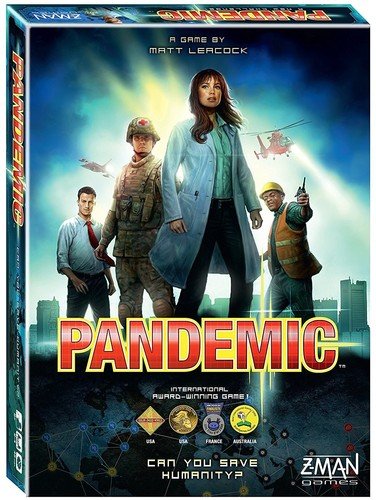
In fact, today I had an informal lunch with some young priests: guys drop in between 12-2 for stuff from the grill, etc.   Conversations ranges from “mother of the bride at marriage rehearsal” to “last night’s Brewer’s game” to why “I will never forgive the Dodgers for leaving Vero” to “why hospital layouts are so confusing” … etc.   At last, riffing on that last point, these guys started talking about Pandemic, in a rather jocular tone.  I quickly twigged to the fact that they were talking about a board game called, incredibly, Pandemic.

US HERE – UK HERE

Yes, in our post-modern, deconstructing age, there is a board game called Pandemic.  Who knew?  I’ve read a few books about Pandemic, and it doesn’t sound like a game to me.

They began to describe it.  Players work as a team to stop the spread of disease across the globe.  If enough places get infected, you lose.  Occasionally, different cards throw a curve at you … just to riff off the baseball theme, above.

I opined, without too much objection, that it is sort of Anti-Risk.  In Risk, individuals move little pieces around to dominate all others.  In Pandemic, teams work to stop the little pieces.

Apparently, diseases you are fighting can mutate and other factors and diseases come onto the scene.

That’s when I had An Idea.

I’m getting old, so I don’t know what these young guys do these days, but were I in a group playing Pandemic I would “re-skin” it (I’m proud that I knew that term when they translated into young what I suggested).  Instead of fighting off diseases, why not retool the game so that you are fighting off

HERESIES.

Instead of fighting of, say, Prion Diseases, Plague, or Argentine Hemorragic Fever, you could battle Circumcellions, Cathars and Liberation Theologians.

You could play the game in different ages, wherein teams of Doctors and Fathers could fight off the mutating variations of Gnosticism, such as Valentinianism, Marcionism, Manichaeism.  In another sweep it could be Donatism and its mutations Maximianism and Paremenianism.   How about those Pelagians?  And, later, we would have to fight off all manner of Protestant splintering.

In these modern times, there would be Modernism to combat, in all its virulent forms.  Some card that you draw to change the circumstances could be, with Jesuit themes for today, “Ignatius Loyola converts”… “Clement XIV suppresses Jesuits”… “Karl Rahner is born” or “James Martin publishes books”.  (Hint: Some of those are good and some are not.)

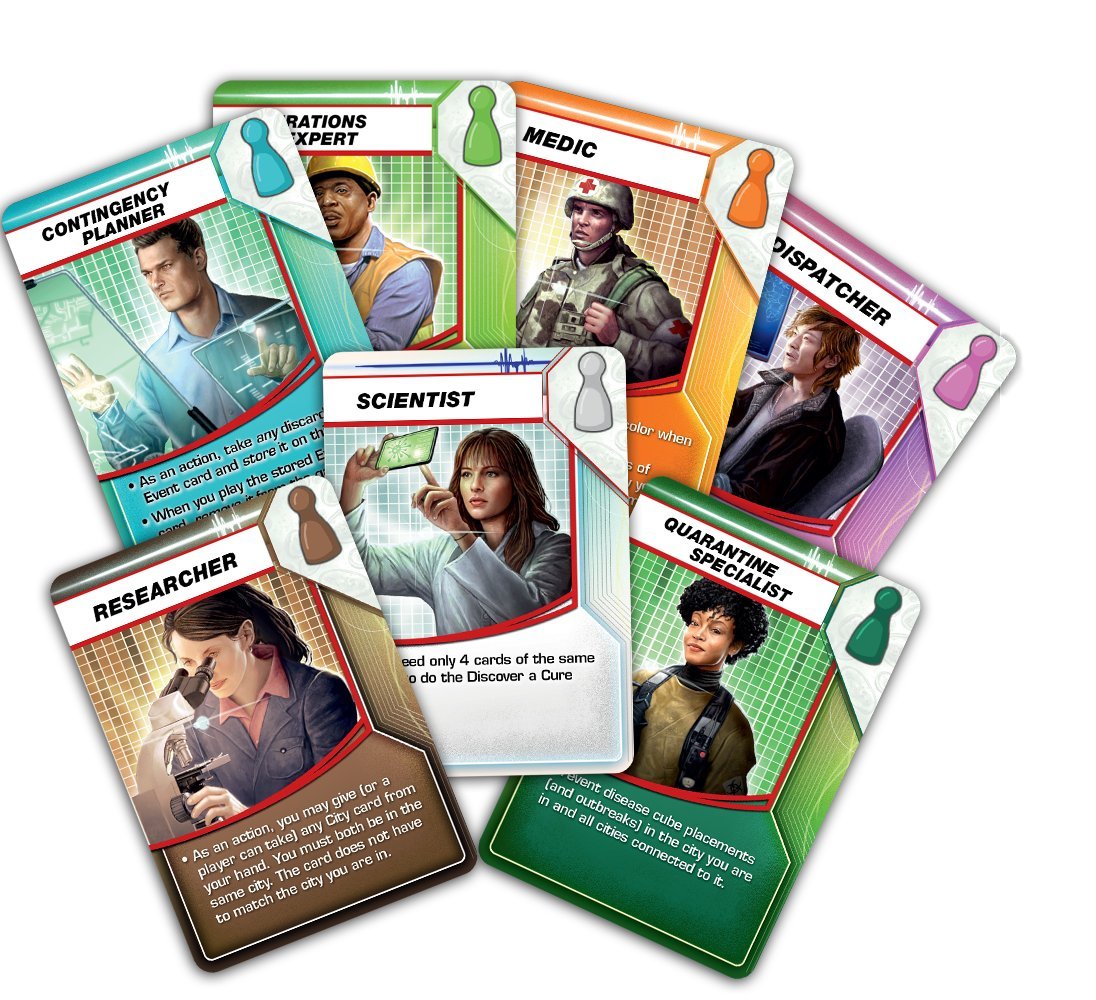
Different players have different specializations on the team: medic, researcher, quarantine specialist, contingency planner….

The INQUISITION Team – just to have a name, you know – would also have to have specialists: theologian, canonist, interrogator, confessor….

We could put our heads together and come up with some great options for …

HERESIES.

¡Hagan lío!

BTW… Pandemic is from – I am not making this up – Z-Man Games.

HERESIES from Fr-Z Games

Posted in ¡Hagan lío!, Lighter fare, Priests and Priesthood, Seminarians and Seminaries | Tagged
14 Comments

“An awful lot of clergy dislike the Novus Ordo, once you add both those opposing groups together”

New Say The Red - Do The Black / New Translation coffee mugThe inimitable Fr. H today has a spiffing piece at his blog Mutual Enrichment.  Let’s have a look.

Taking a breath

We are told that a certain sort of Novus Ordo cleric complains that the current 2010 English translation of the Roman Rite is difficult for him to read. He certainly (judging by two OF Masses I attended last summer) does sometimes have difficulties: taking breath at the right times; pausing; emphasising … all those little tricks by which a crafty hierophant conveys the impression that he understands what he is saying.

The poor dear poppets. They, impoverished souls, may have no ministerial background in delivering liturgically the rolling Tudor periods in Dr Cranmer’s Book of Common Prayer. I pity them. Of course they are going to have trouble with any text that goes on for more than a dozen words without a full stop or colon[That’s our situation now, I’m afraid.  I wonder if it wouldn’t be a good idea to require seminarians, over their years of formation, to have a permanent workshop in which they must stand and recite poetry, passages of mighty prose or famous speeches.]

OK; fair enough. But one thing really does puzzle me. There are four words which they seem so often incapable of saying … three of them monosyllabic … “The Mystery of Faith”[This is, perhaps, a kind of proof that those words shouldn’t be there, in that moment and for that function, in the first place!]

So one gets all sorts of irrelevant nonsense: “Let us proclaim the beauty of our wonderful Catholic Faith”. That sort of thing. My memory is imperfect about details, because, being what PF would call a Rigid Pharisee, my mind tends to be distracted from the interesting and unrigid things the inventive presbyter is saying. Ever a victim to distraction, I am instead caught up in the wonder of the Theophany which he has just brought about upon the Altar. [ROFL!] I can’t help that; I’m too old to change now. But take it from me …

Those four words, of course, are intended to refer to the Mystery of the Great Presence. That is why they were originally within the Verba Domini. [ehem… they still are!] I once wrote a piece about this, which I imagine would be accessible via the Search Engine attached to this blog.

Ah, well. Perhaps things are better in seminaries nowadays. Perhaps the chaps do now get some input, both about the meaning of the Liturgy and how to celebrate it. How to breathe, for example. [See my comments, above.] But what those older clerical chaps do demonstrate, by their endless propensity to change the words, to ad lib their own interminable clevernesses, is this: they obviously find the Novus Ordo (both as composed and as translated) very deeply unsatisfactory; inadequate to meet their own needs and what they assume to be the needs of their people.  [Otherwise, why are they constantly tinkering with it?]


Well … ‘traddies’ find it unsatisfactory … this other ‘trendy’ lot does too … so there seem to be an awful lot of clergy who dislike the OF, once you add both those opposing groups together.

Is there anybody out there who really does like the OF, as opposed to merely tolerating it for pastoral reasons, or using it as the springboard for personal inventiveness?

A challenge!

Posted in Liturgy Science Theatre 3000, Our Catholic Identity | Tagged
15 Comments

ASK FATHER: Extraordinary Ministers and blessings at Communion time

From a reader…

QUAERITUR:

I am a laywoman recently hired by my archdiocese as a sacristan. In this role I am frequently pressed into service as an extraordinary minister. Last Sunday, as I distributed Communion, a young woman approached with her arms across her chest in a manner I recognize as a request for a blessing. [This mysterious gesture has that connotation in some places.  Others use it when they want to receive Communion!] I turned to the priest distributing next to me, but he either ignored or didn’t see me. The young woman looked embarrassed and turned back without being blessed. After Mass I caught her and apologized for making her uncomfortable, offered to get a priest to bless her now, etc. She said she was taught by some nuns in Michigan that she could “do that” – approach a layperson for a blessing. Should I have blessed her? I felt terrible about giving her a traumatic experience.

Don’t feel terrible.  And, no, you should not have blessed her.  Moreover, you did the right thing to offer to get the priest.

This notion that Communion time is a moment for imparting individual blessings originated No-One-Knows-Where.  It is surely as well-intentioned as it is confusing.

Further complicating the issue is the employment of Extraordinary Ministers of Holy Communion who have been instructed – wrongly – to “give blessings” at this moment to those who come forward with their hands crossed across their chest.  Worse yet, people are being told that that is what they should do.

Lay people who are helping with Communion (or doing anything else for that matter) should not make confusing gestures as if they can bless in the manner of a priests.   At the most they might say, “May God bless and keep you,” or something like that.  That’s more of a kind wish than a blessing, so it can be uttered by anyone (without an accompanying sign of the cross).

I remind people that there really is a blessing at the end of Mass.

You can also ask the priest for a blessing outside of Mass.  And you should!

Posted in "How To..." - Practical Notes, ASK FATHER Question Box, Liturgy Science Theatre 3000 | Tagged
36 Comments

BOOKS RECEIVED: 3 new and 2 important reminders

I have received new books.   Recent arrivals include

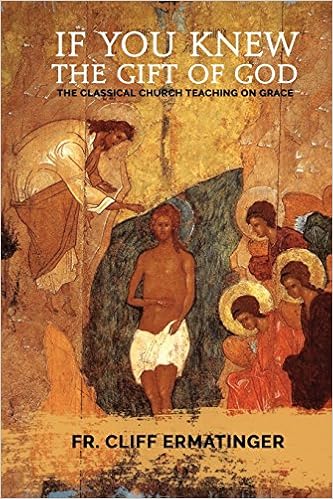
First, from the pen of Fr. Cliff Ermatinger comes If You Knew the Gift of God: Grace: What it is, what it does, and how to cooperate with it according to Church Teaching and Tradition

US HERE – UK HERE

Fr. Ermatinger reminds us that the saints about whom read, impressive figures, were real people just like us. We, too, are called to holiness.

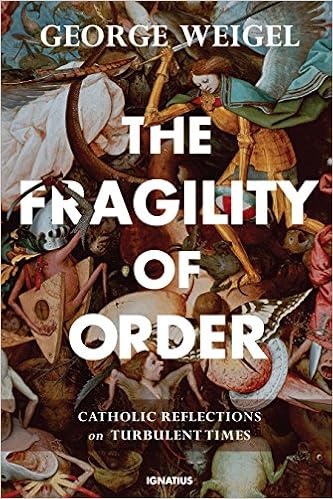
Another title from Ignatius Press and George Weigel is The Fragility of Order: Catholic Reflections On Turbulent Times.  If I remember correctly, he also wrote a book on the “tranquility of order”.

US HERE – UK HERE

The TOC is intriguing:

Introduction: Things Coming Apart?

Part One
A World without Order
with 5 essays

Part Two
A Republic in Disarray
4 essays

Part Three
The Chruch in the Postmodern World
4 essays, two of them about the controversial Synods

Again from Ignatius Press, a book co-authored by a layman and a Jesuit.  Since this is Ignatius Press, we don’t have to be too suspicious!

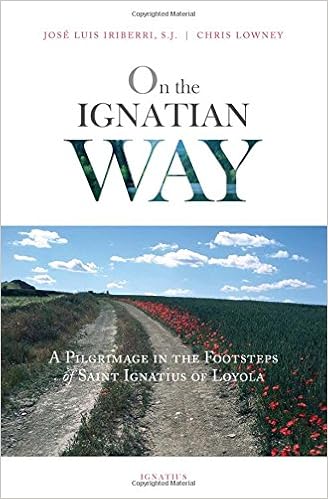
José  Luis Iriberri, SJ and Chris Lowney give us On The Ignatian Way: A Pilgrimage in the Foosteps of Saint Ignatius of Loyola

US HERE – UK HERE

St. Ignatius, whose feast is upon us, made a pilgrimage to Manresa, Spain.   This book intends to help the read plan a pilgrimage.  I includes also essays from several writers.

And two that I have mentioned before but are important.

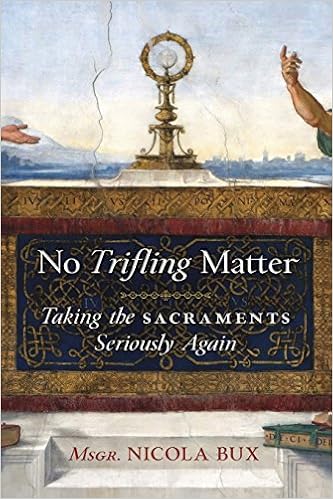
Very exciting is a volume from the mighty Nicola Bux, No Trifling Matter: Taking the Sacraments Seriously Again:

US HERE – UK HERE

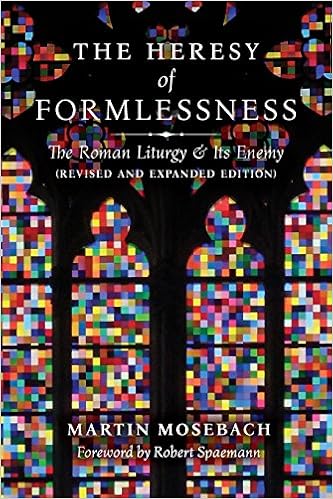
And there’s Martin Mosebach updated The Heresy of Formlessness: The Roman Liturgy and Its Enemy (Revised and Expanded Edition) republished by Angelico.

US HERE – UK HERE

Everyone of you should read Mosebach’s book.

For all your book shopping, or shopping for other things too!, use this search bar as your entry point.


Posted in REVIEWS |
5 Comments