Think about it…
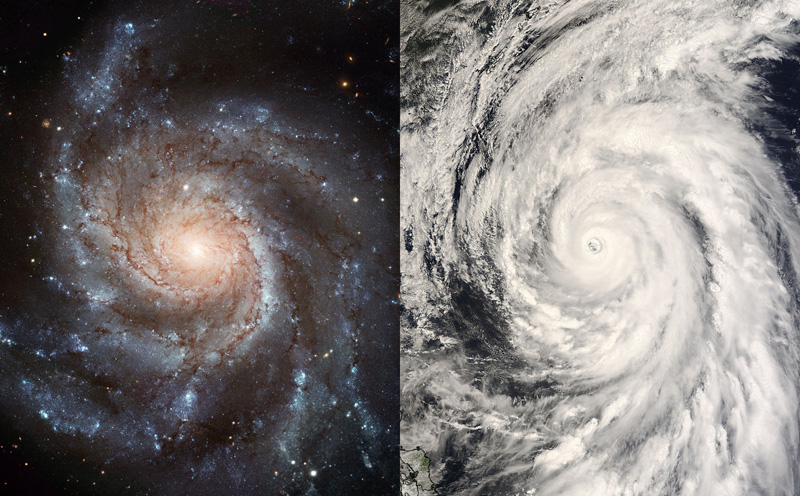
And some say it is all by accident… it just sort of happened…



Coat of Arms by D Burkart
 on ROME 26/6 – Day 76: Brooklyn Bound: “Have a good trip. Look forward to any news on +Atticus when you are back in the USA.”
 on ROME 26/6 – Day 76: Brooklyn Bound: “Safe travels to you Father! May God, in His infinite goodness grant you travelling mercies.”
 on Your Sunday Sermon Notes – Corpus Christi (transferred): “The priest started his sermon by saying that he would have preferred to place the monstrance on the altar for…”
 on Your Sunday Sermon Notes – Corpus Christi (transferred): “I have started going to an SSPX chapel nearby (scouting out candidate catacombs). In the sermon this Sunday (Corpus Christi…”
 on Your Sunday Sermon Notes – Corpus Christi (transferred): “Father read quotations from St. John Chrysostom and St. Augustine about the “one loaf”. both were to the point that…”
 on ROME 26/6 – Day 74-75: Last Day: “Thanks be to God for you and all of the Priests at The Parish. May God Bless you all!”
 on Your Sunday Sermon Notes – Corpus Christi (transferred): “Our parish had celebrated Corpus Christi on Thursday with a High Mass, so Sunday was the 2nd Sunday after Pentecost,…”
A Daily Prayer for Priests










They find you a pro-life agent in your area who commits to giving a portion of the fee to a pro-life group!

PLEASE subscribe via PayPal if it is useful. Zelle and Wise are better, but PayPal is convenient.
A monthly subscription donation means I have steady income I can plan on. I put you my list of benefactors for whom I pray and for whom I often say Holy Mass.
In view of the rapidly changing challenges I now face, I would like to add more $10/month subscribers. Will you please help?
For a one time donation...



Help Monks in Wyoming (coffee – UPDATED LINK) and Norcia (beer) and the wonderful "Soap Sisters" of Summit, NJ!


Please follow me on Twitter!










Visits tracked by Statcounter
since Sat., 25 Nov. 2006:



Aquinas, Father? Order in the Universe?
Yah, random chance mutations created the ineffable universe, and Hawkins and Dawkins are the prophets of our modern age (although, I must submit, that Dawkins’ teeth need a bit of work, after seeing “Expelled”).
I took a human evolution class, with Prof. Wolpoff, while an undergraduate at the University of Michigan in Ann Arbor, and the hitherto pro-evolutionist friend I took the class with said, “Is this all the proof they have for evolution?”
The theory of evolution is simply the pride of a man believing he can understand life and the universe outside of God…
I could never understand how people like Carl Sagan, etc could look at the Planets, the Solar System, the stars etc & say it all came about by chance.
Once upon a time scientists studied creation to learn how God ordered things, now they ignore those same facts so that they can justify denying God had ANYTHING TO DO WITH IT.
While i agree with you Father, just as “no one believes but by faith”, this argument from the beauty of nature is basically the “C’mon!!” argument. Also, I encourage you to look into the notion of ’emergent probability’ by Bernard Lonergan, SJ. It’s not particularly theistically determinist, but it’s interesting nonetheless.
“A little science may take one away from God;
much science brings one back.”
– Roger Bacon
MJ – I like the Bacon quote. Where does it come from, please?
What never ceases to amaze me is that our learned scientists, astronomers and others with more degrees than a thermometer and huge vocabularies came up with “The Big Bang Theory.” When I first heard it I thought is this the best they can do? I also find it comical that each time they design a new device to look deeper into space they say wow the universe is much bigger than we ever imagined. They don’t give God any credit, no their mindset is, it must be that the big bang was much bigger bang than we thought, how sad. Of course our children must be taught this theory as if it were gospel.
JMJ
Tom Lanter
Bless the Lord, O my soul. O Lord my God, Thou art very great; Thou art clothed with splendor and majesty, covering Thyself with light as with a cloak, stretching out heaven like a tent curtain. He established the earth upon its foundations, so that it will not totter forever and ever.He made the moon for the seasons, the sun knows the place of its setting. Thou dost appoint darkness and it becomes night – O Lord, how many are Thy works! In wisdom Thou has made them all; the earth is full of Thy possessions.
(Ps. 104:1,2,5,19,20a,24 NAS)
Yes, the universe and nature are very complex. But if God created and designed—and continues to guide—it all, He must necessarily be more complex than His creation. The laws of nature—second law of thermodynamics, etc.—and common sense tell us that a more complex (ordered) system is more unlikely to spontaneously assemble than a less complex system. If you can believe so readily that God, the more complex, had no origin or came into being spontaneously, why should it be more difficult to believe the same of the universe? The former requires a greater leap than the latter. If you ask of the universe, “Why is there something rather than nothing?”, and conclude that the answer is that someone—God—must have created it, then you must ask, “Why is there God instead of no God?” Who created the creator? Who designed the designer? If you say no one, He always existed, then you are back to the question above: Then why couldn’t the universe just as easily be uncreated and have always existed? The argument from design leads nowhere.
As for evolution by natural selection, those who dismiss it—I am sorry to say—are ignorant. It is not a “theory” in the layman’s sense, it is an observable fact. Every time a virus or bacterium develops resistance to a drug, that is evolution by natural selection. The observable proofs from living creatures are too numerous to mention, let alone the amazing evidence of the fossil record. Gaps, you say? Of course there are gaps. The fossilization of any individual creature is extremely unlikely, and there are an awful lot of rocks on this planet to look in. Nevertheless, look at the abundance of what HAS been found, though we have literally only scratched the surface. Though it is possible that some species by “bad luck” may have left no fossils at all, in general gaps in the fossil record are only waiting patiently for us to find them. Read “The Blind Watchmaker,” “The Selfish Gene,” etc. (if for no other reason than to know thine enemy). The proofs of evolution are so overwhelming, and the arguments against so unconvincing, that even the Church permits us to believe in evolution, lest She have another Galileo embarrassment. Pope Pius XII wrote, “The Church does not forbid that…research and discussions…take place with regard to the doctrine of evolution, in as far as it inquires into the origin of the human body as coming from pre-existent and living matter.” (Humani Generis) “The question about the origins of the world and of man has been the object of many scientific studies which have splendidly enriched our knowledge of the age and dimensions of the cosmos, the development of life-forms and the appearance of man.” (Catechism of the Catholic Church) The Church requires only that one believe that God is the cause of it all and that the human soul did not evolve.
Beautiful pictures Fr.Z! They are even more wonderful put next to one another. I also enjoy the Roger Bacon quote listed above! God bless! Padre Steve, SDB
Publius, I am surprised at your comments above. I thought you understood the concept of first causes better.
Catholics don’t believe God just spontaneously appeared, but rather that God is eternal, therefore He is there during every moment of time that ever was or will be. I’d say He was there “before time” but that probably doesn’t make sense and causes more problems than it solves.
In the beginning, God created the heavens and the earth… All of the material world has a cause, but it would be impossible to go back infinitely and find a cause after cause for everything forever because time doesn’t stretch back infinitely. This is confirmed by science today that suggests a “Big Bang” kicked off the expansion of space and time. So because we can’t turn back the clock infinitely, there MUST be a cause for things in the world that did not itself have a cause. That necessarily uncaused being is what we call God.
It is in God’s nature to be uncaused and to be able to operate outside of time. We can’t say that same thing about the universe based on what we see right in front of us.
“Then why couldn’t the universe just as easily be uncreated and have always existed?”
We have no evidence that the universe is this way and plenty of evidence that it couldn’t be this way. At least the idea of God is a logical conclusion based on what we can see.
This of course is NOT any sort of proof based on design. I am not sure seeing how swirling galaxies and swirling clouds look similar means there is a designer… But I do like intelligent design theories. They are way less offensive to common sense than thinking all of this is random.
http://ww.companionofjesus.com
It amazes me that the same scientists who say it all came about through random chance are willing to, and often do, admit that evolution and the creation of the universe were both guided by ‘natural’ principles such as suitability to the environment and gravity (respectivly).
So it is random or guided? Obviously, if gravity holds sway over the material world then gravity would be the controlling factor, yet some how they want to say that even gravity is random. Random… like the ancients thought the rain was random, or earthquakes.
Dear Tom, you discredit the “Big Bang” theory because you think the name is silly? That shows deep comprehension. The name is merely a shorthand or slang, of course. (In fact, it was first coined by Fred Hoyle in a derisory statement seeking to belittle the credibility of the theory; but the name stuck.) We theorize there was a big bang for one very simple and powerful reason: all of the galaxies we can see, wherever we look, are moving away from one another, and the greater the distance between them, the faster they are moving apart. Edwin Hubble discovered this in 1929. If you “play that movie backwards,” it means that in the past the galaies were closer together, and further in the past they were even closer, etc., until very long ago (we now know with a pretty good degree of certainty, about 13.7 billion years) they were all packed into a very small and very dense region that then began to expand, resulting in the universe we see today. This theory in itself says nothing about what banged or why (or “who” banged it), though there are now also plausible theories about what may have gone on before the “Big Bang”.
http://en.wikipedia.org/wiki/Big_Bang#Speculative_physics_beyond_the_Big_Bang
John, I think you missed my argument. Please re-read. I didn’t say Catholics believe God just spontaneously appeared. I said that if one can believe EITHER that God had no origin OR came into being spontaneously, since God would have to be more complex than His creation, the universe, one could just as easily, more easily in fact, believe that the universe EITHER had no origin OR came into being spontaneously. Besides, fist causes is a discredited argument. Every thing or event does NOT need to have a cause. We know that events on the subatomic scale are random and non-deterministic. Quantum theory has been proven experimentally beyond any reasonable doubt and is in fact a basis of much of our electronic technology.
You say, “We have no evidence that the universe is this way [uncreated] and plenty of evidence that it couldn’t be this way. At least the idea of God is a logical conclusion based on what we can see.” Even if there was “nothing” before the Big Bang (which, as I said is not at all certain, and indeed is becoming less and less certain) and it was the beginning of space and time, the idea that it had to have a “cause” is, again, not a logical or physical necessity. And if there MUST have been a cause, why must it have been God, and why is it God himself MUST not have a cause? Your argument, simply, is, “Everything must have a cause, and we call the first cause God.” The first clause is demonstrably untrue, and the second is basically a tautology.
What never ceases to amaze me is that our learned scientists, astronomers and others with more degrees than a thermometer and huge vocabularies came up with “The Big Bang Theory.” When I first heard it I thought is this the best they can do? I also find it comical that each time they design a new device to look deeper into space they say wow the universe is much bigger than we ever imagined. They don’t give God any credit, no their mindset is, it must be that the big bang was much bigger bang than we thought, how sad. Of course our children must be taught this theory as if it were gospel.
JMJ
Tom Lanter
The concept if the Big Bang originated with Georges Lemaître, a Belgian priest (later, Mongsignor) who was also a physicist.
There is nothing in the concept that contradicts God’s necessary creative action.
That’s what we’ve been saying:
http://www.kolbecenter.org
Publius,
1. The Second Law of Thermodynamics doesn’t tell the whole story.
Steven Hawking says there are two distinct cosmological arrows of Time. According to the first (The Second Law of Thermodynamics, Entropy), the disorder or entropy in the universe increases. universe.
According to the second arrow, the universe is expanding.
JRatzinger also employs a double sided approach. According to Entropy, the universe is moving toward “alukewarm nothingness. On the other hand, it is a world in steady ascent.” (Ratzinger: Eschatology, p. 183).
2. Let me interject here: According to St Thomas the fact of God’s existence has nothing to do with whether Time in fact had a beginning.
3. The complexity of the universe necessitates simplicity in God, not complexity.
4. Your example of viral mutation is good, but it seems more like LaMarck’s explanation of evolution, in which the environment triggers mutation. That is not really the way natural selection is explained.
Most contemporary proponents are Darwinian. For them mutation is monistic–not triggered by the environment.
5. Having said that, I don’t know of any observed mutation in which a virus sprouts wings and flies away.
More later.
Publius,
First, I do not think you have a proper grasp of God. When you say God is more complex, that is not the case. God is an immaterial being. The term complexity implies a material substance. God is greater than material nature, but not more complex. A scientist can believe in the eternal nature of matter, or the eternal nature of an a rational omnipotent God. I think one opinion is much sillier than the other, but that is just my opinion. Also there is nothing in existence that does not have a cause, even if you grant random chance. The only way science could prove this is to create a material substance out of nothing (and energy is not nothing). Finally, you confuse micro-evolution which every rational person believes and macro-evolution. Take for example tuberculosis. This has been around for thousands of years. It has gone through many, many generational mutations, but it is still tuberculosis. It did not evolve into something else. Yes there are strains of drug resistant tuberculosis, but it is still tuberculosis, the same disease that has killed people for thousands of years. I really think Catholic scientists should be required to study some good theology, especially on the nature of God, before than are given posts like head of the Vatican observatory. In the end their god, if they believe in one, is nothing more than the Great Architect of the deists that got the ball rolling and just allows it to go. This god can not be reconciled to the God of Providence. And certainly can not be reconciled with the God that became incarnate.
I seem to recall that Aquinas said that, without Revelation to tell us so, philosophy alone cannot determine whether the universe was created, or instead always existed.
RBrown beat me to it… but yes a Priest postulated the big bang. When he did Einstein stood up and exclaimed something to the point that “noone has given us a theory that makes so much sense as this.”
Really, the big bang is in perfect conformity with (and actually pushes the idea) of creation. There is always the question of how God created the universe and all that is in it. I think the idea of all starting from one point in a massive explosion and reaching further and further is quite fitting for our Lord.
In the beginning, God created the heavens and the earth… All of the material world has a cause, but it would be impossible to go back infinitely and find a cause after cause for everything forever because time doesn’t stretch back infinitely. This is confirmed by science today that suggests a “Big Bang” kicked off the expansion of space and time. So because we can’t turn back the clock infinitely, there MUST be a cause for things in the world that did not itself have a cause. That necessarily uncaused being is what we call God.
Comment by Jesuit John
St Thomas disagrees because he makes a distinction between ontological priority and the priority of duration. See ST, I, 46, ad 2. I think there is also a good discussion of this in Gilson’s The Philosophy of St Thomas Aquinas (Le Thomisme).
Should I ever get off my fanny and get my thrilling doctoral dissertation published in the States, you’ll be able to read in it a more thorough discussion.
I seem to recall that Aquinas said that, without Revelation to tell us so, philosophy alone cannot determine whether the universe was created, or instead always existed.
Comment by Joshua
Not exactly. Even if the universe always existed, it was still created.
Pope Benedict XVI in Spe Salvi:
“…In this regard a text by Saint Gregory Nazianzen is enlightening. He says that at the very moment when the Magi, guided by the star, adored Christ the new king, astrology came to an end, because the stars were now moving in the orbit determined by Christ. This scene, in fact, overturns the world-view of that time, which in a different way has become fashionable once again today. It is not the elemental spirits of the universe, the laws of matter, which ultimately govern the world and mankind, but a personal God governs the stars, that is, the universe; it is not the laws of matter and of evolution that have the final say, but reason, will, love—a Person. And if we know this Person and he knows us, then truly the inexorable power of material elements no longer has the last word; we are not slaves of the universe and of its laws, we are free. In ancient times, honest enquiring minds were aware of this. Heaven is not empty. Life is not a simple product of laws and the randomness of matter, but within everything and at the same time above everything, there is a personal will, there is a Spirit who in Jesus has revealed himself as Love.” – Spe Salvi, No. 5
TJB,
Thank you for that quote from Spe Salvi. It’s very beautiful. Viva il Papa.
Publius:
Yes, the universe and nature are very complex. But if God created and designed—and continues to guide—it all, He must necessarily be more complex than His creation. The laws of nature—second law of thermodynamics, etc.—and common sense tell us that a more complex (ordered) system is more unlikely to spontaneously assemble than a less complex system. If you can believe so readily that God, the more complex, had no origin or came into being spontaneously, why should it be more difficult to believe the same of the universe? The former requires a greater leap than the latter. If you ask of the universe, “Why is there something rather than nothing?”, and conclude that the answer is that someone—God—must have created it, then you must ask, “Why is there God instead of no God?” Who created the creator? Who designed the designer? If you say no one, He always existed, then you are back to the question above: Then why couldn’t the universe just as easily be uncreated and have always existed? The argument from design leads nowhere.
I see that you have studied in-depth the scriptures of your prophet Richard Dawkins, as this argument is copied 1:1 from The God Delusion.
However I find it quite amusing that Richard Dawkins suddenly proposes that “the laws of nature and common sense” tell us that a creator must be more complex than its creation when he has spent a large time of his life bringing home the message that by evolution that what is more complex (e.g. humans) can develop from that which is less complex (i.e. bacteria).
It’s really amusing that the devotees of Prof. Dawkins don’t see the very obvious contradiction against everything he stands for in this argument of his.
It is so nice to read intelligent comments. And yet, at some point I get the feeling that some comments become nothing but wordplay (ludus verborum). And I cease to pay attention. One thing however stands out in my mind: when we discuss matter, we should not take it for granted that IT IS THERE. Or that we know WHAT IT IS? For the most part, we think of matter as something perceived with our senses. Our eyes detect the form, follow the motion, ears detect the sound of steam, skin perceived the surface, etc. But: the one who created this STUFF created also the senses. It is presumption to assume that human perception can be the ultimate judge of material reality. What if matter is nothing else but a manifestation of some waveform? And even that makes no sense, because there can be no waveform without a medium in which the wave propagates. Ultimately, once I start thinking of these things, the mind feels overwhelmed like a person staring into the Sun. It is too much to comprehend. And in that very act of admiration is a trace of our humanity, I think. Show these pictures to a cat and you will get no reaction. Humans, on the other hand are capable of contemplation. So I think, one needs to define a rather narrow subject of inquiry, and stay with the argument, or else, it turns into not much more than wordplay.
That’s what I got out of reading this thread along with a profound sense of wonder. In all things, be it a woodpecker with a pink belly, or an immense galaxy,
Laudate, pueri Domini,
laudate nomen Domini
sit nomen Domini benedictum
ex hoc nunc et usque in saeculum.
Ho hum, I should have known it would be a waste of effort. Just a few comments: I think RBrown is trying to say that entropy is somehow violated: “According to Entropy, the universe is moving toward ‘a lukewarm nothingness. On the other hand, it is a world in steady ascent.’ (Ratzinger: Eschatology, p. 183).” Eschatology is not a scientific journal, of course. I take it the point is, if entropy inevitably leads to increasing disorder (“lukewarm nothingness”), why is it we see increasing order (“steady ascent”) on earth? Because entropy only applies in a closed system. The universe by definition is a closed system—it is “uni,” the only (material) thing that is. Therefore its entropy will inevitably increase to maximum disorder. Given the observational evidence of accelerating expansion, this seems inevitable. The earth, on the other hand, is most definitely NOT a closed system; it receives input of enormous amounts of energy from the sun. With some few exceptions (ocean floor thermal vent communities), all life on earth draws energy, directly or indirectly, from the sun. Energy input makes possibly organization and complexity. But the sun will die eventually, and the inevitable arrow of entropy on earth will be restored without the external energy.
Also, “ascent” is not an evolutionary concept but a human value judgment. Humans are not “more evolved” than goats or clams or bacteria, just differently evolved and better adapted to certain environments. We have bigger brains, but they come at a cost. We are slower than most mammals or birds or fish; we don’t have claws or fangs or shells or wings or gills, all of which would arguably make us even better adapted to more environments; bacteria are the most numerous, and arguably therefore the most successful, organisms on the planet. Some organisms have lost more complex features and become simpler to be better adapted to changing environments. Evolution is not necessarily directional.
If God designed living things, he did a poor job. Any engineer given the tools and resources of God would have done a better job. We might have wheels on our legs instead of feet for better locomotion; or for that matter tank treads. We might have eyes all around our head so we couldn’t be snuck up on. The list of possible improvements is endless. Let’s not even mention the appendix! The same is true for all creatures. Evolution is blind and only woks with what chance mutations provide. Design would always be better.
However, evolution is not random! Not at all. It is powerfully guided by environmental (and to a lesser extent other, such as sexual) selection. Remember there are two parts to Darwinian evolution: (1) random mutations (copying errors) in the process of cell division in the reproductive cells (sperm and eggs in the case of most complex creatures; the whole organism itself in the case of single-celled organisms)—we knows this occurs, it is observable; (2) the struggle to live and reproduce of the resulting offspring—the mutation may be neutral, harmful or beneficial. If harmful, it will ON AVERAGE be less likely to be passed to the next generation as the organism will be less likely to thrive and reproduce. Indeed, it will sometimes not even be born. If beneficial, the mutation will ON AVERAGE be more likely to be passed to the next generation as the organism will be more likely to thrive and reproduce. Evolution is not random; it is merely the building blocks—genetic variations—that are generated at random, for natural selection to then work with.
I know many of you know this, but an unfortunately large number of people do not. They say, “All this could not come about randomly,” and indeed according to Darwin it did not.
I said nothing Lamarckian; I am not that ignorant. I did not say that antibiotics or antivirals trigger mutations. The example of observable evolution I gave works like this: among a population of billions of bacteria that may be exposed to an antibiotic (in a dish or in a body), by chance mutation, arising during cell division as described above, a few or even just one of the bacteria MAY have an altered gene that expresses itself in a way that gives that bacterium resistance to the drug. In the simplest case, all the other billions of bacteria will die, and the remaining one or few will rapidly replace them, and all of their descendants will have the new immunity gene (barring a few further non-advantageous change in that gene in certain individuals). Nothing Lamarckian about it; Lamarckian evolution has been firmly disproved.
“The complexity of the universe necessitates simplicity in God, not complexity.” Huh? How so? Complex in this sense means able to contain information (in the broad scientific sense); the opposite of entropy. The mind of God must contain more information than the universe He is supposed to have designed and created in every detail.
Indeed, viruses do not “sprout wing and fly away.” Viruses by most definitions aren’t even alive. But let’s use bacteria. They don’t sprout wings, but over billions of years and trillions of generations of evolution by natural selection their remote descendants may—and did.
I am sorry I do not “have a proper grasp of God.” You do, of course, because you predefine it through supernatural revelation. I am trying to arrive there using scientific observation and logic. The term complexity DOES NOT imply a material substance. Again, complexity means information. Entropy leads to less information; the opposite is more information, more complexity. That is why a black hole has maximum entropy—it contains no information as far as the rest of the universe can determine. God is greater than material nature, but not more complex. Scientists do not believe in the eternal nature of matter; the prevailing view is that matter was created in the big bang from energy; matter and energy are equivalent by E=mc2 and can be converted one to the other (nuclear fusion in the sun; Hiroshima). However, the total amount of energy and matter is conserved. How is the one opinion much sillier than the other? Can you prove there is nothing in existence that does not have a cause? Just because your everyday experience tells you so does not mean it is so. The laws of quantum mechanics—experimentally verified and applied in technology—defy all of our assumptions and intuitions of cause and effect here on our macro level. We have to accept it even if it defies our experience-based “logic.” No rule of cause and effect can predict whether or when a single uranium atom will decay, for example; only statements based on statistical averages in a large sample of atoms can be reliably made. I do not see how the only way science could prove “there is nothing in existence that does not have a cause…is to create a material substance out of nothing”. I just did. From absolutely everything we have been able to observe and determine in nearly a century of quantum mechanics, the decay of an individual uranium (or any other change in quantum state of a fundamental particle) HAS NO CAUSE. Confusing? Yes. Hard to grasp? Yes. Against common sense? Yes. But it IS SO.
I have not confused micro-evolution and macro-evolution. How long have we observed tuberculosis under a microscope? A couple of centuries? Macro-evolution (as you define it) does not generally happen that fast; indeed, it generally takes vastly longer times. But the fossil record gives us innumerable instances of such changes.
Scientists had long believed, for example, that whales evolved from quadrupedal land mammals, based on anatomical similarities, long before they had fossil evidence, but they expected to find the evidence. “The cetaceans (whales, dolphins and porpoises) are descendants of land-living mammals. Their terrestrial origins are specifically indicated by: the fact that they must breathe air from the surface; the bones of their fins, which resemble the jointed hands of land mammals; and the vertical movement of their spines, characteristic more of a running mammal than of the horizontal movement of fish. The question of how land animals evolved into ocean-going leviathans had been a mystery for a long time, owing to gaps in the fossil record. However, recent discoveries in Pakistan have managed to solve many of these mysteries, and it is now possible to see several stages in the transition of the cetaceans from land to sea.” (Wikipedia) http://en.wikipedia.org/wiki/Evolution_of_whales Lo and behold! The discoveries of the transitional species Ambulocetus, Rodhocetus and Basilosaurus remove any reasonable doubt.
Likewise, it has long been believed that terrestrial quadrupeds evolved from fish. The very recent discovery of Tiktaalik comes pretty close to removing the “missing link”. http://en.wikipedia.org/wiki/Tiktaalik
Let’s not even get into our ancestors and cousins, Homo neanderthalis, Homo erectus, Homo habilis. . . What were they, just apes? Look at them. Impossible not to see transitional forms. http://en.wikipedia.org/wiki/Human_evolution Remember, the Church ALLOWS you to believe that mankind’s physical body evolved from earlier forms. (See references above.) Why on earth do you think it does? Why keep fighting it?
If “Catholic scientists should be required to study some good theology,” I vote that all theologians should be required to study some good science. Ignorance may be bliss, but is unbefitting a scholar.
The fact that a priest proposed the big bang is neither here nor there. Nearly all scientists, including Einstein, once believed the universe was in a “steady state”. However, it was realized by Einstein that gravity would not allow this, hence his introduction of the cosmological constant. (That’s a whole other discussion.) Entropy will also not allow a steady state. Hence the discovery of the expansion of the universe and it’s implication of a big bang was a great relief completely aside from any theological hay that can be mown from it. I am sure this is the context of that (attributed?) Einstein comment. Einstein did not believe in God—see the letter of his that was just auctioned for over $400,000.
Richard Dawkins is not my prophet; his books are not holy scriptures; no one must believe his arguments just because somebody else said so. It is not a revelation or divine inspiration. He is merely a brilliant scientist with the ability to beautifully expound the laws of nature and analyze the God question rationally. My argument is not “copied”; I doubt my off-the-top-of-my-head exposition is nearly as eloquent as Dawkins. In fact the argument comes from may thinkers. There is no contradiction whatsoever between the proposition that “the laws of nature and common sense” tell us that a creator must be more complex than its creation, and the observation that by evolution what is more complex can develop from that which is less complex. The evolution of species is not a conscious act of design and creation; it is ultimately just a local violation of entropy powered by the energy of the sun. (See above.) No thought or design involved. To consciously plan, design and create something, however, requires at least as much information (complexity) in the creator as the thing to be created will contain. Two completely different things, “B.”
BTW, do not presume as to my own beliefs; I challenge Father’s Z’s premise to evoke a good debate. [And I challenge you to add shorter comments.]
Great post Publius.
Thanks, Seminarian. By the way, I had posted the Einstein letter on a different thread, but it belongs better here:
Belief in God ‘childish,’ Jews not chosen people: Einstein letter
Tue May 13, 9:02 AM ET
LONDON (AFP) – Albert Einstein described belief in God as “childish
superstition” and said Jews were not the chosen people, in a letter to
be sold in London this week, an auctioneer said Tuesday.
The father of relativity, whose previously known views on religion have
been more ambivalent and fuelled much discussion, made the comments in
response to a philosopher in 1954.
As a Jew himself, Einstein said he had a great affinity with Jewish
people but said they “have no different quality for me than all other
people”.
“The word God is for me nothing more than the expression and product of
human weaknesses, the Bible a collection of honourable, but still
primitive legends which are nevertheless pretty childish.
“No interpretation no matter how subtle can (for me) change this,” he
wrote in the letter written on January 3, 1954 to the philosopher Eric
Gutkind, cited by The Guardian newspaper.
The German-language letter is being sold Thursday by Bloomsbury Auctions
in Mayfair after being in a private collection for more than 50 years,
said the auction house’s managing director Rupert Powell.
In it, the renowned scientist, who declined an invitation to become
Israel’s second president, rejected the idea that the Jews are God’s
chosen people.
“For me the Jewish religion like all others is an incarnation of the
most childish superstitions,” he said.
“And the Jewish people to whom I gladly belong and with whose mentality
I have a deep affinity have no different quality for me than all other
people.”
And he added: “As far as my experience goes, they are no better than
other human groups, although they are protected from the worst cancers
by a lack of power. Otherwise I cannot see anything ‘chosen’ about
them.”
Previously the great scientist’s comments on religion — such as
“Science without religion is lame, religion without science is blind” —
have been the subject of much debate, used notably to back up arguments
in favour of faith.
Powell said the letter being sold this week gave a clear reflection of
Einstein’s real thoughts on the subject. “He’s fairly unequivocal as to
what he’s saying. There’s no beating about the bush,” he told AFP
Publius,
First, even according to you the Big Bang caused the creation of matter. Energy is not nothing as I said. Where did such a great amount of energy come from?
Second, most philosophers/theologians have had many classes in science. My theology instructor had a BS in Mathematics, an MS in physics (both from the American University at Beirut) and a Ph.D. in philosophy from Michigan State. Conversely, very few scientists have ever taken a philosophy or a theology course. Most are incapable of even understanding philosophy, which is why they avoid it like the plague. Do some research on the differences between artistic genius and scientific genius. Artistic geniuses can understand science, but scientific geniuses have great difficulty understanding anything outside of hard science.
Finally, you need to learn the limits of science. Science can only deal with secondary causes. It can never deal with a first cause, ie God. That is why they start at the big bang and never ask where the big bang came from. Philosophy/Theology on the other can and do deal with first causes. The fact that scientists can not comprehend these disciplines does not mean that they have nothing to offer.
Quantum theory has disproved the first cause argument? Consider this: quantum mechanics works, more or less, on the apparently chaotic subatomic level, but hardly deals with the harmony of large scale events in the cosmos. In fact, the proponents of string theory are attempting to reconcile the disparities between various quantum theories and the harmonious or predictable workings of the macro universe. Many credible theorists are positing states beyond the quantum level in order to derive a unified theory, a theory that explains the connection between electromagnetism, the strong and weak forces, and gravity. So, before we slam the door shut on the first cause argument, perhaps a little more patience might be shown toward the work being done. After all, Newtonian physics was the paradigm until quantum theory came along. Scientists were none too friendly toward the new upstart (quantum mechanics) when it first challenged the older science (…which, by the way, still works just fine for building bridges). The trend, nowadays it seems, is to look for unity amidst or behind apparent chaos. There may yet be a way of explaining a cause behind the seeming randomness of particles at the subatomic level. The difficulty lies in proving something (string theory, for example) that is currently impossible to prove. And, then again, it was once impossible to prove the existence of atoms, thought the ancients (Democritus, circa 4th/5th Century B.C.) held to, by today’s standard, a rudimentary theory for explaining reality. It wasn’t until the 19th C. with the work of John Dalton, chemist, that science had arrived at a place whereby it became possible to begin proving the existence of atoms. One gets the impression that the evidence for a unified expression of reality may be a kind of obvious joke on the part of God: “Hey – look at what I can do! Can’t see for looking, eh?”
Aaaaaack! Christopher!!! “Science can only deal with secondary causes. It can never deal with a first cause, ie God.” Says who? How do you know God is the “first cause”? If everything needs a cause, what caused God? Why is there a God? “That is why they start at the big bang and never ask where the big bang came from.” Completely wrong! There is a huge amount of investigation in modern cosmology into what may have caused and/or preceded the big bang. Whole books have been written about it. Models include: brane cosmology models, in which inflation is due to the movement of “branes” in string theory; the ekpyrotic model, in which the big bang is the result of a collision between branes; the cyclic model, a variant of the ekpyrotic model in which collisions occur periodically; and chaotic inflation, in which inflation events start here and there in a random quantum-gravity foam, each leading to a bubble universe expanding from its own big bang. These models see the Big Bang as an event in a much larger and older universe, or multiverse, and not the beginning of time. Each of these theories has at least a plausible explanation of where the energy of the big bang came from.
The statements that “most philosophers/theologians have had many classes in science” and “very few scientists have ever taken a philosophy or a theology course” and “are incapable of even understanding philosophy” are clearly anecdotal at best and rather foolish. Let’s see some statistics. Oh, I see, philosophers are smarter that physicists! Physicists have a block or handicap! They just can’t understand! I’d be willing to bet most physicists could “pass” a graduate-level philosophy class but that far fewer philosophers could pass a graduate-level physics class.
And thank you for telling me I need to learn the limits of science. As far as I am aware, no one has yet identified the limit. The vast majority of what humans once thought beyond the limits of knowledge (oh, let’s see, weather, motions of sun, moon and planets, growing crops, childbirth, the internal workings of the atom. . .) are now pretty well understood. Beware anyone who says, “Science will never know X.” Most of those who have made such a statement in the past have been proven fools. Just because we do not have the answer to a question now in no way means it is unknowable.
What never ceases to amaze me is that our learned scientists, astronomers and others with more degrees than a thermometer and huge vocabularies came up with “The Big Bang Theory.” When I first heard it I thought is this the best they can do?
Tom,
Do you not realize that the “Big Band Theory” was theorized by a Catholic Priest? Fr. George Lemaitre. He called the theory the hypothesis of the primeval atom. He was brilliant and encouraged Einstein to continue the work of general relativity.
Everything in space/time must have a cause. That’s the very first assumption of science, the one that makes scientific observation and experimental investigation possible. But all these causes have to start somewhere.
If you bring in a First Cause from outside space/time (you don’t even have to call it God, if you don’t want to), you don’t have to chase your tail like this. It worked fine for the Greek philosophers.
But if you assume that stuff always ever “just happened”, with no particular start to the chain of causality, then cause and effect is meaningless. This leaves no room for science to be true. All events would just happen; any apparent relationship between cause and effect would be purely illusion, no matter how persistently they seemed to go together. This would of course play into the hands of those who think science does not actually find out truth, but rather is a cultural artifact that can be twisted to fit whatever’s politically correct.
You don’t have to be Christian, or even deist, to be a scientist. But you do have to hold philosophically that there is some first cause.
I recently suffered a tear in the rotator cuff in my shoulder and am undergoing therapy to relieve the pain and restore my arm to normal use. In the process, I have learned a lot about the muscles, tendons and ligaments in the shoulder and how the arm manages to do all it does. It is absolutely astounding how complicated the whole structure is and how it works. I dare any scientist to explain how this marvelous piece of our anatomy could possibly have developed or evolved by itself from primordial slime. Talk about intelligent design!!! You have to be pretty stupid to believe otherwise. I urge your readers to check it out on the many websites that illustrate how our shoulders are able to do what they do. I believe it’s a marvel superior to the beautiful galaxies shown in your pictures, awesome as they are. Until I experienced this very painful injury, I took it all for granted. No more! Praise and thank God for all his wonderful works.
Thank God for therapists, too!
Warren: I know that there are physicists trying to reconcile the (apparent?) disparities between quantum theory and macro Newtonian/Einsteinian (“classical”) physics and that “credible theorists are positing states beyond the quantum level in order to derive a unified theory.” I omitted discussion for the sake of (hah!) brevity. In fact the behavior of nature at the quantum level is (nearly) completely different from that at macro scales. However, I do not think that most physicists see this as a paradox requiring the invocation of some kind of determinism underlying quantum mechanics. I believe the majority (and simpler view) is that macro assemblages of quantum particles smoothly scale up in their statistical behavior to the macro classical physics we observe with our macro-scaled eyes and instruments.
You are quite correct that while quantum mechanics perfectly predicts the (statistical) behavior of quantum particles, classical physics perfectly (within observational limits) predicts the orbits of planets and trajectory of rockets. This does not, however, necessitate that there is a disjunction. One or a few atoms will behave in a non-deterministic non-causal way; an assembly of a billion of them will (statistically) behave in a classically predictable way.
Anyway, it doesn’t matter. Assume you are right. Everything must have a cause. What then, I ask again, is the cause of God? You are actually beter off with a non-causal quantum view that in an infinite amount of time anything that can happen, however unlikely, including God, will happen. (Boltzman brains, anyone? http://en.wikipedia.org/wiki/Boltzmann_brain )
But, as stated above, since the designer must be more complex (contain more information) than the creation, it is statistically more likely that the universe happened spontaneously than God.
As for your implication that God is playing a joke on us by concocting evidence for our sense to confound us and divert us from the “truth,” it is puerile and insulting both to a perfect God and the creatures made “in his image.” God is not a prankster.
Richard, Richard! Think, man! If you were well designed, you never would have suffered a tear in your rotator cuff! Yes, I and (more relevant) the hyper-educated physicists are “pretty stupid.” Neither you nor I could hold a candle to them in intelligence. I readily admit it. I could not do what they do; I can only read popular books for laymen. Any layman who calls scientists stupid based on a very cursory (and probably flawed) understanding of physical theories is a hubristic fool.
“Richard, Richard! Think, man! If you were well designed, you never would have suffered a tear in your rotator cuff! ”
Publius, Publius… You are of course right – and wrong. Yes, perfectly designed man was incapable of being hurt – but Original Sin damaged us and made us subject to further damage, physical as well as moral.
One might say: Any layman who implies Catholic theology is stupid based on a very cursory (and probably flawed) understanding of theological ideas is a hubristic fool….
Oh Lord! Then I guess since all the other species of animals and plants are equally imperfectly designed as man, they must have been guilty of original sin too! Why, they were perfect before the fruit! Oh, but wait. That’s heresy! They have no souls therefore cannot sin! Or did they share in our sin?? Oh my, what a puzzle!
BTW, I will guarantee I have a better understanding of Catholic theology than most Catholics, leave alone most scientists.
Publius,
“The complexity of the universe necessitates simplicity in God, not complexity.” Huh? How so? Complex in this sense means able to contain information (in the broad scientific sense); the opposite of entropy. The mind of God must contain more information than the universe He is supposed to have designed and created in every detail.”
This is a more subtle way to put God under physical laws. Information theory, “in the broad scientific sense” is a physical theory which deals with things like energy and entropy. Both of these apply to physical things. And it is information theory which postulates that complexity and information are directly related. God is not physical. Information theory doesn’t apply to God because God does not store information like brains or computer chips do. Since God has no parts (nor is He physical), it is impossible that He have “information.” God is all-knowing, but God’s faculty of knowing is entirely immaterial. The only possible way to say that God is complex on the account of His knowledge would be to assume some inexcusable things (e.g., God’s materiality).
So, although you said:
“But, as stated above, since the designer must be more complex (contain more information) than the creation, it is statistically more likely that the universe happened spontaneously than God.”
This is incorrect. God does not “contain information” and so isn’t complex. His intellectual faculty, being immaterial, is utterly simple. There is no reason to suppose that an immaterial beings increases in complexity as its knowledge increases.
“Anyway, it doesn’t matter. Assume you are right. Everything must have a cause. What then, I ask again, is the cause of God?”
This is a first cause argument phrased poorly. There are a few ways to formulate this which do not run into this problem. One would be, “everything which has a beginning has a cause.” This account avoids circularity in positing God as the explanation because God has no beginning, and thus doesn’t need explanation in terms of this proposition. These are the types of formulations used in kalaam cosmological arguments.
Another one could be an enunciation of the principle of sufficient reason. For instance, “everything needs sufficient reason for its existence.” In this case, a careful distinction must be made between reason and cause. Reason is a term which is broader. All causes are reasons, but not vice versa. A reason is internal to a being. A cause is a reason which is external to a being. This would cover all contingent beings, for all contingent beings have a reason outside of themselves (a cause). It would also cover the one necessary being, for God’s reason for His existence is Himself (this is not saying that God is “self caused,” but that God is His own sufficient reason for His own existence). Formulations like these (for instance) easily avoid Dawkins’s “who caused God?” objection.
-Rob
I always thought that God brought the materials, set up the rules, and then said “Play Ball!”. Everything that has taken place since is in accordance to the rules He set up.
What strikes me is that we have walked into the middle (?) of the game and are trying to figure out the rules God set up by observing play. Think of walking into your first cricket match (of which I have no idea how it works other than that there are bowlers, batsmen, and outs) and trying to figure out the rules and how the game is played. Some of it may be easy, other parts of it are obscure.
Such is science. We know a lot, but there is much more for us to learn. I think when we figure it all out, God will then end the game and start a new one.
Fr. Z, I don’t think this troll is contributing anything to the discussion, especially with the profanity.
Publius,
Please check my post and look more carefully at my argument.
You said:
“Information, information, information Ergo by definition complexity!”
But, “information, therefore complexity” is only a valid inference in physical things, because it is only in reference to information theory, which is a physical law, that this is valid. Perhaps you have other reasons for concluding that God must be complex, but it cannot be this. Using information theory in this context is equivalent to tacitly assuming that God is material. But that’s hardly respecting our side of the debate. Surely, a material God would be absurd, but who’s arguing that?
“I have no idea what that means. Some kind of metaphysical mumbo jumbo?”
Something is complex by virtue of having parts. Physical things have parts because they are extended in space. Immaterial things do not have parts because they are not extended in space. Therefore, God does not have parts. That is, He is simple. Since everything in God is one, this also holds true of His intellect.
“In what way does God not “contain information”? Please explain without tautology.”
I was trying to make a distinction between “information” and “knowledge.” I’m not sure that I’d accept those two terms being identical, precisely because information has the connotation of physicality. When I deny that God has “information,” I am denying the implicit idea that God stores information like a hard drive or a brain does. When I do use “information” about God, I only use it in a general sense equivalent to “knowledge.”
“Anyhoo, what is the source of your information?”
Natural theology and revelation.
“Is your source personal observation and repeatable (by others) experimentation? No? What basis for belief then?”
Catholics accept that God is knowable by reason.
-Rob
Publius,
I used to share many of your same concerns. The following helped me overcome them:
1) God exists in a fundamentally different way than we do. The material order requires chains of causation… and is dependent upon a higher order (the spiritual order).
2) Strictly speaking, God does not exist. Rather, God has all existence contained within Him. God is existence.
3) Because existence and creation have their source in God, God Himself need not be created (since creation can only be understood by assuming the idea of a creator).
4) Ultimately, you seem to be tripping up because you find yourself unable to understand fully the nature of God. I hate to break it to you, but no person can ever fully understand God. At the end of the day, God is a mystery and can not be fully understood by His creations (because we are on a lower order of existence than He).
Finally, you seem to be repeating the same talking points. My challenge to you is this: have you considered the possibility that you are wrong?
Publius,
If you get so caught up on terminology, and yet continue to use other large words (sometimes incorrectly), maybe it’s possible you don’t know as much about Catholic theology (or philosophy in general) as you think you do?
Recognizing one’s own limitations is usually the first step towards real wisdom on many matters.
And so I’ll reiterate my challenge: have you seriously considered the possibility that you are wrong?
Oh man, yummy. I wish I had time to engage most of the statements on this page but I can only make a few brief comments in passing- I must apologize up-front.
“If God designed living things, he did a poor job. Any engineer given the tools and resources of God would have done a better job.”
Haha, nice. I think you will have to wait to discuss this one with G-d, I won’t presume to speak for Him. I will say that in spite of how clever your hypothetical engineers might be they did not create themselves and they are not the masters of existence; to dust they shall return.
“We might have wheels on our legs instead of feet for better locomotion; or for that matter tank treads.”
I hope you honestly don’t believe that wheels or tank treads would be an improvement upon the human body. LOL!
“We might have eyes all around our head so we couldn’t be snuck up on.”
This might sound like a nice idea but upon further reflection I think it would bring with it some problems. This reminds of certain ancient didactic stories.
“The list of possible improvements is endless.”
Publius for G-d, 2008! Hehe, j/k.
“Let’s not even mention the appendix!”
I realize that 19th century science explained away the appendix as mere evolutionary baggage but more recent science clearly suggest that the appendix has a role in digestive health. In our society this isn’t an issue since we don’t experience epidemics of diarrhea, but there is evidence that without the appendix the death rate from dysentery would be much higher in less developed nations. One might then criticize the appendix for the fact of appendicitis but I have read recent materials that suggest that the prevalence of appendicitis in modern times has much to do with the invention of the toilet believe it or not. Defecating in the perennial manner does not apply pressure to the colon in a way that might push fecal matter into the appendix. Anyway, all I’m saying is that you might want to revisit the appendix issue since there has been some interesting research since the 19th century. haha.
“Evolution is blind and only works with what chance mutations provide. Design would always be better.”
I believe that the cosmos is kerygmatic and that even the seemingly arbitrary “privations” that you allude to (physical evils and perhaps the very category of the stochastic might be included) disclose meaning in an ontological sense and perhaps express isomorphic relations with salience to the very substrate of our existentiality and intentionality. In effect, I have no problem agreeing with you in that the enacted structures of being that we experience are not “perfect,” but in my case this fact calls to mind that most famous quote from Saint Augustine’s Confessions. Perhaps it is paradoxical, but for me the darker shades of reality generally serve to deconcretize the ontic excesses of my world-view.
“Complex in this sense means able to contain information (in the broad scientific sense); the opposite of entropy. The mind of God must contain more information than the universe He is supposed to have designed and created in every detail.”
The adiastemic reality of God is beyond being – beyond dimensionality, temporality and spatiality – and is to my mind the necessary presupposition of the possibility of being. I understand divine simplicity to be an essentially apophatic notion and thus the idea of absolute simplicity implies infinite relationality. Because limitless and substantial relationality is necessary to the power and actuality of adiastemic hyperousia, and because I understand diastemic being in hypostatic terms, the “information” problematic that you propose does not obtain; you are extending contingent, diastemic reality outside of its logical scope (in my opinion anyway).
Although, this very interesting discussion could potential continue for quite sometime…. I would like to make one point about the “careless” use of the term entropy. Often, scientists and the general public understand entropy as a “scientific” synonym for increasing disorder. This is completely incorrect! Entropy is a thermodynamic state function which is a measure of the unavailability of a system’s energy to do work, thus a more appropriate understanding of entropy is to understand it in terms of the “dispersal” of energy. For a system, every time the entropy is measured, it always results in the same number….this would not be true if the system was reaching a completely random state… just something to think about.
Publius:
Your comments claiming that physicists have an easier time doing philosophy with facility than vice versa is false.
I’ll point you to just one example of the sort of “thinking” (or, truly, its lack) which makes an educated philosopher consider a physicist’s attempt at “philosophy” to be somewhat less useful than that of one of the many talk show hosts littering America’s TV screens:
“You are actually beter off with a non-causal quantum view that in an infinite amount of time anything that can happen…”
This sort of statement would seem to indicate that you haven’t much of an understanding of what a “non-causal quantum view” entails.
This sort of (ridiculous) idea leads certain physicists to try positing “three-valued logic.” It reminds me of one physicist’s prefacing an (impossible) “model” for the universe’s “popping into existence from a quantum vacuum fluctuation” by stating “Nothingness is unstable.”
For those interested in exploring this topic further, particularly Darwinian “transformism” and quantum theory, 3 books should be read. All were written by a devout Catholic physicist, mathematician, and philosopher whose mathematical work helped solve space travel’s “re-entry problem”:
1. “Cosmos and Transcendence”
2. “The Quantum Enigma”
3. “The Wisdom of Ancient Cosmology: Contemporary Science in Light of Tradition.”
#2 includes Dr. Wolfgang Smith’s demonstration of God’s existence from the collapse of the state vector. There are also a number of especially devastating criticisms of transformism.
By the way, just a comment, in passing, about Einstein. How can anyone pay any attention to the philosophical or theological writings of a person who participated in the invention of nuclear weapons? A man like that can only be so intrinsically evil, that only evil persons may be seduced by his writings.
Phil
Ho hum, I should have known it would be a waste of effort.
That attitude manifests a certain lack of confidence in your own ability to convince others.
Just a few comments: I think RBrown is trying to say that entropy is somehow violated: “According to Entropy, the universe is moving toward ‘a lukewarm nothingness. On the other hand, it is a world in steady ascent.’ (Ratzinger: Eschatology, p. 183).” Eschatology is not a scientific journal, of course. I take it the point is, if entropy inevitably leads to increasing disorder (“lukewarm nothingness”), why is it we see increasing order (“steady ascent”) on earth? Because entropy only applies in a closed system. The universe by definition is a closed system—it is “uni,” the only (material) thing that is. Therefore its entropy will inevitably increase to maximum disorder. Given the observational evidence of accelerating expansion, this seems inevitable. The earth, on the other hand, is most definitely NOT a closed system; it receives input of enormous amounts of energy from the sun. With some few exceptions (ocean floor thermal vent communities), all life on earth draws energy, directly or indirectly, from the sun. Energy input makes possibly organization and complexity. But the sun will die eventually, and the inevitable arrow of entropy on earth will be restored without the external energy.
Publius
1. Actually, you merely confirmed my point, which was that Entropy cannot be used to affirm or deny the existence of God–or that the world was created.
2. One of the topics in Eschatology is the nature of Time, which is also part of Cosmology. Hawking, Ratzinger, Einstein, St Augustine, Newton, St Thomas, all wrote on the nature of Time.
3. The strength of contemporary science is its specialization–the multi-faceted concentration of various tools on one specific topic. This specialization, however, often produces a lack of awareness that the topic is also the subject of other academic disciplines. Sometimes this lack of awareness produces a hasty (and uninformed) Ho-hum.
Also, “ascent” is not an evolutionary concept but a human value judgment. Humans are not “more evolved” than goats or clams or bacteria, just differently evolved and better adapted to certain environments. We have bigger brains, but they come at a cost. We are slower than most mammals or birds or fish; we don’t have claws or fangs or shells or wings or gills, all of which would arguably make us even better adapted to more environments; bacteria are the most numerous, and arguably therefore the most successful, organisms on the planet. Some organisms have lost more complex features and become simpler to be better adapted to changing environments. Evolution is not necessarily directional.
A. I realize that contemporary Evolutionism is hostile to any kind of hierarchy in biological structure. But there is evidence that man is superior:
First, animals almost never can survive outside a particular eco-system: Beavers do fine in the mountains, but they die in the dessert. Because of his intellectual power man can live in both places
Second, although animals can do things that man cannot, man has produced scientists to study those things. Bees can produce honey, man cannot. But man can study how they do it, and harvest the honey for food.
Third, animals often have a highly developed sense–hearing, sight, or olfactory. But this sense is ordered to a particular environment.
Fourth, it is ironic that someone promoting science would think wheels are superior to legs as a form of locomotion. Although it is true that wheels (or jets) get a man from point A to B faster, nevertheless, traveling by foot encourages more observation.
B. Finally, the matter of simplicity and the Divine nature. It is a foundation of science that a single principle that applies to various phenomena is superior to various principles for various phenomena. Thus: Newton proposed the Law of Gravity to explain not only falling objects but also the movements of the earth and other planets.
Then along came Einstein who saw the limitations in Newtonian Inertial Frames of Reference and in General Relativity replaced it with Space-Time.
It is the same with God: His simplicity is superior to complexity just as a single scientific principle covering many phenomena is superior to many principles covering the same phenomena.
At work today, so have not had time to digest all comments yet. To begin, in response to Michael, the definition of entropy can be formulated in different ways, but it IS classically associated with disorder. The following from Wikipedia:
To highlight the fact that order and disorder are commonly understood to be measured in terms of entropy, below are current science encyclopedia and science dictionary definitions of entropy:
Entropy – a measure of the unavailability of a system’s energy to do work; also a measure of disorder; the higher the entropy the greater the disorder.[5]
Entropy – a measure of disorder; the higher the entropy the greater the disorder.[6]
Entropy – in thermodynamics, a parameter representing the state of disorder of a system at the atomic, ionic, or molecular level; the greater the disorder the higher the entropy.[7]
Entropy – a measure of disorder in the universe or of the availability of the energy in a system to do work.[8]
Entropy and disorder also have associations with equilibrium.[9] Technically, entropy, from this perspective, is defined as a thermodynamic property which serves as a measure of how close a system is to equilibrium — that is, to perfect internal disorder.[2] Likewise, the value of the entropy of a distribution of atoms and molecules in a thermodynamic system is a measure of the disorder in the arrangements of its particles.[10] . . .in a gas, the order is perfect and the measure of entropy of the system has its lowest value when all the molecules are in one place, whereas when more points are occupied the gas is all the more disorderly and the measure of the entropy of the system has its largest value.[10]
In systems ecology, as another example, the entropy of a collection of items comprising a system is defined as a measure of their disorder or equivalently the relative likelihood of the instantaneous configuration of the items. . . .
The mathematical basis with respect to the association entropy has with order and disorder began, essentially, with the famous Boltzmann formula, S = k ln W, which relates entropy S to the number of possible states W in which a system can be found.[13] The relationship between entropy, order, and disorder in the Boltzmann equation is so clear that according to the views of thermodynamic ecologists Sven Jorgensen and Yuri Svirezhev, “it is obvious that entropy is a measure of order or, most likely, disorder in the system.”[13] In this direction, the second law of thermodynamics, as famously enunciated by Rudolf Clausius in 1865, states that:
“ The entropy of the universe tends to a maximum. ”
Fr Z. said:
Remember… it all just “happened”, right?
I wouldn’t tell this to the people that threatened to sue Bush and Cheney for creating the horrible hurricanes that devastated Florida one year because they didn’t sign the Kyoto Treaty. ;-)
Phil, I think that is a most disturbing comment about Einstein. He was “intrinsically evil”? I believe Jesus said, “Judge not, lest ye also be judged.” That aside, it is a complete mischaracterization to say that Einstein “participated in the invention of nuclear weapons”. Einstein did not participate in the Manhattan Project, nor was he involved in the research that led up to it. His only real involvement was to write a letter, at the urging of his friend Leó Szilárd, to Pres. Roosevelt advising him that based on recent work by Fermi and others it might be possible to construct such a device, and that it appeared that Germany was investigating the possibility. That in fact was the case. It would have been utterly irresponsible for the scientific community not to alert the government to this possibility, and one can only imagine what might have happened if the Nazis had successfuly developed a bomb before the war’s end. Leaving aside the debate on the military and moral aspects of the waepon’s actual use against Japan (with which decision Einstein had no involvement), Einstein later, according to Linus Pauling, regretted having signed the letter to Roosevelt, and in 1947, he wrote an article for The Atlantic Monthly arguing that the United States should not try to pursue an atomic monopoly, and instead should equip the United Nations with nuclear weapons for the sole purpose of maintaining deterrence.
It is also undoubtedly true that since the atomic bomb was possible, someone would inevitably have built it. Better the USA first.
And come on, “only evil persons may be seduced by his writings”? What stone do you live under? Eistein’s theories of special and general relativity, the particulate nature of light and mass-energy equivalence, as well as his contributions to quantum theory, are the bedrock of modern physics and have been proved experimentally to the nth degree. In over 100 years no one has ever (yet) found any violation of his relativity theories. Without his theories, much of our modern technology simply would not work, including the computer you typed on. So you yourself have been seduced.
I thank Publius for his comments — though he probably didn’t intend them as entertainment, they’ve given me some pretty good laughs. In his hubris, he assures us that he has “a better understanding of Catholic theology than most Catholics, leave alone most scientists.” Well, given the catechetical catastrophe of the past 40 years, and the disintegration of high education in the West, that’s not really saying much, is it? Whatever the quality of his understanding of Catholic theology compared to that of most Catholics, it is obviously pretty poor all the same. Note how he was completely caught by surprise when it was pointed out to him that God is simple, not complex. That God is noncomposite and simple (indeed, that which is composite and complex could not be God) is one of the most basic things anyone who studies Catholic theology learns, but Publius is baffled by it. Metaphysical mumbo-jumbo, he calls it.
Then he tries to disprove the “First Cause” argument with the old chestnut, If everything needs a cause, what caused God? Why is there a God? But who says “everything” needs a cause? The way the argument goes, you first establish that every observable, physical, or material thing in the universe is caused; then, since the all of those things that make up the universe are caused, the universe as whole must be caused; so you come to the idea of a First Cause, God, who is not a part of the universe and therefore does not need a cause, indeed must have no cause. It’s sheer gibberish to ask, “Since the First Cause is first and has no antecedent cause, we must now ask, ‘What caused God?’” “What caused God?” is a meaningless question, like asking, “Why does every human have three hundred feet?”
Also, for someone who claims to understand Catholic theology better than most scientists, you’d expect something better than this goofy paragraph:
Then I guess since all the other species of animals and plants are equally imperfectly designed as man, they must have been guilty of original sin too! Why, they were perfect before the fruit! Oh, but wait. That’s heresy! They have no souls therefore cannot sin! Or did they share in our sin?? Oh my, what a puzzle!
Really, Publius, in this age of the internet, nobody has any excuse for displaying the gross ignorance of the Catholic doctrine of original sin that you have displayed here. For starters, you can google “Catechism of the Catholic Church” and read the section on original sin. Your words “guilty of original sin” and “therefore cannot sin” are glaringly obvious signs that you don’t know even the rudiments of Catholic belief that you’d need to know in order to carry on an intelligent discussion on this subject.
As for alleged “design flaws” in creation, the presence of natural evils or physical imperfections hardly constitutes an argument against the evidence of intelligent design in nature. You can also read Romans 8 — Christianity holds that the creation has been subjected to vanity, as a result of sin.
Then this comment: Is your source personal observation and repeatable (by others) experimentation? No? What basis for belief then?
The scientific method (which was invented by a Catholic, by the way) is just one way of knowing. It’s not the only way, nor necessarily the best way.
Switching subjects now, I have a question about RBrown’s comment “Even if the universe always existed, it was still created.”
RBrown, I always appreciate your comments for their clarity, and for how helpful and informative they regarding matters of Catholic theology, especially regarding Thomism. I have read before that St. Thomas posited that human reason couldn’t prove that the universe has not always existed (I’m not sure he’s right about that, but that a whole other subject) — but as I understood it, he said we couldn’t prove the universe had been created, not, “even if the universe always existed, it was still created.” However, even an eternally-existing universe, it would still be contingent on God for its existence. That’s how I understood the Thomist position, but I’m barely knowledgeable about this matter, and I could have misremembered or misunderstood. My question is, in what way could a universe that has always existed have been “created”?
Connie said: Tom, Do you not realize that the “Big Band Theory” was theorized by a Catholic Priest?
So THAT’S why we’re in a musical nightmare, liturgically speaking? :-)
Publius
What stone do I live under? I am sorry that I am a scientist probably at least as well educated as you are. But this is besides the point. I was discussing Einstein\’s evilness, and the fact that people pay attention to his philosophical ramblings. Not to his contributions to physics. You are simply not paying attention to what others are telling you.
Another troubling part about you is your entirely dogmatic claim according to which the world is better off because the US invented the nuclear weapons first. I guess you must be writing that because you certainly think that the US serve made a remarkable contribution to the advancement of civilization by blowing out hundreds of thousands of innocent civilians with its newly-invented toy. What kind of person can you be to, notwithstanding, make such claims? I feel sorry for you.
Phil
Listen to the recent sermon: Big Bang fizzles, Moses sizzles at:
http://www.audiosancto.org
Father also has a lot to say on evolutionism.
Nice theories, all. Many of you think you can use generally unused words to advance your theories, but you pro-evolutionists must come to grips with the simple fact that without random chance mutations your theory falls apart. Let’s take each part separately:
1) Random: meaning not from God
2) Chance: meaning not from God
3) mutations; meaning not from God
Now, that’s not very hard. Can any of you pro-evolutionists refute what I’ve just said? Don’t give me bull shit. This is serious business.
Oh, where to start???
Evolution vs. Darwinism: Evolution, certainly micro-evolution and even macro-evolution are and have been scientifically verified. Belief in evolution is not against Catholic dogma and does not contradict Church teaching.
Evolution is the process of change in the inherited traits of a population of organisms from one generation to the next. Darwinism is the theory that random chance is responsible for the in the inherited traits of a population of organisms from one generation to the next.
Mutations are changes to the nucleotide sequence of the genetic material of an organism. They can be caused by chemicals, radiation or biological vectors. When these changes occur in cells which make up genetic reproductive material these changes are passed to offspring. Note that no where do I discuss the primary cause of mutations which are bound to the fundamental laws of existence. Belief in God in no way nullifies beleif in mutation.
Physics…physics…physics
Quantum physics is based on a theory, mostly having to do with quantum mechanics, which strives to explain the the mechanical interaction of systems in the atomic scale and smaller. It is bound up with the Standard Model of particle interaction, which is known to be an incomplete model, as it does not account for gravity.
Quantum Mechanics and the Standard Model are used to explain the inconsistencies of the Big Bang theory and the observable universe, even though General Relativity breaks down if you go back beyond the Planck temperature. In other words the theory is an approximation, which means our understanding of it is incomplete.
Time & Space.
Time, as it is understood as a concept in physics is entangled with space, as simply another parameter. It is no more correct to talk about the period of time before Big Bang than it is to talk about the area of space before Big Bang.
St Augustine perceived that time was a created thing. He predated Einstein in his appreciation of this fact. My personal opinion is that he had a personal revelation, because the concept of spacetime was alien to any philosophy that existed during his life.
So (sorry for the long post Father) where is this leading?
First, God is THE primary cause. He is the Primary cause by definition.
Second, it is not possible to come to knowledge of the God in the absence of revelation. Now it is possible to come to understand or postulate the existence of a Creator through metaphysics, but that view of God will be much less precise, and only encompass a piece of what God truly is. Not that full understanding of God is ever possible for a mortal.
Third, the revealed nature of God actually fits quite well with what we know of the universe. God is outside time. He had always existed and will always exist because before time began he was. Since He is not within the spacetime Minkowski space he is unaffected by time, which would make Him unchanging. Assuming that He has the power to observe Minkowski space he would be able to see everything at once making Him omniscient as well as able to know both the future and the past, because they would all be happening at the same “time” as far as He was concerned.
Further that would mean that the Son, the Word at the beginning of creation, would already know of his crucifixion and more already be experiencing it and would be experience it fro always, even after the Resurrection, until the end of the world and beyond. More, it falls right into line with the sacrifice of the Mass being the same sacrifice on Calvary, because where Heaven meets Earth and God touches existence there is a place outside normal spacetime.
Terry — great post, too bad Publius is no longer here to read.
Now, a topic I really know very poorly is that of the “fossil record”. Unlike physics, it is a topic at which I am almost fully ignorant, too. I tried to do some reading, but it seems that paleontologists don’t enjoy discussing the matter, since it seems to blow some holes into the Darwinist ship. If anyone can point me to sensible papers on the subject, that would be greatly appreciated. Thanks.
Phil