
 At the table, the post about humeral veils came up. Just to review, the humeral veil used at Benediction of the Blessed Sacrament is a sign that the priest himself is not imparting the blessing. The humeral veil hides and silences the priest because Christ in the Sacrament is giving the blessing while making use of His alter Christus to handle the monstrance.
My priestly meal companion then added that it is, therefore, an absurdity for a priest to give non-communicants blessings during Communion time.
Think about it.
The priest with his left hand is ostentatiously holding Almighty God, the Second Person of the Trinity sacramentally present in the consecrated Hosts in a ciborium. As he distributes communion, people see the Host.
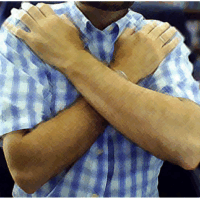
Then someone comes along and makes a gesture like holding a finger in front of the mouth or folding arms across the chest (which many Easterners do because they want to receive).
What happens then? The priest, holding the Blessed Sacrament in one hand, gives his own blessing with the other.
This not a Novus Ordo v. TLM issue. This is a blessings during the dedicated time for Communion issue.
Remember that the logic of the humeral veil is not just to give honor to the Lord in the Eucharist through the use of a beautiful sign of honor. It is to erase the priest, as himself, from the giving of the blessing. It is the Eucharistic Lord, this time, not the priest.
At communion time, the priest, no veil in sight, holding the Lord in one hand, gives his own blessing with the other?
Put this along side the obvious point is that Communion time is for communion and that the Mass has a specific time for blessing.
Fathers, think about what you are doing and why you are doing it.
Priests generally have good hearts and good intentions. But when sentimentality invades and eclipses the obvious, we wind up in a situation where the reasoning because: “As long as I consecrate the Eucharist validly then I can neglect to do X or chose to do Y which has nothing to do with the rites of Mass.
We wind up with well-intentioned jackasses waving guitars around or making fruit salad on Pentecost.
Blessings at Communion feed the disastrous and nearly universal praxis at the Novus Ordo that everyone has to go forward and get something. Because you are there you must go forward. If you go up there you should get something. Therefore, they (percentage wise not a priest) put the white thing on your hand and, with a sense of approval, everyone sings a song (often a modern ditty about how great we all are). Otherwise, if you sense you shouldn’t get the white thing, because it’s more than a white thing and you somehow were catechized about not getting the white thing if you’ve been bad, you still feel compelled to go up there because ushers are directing people pew by pew (pernicious, horrid practice to be abolished!) and everyone is going forward. So, you at least want a blessing, right? You want to get something along side everyone else. And priests, feeling sorry or compassionate or – I dunno – give a blessing to the guy with the finger to his mouth or the gal with the crossed arms. Smiles all around. Let’s leave aside the problem of lay distributors of communion waving their hand around as if blessing. What is that other than total confusion about everything?
Dear readers… dear Fathers… I know I am being hard on this, but I am trying to stress that these gestures all have their own meaning and those meanings can obscure really important realities. And because of the lex orandi – credendi – et vivendi we are our rites. When you change the rites, over time you change what people believe and, thereby, how they choose to live.
I sincerely don’t want to come off as a cynical meanie hard-ass, but blessing at Communion is a symptom of a wider problem.
Alas, I am aware that quite a few priests out there, so very well-meaning and hard-working and concerned for their flocks, have perhaps not given a lot of thought to these things. These poor and often long-suffering men are buried under administrative tasks, running to the four nursing homes and two other churches in their care. They are under the peer pressure of their fellow priests to do these things, to conform. Maybe they are nervous that some short-haired Karen will get her panties in a twist because she didn’t get a blessings instead of the white thing before the song and will write a nastygram to the bishop about the mean priest who hurt her feelings. Another call from the bishop, who probably would not care about the meaning of these rites and their logic even if he grasped them. The only thing the bishop cares about is not getting letters about priests who don’t conform to prevailing trend. And so… he starts giving – keeps giving – blessings at Communion.
Satis.
If I am wrong about this, go ahead and change my mind.































I have been taught that I can only take Communion at Mass if I have heard the Gospel, so that if I arrive late to Mass for whatever reason, including such good ones as arriving late from being on foot pilgrimage, then no ; but can I then take no spiritual Communion ?
As to the Host in one hand and Blessing with the other, that sounds rather abusive prima facie, but then I have not ever once witnessed any such thing.
I have always considered seeking a blessing in that circumstance not as some kind of “right” but as a penitential gesture towards the Lord our God, Present in Eucharist, and seeking forgiveness for my own failings. And a non-Sacramental blessing to fortify myself against them.
Good point. It would also shorten the communion lines as well. Those who are not ready to receive communion receive a blessing at the end of the liturgy.
Only one point: often parents have babies they are holding in their arms when they come to communion. For obvious reasons, most want to receive on the tongue. What about the child? I usually just hold the host close to them without a blessing so that, innocent as they are, they can behold the Lord in the Eucharist more closely. Like you I am open to suggestions. But I agree, communion time is not the occasion for personal blessings.
Father, would you make a distinction for children? I have seem them blessed even at the Vetus Ordo. While I understand your point, and this might be some level of sentimentality on my part, I also think that young children benefit intensely from such a personal moment in developing their own identities. When my son was young, he truly loved going up with us at communion time, despite the fact that he couldn’t receive. I believe that it also made him incredibly desirous of his First Holy Communion, when he knew he would be able to receive not only a blessing but Christ Himself. This is the type of pastoral practice which might genuinely be beneficial for those under the age of reason. I also think that Christ would likely have encouraged it, given Matthew 19:14. Rather like crying babies at Mass, what might not be acceptable for an adult is perhaps the best way to teach the faith to little ones.
First time I heard about the ushering thing I was shocked (unheard of where I’m from). But the blessing-instead-of-communion thing has become A Thing in recent years –probably because of the internet being a window into US Catholicism. It is now relatively common in masses where it is expected that non-practicing Catholics will be in attendance for there to be a reminder of the conditions to receive communion, and then an invitation to whoever wishes so, to approach for a blessing.
What I have seen, at some Divine Liturgies and a Novus Ordo or two, is the priest give a blessing by way of touching with the bottom of the ciborium the top of head of the person who cannot receive. Or maybe not touching, but hovering for a second slightly above their heads. Definitely easier when it’s children and people kneeling.
the combination of my limited mobility (particularly involving stairs) and being in choir make it impractical to try to receive at Sunday Mass. yesterday i had the day off and went to daily Mass. i was startled to see one of the 30 or so people there seek the priest’s blessing. there’s no shame in staying in the pew.
At the TLMs we’ve attended in our area (a couple run out of diocesan parishes, another by the FSSP) the priests will bless children/those not receiving with the Host, not their hand. Although I do imagine this still has similar issues as compared to the Benediction with the humeral veil, since the separation/veiling between the priest and Christ isn’t happening.
That being said, as a parent of small children, what should laity do to help prevent this sort of thing? Obviously it’s certainly possible to go talk to Father, but I also know priests are yanked every which way about how various people say they “should” do things and harping on this apparently small detail runs the risk of turning into Nagging Mouth Noises. So in the meantime should parents at parishes where blessings happen during Communion (whether with the hand or the Host) keep children from kneeling at the altar rail if they are not receiving, or is this trying to control something that’s just not in our wheelhouse?
“If I am wrong about this, go ahead and change my mind.”
I “feel” there is no absolute right and wrong here, but better or worse. I don’t have a definitive opinion on this, and I am ready to change my mind.
“Ushers are directing people pew by pew (pernicious, horrid practice to be abolished!) ” Of course, diabolic.
@Gregg the Obscure “There’s no shame in staying in the pew”. Oh, yes, there is a lot of shame. Perhaps for anglo-saxon culture there is no shame, but in the Asian places in which I have lived, there is shame involved. I am not saying that there should be, but there is.
Question: would it be advisable to give a blessing with the Eucharist instead of the free hand, or would it be even worse?
I would not promote that people come for a blessing, it is much better that they stay in the pew for many reasons, but there are occasions in which it is difficult to explain this. Sometimes parents bring their children before first Communion, or a catechumen comes together with the person helping him to prepare for baptism, and they see the blessing as fostering the desire to receive communion.
Sometimes a non Catholic approaches, and a blessing “looks better” than just telling him to leave the queue.
The fact that the “lay ministers” cannot give a blessing makes more clear that they are not priests, and the awkward moments becomes a reminder that it is not the same.
Perhaps there was a reason that ancient practices, like public penance until absolution (until Easter or months later) was changed, to makes things more “practical” or avoid shame. But I for one would not mind delaying the absolution in some particular cases.
@Dantesque “because of the internet being a window into US Catholicism.” How is one thing related to the other?
You are not wrong about this. I do have sympathy for priests who feel compelled to go along with this even when they know it’s not right. I remember one priest who lamented this practice, when asked to introduce another ill advised practice. I can’t remember what that practice was because it was thankfully never implemented and has thus faded from my memory. I do remember him raising this practice as an example of somthing that should never have been introduced but had become common and as something that had become difficult to eliminate without upsetting/alienating people. He finished by saying something to the effect that “we may not be able to eliminate exisiting bad habits, but we can at least refrain from introducing new bad habits and creating further problems for people down the line.”
Incidentally, this is one the many reasons, among many others, I have always resisted becoming an extraordinary minister of Holy Communion inspite of repeated invitations. It would be highly inappropriate for me, a lay person, to be seen to be “giving a liturgical blessing” at Mass. I want nothihng to do with that.
No exceptions, to me you are again, 100 percent right on this. Sometimes it is discouraging to even discuss issues like this, because it too clearly illustrates our wretched state. We have whole swaths of badly catechized clergy and the people. It is pretty impossible to imagine how the proper worship of God can continue at large in this case, or the proper worship by the people. There’s too much error, too much silliness. But here’s the good news, to these types, the people want silliness! And there are silly clergy to give it to them.
Father, in a sense I envy you. As a priest you are God’s direct instruments. You are given faculties for such spiritual effects we would all die in an instant if we beheld their effects in full. On the other hand you must now witness the grinding demolition of all you gave your life for, and try to educate amidst cosmic levels of jackassery. This is particularly hard for someone with your level of understanding and diligence. Thank you for all you have done and do.
As someone who watched the rollout of the Novis Ordo, this practice of coming up for a blessing at Communion came from a misguided notion of what “active participation” was. If we cannot see or hear the congregation doing something, then they were not actively participating. (Hence, the interruption of the Eucharistic Prayer with the “Mystery of Faith” by the congregation.) When I attend the Vetus Ordo, I “actively participate” by my focus on the Mass and the use of my hand missal. I do not need to be seen and heard to actively participate.
You are entirely correct, Father, and sadly, especially so with that last point concerning the magnitude of the task. I can tell people things one on one, and I can mention things in preaching, but a parochial vicar can only do so much. For this type of change in practice to be seen broadly, we need:
1. Bishops declaring it will not be done in their dioceses
2. Obedient priests to carry out that order
3. Docile laity to accept it
I think a great die-off will have to take place for this to get rolling.
Are these “ushers” some sort of American innovation ??
Never come across anyone of the sort over here in the Old World …
A brick for higher up in the wall rebuilding process though, perhaps? At present I fear in most parishes the structure would simply not be there underneath, and this brick would simply fall down onto the head of the pastor who attempted to put it in place. I too see a lot of traditionally-tending priests (DG for them) using the “bless with the host” approach mentioned by other commentators. Perhaps there is genuinely something to be said for that if a PP is wanting to pick their battles.
Robert: Commune the children too!
– Eastern Rite :-)
Fr. Z, based on your pastoral experience, how would you help guide a parish to a better understanding and practice on this subject? Assume, for the sake of the exercise, that they’re so stuck in their ways that a once-and-done instruction will not suffice.
As long as the ushers dismiss people pew by pew and architects keep spacing the pews so close together that non-communicants are a roadblock to traffic I will not take up this fight. I honestly don’t see this as a top liturgical priority that should give priests scruples. Especially when they are blessing babies the same way without any pushback from commentators.
My mother used to express her disgust at being in line for Communion and seeing the Priest’s hand that would soon give her the host plopped on a little kid’s head for the Priest to give the child a blessing.
@Fr. Reader: I’m from South America. Many things that are now customs were imported via people consuming US media (so things like engagement rings or public proposals or fathers “giving away” brides), and there’s a similar phenomenon happen by which stuff made by Catholics in the US creates a sort of contagion in other places. “Go up for a blessing with your arms crossed over your chest” was a thing I first heard about in the English speaking Catholic blogosphere 10-15 years ago (Can’t believe I’ve been checking on Fr. Z on this blog for that long!), and which only appeared IRL where I live just a few years ago, as if by spontaneous generation. It does sound and feel like the same kind of thing I mentioned above (thank God ushers would never become a thing. There’d be riots).
If you want another classic example, Latin American traditionalism has always been (politically) monarchist (specially of the Carlist variety), Distributist, and strongly anti-US (this last thing more or less the only thing both leftists and trads agreed about). But in the last decade there’s been a surge or Libertarian leaning, US focused people coming in which are clearly influenced by internet Catholicism and not organically through local traditionalism (to call them something).
In our local FSSP parish, the priests give the blessing with the Host, not with the opposite hand while holding said Host. That would be a bit strange.
I think this innovation is somewhat out of place as well, but it does facilitate order. If one is a non-communicant, it’s quite difficult to not somehow impede the flow of traffic out of the pew, or into it when communicants are returning. Frankly I’d love spacious pews with choir seating, but they didn’t ask me when designing the church.
Do we need to be blessed with a Host when others are receiving it? No. I have no desire to be included because I know that if I’m not in a state of grace, I cannot approach to receive. Is it an innovation? Yes. But it does serve a dual purpose. The logistics of moving a pew full of people in and out in an efficient manner and a chance to be close to Our Lord physically, even if we cannot receive.
I’m not particularly excited about it, but if I can make things easier for my pewmates I’m willing to do it as long as we can all get on the same page theologically.
@JabbaPapa: I like the idea of the blessing at the rail being penitential. It’s certainly where one’s heart should be if not an actual communicant. I think if we’re trying to make this awkward piece fit, a deeper understanding than “me too!” would be fitting.
Father Z, this is very interesting and I cannot quarrel with it. But I think this issue is one of those battles that one might be better off not fighting until the vast majority of Catholics learn that the purpose of the Mass is not to give the faithful an opportunity to receive Holy Communion. Rather, it is to offer God Almighty the only form of worship worthy of Him, the Sacrifice at Calvary. So there are enormous benefits from assisting at Mass even if one cannot receive the sacrament.
To JabbaPapa… oh a few places do it, including Nottingham Cathedral. Difficult to say no when someone is gesturing for the row to all shift.
I have made this argument for years. I would argue that even giving the blessing with the host is problematic. There are limits to the number of expositions that can be done per day. Instructions for a Eucharistic procession states that while you may have as many altars along the way only 3 benedictions may be given with the final one being at the end.
My practice as a deacon when approached is to say the prayer “May our Lord Jesus Christ remain always in your heart and make you a saint” I make the sign of the cross over them, but it is not a blessing.
It is better when they don’t come although many come with small children.
The question of blessing while the Eucharist is being distributed reminds me of the practice I have observed at Fraternity parishes during Adoration.
Ordinarily the priests would kiss their breviaries and incense would be blessed when imposed, but both of those are omitted during a period of Adoration. The logic seems to be that it is wrong to kiss an object when the Object of all all our love is present, and that you don’t give a blessing when the Holy One is exposed.