
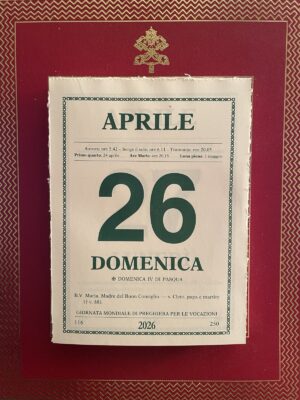
 A little bit each day.
The sun appeared to be raised up at 06:11 and to be pushed down at 20:05.
The Ave Maria was to ring at 20:15, at least for the Roman Curia.
Along with being the 3rd Sunday after Easter in the Vetus Ordo, and the 4th Sunday of Easter in the Novus Ordo, it was also the Feast of Mary, Mother of Good Counsel and also the Feast of St. Cletus, Pope and Martyr, slain around A.D. 88. His name is in the Roman Canon.
There’s a full Moon coming up on 1 May, Feast of St. Joseph the Worker and the beginning of the month especially dedicated to the Blessed Virgin.
Welcome Registrants:
MMMTTTOOOG
cesenamode
This is one of the reasons why The Parish™ is in such good shape and so many wonderful things are happening. There is no job to small for the Pastor, which gives a good example to all.
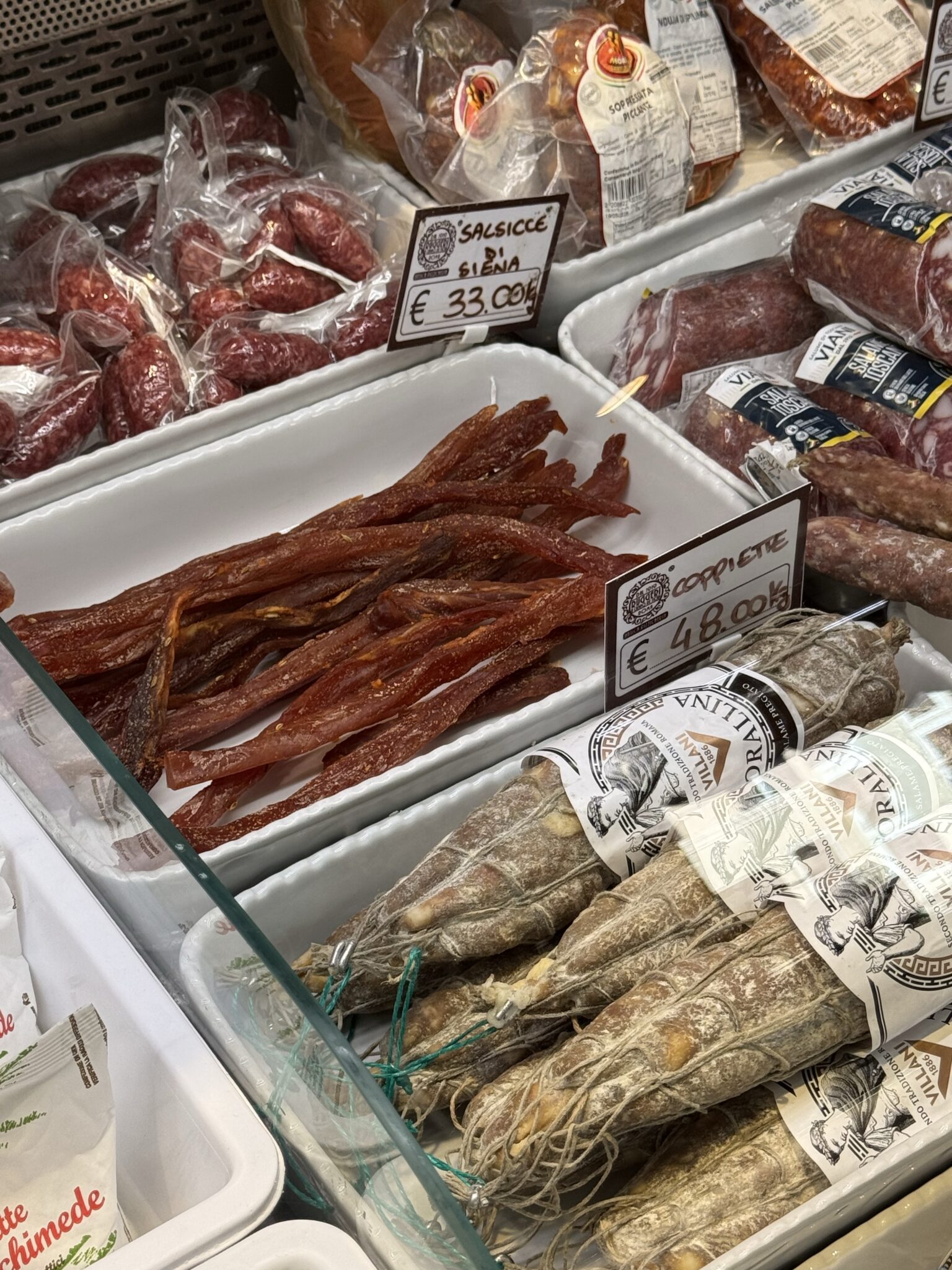
Mouth watering goodies at the local.
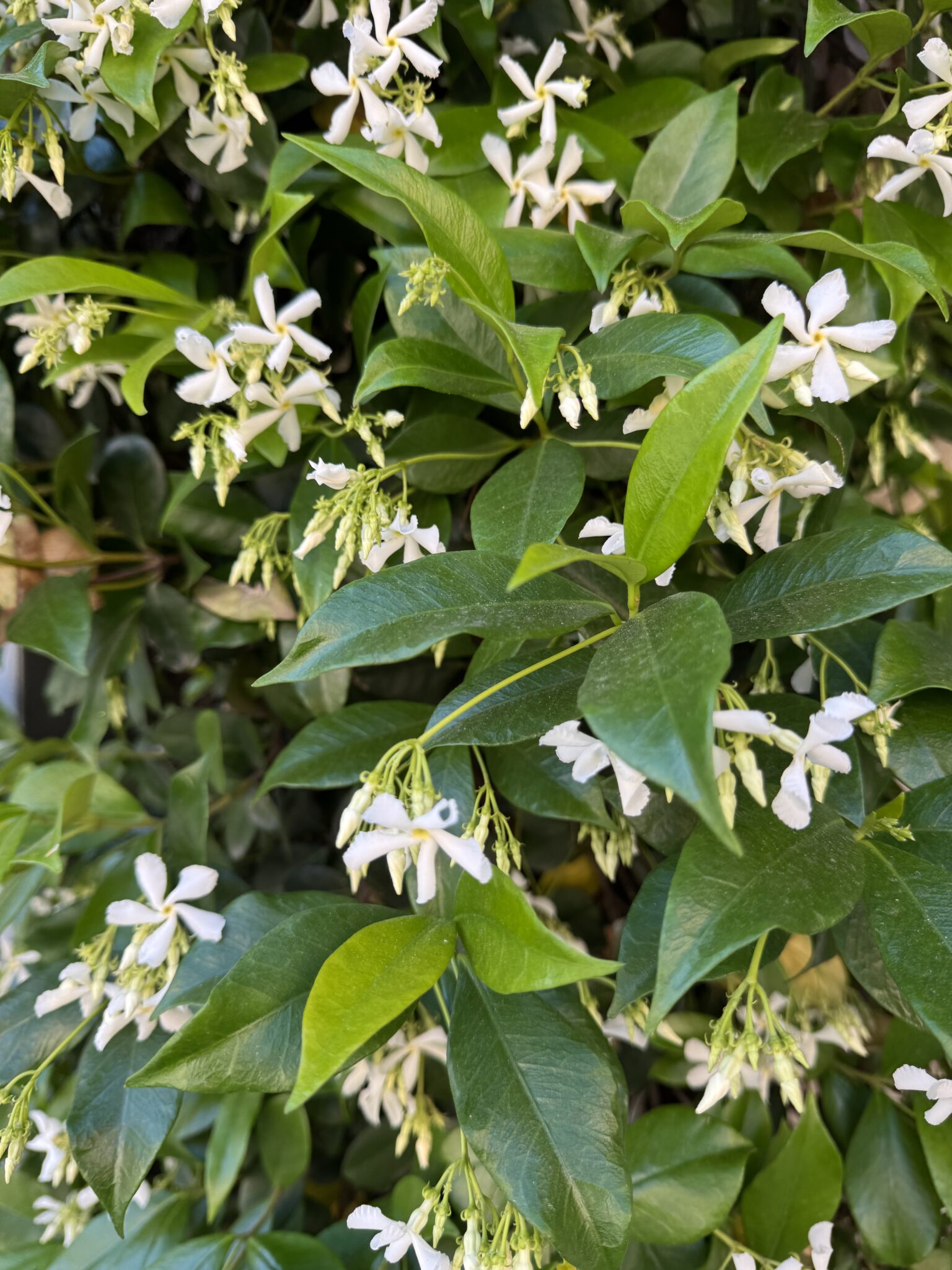
Jasmine Report (…no, not the Jesuit). Where there is lots of sun, the Jasmine has bloomed. Shadier areas, not yet. Nearby are large walls of the stuff, which is glorious especially in the evening as it cools.
To think… a year ago, I was posting about the upcoming conclave, including sonnets by the incomparable Belli, some read by The Great Roman™. Here’s a reminder…
…
Here is Belli’s sonnet about the death and funeral procession of Pope Leo XII. If you are agile you’ll catch some of the frankly obscene puns (far less shocking than the prose of Tucho’s pornotheology) along the way which are not reflected in the English translation (not mine). Read by, of course, The Great Roman™.
| Er mortorio de Leone Duodescimosiconno | The Funeral of Pope Leo XII |
| Jerzera er Papa morto c’è ppassato propi’avanti, ar cantone de Pasquino. Tritticanno la testa sur cuscino pareva un angeletto appennicato. Vienivano le tromme cor zordino, poi li tammurri a tammurro scordato: poi le mule cor letto a bbardacchino e le chiave e ’r trerregno der papato. Preti, frati, cannoni de strapazzo, palafreggneri co le torce accese, eppoi ste guardie nobbile der cazzo. Cominciorno a intoccà ttutte le cchiese appena uscito er morto da palazzo. Che gran belle funzione a sto paese! |
Last night the late great Pope went cruising by Pasquino’s corner, right in front of us, head nodding on a bed of fluffiness just like an angel kipping on the sly; and then the muted buglers came on down, and drummers drumming with a muffled din, and mules to haul the mighty baldaquin, and then the papal keys and papal crown; friars and priests, and next a clapped-out gun, and grooms who held aloft their flaming tapers, and then those bloody guardsmen on display. The bells of all the churches tolled as one the moment that the corpse went on its way… This country has such entertaining capers! |
| 26th November 1831 |
 Belli might have purposely conflated the funeral of Leo XII (10 Feb 1829) and Pius VIII (30 Nov 1830). It doesn’t really matter.
BTW… what’s that Pasquino bit all about in the second line?
Some of you who have been in Rome quite a lot, or had a really good guide, or who have followed this blog, may know about the “statue parlanti… talking statues”.
In days past, these statues scattered about the Centro were used by various groups to post written opinions on public matters. The statues “talked” to each other. The most famous is Pasquino, near the Piazza Navona. The remarks Pasquino made were called “pasquinate”. (There’s also a great restaurant just across from it called Cul du Sac.)
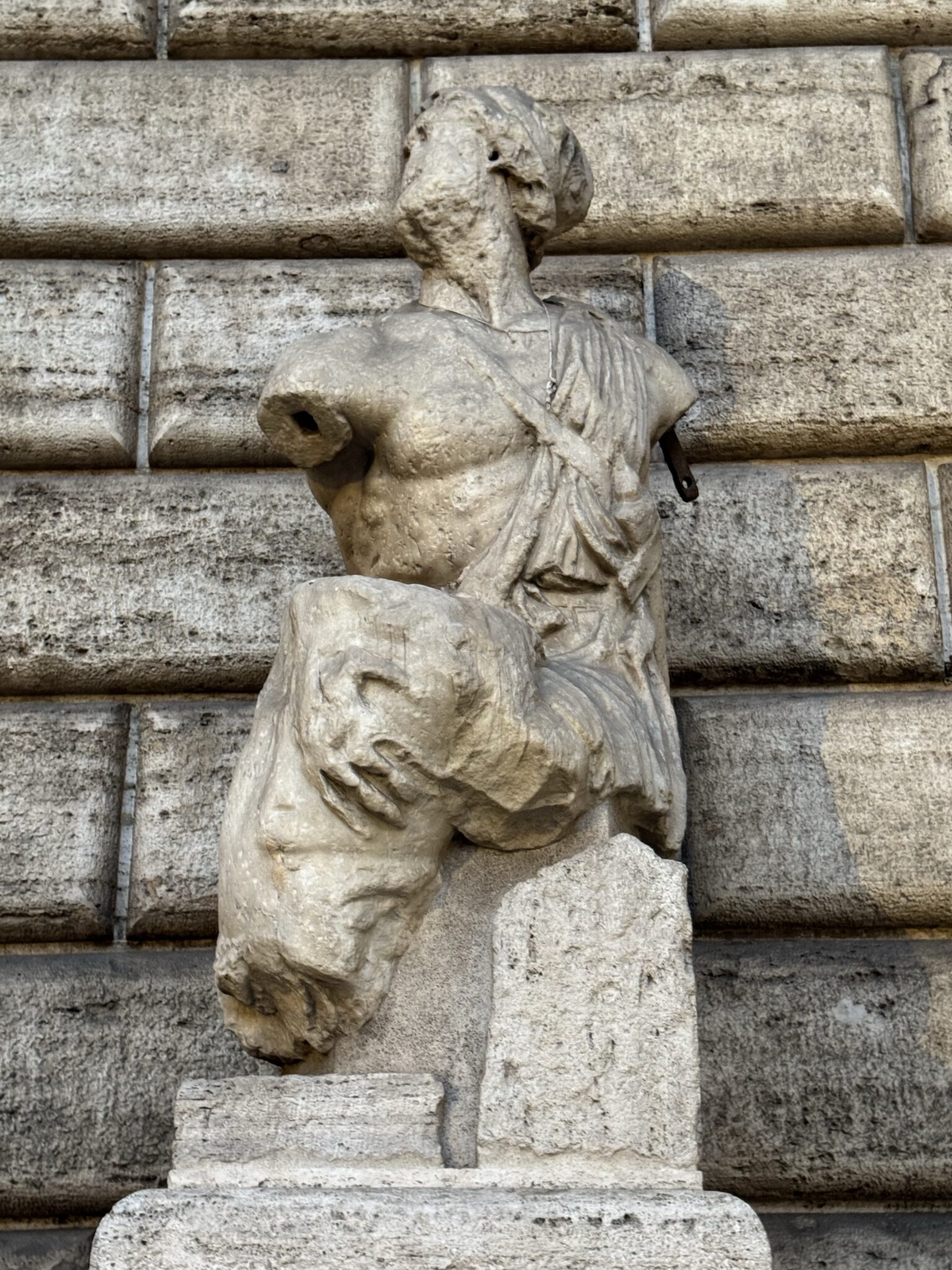
Pasquino – maybe named after a local witty tailor way back in the day in that neighborhood – is a rather battered Hellenistic-style statue maybe 3rd c. BC found in the 15th c. century. The subject of the statue might be Menelaus supporting the body of Patroclus, or some such Roman copy. In the early 16th c Cardinal Oliviero Carafa draped it in a toga and decorated it with Latin epigrams on the occasion of the Feast of Saint Mark. That opened the box, as it were, and people started doing this with other statues. They formed a public salon, the “Congress of the Wits … Congresso degli Arguti”, with Pasquino along with Marphurius (Marforio), Abbot Luigi, Il Facchino, Madama Lucrezia, and Il Babbuino. These poems posted were collected and published annually as early as 1509 as the Carmina apposita Pasquino.
Here’s Pasquino.

Up that street on the left and you reach Piazza Navona.



 Saint110676 on ASK FATHER: Priests tells me to say Act of Contrition outside the confessional, afterward: “Good advice to all, both penitents and confessors. At a parish where I regularly serve, there is a daily 6:00…”



























