I saw a rather cool series of photos from the B&W age which have been colorized. The colorized versions give an entirely different “feel” to the moment.


I saw a rather cool series of photos from the B&W age which have been colorized. The colorized versions give an entirely different “feel” to the moment.
Today is the feast of the Pope who issued the Apostolic Constitution Veterum Sapientia.
Today is the feast of the Pope who didn’t like it when people clapped in church.
Today is the feast of the Pope who issued the Roman Missal of St. John XXIII.

His propers are HERE.
His Eminence Raymond L. Burke gave an interview to Raymond Arroyo of EWTN.
You don’t want to miss this. Arroyo does not lob softballs. He starts out with a question about Pope Francis praise of Card. Kasper!
This is refreshing and it gets better and better as it goes along.
It is about, in part, the “Five Cardinals Book”.
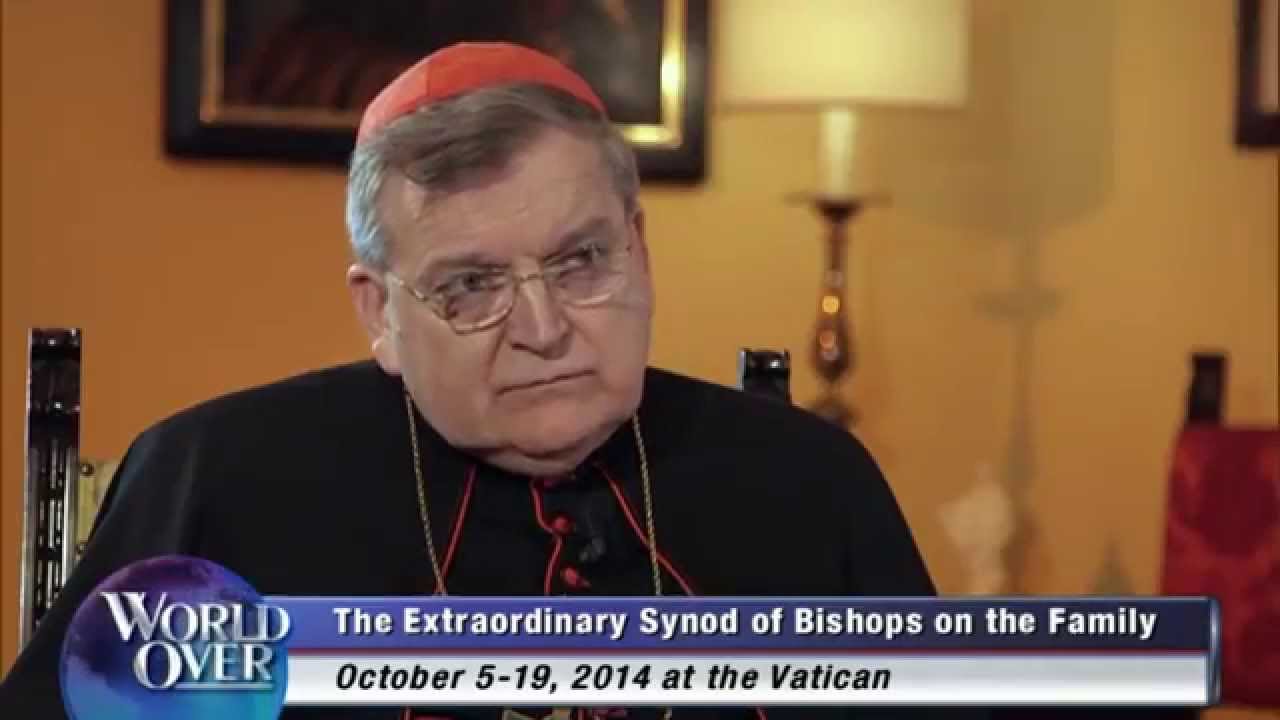

As I post, it has 589 views.

Click to PRE-ORDER
Buy in USA HERE
Buy in UK HERE
The book is available for KINDLE (USA) for a reduced price of $9.99, which is much less than the paperback. HERE
Don’t have a Kindle yet. What on earth are you waiting for? USA HERE (for one type, a Paperwhite, you can surf to others) and UK HERE
 There is a good post at Fr. Hunwicke’s place pertaining to the admittance of the civilly remarried to Holy Communion. With my emphases:
Updating
One gathers … as we grandly say in England … that brilliant ways are being mooted in Synodo for squaring the circle: formally maintaining Catholic sexual morality while letting people off the hook of having to try, with the help of grace, to adhere it. (There was a time when English Protestants claimed that ‘Subtle Jesuits’ could “prove that Black was White”.) One of these Brilliant Ways is Graduality or Gradualism.
Another is the old Liberal Protestant trick of talking about morality as an ideal rather than as a casuistic.
Another, that we must be more polite about people in certain situations and not call them Hurtful Names.
The Hunwicke test for diagnosing clever but shoddy dodges is threefold:
(1) Can you square it with the Sermon on the Mount and the ethical teaching of S Paul?
(2) Can you square it with the Lord’s parables and teaching about ‘we do not know the Day or the Hour’?
(3) Does it apply to murderers and pedophiles?
Whew.
Check his blog often.
 I was alerted to a piece in The Spectator by Louise Mensch, a divorced a remarried Catholic who knows that, in her present situation, to receive Holy Communion would be a mortal sin.
It is a pleasant change of pace to read something by someone who isn’t sugar coating her situation or trying to twist doctrine (and us readers) through emotional manipulation.
Louise Mensch: I’m a divorced Catholic. And I’m sure it would be a mortal sin for me to take Communion
Accept liberal arguments for the convenience of people like me, and you threaten the foundations of the Church
I am a divorced and remarried Catholic. I attend Mass every week. When my children want me to take them up to Holy Communion, I walk along behind them and cross my arms over my breast. My youngest is particularly keen on going up for a blessing, although he wants to know when he can get ‘the bread’. I say, ‘When you understand why it isn’t “the bread”.’ [Well done.]
It has never occurred to me to present myself for Communion when I have not sought — for various reasons that I won’t discuss here — to have my first marriage annulled. I know I am not a good Catholic, and I am living a life that the Church considers to be adulterous. Yet I am in good spirits, as I hope in God’s mercy. But I do not presume upon it. My Catechism says that is a further mortal sin, as would be the unworthy reception of Holy Communion.
People in my state are explicitly encouraged, in the Catechism, to attend church, and to make a spiritual communion, as I do each week. [But apparently we have to spend a lot of time on this issue.] I have the hope that one day I will be in a state of grace and able to receive Holy Communion again. I hope that, despite my ongoing sin, God nonetheless hides me in the shadow of his wings; that Mary, hope of sinners, has her cloak of mercy cast about me. I am a poor Catholic but I am also a believing Catholic. Yet there is a faction within the Church that evidently considers ‘believing Catholic’ to be a hopelessly old-fashioned clique that they must get shot of, alongside lace mantillas and kneeling at the Communion rail.
Holy Communion, for most of the bishops of England and Wales, appears to have become Protestant by default. [OUCH!] Instead of the real presence of Christ in the Eucharist — a presence we should tremble to receive at the best of times — Communion is now a sign, a symbol, a mere shared meal, an ‘expression of community’. [Sadly, I think she’s right. And that’s not only in England.]
Next week [this was published a week ago] an Extraordinary Synod of Catholic bishops, summoned by Pope Francis, will meet to discuss the family. Catholic reformers are full of hope that, under his guidance, the bishops will liberalise the Church’s teaching on divorced and remarried Catholics. The liberal Tablet magazine devoted a cover story to the subject. It filled me with dismay. The article began by quoting Cardinal Walter Kasper, the leading liberal cardinal: ‘The church’s blanket ban on divorced and remarried Catholics receiving Communion…’.
Where to start? The Church does not ban anybody from receiving Communion other than non-Catholics (and there may be exceptions) and those too young to understand what they are receiving. Rather, nobody may receive God in the Eucharist in a state of mortal sin. Even before I remarried, and I use the term in a legal sense, since I cannot sacramentally remarry, I did not always present myself for Communion. Often I would be in a state of serious sin and had not found the time or organised myself enough to go to confession. The fact is that nobody in a state of serious sin — whatever that sin may be, in this case, adultery — is able to receive Christ worthily. To receive him unworthily is to commit a further mortal sin.
The Tablet article was called ‘The Case for Mercy’ and, reading it, I felt like pleading for us suckers who actually believe the basics: sin, confession, absolution, the Real Presence and the like. [Yes, we are soooo behind the curve, aren’t we?] What Cardinal Kasper appears to want to do is to tempt a generation of people into weekly mortal sin. How is that merciful? How is that helping? Is it impossible for liberal theologians to combine their reforming fervour with actual logic? [Do I hear an “Amen!”?] Allow a divorced and remarried person to receive Holy Communion and you are saying one of two things: either that it is not adulterous to have sex outside the marital bond, or that one may harmlessly receive the Most Holy Eucharist while in an ongoing state of mortal sin — a sin one firmly intends to commit again as soon as convenient.
There is no way that either of those things can be true, and the Church’s teaching be true. If sin doesn’t matter, what was the point of the Crucifixion? Why did Christ not stop with a ‘community meal’ on Maundy Thursday and skip that whole bothersome deal the next morning?
There are ways that those civilly divorced and remarried can be admitted to Holy Communion. Make it easier for them to obtain a declaration of nullity. Here is an area where the Church could be more sympathetic, could grant dispensations and exemptions in matters of process. The power of ‘radical sanation’ — granted for various reasons — to make a marriage whole could also be administered more often. That power does actually exist. Where the Church can legitimately change is in matters of tradition and practice — but not doctrine or dogma. Here, we sinners are protected from the human failings of individual priests and bishops by the infallibility of the Church. Some traditionalists protested when altar girls were permitted; [Yes, that was wrong then and it is still wrong now.] I remember asking in one forum if the Bishop had the right to do this (yes), then if it had been done to say it was wrong was — equally as much as in the other direction — to say the Church was wrong. [Well… I think that was a mistake, but it is apples and oranges when it comes to altar girls and Communion for the remarried.]
Theologically, the Church is like a giant tower in Jenga; pull out one brick and you topple all the others. We cannot admit that sex outside marriage isn’t adulterous, nor can we say that mortally sinful people can receive Holy Communion. But we can look harder at the powers given to the Church to declare and discern when somebody is in a state of sin or where, for genuinely merciful reasons, a union can be made whole, by powers already granted to our bishops by the Holy Spirit. [Who knows. We also have to avoid the suggestion that the Church is changing doctrine. Some people are bound to get it wrong and there is nothing we can do about that. We need to avoid wide-spread confusion.]
Nothing will ever persuade me to receive Holy Communion in a state of grievous sin, unless for a serious reason. I once did so, when I discovered that a Protestant at my sister’s wedding had approached the priest, taken the Host and put it into his pocket. The poor priest hesitated but the man had walked away. He was foreign and hadn’t understood. I went to find him at the reception and he said ‘I didn’t want to interrupt the line’. I asked if I could have the Host from his pocket, I made a quick act of adoration and contrition and I ate it, despite being at that time not fit to receive. It seemed the lesser of two evils, and certainly that was my intent. I believe that under the circumstances, it was valid to consume the Host (although I am not sure). [I think she did the right thing in that case.] One day I hope to do so again. But I understand that the Church, while it strives to emphasise mercy, cannot do so by encouraging sin. Communion is not, as the Tablet journalist I Twitter-debated this with said, just ‘for the saints’, that is true. But nor is it, as he put it, ‘a help for the journey.’ It is the Real Presence of Christ in the Eucharist. However unfashionable that may be, it remains true.
This article first appeared in the print edition of The Spectator magazine, dated 4 October 2014
Fr. Z kudos.
 From a reader…
QUAERITUR:
When my Dad died in August we had his funeral mass. He requested cremation and he was cremated following the funeral mass.
With the process of interment in a national cemetery (he had served in the Air Force), we had to schedule a time with the cemetery when my out of town brother can be here. It is scheduled for the day after Thanksgiving.
My Mom (also Catholic) is not planning to have a priest for this. I think this is mostly related to shoddy treatment they received from their pastor. Is it necessary to have a priest there?
I know there would normally be graveside prayers.
Condolences.
The Praenotanda (explanatory section) of the Order of Christian Funerals says that “When no priest or deacon is available for the vigil and related rites, or the rite of committal, a layperson presides.” In the older, traditional rite, clerics handle things.
There are prayers that are to be said at the graveside, which include the blessing of the grave itself if interment is not in a Catholic cemetery which has already been blessed. Though the rite is unclear (… and aren’t they all nowadays? …) it seems that this blessing, if it is to be considered a constitutive blessing, would need to be done by a priest or deacon.
Can the rites of committal be done by a layperson? Sure, if there isn’t a priest or deacon available. The Church is mindful of the reality that, around the world, many people only have access to a priest once a month, if that often. Sometimes they have to bury their dead without the consoling presence of a priest. Thankfully, in these United States, even with a declining number of priests at present, there is an abundance of priests compared to some part of the world.
Arguments and spats happen with priests.
Sometimes, the priest is at fault.
Some priests can be unpleasant. Some laypeople can be unpleasant too.
It would be a shame … no… it would be a really bad idea to deprive yourself and your late father of the priestly ministry of the Church because of an argument with some priest – even if he was totally to blame. If the wounds of the argument are still too raw with that particular priest, contact another parish or ask the funeral director for advice. Funeral directors often know retired priests or priests with non-parochial ministry who can be called on to help out in situations like this. They are also among the world’s best diplomats.
 It’s about 8:30 a.m. and I have already had four phone calls about stuff having to do with the Synod and other related things.
It feels like the world and the the Church withing the world are flying apart at the seams. So, let’s have a break.
Here’s the latest from Mat.
Mat isn’t doing anything in these videos, except just being there and being, probably, being happy, which is what I need.

This morning… I want this guy’s job. I could go to all sorts of places and make videos of me saying the traditional Mass. Okay… maybe not quite so much with the whole crowd involvement thing. Any better ideas?
Nothing actually goes on, but it is hard to take your eyes of this.
Unfamiliar with Mat?
Here is another one. There are a few great moments in it, like the Bollywood thing. For all of them in one video HERE.
UPDATE:
And speaking of travel… click the waving flag to send a donation for my Rome trip in January for the Confraternity of Catholic Clergy meeting.
 From a reader…
QUAERITUR:
Father, I am a fairly new convert to the Church and while I have studied theology, which led me here, I sure do get confused at times.
It seems Catholics, hesitate at studying the scriptures but jump on any and all mystical revelations. I am in a Bible study about Blessed Mary and 1 person kept bringing up Emmerich’s book which I found was at odds with historical facts..is this book of revelations accepted I thought it had been discredited because the poet who wrote down supposed dictation made it up
Please help my confused mind
Welcome to the Church!
Now that you’ve been received into Holy Mother Church, we can let you in on a little secret. We’re all a bit confused at times. Don’t tell anyone, but it’s true.
Depending on where you are and what circle you hang with, you’ll discover a vast variety of interests among Catholics.
Some people, indeed some parishes, are gangbusters about Scripture study. Some are into biographies of saints (hagiography), or even dogmatic (though that’s now a bad word, I guess) theology. Within these categories, you’ll find a wide range of variations.
Blessed Anne Catherine Emmerich was a holy woman. She was a religious who suffered with poor health. She received the stigmata and had numerous visions throughout her life. Clemens Brentano, a poet, visited her over the course of several years and took notes of their conversations regarding her visions. Brentano and Emmerich spoke different dialects. Many of his notes were written well after his visits. Ten years after Blessed Anne Catherine’s death, Brentano completed his notes for publication. The last three volumes, on the life of Christ, were published after Brentano died. Fr. Karl Schmoger produced these volumes after editing Brentano’s notes.
So, there are problems with attributing the books to Blessed Anne Catherine, who never even had a chance to look them over.
The Congregation for the Causes of the Saints excluded the books from their examination of the life of Bl. Anne Catherine. They made the recommendation to St. John Paul II for beatification on the basis of her life alone. What portion of the books can be safely attributed to Bl. Anne Catherine is unknown.
Private revelations are tricky. We know, definitively, that the age of Revelation ended with the death of the last Apostle (John). All that is necessary for salvation has been revealed to the Church.
That doesn’t, of course, prevent God from revealing further things. We cannot place limitations on God.
When the Church rules that a private revelation has indeed taken place, She merely declares that nothing in the revelation is contrary to faith or morals and that the circumstances of the revelation are such that it appears to be valid. No obligation is placed on the faithful to believe the content of the revelation.
The nature of private revelation is precisely that: private. God reveals something to that specific person or those persons. Were God to have wanted to impose the obligation of belief in some particular matter on all mankind, He would have done so through universal revelation (which, as stated above, ended with the death of the last Apostle).
Private revelations can sometimes help other people, bystanders like you and I, grow in faith. They can be hindrances. Their utility is, first of all, for the one to whom the revelation occurs.
The old Catholic Encyclopedia, available at New Advent, has a good explanation of private revelation: HERE
In the meantime, welcome again to the confusion of Holy Mother Church. You’ll never get used to it. You’ll never be bored by it. You’ll may wind up adding to it yourself. Christ is at the helm of our barque. We can rest confidently knowing we’re headed for the right destination, provided we don’t pitch ourselves off the deck and into the cold drink on either the starboard side or to port (that’s right and left for those of you in Columbia Heights).
It’s the feast (in some places and for some groups) of Bl. John Henry Newman. Who can forget his beatification by Benedict XVI?
Those of you who may be new readers may not know about the mug I made with a phrase of Bl. John Henry Newman: “To be deep in history is to cease to be a Protestant.“
Thinking back on the course of my own conversion, the elements which made it easier to take the plunge, and considering the growing projects of the Anglican Ordinariates, and also remembering that Benedict XVI – the Pope of Christian Unity – beatified John Henry Newman…. I put the phrase on a coffee mug.
Fill yours with Mystic Monk Coffee as soon as humanly possible.
Here is a shot of the regular sized coffee mug… I’ll bet you could put your yogurt and granola in it too.

The Z-Swag Store is HERE.
A shot of the larger coffee mug.. I’ll bet that you could put … hot chocolate in it too!

You see that for this mug I really wrapped the design across most of its surface.
Here is the largest mug, the stein. I suspect that this might be coaxed into holding a beer.

The image itself (it’s larger on the mugs):

Here are three shots of the ur-mug, the larger coffee mug. It is made from the same durable stuff I punished for years in the microwave and dishwasher. Though I don’t have a dishwasher now… other than my hands.


I also made another version, with the phrase tighter on one side to make it easier to read:

After years of treating these things with great brutality in the nuclear reactor and the bottom rack of the washer near the heat, I succeeded in getting a crack in one of them, cosmetic, but not fatal.
It might start a conversation. But I suggest that before flashing it about, you might brush up on why being deep in history leads to the Catholic Church.
You can find all the links you need to Z-stuff HERE.
PS: I should have a NEW line rolling out tomorrow. I was inspired by how some nitwits in the combox of the Fishwrap (a more vicious place on earth you will not find) were ridiculing YOU READERS!
 From a reader…
QUAERITUR:
What is the best way to ensure that part of whatever funds are left in my estate are used to have masses offered for the repose of my soul?
I think we all wonder about this. I sure do. Will anyone pray for me after I die? Some of us with little family of our own, and they not Catholics… well. Who will remember us? So many “funerals” or “post-living life celebrations” these days neglect the one thing that is necessary: prayer for the dead.
I want prayers, darn it, not balloons and jokes.
Also, it is hard for many people to find priests who can take their Mass intentions for loved ones. Pray for more priests, good holy, devout and faithful priests.
So, now to the question: making provisions for Masses to be said for you after your death.
If leaving funds for Masses to be said, be as specific as possible about what you want.
Can. 950 of the Code for the Latin Church establishes that if there is no indication of the number of Masses to be said, the presumption is that the number of Masses is determined by the offering prescribed in the donor’s residence. For example, I leave $1,000 “for Masses” in my will without specifying how many. Based on the common custom of $10 per Mass in the Diocese of Black Duck (where I lived), I should have 100 Masses said. Otherwise, I could specify that I’m leaving $1,000 for 50 Masses. In that case the stipend per Mass is $20.
Perhaps one solution would be to establish an agreement with a monastic community. You might create a foundation that would provide a steady flow of money to the community with the agreement that a Mass be celebrated regularly.
Canons 1299 – 1310 cover issues for a pious foundation. Pay attention to details. The Ordinary (usually the religious superior) is the executor of such foundations, and no other provision is acceptable (can. 1301, 3). The Ordinary is to see that the parameters of the bequest are carried out diligently. Provisions may be made for long-term obligations, such as a series of Masses (can. 1303, 1), but the Code no longer speaks of “perpetual obligations.”
A provision might be included in the will to make provisions for the reasonable termination of the foundation, or its transfer to another entity. For example:
“I leave from my estate $50,000 to the Abbey of St. Exuperantia, to be held in a foundation, and from the interest of which foundation, $100 is to be taken per annum for ten Masses for my soul, for at least the next thirty years. However, should St. Exuperantia Abbey close its doors before that time, or be rendered incapable of fulfilling the requirements of this foundation, the remaining funds are to be transferred to St. Aceptisimas Abbey, or another Benedictine Abbey of the Federation of the Duchy of Grand Fenwick. After thirty years, if the Abbot makes a determination that the Masses should not continue, what remains in the foundation is to be dispersed to the Diocese of Black Duck for the support of elderly and infirm priests and, in particular, priest bloggists.”
Whatever provision is made in the will for something like really ought to be looked over by both a civil lawyer and a disinterested canon lawyer.
Finally, why wait until someone dies to have Masses said? Have them said also while people are still alive!

Coat of Arms by D Burkart









A Daily Prayer for Priests


They find you a pro-life agent in your area who commits to giving a portion of the fee to a pro-life group!

PLEASE subscribe via PayPal if it is useful. Zelle and Wise are better, but PayPal is convenient.
A monthly subscription donation means I have steady income I can plan on. I put you my list of benefactors for whom I pray and for whom I often say Holy Mass.
In view of the rapidly changing challenges I now face, I would like to add more $10/month subscribers. Will you please help?
For a one time donation...



Help Monks in Wyoming (coffee – UPDATED LINK) and Norcia (beer) and the wonderful "Soap Sisters" of Summit, NJ!


Please follow me on Twitter!










Visits tracked by Statcounter
since Sat., 25 Nov. 2006:

