I dunno. You decide. Sensible or snobbery.

On the site of ZAGAT (I am looking for some reviews) I saw this. I was a little annoyed by it. Sure, some of the things on this list are clearly super cheap for ingredients and preparation but vastly over priced. But, when you are at a restaurant, you are not buying for yourself and making it yourself. Sometimes, you want it done for you… in a restaurant. Right?   I am not defending ridiculously inflated prices. When I see them on a menu, I feel disrespected.

So, while there is a point about price, is this just snobbery on parade?

The 10 Lamest Things You Can Order in a Restaurant
by Kelly Dobkin

Let’s face it – there are some things that just aren’t worth paying for in a restaurant. Whether they’re exceedingly simple items that are ridiculously marked up, or just flat-out boring, here’s a list of menu items that have us shouting: “lame!”

1. Iceberg wedge salad

Wanna know how to make a hunk of flavorless lettuce even less appetizing? Charge $12 for it. This “classic” menu item, which had its heyday in the ’50s and ’60s, was invented at a time when iceberg lettuce was the height of sophistication. Its alarming resurgence on menus has been played up as “retro,” but let’s be honest – it’s one of the biggest rip-offs in the restaurant game. You can re-create this blasé dish at home for about $3 with a head of Dole and a bottle of Hidden Valley Ranch. [Hmmm … I have a couple clear memories of how delicious a wedge can be.  Once at a place in Minneapolis with a house made Green Goddess dressing and another at a steak place in NYC. The point: I remember how truly delicious they were.  And I am not a fan of iceberg.  So… they were the right thing at the right time and, at a restaurant, that is what you pay for.  Right?]

2. Shrimp cocktail

Twenty dollars for four boiled shrimp? No thanks. Sure, it’s delicious, but essentially it’s just a plate of shrimp and a side of sauce, right? For one to buy or make this at home requires about zero cooking skill and about a third of the cash. Unless someone’s doing something with this dish that you’ve never seen before (read: shrimp cocktail à la sous vide), keep your money in your wallet when you come across this one.  [Okay.]

3. Bottled water

Still a favorite of germaphobes, snooty Europeans and diners desperate to impress their date, bottled water is totes ’80s. Unless you’re in an area where tap water is non-potable, bottled water is a waste of money. Restaurants have been known to mark up it up about 300% – let’s face it, you can purchase the same $10 liter of water at your local Walmart for like $2.50. Most restaurants now also offer filtered tap water, so unless you’re dying to relive the Evian craze of ’89, maybe you should just order tap. [I am beginning to suspect the writer doesn’t have much of a sense of taste.  I have been in cities where the tap water was pretty dreadful, depending on the time of year.  Water affects the food.  The minerals in the water can make a difference with the food.]

4. Plate of fruit

We’ve certainly seen some amazing fruit plates, but seriously, ordering this as your main dish is a bit of a cop-out. Only in cases of sheer laziness or manorexia should a diner order a $7 plate of cut-up fruit for their entree.  [Again, I get the point about price.  But, you pay for prep.]

5. Mixed greens

Ingenious menu idea: take greens direct from the package, put them on a plate, serve with a side of oil and vinegar and slap on an $8-plus price tag – you’re now a restaurateur. [I am reminded of the story of a kid harassing the pitcher, telling him how slow he was, how washed up, etc.  The pitcher responded: “Okay, kid. Get a bat!”] Back in 1994 when mesclun salad was all the rage, this trick might have worked. But now? Not so much. We promise that at most places if you look at the salad options, there’s bound to be a less banal way to eat your veggies.

6. Cereal

We all know Jerry Seinfeld loves to order cereal at a diner, but we’re hoping you’re smart enough not to do the same. Ordering a bowl of cereal as your main course should be an immediate indication that you shouldn’t be out at a restaurant. Go home, put on your PJs, grab a gallon of milk and some Corn Flakes, and plant yourself in front of the tube.  [Putting cereal on this list was deranged.]

7. Scrambled eggs

We understand the hungover person’s need for grease [See my comment, above, about the writer not really understanding food.  Grease? Scrambled eggs?] after an all-night bender, but scrambled eggs in a diner cost about four times more than if you were to just make ’em at home. There’s inevitably a much more worthwhile egg dish on every menu. Even a broke-ass one-handed wino is capable of creating this dish in less than five minutes. [Perhaps the writer hangs out with too many winos.  There are scrambled eggs and scrambled eggs, folks.  Trust me.  I supposed the writer is used to something she has been told are scrambled eggs, some nasty mass of rubbery cooked globules with a glaze of the “grease” she is used to.  That is not how I make them.]

8. Steamed veggies

Sure, they’re healthy and delicious, but they cost 50 cents and you’re likely to get charged something like $7 for it. You’re better off enjoying this bland, overpriced side at home with some melted butter and a bag of Birds Eye.  [I am trending toward the snobbery angle. ]

9. Olives

Dude, most places will give you olives for free! Unless the chef is doing something crazy exciting with mixed olives (which we’re having trouble imagining), as a rule of thumb it’s kind of dumb to shell out money on a gratis bar snack.  [Uh huh.  She should put away her can opener and start trying real olives.]

10. Baked potato

Seriously? We all love baked potatoes but what are you, 90? What you’ll pay for this one in a restaurant vs. making it at home is significant. If a place is going to give you the option of a baked potato, we’re pretty sure they’ll have something considerably more interesting in the spud department.  [There are times when the baked potato is exactly the right way to eat your carbs.]

You decide.

Discuss.
Posted in Fr. Z's Kitchen, The Drill | Tagged
58 Comments

Bp. Slattery: great comments on TLM, Latin, “ad orientem” worship

Several people wrote about this via email and I also saw it posted by the ever-alert folks at Rorate.  You will recall the outstanding Bp. Edward Slattery of Tulsa, about whom we have written before.  Bp. Slattery stepped in at the last minute at the National Shrine in Washington DC, as celebrant for the Pontifical Mass in Honor of the anniversary of Pope Benedict’s inauguration.  Apparently such Masses in honor of Pope Benedict’s inauguration are now forbidden, but I digress.

Bp. Slattery made some comments you are sure to find interesting about prayer, Holy Mass and vocations. HERE.

From Bishop Edward Slattery’s interview with the National Catholic Register, published on October 28, 2011: Bishop Slattery on Prayer, the Mass and New Vocations.

Q: You’ve made public statements about problems with the liturgy. What changes would you like to see?

I would like to see the liturgy become what Vatican II intended it to be. That’s not something that can happen overnight. The bishops who were the fathers of the council from the United States came home and made changes too quickly. They shouldn’t have viewed the old liturgy, what we call the Tridentine Mass or Missal of Pope John XXIII, as something that needed to be fixed. Nothing was broken. There was an attitude that we had to implement Vatican II in a way that radically affects the liturgy.

What we lost in a short period of time was continuity. The new liturgy should be clearly identifiable as the liturgy of the pre-Vatican II Church. Changes, like turning the altar around, were too sudden and too radical. There is nothing in the Vatican II documents that justifies such changes. We’ve always had Mass facing the people as well as Mass ad orientem [“to the east,” with priest and people facing the same direction]. However, Mass ad orientem was the norm. These changes did not come from Vatican II.

Also, it was not a wise decision to do away with Latin in the Mass. How that happened, I don’t know; but the fathers of the Council never intended us to drop Latin. They wanted us to hold on to it and, at the same time, to make room for the vernacular, primarily so that the people could understand the Scriptures.

Q: You yourself have begun celebrating Mass ad orientem.

Yes, in our cathedral and a few parishes where the priests ask me to. Most of the time, I say Mass facing the people when I travel around the diocese or when I have a large number of priests concelebrating, because it works better that way.

A few priests have followed my example and celebrate ad orientem as well. I have not requested they change. I prefer to lead by example and let the priests think about it, pray about it, study it, and then look at their churches and see if it’s feasible to do.

Q: And it’s positive when people are thinking about and talking about the liturgy.

When people make the liturgy part of their conversation, it is a good thing. As priests and laypeople discuss the liturgy, they’ll see how important it is and how it is a work of God and not our own.

But we must approach the liturgy on bended knee with tremendous humility, recognizing that it doesn’t belong to us. It belongs to God. It is a gift. We worship God not by creating our own liturgies, but by receiving the liturgy as it comes to us from the Church. The liturgy should be formed and shaped by the Church itself to help people pray better. And we all pray better when we are disposed to receive what God has offered, rather than creating something of our own.

Posted in "How To..." - Practical Notes, Brick by Brick, Liturgy Science Theatre 3000, Mail from priests, Our Catholic Identity, The Drill, The future and our choices | Tagged , , ,
18 Comments

USCCB doctrine committee confirmed its position on the theological work of Sr. Elizabeth Johnson

Remember Sr. Elizabeth Johnson?  Teacher at the Jesuit-run Fordham University?  She wrote some things about the Holy Trinity that seemed to the US Bishops not to be exactly in line with Catholic doctrine and was called on it.  She objected. The US Bishops respond.

From CNA comes this update.

US bishops reaffirm critique of controversial theologian’s work

Washington D.C., Oct 29, 2011 / 06:19 pm (CNA).- The U.S. bishops have confirmed their criticism of a controversial theology book, after the author [Sr. Elizabeth Johnson] insisted they had “misunderstood” and “misrepresented” it.In an October 11, 2011 statement made public yesterday, doctrinal authorities at the United States Conference of Catholic Bishops said their committee “finds itself confirmed in its judgments” about Sister Elizabeth Johnson’s “Quest for the Living God,” which it previously criticized in March 2011.

After reviewing the Fordham University professor’s defense of her work, the Committee on Doctrine said it “remains convinced that the book … does not sufficiently ground itself in the Catholic theological tradition as its starting point,” and “does not adequately express the faith of the Church.”

In her response to the bishops’ first critique, Sr. Johnson sought to remind them that theology “does not simply reiterate received doctrinal formulas but probes and interprets them in order to deepen understanding.”

The committee agreed with Sr. Johnson’s insight about theology, but insisted she had not accomplished this task appropriately.

“It is true that the task of theological reflection is never accomplished by the mere repetition of formulas,” they noted, saying they did not object to Sr. Johnson’s attempt “to express the faith of the Church in terms that have not previously been used and approved.”

Rather, they objected to “Quest for the Living God” because “the ‘different’ language used in the book does not in fact convey the faith of the Church.”

“The real issue is whether or not new attempts at theological understanding are faithful to the deposit of faith as contained in the Scriptures and the Church’s doctrinal tradition,” they said. “All theology is ultimately subject to the norm of truth provided by the faith of the Church.”

Sr. Johnson’s treatment of the Trinity raised particular concerns for the committee.

They noted that her way of speaking about the three divine persons “leaves the door open to modalism,” an ancient heresy which rejected any real distinction between the Father, Son, and Holy Spirit.

“The book’s misunderstanding of the incomprehensibility of God has effectively ruled out even divinely revealed analogies for the relationship among the persons of the Trinity,” they noted. “The result is that the book can only speak in vague terms about the Trinity.”

While refraining from any judgment of Sr. Johnson’s motives, the committee said her book had become a “particular pastoral concern” as a work intended for a popular, non-scholarly audience. [Read: It confuses people and leads them into error about a foundational article of the Faith, without which we are not really Christians.]

“Furthermore,” they stated, “whether or not the book was originally designed specifically to be a textbook, the book is in fact being used as a textbook for the study of the doctrine of God.”

Bishops, they said, have a responsibility “to judge works of theology … in terms of how adequately they express the faith of the Church.”

CNS has more.

UPDATE: Cardinal Wuerl responds to charge bishops never were willing to meet with theologian.

Sister Elizabeth A. Johnson, professor of systematic theology at Fordham University, responded this morning to the U.S. bishops’ Committee on Doctrine latest statement on her book “Quest for the Living God: Mapping Frontiers of the Theology of God.” Here is her statement, which as of this writing is not available online. Go here to read our story detailing the bishop’s latest response to the book, and here to read their full text.

[…]

Posted in Brick by Brick, Linking Back, Our Catholic Identity, The Drill | Tagged , , , , , ,
23 Comments

Pagan chant to the deity Olokun in the Basilica of St. Francis during Assisi III

I think the whole Assisi III thing was overblown. I watched a bit of it and read some of the interventions. Dull.

However, someone sent this by email.  In the Basilica of Saint Francis in Assisi, for this inter-religious confab for peace an African pagan priest sang a prayer to the pagan deity of Olokun.

http://gloria.tv/?media=209137

I watched the video. Kinda cool sounding chant!

Not so cool in a church.

He didn’t kill an animal or anything like that, but I think it was a sacrilegious to have that in a church.

“But Father! But Father!”, some of you are surely saying. “What was so wrong about that? After all, he was just singing something he believes. You are intolerant and against diversity.  You obviously hate Vatican II. ”

On the face of it, nothing is wrong with him singing his own prayers.   I think he has a false faith, but he seems sincerely to believe it.  I hope he’ll come around, but in the meantime he can pray what it pleases him to pray.  What I don’t like was that it was in a consecrated church, a church consecrated to the one true Trinue God and in honor of St. Francis.

When something is consecrated, it should be used for sacred purposes or at least purposes that are not contrary to the Faith. Was that African holy man doing something contrary to our Faith? I can’t say for sure, because I don’t know enough about what that fellow actually sang.  I don’t understand that language.  But it sure looks like he did. My immediate impression was not good. At the very least, the choice to have that in a consecrated church shows little regard on the part of the organizers for the appearance of things. It was also wrong to be so insensitive to the Catholic sensibilities of members of our Holy Church.

I am trying to imagine what St. Francis, who as tough as nails when it came to the faith and nobody’s fool, would have said about that chant in a consecrated church.

For pity’s sake, couldn’t the organizers have learned from the mistakes made at Assisi I, back in the day?

In any event, I don’t think this is worth freaking out over.  No doubt some people will say that this was Pope Benedict’s fault, as if he made out the schedule and took that fellow up to the microphone himself.  I doubt any of the organizers intended to do anything contrary to the Catholic Faith, but I am irritated that these people seem not to be able to learn from the past.

If I were Pope, some people would putting their belongings in a box and moving to a new assignment.

Meanwhile, it might be worthwhile to review Mortalium animos.

Posted in "But Father! But Father!", Liturgy Science Theatre 3000, Our Catholic Identity | Tagged ,
129 Comments

The Catholic League on the attack on Catholic University of America

From The Catholic League:

ATTACK ON CATHOLIC UNIVERSITY

October 28, 2011

Catholic University of America is being sued by George Washington University professor John Banzhaf because it does not accommodate Muslim religious practices.

Catholic League president Bill Donohue comments as follows:

John Banzhaf needs to be sued for bringing a frivolous lawsuit. He has no complainants—not a single Muslim at Catholic University has come to him complaining about seeing pictures of the pope or the display of crucifixes in campus buildings. Nor has a single Muslim registered a complaint with the administration of the university. This lawsuit, which follows a recent one filed by Banzhaf against Catholic University for moving towards single-sex dorms, stands not one iota of a chance of ultimately winning. Its purpose is to harass.

When Catholics enroll at Yeshiva University in New York City, they expect to see the Star of David and portraits of Moses. When Protestants enroll at the American Islamic College in Chicago, they expect to see the Crescent and Star and portraits of Muhammad. And when Muslims enroll at Catholic University of America in Washington, D.C., they expect to see crucifixes and portraits of Jesus. Those who attend these private schools and object to such displays need to leave and apply to a community college or a state university.

The impression is being left in the media that Muslim students are behind this assault on the First Amendment. It thus behooves Muslim leaders to denounce this lawsuit immediately. The bigot is Banzhaf, not Muslims.
Contact our director of communications about Donohue’s remarks:
Jeff Field
Phone: 212-371-3191
E-mail: cl@catholicleague.org


Posted in Our Catholic Identity, The Last Acceptable Prejudice | Tagged , , , , ,
15 Comments

New Shakespeare movie

A new movie about Shakespeare is out. The premise is absurd: Shakespeare’s plays were not written by William Shakespeare. Piffle, to that. Still, I saw the trailer and the CGI of Elizabethan London looks pretty good.

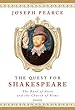
Joseph Pearce has a pretty good but not perfect book on the issue of Shakespeare’s identity and Catholic faith. To get it, The Quest for Shakespeare, click HERE.  He also has Through Shakespeare’s Eyes.

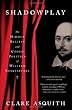
Another interesting, but not perfect, book about Shakespeare’s Catholicism is by Clare Asquith, called Shadowplay.  This focuses on language and images in the plays.  She stretches at times, but in the main her ideas are correct.

From the UK’s best Catholic weekly:

Anonymous should be ignored by all Shakespeare lovers

Conspiracies about the authorship of Shakespeare have fascinated for decades, but ultimately ‘only foolish snobs don’t believe in Shakespeare’

By Francis Phillips on Friday, 28 October 2011

Although this might seem a frivolous subject, I maintain that nothing that concerns Shakespeare can ever be considered frivolous. As readers probably know, there is a new film out, made by Sony Pictures and produced by Roland Emmerich, called Anonymous which allegedly “presents a compelling portrait of Edward de Vere as the true author of Shakespeare’s plays.” This, as Allan Massie points out, writing in the Telegraph yesterday, is utter nonsense. He comments, “Never mind that Oxford died in 1604, some years before Shakespeare’s last plays were written and produced…Never mind that nobody at the time attributed the authorship to anyone but he man from Stratford. Evidently they were all fooled, even Ben Jonson, a fellow playwright who knew William Shakespeare…”

This notion of De Vere’s candidacy only gained credence in 1920 when someone called J Thomas Looney produced the argument that only an aristocrat would possess the culture, knowledge and education to write the plays; a local lad from Stratford could not possibly have possessed the necessary sophistication etc. Massie puts this absurd idea in its place. Shakespeare’s literary sources for his plays are well-known and as his biographer Peter Ackroyd points out, he had the preternatural sensibility and imaginative capacity to transform what he read into the dramas that we know and love. As Massie puts it, playwrights and novelists “pick up bits and pieces of information and put them to use… Shakespeare had no need to have travelled or to have studied law, or been active in politics, to write the plays. Works of literature are made from memory, experience (which includes what you have read), observation and imagination…and if you have the last of these, a little of the others can be made to go a very long way.”

It seems that Looney has had his supporters, including Sigmund Freud. Now that Freud’s own preposterous ideas, such as the Oedipus Complex, have been exploded, it is time to put Looney in his place as a crank, snob and a conspiracy theorist. Of the film, Shakespeare scholar James Shapiro writes in the New York Times that “Mr Emmerich has made a film for our time, in which claims based on conviction are as valid as those based on hard evidence.” I am surprised that author Dan Brown hasn’t (yet) taken up this theme.

I blogged about this subject earlier in the year when Sir Derek Jacobi, acting the part of King Lear at the Donmar Warehouse, pronounced that, “legend, hearsay and myth have created [Shakespeare].” Well, Jacobi is only a thespian, if a very fine one; Looney, aside from his unfortunate name, was trying to escape the anonymity he richly deserved; and this new film, Anonymous, ought to be ignored by all Shakespeare lovers. As Massie observes, “Only foolish snobs don’t believe in Shakespeare.”

Posted in The Drill | Tagged , ,
19 Comments

News about the British monarchy

From the Beeb:

Girls equal in British throne succession

Sons and daughters of any future UK monarch will have equal right to the throne, after Commonwealth leaders agreed to change succession laws. [Ho hum… bigger news is below…]

The leaders of the 16 Commonwealth countries where the Queen is head of state unanimously approved the changes at a summit in Perth, Australia.

It means a first-born daughter of the Duke and Duchess of Cambridge would take precedence over younger brothers.

The ban on the monarch being married to a Roman Catholic was also lifted[THAT’s news.]

[…]

On scrapping the ban on future monarchs marrying Roman Catholics, Mr Cameron said: “Let me be clear, the monarch must be in communion with the Church of England because he or she is the head of that Church. But it is simply wrong they should be denied the chance to marry a Catholic if they wish to do so. After all, they are already quite free to marry someone of any other faith.”

[…]

We know that it is no longer required that non-Catholic spouses in mixed marriages agree as a sine qua non to raised children as Catholics, but this could lead to a Catholic apostatizing or abandoning her or his duties to children.

Is, for example, the first born of a future monarch with a Catholic spouse going to be raised Catholic?  The second born?  The third born?

Talk about pressure never to live one’s faith in the public square!

Or am I getting this wrong?

Think about this over a nice cup of tea from the Wyoming Carmelites (they have changed their page, btw)!

Posted in Brick by Brick, The Drill, The Last Acceptable Prejudice | Tagged , , ,
36 Comments

openings

In the (digital) pages of the UK’s best Catholic weekly, I saw this in the classifieds.

Maybe I should apply!

Well…

Posted in The Campus Telephone Pole | Tagged ,
17 Comments

The Feeder Feed: between (extra) innings edition

It is the break between WS6 inning 9 and inning 10.

A shot taken today from the feeder: the first male Cardinal I have seen in weeks.

Posted in The Feeder Feed |
19 Comments

English translation of Prof. Becchetti’s remarks about PCJP global economy “white paper”

Acton Institute’s Michael Severance, who works in Rome, has posted something interesting on the new “white paper” from the Pontifical Council for Justice and Peace.

Read the whole thing HERE.

Rome Economist Helps Explain Vatican ‘Note’ on Financial Reform
Michael Severance

When the Pontifical Council for Justice and Peace needed an expert economist to assist in articulating the “Note” titled Towards Reforming the International Financial and Monetary Systems in the Context of Global Public Authority to feisty journalists at an Oct. 24 Vatican press conference, it called on the University of Rome “Tor Vergata” economics professor, Leonardo Becchetti.

For an English translation of the professor’s remarks at the Vatican press conference, go to the end of this post.

Prof. Becchetti is a local celebrity of sorts, whose TV time has increased since the outbreak of the global financial crisis and growing cynicism on the future of the European Union. He has provided his expert assessments and criticism to Italian news channels and late night talk show programs, and has become a “go-to guy” when speaking on the relationship of economics to human happiness, central banking and monetary policy. See his interview of the monetary policy and inflation:

[wp_youtube]woOyekGo89g[/wp_youtube]

No doubt, Prof. Becchetti was charged with the very difficult task of articulating and defending some the Note’s bold economic and political prescriptions – usually a “no-fly zone” for Vatican officials. Moreover, in all fairness, Becchetti removed his professor’s hat to his best ability, while speaking in relatively plain language to the journalists, most of whom, like myself, do not hold PhDs in international finance and monetary policy.What follows is the unofficial English translation (actually my own) of the transcript of Prof. Leonardo Becchetti’s presentation. Becchetti’s technical debriefing on the Note last Monday raised a few eyebrows and provoked some critical thinking on what the Vatican document said (and didn’t say) regarding international financial and monetary reform.

For example the following finer points jumped out when translating Becchetti’s remarks:

1. The logic that a global economy requires global governance seems not quite right. What about the Church’s traditional support of subsidiarity, that is, crises should be resolved at the local level of problem. The financial crisis is a pandemic and will require massive effort to resolve it, but local symptoms and outbreaks of this financial disease are manifest in unique ways from nation to nation. A single global monetary and financial authority might simply enforce a “one-size-fits-all” policy that is not practical in most countries. This logic smacks of the 20th century centralized economic planning that has proven destructive in Eastern Europe.

2. Becchetti’s analogy of the “long spoons” is not sensitive to the fact that, through human innovation, those same klutzy over-sized spoons can be creatively re-invented through human innovation to allow for self-feeding. For me, Becchetti’s long spoon analogy inspires ideas of spoon-feeding each other (i.e. receiving easy hand-outs) and not creative cooperation to resolve our financial crisis. If left to fend for ourselves, it might be a clumsy experience at first, but we will then be forced to find ingenious and independent ways of self-preservation.

3. It is true that our world is increasingly interdependent and this provides great opportunity for international solidarity and cooperation, but why use the term “formidable threat” when addressing the fact that first world job holders are feeling the heat of equally qualified laborers from developing countries? I like the thought that the first world feels the need to compete and intelligently find more efficient ways of production, but Becchetti’s subtle semantics seem to infer that Marxist class struggles are at play in devising a global financial peace plan .

4. Lastly, what evidence is there that a financial transaction tax on stock exchange activity will ease the pain and suffering of today’s struggling businesses and unemployed? How many ways have we tried to tax and redistribute our way to human fulfillment? Is this the missing link in international economic planning? Cannot someone speaking on behalf of the Church and who is an expert in economics and happiness, at least make some sort of plea for greater spiritual wealth and its redistribution (i.e. by becoming fulfilled in Christ evangelizing His Word)?

I am sure you will have more questions yourself. Please feel free to share your own opinions. [There and here!]

Translation of Prof. Leonardo Becchetti’s remarks (original Italian version)

[…]

Read the whole thing THERE.

Posted in The Drill | Tagged , , , ,
11 Comments